A failing heater hose connector doesn’t announce itself—it drips coolant against your firewall until the plastic cracks and you’re stranded with a steaming engine bay. That single 5/8-inch splice or tee is the weak link in your cooling system, and the wrong material choice turns a ten-minute fix into a tow-truck bill.
I’m Amir — the founder and writer behind Four Wheel Ask. I’ve analyzed dozens of heater hose connectors across brass, aluminum, and steel constructions, comparing wall thickness, barb geometry, and real-world owner feedback from thousands of miles of daily driving.
Whether you’re replacing a brittle factory tee on a GM SUV or splicing a coolant line on a turbo diesel, picking the right 5/8 heater hose connector determines whether your repair lasts the season or the life of the vehicle.
How To Choose The Best 5/8 Heater Hose Connector
The 5/8-inch heater hose connector is a commodity part by size, but material choice and barb profile determine whether you’ll revisit the repair next season. Focus on three criteria that matter under hood temperatures and constant coolant pressure.
Material Matters: Brass vs. Aluminum vs. Steel
Brass connectors resist corrosion best in coolant environments but add weight. Aluminum is lighter and conducts heat away from the joint, but soft alloys can strip or deform under over-tightened clamps. Alloy steel (like the Dorman 56387) offers the highest tensile strength but can rust if the zinc coating scratches during installation. For a permanent repair, brass or aerospace-grade aluminum is the benchmark.
Barb Profile and Count
A connector with two or three full barbs per side creates a mechanical lock that prevents the hose from sliding off under 15–20 PSI system pressure. Straight knurls rely entirely on clamp force and fail sooner. Look for step-down barbs that increase in diameter toward the center—this wedge action grips the hose inner wall without damaging the rubber.
Wall Thickness and ID Consistency
Thin-wall connectors (around 1.5 mm wall) fit loose on some 5/8-inch ID hoses, especially aftermarket hoses with thicker walls. A connector with an outer diameter of roughly 15.5 mm suits thin-wall hoses, while a 17 mm OD works with thick-wall silicone or reinforced hoses. Always measure your actual hose ID with a caliper before ordering.
Quick Comparison
On smaller screens, swipe sideways to see the full table.
| Model | Category | Best For | Key Spec | Amazon |
|---|---|---|---|---|
| Dorman 800-416 | Metal Coupling | Direct OEM replacement | 5/8 x 5/8 metal coupling | Amazon |
| Dorman 56387 | Metal Tee | GM plastic tee replacement | 5/8 x 5/8 x 5/8 alloy steel tee | Amazon |
| Joywayus Brass Y | Brass Y Union | Split for dual circuits | 5/8″ brass Y with three barbs | Amazon |
| ANPTGHT Aluminum Coupler | Aluminum Splice | Lightweight repair (2-pack) | 5/8 x 5/8 aerospace aluminum | Amazon |
| JoyTube Aluminum Adapter | Aluminum Adapter | Electric water pump adaptation | 5/8″ aluminum barb with flange | Amazon |
In‑Depth Reviews
1. Dorman 800-416 Heater Hose Connector

The Dorman 800-416 is the straight replacement coupling that matches the factory geometry of countless GM and Ford cooling systems. Its metal construction eliminates the cracked-plastic failure point that leaves so many owners stranded, and the step-down barb profile locks the 5/8-inch heater hose in place without requiring excessive clamp torque. The entire body measures just 3.2 inches long, so it fits into tight firewall clearances where bulkier connectors won’t seat.
Real owners report this fitting surviving multiple hose swaps and coolant flushes without developing pinhole leaks at the barb shoulders. The machined surface is ready to paint if you want to match a custom engine bay, but the raw metal finish resists coolant spotting well enough to leave as-is. Dorman backs it with a limited lifetime warranty, which is rare for a coupling at this tier.
For a one-to-one factory replacement that doesn’t introduce fitment surprises, this connector sets the reliability benchmark. The only catch is that it’s a single coupling — if you need a tee or a Y-splitter, you’ll need to step up to one of the other options on this list.
What works
- Direct OE fitment with no adapter needed
- Step-down barbs prevent hose blow-off
- Limited lifetime warranty
What doesn’t
- Single-piece only, no multi-pack
- Not suitable for thick-wall silicone hoses
2. Dorman 56387 Metal Universal Heater Hose Tee
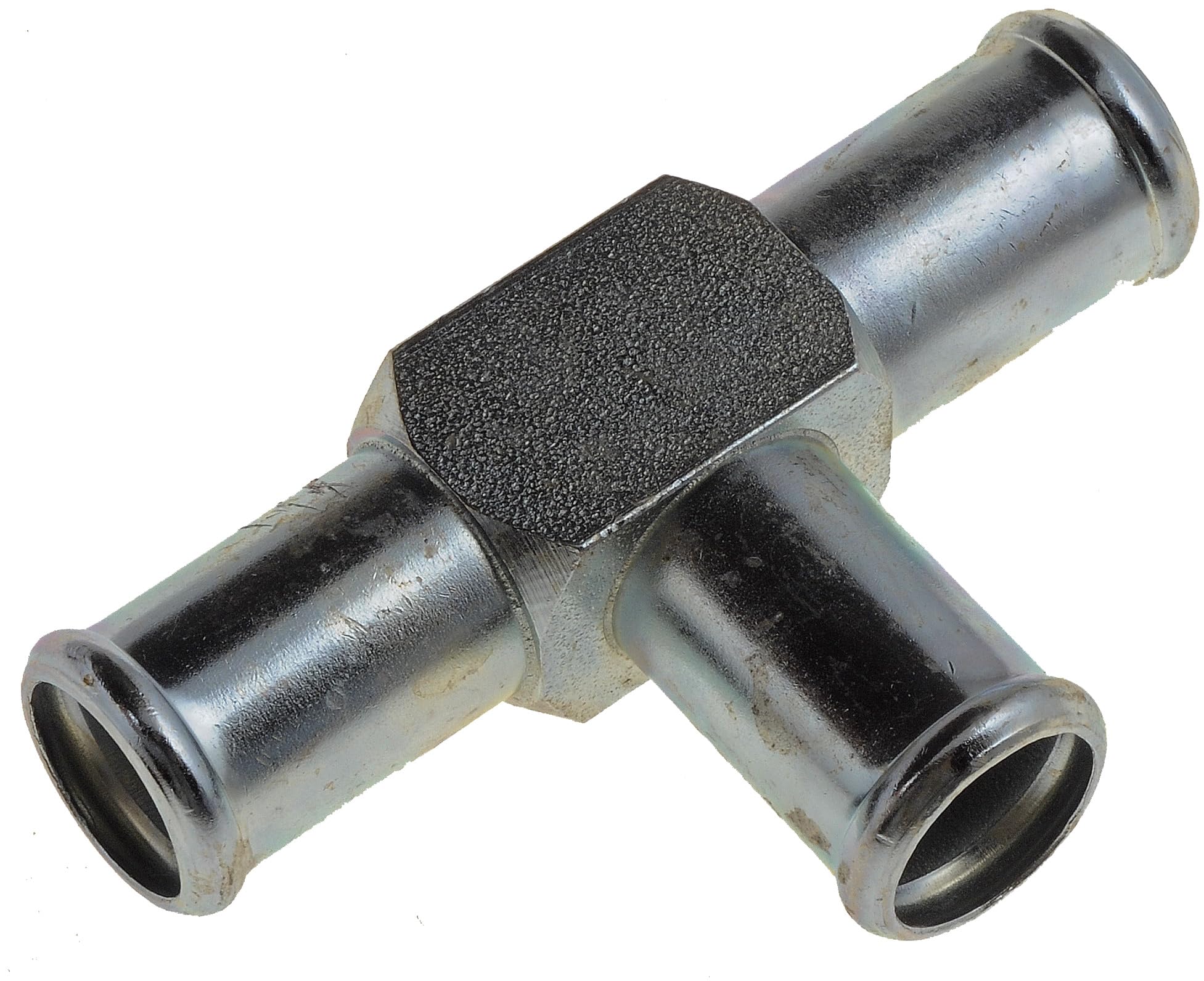
The Dorman 56387 is the go-to fix for the infamous plastic heater hose tee that snaps off on late-model GM Acadia, Traverse, and Enclave V6 engines. It’s a three-way tee with all three ports sized at 5/8 inch, machined from alloy steel with a protective coating that resists corrosion better than the bare-zinc fittings of previous decades. The tee body is noticeably heavier than aluminum alternatives, which translates to confidence when you’re torquing the clamps.
Owner reports confirm this tee completely eliminates the coolant-loss failure that GM owners call a “time bomb” under the intake. The barbs are aggressive enough to grip aged OEM hoses, and the 5.5-inch overall length gives plenty of hose overlap even if you trim back degraded ends. Some users on Toyota applications note that the barb outer diameter runs 15.5 mm, which is slightly smaller than the 17 mm OD required for thick-wall Asian-market hoses — verify your hose wall before ordering.
If you’re doing one-and-done coolant tee replacement on a GM V6, this is the part. For European or Asian vehicles with thick-wall hose, measure first or the barbs may feel loose.
What works
- Direct metal substitute for GM plastic tees
- Three identical 5/8 ports for versatile routing
- Sturdy steel construction with coating
What doesn’t
- Thin-wall barbs may not suit thick silicone hoses
- Not compatible with all Asian brands
3. Joywayus 5/8″ Brass Y Shaped Union Fitting

The Joywayus brass Y fitting brings something the straight couplers can’t match: a natural split for dual heater cores, auxiliary coolant loops, or even fuel return lines on small engines. It’s machined from lead-free brass with thick walls that weigh 90 grams — nearly five times the heft of an aluminum splice — giving it a premium feel that resists deformation under repeated clamp loads. The Y geometry places the branch at roughly 90 degrees, which keeps hose routing clean in tight engine bays.
Owners have used this fitting to split air lines, supply dual dishwashers, and even drain fuel from snow throwers, proving its versatility beyond coolant-only duty. The barb shoulders are sharp and well-defined, requiring a proper clamp to fully seat but forming a leak-proof seal once tightened. The temperature rating of -40 to 160°F covers standard coolant operating ranges, though extreme racing applications with sustained 200°F+ temperatures may push the upper limit.
For a Y-split that doesn’t rattle or corrode, this brass fitting is the clear choice — just be aware that brass adds weight and the price is slightly higher than a simple coupler.
What works
- Heavy-duty brass resists vibration fatigue
- Lead-free construction for coolant safety
- Three-barrel design enables custom routing
What doesn’t
- Heavier than aluminum alternatives
- Temperature limit below brass radiator fittings
4. ANPTGHT Aluminum Hose Barb Splice Coupler (2-Pack)
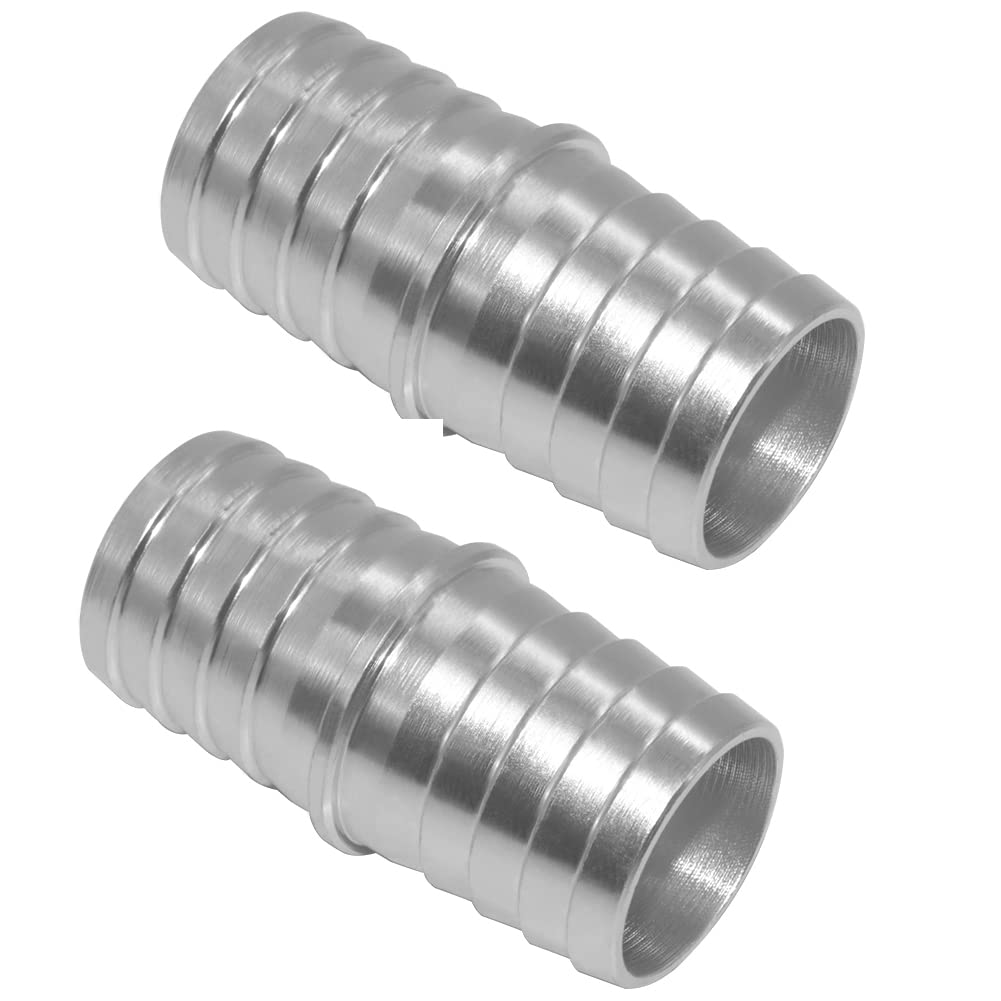
The ANPTGHT coupler brings aerospace-grade 6061 aluminum to a part that’s usually stamped steel or brass. The two-pack includes two identical 5/8 x 5/8 straight splices, each machined with three distinct barbs per side that create positive retention without chewing up the hose inner wall. The weight savings over brass is significant — each coupler weighs just a few grams — which matters on radiator hose assemblies where excess mass can stress the hose neck.
Real-world feedback from 6.5-liter turbo diesel owners confirms these couplers hold up to the high-pressure, high-temperature coolant loops common in diesel auxiliary systems. The aluminum surface resists the pitting that affects zinc-coated steel after repeated heat cycles, and the polished finish slides into hoses with less drag than cast fittings. Because it’s a two-pack, you get one for the repair and a spare for the tool box.
The only tradeoff is that soft aluminum can gall if you over-torque worm-gear clamps — use a torque-limiting screwdriver or stop at the first sign of resistance. For weight-conscious builds or anyone who wants a spare on hand, this is the smartest value proposition.
What works
- Aerospace-grade aluminum resists corrosion
- Two-piece set for redundancy
- Low weight minimizes hose strain
What doesn’t
- Soft material can strip with heavy clamps
- No barb steps for thick-wall hoses
5. JoyTube Aluminum Hose Barb Adapter (2-Pack)
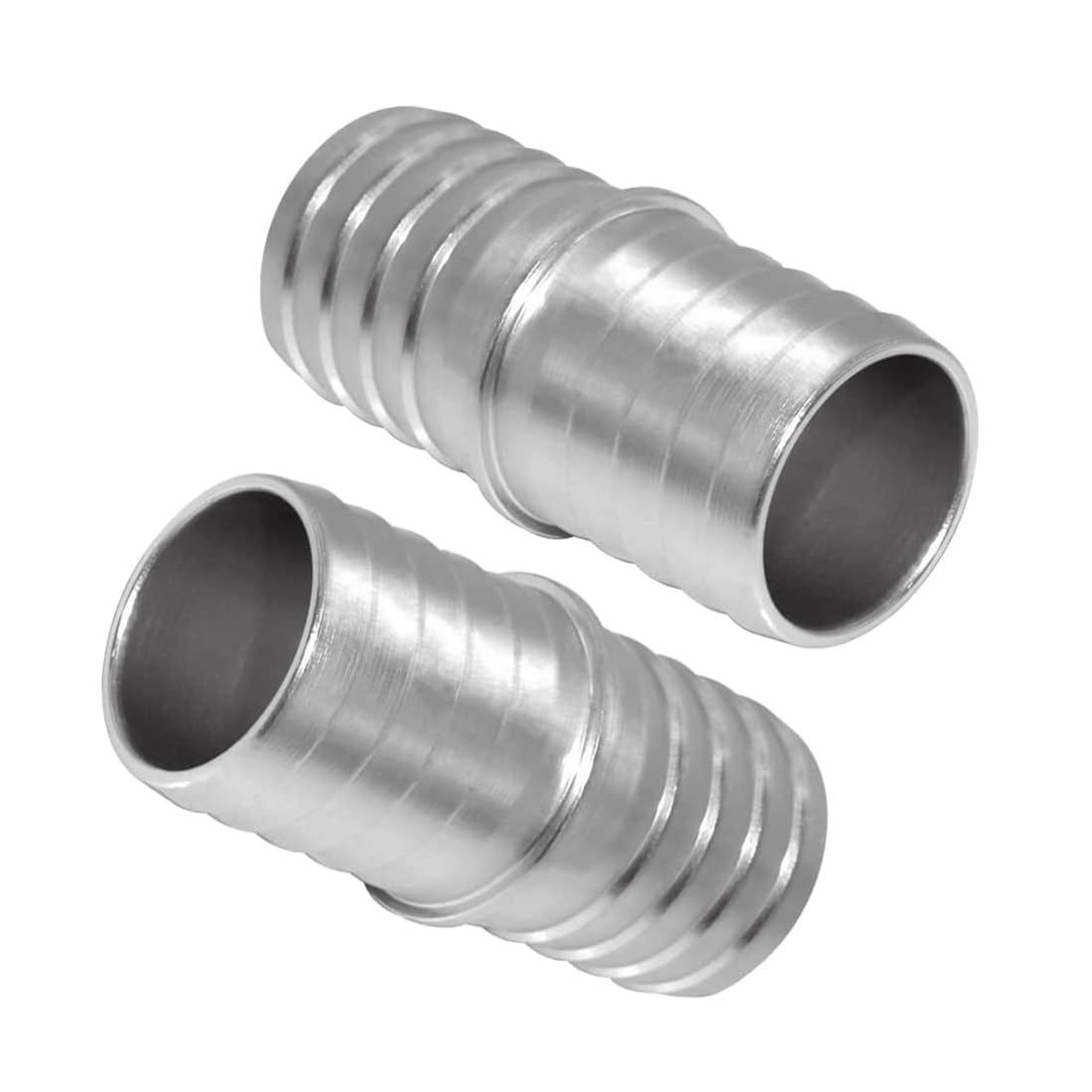
The JoyTube aluminum adapter uses a center flange that acts as a mechanical stop, preventing the hose from being pushed too far onto the barb and blocking flow. This feature is especially useful when you’re adapting an electric water pump outlet to a standard radiator hose, where misjudging insertion depth can create a hidden restriction. The barb profile is cleanly machined with two full ridges per side, and the overall length is compact enough to fit in routing paths that other splices can’t.
Owners running custom coolant loops and electric pump retrofits report that the center flange eliminates the guesswork of hose alignment. The aluminum body is durable enough for daily temperatures and the two-pack price keeps the per-unit cost low. One note from users: the packaging is minimal (described as a “curling pins box”), so inspect the barbs on arrival for any machining debris.
If you’re fabricating a non-standard coolant circuit or need a positive insertion stop, this flanged adapter solves a problem no straight coupler can address.
What works
- Center flange prevents over-insertion
- Two-piece set for multiple repairs
- Compact length fits tight routing
What doesn’t
- Only two barbs per side, less grip than triple-barb designs
- Packaging offers no protection during shipping
Hardware & Specs Guide
Barb Count and Retention
The number of barbs per side directly correlates with hose retention force. Triple-barb designs (like the Dorman 800-416 and ANPTGHT coupler) provide three mechanical locking points that distribute clamping load. Double-barb designs (JoyTube adapter) rely more on the center flange or clamp pressure. For high-pressure coolant loops — anything above 15 PSI — a minimum of three barbs per side is recommended.
Material Density and Thermal Expansion
Brass (density ~8.5 g/cm³) expands less than aluminum (~2.7 g/cm³) under heat, meaning brass connectors maintain tighter barb-to-hose contact as the engine warms from cold start to operating temperature. Aluminum’s higher expansion rate can cause the barb-to-hose gap to widen slightly at full temp, which some builders compensate for by using constant-tension spring clamps instead of worm gear clamps.
FAQ
Can I use a brass 5/8 connector in a fuel line instead of coolant?
Why do GM plastic heater hose tees fail so often?
What size clamp do I need for a 5/8 heater hose connector?
Final Thoughts: The Verdict
For most buyers, the 5/8 heater hose connector winner is the Dorman 800-416 because its metal construction and triple-barb grip deliver leak-free performance that outlasts the original plastic fitting. If you need a tee to replace that failing GM coolant manifold, grab the Dorman 56387. And for a lightweight two-pack that covers multiple repair points or adapts a custom coolant loop, nothing beats the ANPTGHT Aluminum 2-Pack.

Certification: BSc in Mechanical Engineering
Education: Mechanical engineer
Lives In: 539 W Commerce St, Dallas, TX 75208, USA
Md Amir is an auto mechanic student and writer with over half a decade of experience in the automotive field. He has worked with top automotive brands such as Lexus, Quantum, and also owns two automotive blogs autocarneed.com and taxiwiz.com.