A fuel line that collapses under vacuum, splits at the barb, or hardens after one season turns a simple maintenance job into a repeated headache. The 5/16-inch ID size covers everything from lawn mower carburetor feeds to classic car fuel pump lines, but not every hose on the market handles ethanol blends or under-hood heat the same way. Choosing the wrong construction means chasing leaks and replacing lines sooner than necessary.
I’m Amir — the founder and writer behind Four Wheel Ask. My approach to fuel system components relies on cross-referencing SAE standards, material composition data, and thousands of owner-reported long-term reliability notes to separate what performs from what merely fits out of the box.
The reality of rubber fuel lines is that SAE 30R7 certification, wall thickness, and temperature tolerance determine whether a hose survives years of service or degrades prematurely. This guide breaks down five contenders for the best 5/16 fuel line across different use cases and budgets to help you pick the right construction for your application.
How To Choose The Best 5/16 Fuel Line
Selecting the right 5/16-inch fuel hose involves more than matching the inner diameter to your barb. Material construction, pressure rating, and temperature range determine whether the line performs reliably over time or becomes a recurring replacement item. The three factors below cover the most common points where buyers make costly mistakes.
SAE Rating and Ethanol Compatibility
SAE 30R7 is the most common standard for low-pressure fuel systems, covering carbureted engines, return lines, and PCV connections. It handles ethanol blends up to E-85, but prolonged exposure to high-ethanol content can accelerate degradation in standard rubber formulations. SAE 30R9 adds a fluoroelastomer inner layer for superior ethanol resistance and is recommended for fuel-injected systems with higher operating pressures. If your vehicle runs E-85 or sees regular ethanol exposure, confirm the hose specification explicitly states compatibility rather than assuming 30R7 covers all scenarios.
Burst Pressure and Wall Thickness
Working pressure for most 5/16 fuel lines in carbureted applications sits between 50 and 150 psi, with burst pressures ranging from 250 psi to over 1000 psi on reinforced models. Thicker walls generally provide better kink resistance and puncture protection, but they also reduce flexibility in tight routing. For stationary engines, lawn equipment, and low-pressure classic car systems, a 150 psi working pressure line is adequate. For race applications or high-vibration environments, a hose with a minimum 300 psi working rating and braided reinforcement adds a meaningful safety margin.
Temperature Range and Material Composition
Fuel lines in engine bays see ambient temperatures that can exceed 250°F near exhaust manifolds. A hose rated to at least 257°F is the baseline for under-hood use, while lines routed near the exhaust or turbocharger require PTFE or silicone-based constructions. NBR (nitrile butadiene rubber) is the standard material for SAE 30R7 hoses and offers good oil and fuel resistance, but it stiffens at low temperatures. If you live in a cold climate, look for a hose with a low-temperature rating of -40°F to maintain flexibility during winter starts.
Quick Comparison
On smaller screens, swipe sideways to see the full table.
| Model | Category | Best For | Key Spec | Amazon |
|---|---|---|---|---|
| Continental 65127 | Premium | Classic car fuel systems | SAE 30R7, 25 ft, USA-sourced | Amazon |
| EVIL ENERGY Push Lock | Mid-Range | Race car and high-vibration use | 300 psi working, 5 ft, NBR/Polyester | Amazon |
| CMOOD 25-Foot Roll | Value | Multiple small engine projects | 150 psi working, 25 ft, NBR rubber | Amazon |
| YGQ Braided with Clamps | Budget | Lawn mower and generator repairs | 60 psi working, 8 ft, NBR braided | Amazon |
| EVIL ENERGY PTFE 6AN | High-End | EFI and E-85 conversions | 1500 psi working, 10 ft, PTFE/Nylon | Amazon |
In‑Depth Reviews
1. Continental 65127 5/16″ ID Fuel Hose

Continental is a name that carries weight in the fuel system world, and the 65127 hose reflects the engineering standards you would expect from a supplier to major automotive OEMs. This 25-foot roll of 5/16-inch ID hose meets SAE 30R7 requirements and is built for low-pressure applications including carburetor feed lines, PCV connections, and fuel return paths. The nitrile rubber construction provides reliable resistance to leaded and unleaded gasoline, diesel, and ethanol blends up to E-85 without the inner liner softening or swelling over time.
What stands out in owner feedback is the consistent wall thickness and the complete absence of kinking when routed around moderate bends. Multiple users report successful installations on classic cars, diesel passenger vehicles like the VW TDI, and marine applications where fuel quality varies. The hose maintains full internal diameter under clamp pressure, which helps prevent flow restriction in gravity-fed systems where every fraction of a psi matters.
The main trade-off reported is that this hose is noticeably softer than some 30R7 alternatives, which means it can be vulnerable to abrasion if routed against sharp edges or in high-vibration environments without protective sleeving. That softness also makes it exceptionally easy to push onto barbs, a real advantage when working in tight engine bays. For most restoration and general maintenance jobs, this is the hose that balances compliance with durability better than anything else at this price point.
What works
- USA-sourced with current date code stamping
- Flexible enough for tight routing without kinking
- Consistent 0.56-inch OD fits standard clamps securely
What doesn’t
- Outer jacket lacks abrasion protection for high-vibration use
- Softer compound can deform under extreme clamp torque
2. EVIL ENERGY 5/16 Fuel Hose Push Lock
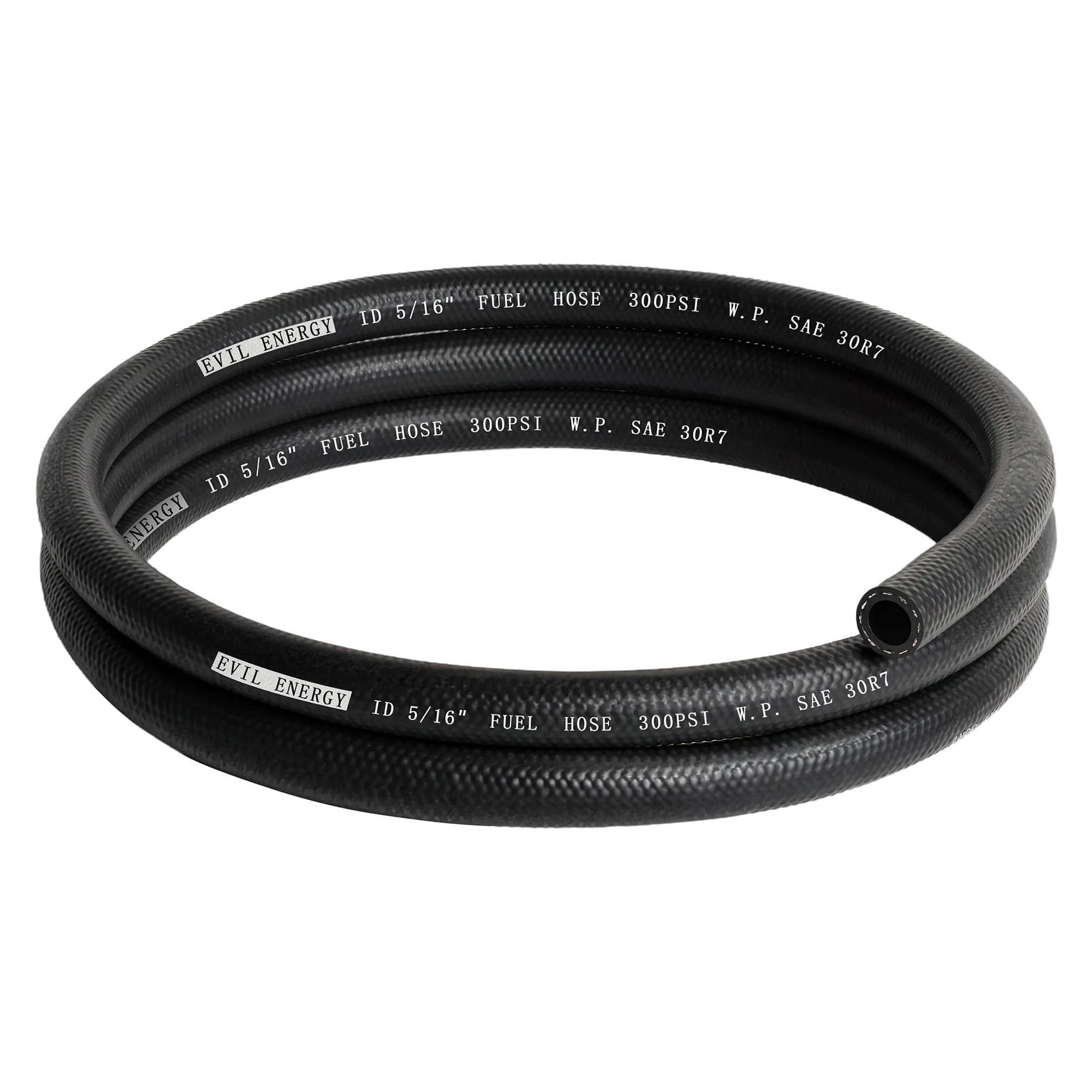
EVIL ENERGY has built a reputation in the performance aftermarket for offering race-grade components at prices that undercut the specialty brands, and this 5/16-inch push-lock hose continues that trend. The hose is constructed from NBR rubber with a braided polyester fiber reinforcement that allows it to handle a working pressure of 300 psi and a burst pressure of 1200 psi. Those numbers place it well above standard 30R7 requirements, making it suitable for fuel-injected systems, oil cooler lines, and other applications where pressure spikes are a genuine concern.
The 5-foot length is clearly aimed at targeted repairs rather than whole-vehicle re-plumbing, which makes sense for the intended buyer who is replacing a compromised section on a sports car, ATV, or race vehicle. Owner reports consistently mention the hose’s flexibility as a standout feature, with several users noting that it pushes onto barbed fittings with less effort than comparable SAE 30R7 lines while still maintaining a leak-free seal under clamp pressure. The minimum bend radius of 80mm (just over 3 inches) allows routing through fairly tight engine compartments without collapse.
One area where this hose distinguishes itself is cold-weather performance, with a temperature range stretching from -40°F to 257°F. Users in northern climates report that the line remains pliable enough for winter repairs, which is a genuine advantage over standard rubber hoses that stiffen and become difficult to work with below freezing. The polyester braid adds a layer of cut resistance that the softer Continental hose lacks, though it is still not as abrasion-proof as a nylon or stainless steel braided jacket would be.
What works
- 300 psi working pressure handles fuel-injected systems
- Excellent flexibility in cold weather down to -40°F
- Braided reinforcement adds puncture resistance
What doesn’t
- Only 5 ft length limits large-scale projects
- Push-lock design requires barbed fittings for best seal
3. EVIL ENERGY 6AN PTFE Fuel Hose
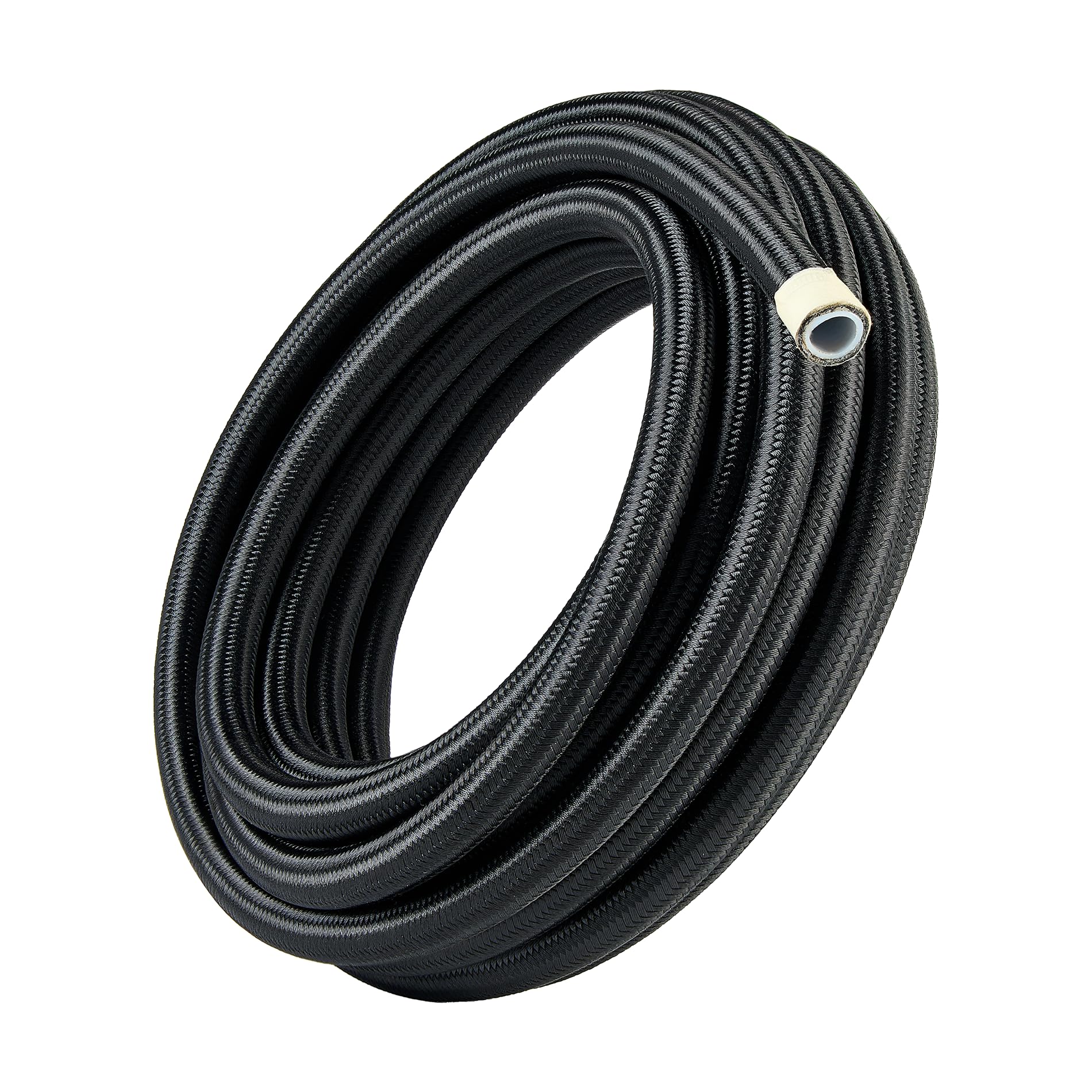
When the application demands chemical resistance beyond what standard NBR rubber can deliver, a PTFE-lined hose is the appropriate solution, and this EVIL ENERGY 6AN line delivers that capability in a 5/16-inch ID package. The polytetrafluoroethylene inner layer is virtually inert, meaning it resists attack from E-85, methanol, high-sulfur diesel, and even brake fluid without swelling or degrading. The nylon braided outer jacket provides abrasion protection and keeps the hose structure intact at pressures up to 1500 psi working and 4500 psi burst.
This hose is not intended for casual carburetor swaps or lawn mower repairs. It is designed for fuel-injected engines, LS swaps, and high-performance builds where fuel compatibility and pressure ratings are non-negotiable. The temperature range of -76°F to 446°F exceeds what any rubber-based hose can offer, making it suitable for routing near exhaust components, turbochargers, or in engine bays that see extreme thermal cycling. Owner feedback from diesel truck and race car builders consistently confirms that this hose holds up where standard 30R7 lines would harden and crack within a season.
There are genuine installation considerations here that do not apply to rubber hose. The PTFE liner is stiff and has a minimum bend radius of 3.5 inches, and folding or kinking it will permanently damage the inner layer. Professional installation with EVIL ENERGY’s own PTFE fittings is strongly recommended, and the hose does require a special cutter to achieve clean, fray-free ends. For builders who need the ultimate in fuel compatibility and pressure handling, this is the only option in this lineup that covers that requirement.
What works
- PTFE liner is chemically inert for E-85 and methanol
- 1500 psi working pressure handles boosted systems
- 450°F temperature rating for hot engine bay routing
What doesn’t
- Stiff construction requires careful routing to avoid kinking
- Specialized PTFE fittings and cutting tools needed
4. CMOOD 5/16″ ID Fuel Line Hose 25 ft

The CMOOD 25-foot roll is the volume play in this comparison, offering enough length to re-plumb multiple small engines, a classic car fuel system, or a boat with material left over for spares. The hose meets SAE 30R7 specifications with a synthetic rubber construction that handles gasoline, diesel, biodiesel, and ethanol blends up to E-85. The 150 psi working pressure and 500 psi burst rating are appropriate for standard carbureted and low-pressure fuel injection systems.
Owner reports highlight the consistent inner diameter and the fact that the hose seats well on standard barbed fittings without needing excessive clamp torque. Several buyers used this line for recreational vehicles, including a 5th-gen 4Runner breather relocation and various lawn tractor fuel line replacements, and noted that the hose held up through a full season without cracking or softening. The 25-foot length makes it easy to cut custom sections for multiple projects without having to buy separate rolls for each job.
Where this hose falls short is in perceived long-term durability compared to premium options. A small number of owners mention that the outer surface can develop a slight tackiness after extended exposure to high-ethanol fuel, which is a common trait among budget-oriented 30R7 hoses. The wall thickness is adequate for most uses, but the hose offers less margin for error if routed near sharp metal edges or in high-vibration environments. For general maintenance and projects where cost per foot matters, this is a solid workhorse that gets the job done.
What works
- 25 ft length covers multiple projects from one roll
- Fits standard barbs without excessive force
- Good ethanol and biodiesel compatibility
What doesn’t
- Outer surface can develop tackiness with prolonged E-85 use
- Less abrasion resistance than braided alternatives
5. YGQ 5/16″ ID Fuel Line Hose with Clamps

The YGQ fuel line bundle takes a practical approach by including ten hose clamps with the 8-foot section of hose, making it a grab-and-go solution for someone who needs to complete a single repair without making a separate trip for hardware. The hose itself is NBR rubber with braided nylon reinforcement and meets SAE 30R7 standards, with a working pressure of 60 psi and a burst pressure of 249 psi. Those numbers are adequate for gravity-fed carburetor systems on lawn mowers, generators, snow blowers, and ATVs.
Owner feedback from users who installed this on Tecumseh, Briggs & Stratton, and Kohler engines confirms that the hose pushes onto barbs with reasonable effort and holds a seal with the included clamps. The braided construction gives the hose a slightly stiffer feel than non-reinforced alternatives, which actually helps prevent collapse on long unsupported runs. The 8-foot length is generous for a single repair and leaves a useful amount of spare material for future maintenance.
The main criticism in the review data centers on the included clamps, which multiple owners describe as inconsistent in size and difficult to tighten evenly. The hose itself earns consistent praise for its quality at this price level, but the clamps may need to be replaced with name-brand options for a truly secure installation. The hose also has a narrower temperature range than the premium options, starting to stiffen noticeably below freezing. For seasonal equipment and budget-conscious repairs where extreme cold is not a factor, this bundle provides everything needed in one package.
What works
- Includes hose clamps for a complete repair kit
- Braided reinforcement resists collapse on long runs
- Works well for Tecumseh, Kohler, and Briggs engines
What doesn’t
- Included clamps are inconsistent in size and quality
- Stiffens noticeably in below-freezing temperatures
Hardware & Specs Guide
SAE 30R7 vs 30R9
The 30R7 standard covers low-pressure fuel systems up to 50 psi working pressure with a nitrile rubber inner tube and a synthetic rubber cover. It handles ethanol blends up to E-85 but is not designed for continuous immersion in high-alcohol fuels. SAE 30R9 adds a fluoroelastomer inner layer that resists ethanol permeation and swelling at higher concentrations, making it the standard for fuel-injected vehicles and E-85 conversions. For carbureted engines and return lines, 30R7 is sufficient. For anything with a fuel pump pushing above 50 psi, step up to 30R9 or PTFE.
Wall Thickness and Kink Resistance
A thicker wall increases burst pressure and puncture resistance but reduces flexibility. Standard 5/16-inch fuel lines have a wall thickness between 0.1 and 0.125 inches, while braided or push-lock hoses can reach 0.2375 inches. Thinner walls conform to tight bends more easily but collapse under vacuum or external pressure. For gravity-fed systems, wall thickness is less critical. For fuel pump suction lines or applications with sharp 90-degree bends, a minimum 0.125-inch wall is recommended to prevent flow restriction.
Braid Types and Their Purpose
Nylon braiding embedded in the hose wall increases burst pressure without adding significant stiffness, making it the most common reinforcement in SAE 30R7 hoses. Polyester braiding offers similar strength with slightly better flexibility at low temperatures. Stainless steel or nylon outer braiding, such as on PTFE hoses, provides abrasion and cut resistance but requires specialized fittings. For standard automotive use, embedded nylon or polyester braid is the best balance of protection and ease of installation.
Temperature Ratings Explained
Standard rubber fuel lines are typically rated from -40°F to 257°F. Below -40°F, nitrile rubber becomes brittle and can crack under vibration. Above 257°F, the rubber compound begins to degrade, with hardening and loss of flexibility occurring over time. PTFE-lined hoses extend the range from -76°F to 446°F, making them suitable for turbocharged engines and exhaust-adjacent routing. If your engine bay sees sustained temperatures above 250°F near the fuel line path, a PTFE hose is the only reliable long-term choice.
FAQ
Can I use 5/16 fuel line for fuel injection systems?
What is the difference between 5/16 and 6AN fuel line?
How long does 5/16 rubber fuel line last?
Can I use 5/16 fuel line for diesel?
Final Thoughts: The Verdict
For most buyers, the best 5/16 fuel line winner is the Continental 65127 because it delivers USA-sourced SAE 30R7 quality in a practical 25-foot length at a price that undercuts local auto parts store rolls. If you want push-lock performance with high pressure capacity, grab the EVIL ENERGY 5/16 Push Lock. For extreme chemical resistance and high-temperature engine bay routing, the EVIL ENERGY 6AN PTFE hose is the only choice that covers that requirement. Budget-conscious buyers working on lawn equipment will find the YGQ bundle with clamps gets the job done for a single repair, but plan to replace the included clamps with quality hardware for a leak-free installation.

Certification: BSc in Mechanical Engineering
Education: Mechanical engineer
Lives In: 539 W Commerce St, Dallas, TX 75208, USA
Md Amir is an auto mechanic student and writer with over half a decade of experience in the automotive field. He has worked with top automotive brands such as Lexus, Quantum, and also owns two automotive blogs autocarneed.com and taxiwiz.com.