A fuel system is only as reliable as its weakest connection. A poorly chosen or cheaply made 5/16″ fitting can introduce air, drip fuel onto hot manifolds, or fail under pressure — turning a simple repair into a dangerous headache. The right connector delivers a leak-free seal, resists corrosion from ethanol-blended fuels, and holds up under the heat cycles and vibration of daily driving.
I’m Amir — the founder and writer behind Four Wheel Ask. Over the years I have analyzed hundreds of fuel system components, cross-referencing material specs, thread standards, pressure ratings, and real owner feedback across forums and verified purchase reports to separate parts that perform from those that cause trouble.
This guide cuts through the noise to bring you the options that consistently deliver a secure, lasting seal. After carefully evaluating dozens of fuel fittings across multiple brands, here is our curated selection of the best 5/16 fuel line connector options.
How To Choose The Best 5/16 Fuel Line Connector
A 5/16″ fuel line connector looks like a simple part, but the material, connection style, and intended application determine whether it seals for years or causes a tow-truck moment. Understanding the trade-offs between aluminum, brass, steel, and plastic — and between AN flare, barb, compression, and quick-connect designs — will help you pick the right piece for your specific fuel or fluid system.
Material Matters: Aluminum vs. Brass vs. Steel vs. Plastic
Aluminum alloy 6061-T6 offers a great strength-to-weight ratio and resists corrosion well, making it a favorite for AN-style fittings in EFI and LS swap applications. Brass provides excellent corrosion resistance and machines cleanly, ideal for compression fittings on transmission cooler lines or fuel repairs. Alloy steel with a corrosion-resistant coating delivers OEM-grade durability for factory-style quick connectors. Plastic connectors are lightweight and cost-effective for low-pressure nylon tubing, but they do not match the longevity of metal under heat cycling or in ethanol-rich fuel environments.
Connection Types: AN Flare, Barb, Compression, and Quick-Connect
AN flare fittings use a 37-degree sealing surface and a threaded collar to create a high-pressure, vibration-resistant joint — trusted in performance fuel systems. Barb fittings push hose over serrated ridges and rely on a hose clamp for sealing; they are simple and effective for rubber or nylon lines at moderate pressure. Compression fittings crush a ferrule around tubing to form a seal, ideal for hard lines where you want a removable joint without flaring. Quick-connect fittings use a retainer clip or push-lock mechanism, offering tool-free removal for factory fuel line repairs, though the plastic retainers can be brittle on some brands.
Application Matching: Fuel, Transmission, and Coolant Lines
A connector designed for a fuel system may not be optimal for transmission cooler lines, where continuous oil flow and higher temperatures demand brass or steel construction. On EFI fuel rails, an AN fitting with a 37-degree flare and proper O-ring compatibility is the standard. For a quick repair of a rusted steel line, a compression-to-barb adapter in brass lets you splice in a rubber hose section without special tools. Always verify whether the connector is rated for submerged fuel use, E85 compatibility, and the working pressure your system demands.
Quick Comparison
On smaller screens, swipe sideways to see the full table.
| Model | Category | Best For | Key Spec | Amazon |
|---|---|---|---|---|
| EVIL ENERGY 6AN | AN Fitting | LS Swaps & EFI | 6AN Male to 5/16 Quick-Disconnect | Amazon |
| Dorman 800-081 | OEM Connector | Factory Replacements | Steel to Nylon Tubing Adapter | Amazon |
| Joywayus Brass | Compression | Transmission Cooler Lines | 5/16 Compression x 5/16 Barb | Amazon |
| YSIL Brass | Compression | Fuel & Trans Lines | 5/16 Tube OD x 5/16 Barb | Amazon |
| AC PERFORMANCE | Quick Connector | Nylon & Rubber Hoses | Female 5/16 to Male Barb | Amazon |
In‑Depth Reviews
1. EVIL ENERGY 6AN Male to 5/16 Quick-Disconnect Female EFI Fuel Rail Fitting

The EVIL ENERGY fitting bridges the gap between aftermarket AN plumbing and factory 5/16″ EFI hard line with a clean, secure interface. Machined from 6061-T6 aluminum with a black finish, it seals via a 37-degree flare and uses a 9/16-18 UNF thread — the standard for 6AN connections. Owner reports from multiple LS swap builds confirm leak-free sealing right out of the box, with several noting that the fitment on factory fuel rails and transmission cooler lines required no additional adapters or finesse.
Rated for 1500 psi working pressure and a temperature range of -40°F to 250°F, this connector handles both fuel and transmission fluid circuits without concern. The aluminum construction keeps weight minimal, and the anodized finish resists corrosion from ethanol-blended fuels. Reviews consistently mention that the fittings feel as substantial as premium brands like Earls or Radium, at a fraction of the usual cost.
For anyone adapting a 5/16″ factory hard line to an AN-based fuel system, this is the piece that removes guesswork. It installs quickly with standard wrenches and holds up to the vibration and heat cycling common in engine bay environments. The included sticker is a minor bonus, but the real value is in the dependable seal that dozens of verified buyers have confirmed over repeated purchases.
What works
- Precision-machined 6061-T6 aluminum with a reliable 37-degree sealing surface
- Rated to 1500 psi with broad temperature range for fuel and trans use
- Verified leak-free performance across multiple LS swap and retrofit applications
What doesn’t
- Single-piece packaging — may need to order multiples for multi-port systems
- Black anodized finish can show wear if over-torqued with aggressive tools
2. Dorman 800-081 Fuel Line Quick Connector

Dorman has a long-standing reputation for producing parts that match OEM fit and function, and the 800-081 quick connector lives up to that standard. Designed to adapt 5/16″ steel line to 5/16″ nylon tubing, this two-pack uses an alloy steel body with machined construction and a white plastic retainer clip for tool-free connection. Verified buyers on Dodge Journey and other Chrysler platforms confirm it replaces factory connectors without modification, restoring fuel system integrity quickly.
The connector is backed by Dorman’s limited lifetime warranty and engineered by a U.S.-based team focused on quality control. The steel body provides robust resistance to deformation under clamp load, while the nylon-compatible interface seals reliably against the tubing without special tools. One reviewer noted that the retainer clips are difficult to remove once fully seated, which adds to the security of the connection but requires care during future servicing.
For anyone replacing a corroded or broken factory quick connector on a steel-to-nylon fuel line, this kit delivers the exact geometry and sealing performance needed. The two-piece packaging provides a spare or allows a simultaneous repair on both feed and return lines. It is a straightforward, engineering-backed solution that avoids the uncertainty of generic unbranded fittings.
What works
- Direct OEM replacement fitment validated on multiple Chrysler and universal applications
- Alloy steel construction with machined finish for long-term durability
- Limited lifetime warranty from a trusted U.S.-based manufacturer
What doesn’t
- White plastic retainer clips can be brittle and difficult to unseat once locked in
- Limited to steel-to-nylon adaptation — not a universal barb or AN solution
3. Joywayus 2PCS Brass Fuel Line Adapter 5/16 Compression Tube to 5/16 Hose Barb

The Joywayus adapter solves a specific and common problem: splicing a rubber hose into a hard line without cutting threads or using a flaring tool. One end accepts 5/16″ OD tube with a compression ferrule, while the other provides a 5/16″ ID hose barb. The all-brass construction resists corrosion from fuel, transmission fluid, and coolant, making it a versatile repair component for multiple systems under the hood.
Owner feedback highlights its effectiveness on copper-nickel gas lines and GM transmission cooler lines. The compression sleeve and ferrule create a positive seal without requiring extreme torque — overtightening brass compression nuts can deform the threads, so a firm hand with a wrench is sufficient. One reviewer used it to repair a pinhole in a transmission cooler line by cutting out the damaged section and bridging the gap with rubber hose, avoiding a full line replacement.
This fitting is best approached as a targeted repair tool rather than a universal connector. The brass material holds up well under hood temperatures, and the two-pack provides a backup or allows both ends of a cut line to be addressed. For anyone dealing with a rusted or pinhole-damaged hard line who wants a clean, removable fix, this adapter delivers exactly that capability.
What works
- Brass construction provides excellent corrosion resistance for fuel, oil, and coolant
- Compression-to-barb design enables hard line repair without flaring tools
- Two-piece set offers redundancy or simultaneous dual-line repair capability
What doesn’t
- Brass nuts require careful torque application to avoid thread damage
- Not intended for high-pressure fuel injection circuits without additional clamping
4. YSIL 2PCS Compression Fitting 5/16 Tube OD to 5/16 Hose Barb

The YSIL compression fitting covers the same ground as the Joywayus adapter — 5/16″ tube OD to 5/16″ hose barb — with similarly robust brass construction and a two-piece configuration. The design includes a fitting body, compression sleeve, and ferrule that work together to create a leak-free seal when properly tightened. Verified buyers on Ram 2500 and Ford F-350 transmission cooler lines report that the fitting held without issues after installation with quality hose clamps on the barb end.
Brass offers natural lubricity during installation and resists the galvanic corrosion that can occur when dissimilar metals meet in a fluid system. The manufacturer recommends using a wrench to seat the ferrule and sealing the barb end with a hose clamp to ensure a positive grip. One reviewer noted that standard fuel line hose will degrade quickly when exposed to transmission fluid, so matching the hose type to the application is essential for long-term reliability.
This fitting is a solid choice for anyone needing a low-cost, reliable way to transition from hard line to rubber hose on cooler circuits or low-pressure fuel repairs. The two-pack pricing makes it economical for shops or DIYers who keep spare fittings on hand. It does not reinvent the wheel, but it executes a proven design with consistent quality and positive real-world validation.
What works
- Premium brass material resists rust and corrosion in demanding fluid environments
- Compression mechanism seals reliably on standard 5/16 OD tube without flaring
- Two-piece set provides excellent value for repair work or spare inventory
What doesn’t
- Hose barb end requires proper clamp selection to prevent hose blow-off
- Not rated for high-pressure EFI systems without additional securement measures
5. AC PERFORMANCE Plastic Fuel Quick Connector 5/16 Tube to 5/16 Barb
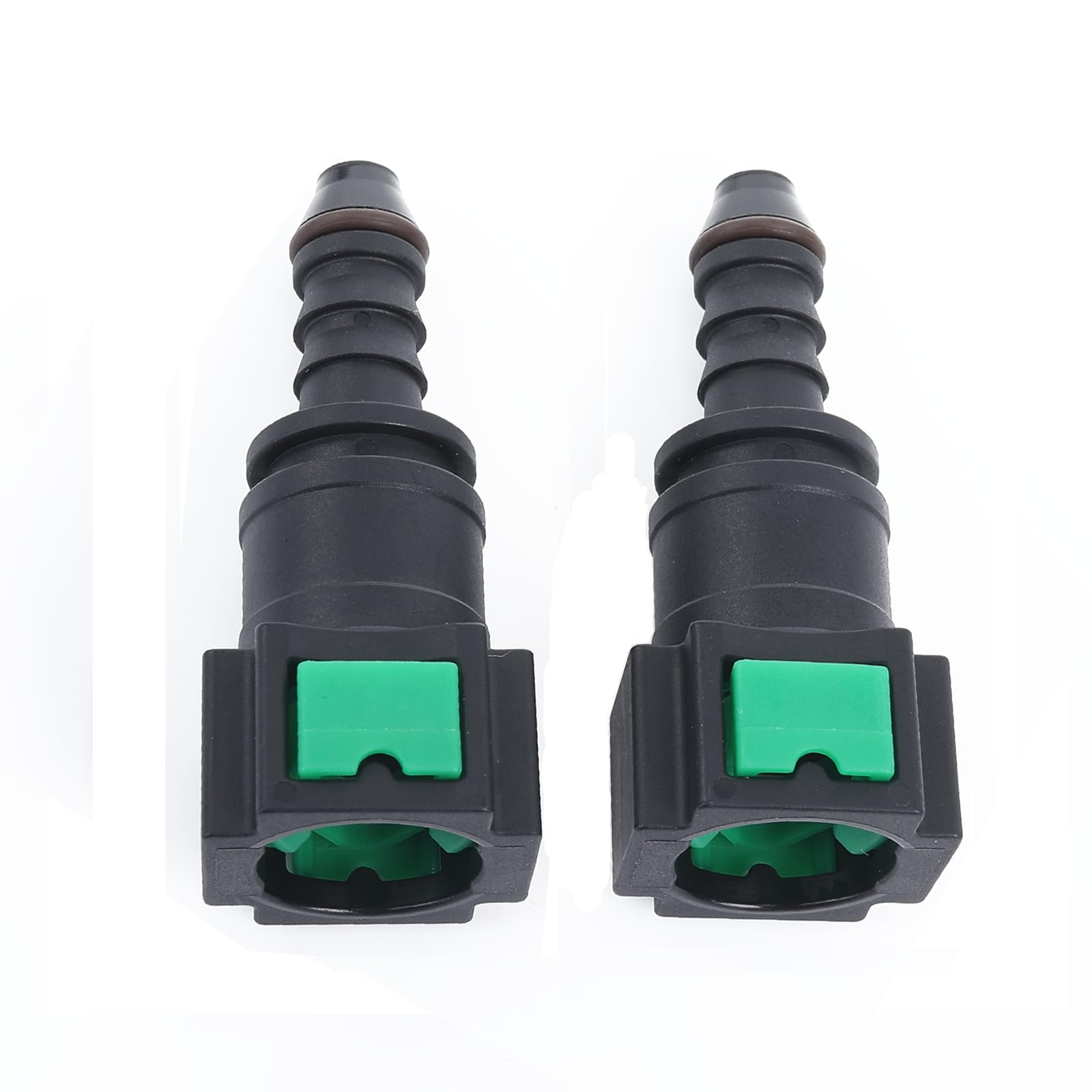
The AC PERFORMANCE quick connector takes a straightforward approach: a plastic body with a female 5/16″ SAE quick-connect port on one side and a male barb sized for 8.5 mm (5/16″ ID rubber or 1/4″ ID nylon) on the other. The FKM O-rings provide compatibility with ethanol, methanol, E85, and diesel fuels, making it more versatile than basic rubber-sealed connectors. Its lightweight plastic construction makes it suitable for low-pressure applications such as oil catch can lines, vent hoses, and return circuits.
Owner reviews highlight its utility on DIY catch can setups for LS engines, where the 5/16″ barb fits valve cover and intake manifold ports cleanly. One reviewer noted that the barb end measures exactly 1/2 inch, which means it fits standard 1/2″ fuel line with a slightly smaller ID but is loose in true 1/2″ push-lock hose — a detail worth verifying before purchase. The tool-free quick-connect interface is convenient for systems that require periodic disconnection.
At its core, this connector is a practical, low-cost solution for non-critical fluid circuits. It does not have the structural margin of a metal fitting for high-pressure fuel injection, but for vacuum lines, catch can plumbing, or low-pressure return paths, it provides a clean, functional connection. The two-pack ensures you have a spare or can complete a paired installation without an extra order.
What works
- FKM O-rings rated for ethanol, methanol, E85, and diesel compatibility
- Tool-free quick-connect design simplifies installation and future service access
- Two-pack offers good value for catch can and low-pressure circuit builds
What doesn’t
- Plastic body lacks the durability of metal fittings for high-pressure or high-heat use
- Barb dimensions may be loose in true 1/2″ push-lock hose — verify fit before assembly
Hardware & Specs Guide
Material Selection Guide
Aluminum 6061-T6 — Best for AN fittings in EFI and performance fuel systems where weight and corrosion resistance matter. Rated for pressures up to 1500 psi with proper flare sealing. Avoid in direct contact with steel in chloride-rich environments without anodizing.
Brass — Ideal for compression fittings on transmission cooler lines, fuel repairs, and coolant circuits. Excellent corrosion resistance and machinability. Not as strong as steel under high torque, but more than adequate for moderate-pressure fluid systems.
Alloy Steel — Used in OEM-style quick connectors where structural rigidity and direct factory replacement fit are needed. Often coated or plated for corrosion resistance. Heavier than aluminum or brass, but offers maximum durability for hard line connections.
Plastic / Nylon — Suitable for low-pressure fuel return lines, vent circuits, and catch can plumbing. Lightweight and inexpensive, but degrades faster under heat cycling and is not recommended for pressurized fuel injection circuits.
Connection Method Reference
AN Flare (37°) — Industry standard for performance fuel systems. Requires a flared tube end and a threaded collar to compress the flare against a male cone. Withstands high pressure and vibration. Compatible with aluminum, steel, and stainless steel tubing.
Barb — Simple push-on design where the hose is forced over serrated ridges. Requires a hose clamp for positive retention. Works with rubber, silicone, and nylon hose. Best for low-to-moderate pressure circuits like returns, vents, and cooler lines.
Compression — Uses a ferrule that is compressed onto the tubing by tightening a nut. Does not require flaring. Ideal for hard line repairs where access to a flaring tool is limited. Effective on brass, copper-nickel, and steel tubing.
Quick-Connect — Uses a retainer clip or internal locking mechanism for tool-free attachment and removal. Common on OEM fuel systems. Convenient for service access, but plastic retainers can be brittle and may break during disconnection if aged or over-tightened.
FAQ
What does 5/16 fuel line connector mean?
Can I use a brass compression fitting on a fuel injection system?
How do I know if I need a barb or a compression fitting?
Are aluminum AN fittings safe for use with E85 fuel?
Will a 5/16 quick-connect work on my 5/16 steel line?
Final Thoughts: The Verdict
For most buyers, the best 5/16 fuel line connector winner is the EVIL ENERGY 6AN fitting because it combines premium 6061-T6 aluminum construction, a reliable 37-degree flare seal, and a price that undercuts specialty brands while delivering verified leak-free performance on LS swaps and EFI retrofits. If you need an exact OEM replacement for a factory steel-to-nylon line, grab the Dorman 800-081 with its lifetime warranty and direct fit validation. And for a budget-friendly hard line repair using compression-to-barb adaptability, nothing beats the Joywayus brass adapter for corrosion resistance and ease of installation on transmission cooler or fuel return circuits.

Certification: BSc in Mechanical Engineering
Education: Mechanical engineer
Lives In: 539 W Commerce St, Dallas, TX 75208, USA
Md Amir is an auto mechanic student and writer with over half a decade of experience in the automotive field. He has worked with top automotive brands such as Lexus, Quantum, and also owns two automotive blogs autocarneed.com and taxiwiz.com.