A pinhole leak in your cooling system can strand you before the temperature needle climbs past halfway. The 5/16-inch coolant hose is the unsung workhorse under your hood, carrying hot antifreeze between the radiator, heater core, and overflow tank. When that factory rubber gives out, you need a replacement that can handle the heat, pressure, and chemical onslaught of modern coolant without softening or cracking.
I’m Amir — the founder and writer behind Four Wheel Ask. I analyze the material composition, burst ratings, and temperature tolerances of automotive hoses to separate genuine upgrades from parts that belong on a shelf.
This guide breaks down the five best options for the 5/16 coolant hose based on real thermal limits, pressure capacity, and flexibility under the hood, so you can pick a hose that lasts longer than the job it’s doing.
How To Choose The Best 5/16 Coolant Hose
Not all 5/16-inch hose is the same under the hood. The material, pressure rating, and wall thickness determine whether the hose lasts the life of the repair or starts weeping coolant inside a year. Here are the three specs that matter most.
Material: Silicone vs. EPDM vs. NBR
Silicone hoses handle the highest sustained heat — up to 350°F — without hardening, but they need reinforcement to resist burst pressure. EPDM rubber is the standard OEM material, good to about 257°F with strong resistance to coolant additives and ozone cracking. NBR is a synthetic rubber best for fuel and oil lines, not primary coolant duty. For pure coolant applications, silicone or EPDM is the right call.
Wall Thickness and Ply Reinforcement
Standard coolant hose has a nominal wall thickness around 0.125 inches. Thicker walls, like the 0.160-inch wall found on premium silicone hose, provide nearly three times the puncture resistance. A 1-ply or 2-ply polyester reinforcement increases burst pressure above 100 psi, which matters in systems with block-mounted heater valves or high-flow water pumps.
Temperature and Pressure Tolerance
Coolant in modern engines can exceed 240°F under load. The hose must maintain flexibility and seal integrity at that temp. Look for a working temperature rating of at least 257°F for rubber, 350°F for silicone. Working pressure should be a minimum of 100 psi. Burst pressure should be at least 300 psi for a safe margin under hot-system pressure spikes.
Quick Comparison
On smaller screens, swipe sideways to see the full table.
| Model | Category | Best For | Key Spec | Amazon |
|---|---|---|---|---|
| KDP Silicone Hose 5ft | Silicone | High-heat cooling systems | 0.160″ wall, 350°F max | Amazon |
| EVIL ENERGY Oil Cooler Hose 5ft | CPE Rubber | Transmission oil cooler lines | 250 psi working, 1000 psi burst | Amazon |
| EVIL ENERGY EPDM Hose 10ft | EPDM Rubber | Radiator overflow and heater | SAE 20R3, 300 psi burst | Amazon |
| CMOOD Fuel Line Hose 25ft | NBR Rubber | High-volume bulk runs | 150 psi working, 25 ft length | Amazon |
| EVIL ENERGY Fuel Hose 20ft | NBR/Polyester | Push-lock fuel and coolant | 300 psi working, 1200 psi burst | Amazon |
In‑Depth Reviews
1. KDP 5/16 Inch Silicone Heater Hose 5ft

This KDP silicone hose brings a 0.160-inch wall thickness that is nearly triple the standard for rubber hose in this size. The 1-ply polyester reinforcement keeps working pressure at 100 psi, but the real advantage is the temperature ceiling of 350°F. That range covers even the hottest return lines from high-compression engines and turbo coolant circuits without hardening or losing seal integrity over time.
The 5-foot length covers most heater core and radiator overflow runs with minimal waste. The rubber-like flexibility at -65°F means it doesn’t fight you during cold-weather installations, and the smooth inner bore reduces flow restriction compared to corrugated hose. It handles water and air transport well, though it should not be used as an oil hose due to the silicone compound’s reaction to petroleum.
For pure coolant duty where heat is the primary enemy, this KDP hose delivers the widest safety margin available in a 5/16-inch package. It is the top pick for builds that see high sustained coolant temperatures or reside in hot climates.
What works
- 0.160-inch wall provides exceptional puncture resistance
- 350°F max temp beats every rubber option in this list
- Remains flexible even below freezing
What doesn’t
- Not compatible with oil or fuel
- 5-foot length may require joining for longer runs
2. EVIL ENERGY Transmission Oil Cooler Hose 5ft
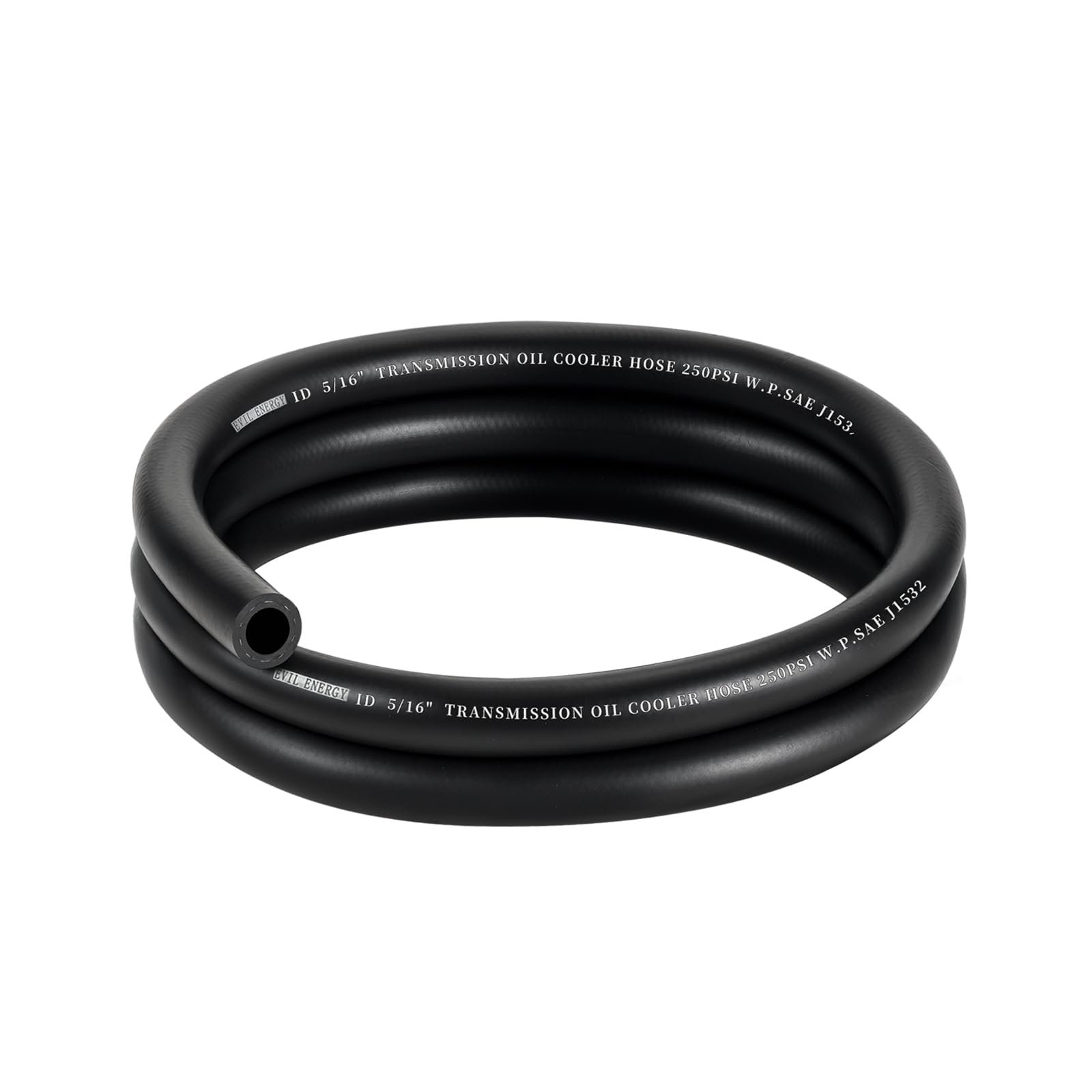
The EVIL ENERGY CPE hose is built for transmission oil cooler circuits where pressure spikes are routine. With a 250 psi working pressure and a 1000 psi burst rating, it laughs at standard cooling system demands. The SAE J1532 certification means it meets strict oil resistance requirements, making it a cross-compatible option for coolant systems with oil-to-coolant heat exchangers.
Chlorinated polyethylene (CPE) provides strong resistance to heat and oil, with a temperature range of -40°F to 257°F. The minimum bend radius of 72mm (about 2.8 inches) is tight enough for routing around engine bay obstructions without kinking. The 5-foot length is standard for single cooler line runs on most passenger vehicles.
This hose is best used in systems where the coolant circuit shares space with oil coolers or where higher working pressure margins provide peace of mind. It is not the best choice for straight radiator-to-engine coolant flow due to the higher cost per foot compared to standard EPDM hose.
What works
- 1000 psi burst pressure is overkill for coolant but reassuring
- Excellent oil and heat resistance from CPE compound
- Tight bend radius fits tight engine bay routing
What doesn’t
- Lower temperature ceiling than silicone at 257°F
- Overbuilt for basic coolant-only applications
3. EVIL ENERGY EPDM Heater Hose 10ft
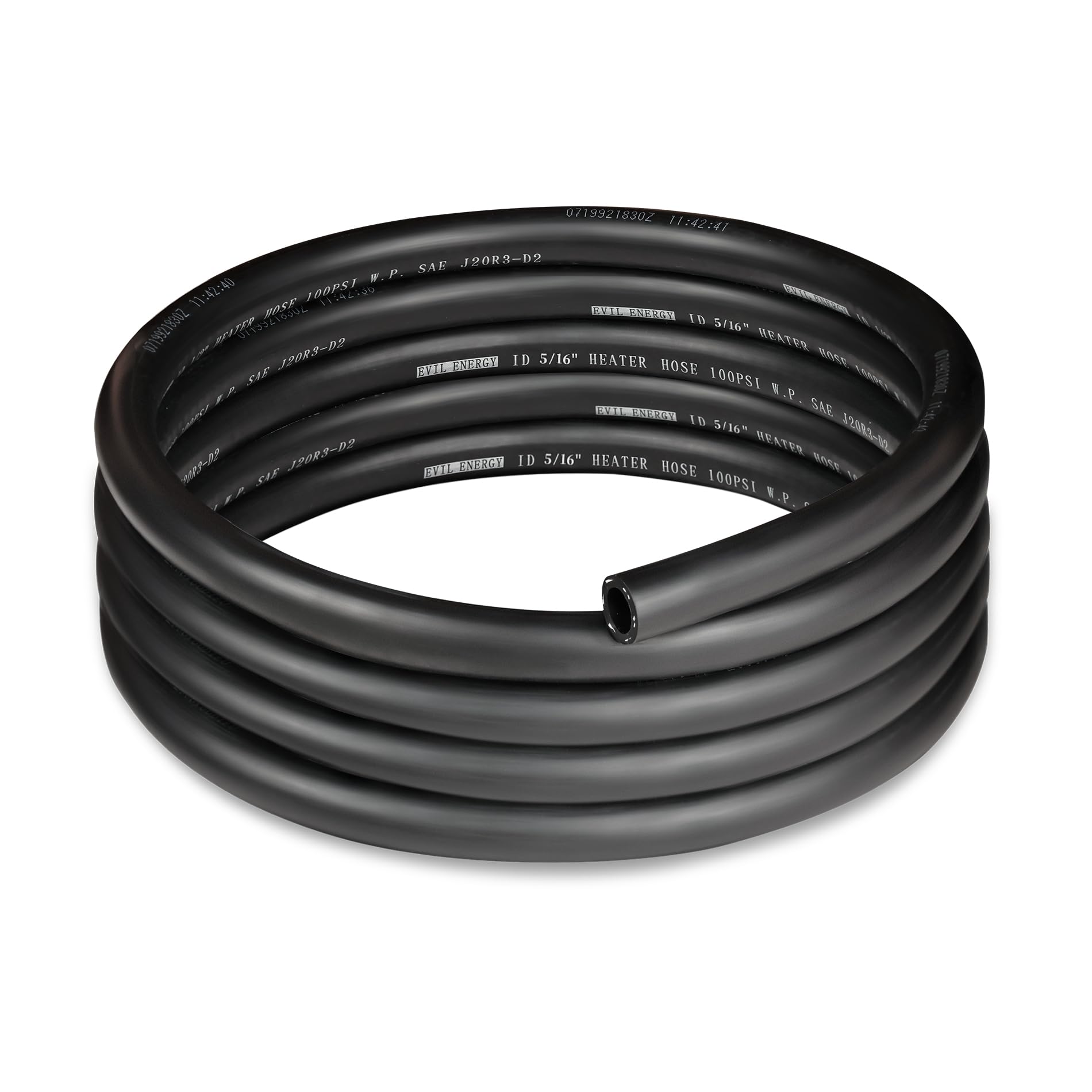
This EVIL ENERGY 10-foot roll of EPDM rubber hose covers common cooling system jobs like radiator overflow lines, heater core connections, and bypass hoses. The SAE 20R3 Standard Wall Class D-2 rating means it meets industry specs for coolant service, with a 100 psi working pressure and 300 psi burst rating that fits most passenger car and light truck systems.
EPDM rubber resists ozone, UV, and coolant additives better than standard rubber, which prevents the cracking that appears on cheap hoses after a couple of seasons. The temperature range of -40°F to 257°F covers the entire coolant operating window. The 0.125-inch nominal wall thickness is standard, and the 10-foot length allows for multiple repairs or one long run without splicing.
The 64mm minimum bend radius is slightly tighter than the CPE hose, making it easier to route around tight corners in the engine bay. For budget-conscious buyers who need a reliable coolant hose without paying for silicone-level heat tolerance, this is the most cost-effective pick.
What works
- 10-foot length covers multiple jobs
- EPDM resists cracking from coolant and weather
- Meets SAE 20R3 standard wall spec
What doesn’t
- 0.125-inch wall is thinner than silicone alternatives
- 257°F max temp may be marginal for high-performance builds
4. CMOOD 5/16 Fuel Line Hose 25ft

The CMOOD NBR fuel hose brings a generous 25-foot length at a very low per-foot cost. Rated at 150 psi working pressure with a 500 psi burst, it handles coolant duty along with fuel, ethanol, and oil mixtures. The 0.2375-inch wall thickness is nearly double the standard fuel hose, providing substantial crush resistance for high-wear areas.
NBR (nitrile butadiene rubber) is designed for petroleum resistance, which makes it a strong candidate for dual-purpose coolant and oil lines. The temperature range of -40°F to 257°F matches the EPDM options. The one downside is that NBR does not resist coolant additives as well as EPDM or silicone over the long term, meaning this hose is best for applications where coolant is not the primary fluid.
Consider this hose if you need a long continuous run for a remote reservoir or a trailer cooling system where fuel/oil compatibility is also required. For pure coolant-only systems, the EPDM alternatives at similar cost provide better additive resistance.
What works
- 25-foot length is unmatched for long or multiple runs
- Thick 0.2375-inch wall resists crushing and abrasion
- Handles fuel, oil, and coolant in one hose
What doesn’t
- NBR is less compatible with coolant over long durations
- Bulky wall reduces flexibility in tight bends
5. EVIL ENERGY Push Lock Fuel Hose 20ft
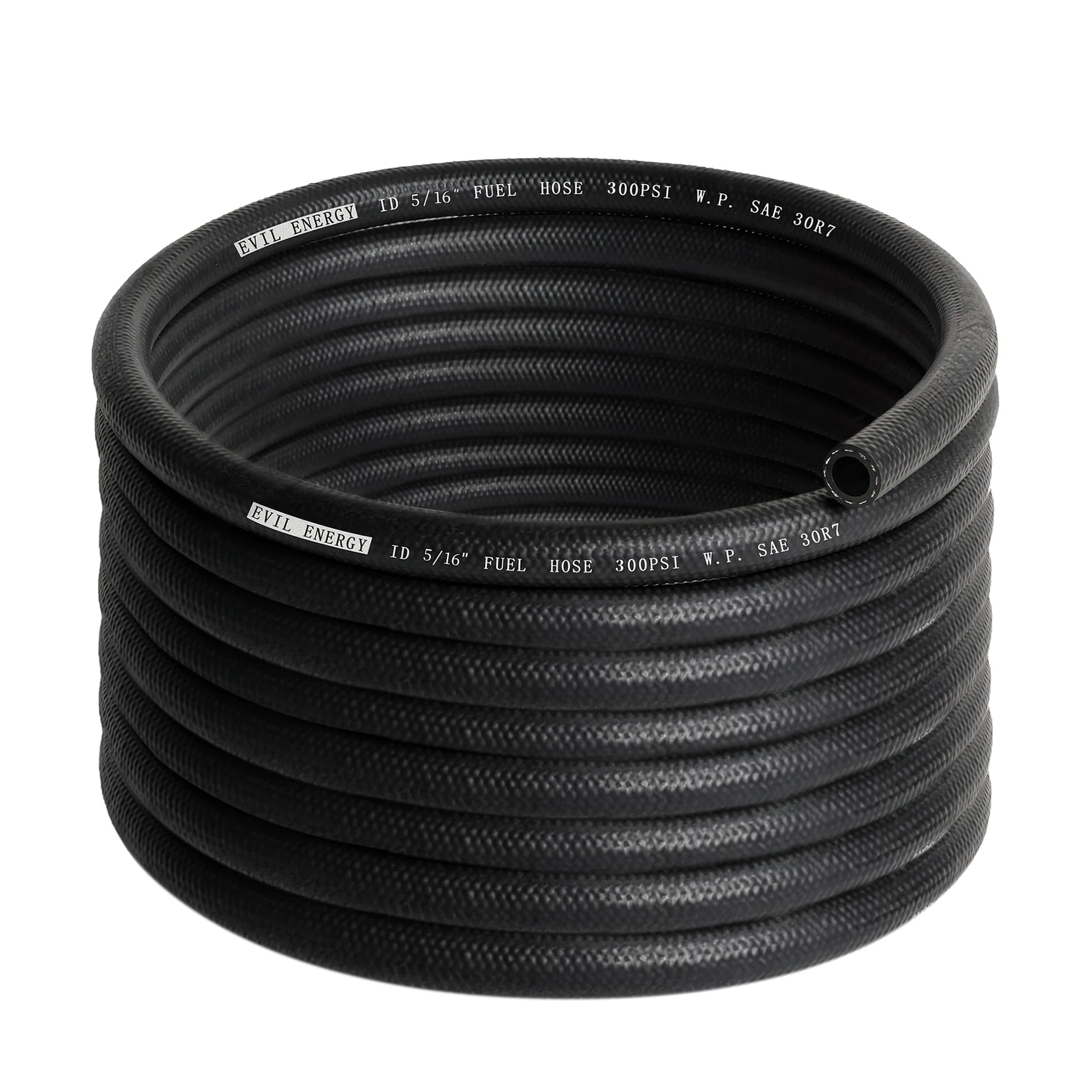
The EVIL ENERGY 30R7 push-lock hose is built for high-pressure fuel systems but crosses over into heavy coolant duty with ease. The 300 psi working pressure and 1200 psi burst rating make it the strongest hose in this lineup by a wide margin. The braided polyester reinforcement prevents ballooning under pressure and gives the hose a robust feel that standard fuel hose lacks.
The NBR compound with polyester fiber layers provides excellent wear resistance and handles temperatures up to 257°F. The 80mm minimum bend radius is wider than the other hoses, so routing through tight engine bays requires more planning. The 20-foot length covers multiple large-scale jobs or one very long return line on a diesel pickup.
This hose is overkill for a simple radiator overflow line, but it is the right choice for high-pressure coolant systems, turbo coolant return lines, or any application where burst safety is the top priority. The push-lock compatibility also means it pairs well with barbed fittings without requiring clamps in low-pressure sections.
What works
- 1200 psi burst rating provides the widest safety margin
- Braided polyester reinforcement resists kinking and swelling
- 20-foot length offers excellent value per foot for heavy use
What doesn’t
- Wider bend radius makes tight routing harder
- Overbuilt and stiffer than silicone or EPDM alternatives
Hardware & Specs Guide
Wall Thickness and Inner Diameter Tolerance
Standard 5/16-inch coolant hose has an inner diameter of 0.3125 inches (8 mm). The outer diameter varies from 0.55 inches on rubber hoses to 0.63 inches on thick-wall silicone. Wall thickness typically ranges from 0.125 inches to 0.160 inches. A thicker wall resists vacuum collapse and puncture from zip ties or sharp engine bay edges. Tolerance of ±0.4 mm on inner diameter matters when the hose must seal over barbed fittings without leaking.
SAE Ratings Explained: 20R3 vs 30R7
SAE 20R3 is the standard rating for coolant and heater hose, specifying resistance to ethylene glycol, water, and heat up to 257°F. SAE 30R7 is a fuel and emission hose rating tested for gasoline, oil, and ethanol blends. While 30R7 hoses often have higher burst pressure ratings, they are not formulated for long-term coolant immersion. Using a 30R7 hose in a dedicated coolant system may lead to inner liner degradation over years of service.
FAQ
Can I use a fuel hose for a coolant line in a pinch?
What is the difference between working pressure and burst pressure in a coolant hose?
How do I measure the inner diameter of an old coolant hose if the size is not printed on it?
Final Thoughts: The Verdict
For most buyers, the 5/16 coolant hose winner is the KDP Silicone Hose because its 0.160-inch wall and 350°F temperature rating provide the widest safety margin for any coolant application. If you want high burst pressure for a transmission cooler or turbo setup, grab the EVIL ENERGY CPE Hose. And for a budget-friendly bulk option that covers multiple repairs, nothing beats the EVIL ENERGY EPDM 10ft Hose.

Certification: BSc in Mechanical Engineering
Education: Mechanical engineer
Lives In: 539 W Commerce St, Dallas, TX 75208, USA
Md Amir is an auto mechanic student and writer with over half a decade of experience in the automotive field. He has worked with top automotive brands such as Lexus, Quantum, and also owns two automotive blogs autocarneed.com and taxiwiz.com.