Four-wheeled off-road riding—whether on an ATV, UTV, or side-by-side—demands head protection built for impact, debris, and long hours in rough terrain. A helmet that looks right but fails on ventilation, weight, or retention can turn an afternoon trail ride into a costly lesson in comfort and safety. The market is flooded with options that claim DOT certification, but the real separation happens in shell construction, foam density, liner quality, and how those components work together under real riding conditions.
I’m Amir — the founder and writer behind Four Wheel Ask. I spend my time analyzing product specifications, studying materials science in helmet construction, and aggregating real owner feedback to help riders cut through marketing claims and select genuine protection for their terrain and budget.
Your search for the best 4 wheeler helmet ends with understanding how DOT certification, shell materials, and ventilation design impact your safety and comfort on every ride.
How To Choose The Best 4 Wheeler Helmet
Selecting a 4 wheeler helmet involves more than picking a color or matching your machine. The right helmet balances certified impact protection, proper fit, ventilation suited to your climate, and weight that won’t fatigue your neck on long rides. Understanding the key variables before you buy saves money and delivers real safety.
Certification Standards
DOT FMVSS 218 is the minimum legal standard in the United States. Helmets carrying this certification have passed impact attenuation, penetration resistance, and retention system tests. ECE 22.05 and the newer 22.06 standards are stricter, requiring additional impact points and rotational force testing. A helmet with dual DOT and ECE certification offers broader protection validation than DOT alone.
Shell Construction and Weight
ABS plastic shells are common at budget and mid-range price points. They provide solid impact resistance but add weight. Polycarbonate and composite shells (glass fiber, carbon-Kevlar blends) reduce weight while maintaining or improving impact dispersal. Lighter helmets reduce cervical spine strain during extended rides and are especially important for younger riders.
MIPS and Rotational Impact Protection
MIPS (Multi-directional Impact Protection System) adds a low-friction layer between the shell and liner that allows the helmet to rotate slightly during angled impacts, reducing rotational forces transmitted to the brain. This technology was originally developed for cycling but has migrated into off-road motorcycle and ATV helmets. It is an upgrade worth prioritizing for aggressive trail riding.
Fit, Sizing, and Liner Quality
Helmets are not one-size-fits-all. Measure your head circumference above the eyebrows and match it to the manufacturer’s sizing chart. Removable, washable liners improve hygiene and extend the helmet’s usable life. Cheek pads that come in multiple thicknesses allow fine-tuning the fit. A helmet that shifts during riding or creates pressure points is a safety liability regardless of certification.
Quick Comparison
On smaller screens, swipe sideways to see the full table.
| Model | Category | Best For | Key Spec | Amazon |
|---|---|---|---|---|
| Troy Lee Designs SE4 MIPS | Full Face Motocross | Trail & Track Riding | 16 vents, MIPS, removable liner | Amazon |
| Fox Racing V Core MIPS | Full Face Off-Road | High-Speed Dirt & Track | MIPS, mag visor release, 13 vents | Amazon |
| BEON Open Face 3/4 | Open Face Retro | Cruiser & Scooter Commutes | Dual visors, quick-release buckle | Amazon |
| ScorpionEXO Covert FX | Full Face Street Fighter | Street & Dual Sport Riding | TCT-Ultra shell, ECE 22.06, speaker pockets | Amazon |
| Bell MX-9 Adventure MIPS | Adventure Dual Sport | ADV & Long-Distance Touring | MIPS, peak visor, Cardo ready | Amazon |
| O’Neal 5SRS Wingman | Full Face Motocross | Aggressive Trail & Track | Lightweight shell, vivid graphics | Amazon |
| O’Neal 1SRS Solid | Full Face Off-Road | Entry-Level Off-Road Riding | Solid build, storage bag included | Amazon |
| Auboa AU-T801 | Full Face Race | Budget All-Rounder | DOT, dual visors, lightweight ABS shell | Amazon |
| ILM Z705 Youth | Youth Full Face | Kids ATV & Dirt Bike | DOT & ECE, 2.4 lbs, 4-in-1 kit | Amazon |
| Senhill Motocross | Full Face Motocross | Entry-Level Youth & Adult | DOT, 950g, goggles & gloves included | Amazon |
| OUMURS HD-806 | Full Face Off-Road | Budget ATV & Moped Riding | DOT, quick-release buckle, full kit | Amazon |
In‑Depth Reviews
1. Troy Lee Designs SE4 Polyacrylite MIPS
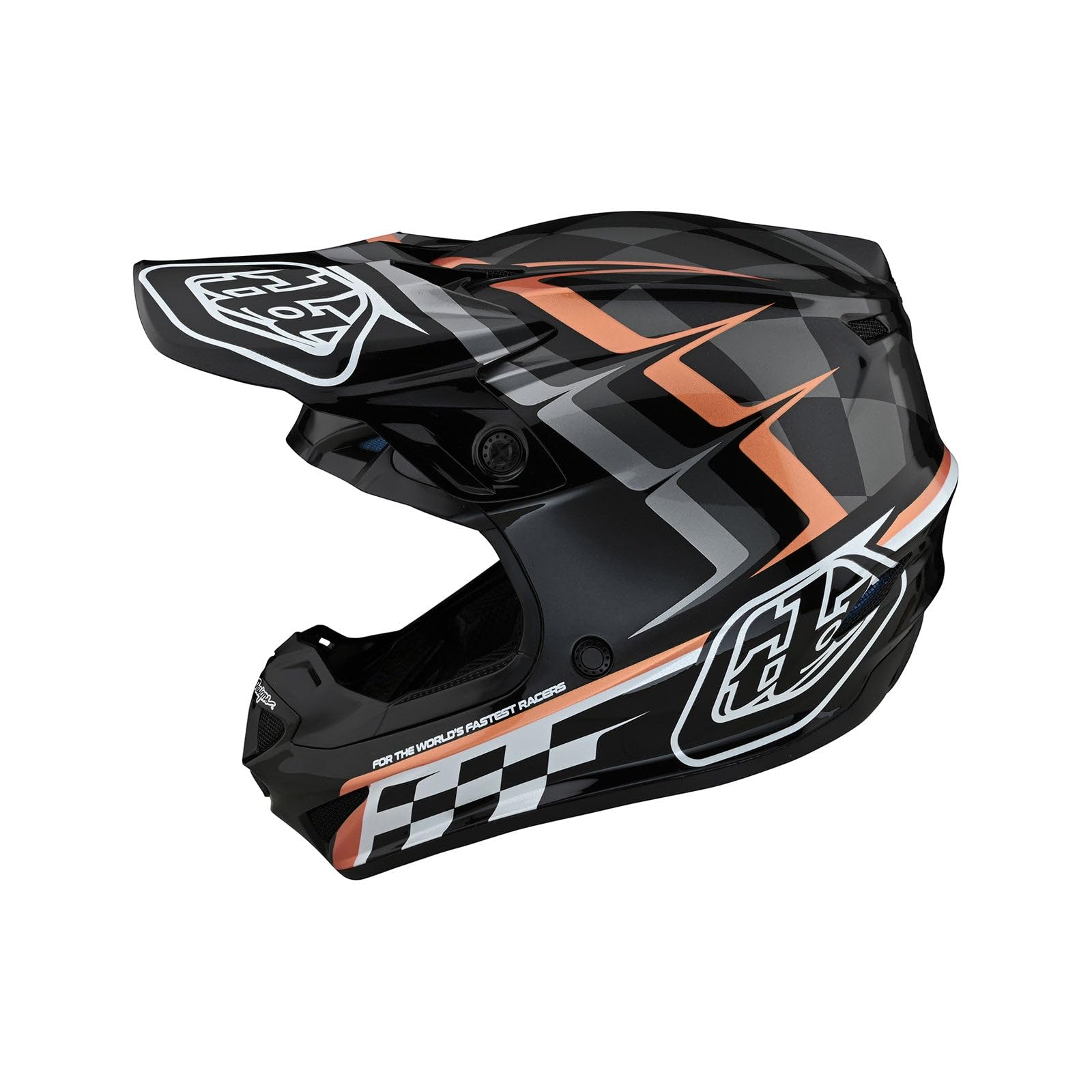
The SE4 Polyacrylite sits at the intersection of race-bred engineering and accessible pricing. Troy Lee Designs brings four decades of motocross heritage into this full-face helmet, which features a lightweight MIPS system aimed at reducing rotational forces during angled impacts—a critical upgrade over standard DOT-only lids. The 16 cooling vent ports, combined with an EPP collarbone ventilation system in the chin bar, indicate a design philosophy focused on rider endurance during sustained aggressive riding.
Owner reports consistently highlight the extended rear coverage that boosts confidence on trails and in technical sections where roost and branches are real hazards. The fit runs snug out of the box and conforms after a few rides, with interchangeable cheek pads available for fine-tuning. The visor stays planted at speed without catching wind, a detail that matters when transitioning between standing and seated positions on rough terrain.
What separates the SE4 from cheaper alternatives is the integration of MIPS at a price point where most manufacturers omit it. Riders moving from budget helmets report immediate relief from wind noise and pressure points. The trade-off is a strap system that uses a standard double-D ring rather than a quick-release—a minor inconvenience for significantly better retention security under impact.
What works
- MIPS impact technology at a mid-premium price
- Excellent ventilation for hot terrain riding
- Extended rear coverage improves trail safety
What doesn’t
- Double-D ring strap lacks quick-release convenience
- Initial fit is very tight before break-in
2. Fox Racing V Core MIPS

Fox Racing’s V Core MIPS represents a deliberate step forward in off-road helmet design, combining injection-molded polycarbonate and ABS construction with a magnetic visor release system engineered to detach during a crash and reduce neck strain. The helmet carries both DOT FMVSS 218 and ECE 22.06 certifications—a dual-standard approach that provides assurance beyond the legal minimum. Nine intake and four exhaust vents deliver airflow that owners describe as transformative during summer riding.
The magnetic visor release is not a gimmick. In a crash where the visor catches on terrain or the vehicle roll cage, the system is designed to break away cleanly rather than transferring rotational torque to the neck. This feature, combined with MIPS, makes the V Core a strong choice for riders who push hard on technical trails where high-sides and endos are realistic possibilities. The shell is available in four sizes, and the EPS comes in five densities to accommodate different head geometries.
Feedback from owners who pair this helmet with high-power e-bikes and 72V conversion builds indicates that the mouth vent effectively prevents fogging even at speeds exceeding 35 mph. The initial tightness reported across many reviews resolves after roughly five rides, after which the liner conforms comfortably. Riders seeking a quick-release chin strap should note the V Core uses standard double-D rings, consistent with its off-road racing pedigree.
What works
- Dual DOT and ECE 22.06 certification
- Magnetic visor reduces neck injury risk in crashes
- High airflow with 13 ventilation ports
What doesn’t
- Significant break-in period for initial tightness
- No quick-release chin strap
3. BEON Open Face 3/4 Retro Helmet

The BEON B-120 takes the classic 3/4 open-face profile and equips it with modern safety engineering and dual-visor convenience. It carries both DOT FMVSS 218 and ECE 22.05 certification, placing it above many retro-styled helmets that prioritize aesthetics over compliance. The advanced thermoplastic shell is paired with high-density EPS foam, and the Click-n-Secure quick-release buckle allows one-gloved operation—a practical advantage for riders who frequently remove their helmet during short commutes or trail stops.
What sets the BEON apart in the open-face category is its retractable inner sun visor, which eliminates the need to carry separate sunglasses or swap shields when transitioning from shade to direct sunlight. The package also includes a longer outer visor for high-speed use that provides additional face protection. The removable and washable mesh inner liner, combined with tan PU leather accents, delivers a premium feel that owners consistently describe as exceeding expectations for a helmet at this level.
Riders running Vespas, cafe racers, and bobbers report that the round retro silhouette pairs naturally with vintage-style motorcycles while delivering modern safety. The shell is reasonably light for an open-face design, and the metal visor base can be adjusted without tools. The primary constraint is that the 3/4 design leaves the jaw unprotected, so riders on high-speed highways or technical off-road terrain should consider a full-face alternative.
What works
- Retractable inner sun visor eliminates eyewear swaps
- Quick-release buckle works smoothly with gloves
- Dual DOT and ECE certification
What doesn’t
- Open-face design provides no jaw protection
- Not suited for high-speed or off-road use
4. ScorpionEXO Covert FX Full Face

The ScorpionEXO Covert FX blends street-fighter aesthetics with some of the most advanced safety engineering in its class. The TCT-Ultra composite shell uses a proprietary blend of fibers to achieve a weight of roughly 2.9 pounds for a medium while maintaining superior impact dispersal properties. The helmet carries both DOT FMVSS 218 and the demanding ECE 22.06 certification, the latter requiring additional impact points and rotational force testing that exceeds previous standards. The aero-tuned ventilation system features a large top intake and a dual-position mouth vent that functions as a defroster in its first position and adds cabin ventilation in the second.
Communication-ready speaker pockets accommodate 50mm Bluetooth speakers, making the Covert FX a strong candidate for riders who navigate with GPS or stay connected on group rides. The KywikWick C moisture-wicking liner helps regulate temperature across varying conditions, and the KwikFit cheek pads are sculpted to accommodate eyeglasses without pressure points. The included dark smoke Everclear fog-free shield provides additional value, and the tool-less shield removal system simplifies swapping between clear and tinted options.
Owner feedback consistently praises the fit retention after initial break-in, with several reviews noting that the helmet conforms perfectly to head shape after a few rides. The noise level is notably low for a full-face street helmet, though some riders report wind whistle above 50 mph that requires earplugs. The front vent control is difficult to reach while riding, and the top vent uses an unintuitive left-right slider that leaves some owners unsure whether it is open or closed.
What works
- Extremely lightweight composite shell reduces fatigue
- ECE 22.06 certified with added rotational testing
- Bluetooth speaker pockets and glasses-friendly cheek pads
What doesn’t
- Vent controls are difficult to operate while riding
- Significant wind noise above 50 mph
5. Bell MX-9 Adventure MIPS

The Bell MX-9 Adventure MIPS is a dual-sport helmet designed for riders who split time between pavement and dirt. It integrates MIPS rotational impact protection into a platform that accommodates both off-road goggles and street shields, with a peak visor that shades the eyes during standing trail riding. The helmet conforms to DOT FMVSS 218 standards and is designed to accept Cardo communication systems, making it a practical choice for adventure touring where navigation and group communication are essential.
Owner feedback places the MX-9 among the best values in the adventure helmet category, with particular praise for its airflow performance in hot and humid conditions. The fit is optimized for riders with Western-shaped head profiles, and the plush liner provides a comfortable interface during multi-hour rides. The visor is designed to work with goggles, which is a key requirement for off-road sections where dust and debris are constant hazards.
The peak visor catches wind above 40 mph, generating lift and noise that require ear protection on longer pavement stretches. The cheek pads are reported to be stiff and slow to conform, and some owners find themselves between sizes—a common issue with Bell’s sizing that makes trial fitting advisable. Ventilation cannot be fully closed except through the mouth vent, limiting cold-weather versatility.
What works
- Strong airflow ideal for hot-weather adventure riding
- MIPS protection at a value-oriented price point
- Compatible with goggles and communication systems
What doesn’t
- Peak visor generates lift and noise above 40 mph
- Cheek pads are stiff and slow to break in
6. O’Neal 5SRS Wingman

The O’Neal 5SRS Wingman brings a distinct visual identity to the full-face motocross category with its flying tiger motif and aggressive sculpting, but the substance behind the styling is equally serious. The shell construction prioritizes weight reduction without compromising impact protection, and the ventilation system delivers airflow that owners describe as well-calibrated for trail riding without excessive noise. The included storage bag adds practical value for riders who transport their gear between riding areas.
Owner feedback emphasizes the importance of consulting O’Neal’s sizing chart carefully. Riders with a 23.5-inch head circumference who initially ordered a large reported excessive cheek pressure that resolved after sizing up to XL. The retention system holds securely, and the liner provides consistent comfort across different head shapes once the correct size is identified. The graphics are applied with UV-resistant materials that hold up to sun exposure and repeated cleaning.
Ventilation is described as balanced—sufficient airflow to prevent overheating during sustained climbs without creating distracting noise levels at moderate speeds. The shell weight is competitive with helmets in the premium segment, and the overall build quality aligns with O’Neal’s reputation in motocross. The primary limitation is the lack of MIPS or an equivalent rotational impact system, which places it a step behind helmets like the Troy Lee SE4 or Fox V Core in comprehensive safety engineering.
What works
- Distinctive graphics with UV-resistant finishes
- Well-balanced ventilation for trail riding
- Competitive weight for a full-face shell
What doesn’t
- No MIPS rotational impact protection
- Sizing runs small; ordering up is necessary
7. O’Neal 1SRS Solid

The O’Neal 1SRS Solid represents the entry point into O’Neal’s off-road helmet lineup without sacrificing the brand’s core construction standards. It uses an ABS and EPS composite shell built to meet DOT requirements, with a design language that mirrors O’Neal’s higher-tier models. The field of view is generous, and the helmet includes a thick storage bag that owners note as a surprisingly premium addition at this level.
Owner reports indicate that the 1SRS fits true to size with a comfortable liner that accommodates a range of head shapes. The ventilation is functional if not class-leading, providing adequate airflow for recreational trail riding and short to moderate session lengths. Riders pairing this helmet with high-speed e-bikes and 84V builds report that it feels secure and stable, though they note it is heavier than dedicated downhill or motocross helmets.
The value proposition here is straightforward: a solid, no-frills full-face helmet from a reputable motocross brand at a price that undercuts most competitors. The trade-offs are the absence of MIPS, a heavier overall weight, and a less sophisticated vent system compared to premium options. For riders on a tight budget who prioritize brand reliability and basic DOT protection, the 1SRS delivers exactly what it promises without pretending to be something it is not.
What works
- Reputable motocross brand at a budget-friendly price
- Generous field of view for situational awareness
- Thick storage bag adds practical value
What doesn’t
- Heavier than premium competitors
- No MIPS rotational impact system
8. Auboa AU-T801 Full Face

The Auboa AU-T801 enters the market as a budget-conscious full-face helmet that does not skip DOT FMVSS 218 certification. The shell combines ABS engineering material with stable EPS foam to deliver impact resistance at a weight that owners describe as surprisingly manageable for extended rides. The integrated fin and shell design contributes to aerodynamic stability, and the helmet comes with both a colorful tinted visor and a replacement clear visor for day-to-night riding.
Owner feedback highlights the AU-T801’s value proposition. Multiple riders report surviving crashes with minimal head impact, crediting the helmet’s structural integrity. The visor lock design reduces wind noise compared to cheaper models, and the multiple vents promote airflow that prevents excessive heat buildup during summer rides. The removable and washable liner adds hygiene convenience that is often missing at this price tier.
The chin strap protection design has been identified as a weak point, with some owners reporting cosmetic damage to the outer shell within the first two weeks of use. Visor fogging is a recurring complaint, particularly in cooler conditions, suggesting that an anti-fog treatment is a recommended addition. The sizing runs true for most head shapes, but riders with oval head profiles may experience pressure points on longer rides.
What works
- DOT certified at a very accessible price point
- Includes clear and tinted visors for dual-condition use
- Removable and washable liner for hygiene
What doesn’t
- Chin strap design can cause cosmetic shell damage
- Visor fogging requires aftermarket anti-fog treatment
9. ILM Z705 Youth ATV Helmet

The ILM Z705 is a youth-focused full-face helmet that carries both DOT FMVSS 218 and ECE 22.06 dual certifications—an unusual combination in the junior size bracket. The ABS shell and high-density EPS padding are engineered for impact absorption, and the net weight of roughly 2.4 pounds is significantly lighter than adult equivalents, reducing cervical spine strain on younger riders. The 4-in-1 bundle includes motorcycle gloves, a balaclava face mask, and UV-resistant goggles with sponge cushioning.
Owner reports consistently confirm that the sizing chart is accurate, with the medium fitting a 7-year-old riding a 125cc ATV perfectly. The quick-release buckle makes it easy for children to put on and remove the helmet independently, and the removable and adjustable sun visor allows parents to fine-tune visibility as the child grows. The ventilation system uses multiple ports to keep young riders cool during active sessions.
The documentation does not specify a minimum age recommendation, and some parents report that the helmet is too heavy for children under five. The included goggles have lens retention issues, and the gloves run oversized compared to the helmet sizing. For riders aged six and up, the Z705 delivers dual-certified protection at a weight that respects the physical limitations of younger necks.
What works
- Dual DOT and ECE 22.06 certification for youth riders
- Lightweight design reduces neck strain
- Includes gloves, goggles, and balaclava
What doesn’t
- Too heavy for children under five years old
- Goggle lens retention is below par
10. Senhill Motocross Helmet

The Senhill Motocross Helmet is engineered for riders seeking a lightweight entry-level full-face option, weighing in at approximately 950 grams. The shell is constructed from ABS engineering material with a high-density EPS buffer layer, and the helmet carries DOT FMVSS 218 certification. The package includes goggles and cross-country gloves, providing a complete protective setup out of the box.
Owner feedback indicates that the helmet fits true to size for most adult and youth riders, with the large size accommodating round head shapes particularly well. The lightweight construction is the standout feature, with riders noting that they barely feel the helmet during extended sessions. The design generates frequent compliments, and the visor provides adequate coverage for trail and track conditions.
The included goggles are a weak point—they use a rubber lining instead of foam, which allows dust to reach the eyes during dusty rides. The sizing runs slightly large for some head shapes, requiring careful measurement before purchase. Despite these compromises, the Senhill delivers a functional DOT-certified helmet at a price that makes it accessible for riders who need basic protection without the financial commitment of premium brands.
What works
- Very lightweight at 950 grams for all-day comfort
- DOT certification at an entry-level price
- Includes goggles and gloves for complete setup
What doesn’t
- Included goggles have poor dust resistance
- Sizing runs slightly large for some head shapes
11. OUMURS HD-806 Adult ATV Helmet

The OUMURS HD-806 is a full-face ATV helmet built around an ABS shell and EPS liner that meets DOT FMVSS 218 safety standards. It comes as a complete kit including goggles, gloves, and a face mask, allowing riders to suit up without making separate accessory purchases. The multiple air vents are designed to channel fresh air through the shell during summer riding, and the quick-release buckle simplifies donning and doffing.
Owner feedback emphasizes the value of the included accessories, with the gloves described as being of notably higher quality than typical bundle inclusions. The goggles provide UV resistance and wind protection, and the face mask adds coverage for dusty trail conditions. The design is modern and visually cohesive, and the matte black finish resists visible wear from regular use.
The sizing runs small compared to the stated measurements. Several owners report needing to size up from XL to 2XL, and even the largest size feels tight for riders with broader head profiles. The weight of roughly 2.6 kilograms places it on the heavier side of the full-face category, which may cause fatigue on extended rides. Correct sizing is essential before purchase, and the return policy should be reviewed in advance.
What works
- Complete kit with goggles, gloves, and mask
- DOT certified ABS and EPS construction
- Multiple vents improve airflow in summer conditions
What doesn’t
- Sizing runs small; order at least one size up
- Heavy weight causes fatigue on longer rides
Hardware & Specs Guide
Shell Materials
The outer shell is the first line of defense against impacts. ABS plastic is the most common material at budget and mid-range price points—it offers solid puncture resistance but adds weight. Polycarbonate shells reduce weight while maintaining strength, and composite blends (glass fiber, carbon, Kevlar) used in premium helmets like the ScorpionEXO Covert FX provide the best strength-to-weight ratio. Shell material directly affects how much fatigue your neck experiences during multi-hour rides.
EPS Foam Liner
Expanded Polystyrene (EPS) foam sits between the shell and your head, absorbing impact energy by crushing on controlled deformation. Multiple EPS densities within a single helmet allow engineers to tune impact absorption for different impact zones. Some helmets use a single-density EPS, while advanced models use multi-density foam layers. The EPS is usually paired with a comfort liner that is removable and washable—a feature that significantly extends the helmet’s usable life.
MIPS Technology
MIPS (Multi-directional Impact Protection System) adds a low-friction layer between the EPS liner and the shell. During an angled impact—the most common type in real-world crashes—the MIPS layer allows the helmet to rotate slightly relative to the head, reducing rotational forces that can cause brain injuries. Helmets like the Troy Lee SE4 and Fox V Core integrate MIPS without adding significant weight or bulk, making it a practical upgrade for trail and track riders.
Ventilation Systems
Ventilation design separates comfortable helmets from sweaty ones. Intake vents at the forehead and chin bar channel fresh air across the rider’s head, while rear exhaust vents create negative pressure that pulls hot air out. The number of vents is less important than their placement and the internal channeling that routes air over the scalp. Helmets with closable vents offer cold-weather versatility, while fixed vents prioritize maximum airflow for warm-climate riding.
Retention Systems
The chin strap and buckle are the final link between helmet and rider. Double-D ring straps are the gold standard for racing applications—they are simple, mechanically reliable, and cannot accidentally loosen during a crash. Quick-release buckles offer convenience for street and recreational riders, with micro-ratchet and push-button designs that operate smoothly with gloved hands. The BEON Open Face’s Click-n-Secure buckle is an example of a well-executed quick-release system.
Certification Standards
DOT FMVSS 218 is the legal minimum for helmets sold in the United States. ECE 22.05 and the newer 22.06 are international standards with more rigorous testing protocols, including additional impact points and rotational force testing. Snell certification is voluntary and is the most demanding standard, requiring multiple impacts at higher energy levels. A helmet carrying dual DOT and ECE certifications has passed a broader range of tests than DOT alone, providing greater confidence in real-world performance.
FAQ
What does DOT certification actually mean for a 4 wheeler helmet?
How should a 4 wheeler helmet fit for maximum safety?
Is MIPS worth the extra cost in an off-road helmet?
Can I use a motorcycle helmet for ATV riding?
When should I replace my 4 wheeler helmet?
Final Thoughts: The Verdict
For most riders, the best 4 wheeler helmet winner is the Troy Lee Designs SE4 Polyacrylite MIPS because it combines proven rotational impact protection, excellent ventilation, and race-bred ergonomics at a price that undercuts competitors with similar safety features. If you need the ultimate in lightweight composite engineering and ECE 22.06 certification, grab the ScorpionEXO Covert FX. And for youth riders or those on a tight budget, nothing beats the dual-certified value of the ILM Z705 for protecting younger necks without breaking the bank.

Certification: BSc in Mechanical Engineering
Education: Mechanical engineer
Lives In: 539 W Commerce St, Dallas, TX 75208, USA
Md Amir is an auto mechanic student and writer with over half a decade of experience in the automotive field. He has worked with top automotive brands such as Lexus, Quantum, and also owns two automotive blogs autocarneed.com and taxiwiz.com.