Choosing the right 3-inch air intake pipe comes down to understanding material composition, bend geometry, and how each design affects flow dynamics underhood. Many builds get held back by thin-wall tubing or overly tight radii that disrupt air velocity before it reaches the throttle body.
I’m Amir — the founder and writer behind Four Wheel Ask. My approach focuses on comparing manufacturer specifications, metallurgy, reinforcement layers, and real owner feedback across hundreds of installation reports to separate durable components from those that introduce restriction or premature wear.
After reviewing owner feedback on dozens of builds, the best 3-inch air intake pipe depends on material choice, bend radius, and application fit quality.
How To Choose The Best 3-Inch Air Intake Pipe
Selecting an intake pipe requires more than matching diameter. You need to evaluate material grade, wall thickness, bend radius, and whether the pipe will be welded, clamped, or used with silicone couplers. Each factor influences airflow efficiency and long-term reliability under engine bay heat and vibration.
Material Composition and Wall Thickness
T6061 aluminum is the industry standard for custom intake and intercooler piping because it resists corrosion, welds cleanly, and maintains strength at elevated temperatures. Wall thickness around 0.071 inch (1.8 mm) provides enough rigidity for boosted applications without adding unnecessary weight. Thinner walls risk deformation under clamp pressure or fatigue from engine movement.
Bend Radius and Airflow
Mandrel bending preserves the full inner diameter through the curve, preventing velocity loss. A 1.5D radius (1.5 times the pipe diameter) offers a good balance between smooth transition and compact fitment. Tighter 1.3D bends work in confined spaces but introduce slightly more turbulence. Silicone elbows provide flexibility for routing around obstacles and absorb vibration that metal pipes transmit directly to the intake system.
Length and End Configuration
Straight sections allow custom cutting and welding for exact length requirements. Pre-bent elbows with modest leg lengths simplify joining two points without multiple couplers. Pipes with bead-rolled ends improve hose retention under boost, while smooth-end sections require aftermarket bead forming or T-bolt clamps to prevent blow-off.
Quick Comparison
On smaller screens, swipe sideways to see the full table.
| Model | Category | Best For | Key Spec | Amazon |
|---|---|---|---|---|
| KRD PERFORMANCE 24″ Straight | Premium | Custom long-run builds | 24 in length, T6061, 0.071 in wall | Amazon |
| AC PERFORMANCE Silicone Ducting | Premium | Flexible routing & heat zones | 1 m length, silicone coated, 572 degF rated | Amazon |
| Podavelle 90 Degree Elbow | Mid-Range | Turbo and intercooler routing | 3 in OD, 1.5D radius, brushed, 0.071 in wall | Amazon |
| AC PERFORMANCE 45 Degree Elbow | Mid-Range | Tighter offset transitions | 1.3D radius, 0.071 in wall, T6061 | Amazon |
| Podavelle 45 Degree Elbow | Mid-Range | Clean angled pipe joins | 1.5D radius, 3.94 in leg, brushed finish | Amazon |
| Haturmyko Silicone 90 Elbow | Mid-Range | Vibration dampening connections | 8 in legs, 4-ply, -60 to 300 degF range | Amazon |
| ETL INDUSTRIES Straight 18″ | Budget | Entry-level custom sections | 18 in length, polished T6061, bead ends | Amazon |
In-Depth Reviews
1. KRD PERFORMANCE 24″ Straight Aluminum Pipe

The KRD PERFORMANCE straight section delivers the longest single-piece option in this lineup at 24 inches, making it ideal for builds that need a continuous run without splicing multiple shorter tubes. The 0.071-inch wall thickness matches industry-standard intercooler piping, providing enough material for welding and bead forming without excessive weight. Multiple owner reports confirm the brushed finish resists corrosion well in engine bay environments.
Mandrel construction ensures the inner diameter remains consistent along the entire length, which matters for both turbo inlet and intercooler pipe applications where flow restriction must be minimized. The 6061 alloy welds cleanly with TIG or MIG processes, and several users noted they cut sections for custom radiator hose adapters with clean results. No kinks or deformations were reported across verified purchases.
For anyone building a custom intake or intercooler system from scratch, this pipe provides maximum flexibility to cut, weld, and fit without compromise. The length alone reduces the number of couplers needed, which cuts potential leak points. Just plan for bead rolling or use T-bolt clamps at connection points since the ends come smooth.
What works
- Full 24-inch length reduces coupler count
- Mandrel-straight with consistent wall thickness
- Brushed finish resists engine bay corrosion
What doesn’t
- No pre-formed bead on either end
- Thin wall may require careful welding technique
2. AC PERFORMANCE Silicone Flexible Air Ducting

This silicone-coated fiberglass ducting fills a different role than rigid aluminum pipes — it excels where routing requires tight bends, vibration isolation, or heat shielding that metal cannot provide. The 1-meter length offers generous material to snake around obstructions, and the working temperature range from well below freezing to 572 degrees Fahrenheit means it holds up near turbo housings and exhaust manifolds.
Owner feedback highlights its use on diesel heater inlets, turbo inlet ducts, and intercooler charge pipe transitions with boost levels around 9 PSI without collapse. The smooth interior promotes reasonable flow, though the convoluted exterior can create minor surface friction compared to a mandrel-bent aluminum tube. Several users mentioned the need for 2.5-inch clamps to achieve a secure seal on 3-inch ports.
One important caution from verified buyers involves the fiberglass particles released during cutting — proper respiratory protection and gloves are essential. Once installed, the material handles heat and pressure well, but it requires support along its length to prevent sagging in high-vibration environments. This ducting is best suited for cold-air induction, brake cooling, and other low-to-moderate pressure applications where flexibility outweighs absolute flow efficiency.
What works
- Extreme temperature range suits hot engine bay use
- Flexible enough for complex routing paths
- Holds up to moderate boost without collapsing
What doesn’t
- Fiberglass dust requires careful handling during cutting
- Needs external support for long unsupported spans
3. Podavelle 90 Degree Aluminum Elbow
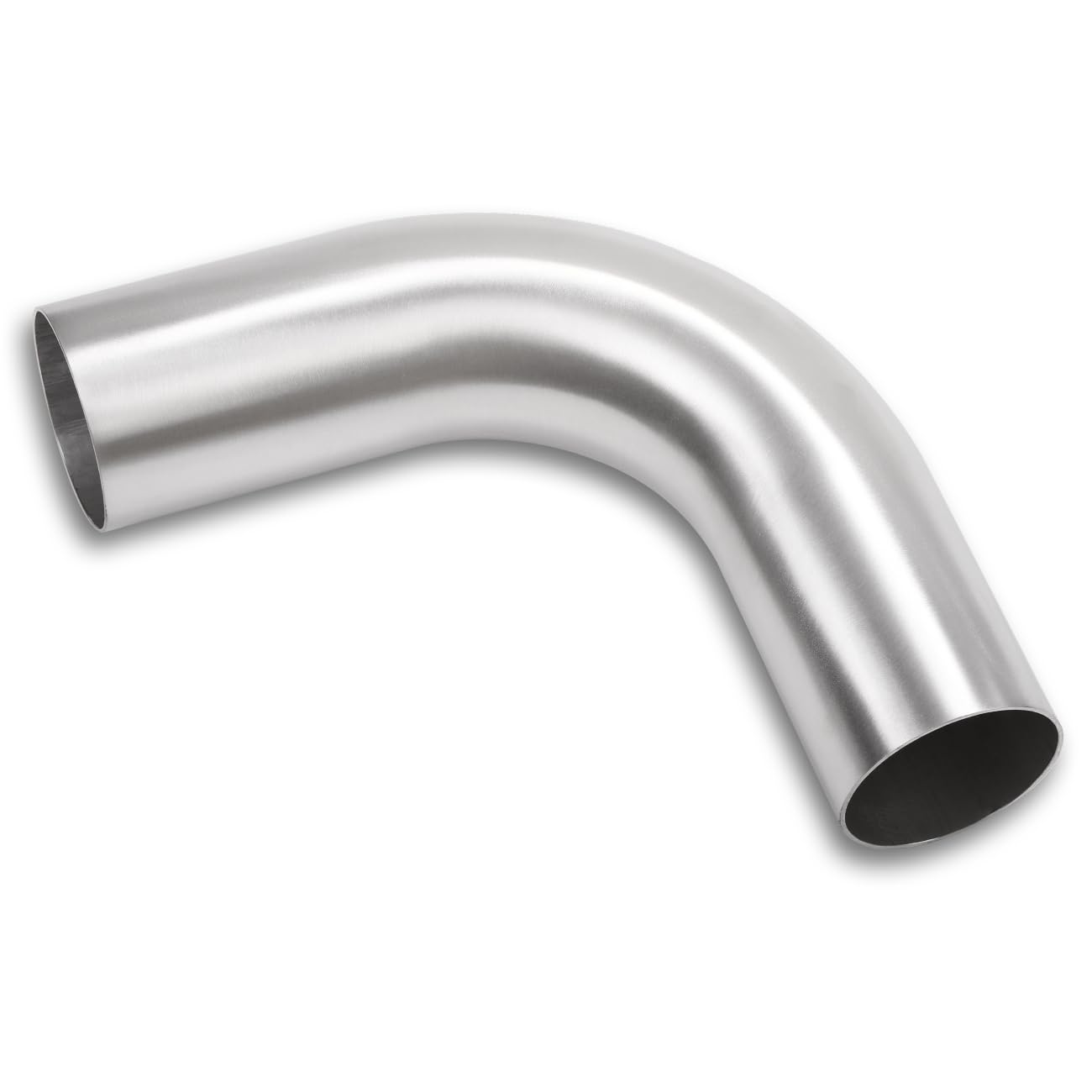
The Podavelle 90-degree elbow delivers a smooth mandrel bend with a 1.5D centerline radius that maintains airflow velocity through the turn better than tighter crimped alternatives. The 3.94-inch straight legs on each side provide adequate engagement for silicone couplers, and the brushed finish blends well with aftermarket engine bay aesthetics. Verified buyers consistently note the clean inner surface and consistent wall thickness.
Construction from T6061 aluminum offers good corrosion resistance and weldability. Multiple owners reported using this pipe for intercooler routing, turbo outlet connections, and even custom exhaust applications where a tight radius was needed. The 0.071-inch wall thickness is standard for this category and provides enough meat for bead rolling without becoming brittle.
One area where this pipe stands out is the quality of the mandrel bend — no crimping or wall thinning was reported at the apex of the curve. For forced induction setups where every bit of flow matters, this elbow introduces minimal turbulence. Just verify your centerline clearance before ordering since the 1.5D radius occupies more space than a tighter 1.3D alternative.
What works
- Smooth mandrel bend preserves inner diameter
- Brushed finish resists fingerprints and corrosion
- T6061 alloy welds and machines easily
What doesn’t
- Short leg length limits coupler overlap
- 1.5D radius may not fit tight engine bays
4. AC PERFORMANCE 45 Degree Aluminum Elbow

AC PERFORMANCE offers a well-executed 45-degree elbow with a 1.3D radius that fits into tighter packaging constraints than the more gradual 1.5D alternatives. The 4-inch leg length provides decent room for coupler engagement, and the 0.071-inch wall thickness is consistent with quality intercooler piping. Owner reviews highlight the smooth internal and external machining with no burs or rough edges.
The 6061 aluminum construction handles welding well, with users reporting clean TIG results for custom flange additions and bead forming. The brushed finish offers a uniform appearance that matches other AC PERFORMANCE piping components if you are building a full system from the same brand. Several buyers used this elbow for ATV intake modifications and turbo inlet transitions with positive results.
Where this pipe differentiates itself is the balance between compact geometry and flow quality — the 1.3D radius is tighter than standard but still mandrel formed to avoid the flow-killing flat spots seen on crush-bent tubes. For engine swaps or custom fabrications where space is at a premium, this elbow provides a compact solution without sacrificing the smooth bore that boosted applications demand.
What works
- Tighter 1.3D radius fits confined engine bays
- Clean machining with no internal burs
- Consistent wall thickness for reliable welding
What doesn’t
- Leg length could be longer for coupler security
- Tighter bend introduces slightly more turbulence than 1.5D
5. Podavelle 45 Degree Aluminum Elbow
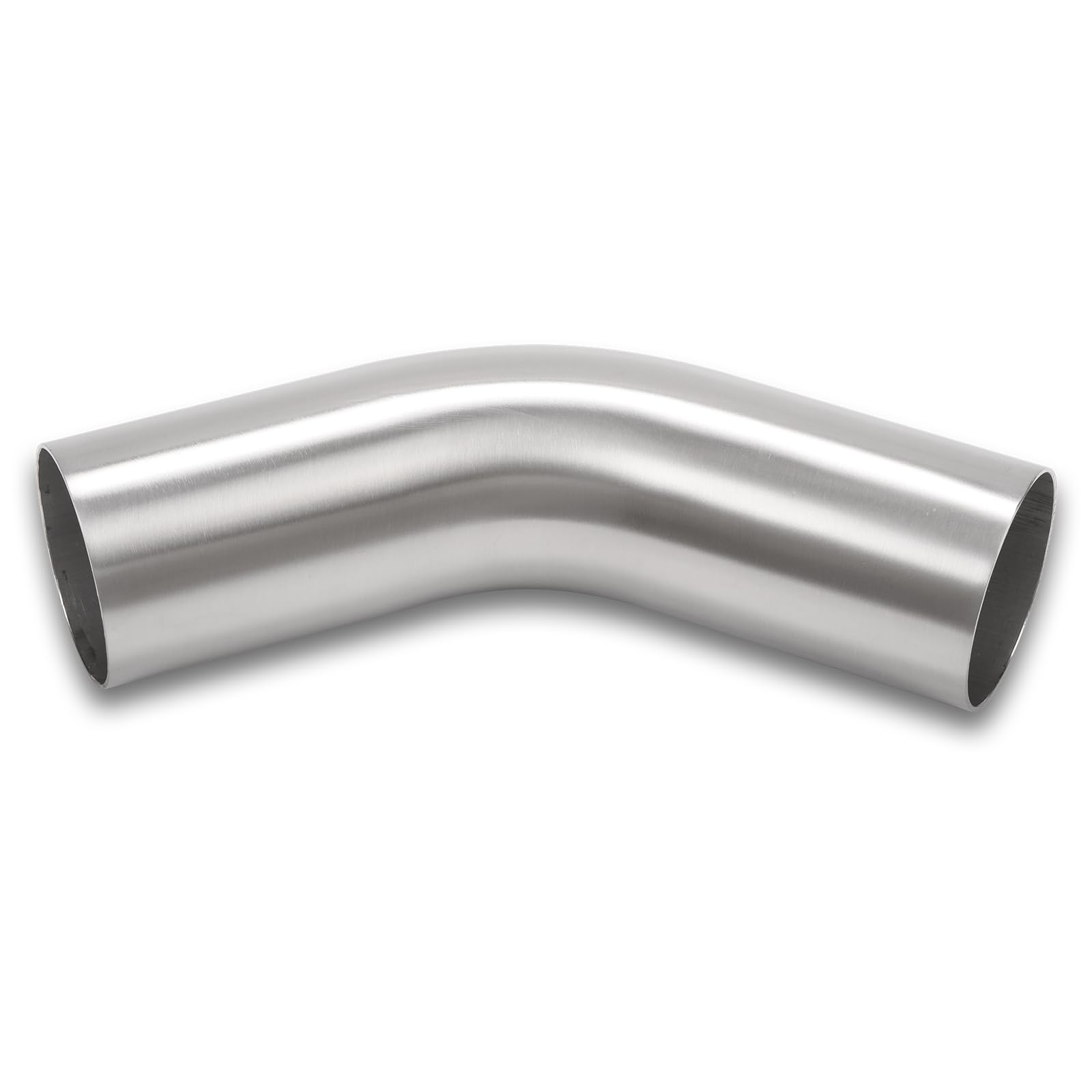
The Podavelle 45-degree elbow mirrors the build quality of its 90-degree sibling but in a shallower angle that works well for offset corrections and gradual direction changes in intake and intercooler plumbing. The 1.5D radius ensures minimal flow disruption, and the 3.94-inch legs give enough surface area for double-clamp connections. Verified reviews consistently rate the fit and finish highly.
Made from T6061 aluminum with a brushed surface treatment, this pipe resists oxidation and cleans easily. Owners have used it for everything from intercooler pipe transitions on turbocharged projects to tailpipe sections on custom exhaust work. The mandrel bend maintains full diameter through the curve, and the wall thickness at 0.071 inch provides the rigidity needed for boosted applications without excessive weight.
One notable aspect from buyer reports is the consistency of the brushed finish across multiple units, which matters if you are ordering several pieces for a visible engine bay. The aluminum alloy is soft enough to form a bead with a simple hand tool but strong enough to hold clamp pressure without deformation. For a clean 45-degree transition at a reasonable investment, this elbow delivers reliable, repeatable quality.
What works
- Gradual 1.5D radius preserves flow velocity
- Consistent brushed finish across production runs
- Easy to bead, weld, or modify
What doesn’t
- Short straight sections limit coupler overlap
- Not ideal for extremely tight packaging needs
6. Haturmyko 90 Degree Silicone Elbow Coupler
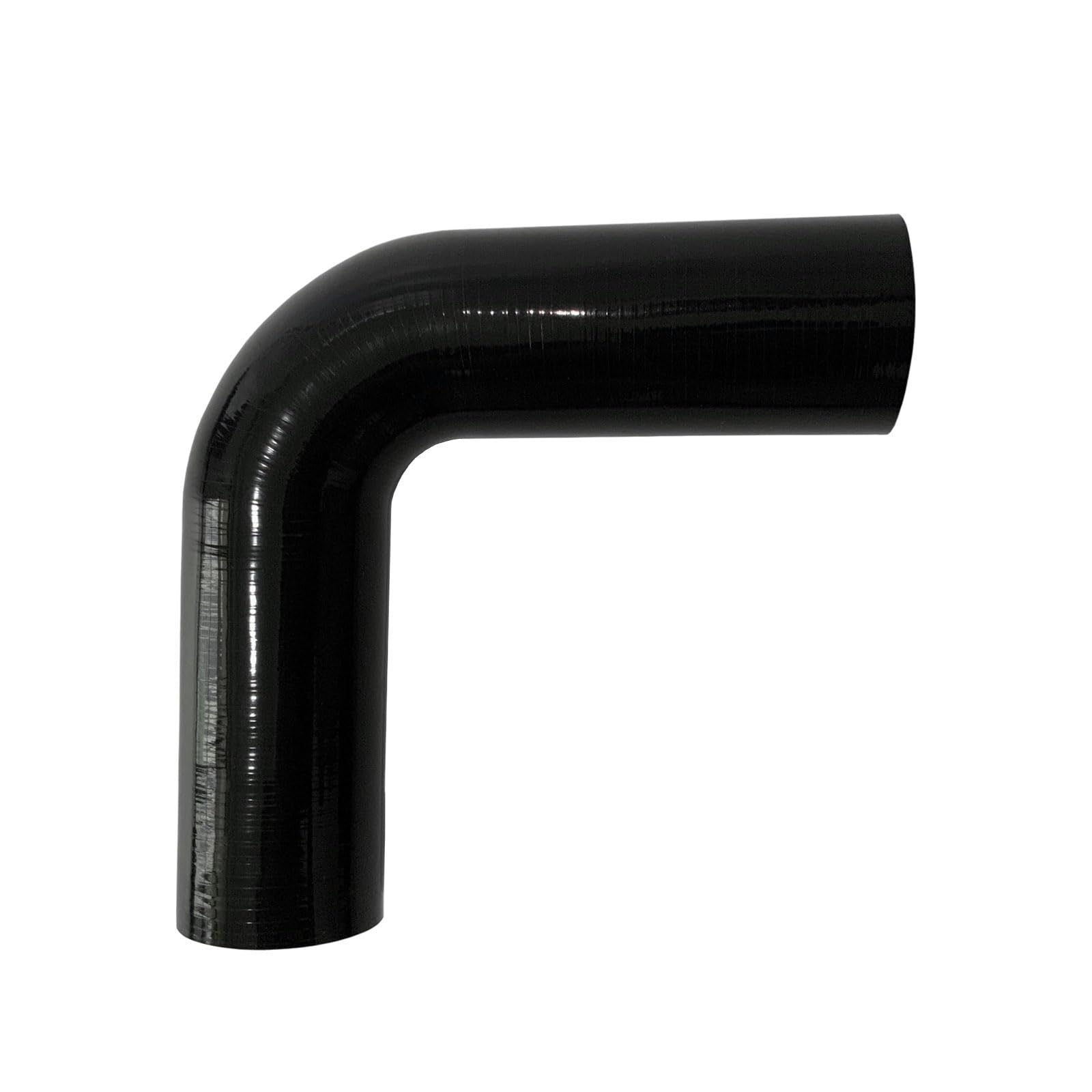
The Haturmyko silicone elbow provides a flexible alternative to rigid aluminum for connecting components that experience relative movement or vibration. The 8-inch leg length on both sides offers substantial engagement for hose clamps, reducing the risk of blow-off under boost. The 4-ply reinforcement gives the wall structure to resist collapse while maintaining the flexibility needed for slight misalignment corrections.
Temperature ratings span from negative 60 degrees to 300 degrees Fahrenheit, covering typical engine bay conditions comfortably. Owners have used this coupler for intercooler charge pipes, radiator hose transitions, and aftermarket intake setups where aluminum would transmit too much vibration. The 5 mm wall thickness provides a robust clamping surface without being overly stiff.
Multiple verified buyers emphasize the importance of using properly sized internal inserts or T-bolt clamps to achieve a leak-free seal, especially on aluminum pipes with smooth ends. The silicone material resists coolant and oil exposure well, and the black finish blends discreetly into most engine compartments. For setups that need vibration dampening at a connection point, this elbow fills the role effectively without introducing flow restriction.
What works
- Long 8-inch legs provide secure clamp grip
- 4-ply reinforcement prevents collapse under boost
- Wide temperature range suits turbo applications
What doesn’t
- Requires inserts or T-bolt clamps for best seal
- Silicone can degrade with prolonged fuel exposure
7. ETL INDUSTRIES Straight Aluminum Pipe

The ETL INDUSTRIES straight pipe offers an 18-inch section of polished T6061 aluminum with bead-rolled ends that improve hose retention right out of the box. This is one of the few budget-friendly options that includes pre-formed beads, saving the step of hand forming or welding them yourself. The polished finish gives a bright appearance that stands out in open engine bays.
Owner reviews consistently mention the pipe arriving clean and dent-free, with the bead-rolled ends providing a positive stop for silicone couplers. Multiple users cut this pipe into shorter sections for radiator hose adapters and intercooler transitions, reporting that the aluminum cuts and welds without difficulty. The 0.071-inch wall thickness is consistent with more expensive options in this category.
While the polished finish looks great initially, it requires occasional cleaning to maintain its shine in daily-driven vehicles. The 18-inch length is versatile for many projects, and the included bead on each end adds practical value that higher-priced options often omit. For anyone starting a custom intake project on a measured budget, this pipe delivers the essential features without unnecessary cost.
What works
- Pre-formed beads on both ends improve hose retention
- Polished T6061 alloy with consistent wall thickness
- Clean, dent-free packaging on delivery
What doesn’t
- Polished finish shows dirt and requires upkeep
- Short compared to 24-inch alternatives for long runs
Hardware & Specs Guide
T6061 Aluminum Alloy
This aerospace-grade alloy provides excellent corrosion resistance, good weldability, and a favorable strength-to-weight ratio for intake and intercooler piping. It machines cleanly for bead rolling and flange welding, and it withstands underhood temperatures without softening. Most quality 3-inch intake pipes use T6061 rather than cheaper 5052 or 6063 grades.
Mandrel Bending vs. Crush Bending
Mandrel bending uses an internal support to keep the pipe cross-section round through the curve, preserving the full inner diameter for unrestricted airflow. Crush bending collapses the inside wall slightly, creating a restriction that reduces flow and can cause turbulence. For boosted applications, mandrel bends are essential to maintain pressure and velocity.
Silicone Reinforcement Layers
Silicone couplers and elbows with 4-ply or 5-ply reinforcement resist ballooning under boost pressure while remaining flexible enough for vibration isolation. Wall thickness around 5 mm provides a good balance between compliance and burst strength. Single-ply silicone hoses are suitable for atmospheric applications but may fail under forced induction.
Bead Rolling for Hose Retention
A bead-rolled end creates a raised ridge near the pipe opening that prevents silicone couplers from sliding off under pressure. Pipes without beads rely entirely on clamp tension, which can allow blow-off at higher boost levels. Adding a bead with a hand tool or having one welded on improves connection security significantly.
FAQ
What wall thickness should I look for in a 3-inch aluminum intake pipe?
Can I weld a 3-inch aluminum intake pipe at home?
What is the difference between a 1.3D and a 1.5D bend radius?
How do I prevent silicone couplers from blowing off under boost?
Final Thoughts: The Verdict
For most buyers, the best 3-inch air intake pipe winner is the KRD PERFORMANCE 24″ Straight because it offers the longest uninterrupted section with quality T6061 construction and mandrel-straight consistency for maximum flexibility in custom builds. If you need a flexible solution for heat-intensive or vibration-prone routing, grab the AC PERFORMANCE Silicone Ducting. And for a clean 90-degree transition with minimal flow loss, nothing beats the Podavelle 90 Degree Elbow.

Certification: BSc in Mechanical Engineering
Education: Mechanical engineer
Lives In: 539 W Commerce St, Dallas, TX 75208, USA
Md Amir is an auto mechanic student and writer with over half a decade of experience in the automotive field. He has worked with top automotive brands such as Lexus, Quantum, and also owns two automotive blogs autocarneed.com and taxiwiz.com.