Selecting the right fuel line for your project means balancing material integrity, pressure tolerance, and long-term compatibility with the fuels you actually run. A poor choice here leads to leaks, restricted flow, or premature failure inside a hot engine bay.
I’m Amir — the founder and writer behind Four Wheel Ask. My approach centers on cross-referencing manufacturer material claims against real-world owner durability reports and technical specification sheets to identify what genuinely holds up over time.
After evaluating material construction, pressure tolerance, and owner satisfaction across five top brands, here is the best 3/8 stainless steel fuel line.
How To Choose The Best 3/8 Stainless Steel Fuel Line
Not all stainless fuel lines deliver the same durability or flow reliability. Understanding the material construction, pressure ratings, and fuel compatibility ensures you pick a line that matches your engine’s demands without cutting corners on safety.
Material & Construction Type
Rigid 304 stainless steel tubing offers a permanent, corrosion-resistant solution ideal for hard-lined fuel systems on classic cars or custom builds. Braided hose — typically a synthetic rubber or PTFE core wrapped in stainless braid — provides flexibility for routing around tight engine compartments and absorbs vibration better. PTFE inner liners resist fuel permeation and handle ethanol blends, while CPE rubber cores offer a more budget-friendly option with adequate performance for standard fuels.
Pressure Ratings & Temperature Range
Working pressure indicates the maximum continuous pressure the line can handle during operation, while burst pressure is the safety ceiling before failure. For fuel injection systems, look for a working pressure of at least 500 psi and burst pressure above 2000 psi. Temperature range matters in engine bays where heat soak can exceed 200°F — lines rated from -40°F to at least 250°F handle both cold starts and hot running conditions without degradation.
Fuel Compatibility
If you run E85 or high-ethanol blends, a PTFE-lined hose is essential because ethanol attacks standard rubber and CPE liners over time, causing swelling and permeation. Standard braided hose with a CPE core works reliably with gasoline, diesel, and oil but degrades faster with alcohol-based fuels. Always verify the manufacturer’s explicit compatibility statement before committing to a line for ethanol applications.
Length, Fittings & Installation
Measure your total fuel run from tank to engine bay, including return lines, before purchasing. Kits that include pre-assembled AN fittings in multiple angles reduce the need for adapters and simplify routing. Rigid tubing requires a tubing bender and careful measurement to avoid kinks, while braided hose needs proper wrenches and hose cutters for clean ends. Professional installation is recommended for any fuel system work involving high pressure.
Quick Comparison
On smaller screens, swipe sideways to see the full table.
| Model | Category | Best For | Key Spec | Amazon |
|---|---|---|---|---|
| WnSEu AN6 20FT Kit | Braided Hose Kit | Complete AN plumbing | 20ft, 10 fittings included | Amazon |
| The Stop Shop 16Ft Tubing | Rigid Tubing | Permanent hard-line systems | 304 stainless, 16ft coil | Amazon |
| EVIL ENERGY 6AN PTFE | PTFE Braided Hose | E85 and high-ethanol fuel | PTFE liner, 10ft, 1500psi | Amazon |
| Partschoice 25FT 6AN | CPE Braided Hose | Long non-ethanol runs | 25ft, 6000psi burst | Amazon |
| CarBole 10FT Braided | Braided Hose | Basic replacement and repair | 1500psi working, 10ft | Amazon |
In-Depth Reviews
1. WnSEu AN6 20FT Fuel Line Hose Kit
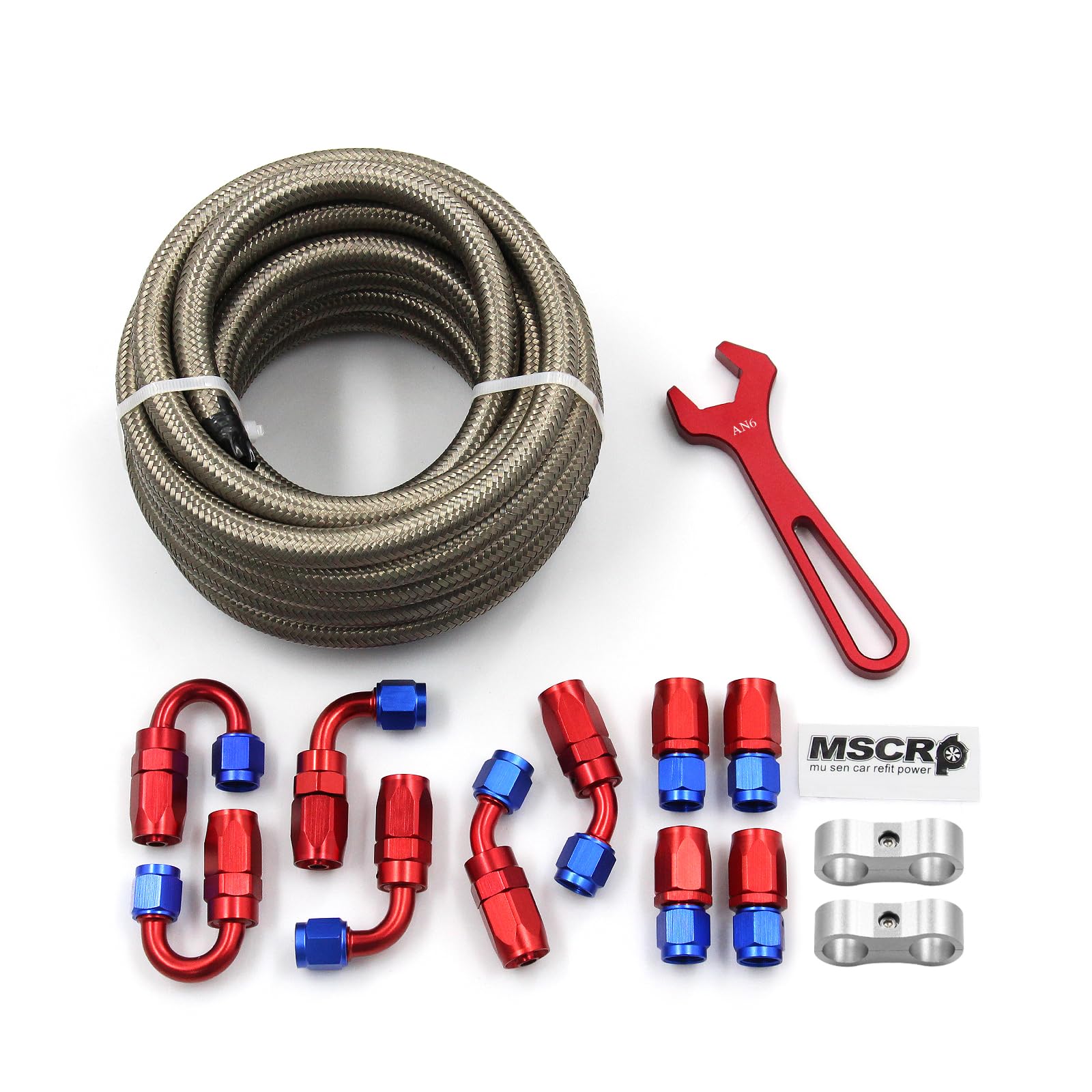
This kit delivers everything needed for a complete AN fuel system plumb: 20 feet of stainless braided hose plus ten fittings spanning 0-degree, 45-degree, 90-degree, and 180-degree angles, along with clamps and a dedicated wrench. The 8.73mm inner diameter matches standard 3/8-inch line requirements, and the included fitting variety means fewer trips to the parts store during installation. The hose itself carries a 500 psi working pressure with a 2000 psi burst ceiling, suitable for most fuel injection and return line applications.
The temperature range of -40°F to 257°F covers both extreme cold starts and engine bay heat soak conditions. Compatibility extends to nearly every common automotive fluid, including gasoline, diesel, engine oil, and coolants, though the manufacturer recommends using their own PTFE fittings for optimal sealing performance. The braided stainless jacket offers solid abrasion resistance in areas where the line contacts engine components or chassis edges.
Owner reports consistently highlight the convenience of having all fitting angles in one box, reducing the guesswork when routing around intake manifolds and frame rails. The 20-foot length provides enough material for most passenger car and light truck fuel systems, including supply and return runs. For anyone building a custom EFI swap or replacing aged hard lines with flexible AN plumbing, this kit represents a complete, ready-to-install solution.
What works
- Comprehensive kit with 10 fittings in multiple angles
- Long 20-foot hose length covers most vehicle layouts
- Proper AN wrench included for secure assembly
What doesn’t
- Working pressure of 500 psi is lower than some PTFE alternatives
- Fittings may not match all existing AN thread standards
2. The Stop Shop 16 Ft 3/8″ Stainless Steel Fuel Line Tubing

For those who prefer the permanence and clean appearance of rigid fuel lines, this 16-foot coil of 3/8-inch outer diameter 304 stainless steel tubing offers a corrosion-resistant foundation for hard-lined fuel systems. The 0.031-inch wall thickness provides sufficient structural integrity for low-pressure and return applications while remaining workable with standard tubing benders. Grade 304 stainless delivers excellent resistance to road salt, moisture, and fuel exposure without the rust concerns of mild steel lines.
The coil format ships in a compact roll, requiring careful uncoiling and straightening before installation. A quality tubing bender is essential to avoid kinks that restrict flow or create stress risers. Unlike braided hose, rigid tubing holds its shape permanently once bent, making it ideal for chassis-mounted runs where vibration is minimal and a factory-style appearance is desired. The 16-foot length typically covers a full feed and return circuit on smaller vehicles or a single long run on larger platforms.
Feedback from restorers and hot rod builders emphasizes the authentic look of hard-lined stainless in engine bays where braided hose would appear out of place. The material is compatible with all standard fuels, including gasoline and diesel, and does not permeate or swell over time. For builders prioritizing a period-correct finish or leak-proof hard lines that outlast the vehicle, this tubing delivers a premium foundation.
What works
- Genuine 304 stainless steel resists corrosion indefinitely
- Rigid construction eliminates permeation and swelling
- Clean factory-style appearance for restoration projects
What doesn’t
- Requires tubing bender and flaring tools for installation
- No fittings or connectors included in the coil
3. EVIL ENERGY 6AN PTFE Fuel Hose Line
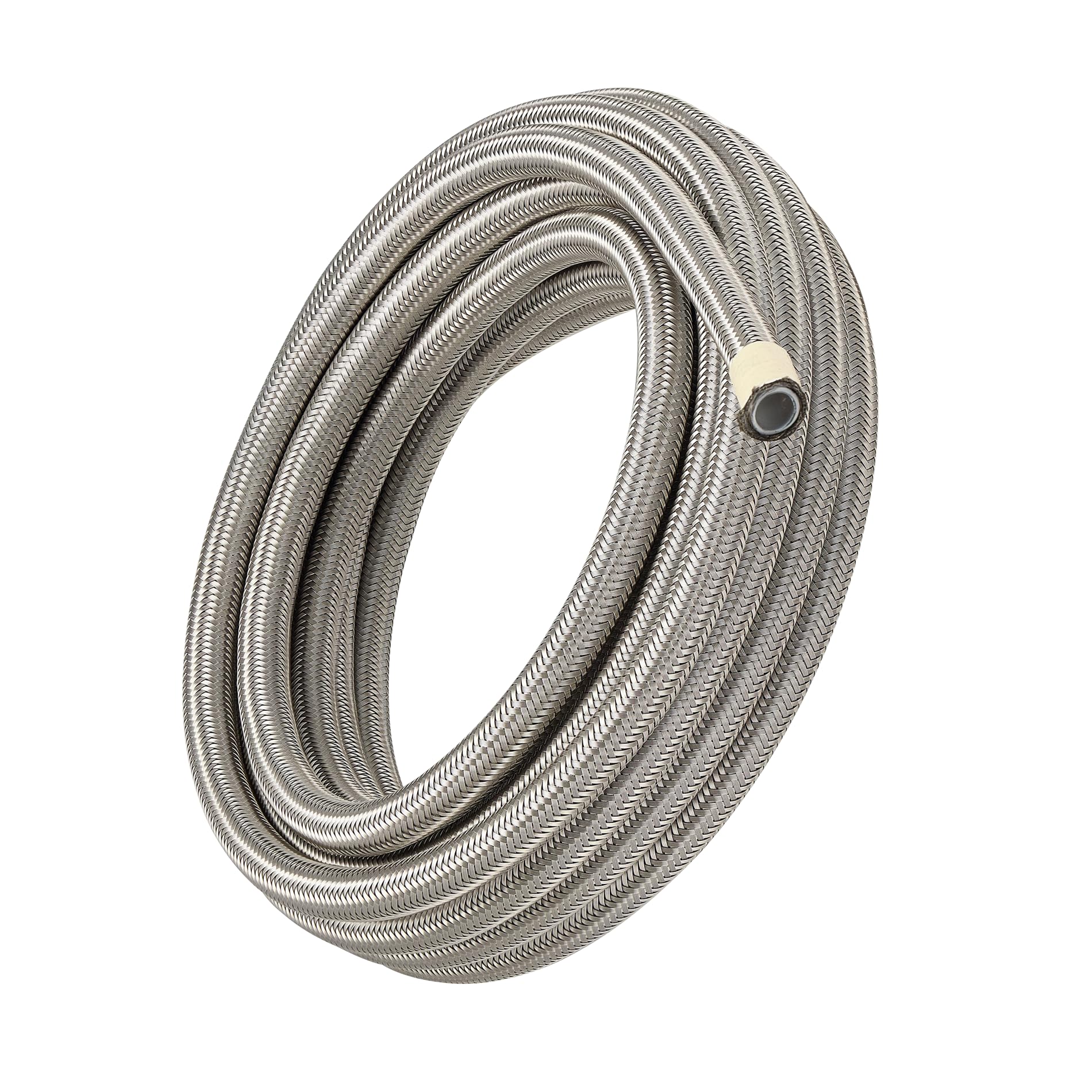
The defining feature of this 10-foot 6AN hose is its PTFE inner liner, which provides near-zero fuel permeation and full compatibility with aggressive fuels including E85, methanol, and biodiesel. The 0.31-inch inner diameter delivers adequate flow for moderate-horsepower fuel injection systems, while the stainless steel braid protects against abrasion and heat. With a working pressure of 1500 psi and a burst rating of 4500 psi, this hose handles boosted applications and high-pressure EFI pumps without safety concerns.
The temperature range of -76°F to 446°F is among the widest in this category, making it suitable for applications near exhaust manifolds, turbochargers, or in cold climates where standard rubber-lined hoses grow brittle. The PTFE construction resists fuel additives and ethanol degradation that cause standard CPE hoses to swell and leak over time. However, the PTFE core is noticeably stiffer than rubber-lined hose, requiring careful routing with generous bend radii to avoid kinking the inner tube.
Users running flex-fuel vehicles consistently report zero fuel odor and no hose swelling after extended E85 use, validating the PTFE liner’s performance advantage. The silver stainless braid matches the look of other AN components in a bay. Professional installation is strongly advised given the stiffness and the need for proper PTFE-compatible fittings that seat correctly against the slick inner surface.
What works
- PTFE liner handles E85, methanol, and biodiesel without degradation
- Wide temperature range from -76°F to 446°F
- High 1500 psi working pressure for boosted applications
What doesn’t
- Stiff construction makes tight routing difficult
- 10-foot length may be insufficient for longer vehicle runs
4. Partschoice 25FT 6AN Braided Stainless Steel Fuel Line

This 25-foot spool of 6AN braided hose delivers the longest single-piece run in this comparison, making it a practical choice for trucks, vans, or custom chassis where the fuel tank sits far from the engine. The CPE synthetic rubber inner core is paired with a stainless steel braid outer layer, providing solid resistance to heat, corrosion, and abrasion at a cost per foot that undercuts PTFE alternatives. The 0.34-inch inner diameter and 0.55-inch outer diameter match standard 3/8-inch AN sizing conventions.
The working pressure of 1000 psi and burst pressure of 6000 psi offer a generous safety margin for naturally aspirated and mildly boosted fuel systems. The temperature range of -40°F to 248°F covers typical operating conditions but falls short of the heat tolerance found in PTFE-lined options. A significant limitation is the lack of E85 compatibility — this hose is designed for racing fuel, pump gas, alcohol-based fuels, motor oil, and coolant, but the manufacturer explicitly states it is not applicable to E85.
Buyers in California and New York should note that this product is not CARB-compliant and is not legal for sale or use in those states. Owner feedback highlights the generous length as the primary selling point, especially for projects where multiple hose runs or long wheelbase vehicles demand more than the standard 10 or 20 feet. For non-ethanol applications where length matters more than extreme heat resistance, this spool offers strong value.
What works
- 25-foot length covers long wheelbase and dual-tank setups
- 6000 psi burst pressure provides wide safety margin
- Cost-effective per foot for non-ethanol fuel systems
What doesn’t
- Not compatible with E85 or ethanol blends
- Not CARB legal for sale in California or New York
5. CarBole 10FT Stainless Steel Braided Fuel Line
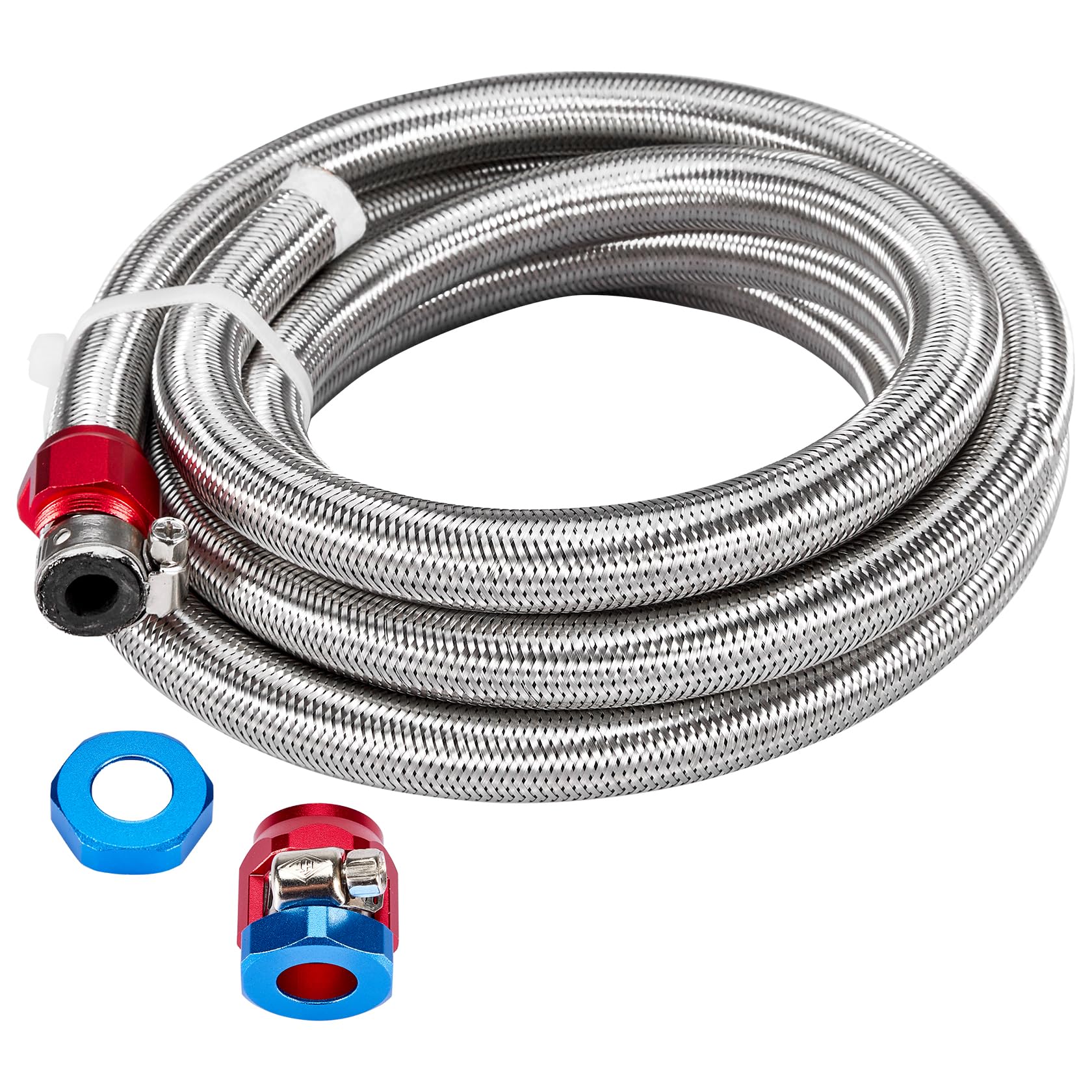
This 10-foot braided hose from CarBole uses a double stainless steel braid construction for enhanced abrasion and corrosion resistance in tight engine bays where the line contacts vibrating components. The 3/8-inch inner diameter and 5/8-inch outer diameter match standard fuel line sizing, and the package includes two hose ends and clamps for immediate installation. The working pressure of 1500 psi with a burst pressure of 4500 psi provides ample headroom for carbureted and EFI systems within the rated temperature window of -40°F to 257°F.
Compatibility extends to all automotive fuels except alcohol-based blends, along with antifreeze, lubricants, and coolants. The double braid adds a layer of physical protection compared to single-braid hoses, reducing the risk of chafe-through in areas where the line rubs against brackets or chassis edges. The 10-foot length suits shorter runs such as carburetor fuel supply, transmission cooler lines, or turbo oil feed applications rather than full front-to-rear fuel system plumbing.
Buyer reports note that the included clamps are functional for low-pressure applications but should be upgraded to proper fuel-injection-grade clamps for pressurized EFI systems. The hose flexibility is good for routing around obstacles, though the double braid makes it slightly stiffer than single-braid equivalents. For basic replacement jobs, small engine repairs, or short accessory lines, this kit provides a straightforward, no-fuss solution at an accessible entry point.
What works
- Double stainless braid improves abrasion resistance
- 1500 psi working pressure suits most systems
- Includes hose ends and clamps for quick installation
What doesn’t
- Not compatible with alcohol-based fuels including methanol
- 10-foot length limits use to short accessory runs
Hardware & Specs Guide
Braided Hose vs Rigid Tubing
Braided stainless hose uses a flexible synthetic rubber or PTFE core wrapped in woven stainless steel strands. It absorbs vibration, conforms to tight spaces, and simplifies routing around obstacles. Rigid 304 stainless steel tubing offers permanent, leak-proof hard lines that never permeate or swell but require a tubing bender and flaring tools for fabrication. Choose braided hose for engine bays with movement and vibration; choose rigid tubing for chassis-mounted runs where a factory hard-line appearance is desired.
Understanding AN Fittings and Sizing
AN (Army-Navy) sizing uses a dash number where -6 equals 3/8-inch inner diameter for standard hose. The hose outer diameter varies by construction — braided PTFE hose typically measures 0.43 inches OD, while CPE rubber braided hose measures around 0.55 inches OD. Fitting angles (0°, 45°, 90°, 180°) allow routing around obstructions without sharp bends that restrict flow. Always use fittings matched to the hose type — PTFE hoses require PTFE-specific fittings with a smooth sealing surface, while CPE hoses use standard AN barbed or push-lock fittings.
FAQ
Can I use braided stainless hose for a fuel injection system?
What is the difference between PTFE and CPE hose liners?
How do I cut braided stainless fuel hose cleanly?
Is 3/8 inch fuel line big enough for my engine?
Do I need special tools to install rigid stainless tubing?
Final Thoughts: The Verdict
For most buyers, the 3/8 stainless steel fuel line winner is the WnSEu AN6 20FT Kit because it combines a complete fitting assortment with ample hose length at a balanced value point. If you need E85 compatibility and high heat tolerance, grab the EVIL ENERGY 6AN PTFE. And for a permanent hard-line installation with a restoration-grade finish, nothing beats the The Stop Shop 16Ft 304 Stainless Tubing.

Certification: BSc in Mechanical Engineering
Education: Mechanical engineer
Lives In: 539 W Commerce St, Dallas, TX 75208, USA
Md Amir is an auto mechanic student and writer with over half a decade of experience in the automotive field. He has worked with top automotive brands such as Lexus, Quantum, and also owns two automotive blogs autocarneed.com and taxiwiz.com.