A 21 mm impact socket is one of those tools you grab without thinking — until the moment it cracks, slips, or rounds a lug nut. The metallurgy, wall design, and heat treatment determine whether that socket survives hundreds of impacts or becomes a throwaway frustration. Matching the right build to your specific workflow saves time and prevents damage to both fasteners and rims.
I’m Amir — the founder and writer behind Four Wheel Ask. I’ve spent years analyzing tool specifications, metallurgy reports, and owner feedback to identify what actually holds up under sustained impact use without slipping or failing.
Checking build quality, steel composition, and owner feedback, the best 21 mm impact socket delivers lasting performance without straining your budget.
How To Choose The Best 21 Mm Impact Socket
A 21 mm socket is a staple in automotive work, common on lug nuts, suspension components, and drivetrain fasteners. Choosing the right one goes beyond picking the cheapest option — the steel alloy, heat treatment, wall geometry, and drive compatibility all influence how long it lasts and how reliably it grips.
Steel Composition: Chrome Molybdenum vs. Chrome Vanadium
Chrome molybdenum (Cr-Mo) offers superior impact toughness and flexural strength, making it the preferred alloy for professional-grade impact sockets. Chrome vanadium (Cr-V) is harder and more brittle — it can withstand high torque but may crack under repeated shock loads. For daily impact use, Cr-Mo delivers longer life and better resistance to deformation.
Drive Size and Wall Thickness
A 1/2-inch drive is the standard for 21 mm impact sockets, offering the best balance of torque capacity and tool compatibility. Deep sockets provide clearance for longer studs, while thin-wall designs improve access to recessed fasteners. Extra thin walls reduce weight and fit tighter spots, but may sacrifice some durability on extremely high-torque fasteners.
Special Features That Matter
Non-marring inserts protect alloy wheels from scratches during lug nut removal. Swivel or universal sockets offer up to 30 degrees of articulation for fasteners in awkward positions. Radius-corner and lobular drive designs distribute force across the fastener flats rather than the corners, significantly reducing the chance of rounding. Laser etching and color coding help identify sizes quickly in low-light shop conditions.
Quick Comparison
On smaller screens, swipe sideways to see the full table.
| Model | Category | Best For | Key Spec | Amazon |
|---|---|---|---|---|
| Williams JHW12M-621 | Premium | Precision fit & durability | 3/8″ Drive, Deep, SUPERTORQUE | Amazon |
| Capri Tools Universal | Premium | Tight access fasteners | 1/2″ Drive, Swivel, 30° Angle | Amazon |
| TIGHTSPOT Deep | Mid-Range | Anti-rounding performance | 1/2″ Drive, Deep, Radius Corner | Amazon |
| Sunex Tools 2621 | Mid-Range | Thin-wall access | 1/2″ Drive, Deep, Extra Thin Wall | Amazon |
| RIGOR 11505 | Budget | Wheel & rim protection | 1/2″ Drive, Non-Marring, Hollow Core | Amazon |
In‑Depth Reviews
1. Williams JHW12M-621 SUPERTORQUE 21 mm Deep Impact Socket
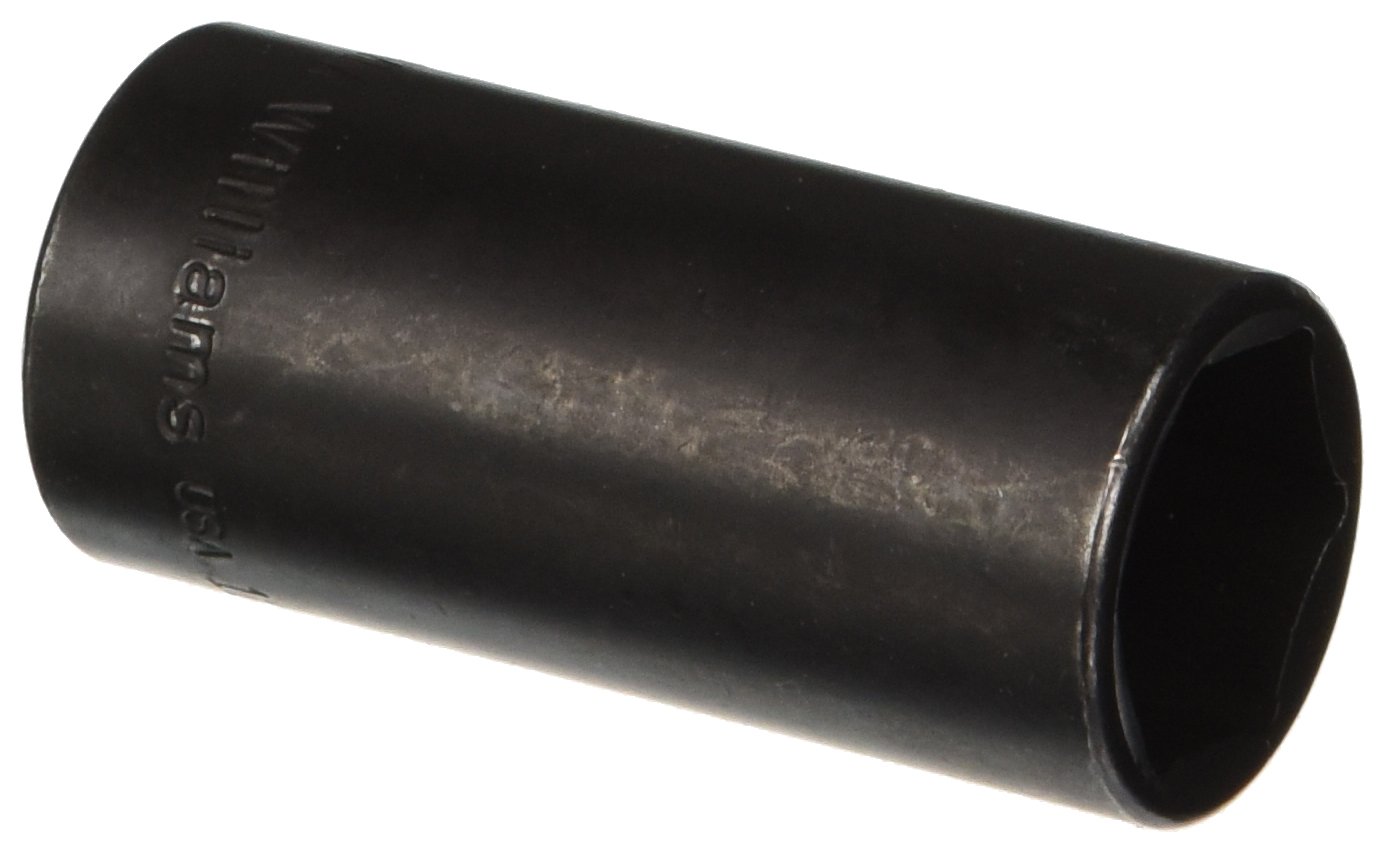
Williams has been manufacturing industrial tools for over 140 years, and the JHW12M-621 reflects that legacy in its lobular SUPERTORQUE geometry. The opening profile engages the fastener flats rather than the corners, distributing torque more evenly and reducing the risk of rounding. This design matters most on high-torque fasteners where a standard six-point socket can deform the bolt head over repeated cycles.
Built from high-strength alloy steel with dedicated impact heat treatment, this socket is rated for both pneumatic and electric impact wrenches. The black industrial finish provides corrosion resistance without adding thickness. At 21 mm with a 3/8-inch drive, it sits at the lighter end of the impact socket spectrum, making it a strong match for service work where fastener access and tool compatibility both matter.
Owner reports consistently note the tight fit and lack of play on fasteners, which reduces vibration and extends the life of both socket and fastener. The deep configuration gives clearance for longer studs, and the broaching is clean enough to grip without excessive slop. For a socket that balances heritage build quality with modern geometry, this is the benchmark pick.
What works
- SUPERTORQUE lobular design grips flats and reduces fastener rounding
- Heat-treated impact alloy holds up under sustained high-torque use
- Deep profile clears longer studs and recessed nuts
What doesn’t
- 3/8-inch drive limits compatibility with standard 1/2-inch impact guns
- No laser etching or color coding for size identification
2. Capri Tools 21 mm Universal Impact Socket
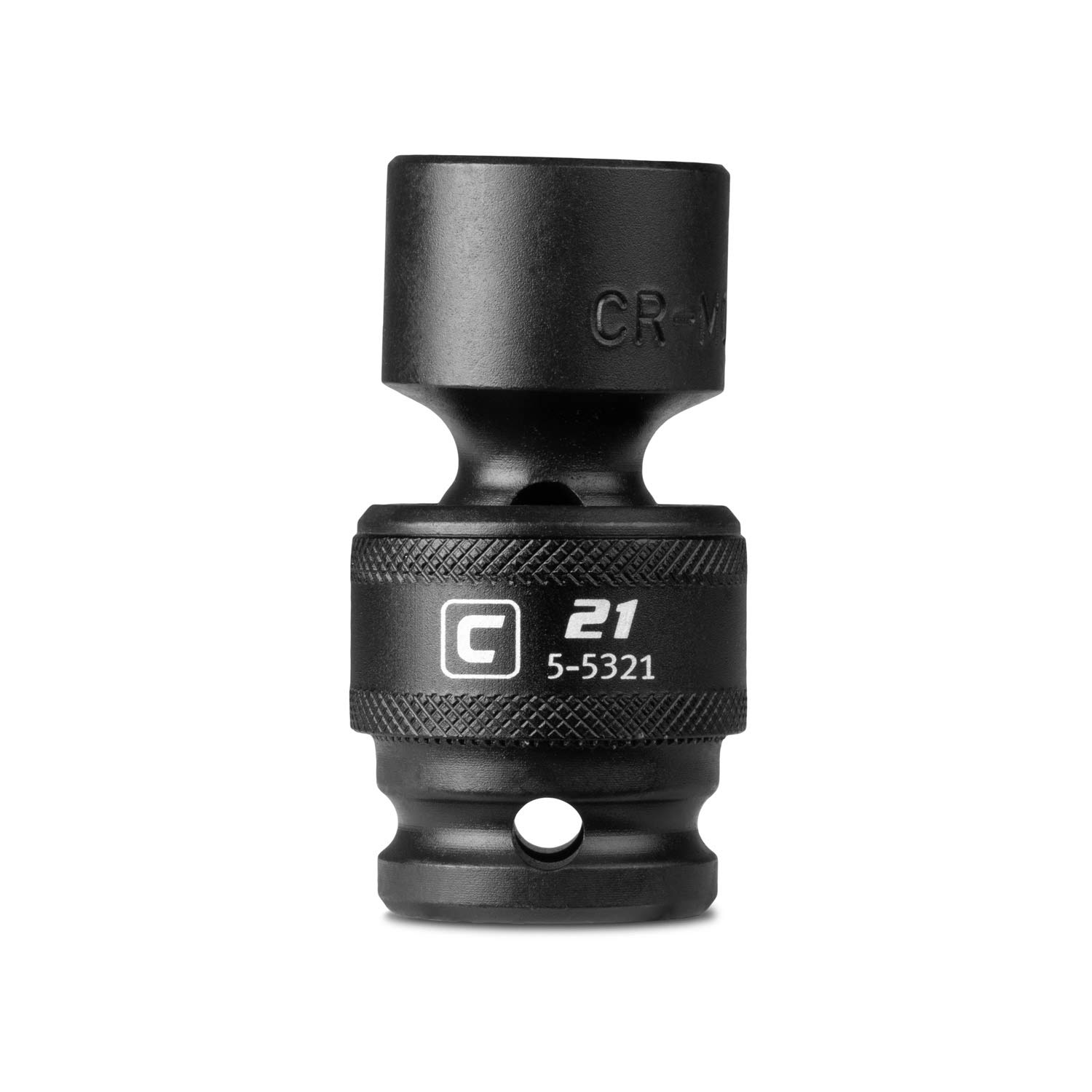
Capri Tools designed this universal impact socket to solve a specific problem: reaching fasteners that sit at an awkward angle. The swivel head rotates 360 degrees with a 30-degree working angle, letting the socket articulate around obstructions without needing a separate u-joint adapter. That articulation is critical on suspension links, exhaust bolts, and caliper brackets where straight-line access is blocked.
The socket is forged from chrome molybdenum steel and put through a proprietary heat treatment process that Capri claims improves torque resistance. The manganese phosphate coating — commonly used in military and aerospace applications — offers better corrosion protection than standard black oxide. The WaveDrive six-point geometry further reduces fastener rounding by engaging the side walls rather than the corners of the bolt head.
Real-world feedback highlights the smooth swivel action and the secure lock-up with minimal wobble. The 1/2-inch drive input pairs with standard impact wrenches, and the 21 mm size covers most passenger vehicle lug nuts and common chassis fasteners. For mechanics who regularly work in confined spaces, the added articulation eliminates the need for wobble extensions and reduces the chance of crossthreading from angled force.
What works
- Swivel head provides 30-degree angle for tight-access fasteners
- WaveDrive design grips flats instead of corners to prevent rounding
- Manganese phosphate coating resists corrosion better than standard finishes
What doesn’t
- Swivel mechanism adds bulk compared to a fixed socket
- Articulation may reduce maximum torque capacity vs. solid design
3. TIGHTSPOT 21 mm Deep Impact Socket
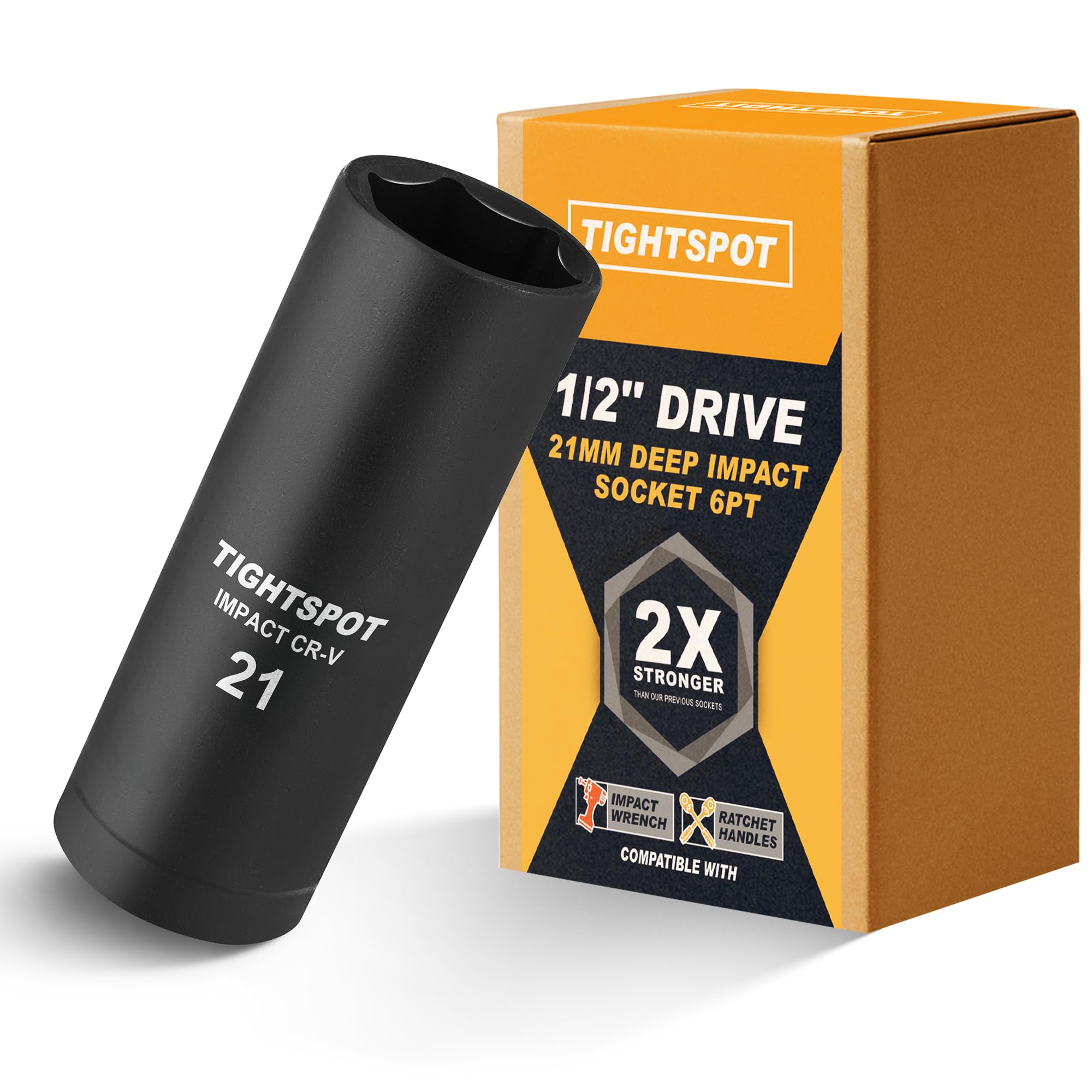
TIGHTSPOT positions this 21 mm deep impact socket as a solution for confined spaces where a bulky socket simply won’t fit. The chrome vanadium steel construction prioritizes hardness and resistance to deformation under load, while the radius corner design engages the fastener flats rather than the tips. This geometry directly reduces the chance of rounding corroded or overtightened bolts.
The socket features a chamfered opening that guides the fastener into the drive, speeding up engagement on repetitive jobs like wheel swaps. For size identification, TIGHTSPOT uses both laser etching and permanent stamping — the stamping ensures the size remains readable even after the laser mark wears off from heavy use. The manganese phosphate finish adds a layer of corrosion protection suitable for shop and mobile environments.
Owner feedback notes that the socket fits snugly on fasteners with minimal slop, which translates to less vibration and better torque transfer. The 1/2-inch drive compatibility covers the vast majority of impact wrenches in home and professional shops. At this price point, the combination of radius-corner geometry, dual marking, and corrosion treatment offers measurable performance benefits over basic no-name impact sockets.
What works
- Radius corner design reduces fastener rounding under high torque
- Dual laser etching and permanent stamping for long-term size ID
- Chamfered opening speeds up fastener engagement
What doesn’t
- Chrome vanadium steel is more brittle than Cr-Mo under repeated shock
- Slightly heavier than thin-wall alternatives
4. Sunex Tools 2621 21 mm Extra Thin Wall Deep Impact Socket
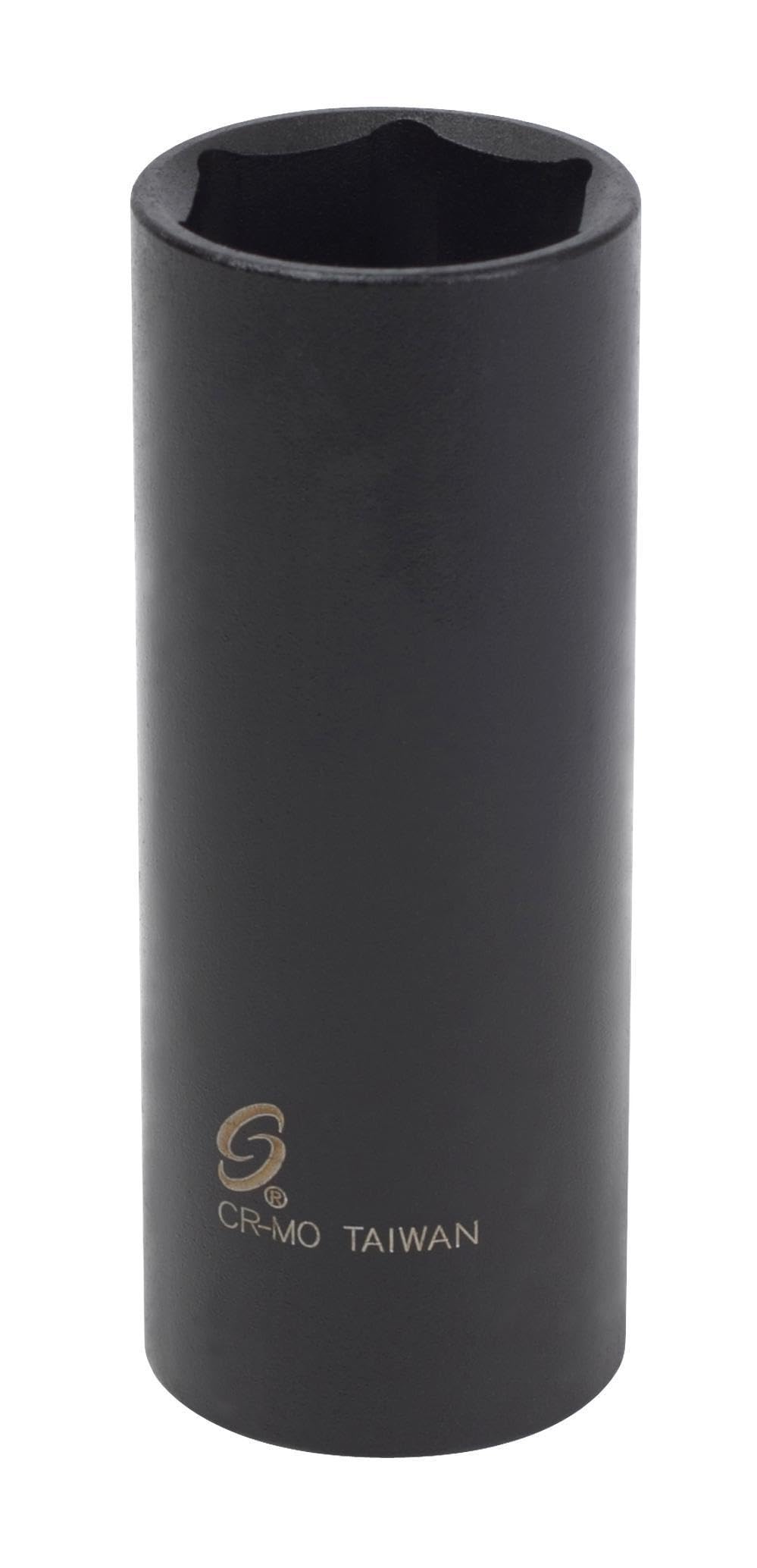
Sunex Tools has built a reputation in the automotive aftermarket for impact sockets that balance strength with practical design. The 2621 is a 1/2-inch drive, 21 mm, six-point deep socket with an extra thin wall profile. The reduced wall thickness allows it to fit into tighter spaces — particularly useful on aftermarket wheels with limited clearance between the socket and the rim barrel.
The socket is forged from chrome molybdenum alloy steel, giving it the ductility needed to absorb impact energy without cracking. The manganese phosphate finish provides a non-reflective surface with good corrosion resistance. Sunex backs this socket with a lifetime warranty that carries no exclusions, which signals confidence in the heat treatment and machining tolerances. The six-point geometry delivers full contact on the fastener flats to distribute torque evenly.
User reports highlight the snug fit on 21 mm fasteners and the thin wall’s ability to clear tight wheel bores where standard sockets bind. The deep profile handles longer studs common on trucks and SUVs. For mechanics who regularly encounter aftermarket wheels with narrow lug wells, the extra thin wall often means the difference between using an impact gun and reaching for a breaker bar by hand.
What works
- Extra thin wall fits tight clearance around wheel bores and calipers
- Cr-Mo alloy delivers impact toughness and long service life
- Lifetime warranty with no exclusions
What doesn’t
- Thin wall may deform under sustained extreme torque loads
- Laser etching can wear off with heavy use over time
5. RIGOR 11505 21 mm Non-Marring Lug Nut Socket

RIGOR designed the 11505 specifically for wheel service where protecting the rim finish is as important as removing the lug nut. The socket features a PP+TPR sleeve that covers the exterior surface, preventing scratches on alloy wheels. The insert also protects the top of the lug nut, which matters for covered lug nuts where exposed steel tools can chip chrome or damage finishes.
The core is forged from chrome molybdenum steel with precision heat treatment, and RIGOR backs it with a limited lifetime warranty. The hollow core design accommodates longer lug nuts and studs that would bottom out in a standard socket. The sleeve material is rated for temperatures from -40 to 176 degrees Fahrenheit and resists oil and weathering, so it holds up in both shop and mobile service environments.
Testing data from RIGOR indicates the socket exceeds 2,500 life cycles at 390 ft-lb of torque before failure, meeting or exceeding ANSI standards. The color-coded band and laser etching make size identification fast, even in low light. For technicians who work on high-end wheels or customer vehicles where cosmetic damage is not acceptable, the non-marring design eliminates the need for tape or protective wraps.
What works
- PP+TPR sleeve prevents scratches on alloy wheel finishes
- Hollow core design clears longer lug nuts without bottoming out
- Cr-Mo steel core with heat treatment for impact durability
What doesn’t
- Sleeve adds bulk, reducing access in tight wheel bores
- Sleeve may wear or tear over extended use and require replacement
Hardware & Specs Guide
Chrome Molybdenum vs. Chrome Vanadium
Cr-Mo steel contains molybdenum, which adds toughness and fatigue resistance under repeated impact loads. Cr-V steel uses vanadium for hardness, making it more resistant to deformation but more prone to cracking under shock. For daily impact use, Cr-Mo offers the best combination of durability and flexural strength. Cr-V can work well in lower-torque or occasional-use scenarios but carries a higher risk of catastrophic failure on stubborn fasteners.
Impact Socket Drive Sizes
The drive size determines which impact wrench or ratchet the socket accepts. A 1/2-inch drive is the standard for 21 mm sockets and provides the torque capacity needed for lug nuts and suspension bolts. A 3/8-inch drive reduces weight and improves access in tighter spots but may limit maximum torque input. Always match the drive size to your tool — using an adapter reduces torque capacity and adds a failure point between the tool and the fastener.
Wall Thickness and Access
Deep sockets provide extra clearance for long studs and recessed nuts, while thin-wall sockets reduce the outer diameter to fit into narrow wheel bores and tight suspension pockets. Extra thin wall designs sacrifice some material strength for access — they work well on standard torque fasteners but may deform under extreme loads. Standard wall sockets offer the best durability for high-torque applications where clearance is not the primary constraint.
Fastener Engagement Geometry
Six-point sockets contact the fastener at six points, providing maximum torque transfer with minimal rounding risk. Radius-corner and lobular designs (like SUPERTORQUE and WaveDrive) shift the contact point to the flats of the fastener rather than the corners, further reducing rounding. This geometry is particularly valuable on rusted or overtightened fasteners where corner contact can cause the socket to cam out and damage the bolt head.
FAQ
What is the difference between Cr-Mo and Cr-V steel in impact sockets?
Can I use a 21 mm impact socket with a regular ratchet?
Why would I need a thin wall impact socket?
How do I know if a 21 mm socket fits my lug nuts?
Final Thoughts: The Verdict
For most buyers, the best 21 mm impact socket winner is the Williams JHW12M-621 because the SUPERTORQUE geometry and impact-rated alloy deliver reliable, long-term performance on a wide range of fasteners. If you need articulation for tight access, grab the Capri Tools Universal. And for protecting alloy wheels during tire service, nothing beats the RIGOR 11505 with its non-marring sleeve.

Certification: BSc in Mechanical Engineering
Education: Mechanical engineer
Lives In: 539 W Commerce St, Dallas, TX 75208, USA
Md Amir is an auto mechanic student and writer with over half a decade of experience in the automotive field. He has worked with top automotive brands such as Lexus, Quantum, and also owns two automotive blogs autocarneed.com and taxiwiz.com.