Finding a set of 205/50R17 tires that balances dry grip, wet confidence, and long-term treadwear is the central challenge for owners of compact sport sedans, hot hatches, and coupes. The 25.1-inch diameter and 93 load index target a specific performance envelope, and the wrong choice can turn a nimble daily driver into a noisy, hydroplaning mess.
I’m Amir — the founder and writer behind Four Wheel Ask. I’ve spent years analyzing tire compound chemistry, tread pattern engineering, and aggregated owner feedback to identify which 205/50R17 models deliver genuine all-season capability versus those that merely claim it.
This guide cuts through the marketing to help you choose from the best 205/50r17 tires available today, ranked by real-world performance, wet and dry handling metrics, and value across budget-friendly, mid-range, and premium tiers.
How To Choose The Best 205/50R17 Tires
Selecting the right 205/50R17 tire involves understanding your local climate, driving style, and the specific demands of a 25.1-inch diameter wheel. This section breaks down the essential factors before you commit to a set.
Seasonal Capability: All-Season vs. Summer
All-season tires in this size use silica-rich compounds and multi-angle sipes to maintain grip in light snow and standing water, while summer compounds like the Yokohama ADVAN Fleva V701 prioritize dry-road adhesion and heat resistance but lose traction below 45°F. If you face regular winter precipitation, an all-season with a severe snow service rating is non-negotiable.
Treadwear Warranty and UTQG Rating
The Uniform Tire Quality Grading (UTQG) rating gives a standardized comparison for treadwear, traction, and temperature resistance. A UTQG 380AA indicates a harder compound with longer life, whereas softer compounds around 200-300 deliver more grip at the cost of faster wear. Cross-reference the UTQG with the manufacturer’s mileage warranty — a 50,000-mile promise signals a touring-oriented tire built for longevity.
Load Index and Inflation Pressure
All seven products in this guide carry a 93 load index (1,433 pounds per tire) and most use an XL (Extra Load) construction. XL tires have stiffer sidewalls to support higher inflation pressures (up to 50 PSI) which improves steering response but can make the ride firmer. If your car’s original spec calls for SL (Standard Load), running an XL tire at a lower pressure than max will still offer a stable footprint.
Quick Comparison
On smaller screens, swipe sideways to see the full table.
| Model | Category | Best For | Key Spec | Amazon |
|---|---|---|---|---|
| Continental ExtremeContact DWS06 PLUS | Ultra-High-Performance All-Season | Balanced dry/wet/snow performance | 50,000-mile tread life warranty | Amazon |
| Michelin Pilot Sport AS 4 | Ultra-High-Performance All-Season | Supercar-certified grip | 1,477 lbs load capacity | Amazon |
| Yokohama ADVAN Fleva V701 | Summer Ultra-High-Performance | Maximum dry road adhesion | 93W XL summer compound | Amazon |
| Hankook Ventus V2 concept 2 | All-Season Performance | Reliable all-season value | 50 PSI maximum pressure | Amazon |
| Falken Ziex ZE950 | All-Season High Performance | Snow and wet traction at a budget-friendly price | 3D Canyon sipe technology | Amazon |
| Fullway HP108 (Set of 2) | Budget All-Season | Best value for daily driving | 4-ply rated XL construction | Amazon |
| Michelin Energy Saver A/S | Touring All-Season | Low rolling resistance and long treadwear | 55,000-mile manufacturer warranty | Amazon |
In‑Depth Reviews
1. Continental ExtremeContact DWS06 PLUS

Continental’s SportPlus Technology is the backbone of the ExtremeContact DWS06 PLUS, and in the 205/50R17 size it delivers an exceptional balance of dry cornering stiffness and wet-road compliance. The asymmetric tread uses macro-blocks on the outer shoulder for lateral grip while deep circumferential grooves and open lateral channels push water out through the contact patch, giving this tire one of the highest hydroplaning resistance ratings in its class.
The 50,000-mile limited tread life warranty is generous for an ultra-high-performance all-season tire, and the Tuned Performance Indicators — the D, W, and S symbols molded into the tread — give you a visual cue when the tire has worn past its optimal dry, wet, or snow capability. The silica-rich compound remains pliable in cold conditions, so light snow traction is surprisingly strong for a tire that doesn’t carry the three-peak mountain snowflake symbol.
XL construction at 93 load index means the sidewalls are stiff enough to prevent squirm during aggressive lane changes, yet the ride quality remains composed over expansion joints and broken pavement. For drivers who want one set of tires that can handle spirited back-road runs and the occasional winter commute, this Continental represents the highest all-round capability in this size range.
What works
- Outstanding wet grip and hydroplaning resistance
- 50,000-mile treadwear warranty is rare for UHP all-season
- Tuned Performance Indicators help you know when to replace
What doesn’t
- Premium price compared to mid-range all-season offerings
- Snow traction is good but not severe-service certified
2. Michelin Pilot Sport AS 4
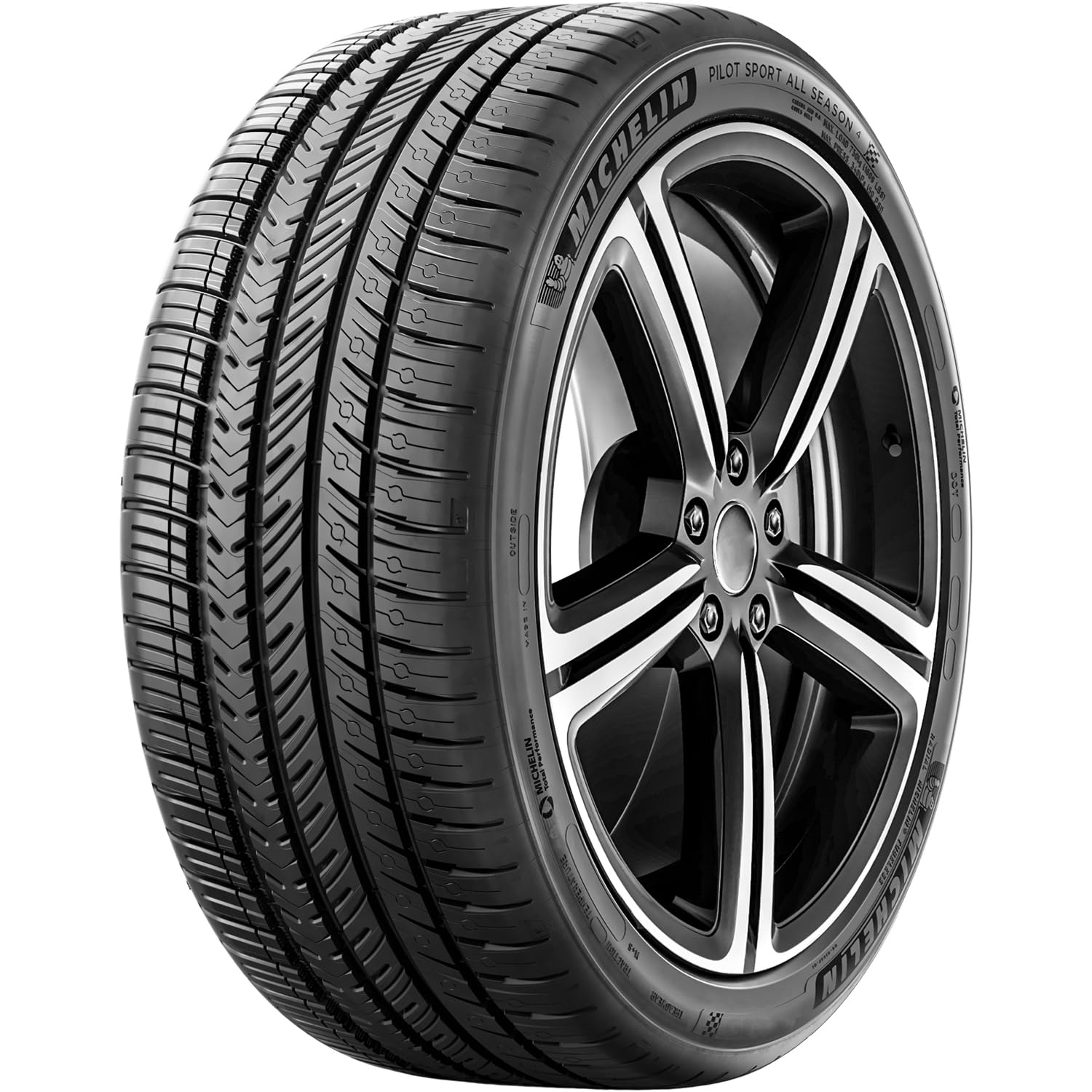
The Michelin Pilot Sport All Season 4 carries a Y speed rating (up to 186 mph) and a 1,477-pound load capacity that surpasses the standard 93 index, making it the most performance-oriented option in the premium tier of 205/50R17 tires. Michelin’s Dynamic Response Technology uses a variable-depth sipe layout that keeps the tread blocks rigid during hard cornering while still allowing the edges to bite into snow-covered pavement.
On dry roads, the Pilot Sport AS 4 feels nearly as sharp as a dedicated summer tire, with the Helio+ 3D sipe technology providing enough wet-surface bite that you can maintain higher cornering speeds through rain-soaked turns without the understeer that plagues cheaper all-season compounds. The asymmetric tread pattern also reduces road noise at highway speeds, a welcome feature if you spend long hours behind the wheel of a compact sedan or hot hatch.
While the price places it at the top end of this category, the wear characteristics are excellent — many owner reports indicate the tread holds up well beyond 30,000 miles with regular rotation. If your priority is maximum grip in wet and dry conditions and you can accept a firmer ride from the stiffer construction, this Michelin justifies its premium positioning against competitors in the same size.
What works
- Near-summer-tire dry grip in an all-season package
- Strong wet traction with good hydroplaning resistance
- High load capacity with a Y speed rating
What doesn’t
- Most expensive tire in this 205/50R17 comparison
- Stiff ride may feel harsh on rough pavement
3. Yokohama ADVAN Fleva V701

The Yokohama ADVAN Fleva V701 is a pure summer tire designed for maximum dry-road adhesion, and in the 205/50R17 size it uses a continuous center rib with large shoulder blocks to maintain stability during high-speed cornering. The silica-reinforced compound is formulated to handle higher operating temperatures without greasing up, making it an excellent choice for autocross events or canyon carving in warm climates where temperatures stay above 45°F year-round.
Wet traction is acceptable for a summer tire thanks to the four wide circumferential grooves that evacuate standing water, but the lack of siping means you cannot rely on this tire in rain at the same confidence level as an all-season. The trade-off is a tactile steering response that communicates road texture through the wheel — the tire feels alive in a way that all-season touring tires simply cannot replicate.
At 23.81 pounds per tire, the ADVAN Fleva is among the lighter options in this category, which reduces unsprung mass and helps suspension response on smaller sedans. Keep in mind that summer compounds lose elasticity below 40°F, so this Yokohama is a three-season tire unless you live in a frost-free zone.
What works
- Excellent dry grip and turn-in response
- Lightweight construction reduces unsprung mass
- Good heat tolerance for spirited driving
What doesn’t
- Not suitable for temperatures below 45°F
- Wet traction lags behind all-season competitors
4. Hankook Ventus V2 concept 2

The Hankook Ventus V2 concept 2 positions itself as a budget-friendly mid-range all-season tire that still delivers a 93 load index and XL construction. The V-rated design (up to 149 mph) uses a symmetrical tread pattern with continuous center ribs for directional stability, while the multi-step grooves and high-density sipes provide decent wet-weather evacuation for daily driving in unpredictable climates.
At 19.7 pounds, this is the lightest tire in the entire lineup, which can improve fuel economy and reduce wear on suspension components. The 50 PSI maximum pressure rating allows you to adjust inflation for sharper steering response, though the base compound is harder than premium competitors, which translates to slightly less ultimate grip when pushing hard through corners.
Noise levels are moderate at highway speeds, and the ride comfort is acceptable for a tire in this mid-range tier. For commuters who want a reliable all-season with a strong load rating at a mid-range price point, the Ventus V2 concept 2 offers consistent year-round capability without the premium cost of a Continental or Michelin.
What works
- Lightest tire in the review improves fuel economy
- Reliable all-season performance for daily driving
- Strong maximum pressure rating for tunability
What doesn’t
- Lower ultimate grip than premium UHP tires
- Road noise increases with wear
5. Falken Ziex ZE950

The Falken Ziex ZE950 uses 3D Canyon sipe technology that interlocks the tread blocks under lateral load for improved handling stability, while increasing the edge count for ice braking. This dual-purpose sipe design is rare at this price tier, making the ZE950 one of the most affordable options that still delivers meaningful snow traction without sacrificing dry-road stiffness.
The wide-angled tread slots trap snow inside the center of the tire, which uses snow-on-snow friction to enhance grip in deeper slush, while the sculptured groove walls eliminate the wandering sensation that many budget all-season tires exhibit when riding over rain grooves. At 22 pounds, the weight is middle-of-the-pack, and the XL construction at 93 load index provides a stable contact patch under hard braking.
Where the ZE950 falls short is in ultimate dry cornering grip — the compound is tuned for longer tread life, so driving enthusiasts will notice earlier understeer compared to the Continental or Michelin options. For budget-conscious buyers who experience seasonal rain and occasional snow, however, the ZE950 packs an impressive amount of foul-weather technology into a very accessible price.
What works
- Excellent rain and snow traction for the price point
- 3D Canyon sipes improve handling without sacrificing edge count
- Sculptured groove walls reduce highway wandering
What doesn’t
- Dry grip is not as sharp as premium UHP options
- Compound prioritizes tread life over maximum adhesion
6. Fullway HP108 (Set of 2)
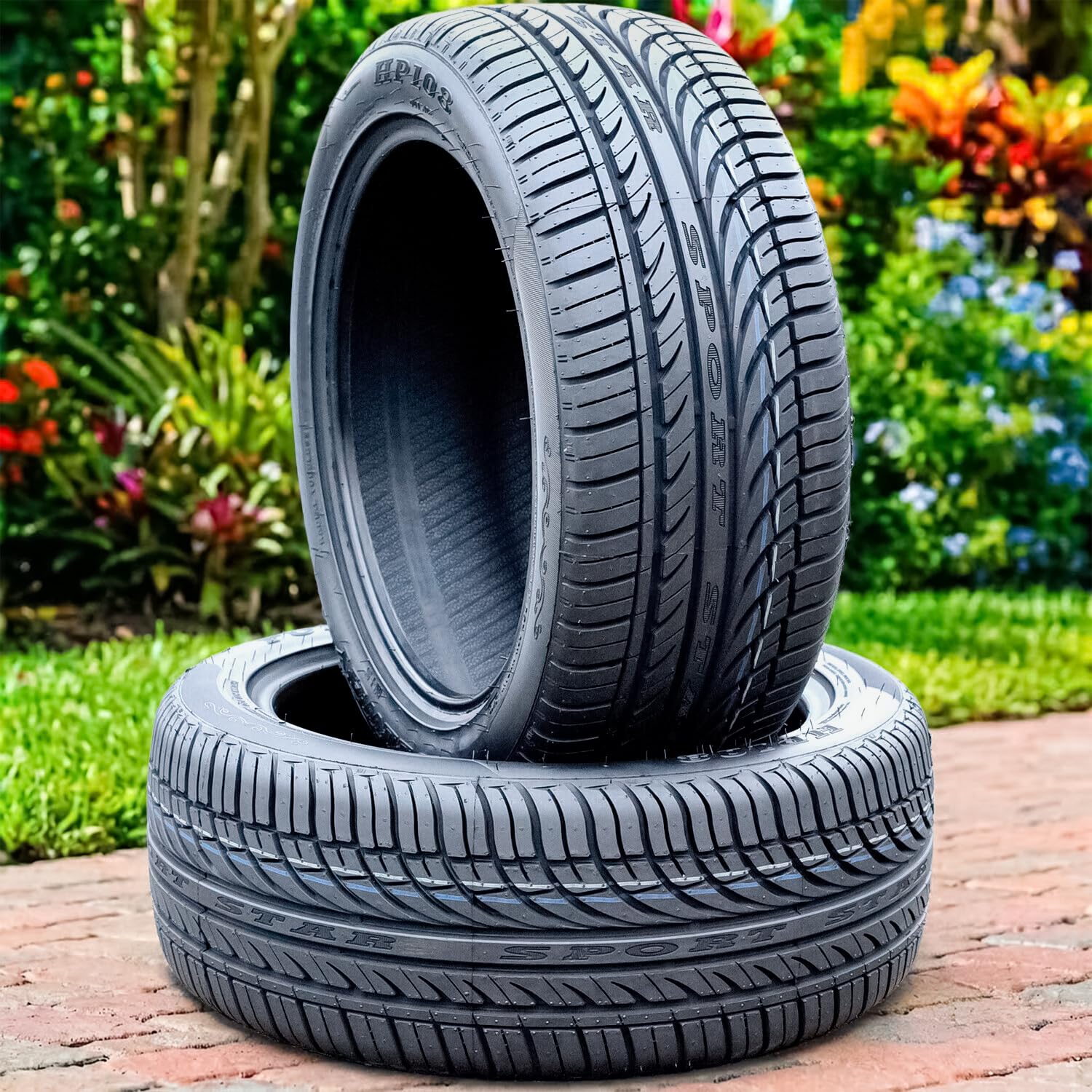
The Fullway HP108 is sold as a set of two tires, making it the most budget-friendly way to cover an axle on a vehicle that requires a pair of 205/50R17 rubber. The 4-ply rated XL construction provides the same 93 load index as premium competitors, though the tread compound and sidewall stiffness are tailored more toward long straight-line treadwear than aggressive cornering performance.
The symmetrical tread pattern uses independent shoulder blocks and wide lateral grooves to channel water away from the contact patch, offering decent wet-weather confidence for daily commuting. The UTQG 380AA rating indicates a harder compound that will resist wear over many miles, but owners should expect reduced grip in cold conditions compared to softer premium all-season blends.
Noise levels are higher than average at highway speeds, and the ride quality is noticeably firmer due to the lower-quality rubber damping characteristics. Still, for a dedicated commuter vehicle or a set of temporary tires, the Fullway HP108 provides budget-friendly XL-rated performance that meets the basic safety requirements of the 205/50R17 size specification.
What works
- Very accessible price for a pair of XL-rated tires
- UTQG 380AA suggests long tread life
- 4-ply construction meets the 93 load index requirement
What doesn’t
- High road noise at highway speeds
- Limited dry and wet grip compared to mid-range options
7. Michelin Energy Saver A/S

The Michelin Energy Saver A/S is a touring-focused all-season tire designed for low rolling resistance and maximum tread life, and in this size it carries a 94 load index (1,477 pounds) with a 55,000-mile manufacturer warranty — the strongest mileage guarantee in this comparison. The silica-based compound and energy-optimized tread pattern reduce internal friction, which can improve fuel economy by several percentage points compared to a standard high-performance tire.
Ride comfort is the standout feature here: the standard load (SL) construction and variable-pitch tread blocks dampen road noise effectively, making this tire the quietest option in the 205/50R17 category. The V speed rating (up to 149 mph) is sufficient for highway cruising, and the four wide circumferential grooves provide adequate wet-weather evacuation for a touring tire.
Where the Energy Saver A/S falls short is in spirited driving — the sidewalls are softer and the tread blocks are designed for stability in straight-line cruising rather than hard cornering. Enthusiasts looking for sharp turn-in will find the Michelin lacks the feedback of the Pilot Sport AS 4 or the Continental. For the high-mileage commuter who prioritizes treadwear, fuel savings, and a quiet cabin, however, this Michelin offers the longest-lasting solution for the 205/50R17 size.
What works
- 55,000-mile manufacturer treadwear warranty
- Low rolling resistance reduces fuel consumption
- Excellent ride comfort and low noise levels
What doesn’t
- Soft sidewalls limit cornering precision
- Premium price for a touring-oriented tire
Hardware & Specs Guide
Load Range and Maximum Pressure
Every tire in this guide except the Michelin Energy Saver A/S uses Extra Load (XL) construction, which allows higher inflation pressures (up to 50 PSI) to support the 1,433-pound load capacity. The SL (Standard Load) Energy Saver A/S runs at a lower optimal pressure, providing a softer ride at the expense of maximum load capacity. Matching the load range to your vehicle’s factory recommendation ensures proper contact patch shape and even treadwear.
UTQG Rating and Tread Life
The Uniform Tire Quality Grading system evaluates treadwear on a scale where higher numbers indicate longer wear. The Fullway HP108 and Falken ZE950 lean toward higher treadwear grades (380+), while the Continental and Michelin Pilot Sport AS 4 balance grip and longevity with mid-range wear ratings. A 50,000-mile warranty like the Continental’s signals that the manufacturer expects consistent tread depth retention under normal rotation schedules.
FAQ
What vehicles typically use 205/50R17 tires?
Can I replace 205/50R17 all-season tires with summer tires?
How often should I rotate a set of 205/50R17 tires?
Final Thoughts: The Verdict
For most buyers, the 205/50r17 tires winner is the Continental ExtremeContact DWS06 PLUS because it delivers the best all-round balance of wet and dry grip, snow capability, and a 50,000-mile treadwear warranty that premium competitors rarely match. If you want maximum dry-road performance and can accept a stiffer ride, grab the Michelin Pilot Sport AS 4. And for a budget-friendly all-season that still offers meaningful snow and wet traction, nothing beats the Falken Ziex ZE950.

Certification: BSc in Mechanical Engineering
Education: Mechanical engineer
Lives In: 539 W Commerce St, Dallas, TX 75208, USA
Md Amir is an auto mechanic student and writer with over half a decade of experience in the automotive field. He has worked with top automotive brands such as Lexus, Quantum, and also owns two automotive blogs autocarneed.com and taxiwiz.com.