A cabin air filter is one of those components that quietly governs your daily driving experience, yet most owners only think about it when odors, reduced airflow, or allergy symptoms force the issue. For the 2019 Ram 1500, the choice goes beyond a simple parts-store grab — the filtration media, carbon content, and frame rigidity directly impact how effectively your HVAC system removes pollen, exhaust gases, and fine particulate matter from the cabin environment.
I’m Amir — the founder and writer behind Four Wheel Ask. My approach to evaluating automotive components focuses on analyzing product specifications, comparing construction materials, and aggregating long-term owner feedback to separate marketing claims from real-world performance.
After analyzing filtration efficiency, build quality, and real-world owner feedback, we found the top picks for the best 2019 ram 1500 cabin air filter.
How To Choose The Best 2019 Ram 1500 Cabin Air Filter
Selecting the right cabin air filter for your 2019 Ram 1500 requires understanding a few key variables that affect both filtration performance and HVAC efficiency. Not all filters that fit the same slot deliver the same results.
Filtration Media Type
Standard particulate filters use pleated synthetic media to capture dust and pollen. Activated carbon filters add a layer of charcoal that adsorbs gases, odors, and ozone. For driving in urban traffic or areas with heavy exhaust exposure, the carbon layer makes a noticeable difference in cabin air freshness. HEPA-grade options push filtration further by trapping particles as small as 0.3 microns.
Frame Construction and Seal Quality
A filter’s frame determines how well it seats inside the housing. Rigid plastic frames with foam gaskets create a tighter seal, preventing unfiltered air from bypassing the media. Flexible or cardboard frames may fit initially but can warp over time, compromising the seal and allowing particulates to enter the cabin.
Service Life and Replacement Intervals
Most manufacturers recommend replacement every 12,000 to 15,000 miles, but driving conditions heavily influence that interval. Heavy dust, pollen seasons, and frequent idling in traffic accelerate media loading. A filter with higher media surface area and robust carbon loading will maintain airflow and adsorption capacity longer between changes.
Quick Comparison
On smaller screens, swipe sideways to see the full table.
| Model | Category | Best For | Key Spec | Amazon |
|---|---|---|---|---|
| Bosch 6090C | Premium | Overall Filtration Quality | HEPA Multi-Layer Media | Amazon |
| Spearhead Odor Defense | Mid-Range | Value & Longevity | Activated Carbon Electrostatic | Amazon |
| KAX Premium ProSeries | Mid-Range | High Efficiency | Dual Carbon 99.9% PM2.5 | Amazon |
| ZEZUT CF11671 | Premium | Durable Construction | Honeycomb HEPA Structure | Amazon |
| iRKY CF11671 | Budget | Essential Replacement | Basic Activated Carbon | Amazon |
In‑Depth Reviews
1. Bosch 6090C HEPA Cabin Air Filter

Bosch brings decades of filtration engineering to the 6090C, a HEPA-grade cabin filter designed specifically for the 2019 Ram 1500 and compatible HD truck variants. The multi-layer media construction combines a pre-filter layer for larger particulates with a dense HEPA layer that captures finer particles down to 0.3 microns, making it one of the most capable options for drivers who prioritize air quality over basic debris removal.
What sets the 6090C apart from many competitors is its frame rigidity and seal design. The reinforced frame resists warping under humidity and temperature cycles, maintaining consistent contact with the filter housing. Owner feedback frequently notes that the fitment is precise, with no rattling or gaps that would allow bypass airflow. For allergy sufferers or those driving in high-pollution areas, the HEPA certification provides verifiable performance rather than marketing ambiguity.
The trade-off comes in airflow resistance. HEPA-grade media is inherently denser than standard pleated material, which can slightly reduce HVAC airflow at lower fan speeds. Most users report the difference is negligible during normal operation, but those who regularly run their system on low settings may notice a marginal reduction. Bosch recommends annual replacement, and the build quality supports that interval under moderate driving conditions.
What works
- HEPA-grade filtration captures sub-micron particles effectively
- Reinforced frame maintains consistent seal over time
- Trusted brand with strong quality control standards
What doesn’t
- Denser media may slightly reduce airflow at low fan speeds
- Premium build commands a higher investment than basic filters
2. Spearhead Odor Defense Breathe Easy Cabin Filter
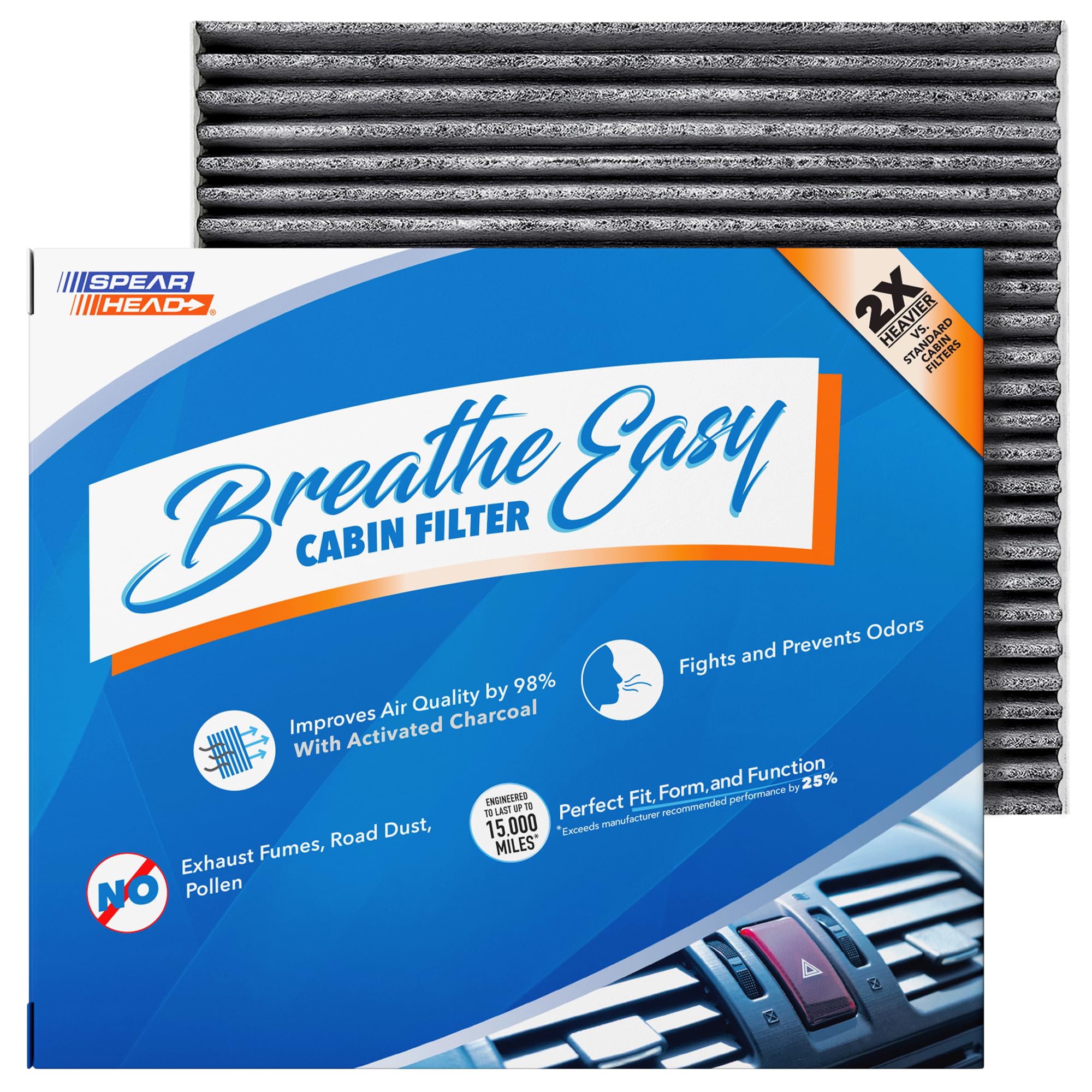
Spearhead’s Odor Defense Breathe Easy filter targets the sweet spot between cost-conscious replacement and meaningful performance upgrades. The core differentiator is the coconut shell activated carbon layer, which provides real adsorption capacity for exhaust fumes, road debris odors, and VOCs without requiring a premium outlay. The electrostatic media is designed to attract and hold fine particles through static charge rather than relying solely on mechanical filtration.
The manufacturer claims up to 25% longer service life compared to standard 12,000-mile filters, which aligns with the media density and carbon loading observed in the construction. The precision-woven pleating maintains a reasonable pressure drop, meaning HVAC airflow remains strong even as the media loads over time. For Ram 1500 owners who do frequent highway commuting or city driving with stop-and-go traffic, the extended life window reduces the hassle of mid-season replacements.
Where the Spearhead filter makes concessions is in the frame construction. While functional and properly dimensioned, the frame does not feel as substantial as the Bosch or ZEZUT units. It seals adequately when new, but long-term durability in high-humidity environments may not match the reinforced alternatives. For the owner seeking a reliable, everyday filter with good odor control at a reasonable cost, this remains a strong contender.
What works
- Real coconut shell activated carbon handles odors effectively
- Extended 15,000-mile service life reduces replacement frequency
- Electrostatic media improves fine particle capture
What doesn’t
- Frame less rigid than premium-tier competitors
- Carbon layer thickness is moderate compared to dual-layer designs
3. KAX Premium ProSeries Cabin Air Filter

KAX’s ProSeries filter brings a dual-layer carbon matrix that outperforms basic carbon-infused media by a measurable margin. The independent lab testing shows 99.9% PM2.5 filtration efficiency, which places it well above standard particulate filters and into the territory of specialized allergy-grade options. The dual-layer approach separates mechanical filtration from gas-phase adsorption, allowing each layer to operate at peak efficiency without compromising the other.
Airflow optimization was a clear design priority. The media pleating and spacing are engineered to reduce airflow resistance by roughly 15% compared to OEM-grade filters, which means the HVAC fan can move more air with less strain. This is particularly noticeable during summer months when maximum cooling airflow is desired. The fitment precision is another strong point — KAX subjects the installation process to multiple rounds of testing, and the result is a tool-free install that seats securely in the housing.
The main consideration with the KAX ProSeries is that the lightweight construction, while beneficial for airflow, may not feel as durable in hand as some heavier-duty alternatives. The carbon matrix is effective but will deplete faster under extreme exposure to pollutants. For the typical daily driver who wants noticeably cleaner cabin air and strong odor control without modifying the HVAC system, this filter delivers measurable results.
What works
- 99.9% PM2.5 efficiency verified by testing
- Optimized pleating reduces airflow restriction noticeably
- Tool-free installation with verified fitment accuracy
What doesn’t
- Lightweight frame may not withstand heavy handling
- Carbon adsorption capacity depletes faster under high pollutant loads
4. ZEZUT CF11671 Honeycomb Cabin Air Filter
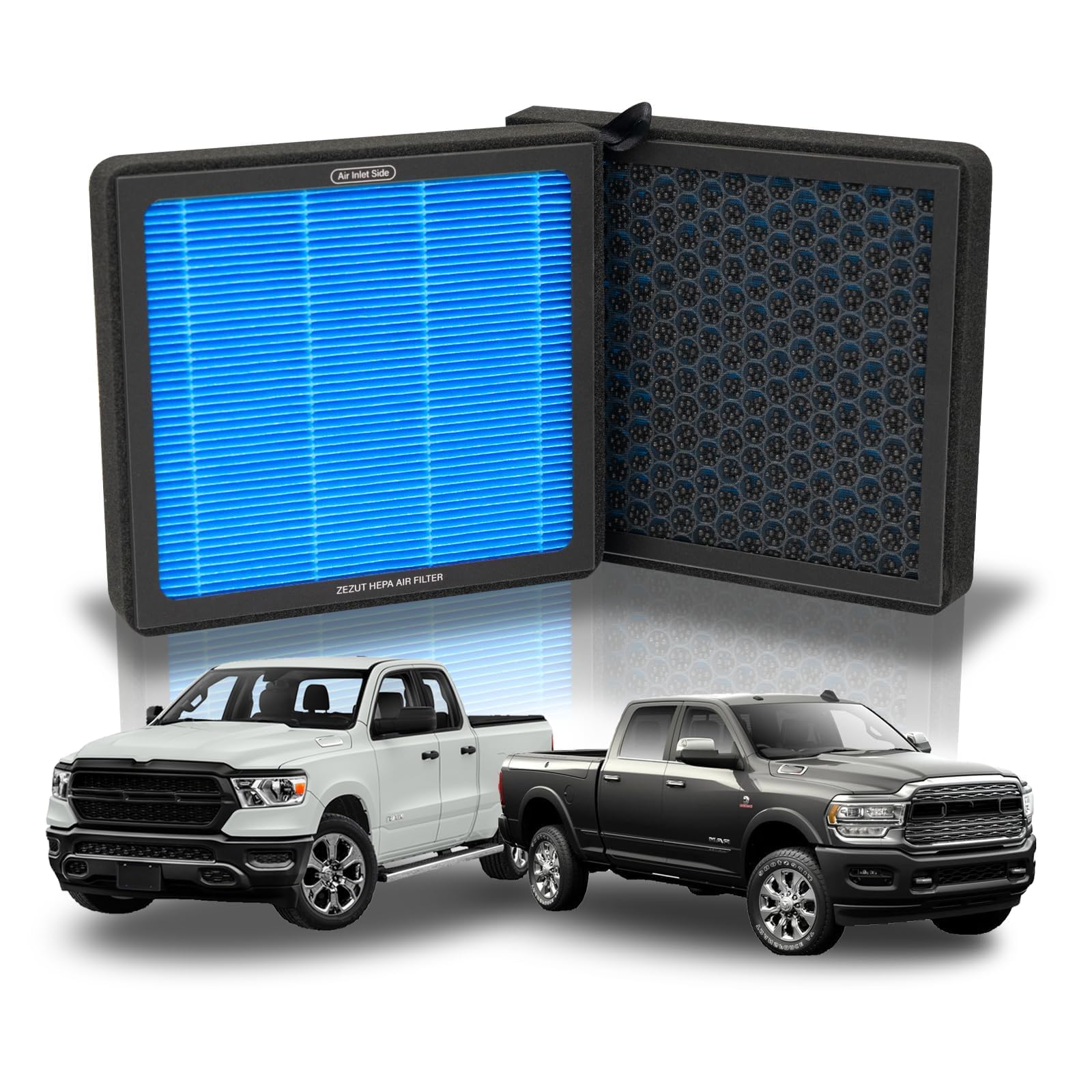
ZEZUT’s CF11671 distinguishes itself through a honeycomb structural support system integrated into the media layup. This design provides exceptional rigidity and pleat spacing uniformity, ensuring that the filter media maintains consistent surface area exposure across the entire service life. The honeycomb core prevents pleat collapse even under high airflow conditions, a common failure point in cheaper filters that rely solely on flexible media stiffness.
The activated carbon bead infusion adds another layer of performance. Rather than using a carbon-impregnated substrate, ZEZUT embeds discrete carbon beads into the media matrix, increasing the surface area available for gas adsorption. The filter meets HEPA standards for particulate removal, capturing up to 99.102% of airborne particles during testing. The sturdy corrugated box packaging also speaks to the manufacturer’s attention to product condition upon delivery — a detail that matters for maintaining filter integrity before installation.
The weight of this filter is notably higher than most competitors, which reflects the denser material construction and the honeycomb reinforcement. While this contributes to durability, it also means the filter presents slightly more resistance to airflow than a standard pleated design. Owners who prioritize absolute maximum HVAC output may notice a minor trade-off, but for those seeking robust build quality and verified filtration standards, the ZEZUT filter offers a compelling package.
What works
- Honeycomb structure prevents pleat collapse and maintains performance
- Activated carbon beads provide strong odor adsorption
- HEPA-standard particulate removal with verified efficiency
What doesn’t
- Heavier construction may slightly reduce airflow volume
- Premium build commands a higher investment than entry-level filters
5. iRKY CF11671 Cabin Air Filter
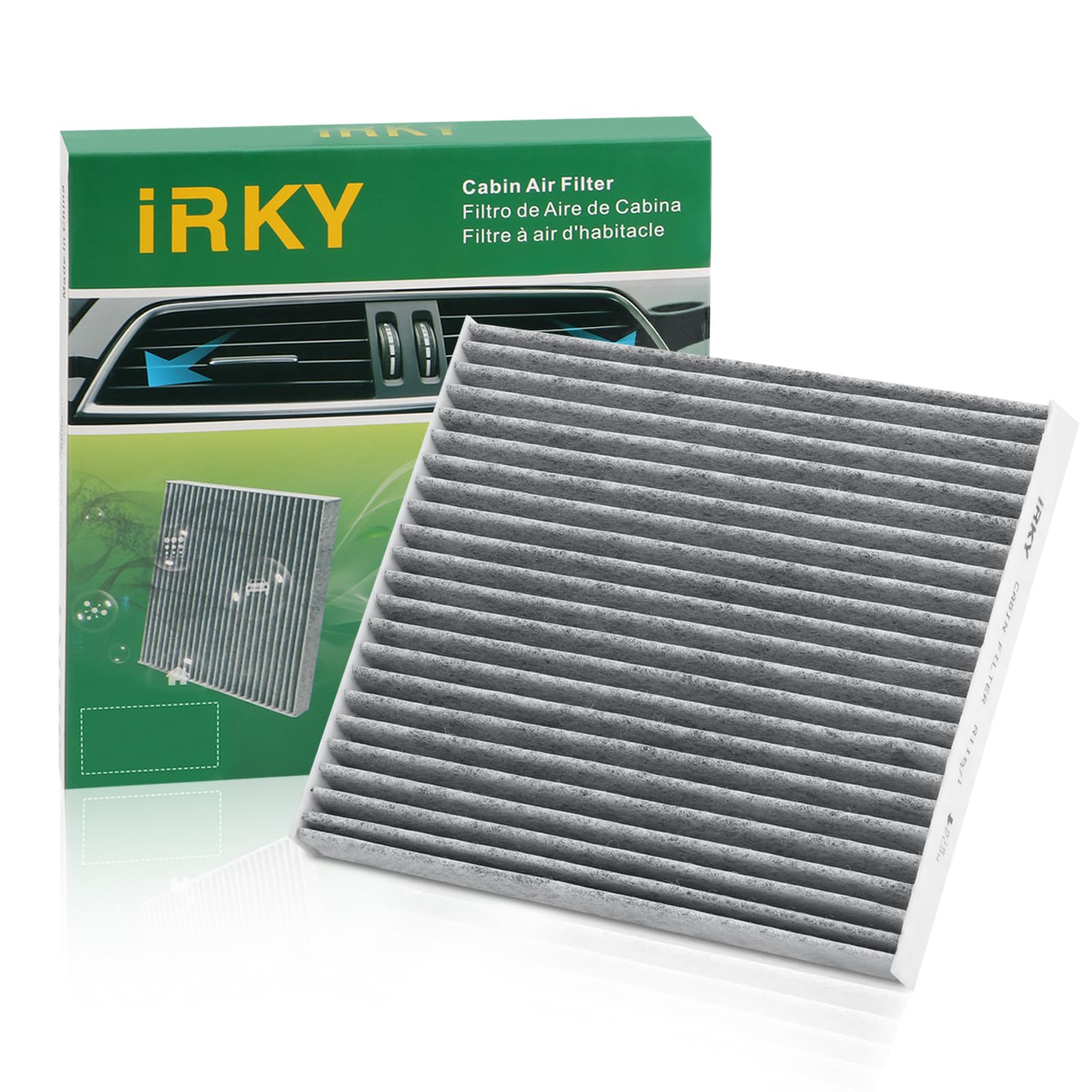
The iRKY CF11671 represents the entry point for Ram 1500 owners who need a functional cabin air filter with basic activated carbon capability at a controlled cost. The pleated media includes a fine activated carbon layer that provides meaningful odor reduction for exhaust fumes and ambient pollutants, making it a step above standard white particulate filters. The advertised compatibility covers the full range of 2016-2026 Ram 1500 models along with HD variants.
Installation simplicity is a highlight — the filter slides into the housing without modification, and the airflow direction arrows are clearly marked. For owners performing their first cabin filter replacement, the straightforward design reduces the chance of improper installation. The manufacturer recommends replacement annually or every 12,000 miles, which aligns with industry-standard intervals and keeps maintenance expectations clear.
The trade-offs appear in material refinement. The carbon layer is less substantial than what dual-layer or honeycomb designs offer, and the frame uses a lighter-grade plastic that may not hold its shape as well through multiple temperature cycles in extreme climates. For the budget-conscious owner who wants carbon filtration without over-investing, the iRKY filter delivers essential protection. Those seeking maximum performance or extended service intervals will find more capability in the higher-tier options.
What works
- Activated carbon layer improves cabin air over basic filters
- Simple installation with clear airflow direction indicators
- Broad compatibility across Ram truck generations
What doesn’t
- Carbon layer less substantial than premium dual-layer designs
- Frame material may deform under extreme temperature cycling
Hardware & Specs Guide
Activated Carbon Media
Carbon-infused filters use a process called adsorption, where gas molecules bond to the surface of the carbon particles. Coconut shell carbon offers a higher density of micro-pores compared to coal-based alternatives, increasing the surface area available for trapping odors, VOCs, and exhaust gases. The thickness of the carbon layer and the size of the carbon granules directly affect how long the filter remains effective before the adsorption sites become saturated.
HEPA and PM2.5 Ratings
HEPA certification requires capturing 99.97% of particles at 0.3 microns, the most penetrating particle size. PM2.5 refers to particulate matter smaller than 2.5 microns, which includes combustion byproducts and fine dust. Filters that advertise PM2.5 efficiency are tested specifically at that size range. Understanding these ratings helps match filter capability to your driving environment — urban commuters benefit more from high PM2.5 and carbon performance than rural drivers who primarily face pollen and dust.
Frame and Seal Construction
The frame material determines how well the filter maintains its shape and seal within the housing. Rigid plastic frames with foam gaskets provide the most consistent seal across temperature and humidity changes. Cardboard or flexible frames may install easily but can warp over time, creating gaps that allow unfiltered air to bypass the media. For the 2019 Ram 1500, a filter with a reinforced frame and integrated seal foam will deliver the most consistent long-term performance.
Service Life Considerations
While manufacturers advertise 12,000 to 15,000-mile service intervals, actual filter life depends heavily on driving conditions. Heavy traffic, construction zones, agricultural areas, and high pollen seasons all accelerate media loading. A filter with higher media surface area and robust carbon loading will maintain airflow and adsorption capacity longer. Checking the filter visually every six months and replacing it when visible debris accumulates or airflow drops is a more reliable approach than strictly following mileage intervals.
FAQ
How often should I replace the cabin air filter on my 2019 Ram 1500?
What is the difference between a standard filter and an activated carbon filter?
Can I install the cabin air filter myself on a 2019 Ram 1500?
What signs indicate my cabin air filter needs replacing?
Final Thoughts: The Verdict
For most buyers, the 2019 ram 1500 cabin air filter winner is the Bosch 6090C because it combines HEPA-grade filtration with a rigid frame and consistent seal quality that outperforms basic carbon filters. If you want strong odor control and verified PM2.5 efficiency without the HEPA price premium, grab the KAX ProSeries. And for durable construction with honeycomb reinforcement that maintains pleat integrity over time, nothing beats the ZEZUT CF11671.

Certification: BSc in Mechanical Engineering
Education: Mechanical engineer
Lives In: 539 W Commerce St, Dallas, TX 75208, USA
Md Amir is an auto mechanic student and writer with over half a decade of experience in the automotive field. He has worked with top automotive brands such as Lexus, Quantum, and also owns two automotive blogs autocarneed.com and taxiwiz.com.