Choosing the right air filter for your 2018 Nissan Rogue means deciding between a handful of aftermarket options that all claim better engine protection, longer life, or cleaner cabin air. The real question is which one actually delivers on its promises for your specific driving conditions and budget comfort level.
I’m Amir — the founder and writer behind Four Wheel Ask. I have spent years analyzing product specifications, studying filter media construction, and cross-referencing owner feedback across thousands of Nissan Rogue maintenance threads to identify what truly matters when selecting an air filtration upgrade.
In this guide, I break down the top options available for your Rogue, evaluating factors like filter media quality, fitment precision, and real-world owner satisfaction. After thorough market analysis and owner feedback review, the best 2018 nissan rogue air filter delivers reliable engine protection and consistent airflow performance.
How To Choose The Best 2018 Nissan Rogue Air Filter
The 2018 Nissan Rogue uses two separate filtration systems — an engine air filter that feeds the intake and a cabin air filter that conditions the air entering the passenger compartment. Selecting the right replacement means understanding filter media, fitment verification, and the specific demands of your driving environment.
Engine Air Filter vs Cabin Air Filter
The engine air filter is a rigid rectangular panel that sits inside the air box mounted on the intake duct, protecting the 2.5L four-cylinder from dust and debris before combustion. The cabin air filter, typically located behind the glove box, captures pollen, road dust, and exhaust particulates before they reach the HVAC system. Many owners replace both at the same interval, but the performance demands differ significantly — the engine filter must flow enough air for combustion without restriction, while the cabin filter prioritizes fine particle capture.
Filter Media and Construction Quality
Standard paper media offers reliable filtration at a low entry point but begins losing efficiency as pleats load with debris. Synthetic blended media, found in mid-range options, maintains consistent airflow over a longer service window. HEPA-rated media, which traps 99.97% of particles at 0.3 microns, is reserved for cabin filters where respiratory protection matters most. Pre-oiled media, used in some aftermarket engine filters, relies on tacky oil coating to catch particles rather than dense fiber layers — this can flow more air but requires careful oiling to avoid MAF sensor contamination.
Fitment Verification and OEM Part Numbers
The 2018 Rogue engine air box accepts filters that cross-reference to OEM numbers 16546-4BA01, 16546-4BA1A, and 16546-4BC1A. The cabin filter slot uses part numbers 27277-4BU0A or 27277-BA0A. Always verify that the aftermarket filter lists these specific OEM equivalents in its compatibility notes, because dimensional variances of even a few millimeters can create air bypass gaps that render the filter useless. Using Amazon’s My Garage tool or double-checking the manufacturer’s fitment chart is the only way to confirm exact compatibility before purchasing.
Replacement Intervals and Driving Conditions
Nissan recommends replacing both filters every 12,000 miles or 12 months under normal driving conditions. Extended-life filters from brands like K&N advertise 18,000-mile service windows, though this assumes mostly highway driving with moderate particulate exposure. If you regularly drive on unpaved roads, in heavy urban traffic, or in areas with seasonal pollen spikes, cutting that interval in half is a smart practice. Visual inspection every oil change — looking for visible dirt loading, oil contamination, or collapsed pleats — remains the most reliable way to determine actual replacement timing.
Quick Comparison
On smaller screens, swipe sideways to see the full table.
| Model | Category | Best For | Key Spec | Amazon |
|---|---|---|---|---|
| K&N KNA-5016 | Engine Filter | Extended service life | 18,000-mile replacement window | Amazon |
| Bosch 6086C | Cabin Filter | HEPA-grade cabin air | 99.97% efficiency at 0.3 microns | Amazon |
| HMENG Combo | Combo Pack | Complete engine and cabin refresh | Includes both filter types | Amazon |
| EPAuto GP858 | Engine Filter | Budget-friendly direct replacement | OEM equivalent rigid panel | Amazon |
| A-Premium Pre-oiled | Engine Filter | High-flow pre-oiled media | Pre-oiled synthetic construction | Amazon |
In‑Depth Reviews
1. K&N KNA-5016 Engine Air Filter
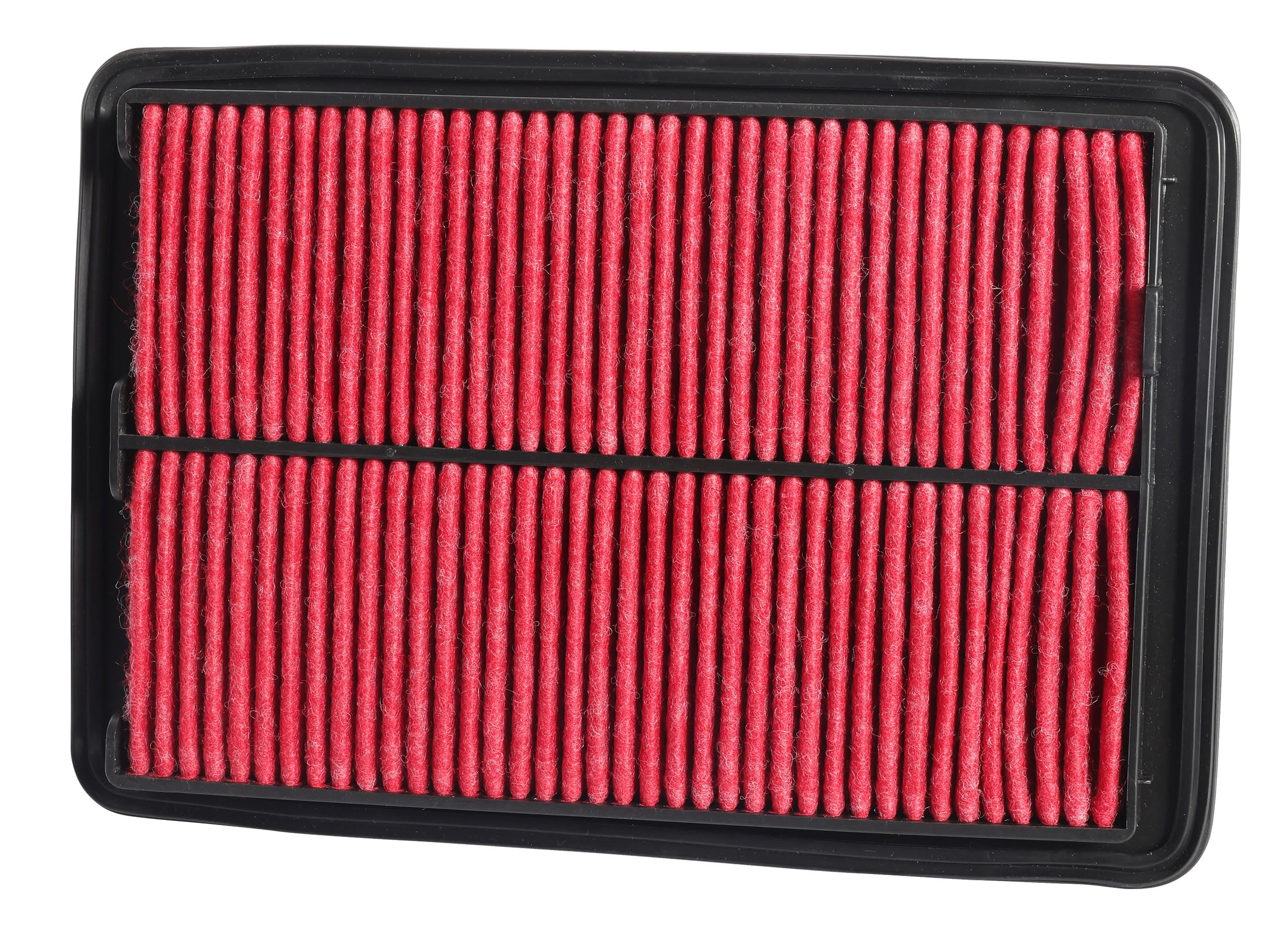
The K&N KNA-5016 uses a dense synthetic media blend rather than traditional paper, giving it a claimed service life of 18,000 miles — a 50% increase over standard 12,000-mile replacements. The filter media is engineered to achieve up to 99% particle capture efficiency while maintaining the airflow volume the 2.5L engine demands under load. This makes it a strong option for owners who want a single filter that stays effective through multiple oil change intervals without degradation.
Construction quality is immediately apparent when handling the filter. The perimeter frame is rigid urethane that seals tightly against the air box housing without crushing or deforming during installation, which eliminates the bypass gaps that plague cheaper filters with flexible plastic frames. The media pleats are evenly spaced and bonded to the frame with a continuous adhesive bead — no gaps or thin spots that would allow unfiltered air to reach the MAF sensor or throttle body.
For 2018 Rogue owners who cover highway miles daily or live in areas with moderate dust levels, the extended replacement window adds genuine convenience. The one-year limited warranty provides baseline protection, and the manufacturer’s reputation for rigorous testing — including ISO-based filtration validation — gives confidence that the 99% efficiency claim holds over the full service interval rather than just at the point of installation.
What works
- Extended 18,000-mile service interval reduces maintenance frequency
- Rigid urethane frame prevents air bypass and warping
- High particle capture efficiency maintained across service life
- OEM cross-reference compatibility with 2014-2019 Rogue models
What doesn’t
- Initial cost is above standard paper filter pricing
- Premium construction is overkill for low-mileage or urban-only driving
2. Bosch 6086C HEPA Cabin Air Filter

The Bosch 6086C is certified to HEPA standards under ISO 29463-3:2011, meaning it traps 99.97% of airborne particulates at 0.3 microns — a level of filtration efficiency that far exceeds standard cabin air filters. This is achieved through a multi-layer media stack that includes a melt-blown electrostatic layer and a dense synthetic base, with an additional static cotton layer that increases the dirt-holding capacity before the filter reaches its pressure drop limit.
Structural ribs run across the filter face to maintain pleat geometry under the airflow loads generated by the Rogue’s HVAC blower at high speed. This prevents the media from collapsing or flexing in ways that create preferential flow paths — a common failure mode in budget cabin filters that bypass unfiltered air around the edges. The media contains no chemical odor neutralizers, which is important for owners sensitive to scented filter treatments that can mask rather than remove contaminants.
For 2018 Rogue owners who prioritize cabin air quality — especially those with allergies, asthma, or who drive in heavy traffic or agricultural areas — the HEPA certification provides verifiable protection rather than marketing claims. Bosch recommends annual or 12,000-mile replacement, consistent with standard intervals, and the filter fits both the 2014-2020 Rogue and 2017-2022 Rogue Sport without modification.
What works
- Certified HEPA efficiency traps 99.97% of particulates at 0.3 microns
- Multi-layer media with electrostatic capture for superior small-particle retention
- Structural ribs prevent pleat collapse at high blower speeds
- No chemical odor neutralizers added to media
What doesn’t
- Premium media increases airflow resistance vs standard cabin filters
- Higher density media may require more frequent replacement in dusty climates
3. EPAuto GP858 Engine Air Filter
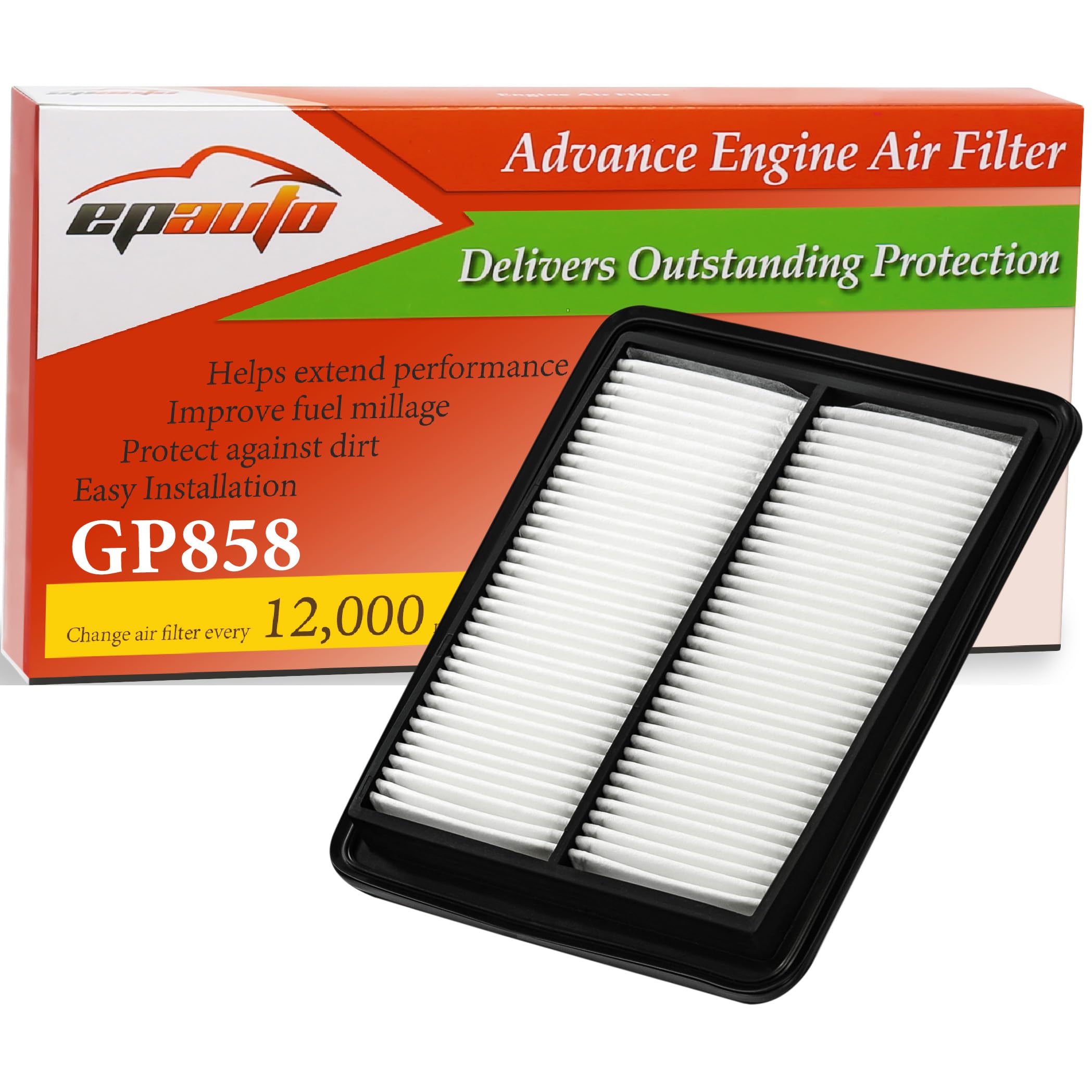
The EPAuto GP858 is a straightforward, no-nonsense rigid panel filter designed as a direct cross-reference for the OEM Nissan part numbers 16546-4BA01 and 16546-4BC1A. It uses a pleated paper media bonded into a rigid rectangular frame that matches the factory air box dimensions precisely — an important detail because even slight dimensional variation can allow unfiltered air to bypass the filter entirely. At its price point, it represents the baseline standard of what a replacement engine air filter should deliver.
Pleat count and spacing are consistent across the entire media surface, and the perimeter gasket is a compressible foam that conforms to the air box lid without requiring excessive clamping force. The filter is rated for 12,000-mile replacement intervals, which aligns with Nissan’s factory maintenance schedule and makes it easy to pair with cabin filter changes at the same mileage mark. The manufacturer suggests pairing it with the CP854 cabin filter for a complete refresh, which simplifies ordering for owners who replace both simultaneously.
For 2018 Rogue owners who follow the factory maintenance schedule and want a reliable filter without paying for extended-life features they do not need, the GP858 delivers exactly what is required. It protects the engine from intake debris, flows sufficient air for the 2.5L engine across the full RPM range, and does so at a price point that makes biannual replacement painless. The rigid frame also means it stores well without warping if you buy a multi-pack for future changes.
What works
- Precise OEM-equivalent dimensions eliminate air bypass concerns
- Consistent pleat spacing ensures uniform filtration across the media surface
- Compressible foam gasket conforms to air box lid for a reliable seal
- Budget-friendly pricing compatible with 12,000-mile replacement cycles
What doesn’t
- Paper media cannot be cleaned or extended beyond standard service life
- No performance benefit over factory filter for modified or tuned engines
4. HMENG Cabin & Engine Air Filter Combo
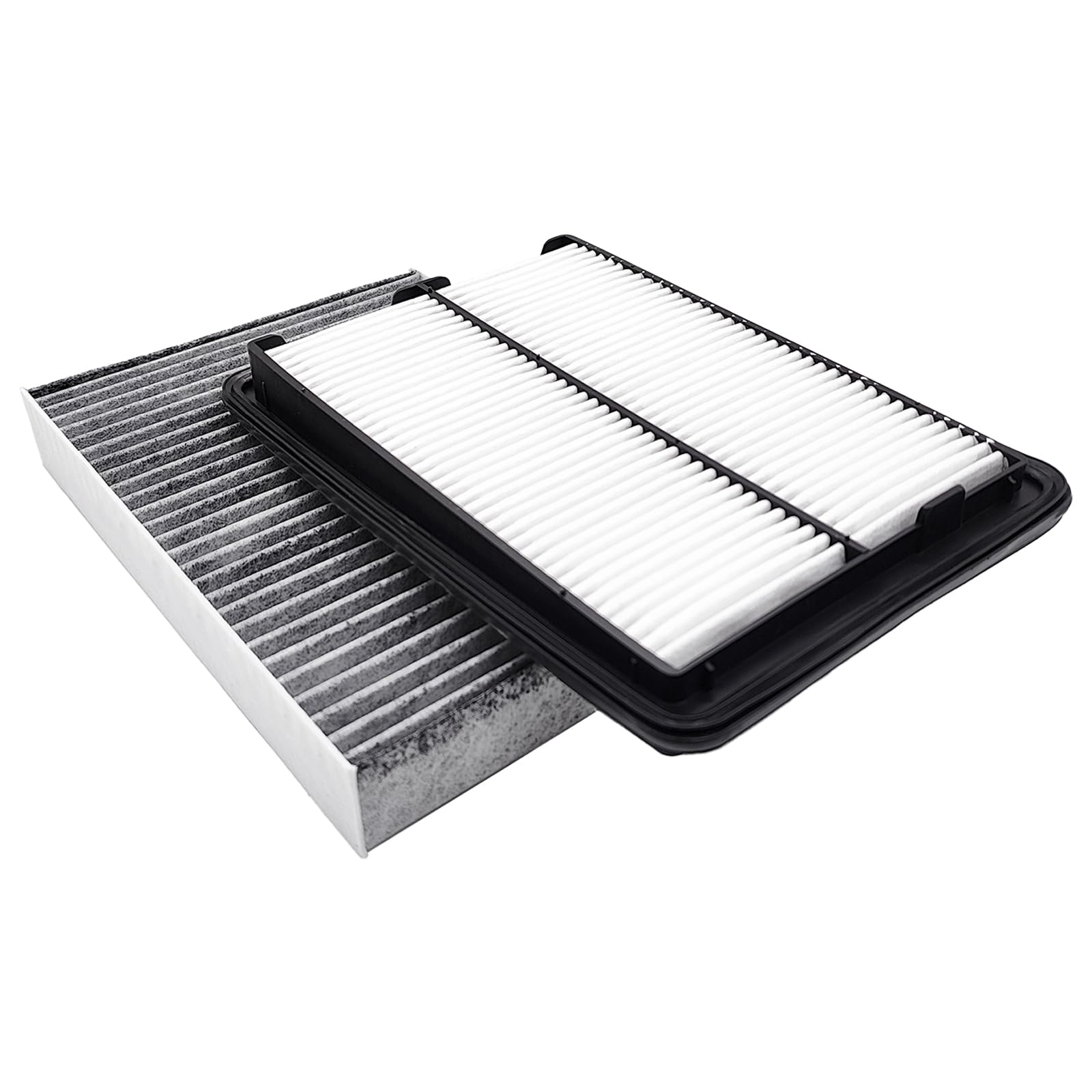
The HMENG combo pack includes both the engine air filter and the cabin air filter in a single purchase, cross-referenced to the full range of OEM part numbers for the 2014-2020 Rogue and 2017-2022 Rogue Sport. The engine filter uses a rigid rectangular panel design with pleated synthetic media, while the cabin filter uses a multi-layer construction that targets both particulate capture and odor reduction. For owners who prefer to replace both filters at the same time, this bundle eliminates the need to cross-shop separate listings and verify compatibility twice.
The cabin filter in the set replaces OEM numbers 27277-4BU0A and 27277-BA0A, fitting the Rogue’s glove box housing without trimming or adapter plates. The engine filter maintains the factory 12,000-mile replacement recommendation and has been tested to match the airflow characteristics of the OEM filter to avoid triggering lean-condition fault codes on the 2.5L engine. Both filters are manufactured to OE-grade dimensional tolerances, meaning no crushing or bending is required to seat them in their respective housings.
For 2018 Rogue owners tackling both filter replacements in a single maintenance session — a job that typically takes under 15 minutes with basic hand tools — the HMENG bundle offers the convenience of a coordinated set. The packaging includes clear labeling that identifies which filter goes where, removing the guesswork for first-time DIY owners. The one-unit count per filter is sufficient for a single complete change, and the pricing represents a modest savings versus buying two individual filters from separate brands.
What works
- Convenient single purchase covers both engine and cabin filtration needs
- OEM-equivalent part numbers verified for 2014-2020 Rogue compatibility
- OE-grade dimensional tolerances prevent installation difficulties
- Saves ordering time versus sourcing two separate filters
What doesn’t
- No extended-life option — both filters follow the standard 12,000-mile cycle
- Media quality is functional but does not match premium HEPA or long-life tiers
5. A-Premium Pre-oiled Engine Air Filter
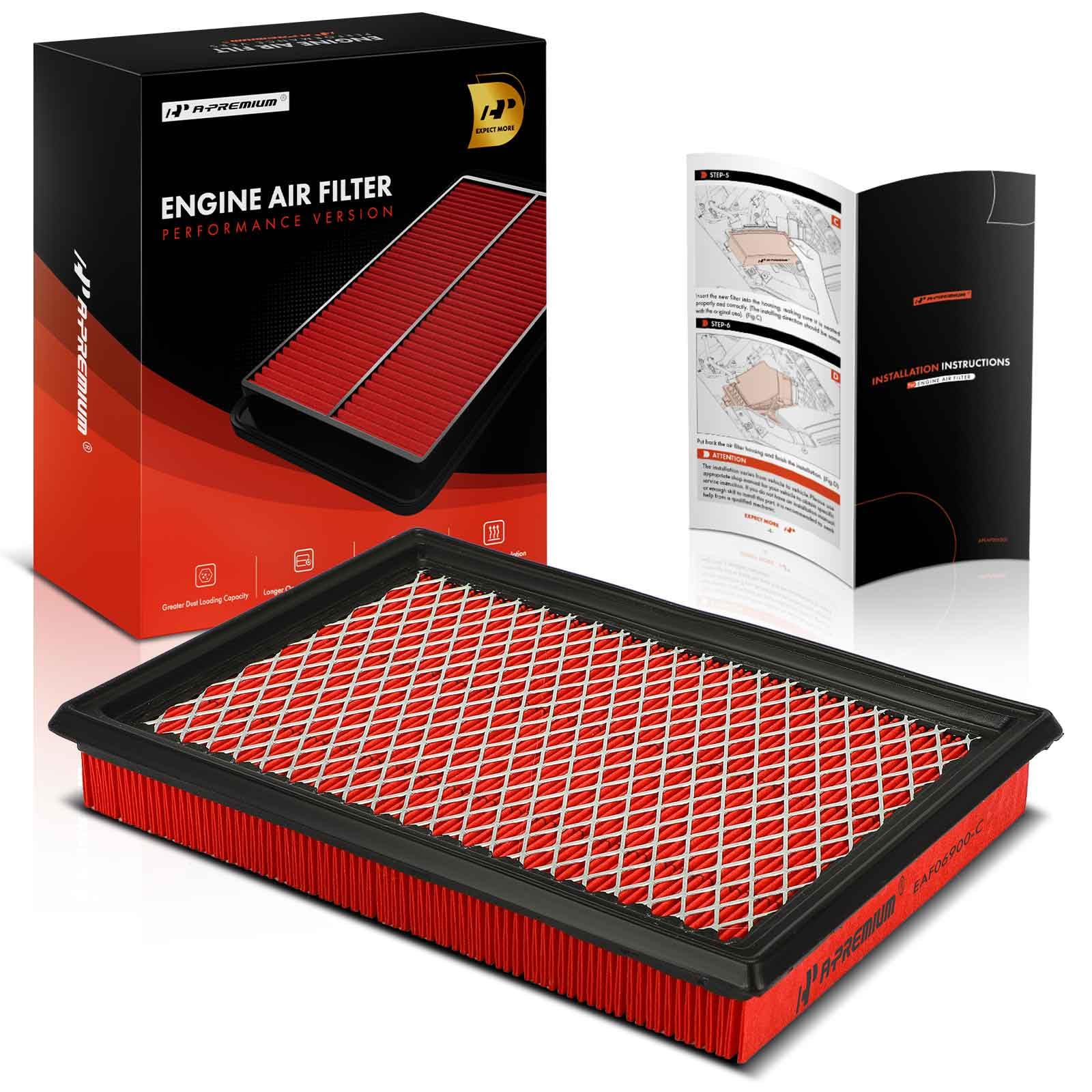
The A-Premium pre-oiled filter uses a synthetic media impregnated with a tacky oil coating designed to capture particulate matter through adhesive attraction rather than mechanical sieving alone. This approach can reduce airflow restriction compared to dense paper media while maintaining high particle retention, which appeals to owners looking for a filter that flows freely without sacrificing engine protection. The manufacturer lists compatibility with a wide range of Nissan and Infiniti applications, though 2018 Rogue owners should verify the specific fitment notes for their engine configuration.
Build quality centers on a rigid rectangular frame with dimensions of 9.25 by 6.97 by 1.50 inches, using a boxed packaging design that protects the pre-oiled media from contamination during shipping. The filter is classified as a non-washable, non-reusable replacement part — meaning it is designed for single-use service intervals rather than repeated cleaning and re-oiling like some performance filters. The manufacturer offers a one-year unlimited mileage warranty on materials and workmanship, which provides a basic safety net against manufacturing defects such as media separation or frame cracking.
For 2018 Rogue owners who are curious about pre-oiled filter technology but do not want to commit to a reusable system that requires periodic cleaning, this filter offers a chance to evaluate the performance characteristics without the ongoing maintenance commitment. The extended service window claim — where the filter operates over longer periods between changes — assumes moderate driving conditions, and visual inspection at each oil change remains the smartest way to determine when replacement is actually needed rather than relying solely on mileage intervals.
What works
- Pre-oiled synthetic media reduces restriction while maintaining filtration
- Rigid frame with OE-compatible dimensions for secure air box fitment
- One-year warranty provides manufacturing defect protection
- Good entry point for owners exploring pre-oiled filter technology
What doesn’t
- Non-reusable design means full replacement at each service interval
- Over-oiling from the factory can potentially coat MAF sensor element
Hardware & Specs Guide
Filter Media Types Explained
Standard paper media uses cellulose fibers layered into a dense mat that physically blocks particles through mechanical sieving. Synthetic blended media incorporates polyester or nylon fibers for improved moisture resistance and more consistent pore size distribution. HEPA media adds a melt-blown electrostatic layer that attracts sub-micron particles via static charge, achieving the 99.97% capture rate at 0.3 microns required for HEPA certification. Pre-oiled media relies on a viscous oil coating applied to an open-cell synthetic substrate — particles stick to the oil rather than being trapped in the fiber matrix, which allows higher airflow at the cost of requiring precise oil loading to avoid oversaturation.
Filtration Efficiency and Airflow Trade-offs
Higher filtration efficiency typically comes at the expense of increased airflow resistance — a filter that traps 99% of particles creates more pressure drop than a filter rated at 95%. For the 2018 Rogue’s 2.5L naturally aspirated engine, the intake system is designed around a specific pressure drop range, and exceeding that range can alter the air-fuel mixture calculations made by the ECU. Cabin filters face a similar trade-off: a HEPA filter with very dense media may reduce HVAC blower output at high fan speeds, while a standard pleated cabin filter flows more freely but captures fewer fine particles. The optimal choice depends on whether your priority is maximum engine airflow or maximum cabin particle removal.
Dimensional Fitment and Sealing Surfaces
The 2018 Rogue engine air filter measures approximately 9.92 inches in length, 6.81 inches in width, and 1.22 inches in height, with a rectangular shape that seats into a molded plastic air box. The sealing surface is a compressible foam or urethane gasket that runs the full perimeter of the filter and must contact the air box lid uniformly to prevent unfiltered air from entering the intake stream. Cabin air filters for the Rogue are typically around 7.28 inches long, 10.04 inches wide, and 1.57 inches thick, with a pleated media that slides into a slot behind the glove box. Any dimensional deviation beyond a small fraction of an inch can compromise the seal or prevent the filter from seating at all.
Replacement Interval Calculations
The standard 12,000-mile replacement interval recommended by Nissan assumes average driving conditions with moderate particulate exposure. Extended-life filters rated for 18,000 miles achieve this by using thicker media with higher dirt-holding capacity, allowing them to accumulate more debris before reaching the same pressure drop as a standard filter at 12,000 miles. However, the actual interval depends on driving environment — a Rogue driven primarily on paved highways will load its filter much slower than one driven on gravel roads or in heavy urban stop-and-go traffic where exhaust recirculation increases fine particle exposure. Visual inspection at every oil change is the most reliable guide: if the media appears uniformly dark across the entire pleat surface rather than just at the leading edge, replacement is due regardless of mileage.
FAQ
How often should I replace the air filter on my 2018 Nissan Rogue?
What is the difference between engine air filters and cabin air filters on a Rogue?
Can I install an air filter myself on my 2018 Nissan Rogue?
What type of filter media is best for my 2018 Rogue engine?
Final Thoughts: The Verdict
For most buyers, the 2018 nissan rogue air filter winner is the K&N KNA-5016 because it delivers the longest service life with verified particle capture efficiency, making it the most convenient option for owners who want to minimize maintenance frequency without sacrificing engine protection. If you want HEPA-grade cabin air quality for allergy relief or respiratory protection, grab the Bosch 6086C. And for a straightforward, budget-conscious replacement that follows the factory maintenance schedule exactly, nothing beats the EPAuto GP858.

Certification: BSc in Mechanical Engineering
Education: Mechanical engineer
Lives In: 539 W Commerce St, Dallas, TX 75208, USA
Md Amir is an auto mechanic student and writer with over half a decade of experience in the automotive field. He has worked with top automotive brands such as Lexus, Quantum, and also owns two automotive blogs autocarneed.com and taxiwiz.com.