A musty smell every time you turn on the ventilation, reduced airflow from the dash vents, or seasonal allergies that flare up during your commute — these are the unmistakable signs that the cabin air filter in your 2017 Explorer has reached the end of its service life. Choosing the wrong replacement means wasted money on a part that either restricts HVAC performance, fails to trap road dust and pollen, or arrives with the wrong dimensions for the filter housing behind the glove box.
I’m Amir — the founder and writer behind Four Wheel Ask. My approach to building this guide combines weeks of cross-referencing manufacturer specifications, analyzing filter media construction across dozens of models, and studying hundreds of owner reports to identify which aftermarket options deliver consistent fitment and real-world filtration gains.
After studying filter layers and owner feedback, I found the top picks for the best 2017 ford explorer cabin air filter to clean your cabin air.
How To Choose The Best 2017 Ford Explorer Cabin Air Filter
A cabin air filter does far more than trap dust — it guards the evaporator core from debris, reduces the load on the blower motor, and determines whether the air entering the cabin smells fresh or carries exhaust fumes. Three factors separate a solid replacement from a frustrating misfit.
Filter Media Type
Standard pleated paper filters stop large particles like pollen and road grit but do little against odors or microscopic irritants. Activated carbon models use a layer of porous charcoal granules to adsorb gases, cigarette smoke, and VOCs. Some premium filters add a melt-blown electrostatic layer that meets HEPA standards, capturing 99.97% of particulates at 0.3 microns. For city drivers who encounter traffic fumes or rural drivers facing agricultural dust, a carbon-infused or HEPA-grade filter makes a noticeable difference in perceived air quality.
Frame Construction and Seal Integrity
The 2017 Ford Explorer filter housing is a tight rectangular pocket behind the glove box. Filters with thin or flexible cardboard edges can buckle during insertion, creating gaps that allow unfiltered air to bypass the media. Rigid plastic or reinforced frames hold their shape better and maintain consistent contact with the housing walls. A foam perimeter strip on some models further improves the seal, which matters most for owners who drive on unpaved roads or in high-pollen seasons.
Replacement Interval and Driving Conditions
Ford recommends replacing the cabin filter every 12,000 miles or 12 months, but real-world conditions often demand a shorter cycle. Heavy urban traffic exposes the filter to higher concentrations of diesel soot and brake dust. Extended use of recirculation mode also loads the filter faster because the same air passes through repeatedly. Owners who notice reduced fan speed or a stale smell well before the 12-month mark should inspect the filter and consider upgrading to a higher-capacity media that resists clogging.
Quick Comparison
On smaller screens, swipe sideways to see the full table.
| Model | Category | Best For | Key Spec | Amazon |
|---|---|---|---|---|
| BOSCH 6021C | HEPA Premium | Ultimate filtration quality | 99.97% at 0.3 microns | Amazon |
| K&N VF1011 | Washable | Long-term cost savings | Reusable / Lifetime warranty | Amazon |
| Motorcraft FP-68 | OEM Spec | Factory-grade fit assurance | OEM paper pleated media | Amazon |
| PureFlow PC99542X | Multi-Layer | Baking-soda odor control | 4 filtration layers / MERV 13 | Amazon |
| ECOGARD XC26155 | Value | Balanced cost and performance | 99.5% particle capture | Amazon |
| Spearhead BE-772 | Extended Life | Longer service intervals | 15,000-mile rated life | Amazon |
| KAX CF11176 | 5-Layer | High dust-holding capacity | Electrostatic + carbon media | Amazon |
| KisFace CF11176 | Electrostatic | Stiff frame for tight fit | Melt-blown + carbon layers | Amazon |
| ZEZUT CF11176 | Budget Carbon | Entry-level carbon upgrade | HEPA-standard / plastic frame | Amazon |
| Billowy 6021C | Economy 4-Layer | Basic odor reduction on a budget | 4-layer non-woven + carbon | Amazon |
| Forccord FOR00271 | Combo Pack | One-stop cabin + engine swap | Cabin + engine filter bundle | Amazon |
In‑Depth Reviews
1. BOSCH 6021C HEPA Cabin Air Filter

The BOSCH 6021C is certified to meet HEPA standards under ISO 29463-3:2011, delivering 99.97% filtration efficiency at the critical 0.3-micron particle size. That certification places it in a different tier than standard carbon filters, which typically capture particles down to only 5–10 microns. The melt-blown electrostatic layer actively attracts airborne contaminants, while an additional static cotton layer increases the total dust-holding capacity so the filter maintains airflow longer between replacements. Structural ribs run across the media to prevent the pleats from collapsing under high fan speeds, a detail that matters for owners who run the HVAC on maximum.
Compatibility covers the 2011–2019 Ford Explorer, along with the Flex, Police Interceptor Sedan and Utility, Special Service Police Sedan, and Taurus, plus Lincoln MKS and MKT models. The 9.25-by-8.27-inch footprint with a 1.3-inch thickness matches the factory housing dimensions closely, and the multi-layer construction does not rely on chemical odor neutralizers — the filtration is purely mechanical and electrostatic. For households with allergy sufferers or anyone who drives through areas with frequent agricultural burning or industrial emissions, the Bosch provides the highest level of protection in this category.
Owners who prioritize cabin air quality above all else and are willing to pay for independent HEPA certification will find the Bosch 6021C stands apart from the carbon-only competition. The lack of a foam seal strip means the rigid frame must seat perfectly, but the structural ribs keep the filter from deforming during insertion. Replacement at the standard 12-month interval is still recommended, though the higher capacity media may stretch to 15,000 miles under light use.
What works
- True HEPA certification verified to ISO 29463-3:2011
- Electrostatic melt-blown layer captures sub-micron particles
- Structural ribs maintain filter integrity over time
- No artificial fragrance or chemical odor neutralizer added
What doesn’t
- Higher upfront cost than basic carbon filters
- No foam perimeter strip for extra seal insurance
2. K&N VF1011 Lifetime Cabin Air Filter

The K&N VF1011 is the only washable and reusable cabin air filter in this lineup, engineered with a polyurethane frame and oiled cotton media that can be cleaned every 50,000 miles and reinstalled for the life of the vehicle. The initial investment is higher than any disposable filter on this list, but the total cost of ownership over five to seven years typically falls below the cumulative expense of buying disposable replacements every 12,000 miles. The filter is pre-treated at the factory and ready to drop into the factory air box without additional oiling — simply wash, dry, and reinstall when service is due.
Compatibility spans 2010–2020 Ford Explorer, Flex, Police Interceptor, and Taurus models, along with Lincoln MKS and MKT variants. The open-pleat cotton design delivers higher airflow compared to dense HEPA or carbon media, which translates to less strain on the blower motor and faster cabin temperature changes. Owners who have used K&N air filters on previous vehicles will recognize the same construction philosophy: the goal is to maximize airflow while trapping particles, rather than chasing the highest filtration efficiency numbers. A lifetime limited warranty backs the product, and the reusable nature keeps disposable filters out of landfills.
Owner reports consistently highlight the perfect fit for the 2016 Explorer XLT and the noticeable improvement in cabin air freshness after switching from disposable filters. The trade-off is that washable media cannot match the 0.3-micron efficiency of a HEPA-grade disposable filter, so drivers with severe allergies may still prefer a single-use HEPA option. For the majority of owners who want to reduce maintenance costs and avoid the yearly replacement chore, the K&N VF1011 is the most economical long-term choice.
What works
- Washable design eliminates recurring filter purchases
- Lifetime limited warranty provides long-term assurance
- Higher airflow reduces HVAC blower resistance
- Reduces landfill waste from disposable filters
What doesn’t
- Higher initial cost compared to single-use filters
- Cannot achieve HEPA-level sub-micron filtration
3. Motorcraft FP-68 Cabin Air Filter

The Motorcraft FP-68 is the genuine Ford-sourced replacement, manufactured to the same specifications as the filter that left the factory in the 2017 Explorer. The pleated paper media is straightforward — no carbon layer, no electrostatic charge, no HEPA claims — but it meets the original engineering requirements for airflow, particle retention, and dimensional accuracy. For owners who prefer to maintain factory specifications and avoid any risk of fitment variance, the Motorcraft FP-68 guarantees that the filter will seat correctly in the housing without trimming or forcing.
The paper media captures large particles like leaves, insects, and coarse dust effectively, but it offers limited protection against odors, exhaust fumes, or sub-micron allergens. The absence of activated carbon means there is no chemical adsorption layer to tackle VOCs or cigarette smoke. Owners who live in areas with clean air and change the filter regularly may find the OEM paper specification perfectly adequate, especially if the vehicle is used primarily for highway commuting where odor exposure is minimal.
Build quality reflects the same standards as the rest of the Motorcraft line: consistent pleat spacing, a rigid frame that resists buckling during insertion, and a fit profile that matches the Explorer housing exactly. The trade-off is that aftermarket carbon filters at a similar or lower price point offer additional odor control that the OEM part cannot match. For warranty-conscious owners or those who simply want a guaranteed drop-in replacement without researching aftermarket options, the Motorcraft FP-68 removes all uncertainty.
What works
- 100% OEM fitment guarantee for 2017 Explorer
- Rigid frame resists deformation during installation
- Maintains factory HVAC airflow specifications
- No risk of aftermarket compatibility issues
What doesn’t
- No activated carbon layer for odor removal
- Basic paper media cannot capture sub-micron particles
4. PureFlow PC99542X Cabin Air Filter

The PureFlow PC99542X from Premium Guard uses four distinct filtration levels in a single cartridge: a preliminary layer for large debris, a particulate filtration media for fine dust and pollen, an activated charcoal layer infused with baking soda to adsorb gases and neutralize odors, and a final support layer that maintains structural integrity. The MERV 13 rating indicates the filter captures particles in the 0.3-to-1.0-micron range with high efficiency, placing it well above basic carbon filters but below true HEPA certification. The baking soda infusion targets persistent smells like pet odors, cooking fumes, and tobacco smoke more aggressively than standard activated carbon alone.
Compatibility is listed for 2020–2025 Ford Explorer models and the Police Interceptor Utility, meaning it does not directly cross-reference the 2017 Explorer in the manufacturer’s fitment guide. However, the physical dimensions and retention design share similarities with the earlier generation housing, and some owners have reported successful installation after verifying measurements. The filter weighs 0.7 pounds, notably heavier than typical carbon filters due to the dense media layers, which suggests a robust dust-holding capacity that could extend the replacement interval.
Owner reviews for the PureFlow on compatible models emphasize the ease of installation, the noticeable reduction in exterior odors, and the cost savings compared to dealer-installed replacements. The baking soda layer provides a fresh sensation without adding perfume-like fragrances, which appeals to drivers sensitive to scented products. Prospective buyers with a 2017 Explorer should confirm the physical dimensions against their factory filter before purchasing, as the listed vehicle range does not explicitly include the 2017 model year.
What works
- Four-layer construction with baking soda for odor control
- MERV 13 rating captures fine particulate matter
- Easy DIY installation on compatible models
- No added perfumes or chemical fragrances
What doesn’t
- Listed fitment starts at 2020 Explorer, verify for 2017
- Heavier media may reduce initial airflow slightly
5. ECOGARD XC26155 Cabin Air Filter

The ECOGARD XC26155 positions itself as a no-nonsense replacement that removes 99.5% of dust, pollen, air pollution, allergens, and pet dander from incoming air. The pleated paper media is engineered to promote good airflow through the HVAC system, which helps prevent premature wear on the blower motor caused by excessive backpressure. Compatible model coverage includes the 2011–2017 Ford Explorer, 2010–2017 Taurus, 2010–2018 Flex, and 2010–2016 Lincoln MKS, along with the Police Interceptor variants — a range that squarely includes the 2017 Explorer without ambiguity.
This filter replaces multiple cross-reference numbers including FRAM CF11176, Purolator C26155, WIX 24068, Motorcraft FP68, and OE AE9Z-19N619A, making it a universal fit for any owner who has previously used those brands. The paper media lacks an activated carbon layer, so odor and VOC adsorption is minimal — the focus is strictly on particulate removal. For drivers in areas with moderate air quality who change filters on schedule, the ECOGARD provides a reliable balance of cost and performance without paying for carbon impregnation they may not need.
The installation process follows the standard behind-the-glove-box procedure and takes approximately five minutes. The dimensions of 10.5 by 9 by 1.5 inches match the Explorer housing closely, and the pleated construction maintains consistent spacing to avoid airflow dead spots. Owners who prioritize affordability and proven filter efficiency over added odor control features will find the ECOGARD XC26155 delivers exactly what it promises: a straightforward replacement that meets the original equipment fit, form, and function at a reasonable price point.
What works
- 99.5% particulate removal at a competitive price
- Explicitly compatible with 2011-2017 Ford Explorer
- Reduces HVAC blower wear through good airflow
- Direct cross-reference to multiple OEM part numbers
What doesn’t
- No activated carbon layer for odor adsorption
- Paper media cannot capture sub-micron particles like HEPA
6. Spearhead BE-772 Breathe Easy Cabin Filter
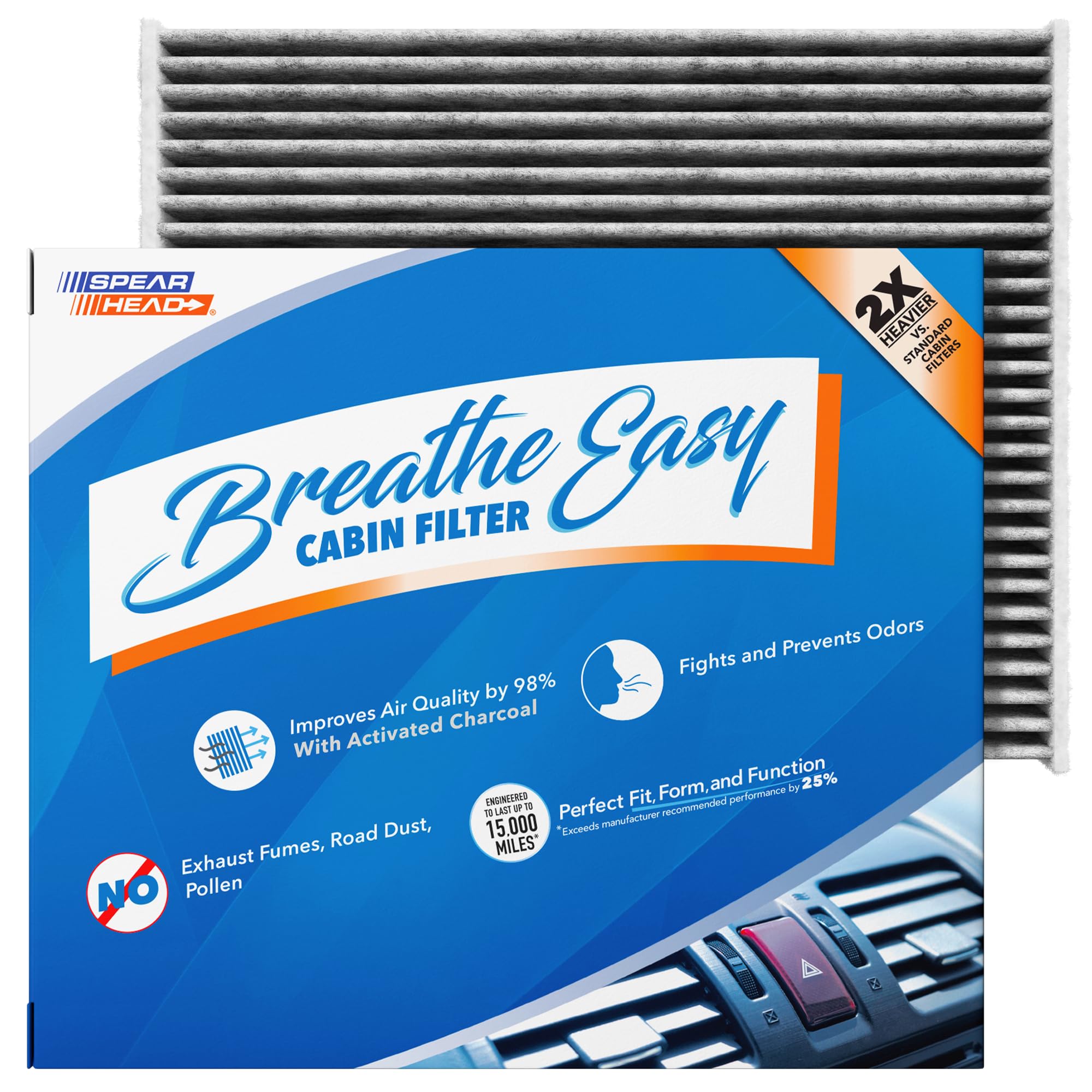
The Spearhead BE-772 is engineered with a 15,000-mile service life — 25% longer than the industry-standard 12,000-mile replacement interval — achieved through precision-woven electrostatic media infused with real coconut shell activated carbon. The coconut-shell carbon has a higher micropore density than coal-based alternatives, which improves its ability to adsorb volatile organic compounds and nuisance odors. The filter media weighs approximately twice as much as standard cabin filters, reflecting the dense packing of electrostatic fibers and carbon granules that increase the total particle-holding capacity.
Compatibility covers 2021–2025 Bronco and Bronco Sport, 2020–2025 Escape, 2020–2025 Explorer, 2022–2025 Maverick, 2021–2025 Mustang Mach-E, 2024-2025 Ranger, and 2024-2025 Nautilus, along with Police Interceptor Utility and Lincoln Aviator and Corsair models. The 2020–2025 Explorer range means this filter was designed for the sixth-generation Explorer rather than the fifth-generation 2017 model. Prospective buyers should measure their factory filter and compare it to the 10.91-by-8.86-by-1.57-inch dimensions listed for the BE-772 before proceeding with a purchase.
The manufacturer emphasizes that the thicker media does not restrict airflow because the electrostatic charge actively pulls particles toward the fibers rather than relying solely on mechanical sieving. For owners of compatible sixth-generation Explorers, the extended life and superior odor control make this a compelling upgrade over standard carbon filters. Those with a 2017 model who are willing to verify dimensions manually may find the filter fits the housing, but the fitment listing does not guarantee compatibility.
What works
- 25% longer service life reduces replacement frequency
- Coconut shell carbon offers high micropore density
- Electrostatic media attracts particles actively
- Double-weight construction for higher capacity
What doesn’t
- Listed fitment starts at 2020 Explorer generation
- Thicker media may require fitment verification
7. KAX CF11176 Cabin Air Filter
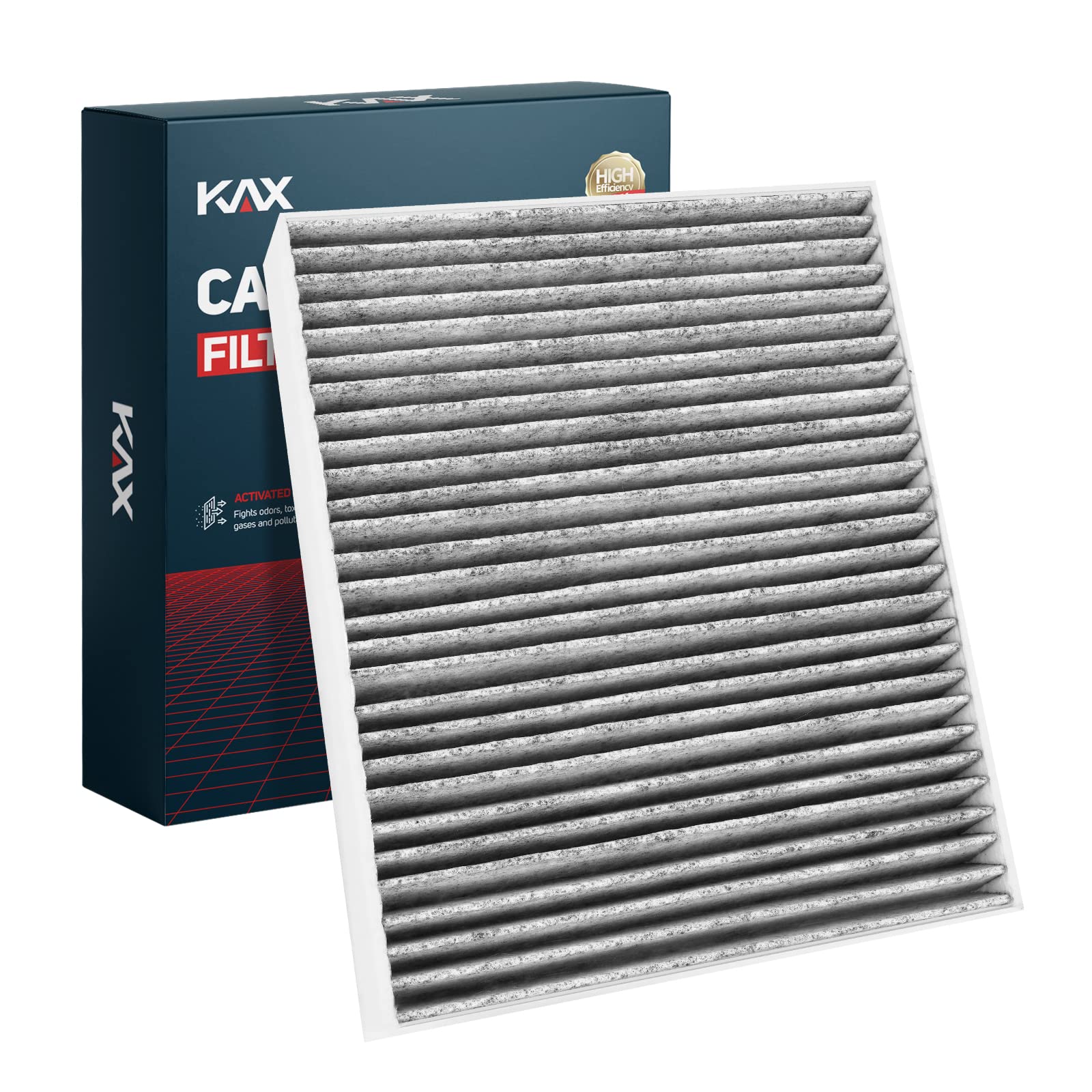
The KAX CF11176 uses a five-layer structural design that combines a high-efficiency non-woven fabric with activated carbon granules for 99.9% filtration efficiency. The specialized long-fiber electrostatic cotton layer increases the dust-holding area significantly compared to flat media, allowing the filter to trap more particulate matter before airflow becomes restricted. The carbon layer targets odors from cigarette smoke, exhaust fumes, and pet smells, making it suitable for urban drivers who frequently encounter traffic congestion and associated air quality challenges.
Compatibility includes the 2011–2019 Ford Explorer, 2009–2019 Taurus, 2010–2019 Flex, Police Interceptor Utility and Sedan from 2013–2019, Police Responder Hybrid 2019–2020, and Special Service Police Sedan 2014–2018, plus Lincoln MKS 2010–2016 and MKT 2010–2019. The 2017 Explorer falls squarely within the listed range, and the 8.9-by-7.4-by-1-inch dimensions match the factory housing dimensions. Installation follows the standard behind-glove-box procedure with no tools required, and the rigid frame helps the filter slide into the slot without buckling.
Owner reviews on compatible Ford Flex and Explorer models note that the filter fits well and delivers noticeably fresher cabin air. Some owners mentioned that the filter felt slightly oversized and required careful alignment during insertion, but once seated, the seal was tight and no bypass was detected. The five-layer construction provides a meaningful upgrade over basic paper filters without reaching the price territory of HEPA-certified options, placing it in a strong mid-range value position for drivers who want carbon filtration without overspending.
What works
- Five-layer media achieves 99.9% filtration efficiency
- Electrostatic cotton layer increases dust-holding capacity
- Activated carbon adsorbs odors and VOCs effectively
- Rigid frame ensures proper seal in the housing
What doesn’t
- Some owners report tight fit requiring careful alignment
- Not certified to HEPA standards despite high efficiency
8. KisFace CF11176 Cabin Air Filter
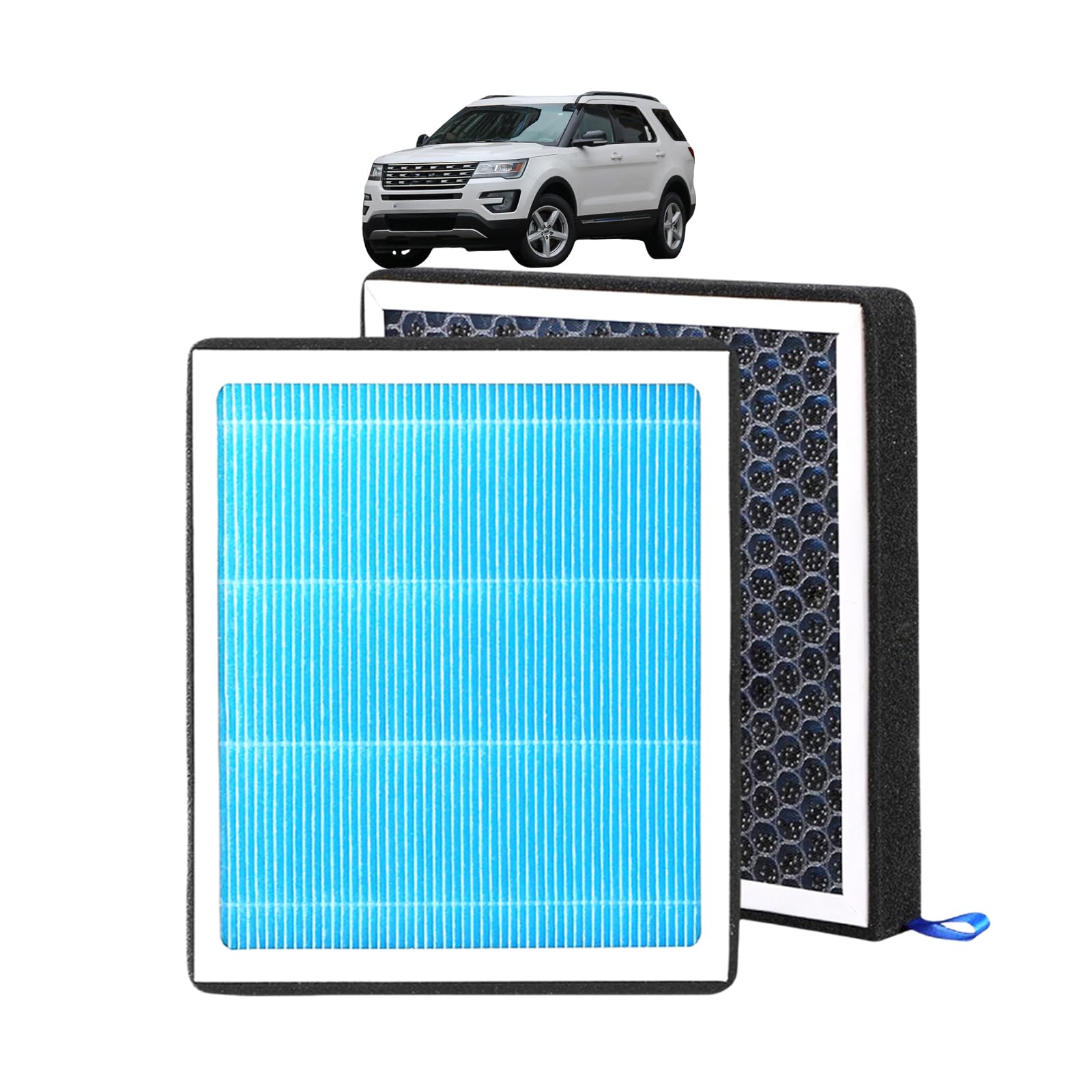
The KisFace CF11176 incorporates a melt-blown electrostatic layer combined with dense non-woven media and activated carbon to achieve a claimed filtration efficiency of 99.99%. The melt-blown layer uses microfibers that create a tortuous path for airborne particles, capturing contaminants through both mechanical sieving and electrostatic attraction. An additional static cotton layer increases the stability of the filter media over its lifetime, preventing the pleats from collapsing or matting down under continuous airflow. The soda-woven carbon layer targets odors from smoke, pets, and cooking.
Compatibility covers the 2011–2019 Ford Explorer, 2010–2019 Flex, 2009–2019 Taurus, Police Interceptor Sedan and Utility from 2013–2019, Police Responder Hybrid 2019–2020, Police Sedan 2014–2018, and Lincoln MKS 2010–2016 and MKT 2010–2020. The 2017 Explorer fits this range exactly. Owner reviews describe the filter as stiff and well-constructed, with reports that it fits more securely than flimsier alternatives that allowed air to leak around the edges. One review noted that the filter was slightly difficult to insert initially due to the rigid frame, but once seated it sealed perfectly.
The efficiency claim of 99.99% is notably high for a non-HEPA-certified filter and suggests the melt-blown layer is performing at a level close to HEPA standards, though independent certification is not mentioned. The filter weighs 0.25 kilograms, which is moderate for a carbon filter of this size. For owners who want a stiff, well-sealing filter with aggressive particle capture at a mid-range price point, the KisFace presents a compelling option that competes closely with more established brands on build quality and media performance.
What works
- Melt-blown electrostatic layer captures fine particles
- Stiff frame ensures tight seal without air bypass
- Activated carbon reduces cabin odors effectively
- Explicit compatibility with 2011-2019 Explorer
What doesn’t
- Rigid frame may require extra effort during insertion
- 99.99% efficiency claim not backed by HEPA certification
9. ZEZUT CF11176 Cabin Air Filter
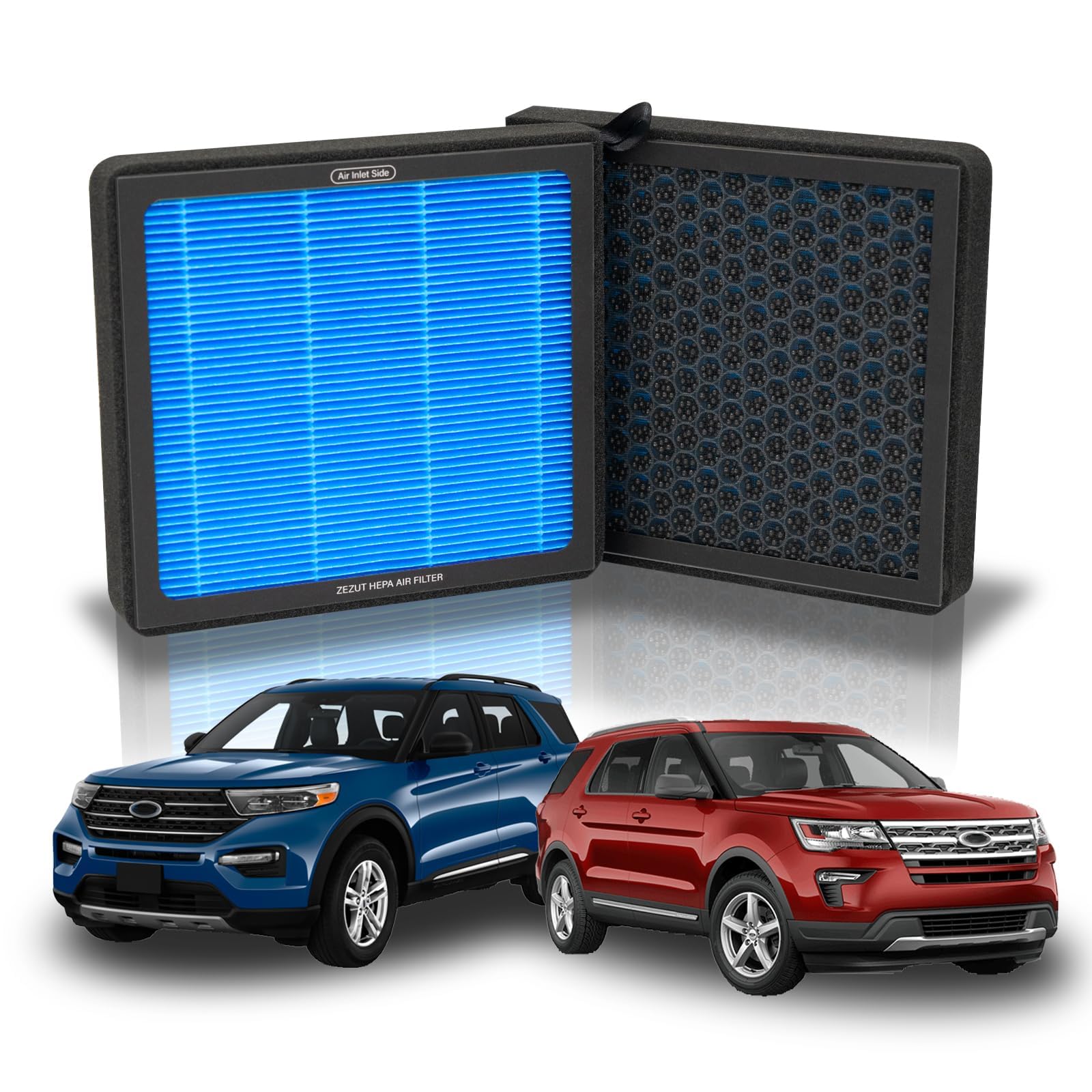
The ZEZUT CF11176 distinguishes itself in the budget-conscious segment with a robust plastic frame that resists bending during installation, combined with media that is tested to meet HEPA standards for 99.97% particle removal at 0.3 microns. The plastic frame is a notable upgrade over the cardboard-edged filters that often arrive crushed or require careful straightening before they will seat properly. Activated carbon particles are infused into the media to neutralize odors from cigarette smoke, pet smells, and cooking fumes. The filter ships in a thick corrugated cardboard box to prevent shipping damage.
Compatibility covers the 2011–2019 Ford Explorer V6 3.5L, 2016–2019 L4 2.3L, and 2012–2015 L4 2.0L, along with Flex, Police Interceptor Sedan and Utility, Police Responder Hybrid, Special Service Police Sedan, and Taurus models, plus Lincoln MKS and MKT variants. The 2017 Explorer is included with the V6 3.5L engine option. Owner reviews on similar Ford platforms confirm the filter fits snugly, though some users noted that the plastic frame can make initial insertion feel tight. Once seated, the seal prevents unfiltered air from bypassing the media.
The ZEZUT delivers HEPA-standard performance at a price point that typically undercuts established brands offering similar efficiency claims. The combination of a rigid plastic frame, carbon infusion, and HEPA-grade media makes this one of the strongest options for owners who want maximum filtration without paying for a premium brand name. The only compromise is that the plastic frame has less give than cardboard, so aligning the filter perfectly before pushing it home is more important — forcing it in at an angle may damage the media or the housing guides.
What works
- Plastic frame resists bending and ensures long-term seal
- HEPA-standard 99.97% capture at 0.3 microns
- Activated carbon layer controls odors effectively
- Secure packaging prevents shipping damage
What doesn’t
- Stiff plastic frame requires careful alignment during install
- Brand less established than Bosch or K&N
10. Billowy 6021C Cabin Air Filter
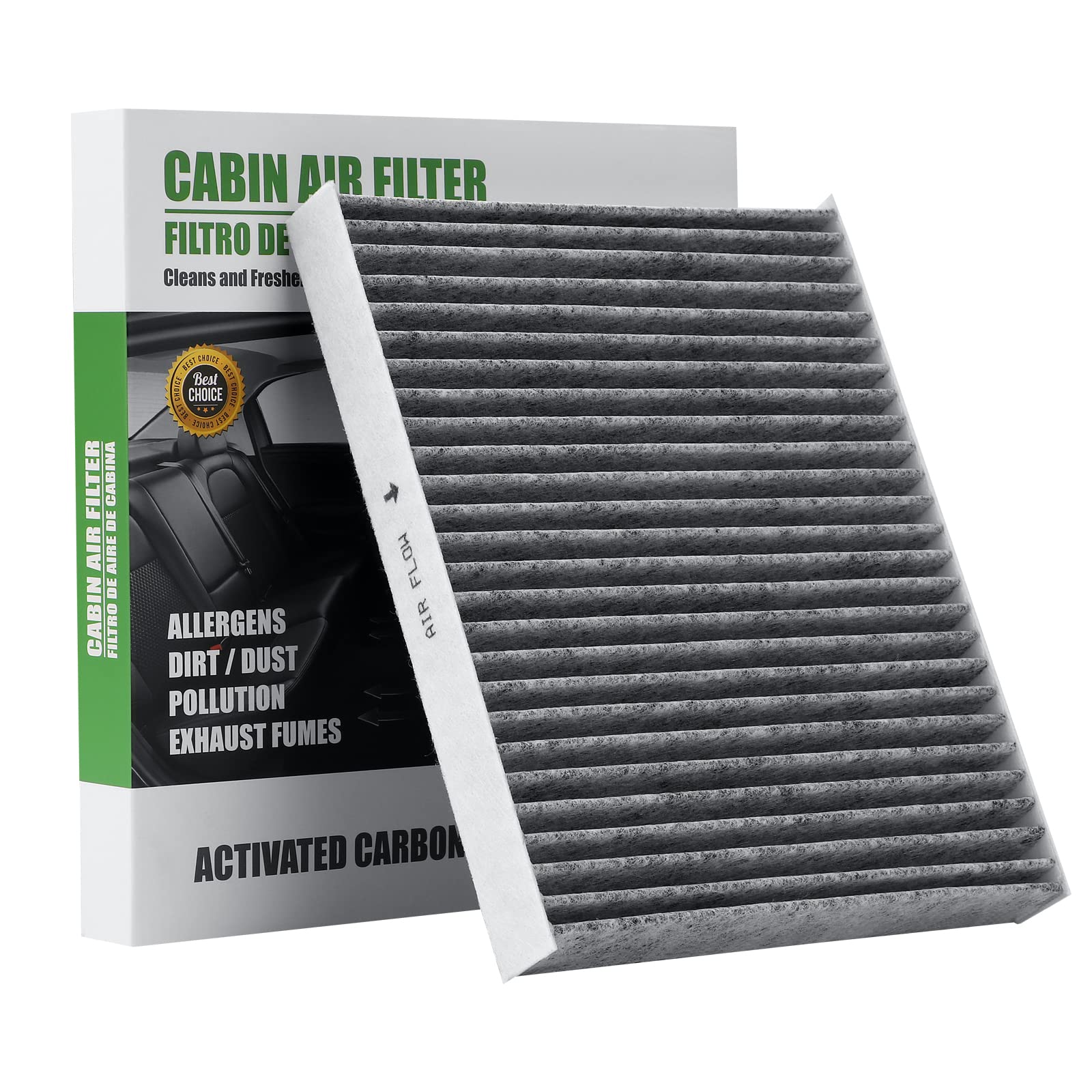
The Billowy 6021C uses a four-layer filtration system with a non-woven filter layer, a melt-blown electrostatic layer, an activated carbon layer, and a support backing. The combination is designed to capture 99% of soot, dust, and airborne contaminants while the carbon layer absorbs odors. The manufacturer recommends replacement every 8–12 months or 12,000 miles, with a tighter 5,000-mile interval for driving in heavily polluted areas or on dirt roads. The 8.94-by-7.36-by-0.98-inch dimensions are close to the factory spec, though the edges are notably rigid.
Compatibility includes the 2011–2019 Ford Explorer, 2010–2019 Flex, 2009–2019 Taurus, Police Interceptor Sedan and Utility from 2013–2019, Police Responder Hybrid 2019–2020, Special Service Police Sedan 2014–2018, and Lincoln MKS 2010–2016 and MKT 2010–2020. The 2017 Explorer is included. Owner reviews indicate that the filter works well once installed, but the rigid edges can make initial insertion difficult. One owner of a 2014 Flex reported that the filter got stuck halfway and required careful trimming with a blade to slide fully into the housing.
For the price point, the Billowy offers a reasonable introduction to carbon-filtered cabin air, but the reported fitment issues suggest that manufacturing tolerances may vary between production batches. The lightweight construction at 0.16 kilograms is noticeably lighter than the KAX or ZEZUT filters, which could indicate less dense media packing. Owners who are comfortable with minor trimming or who have a housing with generous tolerances may find this filter works well, but those seeking a guaranteed drop-in fit may want to consider alternatives with more consistent dimensional quality.
What works
- Four-layer media with carbon for basic odor control
- Very lightweight, easy to handle during installation
- Affordable entry point for carbon filter benefits
- Broad compatibility across Ford and Lincoln models
What doesn’t
- Rigid edges may require trimming for proper fit
- Lightweight construction suggests less media density
11. Forccord FOR00271 Cabin & Engine Air Filter Combo
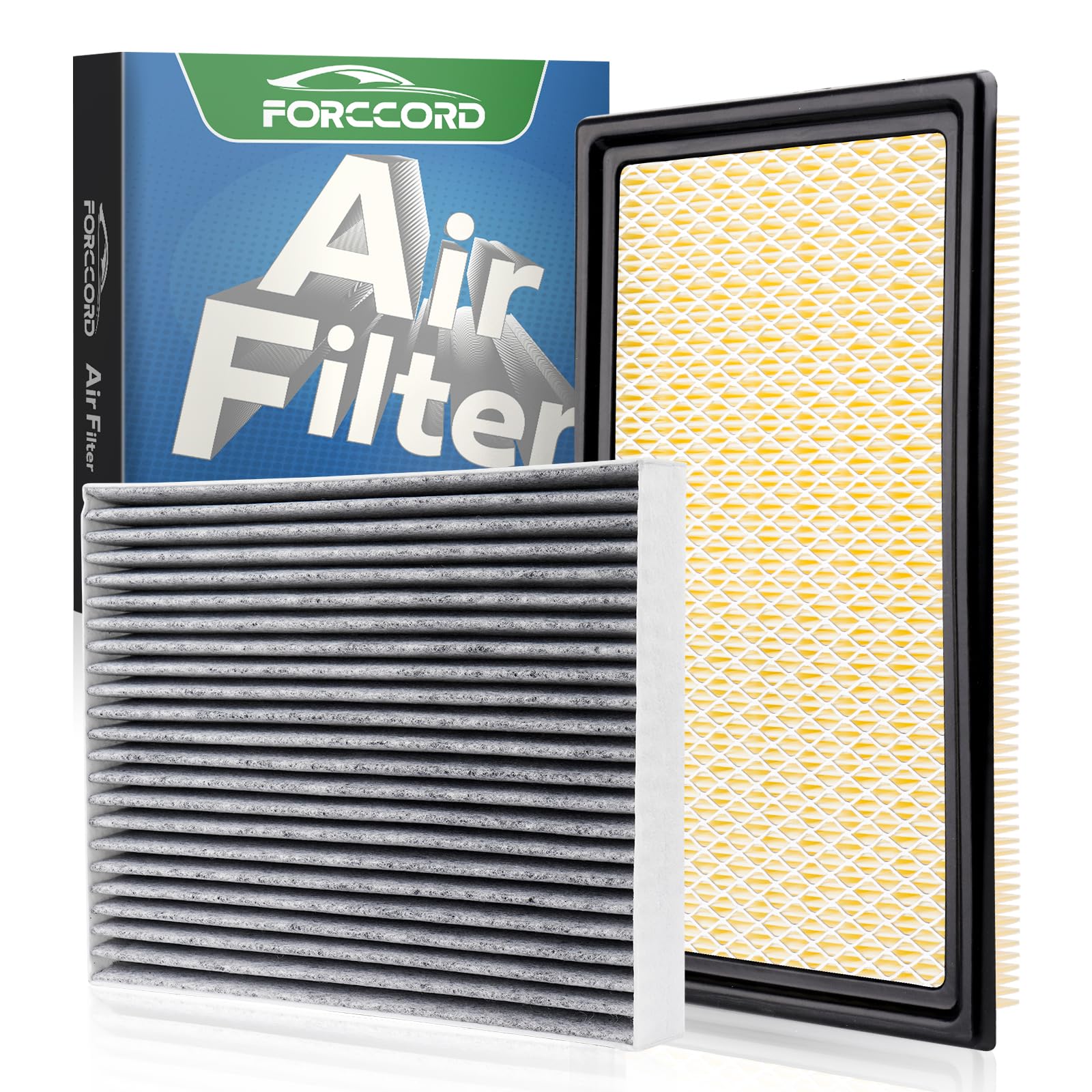
The Forccord FOR00271 bundle packages both a cabin air filter and an engine air filter in a single purchase, designed for owners who want to complete both maintenance items at once. The cabin filter uses activated carbon media with a claimed service life of up to 20,000 miles — 30% longer than the standard 12,000-mile interval. The engine air filter uses advanced HV filter paper with higher filtering precision to capture 99.9% of incoming debris, and is also rated for up to 20,000 miles. The bundle covers the FA1884, 7T4Z9601A, FP89, and JX6Z9601A cross-reference numbers.
Compatibility is listed for the 2020–2026 Ford Explorer 2.3L and 3.0L engines, with a specific note that it is not for the XLT trim. The 2017 Explorer uses a different generation of engine air filter housing and cabin filter dimensions, so this bundle is designed for the sixth-generation Explorer rather than the fifth-generation 2017 model. The unit count is 2 items — one cabin filter and one engine filter — and the bundle is backed by a 1-year warranty. Owner reviews on other compatible platforms note the filters fit well and offer excellent value compared to purchasing both filters separately from dealership parts counters.
For owners of a 2020 or newer Explorer, this combo represents a convenient and cost-effective way to refresh both the cabin air and the engine intake filtration simultaneously. The longer service life claims are supported by the use of higher-grade media, though independent verification is not provided. For 2017 Explorer owners specifically, the cabin filter dimension differences between the fifth and sixth generations mean this bundle is unlikely to fit, so it is best suited for those who have upgraded to a newer model or are purchasing for a different compatible vehicle in the household.
What works
- Convenient cabin and engine filter bundle for one-stop service
- Cabin filter rated for up to 20,000-mile service life
- Engine filter captures 99.9% of incoming debris
- Good value compared to buying two separate OEM filters
What doesn’t
- Designed for 2020-2026 Explorer, not 2017 model
- Not compatible with Explorer XLT trim
Hardware & Specs Guide
Media Types Compared
Pleated paper media captures particles primarily through mechanical sieving — particles larger than the pore size are trapped on the surface. This is the simplest and most economical design, found in the Motorcraft FP-68 and ECOGARD XC26155. Activated carbon media adds a layer of porous charcoal that adsorbs gases and odors through chemical attraction, not just physical blocking. Electrostatic media uses charged fibers to attract particles like a magnet, capturing sub-micron contaminants that would pass through standard paper. HEPA-grade media combines dense microfiber layers with electrostatic charge to achieve 99.97% efficiency at 0.3 microns, as seen in the BOSCH 6021C and ZEZUT CF11176. Washable media, like the K&N VF1011, uses oiled cotton layers that can be cleaned and reused, trading peak filtration efficiency for lower long-term cost and higher airflow.
Frame Materials and Seal Design
Cabin air filter frames are typically made from cardboard, plastic, or polyurethane. Cardboard frames (common on budget filters) can warp or swell if exposed to moisture, creating gaps that allow air to bypass the media. Plastic frames (ZEZUT, KisFace) maintain their shape and provide a consistent seal even in humid conditions. Polyurethane frames (K&N VF1011) offer the best durability and can withstand repeated removal and reinstallation. Some filters also include a foam perimeter strip that compresses against the housing walls to create a positive seal. The 2017 Explorer housing relies on friction fit, so frame rigidity directly affects whether the filter seats correctly or leaves a gap along the edges where unfiltered air can enter the HVAC duct.
FAQ
Where is the cabin air filter located in a 2017 Ford Explorer?
How often should I replace the cabin air filter in my Explorer?
What is the difference between a standard and a carbon cabin air filter?
Can a cabin air filter affect the performance of my Explorer’s HVAC system?
Final Thoughts: The Verdict
For most buyers, the 2017 ford explorer cabin air filter winner is the BOSCH 6021C because it delivers certified HEPA-grade filtration, robust structural ribs, and reliable fitment across the 2011–2019 Explorer range without relying on chemical odor neutralizers. If you want a washable filter that eliminates recurring purchase costs, grab the K&N VF1011. And for a budget-friendly carbon upgrade that still provides strong filtration and a rigid plastic frame, nothing beats the ZEZUT CF11176.

Certification: BSc in Mechanical Engineering
Education: Mechanical engineer
Lives In: 539 W Commerce St, Dallas, TX 75208, USA
Md Amir is an auto mechanic student and writer with over half a decade of experience in the automotive field. He has worked with top automotive brands such as Lexus, Quantum, and also owns two automotive blogs autocarneed.com and taxiwiz.com.