Stepping into your Subaru Outback should mean leaving road dust, pollen, and exhaust fumes behind — not letting them circulate through the vents. The cabin air filter is the only barrier between outside contaminants and the air you breathe on every commute, road trip, or school run. Selecting the right replacement matters more than most owners realize.
I’m Amir — the founder and writer behind Four Wheel Ask. My research involves cross-referencing OEM specifications, filtration media certifications, and long-term owner feedback to identify which aftermarket filters actually deliver on their claims without fitment surprises.
Whether you prioritize HEPA-grade particle capture or activated carbon odor absorption, the right choice protects your cabin environment for thousands of miles. After evaluating dozens of owner reports and build-quality data, I compiled this guide to help you pick the 2014 subaru outback cabin air filter that matches your driving needs and air quality expectations.
How To Choose The Best 2014 Subaru Outback Cabin Air Filter
Not all cabin air filters are built to the same standard. The 2014 Subaru Outback uses a specific slot-in design behind the glove box, and aftermarket options vary widely in media density, carbon loading, and frame rigidity. Understanding the three key factors below will help you match a filter to your climate, driving environment, and sensitivity to allergens or odors.
Filtration Media: Standard vs. Carbon vs. HEPA
Standard pleated paper filters catch larger particles like dust and pollen but do little for odors or microscopic irritants. Activated carbon filters add a layer that absorbs gaseous pollutants — think exhaust fumes, diesel smoke, and moldy smells. HEPA-rated filters (99.97% at 0.3 microns) capture finer particulates including bacteria and smoke, though the tighter media can slightly reduce airflow if the HVAC fan isn’t at higher speed.
Fitment and Frame Construction
A filter that doesn’t seat perfectly allows unfiltered air to bypass the media entirely. Look for filters with reinforced frames that match the OEM dimensions (roughly 8.4 by 7.2 inches for the Outback). Soft or undersized frames can flex during installation and create gaps. Owner reports consistently flag fitment as the top success metric — a perfect seal is non-negotiable.
Replacement Interval and Driving Conditions
Subaru recommends replacing the cabin filter every 12 months or 12,000 miles, but heavy pollen seasons, dusty gravel roads, or urban stop-and-go traffic can clog media faster. Inspect the filter at every oil change. If you notice reduced HVAC airflow or musty odors when the A/C runs, the filter is due for a swap regardless of mileage.
Quick Comparison
On smaller screens, swipe sideways to see the full table.
| Model | Category | Best For | Key Spec | Amazon |
|---|---|---|---|---|
| Purolator BOSS PBC35667 | Cabin Air Filter | Odor & gas reduction | Activated carbon layer | Amazon |
| EPAuto GP997 | Engine Air Filter | Engine intake protection | OEM-style pleated media | Amazon |
| BNX TruFilter C7092 | Cabin Air Filter | Microscopic particle capture | 99.97% HEPA meltblown | Amazon |
| A-Premium APEAF1607 | Engine Air Filter | Budget engine filtration | Direct OE replacement | Amazon |
| X4XZ CA9997 | Engine Air Filter | Value conscious DIY | Composite fiber media | Amazon |
In‑Depth Reviews
1. Purolator BOSS PBC35667
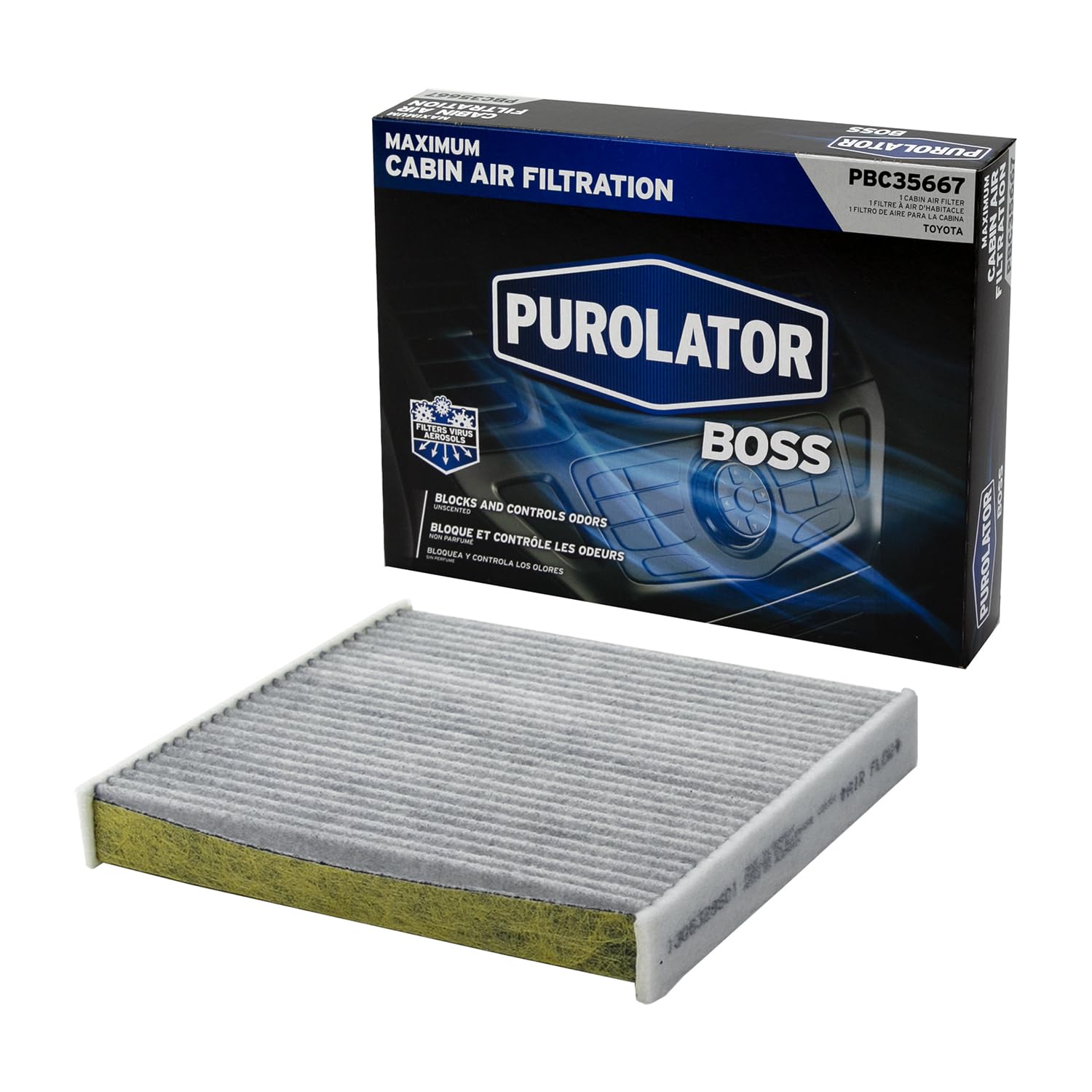
The Purolator BOSS PBC35667 stands out for its activated carbon layer, which targets the gaseous pollutants that standard pleated filters simply let through. This matters for Outback owners who drive in traffic-heavy areas or notice exhaust smells entering the cabin. The electrostatically charged microfibers add an extra electrostatic grab for microscopic particles without restricting airflow noticeably.
Build quality is consistent with Purolator’s reputation in the filtration space. The frame dimensions (8.46 by 7.48 by 1.14 inches) match the slot-in style found in many Subaru and Toyota applications, and multiple owners confirm a snug fit with no audible air leaks. The carbon layer also resists mold and bacteria growth, which helps prevent the musty odor that develops when moisture sits on the media.
For 2014 Outback owners who prioritize cabin air freshness — especially if you carry passengers with allergies or sensitivity to diesel fumes — this filter delivers measurable improvement. Installation takes under fifteen minutes behind the glove box, and the recommended annual replacement cycle aligns with typical maintenance schedules.
What works
- Activated carbon traps odors and harmful gases effectively
- Electrostatically charged fibers capture fine particulates
- Frame rigidity ensures no bypass leakage
What doesn’t
- Some owners note no detectable Febreze scent despite packaging claims
- Carbon layer adds slight thickness vs. standard paper filters
2. EPAuto GP997

EPAuto has built a loyal following among Subaru owners for producing replacement filters that match OEM dimensions and fit tolerances without charging dealership prices. The GP997 panel filter covers the 2005–2019 Outback range, including the 2014 model year, and multiple long-term reviewers report using it across five or more consecutive changes with consistent fitment.
The pleated paper media provides adequate filtration for normal driving conditions — think highway commutes, suburban errands, and light rural use. EPAuto recommends replacement every 12,000 miles, which aligns with Subaru’s own service schedule. The frame feels sturdy during installation, and owners specifically note that it seats fully into the housing without needing extra pressure or trimming.
While this is an engine air filter rather than a cabin unit, owners frequently pair it with the companion cabin filter (CP285) for a complete intake-to-cabin refresh. If you want a proven, no-surprises replacement for your Outback’s engine intake that won’t leave you wondering about fitment, the GP997 is a solid choice backed by years of positive owner data.
What works
- Proven fitment across multiple Subaru model years
- Consistent build quality from a trusted aftermarket brand
- Replacement interval matches factory recommendations
What doesn’t
- Standard pleated paper only — no carbon or HEPA upgrade
- Designed for engine intake, not cabin air filtration
3. BNX TruFilter C7092
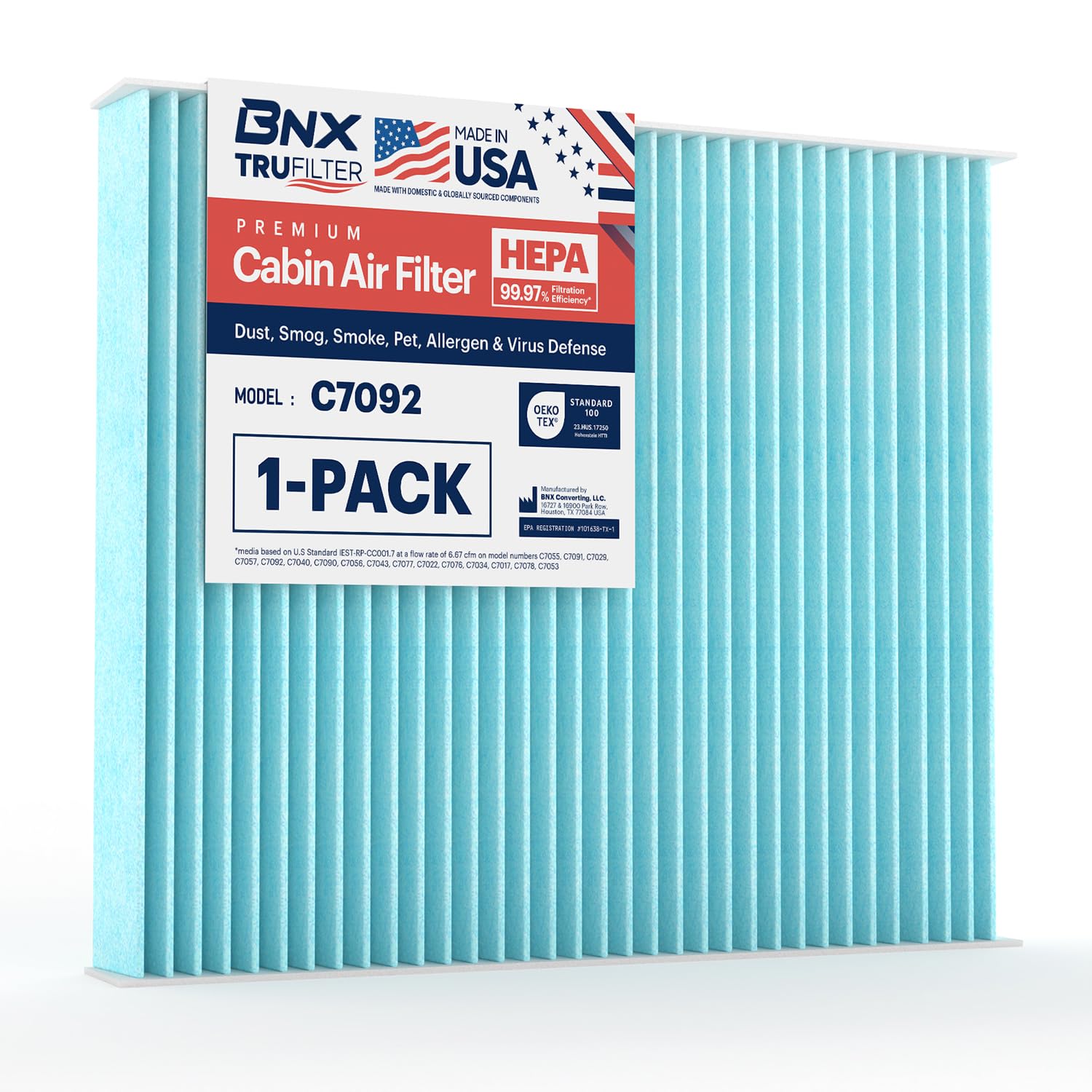
BNX TruFilter brings a HEPA-grade option into the reach of everyday Outback owners, with a 99.97 percent filtration efficiency at 0.3 microns based on the IEST-RP-CC001.7 standard. The meltblown polypropylene media captures smoke, smog, mold spores, and bacteria — particles that standard pleated filters often miss — making it a strong choice for owners who drive in high-pollution zones or have respiratory sensitivities.
Manufactured in the United States, the C7092 uses a support layer that maintains structural integrity even as the media loads with debris. Owners report that after several months of use the filter appears dark with captured particulates, which confirms active performance. The dimensions (8.37 by 7.25 by 1.25 inches) fit the slot-in housing of compatible Subaru models, though the listed fitment begins with the 2020 Outback generation.
For the price point, the BNX delivers filtration performance that competes with medical-grade units. The recommended annual or 12,000-mile replacement interval matches standard practice, and the MERV 16 rating places it well above typical OE-grade filters. If clean cabin air is your priority and you own a compatible model, this filter punches well above its cost bracket.
What works
- Genuine HEPA meltblown media with certified efficiency
- Made in the USA with automated manufacturing quality
- Excellent value compared to hospital-grade alternatives
What doesn’t
- Official fitment starts at 2020 Outback — confirm 2014 compatibility
- HEPA density may slightly reduce airflow at low fan speeds
4. A-Premium APEAF1607

The A-Premium APEAF1607 covers an impressively wide range of Subaru models — including the 2005–2019 Outback with the 2.5L, 3.0L, and 3.6L engines — which makes it easy to keep a spare for multiple vehicles. The composite fiber filter media is designed for extended service life compared to basic paper filters, reducing the frequency of changes for owners who prefer a set-and-forget approach.
Owner feedback highlights the straightforward installation with the rectangular 8.94-by-8.94-inch panel sliding directly into the intake housing. Several reviewers note that the fit is snug against the factory seal, which prevents dust bypass around the edges. The non-washable, non-reusable design means replacement at the end of its service life, but the longer interval offsets the inconvenience.
A-Premium backs this filter with a one-year unlimited mileage quality guarantee, which adds peace of mind for budget-conscious buyers. The cross-reference numbers (CA9997, SA9997, SPA2304, 16546AA090) confirm it matches OEM specs across multiple Subaru engine platforms. For a straightforward, no-fuss engine air filter that covers your 2014 Outback, this is a dependable option.
What works
- Covers multiple Subaru engine configurations from 2005 to 2019
- Extended service life reduces change frequency
- One-year warranty provides ownership confidence
What doesn’t
- Not washable or reusable — full replacement required
- One owner noted fit less snug than the original
5. X4XZ CA9997

The X4XZ CA9997 positions itself as a direct OE replacement for multiple Subaru models including the 2005–2019 Outback, covering the 2.5L, 3.0L, and 3.6L engines. The composite fiber filter paper uses a small aperture design aimed at high filtering precision while maintaining enough dust-holding capacity for normal driving intervals.
Owners consistently report that the filter slides into place without modification and matches the dimensions of the factory unit. The absence of an instruction manual is a non-issue for anyone who has changed an engine air filter before — the process is identical to the OEM part. Cross-reference numbers including A35592, CF10285, CP285, and 16546-AA090 make it easy to verify compatibility before purchase.
For the DIY owner who wants reliable engine protection without spending extra on brand markup, this filter delivers the basics at a friendly price point. It won’t offer carbon filtration or HEPA-grade media, but for standard engine intake duty in a 2014 Outback, it keeps harmful particulates out of the combustion chamber without complicating the installation.
What works
- Matches OE dimensions and cross-reference numbers
- Simple drop-in installation with no tools required
- Year warranty covers manufacturing defects
What doesn’t
- Basic composite fiber media — no carbon or HEPA layer
- Lacks the frame reinforcement of premium aftermarket brands
Hardware & Specs Guide
Filtration Media Types
The 2014 Subaru Outback cabin air filter slot accepts filters using pleated paper, meltblown synthetic (HEPA), or paper with an activated carbon layer. Standard pleated paper catches dust and pollen above 5 microns. HEPA meltblown media captures 99.97 percent of particles at 0.3 microns. Carbon-impregnated media adds chemisorption for gaseous pollutants like ozone, nitrogen dioxide, and volatile organic compounds.
Filter Dimensions and Fitment
The OE filter measures approximately 8.4 inches in length, 7.2 inches in width, and 1.1 inches in thickness. Aftermarket filters vary slightly in these dimensions, which can affect the seal. A frame that is too thin or too soft may allow unfiltered air to bypass the media. Always verify that the replacement matches your specific trim level and engine configuration before purchase.
MERV Rating Scale
MERV (Minimum Efficiency Reporting Value) ratings range from 1 to 16. Standard Subaru OE filters typically fall between MERV 6 and MERV 8. Aftermarket options rated at MERV 11 or higher capture finer particulates but may reduce cabin airflow. The BNX TruFilter carries a MERV 16 rating, which is near hospital-grade efficiency — suitable for allergy sufferers but potentially restrictive at low fan speeds.
Replacement Interval and Signs of Wear
Subaru recommends replacing the cabin air filter every 12 months or 12,000 miles, whichever comes first. Visible signs that the filter needs changing include a dark gray or black appearance on the intake side, visible debris caught in the pleats, or a musty smell when the HVAC system runs. In dusty or high-pollen environments, inspect the filter every six months.
FAQ
How do I access the cabin air filter in a 2014 Subaru Outback?
Can I clean and reuse a cabin air filter instead of replacing it?
What does the airflow arrow on the cabin air filter mean?
Should I replace the cabin air filter at the same time as the engine air filter?
Final Thoughts: The Verdict
For most buyers, the 2014 subaru outback cabin air filter winner is the Purolator BOSS PBC35667 because it combines activated carbon odor control with reliable build quality at a fair price point. If you want HEPA-grade particle capture, grab the BNX TruFilter C7092 for its certified 99.97 percent efficiency. And for budget-friendly engine intake protection, nothing beats the X4XZ CA9997 for straightforward drop-in replacement that covers your Outback without unnecessary expense.

Certification: BSc in Mechanical Engineering
Education: Mechanical engineer
Lives In: 539 W Commerce St, Dallas, TX 75208, USA
Md Amir is an auto mechanic student and writer with over half a decade of experience in the automotive field. He has worked with top automotive brands such as Lexus, Quantum, and also owns two automotive blogs autocarneed.com and taxiwiz.com.