Choosing the right cabin air filter for your 2013 Honda CR-V means understanding what actually traps road dust, pollen, exhaust fumes, and that musty smell before it hits the vents. The best filters balance high particle capture with unrestricted airflow to keep the HVAC system running efficiently.
I’m Amir — the founder and writer behind Four Wheel Ask. My process involves digging into technical specifications, comparing media density and carbon loading, and analyzing verified owner feedback across multiple vehicle platforms to separate real performance from marketing claims.
The CR-V draws outside air through a slot behind the glove box, and a poorly fitted or restrictive filter kills cabin comfort fast. After reviewing dozens of filter specs and owner reports, I consider the Bosch 6029C the best 2013 honda cr-v cabin filter for its balance of filtration and airflow.
How To Choose The Best 2013 Honda CR-V Cabin Filter
The 2013 CR-V uses a specific filter size and shape that not all aftermarket options match perfectly. The three biggest factors that determine real-world performance are media composition, carbon loading density, and the frame seal design. A filter that fits loose or restricts airflow defeats the purpose of replacing it.
Filter Media Types
Standard particulate filters use pleated paper or synthetic media to trap dust and pollen. Carbon-infused variants add an activated carbon layer to absorb odors and gaseous pollutants. HEPA-rated filters push capture efficiency past 99 percent for sub-micron particles but can introduce airflow resistance that some HVAC blowers struggle to overcome.
Frame Fitment and Seal Quality
The 2013 CR-V filter housing relies on a tight compression fit. Filters with thin frames or undersized gaskets allow unfiltered air to bypass the media. Many aftermarket options add extra sponge material around the edges to improve the seal, which can make insertion slightly tighter but prevents dust leakage.
Replacement Interval
Honda recommends changing the cabin filter every 12,000 miles or 12 months. Drivers in dusty climates or heavy traffic areas should cut that interval in half. A clogged filter reduces HVAC airflow, forces the blower motor to work harder, and can lead to musty odors from trapped moisture.
Quick Comparison
On smaller screens, swipe sideways to see the full table.
| Model | Category | Best For | Key Spec | Amazon |
|---|---|---|---|---|
| Bosch 6029C | HEPA Cabin Filter | Allergy Sufferers | HEPA + Electrostatic Layer | Amazon |
| MANN-FILTER CUK 26009 | Activated Carbon | Odor Elimination | Premium Carbon Layer | Amazon |
| WIX 24815XP | Triple-Layer | Long Service Life | Triple-Layer + Carbon | Amazon |
| K&N VF2033 | Washable/Reusable | Lifetime Ownership | Washable Polyurethane | Amazon |
| PurolatorONE C35519C | Activated Carbon | Allergen Reduction | Electrostatic + Carbon | Amazon |
| Parfyter HEPA CF10134 | HEPA + Carbon | Maximum Filtration | HEPA + Honeycomb Carbon | Amazon |
| X4XZ Premium HEPA | HEPA + Carbon | PM2.5 Removal | Melt-Blown + Shell Carbon | Amazon |
| Puroma 2 Pack | 2-Pack | Dual Vehicle Owners | Multiple Fiber Layers | Amazon |
| EPAuto CP182 | Carbon + Soda | Budget Value | Carbon + Soda Media | Amazon |
| ZEZUT CF10134 | HEPA Standard | Tight Seal Priority | 6mm Sponge Seal | Amazon |
| RICHWEI CF10134 | Activated Carbon | Basic Replacement | Carbon + Nonwoven | Amazon |
In-Depth Reviews
1. Bosch 6029C HEPA Cabin Air Filter

Bosch designed the 6029C with a melt-blown electrostatic layer paired with dense HEPA media to achieve high particle capture without relying on chemical odor neutralizers. The multi-layer construction traps pollen, fine dust, and airborne irritants while maintaining airflow adequate for the CR-V HVAC system. Owner reports consistently note immediate air quality improvement after installation.
The structural ribs added to the frame increase stability and prevent collapse under high airflow conditions. Multiple verified reviews for the 2013 CR-V confirm an exact fit with no trimming required. The filter slides into the factory housing and seals properly against the surrounding plastic, eliminating bypass leakage that some thinner aftermarket filters allow.
At a replacement interval of 12 months or 12,000 miles, the 6029C delivers filtration performance that matches or exceeds OEM specifications. The absence of added chemical odor neutralizers makes it a strong choice for drivers sensitive to fragrance treatments while still providing effective odor and particulate reduction through mechanical filtration alone.
What works
- True HEPA media captures sub-micron particles effectively
- Exact OEM fitment for the 2013 CR-V housing
- No chemical odor neutralizers added to the media
- Structural ribs prevent frame flex during installation
What doesn’t
- Premium price compared to basic carbon filters
- Denser media may slightly reduce maximum airflow
2. MANN-FILTER CUK 26009 Cabin Air Filter
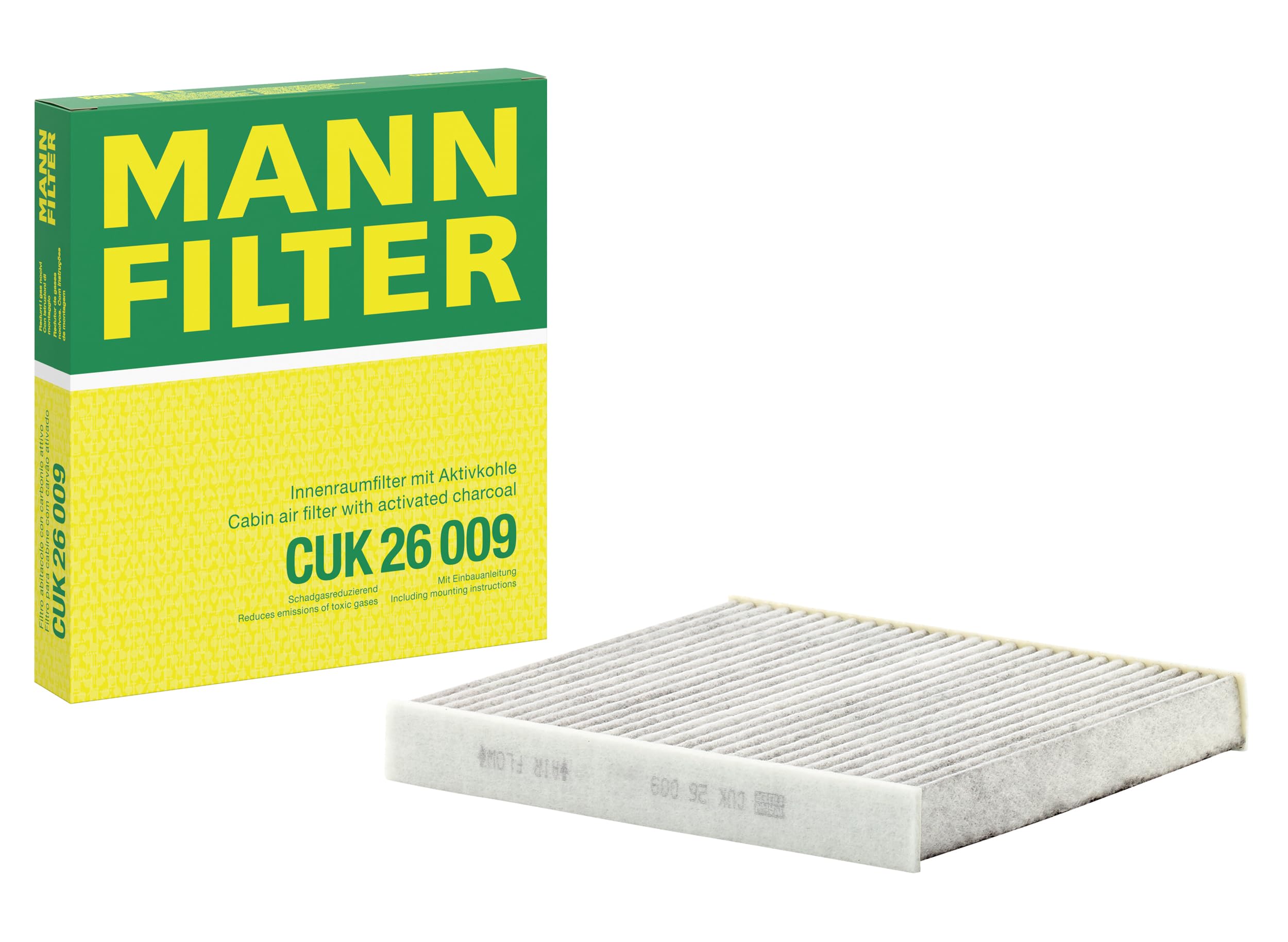
MANN-FILTER is an established OEM supplier for many European automakers, and the CUK 26009 brings that same engineering precision to the Honda CR-V aftermarket. The filter uses a premium activated carbon layer that captures nearly 100 percent of particulates entering through the ventilation system while neutralizing gaseous pollutants and odors. The polyester media construction provides consistent pleat spacing for even airflow distribution.
The carbon layer in the CUK 26009 is denser than what most budget filters use, which translates to better odor absorption over the life of the filter. Owner reviews highlight that the filter fits the 2013 CR-V housing without modification and that the lack of any chemical after-scent makes it a clean upgrade. The 10-inch length matches the factory dimensions closely.
MANN-FILTER recommends annual replacement for optimal performance, with more frequent changes in dusty environments. The CUK 26009 carries a higher price than basic particulate filters, but the build quality and carbon density justify the premium for drivers who prioritize air quality over raw cost.
What works
- High-density activated carbon layer absorbs odors effectively
- OEM-grade build quality with consistent pleat spacing
- No chemical odor neutralizers or fragrances
- Precise fitment for the 2013 CR-V housing
What doesn’t
- Premium price point above basic carbon filters
- Some owners report carbon dust shedding during initial use
3. WIX 24815XP Cabin Air Filter
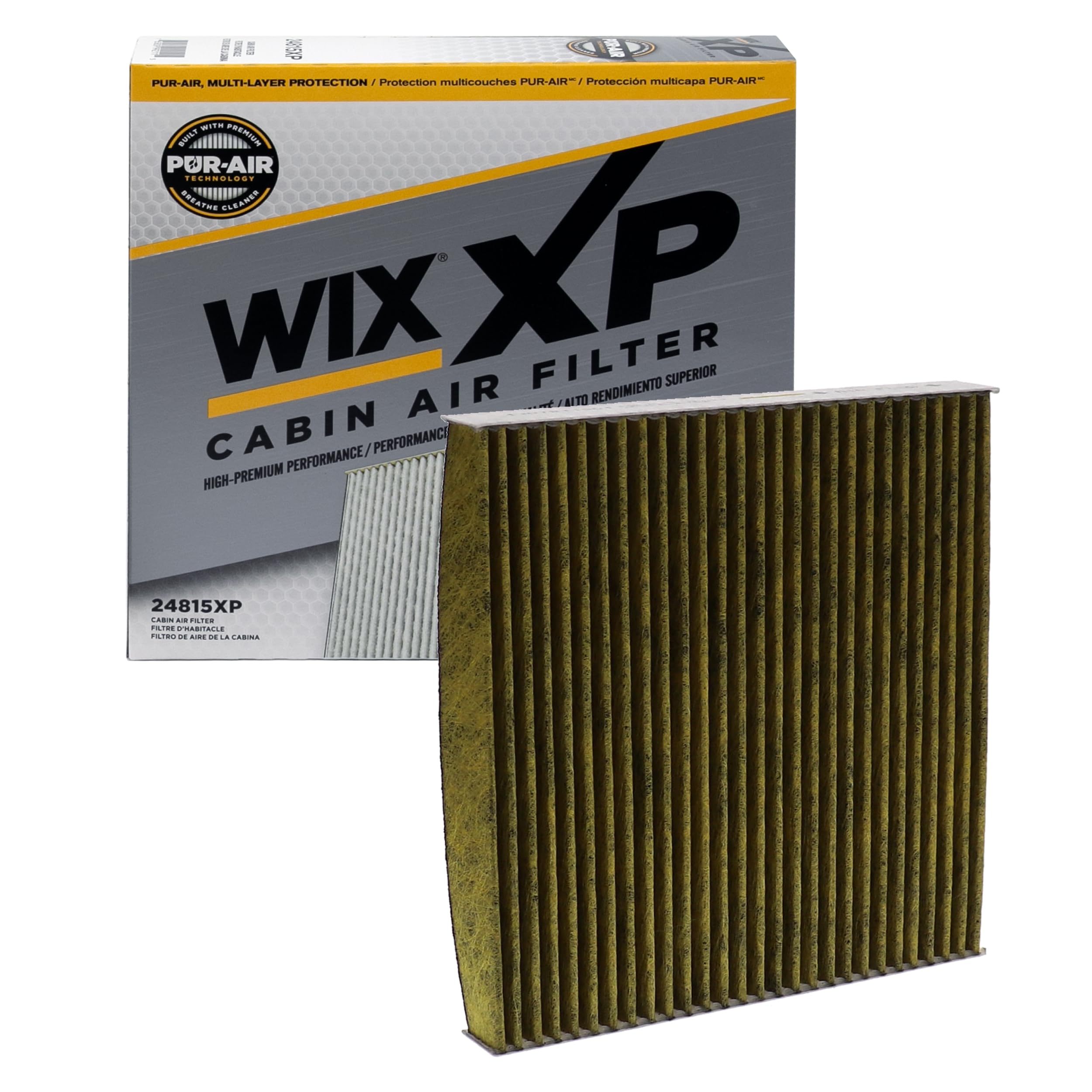
The WIX XP line uses PureFlow technology with a triple-layer construction that combines particulate filtration, activated carbon, and advanced airflow media. This design aims to capture dust, pollen, and airborne particles while simultaneously reducing odors, all without restricting HVAC performance. The 20,000-mile recommended replacement interval is longer than the industry standard of 12,000 miles.
Owner feedback for the 2013 CR-V indicates that the filter fits tightly, which is beneficial for sealing but can require some manual adjustment to get the frame to sit flush in the housing grooves. One verified review noted that the carbon layer effectively eliminated vehicle pollution odors for allergy-sensitive drivers in high-smog areas like Phoenix. The filter meets OEM specifications for dimensions.
The longer service interval means fewer replacements over the vehicle lifespan, which offsets the higher upfront cost. WIX also offers a standard-grade version, but the XP model with its carbon layer is the better choice for drivers exposed to traffic fumes or agricultural dust.
What works
- Triple-layer design captures both particles and odors
- Extended 20,000-mile service interval
- Strong carbon layer reduces traffic fume exposure
- Precision OE fitment tolerances
What doesn’t
- Higher price than standard single-layer filters
- Tight fit requires careful alignment during installation
4. K&N VF2033 Cabin Air Filter

K&N takes a fundamentally different approach with the VF2033 by offering a washable, reusable cabin air filter designed to last the life of the vehicle. The polyurethane construction is pre-treated to help control odors and is engineered to improve HVAC heating and cooling efficiency through increased airflow compared to disposable pleated filters. The filter drops into the factory housing without tools in under five minutes.
The environmental argument is strong: K&N estimates that over 100 million disposable filters end up in landfills annually, and a single reusable filter eliminates that waste stream for the vehicle owner. The lifetime limited warranty backs the product, and the washable design means the upfront cost is the last filter purchase needed for the CR-V. The filter is pre-oiled and ready to install out of the box.
The trade-off is that washable filters typically capture fewer fine particles than high-end disposable HEPA or carbon filters. Drivers who prioritize maximum air purity over convenience and long-term cost may find the K&N less effective for sub-micron particle removal. Regular cleaning with the K&N recharger kit is required to maintain performance.
What works
- Washable and reusable for the vehicle lifetime
- Higher airflow potential than dense disposable filters
- Lifetime limited warranty included
- Reduces landfill waste from disposable filters
What doesn’t
- Higher upfront cost than any disposable option
- Less effective for sub-micron particle filtration compared to HEPA
- Requires periodic cleaning and re-oiling
5. PurolatorONE C35519C Cabin Air Filter
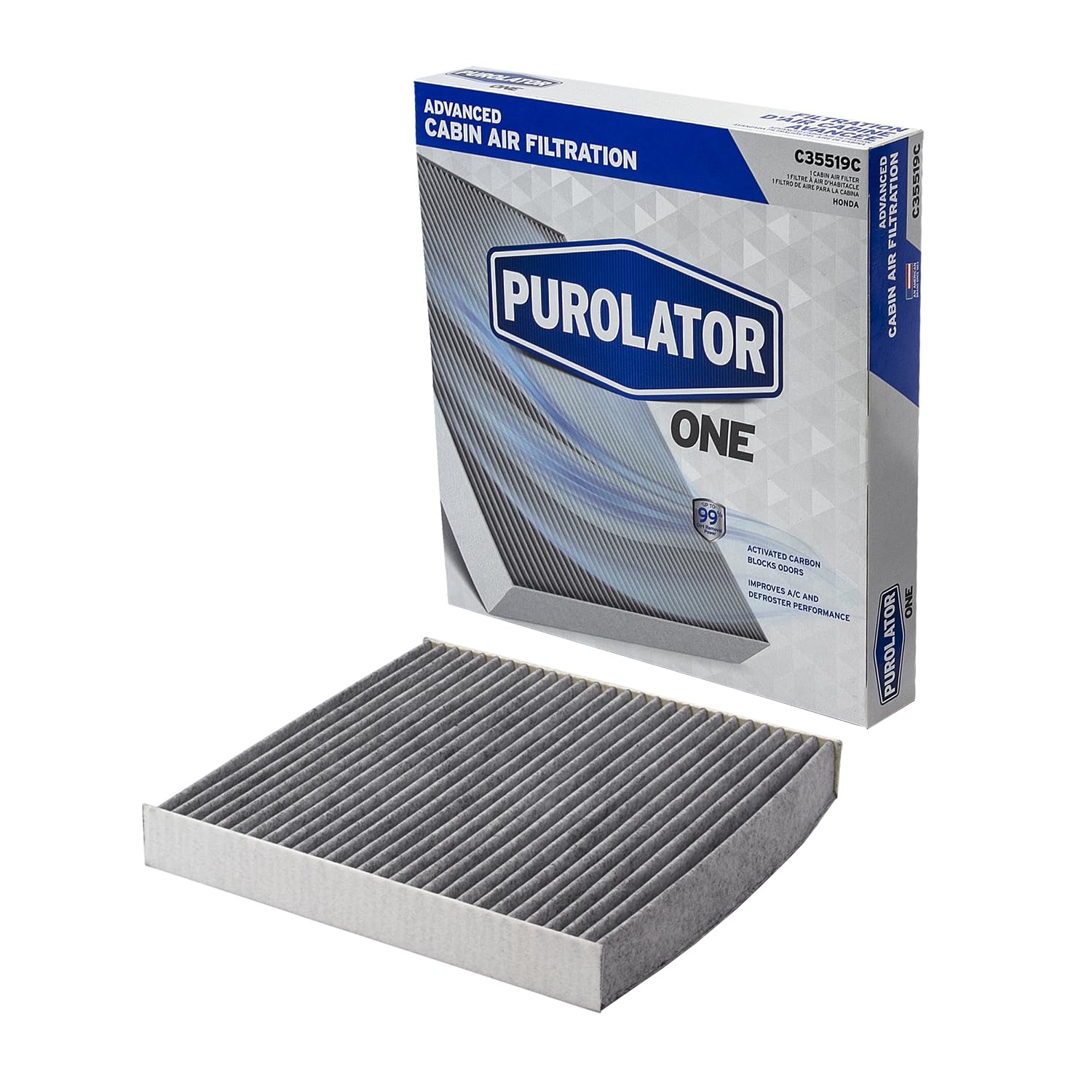
PurolatorONE positions the C35519C as a premium cabin air filter that uses electrostatically charged micro-woven fiber layers to capture up to 99 percent of dirt, brake dust, soot, and other airborne contaminants. The activated carbon layer integrated into the media targets gaseous pollutants and odors that standard particulate filters cannot address. The filter is designed to meet or exceed OEM performance requirements.
Owner reviews for Honda CR-V applications confirm that the filter fits the factory housing with a snug seal and installs in under 15 minutes without tools. Multiple verified buyers noted that the carbon layer makes a noticeable difference in reducing outside odors during stop-and-go traffic. The filter is a relatively recent release, so long-term durability data is still being established.
Purolator recommends annual replacement or every 12,000 miles, with more frequent changes in harsh or dusty environments. The C35519C represents a strong mid-premium option for drivers who want the odor-fighting capability of activated carbon without stepping up to the highest price tier.
What works
- Electrostatic layers trap fine particles effectively
- Activated carbon reduces traffic and exhaust odors
- Meets or exceeds OEM performance specifications
- Easy tool-free installation in the CR-V housing
What doesn’t
- Relatively new product with limited long-term owner data
- Slightly snug fit requires precise alignment
6. Parfyter HEPA CF10134 Cabin Air Filter
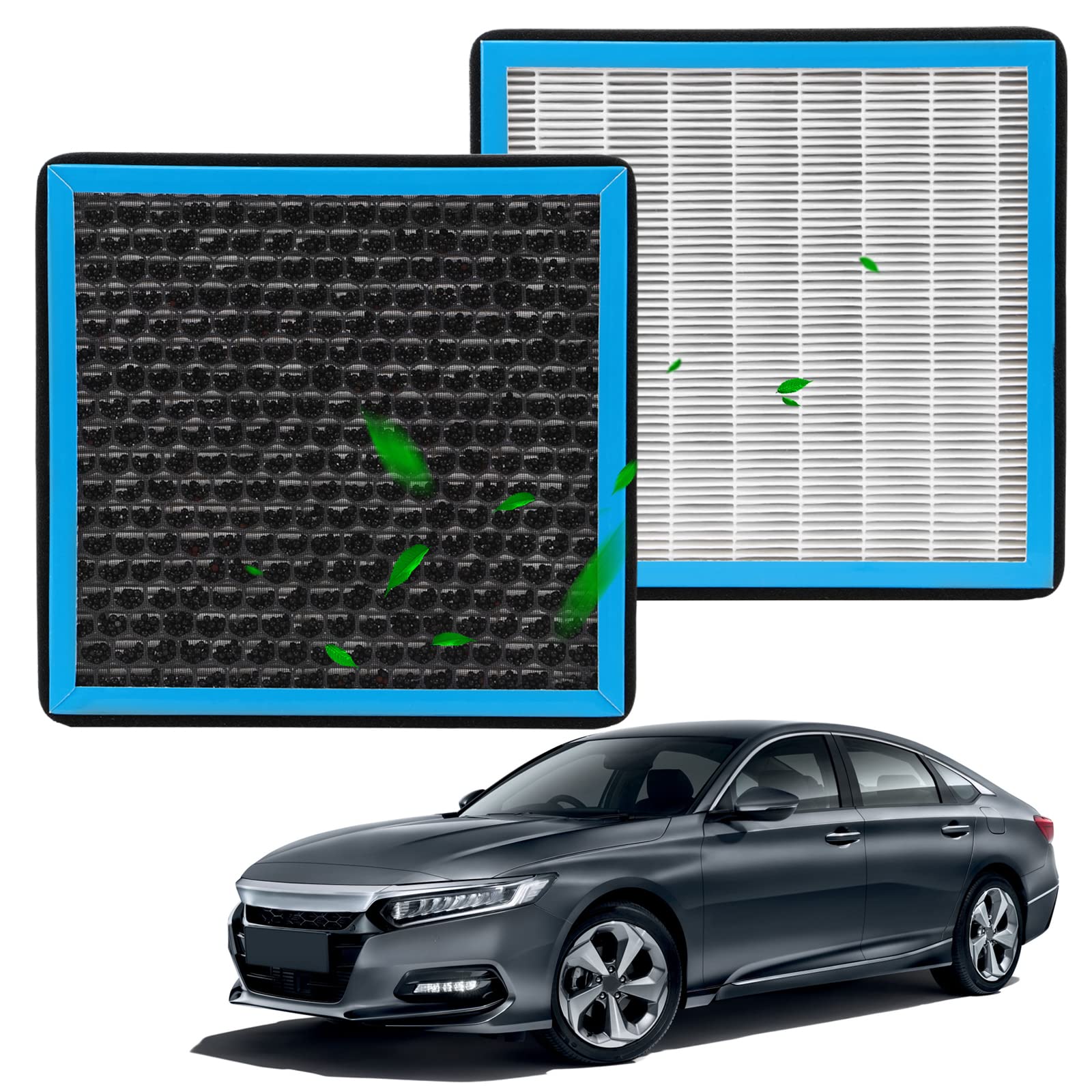
Parfyter builds the CF10134 with a HEPA-grade filtration layer combined with a honeycomb-structured activated carbon screen. The honeycomb design increases the surface area available for odor absorption while adding structural rigidity that prevents the media from collapsing under airflow pressure. The filter targets PM2.5 particles, exhaust fumes, and dust with a 0.3-micron capture threshold.
Verified owners of 2012 and 2013 Honda Accord models reported a perfect fit and noticeable air quality improvement after installation, with one review noting that the AC system seemed to cool more efficiently with the fresh filter in place. The CF10134 part number cross-references directly to the Honda OEM specifications, and the included airflow arrow simplifies orientation during installation.
The combination of HEPA media and honeycomb carbon puts the Parfyter in the premium filtration category at a moderate price point. The 1.18-inch thickness matches the factory filter dimensions, so the glove box door closes without interference. Drivers who want true HEPA performance without paying top-tier prices should consider this option.
What works
- HEPA media captures 0.3-micron particles effectively
- Honeycomb carbon structure increases odor absorption area
- Perfect dimensional fit for the 2013 CR-V filter slot
- Competitive price for a HEPA + carbon combo filter
What doesn’t
- HEPA density may slightly reduce maximum HVAC airflow
- Honeycomb layer adds thickness that may feel tight
7. X4XZ Premium HEPA Cabin Air Filter

X4XZ markets the CF10134 as a premium HEPA filter that combines a melt-blown electrostatic layer with nut-shell activated carbon media. The manufacturer claims over 99.97 percent efficiency for 0.3-micron particles, placing it in the true HEPA category. The filter targets PM2.5 haze, methylbenzene, sulfur dioxide, and nitrogen dioxide in addition to standard dust and pollen.
The inclusion of a removal tool in the package is a thoughtful addition, as the 2013 CR-V filter slot can be awkward to access without the right grip. The frame dimensions measure 9 inches by 8.7 inches by 1.1 inches thick, which aligns with the CR-V factory specifications. The nut-shell activated carbon is a different source material than the petroleum-based carbon used in many budget filters and may offer different absorption characteristics.
The 1-year product service policy provides a safety net for quality concerns. The X4XZ is best suited for drivers who face heavy urban pollution or wildfire smoke conditions and want the highest available filtration efficiency in a disposable format.
What works
- True HEPA efficiency exceeding 99.97 percent for 0.3-micron particles
- Nut-shell activated carbon layer absorbs gaseous pollutants
- Includes a removal tool for easier installation
- 1-year product service policy included
What doesn’t
- Higher price than standard carbon filters
- Dense media may require more frequent inspection in dusty conditions
8. Puroma 2 Pack Cabin Air Filter
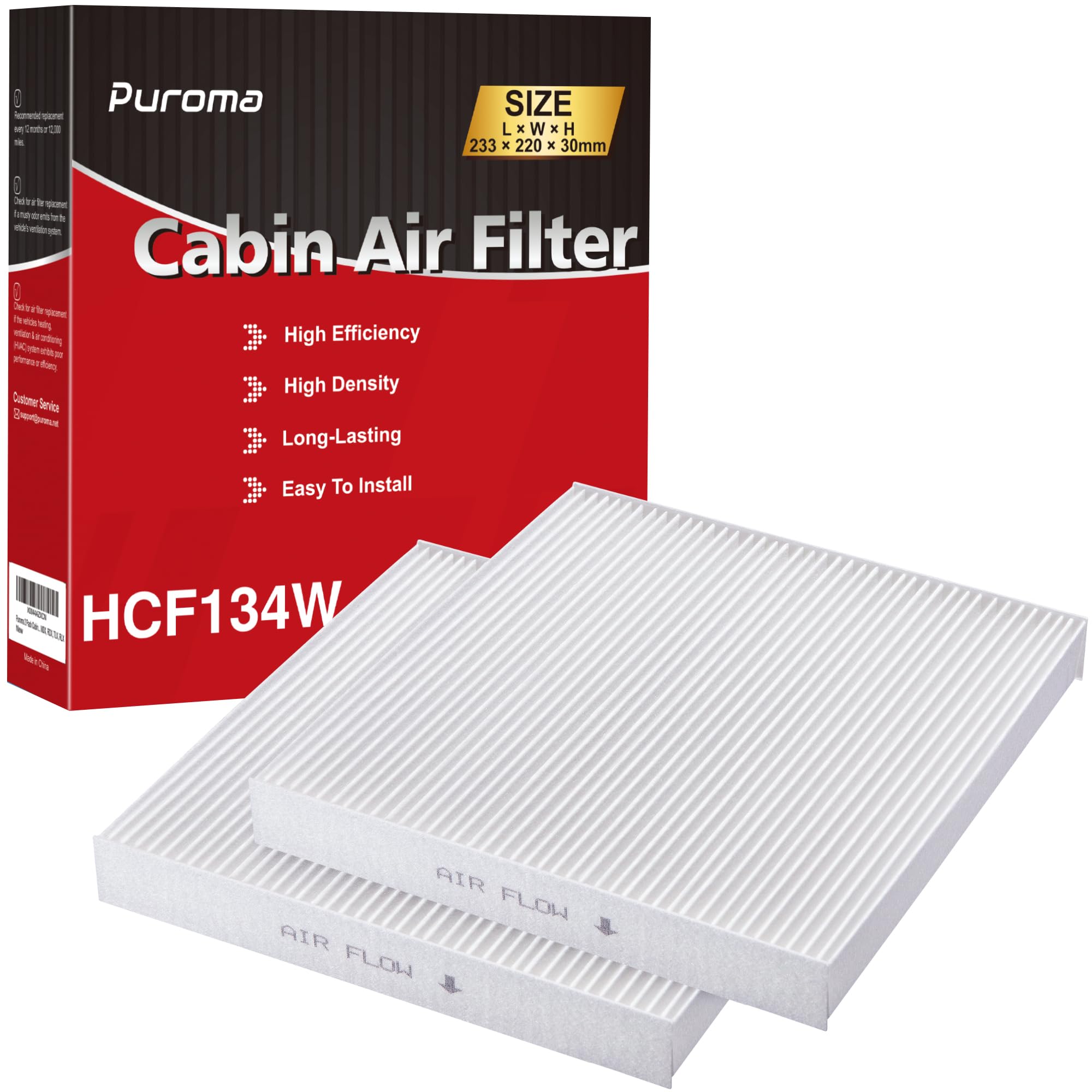
Puroma delivers a 2-pack of CF10134-compatible cabin air filters with a multiple fiber layer design aimed at trapping dust, pollen, and exhaust fumes. The non-woven filter layer uses a close-meshed structure to prevent particles from entering the cabin while maintaining high flow capacity for the HVAC system. The 2-pack format is useful for households with two compatible Honda vehicles or for keeping a spare on hand.
Verified owner reviews for 2013 Honda Civic and 2015 Pilot confirm exact fitment and easy installation, with one buyer noting the 2-pack allowed simultaneous replacement of both vehicles in under 10 minutes total. The filter includes clear airflow arrows printed on the side frame, eliminating guesswork during installation. The brand recommends replacement every 12,000 miles or annually, with 5,000-mile intervals for dusty conditions.
At a per-filter cost that undercuts most single-pack options, the Puroma 2-pack is a strong value play for drivers who want adequate filtration without paying for premium HEPA or heavy-carbon media. The multiple fiber layers provide reasonable protection for suburban and urban driving conditions.
What works
- 2-pack format saves money per filter replacement
- Multiple fiber layers trap dust and pollen effectively
- Clear airflow arrows simplify installation
- Low per-unit cost compared to premium options
What doesn’t
- No activated carbon layer for odor absorption
- Media density is lower than HEPA-grade filters
9. EPAuto CP182 (CF11182) Cabin Air Filter
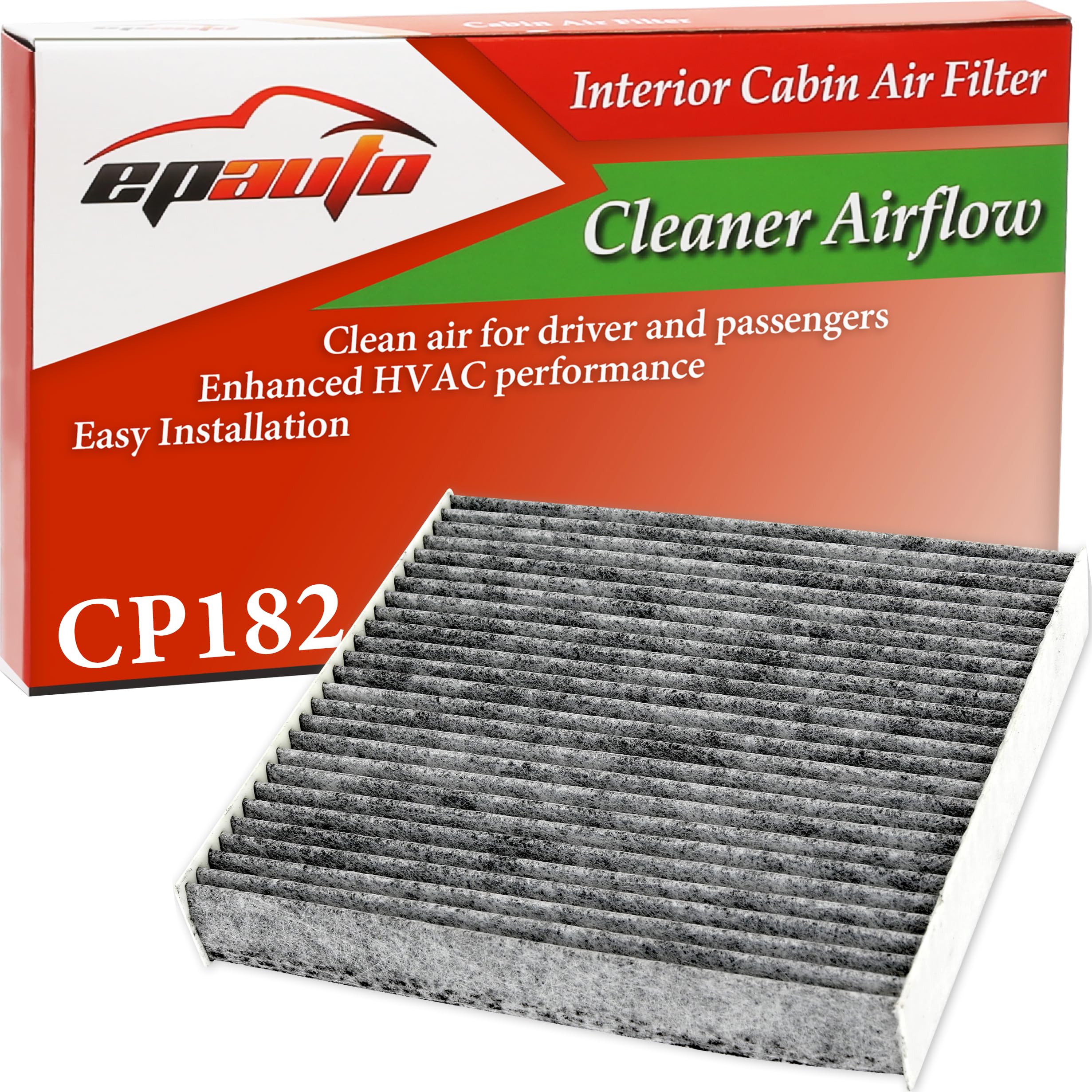
The EPAuto CP182 is one of the most widely purchased aftermarket cabin filters for Honda applications, with broad compatibility spanning Accord, Civic, CR-V, Fit, HR-V, Odyssey, Pilot, and numerous Acura models from 2009 through 2025. The filter uses a carbon and soda-infused media designed to generate a fresher airflow compared to basic particulate filters. The dimensions measure 8.3 inches by 8.1 inches by 1.2 inches thick.
Owner reviews consistently highlight the fitment accuracy and build quality for the price point. Multiple verified buyers for 2013 CR-V applications report that the filter slides into the housing without modification and that the carbon-soda blend noticeably reduces musty odors compared to standard white filters. The filter is manufactured by EPAuto under OEM part number cross-references including 80291-T5R-A01 and 80292-TBA-A11.
The CP182 is not a HEPA filter and does not claim high-efficiency sub-micron capture, but for routine driving conditions the carbon-soda media provides adequate odor control and particulate reduction at a cost that encourages more frequent replacement. EPAuto recommends annual or 12,000-mile replacement intervals.
What works
- Carbon and soda infusion helps neutralize odors
- Proven fitment across multiple Honda and Acura models
- Low cost encourages regular replacement
- Easy installation with clear airflow direction
What doesn’t
- Not HEPA-rated for sub-micron particle capture
- Carbon layer is lighter than premium filter options
10. ZEZUT CF10134 Cabin Air Filter
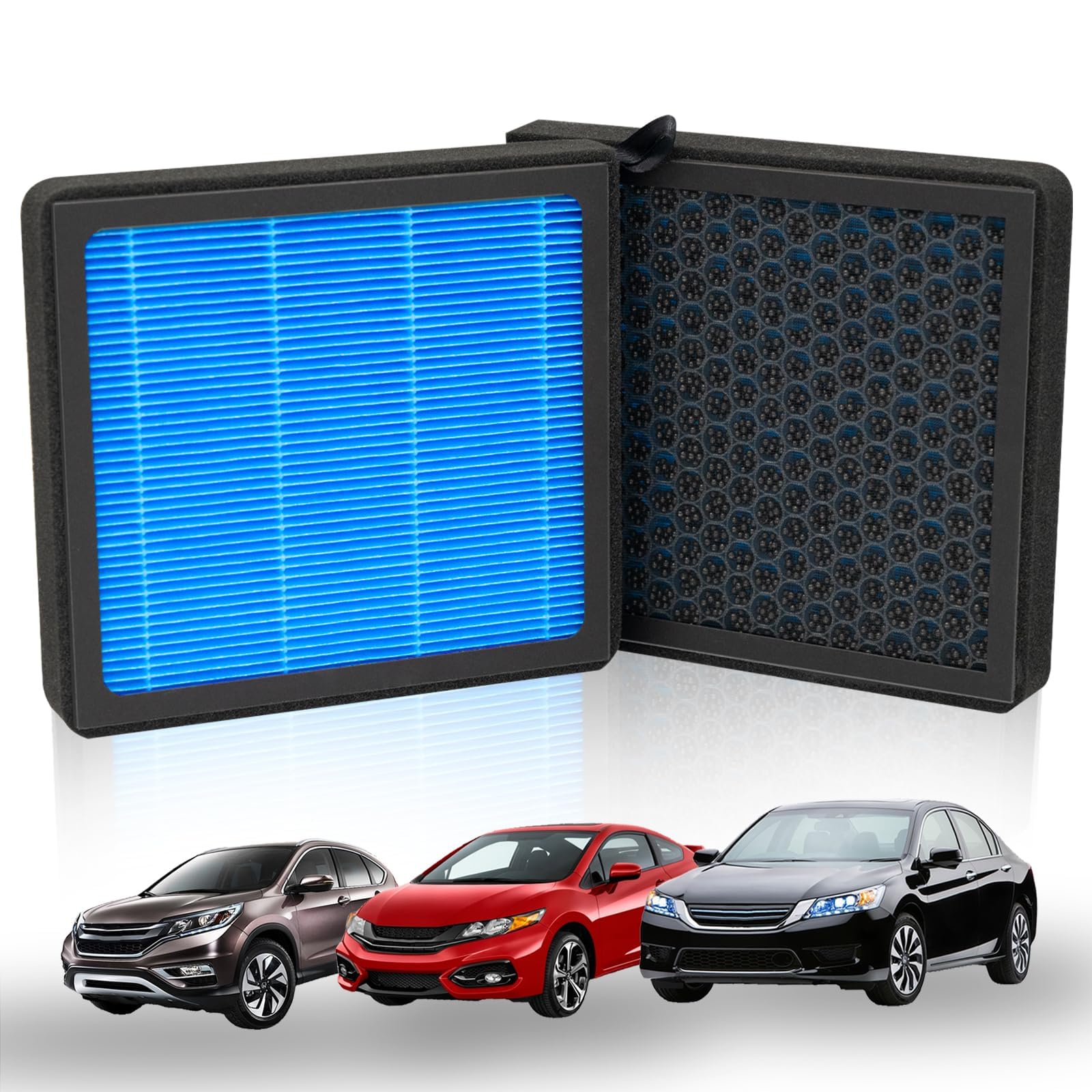
ZEZUT takes a deliberate approach to sealing by adding a 6mm thick sponge layer around the outside of the plastic frame. This design ensures an airtight fit in the filter housing but means the filter will feel slightly larger and tighter during installation compared to OEM specifications. The filter is tested to meet HEPA standards, claiming 99.97 percent removal of minute particles and airborne impurities.
The activated carbon infusion targets cigarette smoke, pet smells, and general vehicle odors, making it a viable option for drivers who frequently carry passengers or travel through urban areas. The filter is compatible with the CF10134 cross-reference and fits the 2007-2016 CR-V generation. The corrugated cardboard packaging protects the filter during shipping and prevents frame warping.
The intentional oversized seal is a double-edged sword: it prevents bypass leakage effectively but can make insertion into the CR-V housing more difficult than standard-dimension filters. Drivers who value a perfect seal over quick installation will appreciate the design philosophy.
What works
- 6mm sponge seal prevents air bypass leakage
- HEPA standard tested for high particle capture
- Activated carbon layer absorbs odors effectively
- Sturdy packaging prevents shipping damage
What doesn’t
- Oversized seal makes installation more difficult
- No customer reviews available to verify long-term performance
11. RICHWEI CF10134 Cabin Air Filter

RICHWEI offers a straightforward CF10134 replacement filter constructed from activated carbon and nonwoven media. The pleated design provides surface area for particle capture while the carbon layer targets odors and gaseous pollutants. The filter is compatible with a wide range of Honda and Acura models spanning 2003 through 2022, including the 2007-2016 CR-V.
Verified owner reviews for Honda Accord applications praise the filter for its dual-element construction that combines charcoal and paper filtration layers. One buyer noted that the carbon loading felt substantial compared to other filters at similar price points, providing immediate air quality improvement after installation. The filter dimensions of 9.25 inches by 8.82 inches by 1.18 inches match the CR-V housing.
The RICHWEI represents a budget-friendly entry point into carbon filtration without major compromises on build quality. The lack of a dedicated HEPA rating means it is best suited for routine replacement rather than allergy-season mitigation. The value proposition is strongest for drivers who change filters frequently and want carbon odor control at the lowest possible per-unit cost.
What works
- Dual-element carbon and paper construction at a low cost
- Wide vehicle compatibility across Honda and Acura models
- Good carbon loading for the price point
- Easy installation with standard dimensions
What doesn’t
- No HEPA rating for fine particle capture
- No airflow arrow printed on the frame
Hardware & Specs Guide
Filter Media Technologies
Cabin air filters for the 2013 CR-V use three primary media types. Standard particulate filters use pleated paper or synthetic fibers to trap visible dust and pollen. Carbon-infused filters add an activated carbon layer that adsorbs gaseous pollutants and odors through a porous surface structure. HEPA filters use a dense mat of randomly arranged fibers that capture 99.97 percent of particles at 0.3 microns through diffusion, interception, and impaction. The trade-off is that denser media reduces airflow, which can affect HVAC performance in some vehicles.
Activated Carbon vs HEPA
Activated carbon filters excel at absorbing odors, exhaust fumes, and volatile organic compounds that HEPA media cannot capture. HEPA filters dominate particle removal but do nothing for gases. The best solution for the 2013 CR-V is a combined filter that layers both media types. Carbon loading density varies widely between brands, with premium options using up to three times more carbon by weight than budget variants. The carbon layer also adds thickness, so frame dimensions must remain within OEM tolerances to avoid interfering with the glove box closure.
FAQ
Where is the cabin air filter located in a 2013 Honda CR-V?
How often should I replace the cabin air filter in my 2013 CR-V?
Can I use a HEPA filter in my 2013 Honda CR-V?
What is the difference between a carbon filter and a standard filter for the CR-V?
Do I need tools to replace the cabin filter in a 2013 CR-V?
Final Thoughts: The Verdict
For most buyers, the best 2013 honda cr-v cabin filter winner is the Bosch 6029C because it delivers true HEPA filtration with perfect OEM fitment at a reasonable price point that sits between budget and premium. If you want maximum odor absorption, grab the MANN-FILTER CUK 26009. And for lifetime ownership with washable convenience, nothing beats the K&N VF2033.

Certification: BSc in Mechanical Engineering
Education: Mechanical engineer
Lives In: 539 W Commerce St, Dallas, TX 75208, USA
Md Amir is an auto mechanic student and writer with over half a decade of experience in the automotive field. He has worked with top automotive brands such as Lexus, Quantum, and also owns two automotive blogs autocarneed.com and taxiwiz.com.