If your 2012 Chevy Cruze is throwing a check engine light, hesitating during acceleration, or guzzling more fuel than it used to, the culprit is often a failed oxygen sensor. This small component directly controls your engine’s air-fuel mixture, and when it goes bad, every mile you drive hurts performance and your wallet.
I’m Amir — the founder and writer behind Four Wheel Ask. I’ve spent years analyzing automotive replacement parts, cross-referencing OEM specifications against aftermarket builds, and filtering through thousands of owner reports to separate the sensors that actually last from the ones that fail within months.
This guide breaks down the best replacement options for the 2012 chevy cruze o2 sensor, focusing on direct-fit compatibility with the 1.4L turbo and 1.8L engines, connector accuracy, and real-world longevity so you can get back on the road with confidence.
How To Choose The Best 2012 Chevy Cruze O2 Sensor
Selecting the correct oxygen sensor for your Cruze involves more than matching a part number. Two engine variants exist under the hood — the 1.4L turbo (LUJ/LUV) and the 1.8L naturally aspirated (2H0) — and each uses a different sensor connector. Buying the wrong one means the plug won’t seat, leaving you with a loose connection and a persistent check engine light.
Upstream vs. Downstream — Know the Position
The upstream sensor (Bank 1 Sensor 1) threads into the exhaust manifold before the catalytic converter and controls fuel trim. The downstream sensor (Bank 1 Sensor 2) sits after the cat and monitors converter efficiency. Swapping their positions will not work: the wiring harness length and connector keying differ. Replace both as a pair if you are approaching 100,000 miles, as a failing downstream sensor can mask a bad cat.
Connector Shape and Wire Count
The 1.4L turbo uses a four-wire flat connector with a distinct locking tab, while certain 1.8L applications may use a different keyed shape. Verify your existing connector visually against product images before installing. A sensor with the wrong connector cannot be made to fit without cutting and splicing factory wiring, which introduces resistance and future failure points.
Construction Material and Heat Tolerance
Oxygen sensors in the Cruze sit close to the turbocharger housing on the 1.4L, exposing them to sustained exhaust gas temperatures exceeding 800°C. Sensors constructed with double laser-welded stainless steel bodies and aluminum oxide trap layers resist thermal shock and vibration better than budget units with rolled seams. A sensor that fails structurally inside the exhaust stream will contaminate the catalytic converter.
Quick Comparison
On smaller screens, swipe sideways to see the full table.
| Model | Category | Best For | Key Spec | Amazon |
|---|---|---|---|---|
| ChawYI 2-Piece Set | Premium | OEM-grade reliability | Measurement accuracy ±1.5% | Amazon |
| TAUTOY 2-Piece Set | Mid-Range | Wide vehicle coverage | Double laser-welded steel body | Amazon |
| TINJO 2-Piece Set | Premium | High heat resistance | Upper temp rating 125°C | Amazon |
| Quivimoro 2-Piece Set | Mid-Range | PTFE filter protection | Upper temp rating 1000°C | Amazon |
| Sangyue 2-Piece Set | Budget | 1.8L engine compatibility | Flange mount digital output | Amazon |
In‑Depth Reviews
1. ChawYI 234-4528 234-4529 Oxygen Sensor Set

ChawYI stands out because it subjects each sensor to 100% testing using the same criteria as OE manufacturers — a rare claim among aftermarket brands. The upstream unit (234-4529) and downstream unit (234-4528) match the factory connector shape for the 1.4L turbo perfectly, and the ±1.5% measurement accuracy means the engine computer receives consistent voltage signals. Owners report immediate clearing of the P0420 code and a noticeable return to normal idle smoothness.
The stainless steel construction handles the thermal cycling of the Cruze’s turbocharged exhaust without cracking. At an upper temperature rating of 800°C, the sensing element retains response speed even during sustained highway pulls. The set includes both positions, so you can replace the pair in one go and avoid the downstream sensor masking a cat efficiency issue later.
Fitment spans the 2011-2015 Cruze 1.4L Eco, LT, and LTZ trims, plus the 2016 Cruze Limited, Sonic, Trax, and Buick Encore — useful if you maintain multiple vehicles. The pre-applied anti-seize compound on the threads simplifies installation, though you should still use a dedicated oxygen sensor socket to avoid damaging the hex.
What works
- Factory-level testing for each sensor ensures reliability out of the box
- Precise ±1.5% accuracy stabilizes fuel trims quickly
- Includes both upstream and downstream units for a complete replacement
What doesn’t
- Does not include a wiring extension — harness length suits stock placement only
- Upper temperature rating lower than some competitor units rated above 1000°C
2. TAUTOY 2PCS Oxygen Sensor Upstream & Downstream
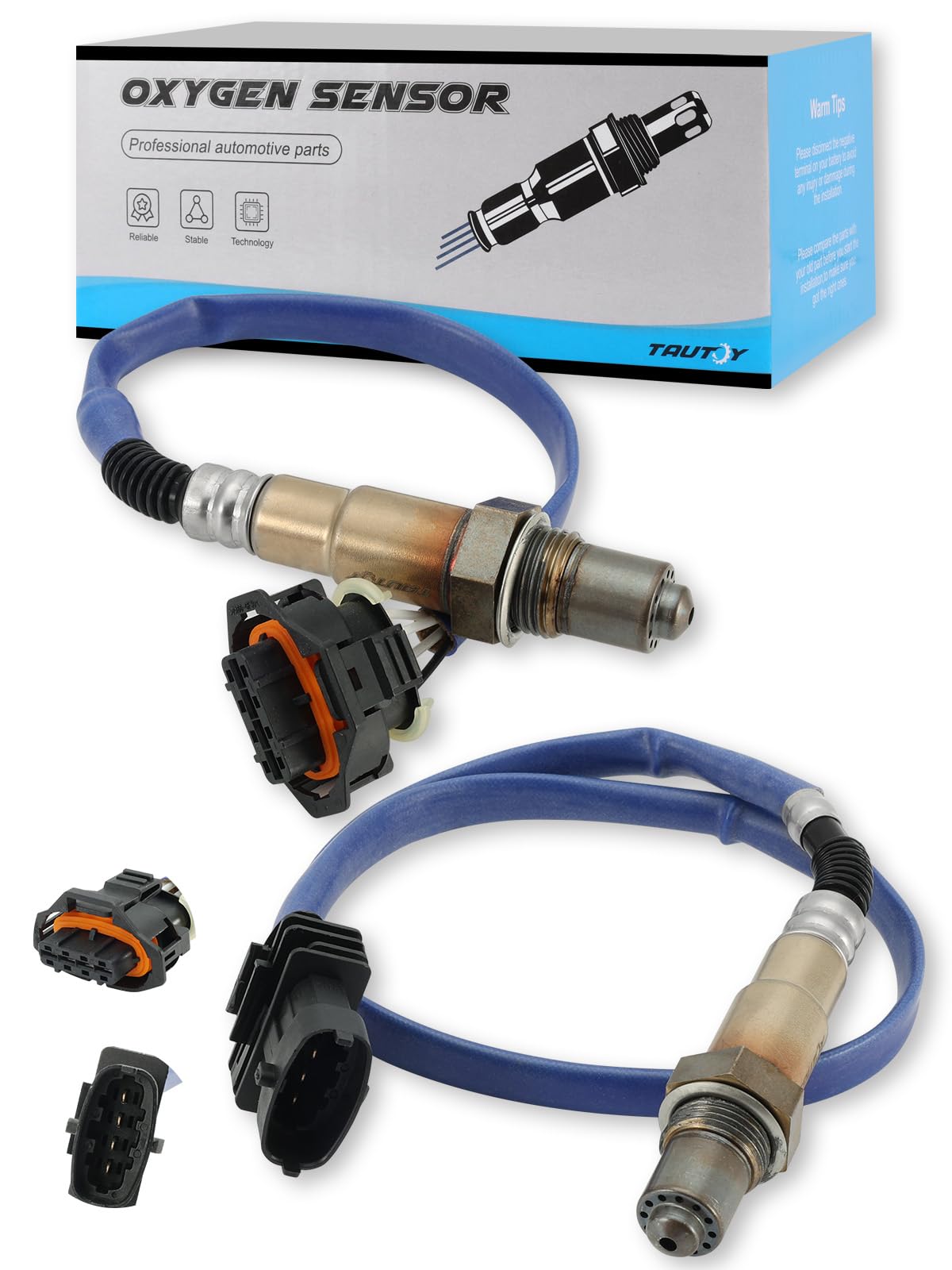
TAUTOY differentiates itself with double laser-welded stainless steel bodies — a construction method that eliminates the weak seam joints found on budget sensors. The 234-4529 upstream and 234-4528 downstream sensors use push-pull output signals that the Cruze’s ECM interprets without voltage drift. Owners of the 1.4L turbo report that the sensor resolves lean-code misfires (P0171) that other units failed to fix.
The set covers not only the 2011-2015 Cruze 1.4L but also the 2016 Cruze Limited, Sonic 2012-2020, and Trax 2013-2021, plus the Buick Encore 1.4L. The flange mount design aligns perfectly with the factory exhaust bungs, and the included gasket ensures no exhaust leaks at the connection point. At 0.31 pounds per sensor, the unit is lightweight yet feels robust in hand.
One detail serious DIYers appreciate: the wire pigtail length matches the OEM routing exactly, so you don’t have to zip-tie slack or stretch wires. The 1-year warranty provides a safety net, though most failures from poor sensors surface within the first 90 days. If your Cruze has existing converter damage from a long-driven failed sensor, replace the cat first.
What works
- Laser-welded body resists cracking under turbo heat cycling
- Exact OEM connector fitment eliminates guesswork
- Broad vehicle compatibility beyond just the Cruze
What doesn’t
- No anti-seze pre-applied on threads — must apply separately
- Limited to 1.4L engines; does not fit the 1.8L variant
3. TINJO 234-4528 234-4529 Upstream & Downstream Set

TINJO focuses on heat management: the aluminum oxide trap layer and PTFE filter combine to protect the sensing element from oil ash and silicone contamination common in turbocharged direct-injection engines. The analog output signal provides the ECM with a continuous voltage curve rather than a narrow switching range, which helps the Cruze maintain stoichiometric fuel ratios during light-throttle cruising. Owners note improved fuel economy of roughly 2-3 MPG after installation.
The set replaces OEM numbers 234-4528 and 234-4529 and fits the 1.4L L4 across the 2011-2015 Cruze, 2012-2020 Sonic, and 2012-2020 Trax. The upper temperature rating of 125°C applies to the sensor body itself, while the internal zirconia element handles exhaust gas temperatures far higher. Installation requires a 22mm oxygen sensor socket; the unit threads smoothly into the exhaust manifold and downstream bung without cross-threading risk.
One note specific to the Cruze: the downstream sensor on the 1.4L sits tight against the transmission housing. TINJO’s slightly shorter body profile gives you an extra half-inch of wiggle room compared to bulkier aftermarket units. If you are replacing only the downstream sensor due to a P0420 code, verify the cat is actually functioning before swapping parts.
What works
- Contaminant-blocking filter extends service life in turbo applications
- Compact body aids access in tight downstream position
- Analog signal gives ECM fine adjustment range
What doesn’t
- 5-volt maximum supply voltage means no compatibility with older 12V switching systems
- No extended warranty beyond standard coverage
4. Quivimoro Upstream & Downstream O2 Sensor Set
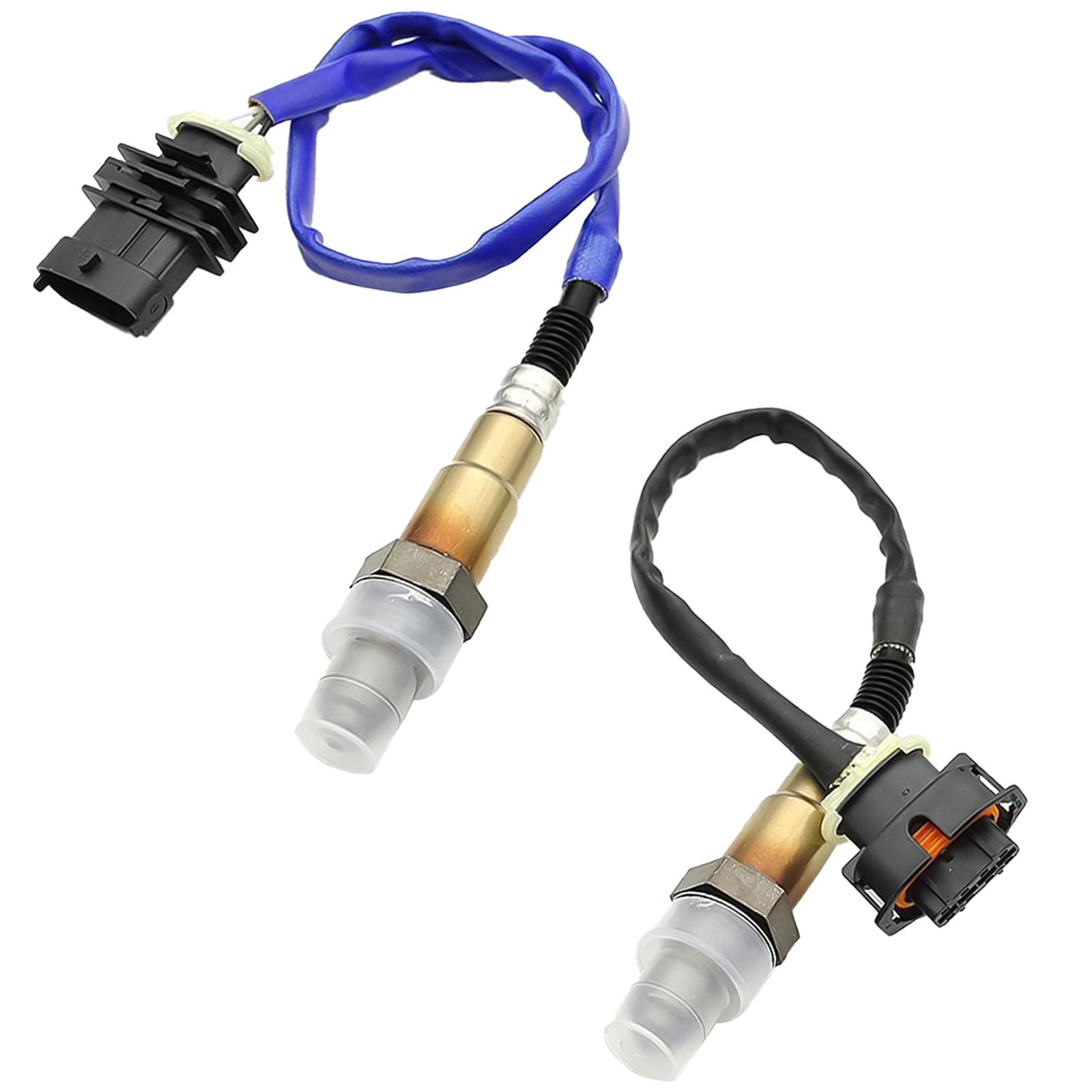
Quivimoro delivers a compelling balance of cost and capability, with an upper temperature rating of 1000°C that exceeds most competitors. The aluminum oxide trapping layer combined with the PTFE filter actively shields the zirconia element from silicone poisoning — a common failure mode when RTV silicone gasket maker is used near the exhaust. Owners of high-mileage Cruzes report the sensor restores normal idle within one drive cycle after installation.
The set replaces 234-4528 and 234-4529 and fits the 1.4L L4 in the 2011-2015 Cruze, plus the Sonic and Trax from 2012-2020. The push-pull output type ensures compatibility with the GM ECM’s preferred signal protocol. The 0.26-kilogram weight per sensor feels solid, and the stainless steel housing resists corrosion from road salt and moisture that accumulates under the Cruze’s underbody tray.
One practical consideration: the connector on the upstream unit uses a more pronounced latch tab than some budget sensors, giving you a positive click when seated. This reduces the risk of the sensor backing out due to engine vibration over time. If your Cruze has aftermarket exhaust components, verify the bung orientation allows the pigtail to route without touching the manifold heat shield.
What works
- 1000°C rating handles extreme turbo exhaust temperatures
- PTFE filter prevents silicone contamination
- Positive-lock connector stays seated under vibration
What doesn’t
- Weight in kilograms rather than pounds can be confusing for US buyers
- No gasket included for the downstream flange connection
5. Sangyue 2PCS Oxygen Sensor for 1.8L Engines

Sangyue is the only sensor in this lineup designed specifically for the 1.8L naturally aspirated Cruze (2010-2015, plus 2016 Cruze Limited). The flange mount with digital output matches the 1.8L’s ECU mapping, which uses a different voltage curve than the 1.4L turbo. Owners of the base LS trim with the 1.8L report that this sensor clears the P0135 and P0141 heater circuit codes that plague earlier production units.
The set covers the upstream and downstream positions and also fits the Chevrolet Sonic 1.6L and 1.8L (2012-2018), the Trax 1.8L (2014-2017), and even the Saab 9-5 2.8L — a surprisingly broad range for a budget-tier product. The aluminum and stainless steel body keeps weight low at 0.2 kilograms, making the installation easier when working overhead under the Cruze’s cramped hood. The digital output provides a clean square-wave signal that the ECM reads without noise filtering issues.
The trade-off for the entry-level price point shows in the connector boot: it feels thinner than the premium options and may deform if you overtighten the wiring clip. Route the pigtail carefully away from the exhaust manifold heat shield to avoid premature insulation breakdown. If your Cruze is a 1.4L turbo, do not buy this set — the connector shape is physically different.
What works
- Specifically confirmed for the 1.8L engine variant
- Lightweight body reduces strain on the bung mount
- Digital signal suits the 1.8L ECU mapping
What doesn’t
- Incompatible with the 1.4L turbo engine
- Connector boot feels less durable than premium alternatives
Hardware & Specs Guide
Zirconia Sensing Element vs. Wideband
The 2012 Cruze uses a narrow-band zirconia oxygen sensor that produces a voltage signal between 0.1V and 0.9V to indicate rich or lean conditions. This differs from wideband sensors found in modern turbocharged engines that measure precise air-fuel ratios across a broader range. The Cruze’s ECM relies on the rapid switching of the narrow-band sensor — a slow sensor will cause the fuel trim to oscillate, wasting fuel and increasing emissions. When selecting a replacement, ensure the sensor is specified as a switching-type oxygen sensor for the GM 1.4L or 1.8L platform, not a universal wideband unit.
Hex Size, Thread Pitch, and Installation Torque
Both upstream and downstream oxygen sensors on the Chevy Cruze use an M18 x 1.5 thread with a 22mm hex. The recommended tightening torque is 30-35 ft-lb, but the more critical spec is the anti-seize compound: the threads must be coated with nickel-based anti-seize to prevent galling against the stainless steel exhaust bung. Over-tightening crushes the sealing washer and causes exhaust leaks, while under-tightening allows the sensor to vibrate loose. Always use a dedicated oxygen sensor socket with a cutout for the wiring pigtail, never an open-end wrench, to avoid rounding the hex.
FAQ
Will a failing O2 sensor cause my Cruze to fail emissions testing?
Can I drive my 2012 Cruze with a bad oxygen sensor temporarily?
Why does my new O2 sensor still show a code after installation?
Final Thoughts: The Verdict
For most owners, the 2012 chevy cruze o2 sensor replacement that offers the best combination of build quality and reliability is the ChawYI 2-Piece Set because it undergoes OE-level 100% testing and delivers ±1.5% measurement accuracy that restores proper fuel trims immediately. If you want superior heat tolerance for a turbocharged 1.4L that runs hot, grab the Quivimoro Set with its 1000°C rating. And for owners of the 1.8L naturally aspirated Cruze on a tight budget, nothing beats the dedicated fit of the Sangyue Set for the base engine.

Certification: BSc in Mechanical Engineering
Education: Mechanical engineer
Lives In: 539 W Commerce St, Dallas, TX 75208, USA
Md Amir is an auto mechanic student and writer with over half a decade of experience in the automotive field. He has worked with top automotive brands such as Lexus, Quantum, and also owns two automotive blogs autocarneed.com and taxiwiz.com.