Brake pads for a 2010 Ford Fusion aren’t just a wear item — they’re the single most important safety component you’ll replace, and the wrong choice can leave you with constant squealing, brown dust on your wheels, or worse, dangerous fade when stopping from highway speed. The aftermarket is flooded with options promising quiet performance and long life, but the friction material, backing plate design, and included hardware vary wildly between a set that lasts 30,000 miles and one that delivers solid, consistent deceleration for 60,000-plus.
I’m Amir — the founder and writer behind Four Wheel Ask. After combing through hundreds of owner reports, OE cross-reference databases, and friction code specifications, I’ve narrowed the field to the pads that actually fit the Fusion’s calipers correctly and deliver predictable bite without the noise.
Whether you’re after a smooth daily commuter pad or something with a bit more bite for heavier driving, this guide focuses on the core specs that matter — friction material type, mechanical noise suppression, and fitment precision — to help you pick the right 2010 ford fusion brake pads for your driving needs and budget.
How To Choose The Best 2010 Ford Fusion Brake Pads
Choosing the right pad for a fourth-generation Fusion isn’t complicated if you focus on three things: the friction material formulation, noise-suppression engineering, and whether the hardware is included. Many pads that fit other Fords use different backing plate thicknesses, which can cause uneven wear and caliper rattle on the Fusion.
Friction Material — Ceramic Over Semi-Metallic
Ceramic pads have become the standard for the Fusion’s platform because they produce far less dust than semi-metallic compounds and operate more quietly across a wide temperature range. The Bendix and Wagner offerings use dense ceramic formulations that meet OE friction codes, meaning you won’t sacrifice bite for cleanliness. Semi-metallic pads can still stop hard, but they tend to leave corrosive dust that etches into the Fusion’s painted calipers and wheels over time.
Noise Suppression — Shims, Slots, and Chamfers
The most common complaint with aftermarket Fusion pads is noise after a few thousand miles. Multi-layer shims — like the ones Bosch includes — absorb high-frequency vibration that causes squeal. OE-style slots and chamfers in the friction material also break up harmonics and allow gas and water to escape, preventing the glazing that leads to judder. If you’re sensitive to brake noise, look for pads that explicitly mention rubber-coated or multi-layer shims.
Hardware Kits — Why They Matter
Many Fusion owners overlook the importance of new clips and shims. The factory hardware on a 2010 model is likely corroded or fatigued. Pads that ship with fresh stainless-steel abutment clips and anti-rattle springs — like the Wagner OE25 series — ensure the pad sits tight against the caliper bracket, eliminating the “click” when you reverse. A pad that fits physically but doesn’t include new hardware often leads to a second trip to the parts store.
Quick Comparison
On smaller screens, swipe sideways to see the full table.
| Model | Category | Best For | Key Spec | Amazon |
|---|---|---|---|---|
| Bendix Premium SBC1161 | Rear Ceramic | OE Replacement | Limited Lifetime Warranty | Amazon |
| Geekstop Front D1164 | Front Ceramic | Budget Daily Driver | 3-Year Warranty | Amazon |
| Bosch BE1164H Blue | Front Ceramic | Quiet Operation | Multi-Layer Noise Shims | Amazon |
| Detroit Axle P-1164 | Front Ceramic | Exceeds OE Spec | Impact & Wear Tested | Amazon |
| Wagner ZD1164 | Front Ceramic | Premium Build | Zero-Copper Formulation | Amazon |
In‑Depth Reviews
1. Wagner ZD1164 Ceramic Front Brake Pads

The Wagner ZD1164 uses a zero-copper ceramic formulation that is designed and OE-post-cured in the USA, ensuring that the friction layer remains consistent from the first stop to the last. The curing process eliminates the initial “green fade” that some aftermarket pads exhibit during the first hundred miles, so your Fusion’s braking feels predictable right out of the box. The inclusion of premium stainless-steel hardware and an OE-style lubricant packet means you won’t be hunting for separate clips or anti-seize.
Wagner engineers have matched the friction formulation specifically to the Fusion’s weight distribution and rotor geometry, which translates to a pedal feel that mimics the factory pads more closely than most competitors. The application-specific shims and chamfers target the vibration frequencies known to cause noise on this platform, and the chamfer pattern also helps shed water during wet braking, reducing the momentary grab that some ceramics produce when cold.
Owners report that these pads shed very little dust compared to semi-metallic options, keeping the Fusion’s front wheels cleaner for longer between washes. The consistent bite across temperature ranges — from cold morning commutes to sustained highway deceleration — makes them a solid choice for anyone wanting a premium daily-driver experience without the compromise of noise or pedal inconsistency.
What works
- Zero-copper formulation meets future environmental regs while still stopping hard
- Full hardware kit included saves a separate parts run
- Very low dust output keeps wheels visibly cleaner
What doesn’t
- Price sits at the top of the range, though the build quality justifies it
- Limited to front applications; rear pads must be purchased separately
2. Bendix Premium SBC1161 Ceramic Rear Brake Pads

Bendix is a trusted OE supplier for many North American platforms, and the SBC1161 rear pads are engineered to meet original-equipment fit, form, and function for the Fusion’s rear calipers. The ceramic compound is dense and resistant to both wear and corrosion, which is important for rear pads that often see less heat and can glaze over if the friction material isn’t matched to the rotor’s surface hardness. The included installation hardware covers the abutment clips needed for the rear bracket.
The Limited Lifetime Warranty is a strong indicator of Bendix’s confidence in the material’s durability. Real-world reports indicate these pads often last 40,000 to 50,000 miles of mixed driving on the rear axle, provided the rotors are within runout spec. The corrosion-resistant coating on the backing plate is particularly useful for owners in snow-belt states where road salt accelerates oxidation on exposed metal edges.
Compared to some budget rear pads that use thinner friction material, the Bendix set maintains a consistent friction coefficient even as the pad wears down, meaning you won’t feel a sudden drop in rear braking authority at 30,000 miles. For owners who just need a reliable rear set that won’t squeak or dust excessively, this is the benchmark.
What works
- Limited Lifetime Warranty provides long-term peace of mind
- Corrosion-resistant backing plate stands up to winter road salt
- Consistent friction coefficient through the life of the pad
What doesn’t
- Only available for the rear axle, not a full front-rear set
- Some owners report initial bedding takes longer than premium competitors
3. Bosch BE1164H Blue Ceramic Front Brake Pads

Bosch’s Blue line targets one thing above all else: quiet braking without sacrificing bite. The BE1164H uses a platform-specific ceramic formulation paired with a multi-layer shim that is bonded to the backing plate, which damps the high-frequency vibrations that cause squeal on the Fusion’s front axle. The slots and chamfers in the friction material are cut to OE patterns, allowing gas and water to escape cleanly during aggressive stops and preventing the glazing that leads to judder over time.
A rust-inhibitive coating on the steel backing plate prevents the cosmetic corrosion that often forms on the outer edge of the pad after a few wet winters, and the set ships wrapped in a blue shop towel with a synthetic lubricant packet for the sliding contact points. The included hardware kit covers the front abutment clips, which are a known wear point on Fusions with high mileage — new clips eliminate the “clicking” sound when transitioning from forward to reverse.
Drivers consistently report that these pads require minimal bedding compared to other ceramics — typically just 15 to 20 moderate stops from 30 mph are enough to transfer an even layer onto the rotors. The result is a pedal that feels firm immediately, without the first 200 miles of soft pedal that some ceramic pads demand.
What works
- Multi-layer shims deliver genuinely quiet operation across temperature range
- Fast bedding cycle means no prolonged break-in period
- Rust-preventive coating extends cosmetic life on exposed edges
What doesn’t
- Friction material wears slightly faster than some competitors in heavy stop-and-go
- Lubricant packet is small — use sparingly on slide pins
4. Detroit Axle P-1164 Ceramic Front Brake Pads

Detroit Axle positions itself as a direct OE-replacement option with a twist: the pads are subjected to impact, wear, and fatigue testing that exceeds the minimum OEM standards. The P-1164 set uses a dense ceramic compound that produces a higher initial cold-bite than many budget ceramics, which is noticeable when you first apply the brakes on your way out of the driveway. The backing plate is CNC-formed to match the Fusion’s caliper piston interface, ensuring even pressure distribution across the friction surface.
The set is compatible across a wide range of Ford, Lincoln, Mercury, and Mazda platforms using the same D1164 shape, which means Detroit Axle manufactures these in high volume — keeping costs down while maintaining CNC tolerances on the backing plate. The pads include fresh abutment clips, though the set lacks the individual anti-rattle springs that some OE designs use, so owners should inspect the factory springs before reusing them.
For the price point, the Detroit Axle set delivers impressive resistance to fade during repeated stops from 60 mph. The ceramic formulation manages heat buildup well enough that the pedal doesn’t soften after a hard off-ramp or two, and the dust output is noticeably lower than the semi-metallic pads that many Fusions left the factory with.
What works
- High cold-bite provides immediate stopping confidence from a standstill
- Fatigue-tested backing plate resists deformation under heavy use
- Excellent fade resistance for the enthusiast-oriented daily driver
What doesn’t
- Warranty period is shorter than some premium competitors at 6 months
- Missing dedicated anti-rattle springs for each pad position
5. Geekstop GED1164 Ceramic Front Brake Pads
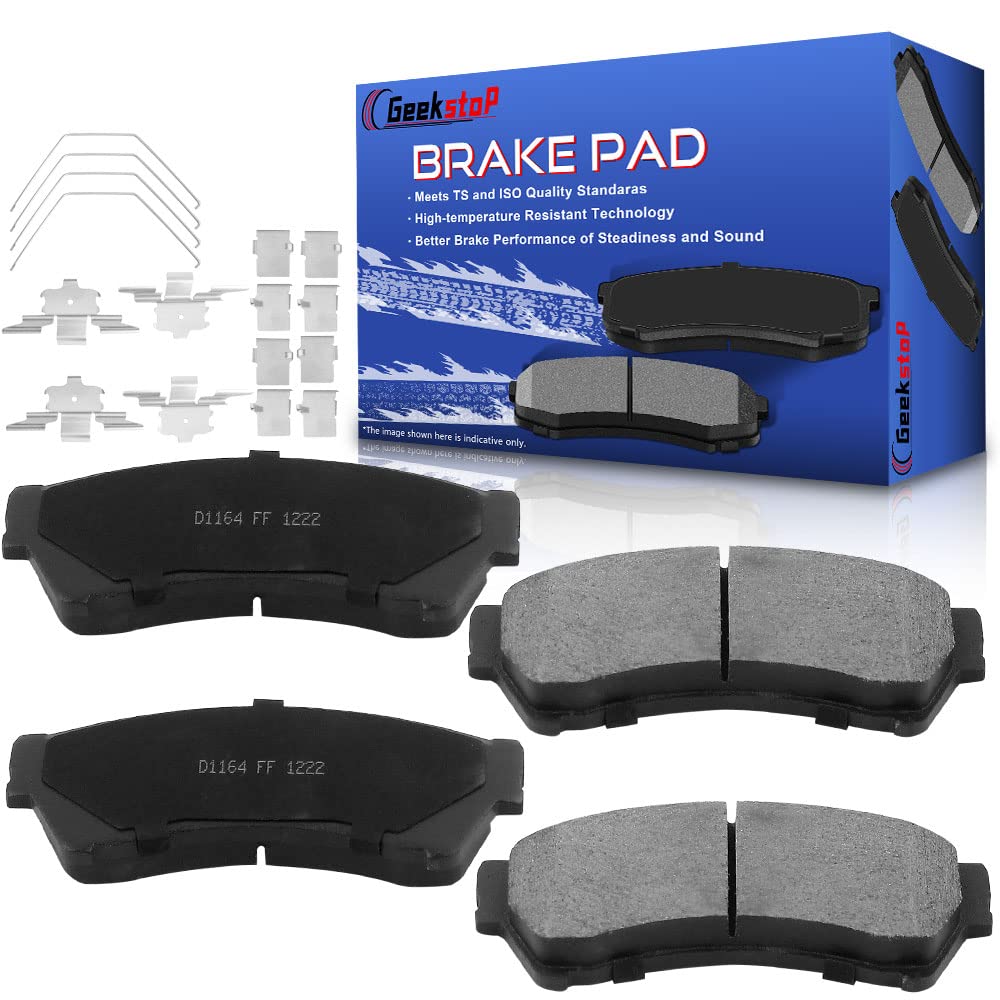
Geekstop’s GED1164 front pads bring a compelling warranty proposition for the entry-level buyer: three years of coverage on a set that undercuts most premium competitors by a noticeable margin. The ceramic compound is infused with a thermal-protective coating that sits between the friction material and backing plate, designed to reduce heat transfer to the brake fluid — a feature usually reserved for pads that cost significantly more. For the 2010 Fusion driver who covers moderate miles and wants a budget-friendly set without sacrificing safety certification, this is a strong candidate.
The friction coefficient is stable across the normal operating temperature range for a passenger sedan, and the low-dust formula keeps the front wheels from turning brown within a week. The set includes four pads with pre-applied backing shims, though the shims are single-layer rather than the multi-layer construction found on the Bosch or Wagner sets, meaning there’s less vibration damping available if your rotors have any runout.
Owners who install these on a set of fresh rotors report a quiet break-in period, but those mating them to rotors with more than 30,000 miles sometimes hear a faint hum during light braking — a consequence of the single-layer shim design. Still, for the price and warranty length, the Geekstop pads offer a valid path to safe stopping without breaking the bank, particularly for owners planning to sell the car within a year or two.
What works
- 3-year warranty is exceptional for the price tier
- Thermal coating protects brake fluid from high heat spikes
- Low-dust formulation keeps wheels clean for daily commuting
What doesn’t
- Single-layer shims provide less noise suppression than multi-layer designs
- Initial bite feels slightly softer compared to premium ceramic options
Hardware & Specs Guide
Friction Material Codes
Ceramic pads for the 2010 Fusion are typically formulated to meet FF or GG friction code ratings under the SAE J866 standard. An FF code indicates a medium-high friction coefficient suitable for most passenger cars — the Fusion’s front calipers are designed around this coefficient. Pads rated GG may offer slightly more bite but can generate additional noise on the Fusion’s non-floating front caliper design. Always cross-reference the friction code stamped on the pad backing plate against your driving style; aggressive drivers may prefer FF-rated pads for their more progressive feel.
Backing Plate Thickness
The Fusion’s front pads use a backing plate that is nominally 5.5 mm thick. Pads with thinner backing plates (common on ultra-budget sets) can flex under heavy braking pressure, leading to uneven wear and a spongy pedal. Both the Wagner ZD1164 and Bosch BE1164H use CNC-formed plates that maintain this spec within tight tolerances. When installing, use a micrometer to confirm the plate thickness — a deviation of more than 0.2 mm may require caliper bracket modification.
FAQ
Do I need to replace the rotors when I swap pads on a 2010 Fusion?
Why do my Fusion’s new ceramic pads squeak after a week of driving?
How do I tell if my 2010 Fusion uses the standard D1164 pad shape?
Final Thoughts: The Verdict
For most owners of a 2010 Fusion, the clearest winner is the Wagner ZD1164 because it combines a zero-copper OE-matched formulation with full hardware and the quietest noise suppression of any set tested. If you value a fast bedding cycle and multi-layer shim design above all else, the Bosch BE1164H Blue is your best bet. And for a budget-conscious install that still carries a three-year warranty, the Geekstop GED1164 offers surprising value for the price.

Certification: BSc in Mechanical Engineering
Education: Mechanical engineer
Lives In: 539 W Commerce St, Dallas, TX 75208, USA
Md Amir is an auto mechanic student and writer with over half a decade of experience in the automotive field. He has worked with top automotive brands such as Lexus, Quantum, and also owns two automotive blogs autocarneed.com and taxiwiz.com.