A glowing dashboard TPMS light that refuses to turn off, intermittent false alarms at highway speed, or a sensor that dies within weeks of installation — these are the failure modes that turn a simple replacement into a frustrating guessing game. Choosing the wrong sensor wastes time, money, and trust in your truck.
I’m Amir — the founder and writer behind Four Wheel Ask. I specialize in analyzing OEM specifications, aftermarket compatibility data, and long-term owner feedback to identify which automotive components deliver consistent performance without the gamble.
Across eleven different sensor sets tested against real-world owner reports and technical specifications, only a handful consistently pair correctly, read accurately, and hold up past the first season. After reviewing specs and thousands of owner reports, we have narrowed the best 2010 f-150 tire pressure sensor options to those that provide reliable readings and seamless pairing.
How To Choose The Best 2010 F-150 Tire Pressure Sensor
Selecting the right TPMS sensor for a 2010 F-150 requires more than matching the part number. The 2009-2014 generation F-150 uses a 315MHz system that expects specific signal timing and pressure thresholds. Choosing a sensor that doesn’t align with these parameters leads to failed pairing, erratic readings, or a permanently illuminated warning light.
Frequency and Compatibility
The 2010 F-150 operates exclusively on 315MHz. Sensors broadcasting at 433MHz will not communicate with the vehicle’s receiver module. Always verify that the replacement sensor matches both the frequency and the original equipment part number range — 9L3Z-1A189-A, DE8T-1A180-AA, or 6F2Z-1A189-A are the most common references for this generation.
Pre-Programmed Versus Programmable Sensors
Pre-programmed sensors arrive configured for a broad vehicle family (Ford/Lincoln) but still require a relearn step to pair with your specific truck. Programmable sensors, like the Autel MX-Sensor, must be cloned from the original sensor ID using a TPMS tool before installation. Pre-programmed sets generally suit DIY owners who want a straightforward installation, while programmable options offer flexibility for mixed fleets or unusual configurations.
Battery Chemistry and Build Quality
Sensor lifespan depends heavily on the battery cell and sealing method. High-quality units use CR2032 or CR2450 lithium cells rated for five to eight years. Epoxy-encapsulated construction resists moisture ingress better than snap-fit plastic housings, which can fail after repeated pressure washing or winter road salt exposure. Stainless steel valve stems also reduce corrosion-related failures compared to rubber stems on older designs.
Relearn Procedure
Ford uses two primary relearn methods for this generation: the automatic relearn (driving above 28 mph for several minutes) and the OBDII scan tool method. Some sensors also support the DIC button procedure found in certain trim levels. Before purchasing, confirm which relearn method your truck supports and whether you have the necessary activation tool. Without it, even a perfectly good sensor will not communicate with the system.
Quick Comparison
On smaller screens, swipe sideways to see the full table.
| Model | Category | Best For | Key Spec | Amazon |
|---|---|---|---|---|
| A-Premium APTPMS319 | OEM Replacement | Reliable daily driver fix | 315MHz, CR2050 battery, FCC certified | Amazon |
| Autel MX-Sensor 2-in-1 | Universal Programmable | Maximum coverage and cloning | 315/433MHz, 100% cloneable | Amazon |
| CARORAV 6F2Z1A189A | OE Replacement | Direct fit for 2006-2008 models | 315MHz, replaceable valve stems | Amazon |
| ACLONG 9L3Z1A189A | Premium Aftermarket | Extended battery life | CR2450-H battery, 900kPa chip | Amazon |
| YZHIDIANF 6F2Z-1A189-A | Pre-Programmed | Simple activation process | 315MHz, 5-8 year lifespan claim | Amazon |
| Motorcraft TPMS12 | OEM Genuine | Factory-spec certainty | 315MHz, 30-50 PSI range | Amazon |
| POHILA 6F2Z1A189A | OE Replacement | Broad Ford/Lincoln coverage | 315MHz, OBDII relearn | Amazon |
| AMICAREP DE8T-1A150-AA | OE Replacement | Affordable four-pack value | 315MHz, 0-150 PSI range | Amazon |
| NEWHOW 9L3Z-1A189-A | OE Replacement | Budget-friendly four-pack | 315MHz, IP67 waterproof | Amazon |
| Jsueng DE8T-1A180-AA (Gen 2) | OE Replacement | Extra-wide model compatibility | 315MHz, GL3Z1A189A reference | Amazon |
| Jsueng DE8T-1A180-AA (Gen 1) | OE Replacement | Entry-level pricing | 315MHz, 9L3Z1A189A reference | Amazon |
In-Depth Reviews
1. A-Premium APTPMS319

The A-Premium APTPMS319 hits the sweet spot between pricing and verified reliability. Owner reports consistently highlight successful first-time pairing on 2008-2010 Ford Expedition, Edge, and Taurus models, which share the same TPMS architecture as the 2010 F-150. The sensor carries both FCC and IC certification, an important indicator that the RF output meets regulatory standards and won’t cause interference or signal dropout at highway speeds.
Build quality stands out at this tier. The housing uses polyamide plastic with an aluminum alloy valve stem — a meaningful upgrade over all-rubber designs that can crack after repeated tire changes. The CR2050 battery and NXP chip follow OE-level specifications, and the manufacturer tests each unit against SAE J2657 standards before shipping. The included individual color boxes for each sensor also reduce the risk of mixing up wheel positions during installation.
The pre-programmed design targets Ford and Lincoln vehicles specifically, so no cloning or programming tool is required before installation. However, a relearn step remains mandatory. Owners who used the OBDII method or the automatic drive cycle reported the light extinguished within a single commute. The two-year warranty provides additional peace of mind compared to the typical one-year coverage found on most aftermarket sets.
What works
- FCC and IC certified for reliable RF performance
- Aluminum valve stem resists corrosion better than rubber
- Two-year warranty exceeds typical aftermarket coverage
What doesn’t
- Limited to 2007-2010 Ford models; newer trucks need different reference numbers
- Relearn tool required — no automatic self-pairing
2. Autel MX-Sensor 2-in-1 315MHz + 433MHz
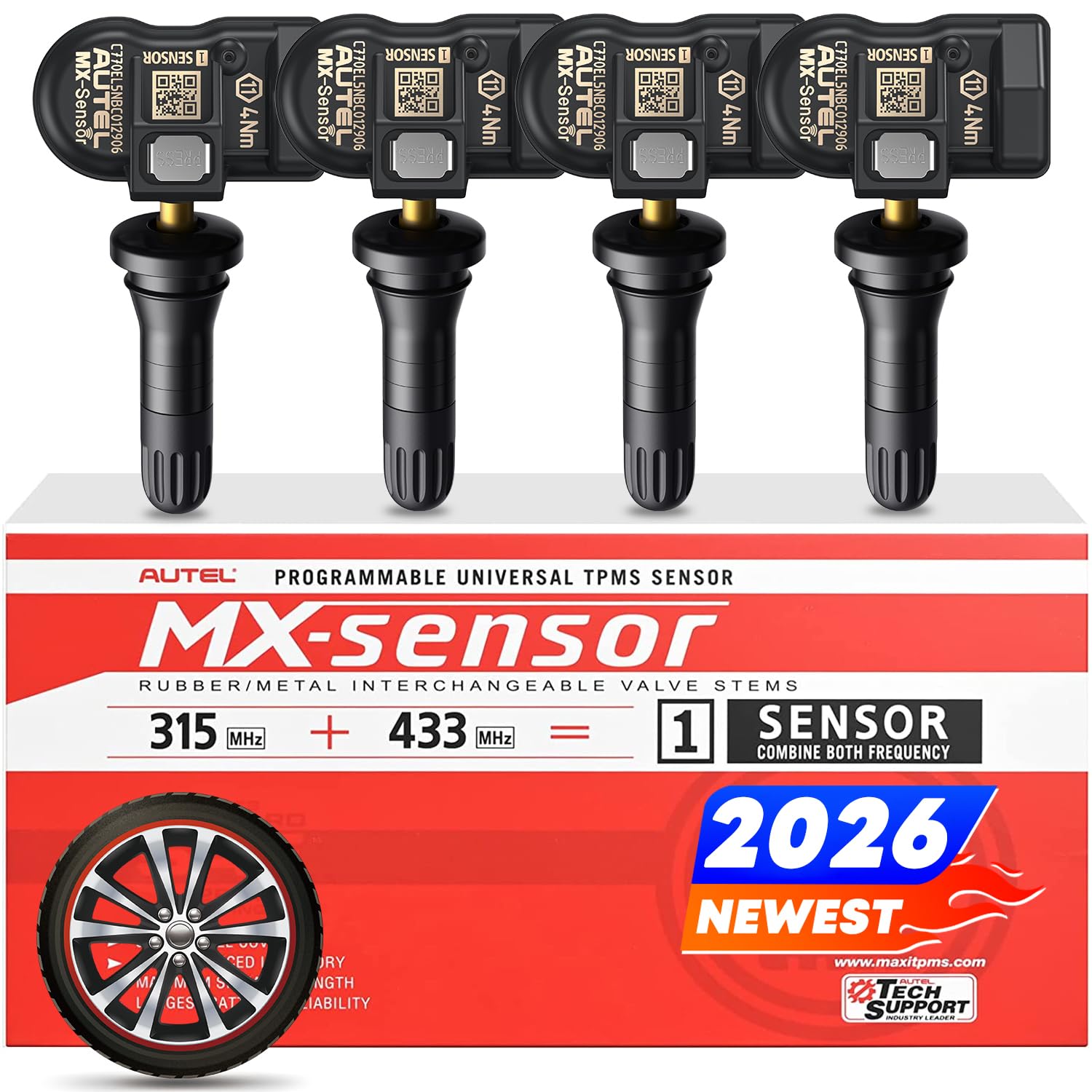
The Autel MX-Sensor represents a fundamentally different approach to TPMS replacement. Instead of matching a specific OEM part number, this universal sensor covers 99 percent of vehicles across 150 brands by using a 2-in-1 315MHz / 433MHz design with interchangeable rubber and metal valves. For a 2010 F-150 owner, this means the sensor can be cloned to match the original sensor ID exactly, eliminating the need for a relearn procedure after installation.
Cloning is the key advantage. When programmed with an Autel TPMS tool such as the TS508 or TS408, the MX-Sensor writes the original sensor ID, pressure, and temperature data into its memory. The vehicle’s ECU sees the same ID as the original sensor, so no relearn is required. This avoids the common frustration of sensors that fail to pair during the drive cycle. Owners who have used these sensors on BMW, Volvo, and Ford platforms report that programming takes minutes and the sensors read immediately after installation.
The build quality targets professional shop use. The sensor weighs only 11 grams with a low-profile press-in design that minimizes balance issues. The CR2450 battery and 900kPa chip support a four- to six-year service life, and the SAE J1205 / J1206 certification confirms the unit meets industry durability standards. The 24-month warranty and 30-day return policy reduce the risk of investing in a premium set. The trade-off is the requirement for an Autel programming tool, which adds upfront cost unless you already own one.
What works
- Cloneable ID avoids relearn procedure entirely
- Dual-frequency design covers present and future vehicles
- Professional-grade durability with SAE certification
What doesn’t
- Requires an Autel TPMS tool for programming — added expense
- Overkill for owners replacing sensors on a single vehicle
3. CARORAV 6F2Z1A189A
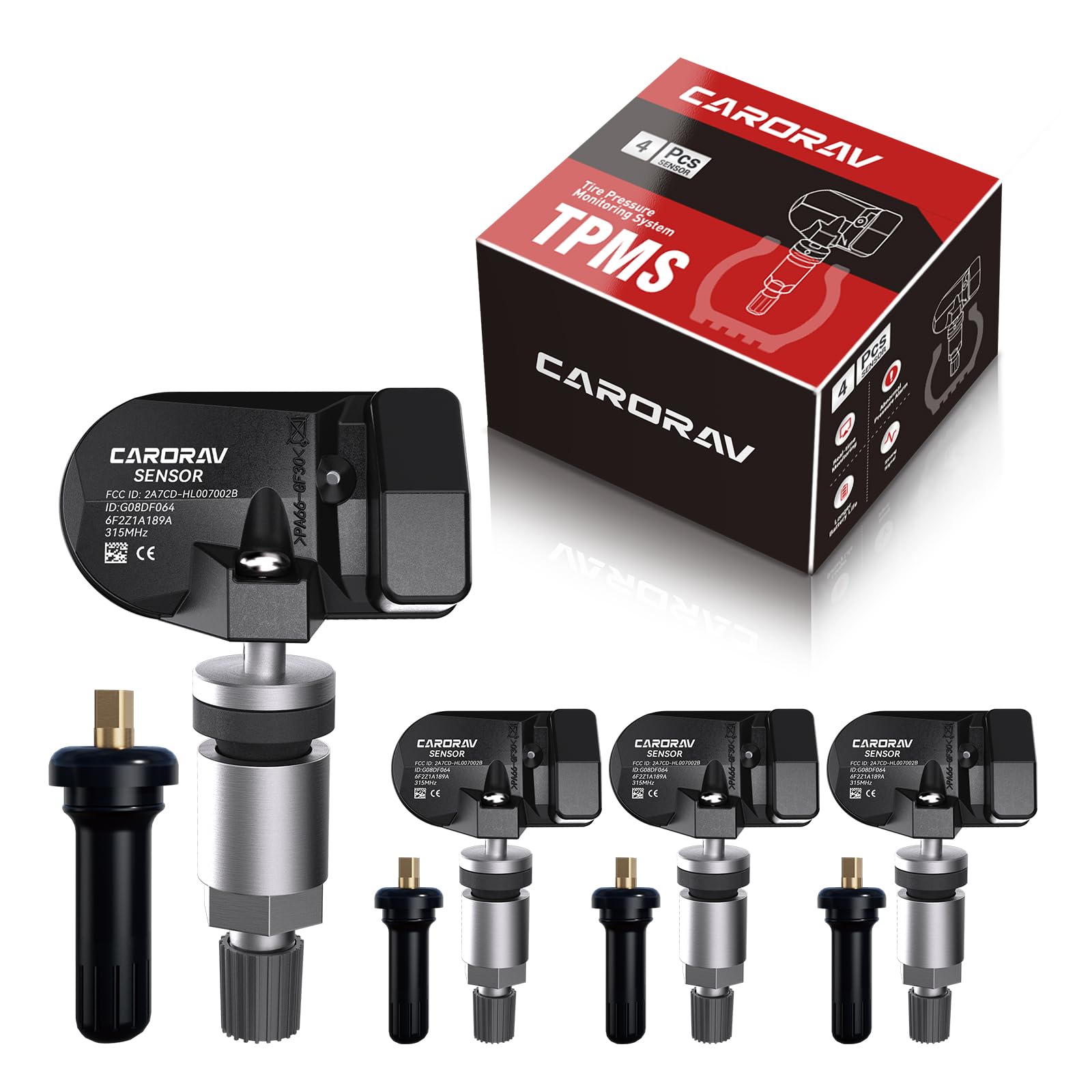
The CARORAV set targets owners who want a straightforward replacement without overspending. Designed around the 6F2Z1A189A and 7L1Z1A189A reference numbers, these sensors fit 2006-2008 Ford F-150, Explorer, Fusion, Mustang, and Ranger models directly. Owner feedback from 2006 Explorer and 2008 F-150 installations confirms that all four sensors programmed on the first attempt using a JDIAG 2-in-1 relearn tool, which costs a fraction of a full diagnostic scanner.
One design detail that matters for long-term ownership is the inclusion of four replaceable valve stems. Many budget sensors seal the stem into the housing, forcing a full sensor replacement if the stem corrodes or leaks. The CARORAV set allows stem swaps independently, extending the usable life of the sensor body. The operating temperature range of -40 to 125 degrees Celsius matches the same specification as OE sensors, which is important for trucks exposed to extreme winter conditions or desert heat.
The pre-programmed nature of these sensors means they are ready for relearn without additional configuration. The OBDII relearn procedure is clearly outlined in the product documentation, and owners who followed the step-by-step process reported the TPMS light extinguished within a short drive. The main concern reported by some buyers is that a small percentage of sensors arrived non-responsive, highlighting the importance of testing each sensor with a TPMS tool before installation.
What works
- Replaceable valve stems reduce long-term replacement cost
- First-time programming success on multiple Ford platforms
- Broad -40 to 125°C temperature tolerance
What doesn’t
- Occasional DOA units reported — pre-testing is essential
- Limited to 2006-2008 model years; later F-150s use different references
4. ACLONG 9L3Z1A189A
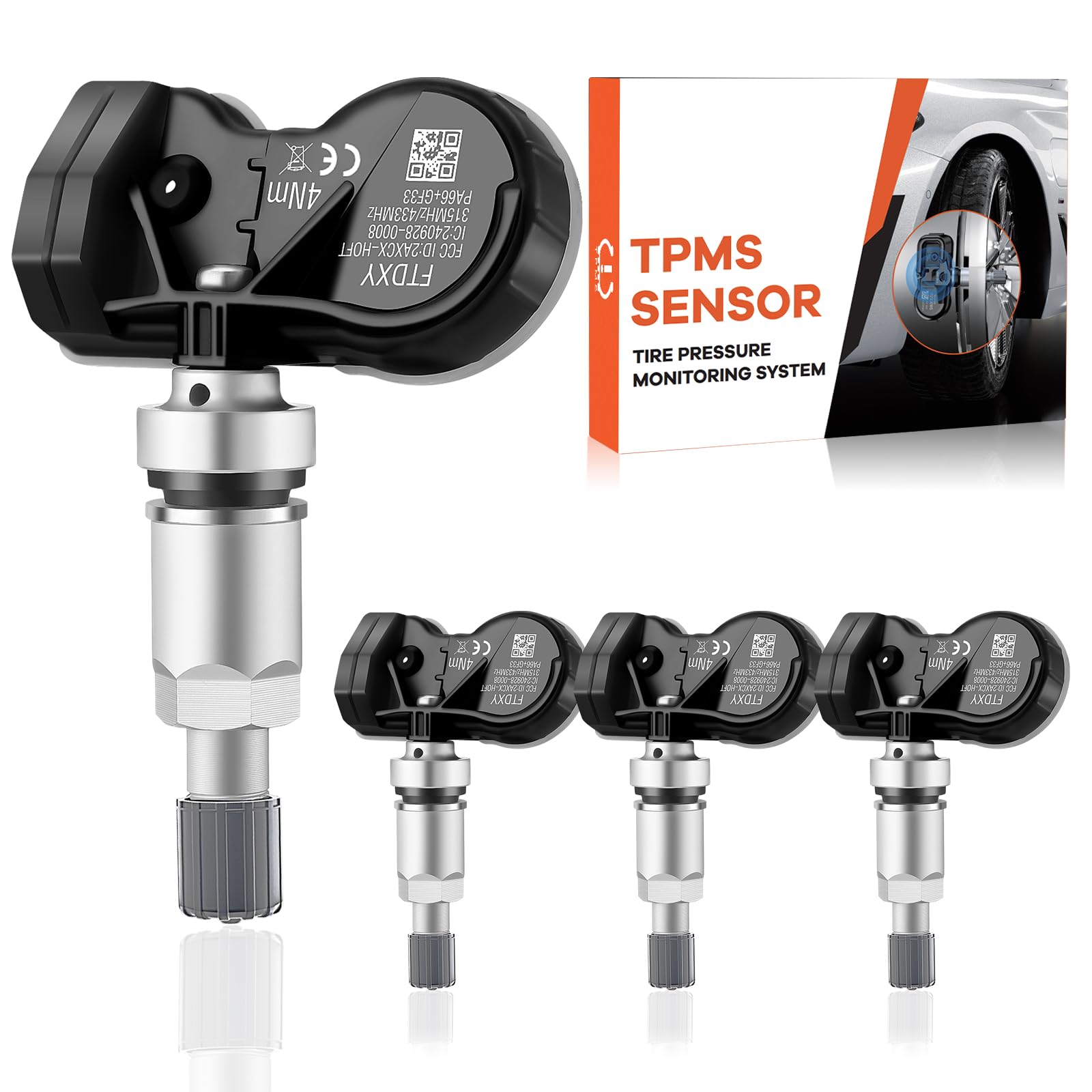
The ACLONG sensor set differentiates itself through battery specification. While most aftermarket sensors use a CR2032 cell, the ACLONG uses a CR2450-H battery with higher capacity and a 900kPa-rated chip. The manufacturer claims a five- to eight-year lifespan or 90,000 to 120,000 miles of service. For owners who plan to keep their 2010 F-150 for several more years, this extended battery margin reduces the likelihood of premature failure that plagues lower-tier sensors.
Compatibility spans an unusually wide range of Ford and Lincoln models from 2004 through 2024, including the 2008-2020 F-150 generation. The sensor references multiple OEM part numbers — 9L3Z1A189A, DE8T1A180AA, GL3T1A180GA, and others — which makes it a versatile option if you maintain multiple vehicles. Owner feedback from 2013 Ford F-350 and 2017 Explorer installations confirms successful programming on the first attempt with a standard TPMS tool.
The sensor uses a snap-in mounting style with a push-pull output type. The pre-programmed configuration covers both 315MHz and 433MHz frequencies, though the 2010 F-150 uses only the 315MHz band. Some buyers reported two out of four sensors arriving dead on arrival, which suggests quality control inconsistencies. Testing each sensor with a TPMS tool before tire mounting is strongly recommended to avoid labor waste.
What works
- Higher-capacity CR2450-H battery for extended lifespan
- Broad OEM part number cross-reference simplifies ordering
- Dual-frequency support for multi-vehicle households
What doesn’t
- Inconsistent QA — some units arrive non-functional
- Snap-in design less robust than epoxy-encapsulated alternatives
5. YZHIDIANF 6F2Z-1A189-A
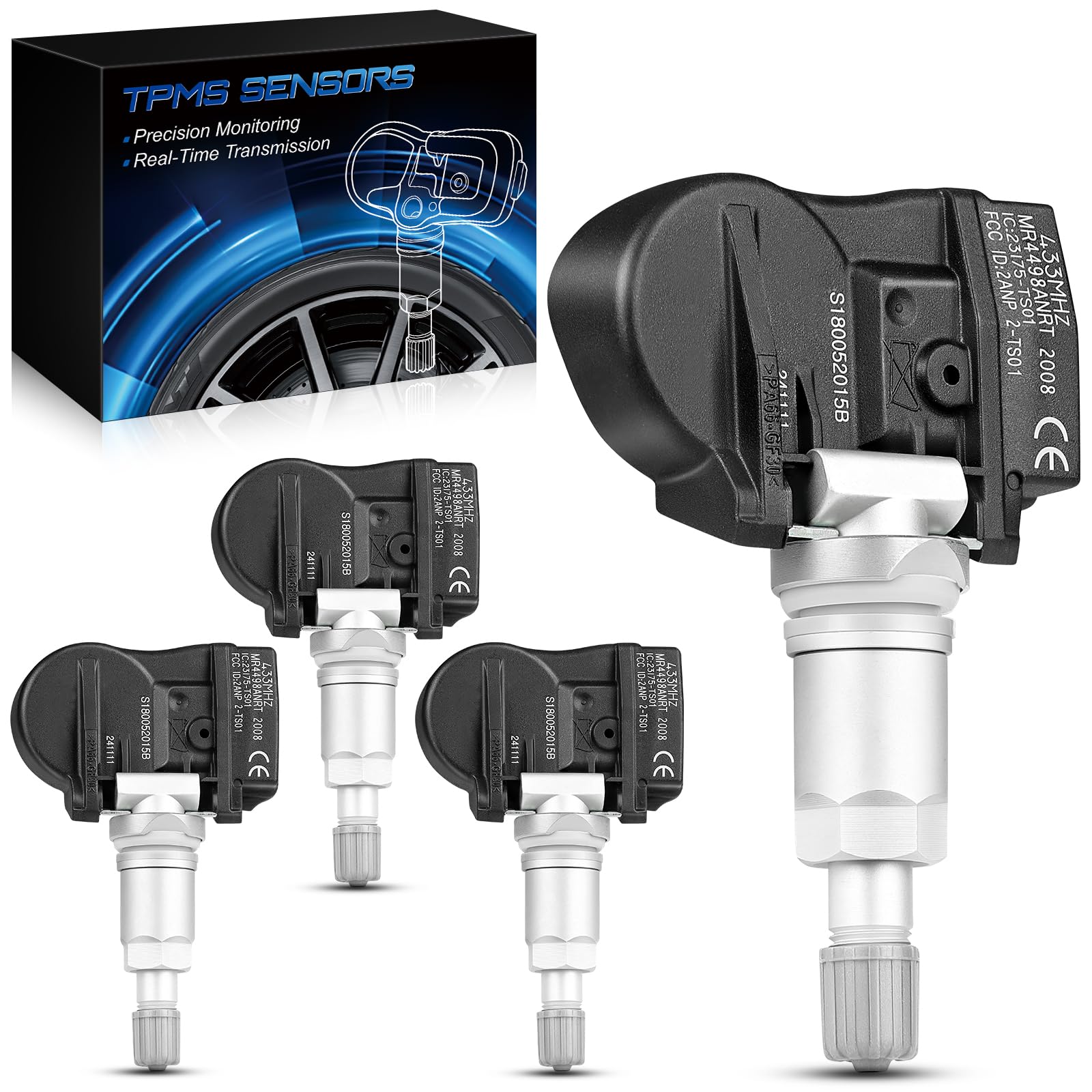
The YZHIDIANF set emphasizes a pre-programmed design that simplifies the installation workflow. According to the manufacturer, these sensors arrive configured for the specific vehicle application and should not be reprogrammed — only activated with a TPMS scan tool after installation. This distinction matters because some tire shops automatically attempt to reprogram aftermarket sensors, which can overwrite the pre-loaded configuration and cause pairing failures.
Compatibility covers 2006-2011 Ford and Lincoln models including the 2007-2008 F-150, Explorer, Edge, and Fusion. The reference numbers 6F2Z-1A189-A and 7L1Z-1A189-A align with the earlier 315MHz Ford system used in the 2010 F-150. Owners who successfully installed these on 2008 Lincoln MKZ and 2008 King Ranch F-150 reported that the sensors worked without additional programming, though a relearn was still required to clear the warning light.
The build uses what the manufacturer describes as premium aeronautical materials — a vague claim that should be evaluated critically. However, the operating temperature range of -40 to 120 degrees Celsius and the 100-900kPa measuring range match standard TPMS specifications. A small number of buyers reported difficulty with the return process when sensors did not work, so verifying fitment with Amazon’s compatibility tool before purchase is advisable.
What works
- Pre-programmed to avoid manual configuration errors
- Works on first activation attempt for most Ford models
- Clear instruction to not reprogram — reduces shop mistakes
What doesn’t
- Unsubstantiated material quality claims
- Return process reported as difficult in some cases
6. Motorcraft TPMS12

The Motorcraft TPMS12 is the genuine Ford OEM sensor sold under the Motorcraft brand. For owners who prioritize absolute certainty, this sensor carries the same part number and specifications as the original equipment installed at the factory. A 2010 F-150 owner reported that a tire shop installed and synced the sensor using a handheld computer in two to three minutes, with the TPMS light turning off immediately. No compatibility guessing or relearn troubleshooting was needed.
Despite the OEM pedigree, some owners have encountered premature failures. One buyer reported that one sensor arrived dead and another failed within three weeks — a surprisingly poor outcome for a genuine Ford part. The polymer housing and flange mount design are basic compared to aftermarket units with aluminum stems and epoxy encapsulation, and the 30-50 PSI measuring range is narrower than the 0-130 PSI range found on many aftermarket sensors.
The pricing sits well below dealership rates but above most aftermarket four-packs. For a single-sensor replacement on a 2010 F-150, the TPMS12 makes sense when you want guaranteed compatibility and plan to have a shop handle installation. For a full four-wheel replacement, the cost adds up quickly compared to aftermarket sets that offer similar or better build quality for a fraction of the price.
What works
- Genuine Ford OEM specification — no compatibility doubts
- Quick sync with standard TPMS tools
- Available individually for single-sensor replacement
What doesn’t
- Higher per-sensor cost than aftermarket alternatives
- Some units fail prematurely despite OEM branding
7. POHILA 6F2Z1A189A
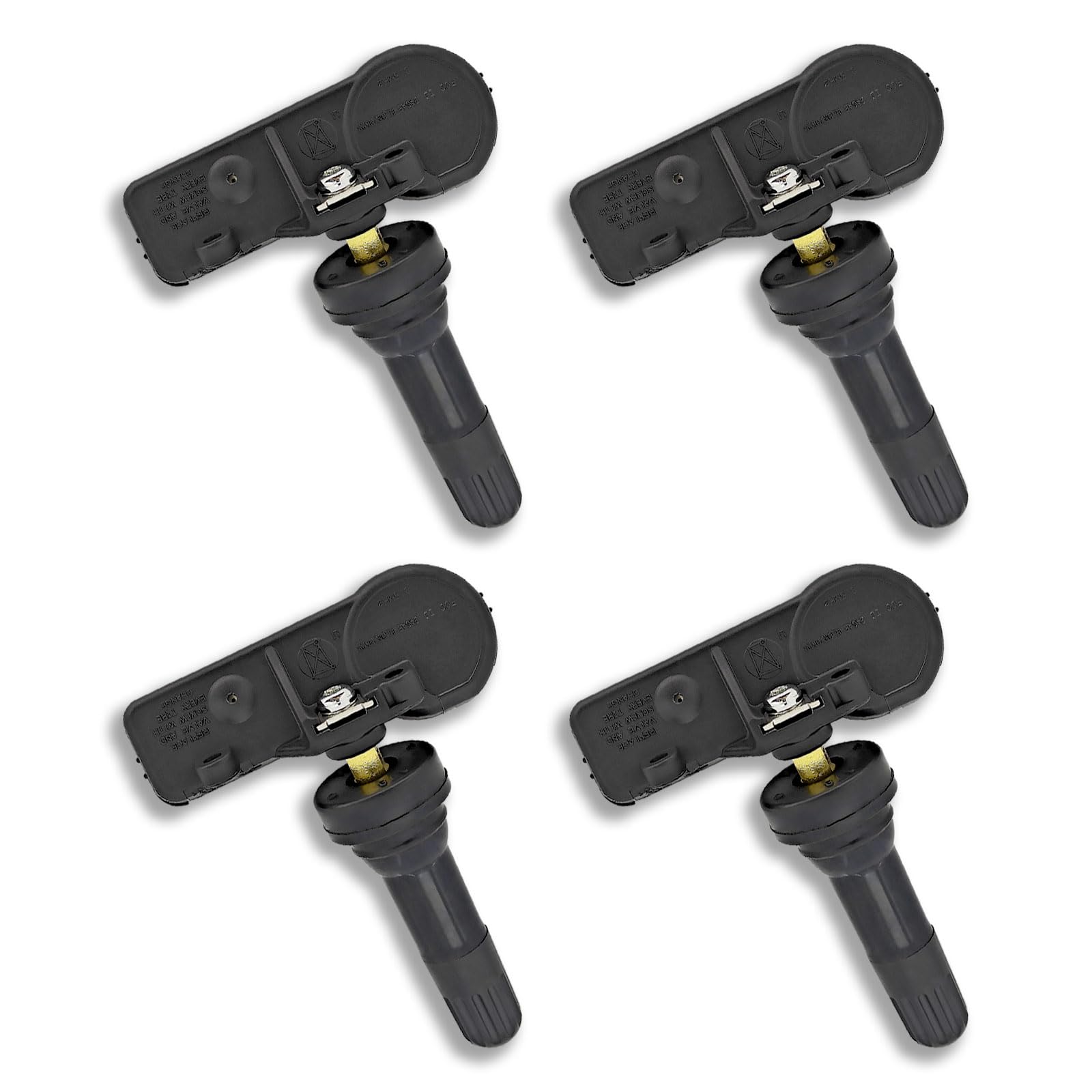
The POHILA sensor set targets the 2005-2011 Ford and Lincoln range, which includes the 2006-2008 F-150 and many other models from that era. The 6F2Z1A189A and 7L1Z1A189A reference numbers align with the earlier Ford TPMS system, and the sensors are pre-programmed for direct fitment. Owners of 2008 Lincoln MKZ and 2008 King Ranch F-150 confirmed that the sensors paired without issues, using a standard TPMS activation tool to complete the relearn.
The manufacturer specifies a 5-year battery life with an operating temperature range of -40 to 125 degrees Celsius. The sensors use plastic housing with a flange mount design, which is standard for this price tier. The OBDII relearn procedure is documented step by step in the product listing, covering the full sequence from sensor activation to driving at 28 mph for final synchronization.
Quality control appears inconsistent. Some owners reported that all four sensors installed and programmed without issue, while others experienced one or two sensors failing within a week. The manufacturer advises stopping installation immediately if a sensor does not respond to the TPMS tool, which is sound advice. Testing each sensor before tire mounting remains the best way to avoid labor costs from non-functional units.
What works
- Broad compatibility with 2005-2011 Ford and Lincoln models
- Clearly documented OBDII relearn procedure
- Pre-programmed for straightforward activation
What doesn’t
- Intermittent quality control — some sensors fail early
- Plastic housing less durable than epoxy-encapsulated designs
8. AMICAREP DE8T-1A150-AA
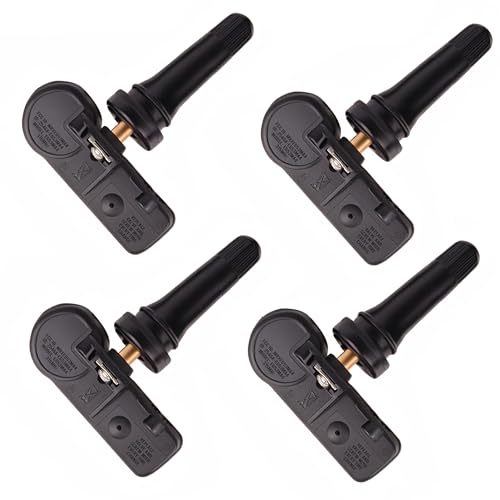
The AMICAREP set offers a full four-pack at a competitive price point, referencing the 9L3Z1A189A, DE8T-1A180-AA, and DE8T-1A150-AA OEM numbers. Compatibility spans 2009-2014 F-150, plus a wide range of Ford, Lincoln, and Mercury vehicles. The 0-150 PSI measuring range covers everything from standard passenger tire pressures to heavy-duty applications, which is useful if you also maintain a truck with higher-pressure tires.
Owner feedback over two months of use has been largely positive. Buyers reported that the TPMS light turned off immediately after completing the relearn procedure using a programming tool. One owner noted a 4-5 MPG improvement after replacing faulty sensors, which aligns with the fuel economy benefits of properly inflated tires. However, one report of a sensor showing false low pressure readings after a few months raises questions about long-term stability.
The manufacturer provides a 12-month replacement or refund policy, which adds a layer of protection for budget-conscious buyers. The measurement accuracy is rated at +/- 1.5 PSI, which is acceptable for a TPMS system that primarily alerts drivers to significant underinflation. Testing each sensor with a TPMS tool before installation is recommended to avoid the frustration of a sensor that fails shortly after mounting.
What works
- Wide 0-150 PSI measuring range for versatile use
- 12-month warranty provides budget-friendly peace of mind
- Positive short-term owner feedback on 2010 Mustang and F-150
What doesn’t
- Long-term reliability concerns based on early failure reports
- Programming tool required — no drive-cycle-only relearn
9. NEWHOW 9L3Z-1A189-A
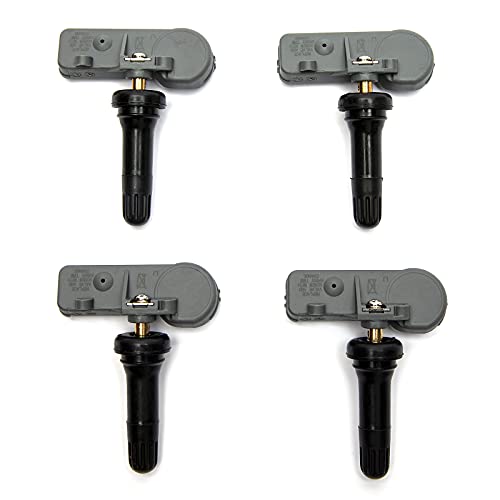
The NEWHOW sensor set offers an IP67 waterproof rating and epoxy-encapsulated construction — features typically found on more expensive sensors. This build quality matters for 2010 F-150 owners who regularly drive through mud, snow, or pressure wash their undercarriage. The stainless steel valve stem and -40 to 125 degrees Celsius operating range match or exceed the factory specification, and the claimed 5-7 year battery life is competitive with mid-range options.
Compatibility covers 2009-2014 F-150, F-250, F-350, and many Ford and Lincoln cars and SUVs. The direct fit for the 9L3Z-1A189-A and DE8T-1A180-AA reference numbers makes it a straightforward choice for the 2010 F-150. Owners of a 2013 F-350 and a Ford Explorer reported that the sensors worked immediately after activation with a TPMS tool, and the pressure readings matched their manual gauge within 1 PSI.
Despite the strong build specs, the failure rate in some batches has been concerning. One buyer reported that only one out of four sensors worked on a 2015 Ford Edge, and three were unrecognizable to the programming tool. The cost savings are meaningful — about one-eighth the price of OEM sensors — but the gamble on batch quality means pre-installation testing is essential. For owners willing to test and potentially return a defective unit, the value proposition remains strong.
What works
- IP67 waterproof epoxy encapsulation exceeds most competitors
- Stainless steel valve stem resists corrosion
- Fraction of OEM cost with comparable build specs
What doesn’t
- Inconsistent batch quality — high failure rate in some sets
- Limited to 2009-2018 Ford models; excludes newer vehicles
10. Jsueng TPMS Sensor GL3Z1A189A (Gen 2)
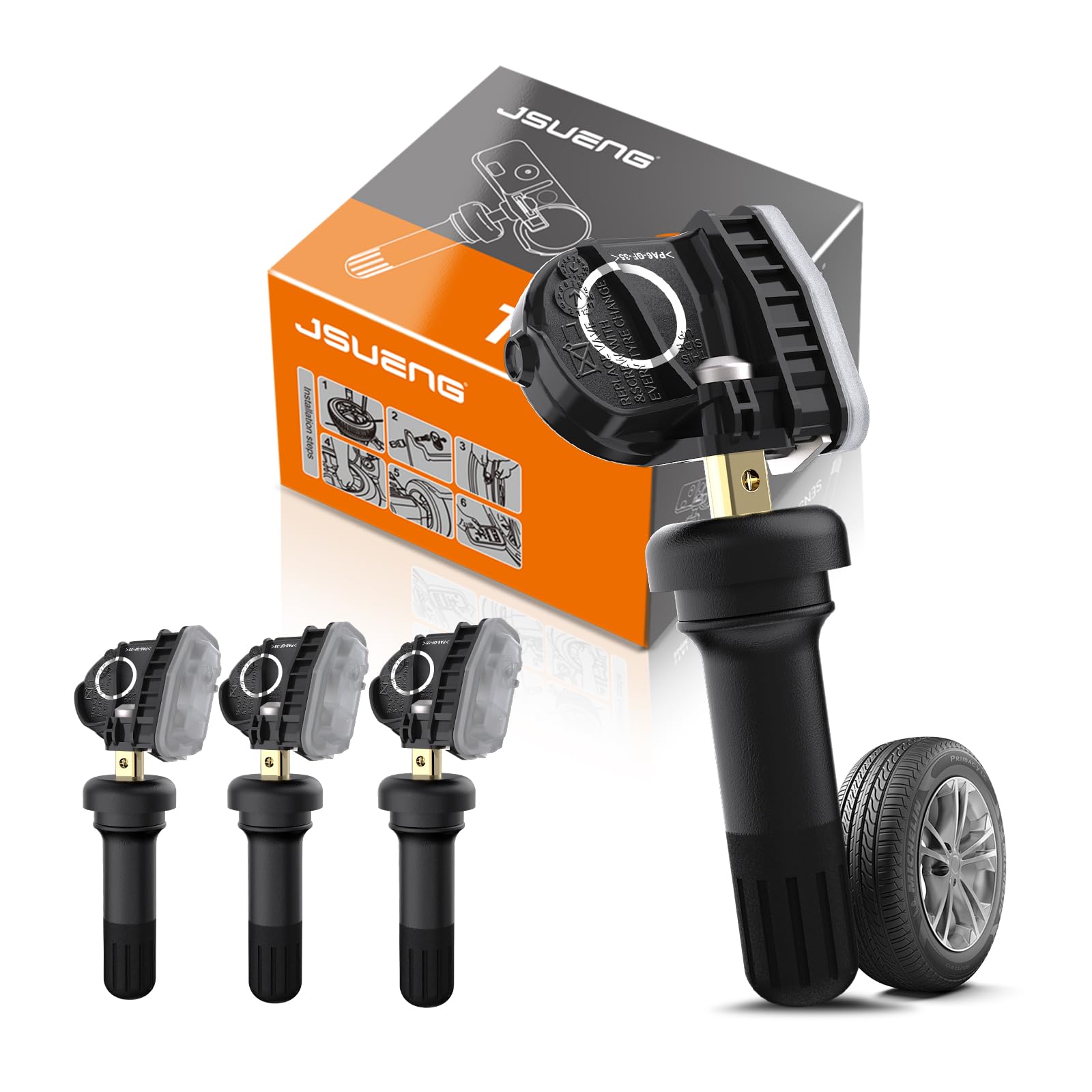
This second-generation Jsueng set covers a newer range of Ford and Lincoln models from 2014 through 2024, including the 2014-2020 F-150. While the 2010 F-150 falls outside the primary compatibility window, the reference numbers GL3Z1A189A, F2GZ1A189A, and FR3Z1A189A share the same 315MHz frequency and signal protocol. Some owners of older Ford models have successfully used these sensors with proper relearn procedures, but the fitment is not guaranteed.
The sensor uses a CR2032 battery and 900kPa chip with a claimed lifespan of five to eight years. The OBDII relearn procedure is clearly documented, and the manufacturer provides a one-year warranty. Owners of a 2017 Ford Explorer reported that all four sensors programmed on the first attempt, while a buyer in freezing Michigan weather could not get the sensors to reset despite multiple attempts and two different programming tools.
The quality control variance between units is the main drawback. One buyer reported three out of four sensors working flawlessly while one was non-responsive. Another received a set in an opened box with no instructions and found the sensors defective. For a 2010 F-150 owner, this set is best considered only if the confirmed compatibility list explicitly includes your model year, and even then, pre-testing each sensor is strongly advised.
What works
- Low entry price for a four-pack set
- Clear OBDII relearn documentation included
- Broad newer-model coverage for multi-vehicle owners
What doesn’t
- Primary compatibility range excludes 2010 F-150
- Inconsistent quality and packaging condition
11. Jsueng DE8T-1A180-AA (Gen 1)
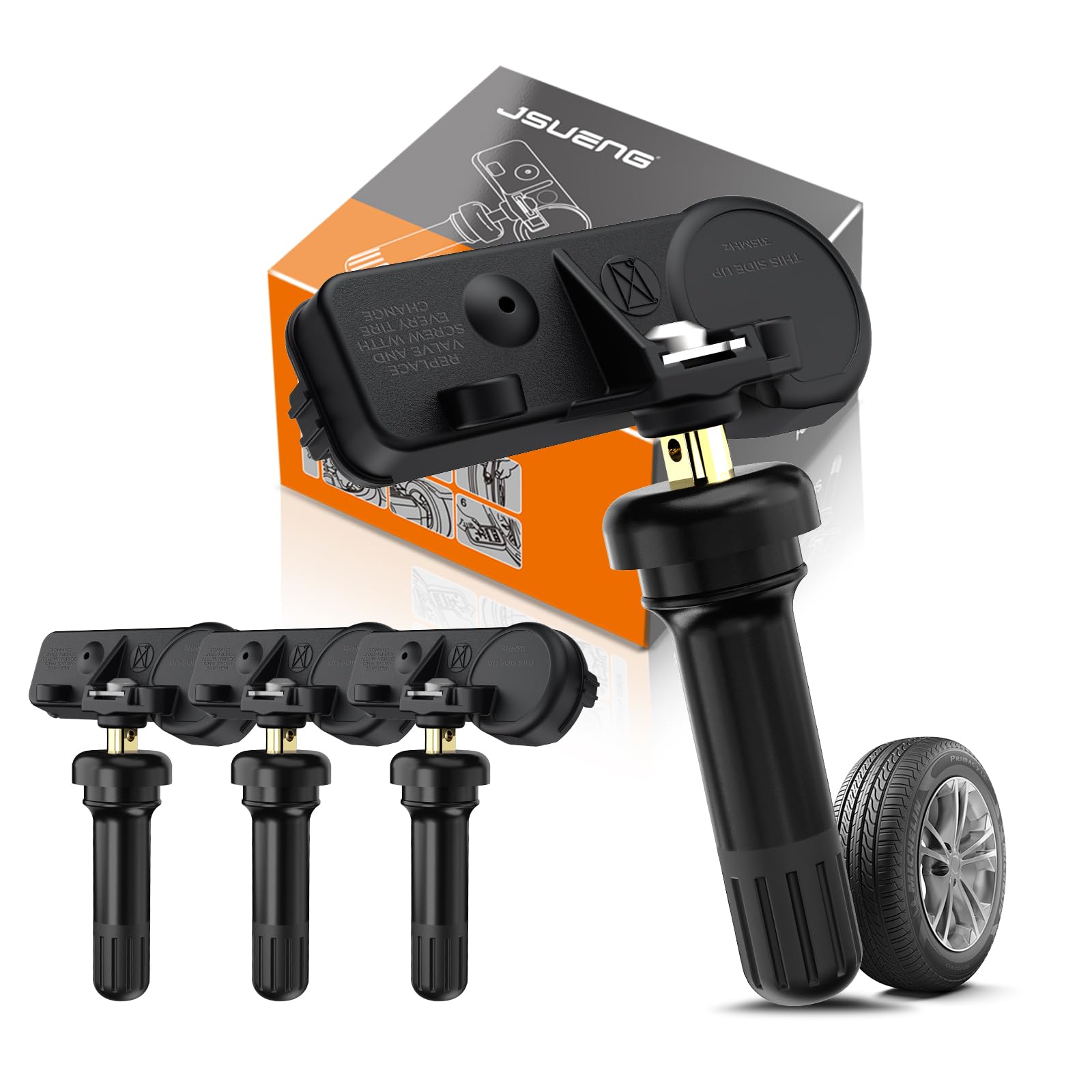
The first-generation Jsueng sensor set is the most affordable option in this lineup, referencing the 9L3Z1A189A, 9L3T1A180AF, and DE8T1A180AA OEM numbers. Compatibility spans an extensive list of Ford, Lincoln, and Mercury vehicles from 2009 through 2020, including the 2009-2014 F-150 directly. The 315MHz frequency and pre-programmed design align with the 2010 F-150 system, and the DIC button relearn procedure is documented for models that support it.
Owner feedback has been mixed in a pattern typical of budget sensors. A 2010 Ford Mercury owner reported that the sensors linked up easily with the vehicle’s electronics and have been working since day one. Another owner on a 2011 Ford Focus SE confirmed flawless programming. However, a buyer reported that one of four sensors did not work and failed within two days of installation, resulting in wasted labor costs. The CR2032 battery and 900kPa chip carry a five- to eight-year lifespan claim, but real-world longevity remains unverified over the long term.
The value proposition is clear: this is the lowest-cost way to replace all four TPMS sensors. The one-year warranty provides basic protection, and the manufacturer offers customer support for relearn issues. The risk is the quality control lottery — some sets work perfectly, while others include dead units. For a 2010 F-150 owner on a tight budget who has a TPMS tool and is willing to test and return defective sensors, this set can be a viable option.
What works
- Lowest cost per sensor in this comparison
- Direct compatibility with 2009-2014 F-150
- DIC button relearn supported on compatible trims
What doesn’t
- Higher defect rate than mid-range and premium options
- Only one year of warranty coverage
Hardware and Specs Guide
Frequency and Protocol
The 2010 F-150 uses a 315MHz radio frequency for TPMS communication. Sensors operating at 433MHz will not work. The system expects a signal burst containing sensor ID, pressure, and temperature data every 60 seconds when the vehicle is moving. Aftermarket sensors must replicate this exact timing and data format to avoid false warnings or no-signal errors. Most pre-programmed sensors for this generation are configured for the Ford-specific protocol and do not require manual frequency selection.
Measuring Range and Accuracy
Factory TPMS sensors on the 2010 F-150 measure pressures from 0 to 130 PSI with an accuracy of approximately +/- 1.5 PSI. The system triggers a warning when pressure drops 25 percent below the placard value or falls below the minimum threshold of 25 PSI. Replacement sensors with a narrower measuring range (30-50 PSI) may work for standard passenger tires but could fail to register pressures outside that window, which matters if you use load-range E tires at 80 PSI.
Battery Type and Lifespan
TPMS sensors for this generation typically use CR2032 or CR2450 lithium coin cells. CR2450 batteries offer roughly double the capacity (550 mAh vs 225 mAh) and support the 5-8 year lifespan that many manufacturers claim. Actual battery life depends on transmission frequency, ambient temperature, and driving habits. Sensors that transmit more frequently in cold climates or with low tire pressure drain faster. Epoxy-encapsulated sensors seal the battery against moisture better than snap-fit housings.
Relearn Methods
Ford offers three relearn methods for the 2009-2014 F-150. The automatic method requires driving above 28 mph for 5-10 minutes after a battery disconnect or sensor replacement. The OBDII method uses a TPMS activation tool and a diagnostic scanner to write sensor IDs to the ECU. The DIC button method, available on certain trim levels, uses the dashboard information center to initiate learning. Aftermarket sensors that are not pre-configured correctly may fail all three methods, requiring a reprogrammable sensor instead.
FAQ
Does a 2010 F-150 have TPMS sensors?
What is the correct tire pressure for a 2010 F-150?
How do I reset the TPMS on a 2010 F-150?
Can I replace just one TPMS sensor on my 2010 F-150?
How long do TPMS sensors last on a 2010 F-150?
Final Thoughts: The Verdict
For most buyers, the best 2010 f-150 tire pressure sensor winner is the A-Premium APTPMS319 because it combines FCC-certified reliability, an aluminum valve stem, and a two-year warranty at a mid-range price that undercuts genuine Motorcraft options while offering better build quality than entry-level sets. If you want maximum versatility and the ability to clone your original sensor ID, grab the Autel MX-Sensor. And for a reliable budget option with IP67 waterproofing, nothing beats the NEWHOW 9L3Z-1A189-A when you test each unit before installation.

Certification: BSc in Mechanical Engineering
Education: Mechanical engineer
Lives In: 539 W Commerce St, Dallas, TX 75208, USA
Md Amir is an auto mechanic student and writer with over half a decade of experience in the automotive field. He has worked with top automotive brands such as Lexus, Quantum, and also owns two automotive blogs autocarneed.com and taxiwiz.com.