A battery that falters in cold weather or dies without warning turns a dependable daily driver into a frustrating liability. The 2007 Hyundai Elantra relies on a robust 12-volt starting battery with sufficient cold cranking amps to fire up the 2.0-liter four-cylinder engine in any season, and choosing the wrong replacement means risking sluggish starts, premature failure, or even electrical system headaches. This guide cuts through the marketing noise and delivers a clear, spec-focused comparison of the top batteries that actually fit and perform in this generation of the Elantra.
I’m Amir — the founder and writer behind Four Wheel Ask. I spend my time studying product specifications, analyzing manufacturer claims against real owner feedback, and tracking long-term reliability data across dozens of battery models to separate marketing fluff from engineering substance.
Every battery reviewed here was evaluated for dimensional fit, terminal configuration, cold cranking amp output, and real-world durability reports from Elantra owners. This detailed guide evaluates the top replacement options on the market to help you confidently select the best 2007 hyundai elantra battery for reliable everyday starting power you can count on.
How To Choose The Best 2007 Hyundai Elantra Battery
Selecting the right battery for the 2007 Elantra requires more than just matching the terminal posts. The vehicle’s engine bay has specific dimensional constraints, the charging system expects a particular internal resistance range, and your local climate demands adequate cold cranking power. Understanding three critical factors will prevent fitment headaches and ensure reliable service life.
Group Size and Physical Fitment
The 2007 Hyundai Elantra typically accommodates a BCI Group 47 (also labeled H5 or L2) battery, which measures approximately 9.5 inches long, 6.9 inches wide, and 7.5 inches tall. Some owners have successfully installed Group 48 (H6) or Group 94R batteries with minor tray adjustments, but the factory hold-down bracket and terminal orientation are optimized for Group 47. Always verify the positive terminal is on the right and negative on the left when facing the battery — reversed terminals can make cable routing difficult.
Cold Cranking Amps and Reserve Capacity
The Elantra’s 2.0-liter engine requires at least 550 CCA for reliable cold-weather starts, though 600 to 700 CCA provides a healthy safety margin. Reserve capacity (RC) matters almost as much — a higher RC rating (100 minutes or more) ensures the battery can power the alternator, lights, and accessories if the charging system fails or during frequent short trips that prevent full recharging. AGM batteries generally offer better RC per pound than flooded lead-acid units.
Battery Chemistry and Warranty Coverage
Flooded lead-acid batteries remain the most affordable option, but they require occasional water level checks and are more prone to vibration damage. AGM (Absorbed Glass Mat) batteries are leak-proof, tolerate deeper discharge cycles better, and handle the Elantra’s underhood heat more effectively — a real advantage for owners who keep their cars for the long haul. Warranty terms vary widely from 24 to 48 months, and some brands require you to return the battery to Amazon rather than a local shop, so read the fine print before purchasing.
Quick Comparison
On smaller screens, swipe sideways to see the full table.
| Model | Category | Best For | Key Spec | Amazon |
|---|---|---|---|---|
| MARXON Group 47 H5 L2 | AGM | Best Overall Fit & Value | 660 CCA, 60 Ah, BCI Group 47 | Amazon |
| Weize Platinum AGM 94R | AGM | High CCA & Reserve | 850 CCA, 80 Ah, 140 RC | Amazon |
| OPTIMA YellowTop DH6 | AGM SpiralCell | Premium Durability | 800 CCA, 72 Ah, 140 RC | Amazon |
| Autocessking Group 65 | AGM | High Performance Build | 750 CCA, 70 Ah, 120 RC | Amazon |
| ACDelco Gold AUX14-200 | AGM Auxiliary | Compact Dual-Battery Setup | 200 CCA, 12 Ah, Leak-Proof AGM | Amazon |
| Relistart Group 94R | AGM | Budget-Conscious Buy | 800 CCA, 80 Ah, 155 RC | Amazon |
| SUNRICH ENERGY 100Ah LiFePO4 | Lithium | Deep Cycle / RV Use | 100 Ah, 100A BMS, Self-Heating | Amazon |
In‑Depth Reviews
1. MARXON Group 47 H5 L2 Start and Stop Car Battery

The MARXON Group 47 delivers the exact dimensions and terminal layout the 2007 Elantra’s battery tray was designed for, making it the most straightforward drop-in replacement in this lineup. Rated at 660 cold cranking amps and 60 amp-hours, it provides ample starting power for the 2.0-liter engine even during subfreezing mornings. The AGM construction means no water checks, no acid leaks, and superior vibration resistance compared to conventional flooded batteries — a meaningful advantage given the Elantra’s front-wheel-drive layout and engine bay harmonics.
Real owner reports from Hyundai Elantra GT owners confirm a perfect fit with no modification required, and several note that the battery arrived at roughly 38 percent state of charge and reached full capacity after a few short drives. The three-year warranty provides reasonable protection, and at roughly two-thirds the cost of a comparable unit from a local auto parts store, the value proposition is clear. The MARXON also supports start-stop systems, which means it handles the Elantra’s electrical load without voltage sag during accessory-heavy driving.
One detail worth noting: the battery’s terminal configuration uses standard A1 posts with the positive on the right, exactly matching the Elantra’s cable routing. The integrated handle makes installation straightforward, and the 41-pound weight feels solid without being cumbersome. For owners who want a factory-fit AGM battery with strong cold-cranking performance and a fair warranty, the MARXON Group 47 represents the most balanced option available.
What works
- Perfect factory fit for Group 47 / H5 applications
- 660 CCA provides reliable cold-weather starts
- AGM design eliminates maintenance and resists vibration
- Strong value compared to local auto parts store pricing
What doesn’t
- Unknown long-term durability beyond one year of owner reports
- May arrive with a partial charge requiring short drives to top off
2. Weize Platinum AGM Battery BCI Group 94R

The Weize Platinum AGM Group 94R punches well above its price point with an 850-CCA rating and 140 minutes of reserve capacity — numbers that would normally command a significant premium from bigger brand names. This battery uses AGM technology with a leak-proof pressurized valve system and high-density plate oxide for maximum power-per-pound. For Elantra owners who drive in extreme cold climates or have added aftermarket electrical accessories, the extra cold cranking headroom provides a meaningful reliability margin.
Owner feedback consistently highlights the battery’s strong cranking power in freezing conditions and its ability to maintain voltage after extended idle periods. One Mini Cooper owner noted it was an identical fit to the factory Varta AGM at less than half the price. Another customer reported that Weize’s customer service promptly replaced a unit that failed after several months, suggesting the company stands behind its three-year warranty. The 80-amp-hour capacity also means the battery can handle deeper discharge cycles without permanent damage — useful for owners who frequently take short trips.
Fitment in the 2007 Elantra requires verifying the Group 94R dimensions (12.4 x 6.89 x 7.48 inches) against the factory battery tray. The 94R is slightly longer than the stock Group 47, so you may need to adjust or remove the plastic trim piece on the tray’s forward edge. The terminal orientation (positive right, negative left) matches the Elantra’s wiring, and the tapered posts accept standard top-post connectors without issue. For those willing to do a minor fitment tweak, the Weize delivers premium-grade specs at a mid-range price.
What works
- 850 CCA offers exceptional cold-weather starting power
- 140-minute reserve capacity provides strong electrical buffer
- Responsive customer service and warranty support
- Premium specs at a competitive price point
What doesn’t
- Group 94R requires minor tray modification in the Elantra
- Heavier than stock at nearly 51 pounds
3. OPTIMA Batteries YellowTop DH6 Group 48

The OPTIMA YellowTop DH6 is the most recognizable name in this comparison, and for good reason — its SpiralCell design uses 99.99 percent pure lead compressed into radial grid plates that resist vibration fifteen times better than standard flooded batteries. The Group 48 form factor delivers 800 cold cranking amps and 140 minutes of reserve capacity in a sealed, maintenance-free package. The dual-purpose YellowTop chemistry also handles moderate deep-cycle use better than a pure starting battery, which matters if the Elantra sits unused for extended periods.
Owner reports from high-performance applications like the Corvette and Ford F-150 highlight that the YellowTop solves electrical system issues that killed multiple factory batteries, particularly in vehicles with high parasitic draws or stop-start technology. Several Elantra owners have successfully installed the Group 48 with the stock hold-down bracket, though the dimensions (10.94 x 6.89 x 7.48 inches) require checking clearance against the fender liner. The three-year warranty is standard for the premium segment, though some owners report difficulty getting warranty claims processed through Amazon purchases rather than local dealers.
One important consideration: the YellowTop’s price sits at a significant premium over virtually every other option in this guide. While the build quality and vibration resistance are genuinely class-leading, a flooded battery at one-third the cost will likely provide equivalent service life for a daily-driven Elantra in moderate climates. The YellowTop makes the most sense for owners who keep their cars long-term, drive on rough roads, or want the peace of mind that comes with OPTIMA’s established reputation. For most Elantra drivers, the extra cost is hard to justify unless you specifically need the dual-purpose deep-cycle capability.
What works
- SpiralCell design offers superior vibration resistance
- 800 CCA with 140 RC delivers reliable power across climates
- Dual-purpose chemistry handles light deep-cycle use
- Established brand reputation and widespread availability
What doesn’t
- Significantly more expensive than comparable AGM options
- Warranty support can be inconsistent with Amazon purchases
4. Autocessking Group 65 Start and Stop AGM Battery
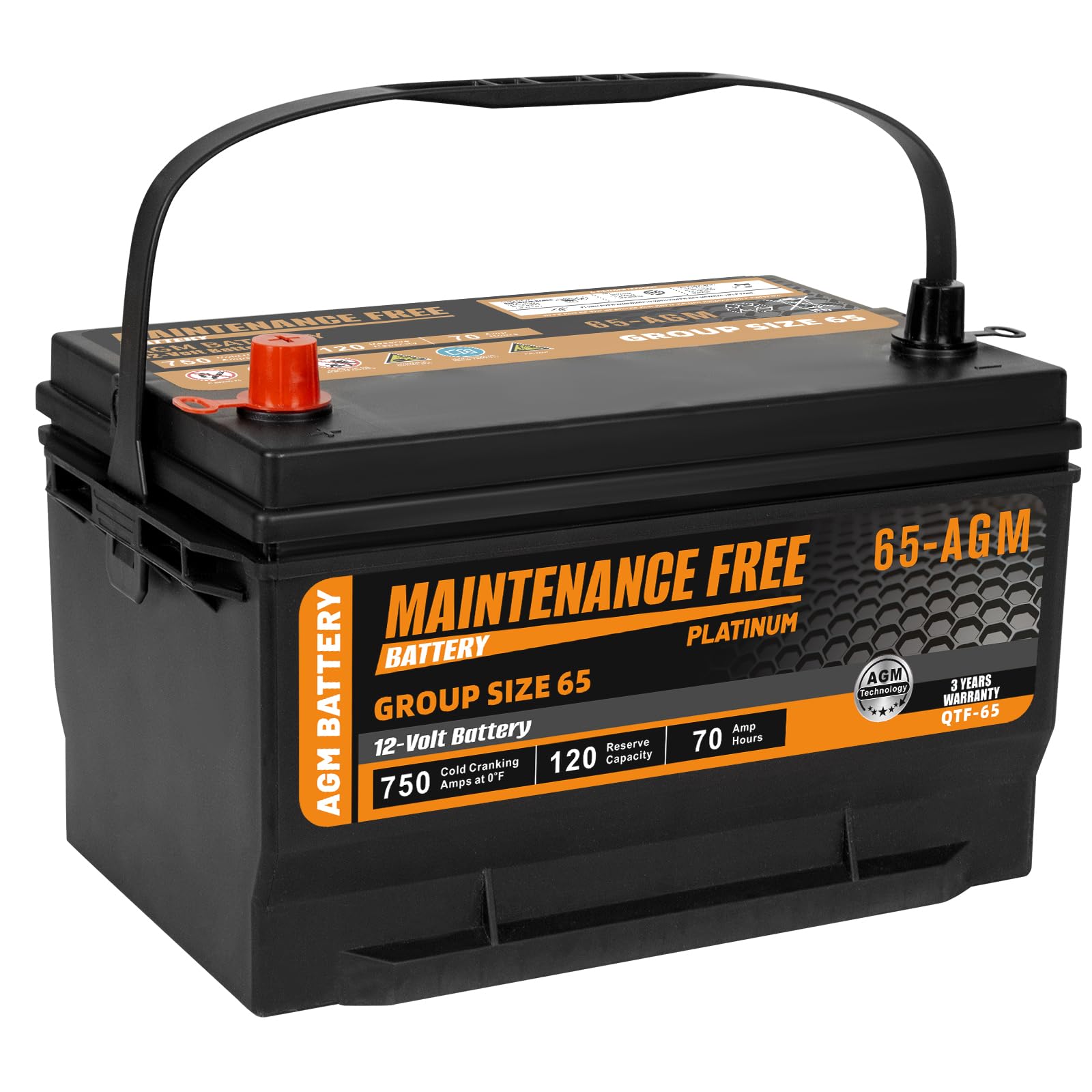
The Autocessking Group 65 AGM battery is built around a heavy-duty design philosophy that prioritizes cold-weather performance and long service life. With 750 cold cranking amps and 70 amp-hours of capacity, it exceeds the Elantra’s minimum requirements by a comfortable margin. The AGM construction uses glass fiber mat technology to absorb electrolyte, making the battery leak-proof and significantly more resistant to vibration damage than flooded alternatives. The three-year warranty provides a solid safety net for daily drivers.
Owner reviews consistently praise the battery as a perfect fit for vehicles that use Group 65 sizing, including the Honda Accord and Civic — platforms that share similar dimensional constraints with the Elantra. One owner reported that the battery started the car immediately after installation and noted the integrated handle made carrying the heavy unit much easier. The battery’s terminal layout features standard tapered posts with positive on the left and negative on the right, which is the opposite of what the Elantra requires. This is a critical detail: Group 65 batteries typically have reversed terminal positions compared to Group 47, so cable reach becomes the deciding factor.
For the 2007 Elantra, the Group 65 size (12.05 x 7.56 x 7.56 inches) is significantly longer than the factory Group 47, which means the battery will overhang the stock tray. Some owners have made this work by fabricating a custom hold-down bracket, but it is not a simple drop-in installation. The Autocessking is a well-constructed battery with strong specifications, but the terminal reversal and dimensional mismatch make it a better fit for owners willing to modify the battery tray and extend the positive cable. If you want a simple swap, the Group 47 options on this list are far more practical.
What works
- 750 CCA and 70 Ah exceed factory specifications
- AGM design prevents leaks and handles vibration well
- Solid three-year warranty coverage
- Positive owner feedback for compatible vehicles
What doesn’t
- Group 65 terminals are reversed compared to Elantra wiring
- Requires tray modification for proper fitment
5. ACDelco Gold AUX14-200 Auxiliary AGM Battery
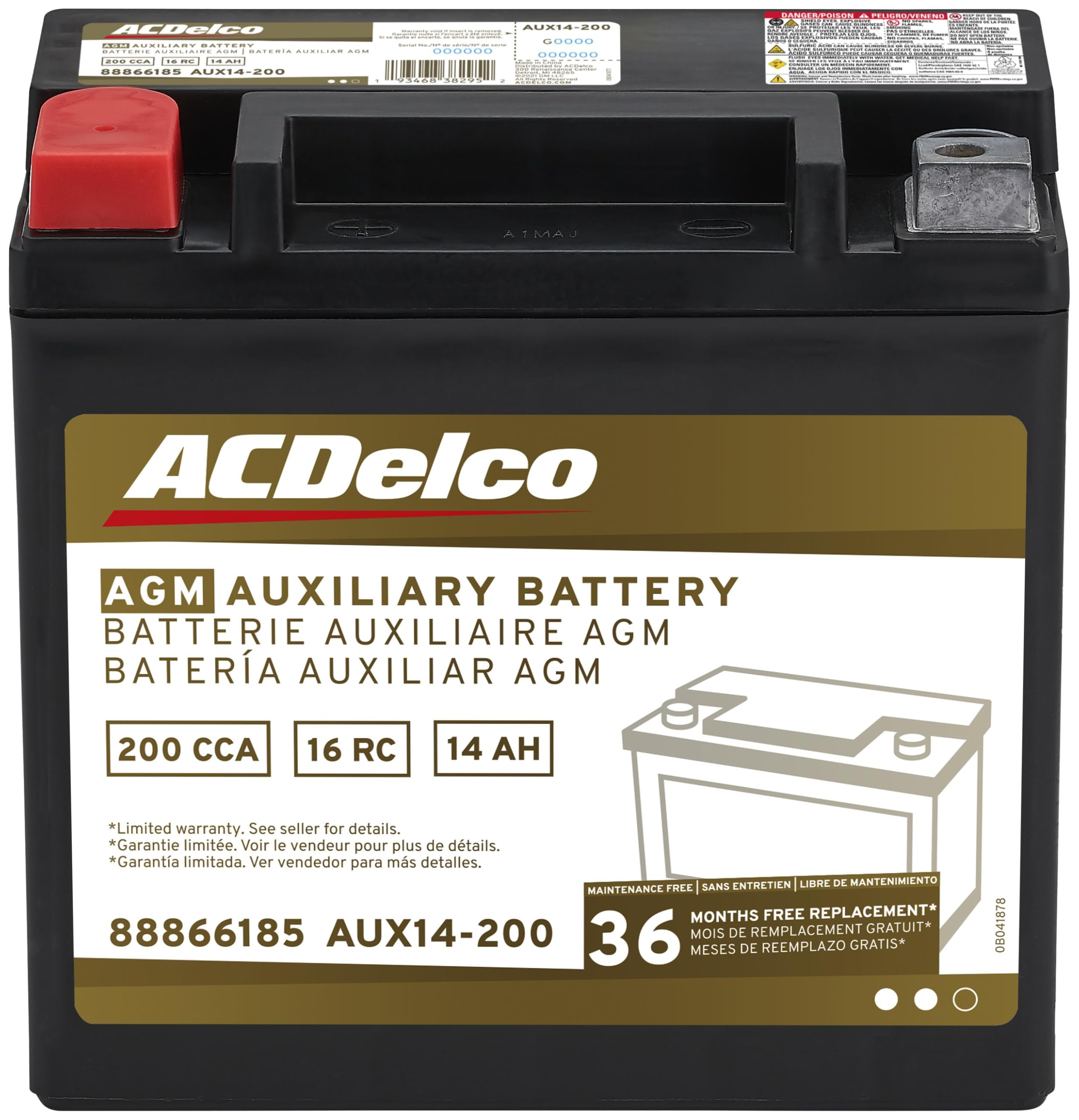
The ACDelco Gold AUX14-200 is an auxiliary battery designed for vehicles with stop-start systems and secondary electrical loads — it is not intended to serve as a main starting battery for a 2007 Elantra. With 200 cold cranking amps and a compact 3.4 x 5.9 x 5.7-inch footprint, this AGM battery is built to power accessories or support a primary battery in a dual-battery setup. The ACDelco Gold line is well-regarded for OEM-grade quality, and this unit shares the same maintenance-free, leak-proof AGM construction found in larger automotive batteries.
Owner reviews for this battery come primarily from Chrysler Pacifica, Mercedes SL, and Dodge Durango owners who needed auxiliary batteries for stop-start systems or under-seat installations. The feedback is overwhelmingly positive regarding reliability and value compared to dealer pricing. One Mercedes owner noted that the battery handled high underhood heat without issues and restored stop-start functionality after replacement. However, several customers reported serious difficulties with warranty claims — ACDelco directs Amazon purchasers back to Amazon for returns, creating a frustrating loop if the battery fails.
For the 2007 Elantra, this battery is relevant only if you are building a dual-battery system for audio equipment, auxiliary lighting, or a winch. The AUX14-200 cannot crank the Elantra’s engine on its own — its 200 CCA rating is roughly one-third of what the stock 2.0-liter requires. The compact size and AGM chemistry make it a solid choice for a secondary battery, and the brand reputation is excellent. But as a primary starting battery replacement, it is simply not appropriate, and listing it here is a cautionary note: always match your battery’s CCA to your engine’s requirements.
What works
- Compact size fits tight secondary battery locations
- AGM construction is maintenance-free and leak-proof
- Strong brand reputation for quality and reliability
- Good choice for dual-battery or auxiliary applications
What doesn’t
- 200 CCA is insufficient as a primary starting battery
- Warranty support has documented issues with Amazon purchases
6. Relistart Group 94R AGM Battery
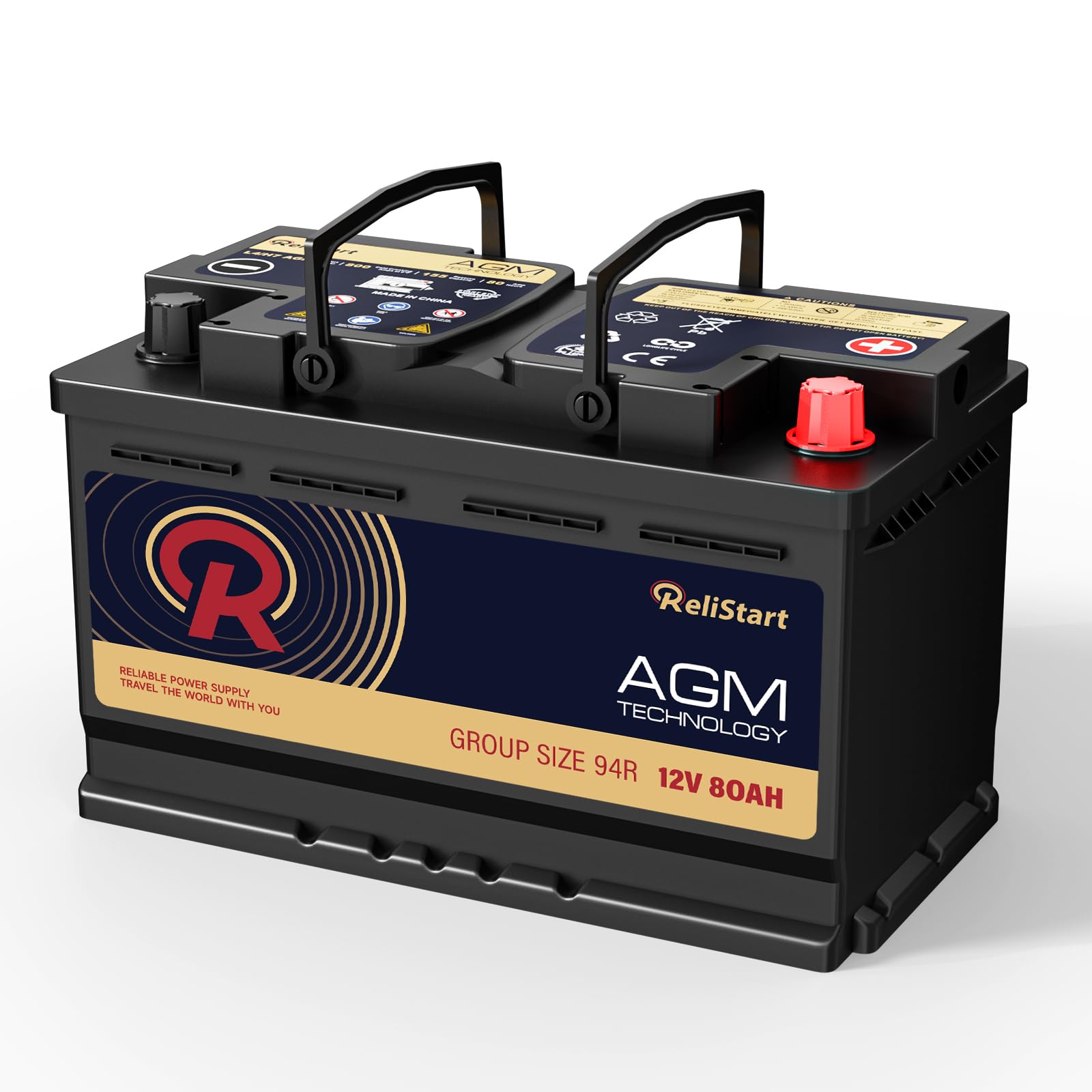
The Relistart Group 94R AGM battery positions itself as a budget-friendly entry in the high-performance AGM category, offering 800 cold cranking amps and an impressive 155 minutes of reserve capacity. The 80-amp-hour rating provides substantial electrical reserve for owners who run accessories or face long periods between drives. Relistart claims four times the cycle life of conventional flooded batteries, and the leak-proof, vibration-resistant design aligns with what you would expect from a modern AGM battery at any price point.
Owner feedback paints a mixed picture. Several buyers report that the battery works flawlessly in vehicles like the Dodge Charger Scat Pack and Chevrolet Traverse, delivering strong starting power and holding voltage well during daily use. One owner specifically praised the price as unbeatable for the specifications offered. However, a critical review notes that the battery failed after only five months, reinforcing the “you get what you pay for” reality of budget-tier AGM batteries. The three-year warranty is present on paper, but the durability data from long-term owners is sparse compared to more established brands.
For the 2007 Elantra, the Group 94R dimensions (12.4 x 6.88 x 7.48 inches) require the same tray modification discussed with the Weize 94R — the battery is longer than the factory Group 47, so the plastic trim piece must be removed or repositioned. The terminal orientation (positive right, negative left) matches the Elantra’s factory wiring. The Relistart is a legitimate option for budget-conscious owners who are comfortable with a minor fitment adjustment and are willing to accept some uncertainty around long-term reliability. If you prioritize absolute dependability over up-front savings, the MARXON Group 47 is a safer bet.
What works
- 800 CCA and 155 RC provide excellent electrical capacity
- Budget-friendly price for AGM specifications
- AGM design is maintenance-free and vibration resistant
- Terminal orientation matches Elantra factory wiring
What doesn’t
- Mixed long-term reliability reports
- Group 94R requires tray modification for fitment
7. SUNRICH ENERGY 12V 100Ah Self-Heating LiFePO4 Battery
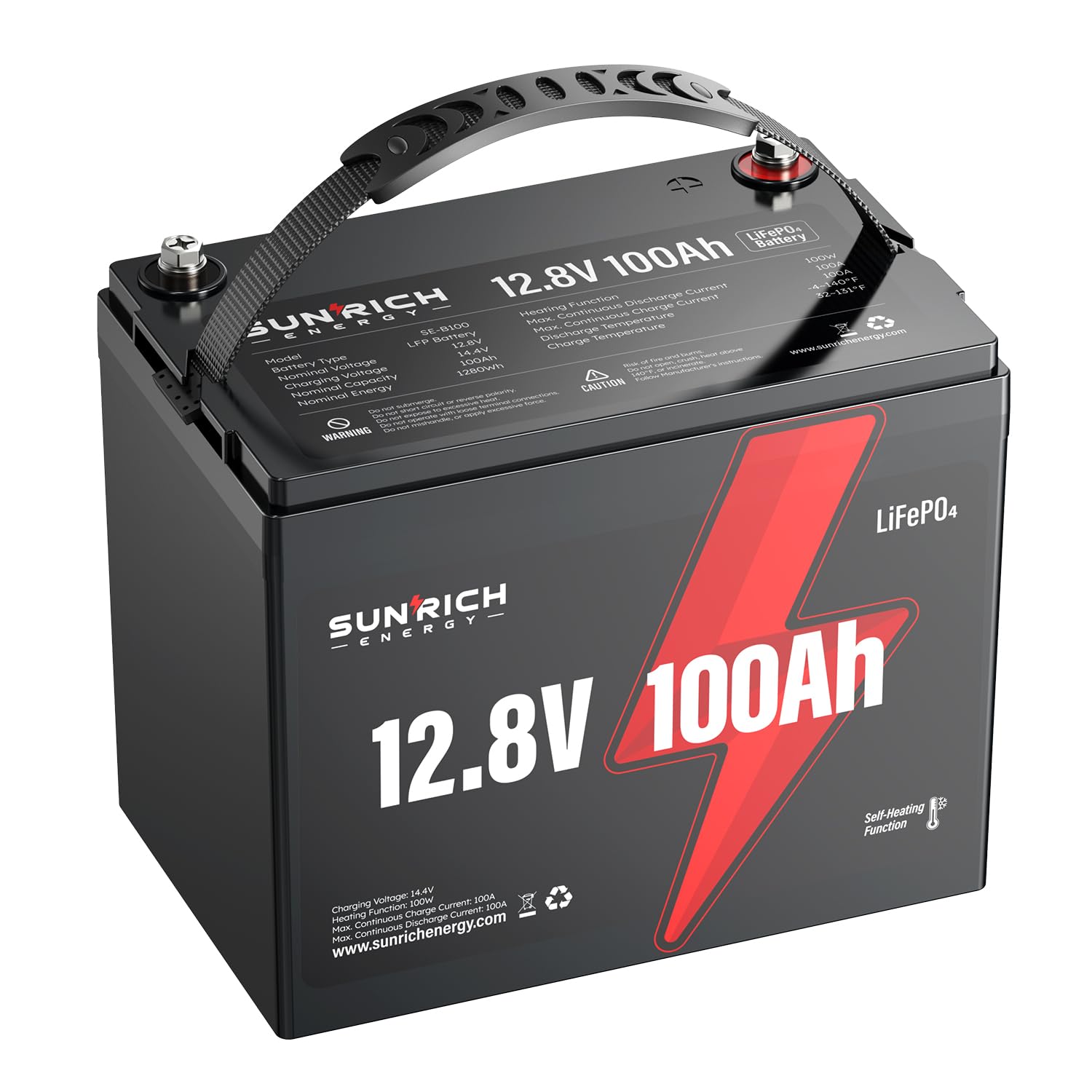
The SUNRICH ENERGY 100Ah LiFePO4 battery represents an entirely different use case from the other batteries in this guide. This is a deep-cycle lithium iron phosphate battery designed for RVs, trolling motors, and home energy storage — not a starting battery for a passenger car. With Grade A prismatic cells rated for up to 7,000 cycles at 80 percent depth of discharge, the service life dwarfs any lead-acid or AGM battery. The built-in 100-watt self-heating system allows charging at temperatures as low as -20°C, which is genuinely impressive for lithium technology.
Owner feedback from RV and marine users is largely positive, with customers praising the battery’s ability to hold charge for extended periods and its lightweight construction — at 24.3 pounds, it weighs roughly half as much as a comparable AGM battery. The Group 24 form factor (10.24 x 6.61 x 8.27 inches) is physically different from the Elantra’s Group 47 tray, and the terminal configuration is not optimized for automotive starting applications. The 100-amp continuous discharge rating is sufficient for starting an engine, but the battery management system (BMS) is calibrated for deep-cycle operation, not the high surge current of engine cranking.
For the 2007 Elantra, this battery is not a practical starting battery replacement. The chemistry, form factor, and BMS tuning are all optimized for sustained low-current discharge rather than the high-current burst required to crank a cold engine. Additionally, the Elantra’s alternator charging profile is designed for lead-acid batteries, so the LiFePO4 chemistry would require a DC-DC charger to prevent overcharging or undercharging. The SUNRICH ENERGY battery excels in its intended application — off-grid power storage and marine deep-cycle use — but it does not belong under the hood of an Elantra as a primary starting battery.
What works
- Exceptional cycle life with up to 7,000 cycles
- Lightweight design at half the weight of lead-acid
- Self-heating enables charging in extreme cold
- Excellent for RV, marine, and solar storage applications
What doesn’t
- Not designed as a vehicle starting battery
- Requires DC-DC charger for alternator compatibility
- Group 24 size does not fit Elantra battery tray
Hardware & Specs Guide
Group Size and Terminal Layout
The 2007 Hyundai Elantra was designed around a BCI Group 47 (H5, L2) battery that measures roughly 9.5 x 6.9 x 7.5 inches. The positive terminal is on the right and the negative on the left when viewed from the front of the vehicle. Group 48 (H6) and Group 94R batteries are longer and require removing or trimming the plastic lip on the front of the factory tray. Always verify that your replacement battery matches the physical dimensions and terminal orientation of the stock unit before purchasing.
Cold Cranking Amps and Capacity
The factory specification for the Elantra’s 2.0-liter engine calls for a minimum of 550 CCA, though 600-700 CCA provides a healthy margin for cold-weather reliability. Reserve capacity (RC) measures how many minutes the battery can deliver 25 amps before voltage drops below 10.5 volts — a rating of 100 minutes or higher ensures you have electrical power if the alternator fails. Amp-hour (Ah) ratings indicate total energy storage; 60-80 Ah is typical for this class of vehicle.
AGM vs Flooded Lead-Acid
AGM (Absorbed Glass Mat) batteries use fiberglass mats to hold electrolyte between the plates, making them leak-proof, vibration-resistant, and maintenance-free. They tolerate deeper discharge cycles better than flooded batteries and handle underhood heat more effectively. Flooded lead-acid batteries are significantly cheaper but require periodic water level checks and are more susceptible to vibration damage. For daily-driven Elantras in moderate climates, a quality flooded battery provides adequate service life at a lower cost.
Warranty and Return Considerations
Most automotive batteries carry 24- to 48-month free replacement warranties, but the terms vary significantly by manufacturer. Some brands require you to work directly with Amazon for returns, while others allow local auto parts store claims. A few customer reports indicate that warranty service can be inconsistent when batteries are purchased through Amazon rather than an authorized dealer. Read the warranty card included with your battery and verify the claim process before making a purchase decision.
FAQ
What battery group size does a 2007 Hyundai Elantra use?
How many cold cranking amps do I need for a 2007 Elantra?
Can I use an AGM battery in my 2007 Hyundai Elantra?
How do I know if a battery will fit my Elantra before buying?
How often should I replace the battery in my 2007 Elantra?
Final Thoughts: The Verdict
For most buyers, the best 2007 hyundai elantra battery winner is the MARXON Group 47 H5 L2 because it delivers the correct factory fit, ample 660 CCA cold-cranking power, and AGM reliability at a price that undercuts local auto parts stores by a wide margin. If you want ultimate cold-weather headroom and are comfortable with a minor fitment adjustment, grab the Weize Platinum AGM Group 94R for its 850 CCA and 140-minute reserve capacity. And for owners who prioritize brand prestige and vibration resistance above all else, nothing beats the OPTIMA YellowTop DH6 — just be prepared to pay a significant premium for the SpiralCell engineering.

Certification: BSc in Mechanical Engineering
Education: Mechanical engineer
Lives In: 539 W Commerce St, Dallas, TX 75208, USA
Md Amir is an auto mechanic student and writer with over half a decade of experience in the automotive field. He has worked with top automotive brands such as Lexus, Quantum, and also owns two automotive blogs autocarneed.com and taxiwiz.com.