Finding a 20 x 4 tire that can handle the torque of an electric motor, the weight of a fat bike, and the abuse of mixed terrain without wearing out in a single season is the real challenge most riders face. The difference between a tire that lasts 500 miles and one that goes 5,000 miles comes down to rubber compound density, tread pattern design, and casing ply construction.
I’m Amir — the founder and writer behind Four Wheel Ask. I’ve spent years analyzing tire construction data, rubber compound formulas, and aggregated owner feedback across dozens of fat tire and e-bike models to identify which 20×4 tires deliver genuine durability instead of just marketing claims.
Whether you ride a commuter e-bike, a mountain fat bike, or a beach cruiser, choosing the right 20×4 tire directly affects your range, handling, and safety. I’ve built this guide to help you find 20 x 4 tires that match your riding style and budget without costly trial and error.
How To Choose The Best 20 X 4 Tires
A 20×4 tire is not a one-size-fits-all component. The demands of an e-bike with a hub motor differ from a pedal-powered mountain fat bike, and street riding requires different tread characteristics than loose dirt or snow. Understanding three key factors will help you narrow your options.
Compound Density and Puncture Protection
The single biggest factor determining how long a 20×4 tire lasts is the rubber compound density. Entry-level tires use standard rubber that wears down quickly under the added torque and weight of an e-bike, often lasting only 500–1,000 miles. Premium options use high-density motorcycle-grade rubber that resists cuts, abrasions, and heat buildup, enabling them to reach 3,000–5,000 miles. TPI (threads per inch) also plays a role — lower TPI tires (around 30) are more puncture resistant for off-road abuse, while higher TPI tires offer a suppler ride but may be more prone to cuts on sharp rocks.
Tread Pattern and Rolling Resistance
The tread design directly controls how your tire behaves on different surfaces. Knobby blocky treads with widely spaced lugs provide maximum bite in loose dirt, mud, and snow but generate higher rolling resistance on pavement, which drains battery range on e-bikes. Semi-slick or directional tread patterns with a continuous center strip reduce friction on asphalt, giving you longer range and quieter operation, while still offering enough edge knobs for light trail duty. For riders who split time evenly between street and off-road, a directional multi-block design offers the best compromise.
Load Capacity and Tire Pressure Range
Every 20×4 tire has a specific maximum load rating and a recommended pressure range. E-bikes are heavier than standard bicycles because of the motor and battery, so you need a tire rated to support at least 200–270 pounds per tire. The pressure range matters because lower pressures (around 20 PSI) provide better traction and shock absorption on rough terrain, while higher pressures (30–40 PSI) reduce rolling resistance and prevent pinch flats on pavement. Tires with a wider usable pressure range offer more versatility across different riding conditions.
Quick Comparison
On smaller screens, swipe sideways to see the full table.
| Model | Category | Best For | Key Spec | Amazon |
|---|---|---|---|---|
| HEB ALLSCAPE 20×4.0 | All-Terrain | Maximum Longevity | 3,000–5,000 mile rating | Amazon |
| ULTRAVERSE Road Dominator | Semi-Slick | Street & Light Trail | Dual compound rubber | Amazon |
| YunSCM 20×4.0 Heavy Duty | Directional | E-Bike Durability | Thicker than standard tires | Amazon |
| MOHEGIA 20×4.0 Kit | All-Terrain | Complete 2-Tire Kit | Max load 266.6 lbs per tire | Amazon |
| RUTU 20×4.0 Foldable | Knobby | Light Off-Road | 45% nylon content rubber | Amazon |
| Hycline 20×4.0 | Knobby | Versatile All-Terrain | Max 40 PSI pressure rating | Amazon |
| RUHUO 2-Pack 20×4.0 | All-Purpose | Budget Entry-Level | 30 TPI, 20 PSI rating | Amazon |
In‑Depth Reviews
1. HEB ALLSCAPE 20×4.0
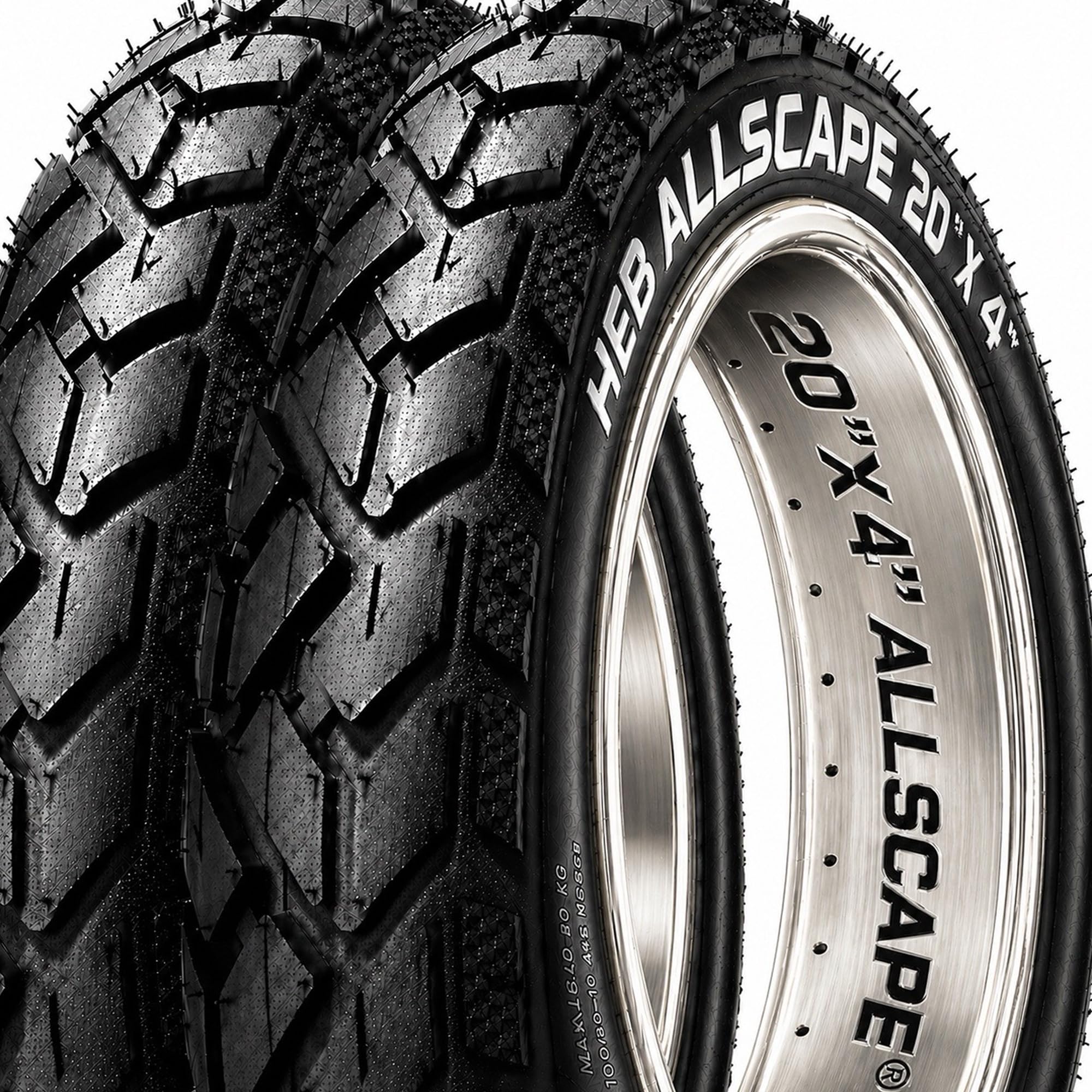
The HEB ALLSCAPE is the clearest example of a premium tire built for riders who are tired of replacing budget tires every 500 miles. Its high-density motorcycle-grade rubber compound is reported to be 2X thicker than stock e-bike tires, which directly translates to the 3,000–5,000 mile lifespan claim — a range verified by multiple long-term owner reports across the 20×4 sizes.
The construction uses advanced anti-puncture technology that makes it significantly harder for glass shards, sharp rocks, or thorns to penetrate the casing. This is critical for e-bike riders who cannot afford a flat on a commuter route or a remote trail. The all-terrain tread pattern balances moderate rolling resistance on pavement with reliable bite on dirt, gravel, and hardpack, making it a genuine do-everything tire.
At this price point, the ALLSCAPE also delivers peace of mind with a U.S.-based company backing it, which simplifies warranty claims and customer support. The only trade-off is that the heavier-duty casing adds noticeable weight compared to thinner budget tires, but that weight penalty is the very reason it lasts so much longer.
What works
- Rated for 3,000-5,000 miles of use
- Motorcycle-grade rubber resists cuts and punctures
- Excellent all-terrain traction
What doesn’t
- Heavier than budget alternatives
- Requires careful seating on some rims
2. ULTRAVERSE 20×4.0 Road Dominator
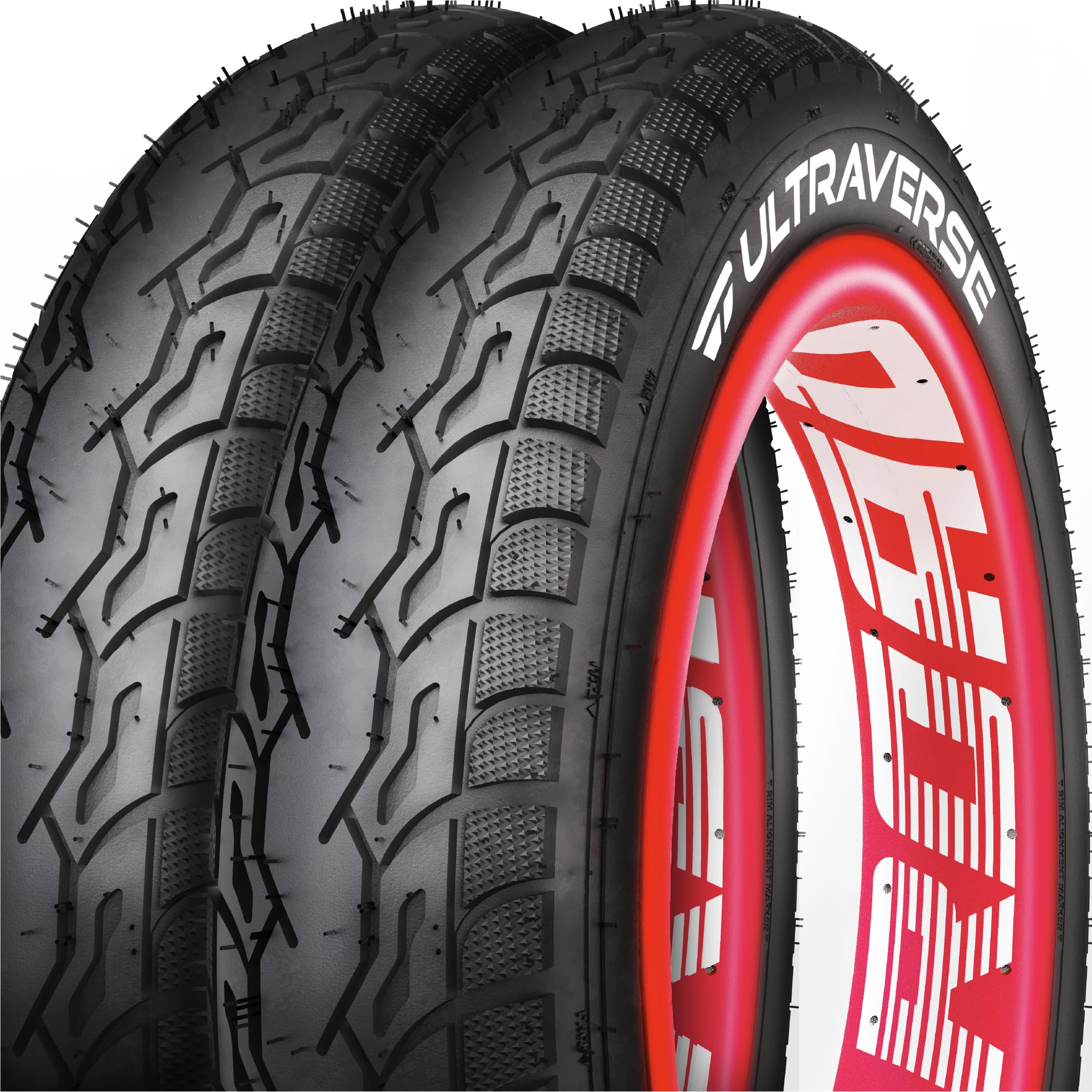
The ULTRAVERSE Road Dominator takes a different approach than most fat tires by focusing on pavement efficiency without completely sacrificing off-road capability. Its semi-slick tread pattern features a continuous center strip that dramatically reduces rolling resistance on asphalt, which directly translates to longer battery range for e-bike commuters and smoother, quieter rolling for all riders.
The dual compound rubber construction uses a harder center compound for wear resistance and softer shoulder knobs for cornering grip, a design borrowed from high-end motorcycle tires. Precision water-dispersal grooves help maintain contact in wet conditions, addressing a common weakness of fat tires on slick pavement. The reinforced casing also provides substantial puncture protection, though not quite as thick as the ALLSCAPE’s motorcycle-grade build.
For riders who spend 70% or more of their time on paved roads with occasional gravel or hardpack detours, the Road Dominator is arguably the most efficient 20×4 tire available. The trade-off becomes apparent in deep mud or loose sand, where the semi-slick center lacks the digging action of a full knobby tread.
What works
- Very low rolling resistance on pavement
- Dual compound extends tread life
- Excellent wet-weather grip
What doesn’t
- Limited bite in deep mud or loose sand
- Not ideal for aggressive mountain trails
3. YunSCM 20×4.0 Heavy Duty
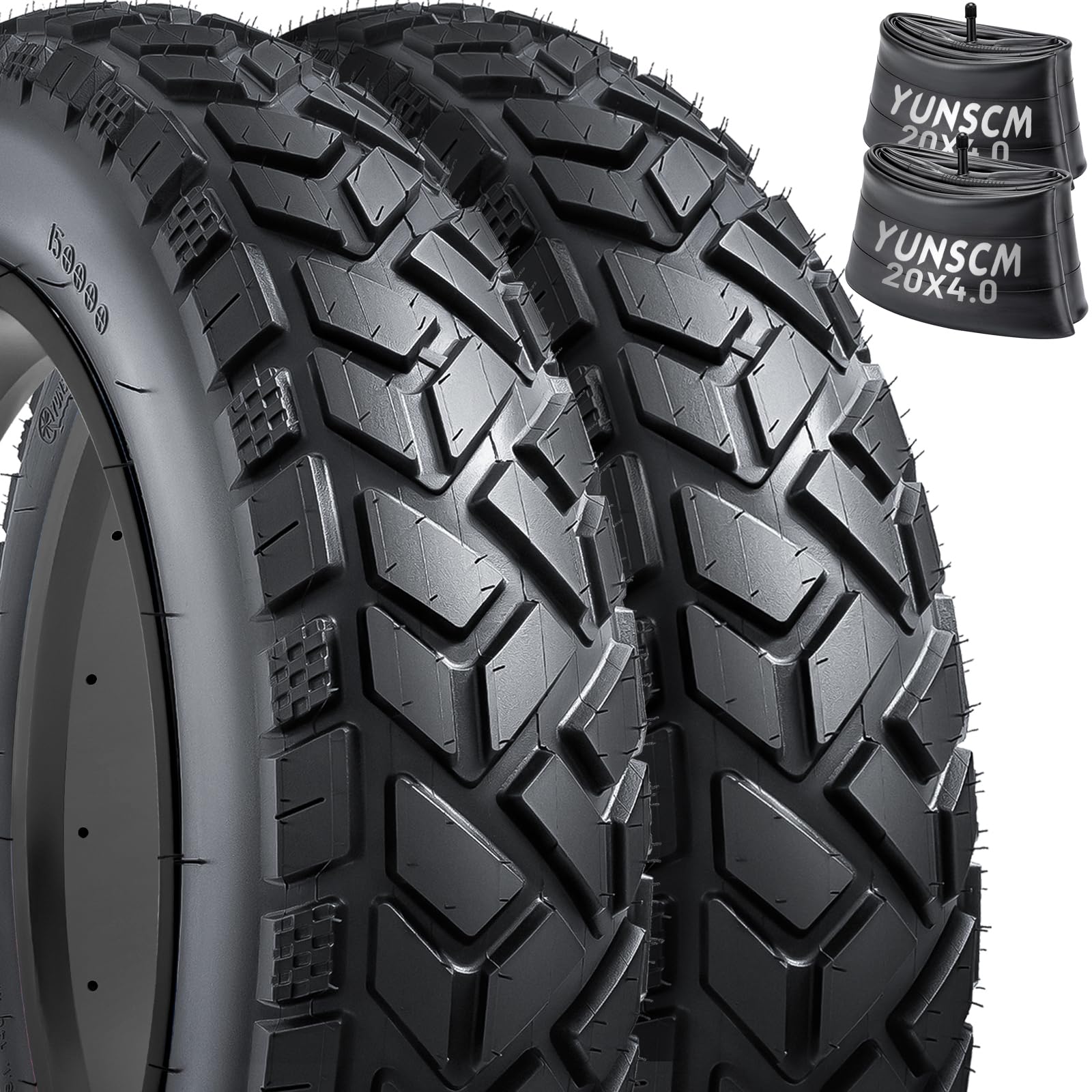
YunSCM has engineered this 20×4 tire specifically for electric bicycle applications where the extra torque from a motor accelerates tread wear on standard tires. The directional tread pattern is designed to channel debris away from the center while maintaining consistent braking traction, and the block-shaped grain pattern provides good traction on both paved roads and daily off-road conditions.
The quality and thickness of this tire are notably greater than ordinary wide tires, which is the main reason it avoids the frequent replacement cycle that plagues budget options. The 2-tire and 2-tube package simplifies the upgrade process, and the included AV32mm Schrader valve tubes fit standard fat bike rims without modification. The air pressure recommendation of 20 PSI is conservative but suitable for the average rider weight on e-bikes.
One trade-off is that the softer wire technology used for folding makes the tire slightly more pliable when first unboxed, which some users report requires careful handling to ensure the bead seats evenly. Once mounted and inflated properly, the directional tread provides a confident feel on dry pavement and hardpack trails, though it is not designed for extreme mud or snow riding.
What works
- Thicker than standard fat tires
- Directional tread improves wet braking
- Complete kit with tubes included
What doesn’t
- Folding design requires careful bead seating
- Limited performance in deep mud
4. MOHEGIA 20×4.0 Kit

MOHEGIA’s 20×4 kit offers a compelling value proposition by bundling two tires, two inner tubes, and two tire levers in a single package, making it a turnkey solution for riders who need to replace both wheels at once. The oversized convex knobs provide excellent stability and absorb rocks well, making this tire feel planted on loose terrain despite its mid-range price position.
The maximum load rating of 266.6 pounds per tire is higher than many competitors at this tier, which is a critical specification for heavier riders or those carrying cargo on an e-bike. The rubber compound emphasizes heat resistance and durability, which helps prevent tread separation during extended motor-assisted rides in hot conditions. The Schrader valve tubes included are 32mm, compatible with most standard fat bike rims.
The knobby tread pattern is genuinely aggressive, which means it excels on trails, dirt, and beach sand but creates noticeable vibration and noise on smooth pavement. For riders who primarily ride off-road and want a complete swap-out kit without purchasing tubes separately, this is a strong mid-range choice. The folded packaging requires the recommended 1-2 day flattening period before installation to avoid bead seating issues.
What works
- Excellent load capacity for e-bikes
- Aggressive knobby traction off-road
- Complete kit saves separate tube purchase
What doesn’t
- Noisy on paved roads
- Requires flattening time before installation
5. RUTU 20×4.0 Foldable
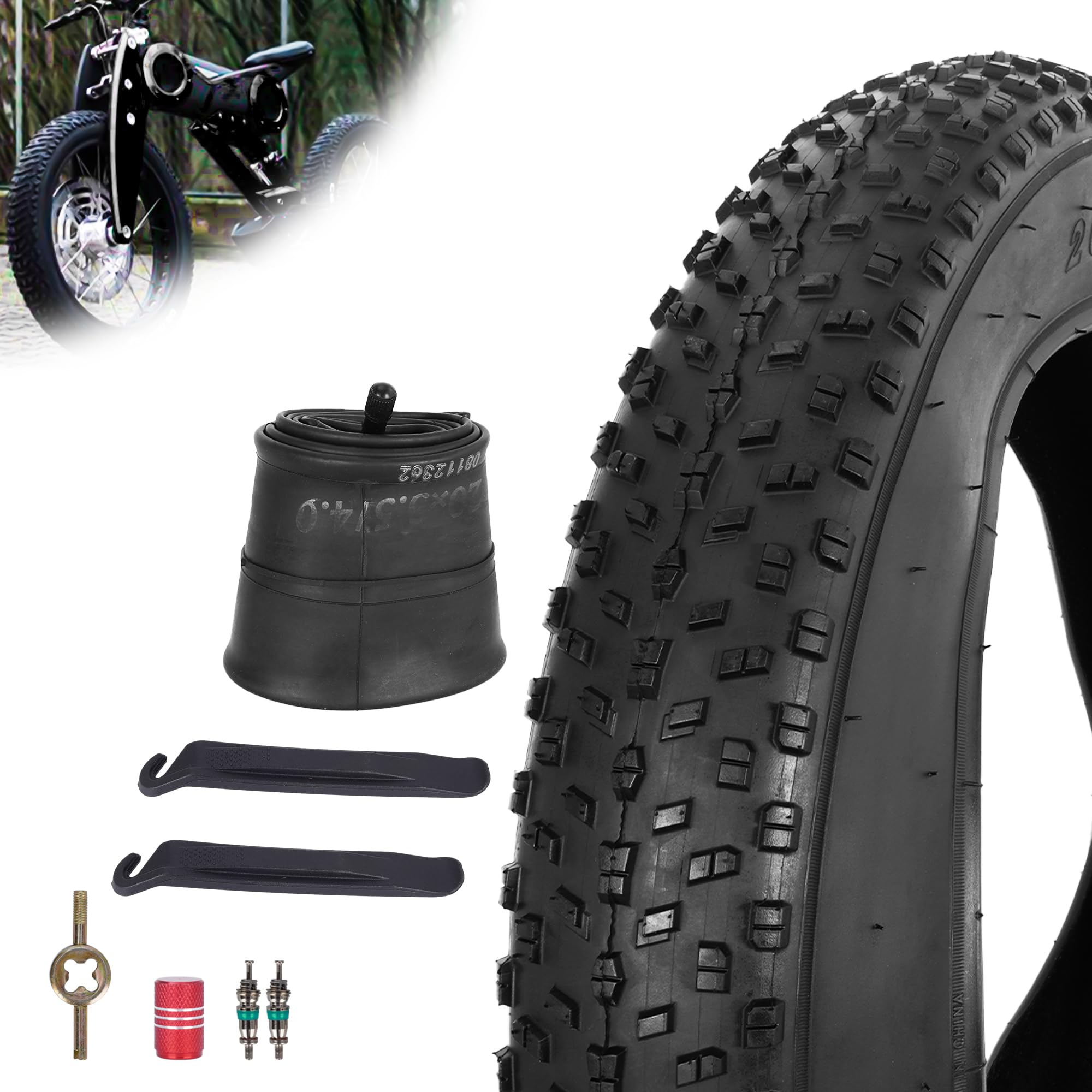
The RUTU 20×4 tire distinguishes itself with a rubber compound that contains 45% nylon content, a material choice that significantly improves tread life and heat resistance compared to traditional all-rubber tires. This nylon reinforcement is particularly effective at resisting punctures from sharp trail debris, making it a practical choice for riders who frequently encounter thorns, glass, or sharp gravel on their routes.
The widely spaced blocky tread pattern features a twill design that increases the ground contact surface area, providing stable driving performance on both good roads and light off-road conditions. The folding design makes it easy to carry as a spare for long trips, which is a practical advantage for bikepackers or commuters who want to carry a backup without adding bulk. The included tire levers and valve core wrench simplify trailside repairs.
The butyl rubber inner tube included in the package is more impact and heat-resistant than standard rubber tubes, offering more than double the service life according to the manufacturer. This matters because tube failures are actually more common than tire punctures in many riding scenarios. The primary limitation is that the tread is optimized for light off-road use rather than deep mud or aggressive trail riding.
What works
- Nylon-reinforced rubber extends tread life
- Foldable for easy spare storage
- Includes high-quality butyl tube
What doesn’t
- Not aggressive enough for deep mud
- Installation requires careful directional alignment
6. Hycline 20×4.0
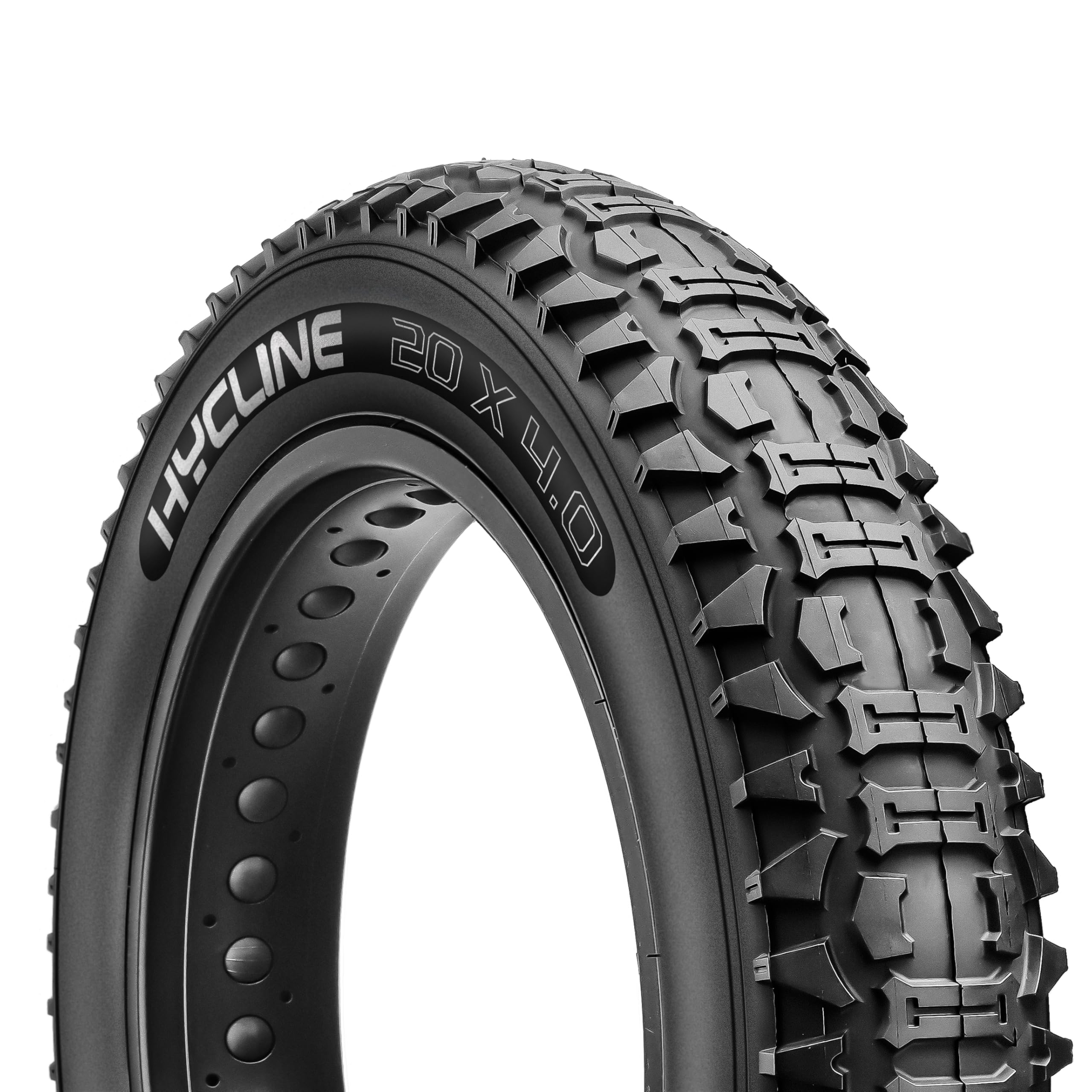
The Hycline 20×4 fat tire uses a symmetrical dual center tread design that improves braking stability and enhances cornering traction by adding lateral bite edges. This design philosophy is unusual in the fat tire category, where most manufacturers focus on either full knobby or full slick patterns — the Hycline splits the difference effectively for mixed-surface riding.
The wide, sloping, blocky knob tread pattern cuts through loose and rocky terrain while maintaining relatively low rolling resistance compared to fully knobby competition. The high-density rubber material gives it good load-bearing capacity and puncture resistance, making it suitable for heavier e-bikes. The 40 PSI maximum inflation rating is notably higher than the 20 PSI limit of many competitors, which allows riders to run higher pressures for purely street use and lower pressures for trail days.
Where the Hycline falls short is in extreme off-road scenarios — the tread depth and knob spacing are optimized for mixed use, meaning it won’t dig as effectively in deep mud or snow as a dedicated off-road tire. For the rider who wants one tire that handles commuting, gravel paths, and light trail duties without compromise, this is a balanced choice.
What works
- Wide 40 PSI pressure range for versatility
- Symmetric dual tread improves cornering
- Low rolling resistance for mixed use
What doesn’t
- Limited bite in deep mud or snow
- Single tire only, no tube included
7. RUHUO 2-Pack 20×4.0
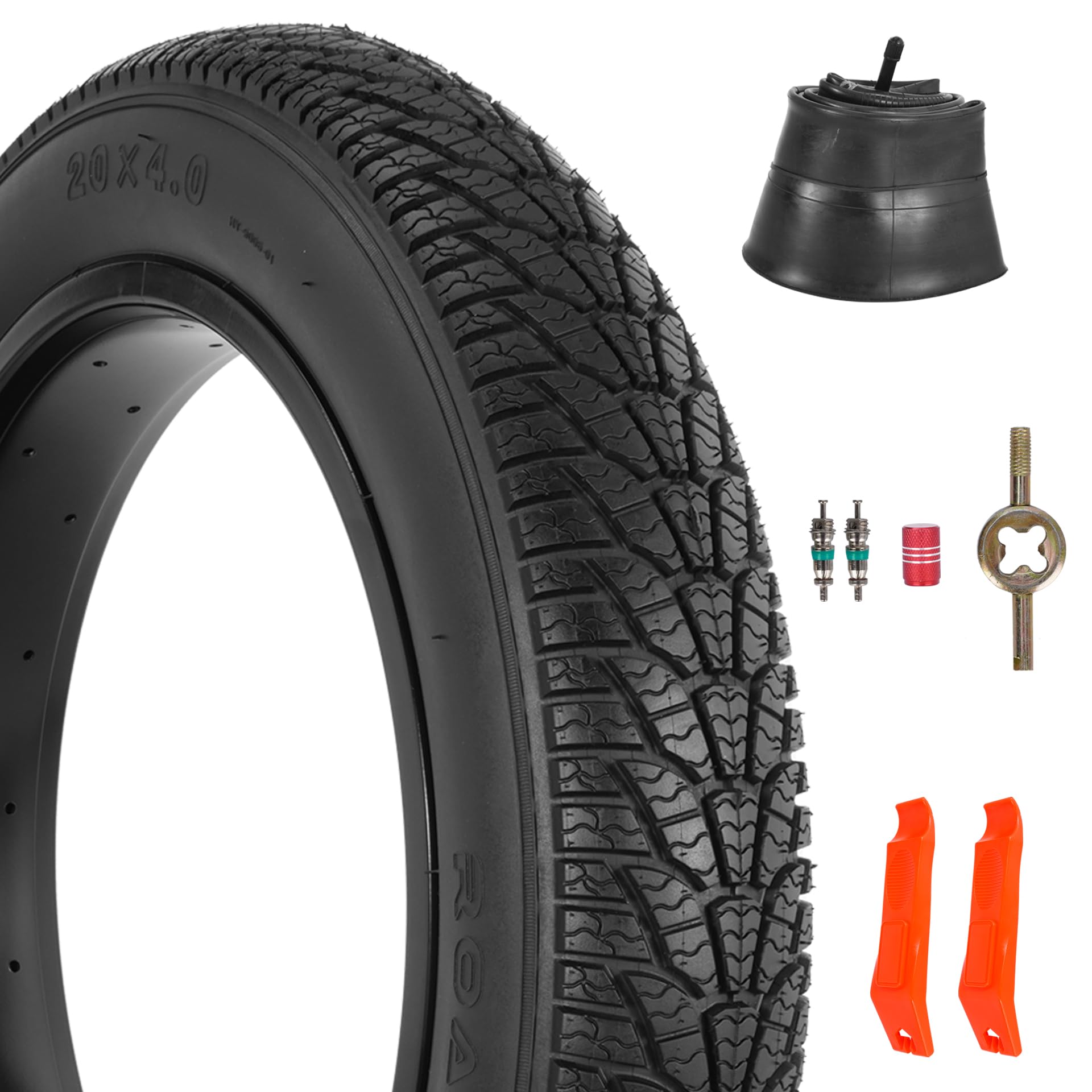
The RUHUO 2-Pack is the most accessible entry point into 20×4 fat tires, offering a complete set of one tire and one inner tube per wheel along with installation tools like tire levers and valve core wrenches. The 30 TPI casing is standard for this price tier, providing decent puncture resistance for casual riding on mixed surfaces without the premium cost of higher-density compounds.
The tight, symmetrical tread pattern provides adequate grip on dry pavement, hardpack dirt, and gravel, making it suitable for recreational riders, commuters on a tight budget, or those equipping a secondary bike. The foldable design saves storage space, and the lightweight 5-pound-per-tire construction helps keep overall bike weight down — an advantage for pedal-only riders who don’t have a motor assist.
The limitations are predictable at this price level. The rubber compound wears faster under the torque of an e-bike motor, and the 20 PSI maximum pressure limits its versatility for riders who want to run higher pressures on pavement. For occasional use on a pedal fat bike or as a budget replacement for a second bike, this kit offers functional performance without a significant financial commitment.
What works
- Affordable entry into 20×4 size
- Lightweight for pedal-only bikes
- Complete kit with tubes and tools
What doesn’t
- Wears quickly on e-bike applications
- Limited to 20 PSI max pressure
Hardware & Specs Guide
TPI (Threads Per Inch)
TPI measures the number of threads per inch in the tire casing fabric. Lower TPI ratings (around 30) use thicker, heavier threads that provide superior puncture resistance and durability, making them ideal for rough off-road and e-bike use. Higher TPI ratings (60–120) use thinner threads that make the casing more flexible and lighter, improving ride compliance and reducing rolling resistance but at the cost of reduced cut resistance. For 20×4 fat tires, a 30 TPI rating is generally preferred for e-bikes and off-road riding, while higher TPI is better for pure street performance.
Load Rating and Pressure Range
Every 20×4 tire has a specific maximum load capacity measured in pounds, typically ranging from 200 to 270 pounds per tire. E-bike riders should prioritize tires with higher load ratings because the combined weight of bike, motor, battery, and rider often exceeds standard bicycle loads. The pressure range determines how the tire behaves on different surfaces — lower pressures (15–25 PSI) create a larger contact patch for better traction on loose surfaces, while higher pressures (30–40 PSI) reduce rolling resistance and prevent pinch flats on pavement. Tires with a wider pressure range offer more versatility across varied riding conditions.
FAQ
Can I use standard 20×4 tires on a high-torque e-bike?
What is the correct pressure for 20×4 tires on pavement versus trail?
How do I know if a 20×4 tire will fit my bike frame and fork?
Why does my 20×4 tire lose air pressure faster in cold weather?
Final Thoughts: The Verdict
For most buyers, the 20 x 4 tires winner is the HEB ALLSCAPE because it delivers genuine 3,000–5,000 mile durability with motorcycle-grade rubber that withstands e-bike torque and trail abuse. If you ride mostly on pavement and want maximum battery range, grab the ULTRAVERSE Road Dominator for its efficient semi-slick tread. And for a budget-friendly entry point that includes everything needed for a complete swap, the RUHUO 2-Pack offers functional performance without a large upfront investment.

Certification: BSc in Mechanical Engineering
Education: Mechanical engineer
Lives In: 539 W Commerce St, Dallas, TX 75208, USA
Md Amir is an auto mechanic student and writer with over half a decade of experience in the automotive field. He has worked with top automotive brands such as Lexus, Quantum, and also owns two automotive blogs autocarneed.com and taxiwiz.com.