A rear tire in the 180/55 section profile is the defining contact patch between your bike and the asphalt — get the compound wrong and you sacrifice corner confidence or watch tread disappear in three thousand miles. The 180/55-18 sizing serves a specific slice of the market, primarily big cruisers, baggers, and certain touring machines that need a wide footprint without the shorter sidewall of 17-inch hoops. Each tire in this segment represents a distinct engineering trade-off between silica content for wet grip, carbon loading for mileage, and carcass construction for load capacity.
I’m Amir — the founder and writer behind Four Wheel Ask. My approach to evaluating motorcycle tires combines detailed analysis of compound formulations, tread pattern geometry, and ply construction data with long-term owner feedback from thousands of real-world miles across multiple riding environments.
Whether you ride a bagger through seasonal rain or drag pegs through mountain sweepers, your choice comes down to how much priority you place on wet traction versus tread life versus warm-up speed. Selecting the right best 180/55-18 motorcycle tire requires careful analysis of tread wear ratings, wet traction capabilities, and heat cycle durability across different riding conditions.
How To Choose The Best 180/55-18 Motorcycle Tire
The 180/55-18 size sits in a narrow but demanding niche. The 180 mm width provides ample rubber for torque-heavy V-twins, while the 55 aspect ratio keeps the sidewall tall enough to absorb highway irregularities. The 18-inch diameter means these tires fit cruisers, baggers, and select touring models rather than pure sport bikes. Understanding three key factors will narrow your options quickly.
Compound and Grip Philosophy
Silica-rich compounds deliver superior cold and wet traction but typically wear faster than carbon-black formulations. Multi-compound rear tires — often called dual-compound or multi-tread — place a harder center strip for straight-line mileage and softer shoulder rubber for cornering bite. A high-silica tire like the Michelin Road 5 prioritizes all-weather confidence at the expense of ultimate mileage, while a carbon-heavy cruiser tire like the Dunlop American Elite targets 10,000-plus miles with acceptable wet grip.
Construction Type and Load Capacity
Radial construction uses belt plies oriented perpendicular to the tread, allowing the sidewall to flex independently from the tread for better heat management and high-speed stability. Bias-ply construction (common in cruiser tires) uses crisscrossed plies that produce a stiffer sidewall suited for heavy loads. The Shinko SR777 HD uses a reinforced bias carcass rated for 1,000 pounds, making it a strong candidate for fully loaded touring. Load index matters: index 73 supports 805 pounds, while index 84 supports 1,102 pounds — a critical difference for two-up riding with luggage.
Matching Tire to Riding Style
Aggressive cornering demands a tire with soft shoulder rubber and a sporty profile that encourages turn-in, traits found in the Metzeler M7 Sportec and Pirelli Diablo Rosso III. Highway touring at steady throttle favors a flat-profile tire with a hard center compound for even wear, which is where the Dunlop American Elite and Pirelli Night Dragon GT excel. Riders who split time between wet commuting and weekend twisties need a tire that warms up quickly without sacrificing siping — the Bridgestone Battlax S22 and Michelin Road 5 lead in that balance.
Quick Comparison
On smaller screens, swipe sideways to see the full table.
| Model | Category | Best For | Key Spec | Amazon |
|---|---|---|---|---|
| MICHELIN Road 5 | Sport Touring | Wet Grip & Mileage | 180/55ZR-17 73W | Amazon |
| Pirelli Diablo Rosso III | Hypersport | Dry/Wet Performance | 180/55ZR-17 73W | Amazon |
| Metzeler M7 Sportec | Sport | Aggressive Cornering | 180/55ZR-17 73 | Amazon |
| Bridgestone Battlax S22 | Hypersport | Wet Weather Grip | 180/55ZR-17 73 | Amazon |
| Dunlop RoadSport 2 | Sport | Quick Warm-Up | 180/55ZR-17 73 | Amazon |
| Shinko SR777 HD | Cruiser | Heavy Duty Use | 180/55-18 84H | Amazon |
| Pirelli Night Dragon GT | Cruiser/Touring | Harley-Davidson Fit | 180/55B-18 80 | Amazon |
| Dunlop American Elite | Touring | Long Mileage | 180/55B-18 80 | Amazon |
| Continental ContiMotion | Sport/Touring | Entry Level Value | 180/55-17 73 | Amazon |
In‑Depth Reviews
1. MICHELIN Road 5

The Michelin Road 5 consistently ranks as the benchmark for wet-weather sport-touring rubber, and the owner reports confirm that reputation. Riders on Ducati Monsters, BMW R-series, and Suzuki Bandits describe near-instant confidence in rain, with the patented XST Evo sipes maintaining stopping distance even after thousands of miles of wear. The 2CT and 2CT+ dual-compound technology places a harder center strip for straight-line durability and softer shoulders for cornering, a layout that delivers balanced performance across varied conditions.
Real-world mileage reports cluster between 10,000 and 13,000 miles for the rear, with the center flattening slowly compared to single-compound alternatives. Owners note that the ACT+ casing provides noticeable stability at highway speeds and during loaded touring, though the tire never feels overly stiff. Warm-up time is minimal — several riders mention feeling confident leaning into the first turn on a cold morning without the slippery sensation common to harder compounds.
For riders who split time between wet commutes, mountain sweepers, and long interstate slogs, the Road 5 offers the widest safety margin in this list. The trade-off is that the shoulder rubber is soft enough to show wear under aggressive track-day use, and the price reflects the premium engineering. But for a do-everything rear tire that demands zero compromise on wet grip, this is the standard-setter.
What works
- Exceptional wet traction without extended warm-up
- Dual-compound delivers impressive center-tread mileage
- Stable at highway speeds even with passenger and luggage
What doesn’t
- Soft shoulder compound wears quicker under aggressive cornering
- Premium positioning commands a higher cost than mid-range options
2. Pirelli Diablo Rosso III

The Diablo Rosso III represents Pirelli’s hypersport DNA translated into a street-legal package, drawing directly from World Superbike Championship development. The bi-compound layout uses a wide soft shoulder stripe that engages from mid-lean angle, providing progressive grip that builds rather than snapping in. Owner feedback from Hayabusa and Ninja 650 riders consistently highlights the immediate stickiness from the first ride — the tire feels planted within the first few miles without the greasy release period some sport tires require.
Wet performance is strong for a sport-oriented tire, with the fine-grain silica compound channeling water effectively through the aggressive tread pattern. Riders report confidence in rain at moderate speeds, though the shoulder blocks are less siped than a dedicated touring tire. The large footprint area contributes to stability during high-speed cornering, and several owners on liter-class bikes note the tire remains composed at triple-digit speeds without excessive squirm.
Mileage is the primary compromise — owners report between 3,000 and 5,000 miles depending on riding aggression and bike weight. The soft compound that delivers such immediate grip simply cannot match the longevity of a harder touring formulation. For riders who prioritize cornering feel and braking traction over tread life, and who accept more frequent replacements in exchange for peak performance, the Rosso III is a compelling choice.
What works
- Instant warm-up and exceptional dry grip from the first mile
- Bi-compound provides smooth transition from straight to lean
- High-speed stability on liter-class sport bikes
What doesn’t
- Soft compound yields relatively short tread life
- Wet grip trails dedicated touring tires in heavy rain
3. Metzeler M7 Sportec

The Metzeler M7 Sportec has developed a near-cult following among riders who want sport-bike handling without the extreme wear rates of pure track-day rubber. The silica-enhanced compound heats up quickly — owners on CBR 900RR and other middleweight sport bikes report feeling confident pushing into corners within a few miles of cold starts. The tread pattern includes deep grooves and a high void ratio that clears water effectively, making this one of the more capable wet-weather sport tires on the market.
Mileage reports cluster around the 3,000 to 5,000-mile mark, with one detailed owner log showing 2,909 miles to the wear indicators. That rider noted the M7 Sportec is slightly less sticky than the Sportec M3 but compensates with better longevity and lower cost than the Roadtec 01. Another owner reported using the tire on track days with results that exceeded expectations, citing the predictable breakaway and consistent feedback near the limit.
The carcass construction uses Metzeler’s radial layout with a stiff sidewall that resists flex under hard braking. Riders on heavier bikes note the tire feels planted during aggressive direction changes, though the profile encourages a slightly quicker turn-in than some touring-oriented alternatives. For the rider who wants a single tire that handles weekend track days, wet commutes, and backroad carving without breaking the budget, the M7 Sportec delivers remarkable breadth.
What works
- Fast warm-up with excellent cold grip for sport riding
- Silica compound provides strong wet traction
- Predictable breakaway characteristics near the limit
What doesn’t
- Mileage is moderate compared to sport-touring tires
- Quick turn-in profile may feel nervous to some touring riders
4. Bridgestone Battlax Hypersport S22

The Battlax Hypersport S22 is Bridgestone’s answer to the challenge of building a street sport tire that works in the rain without sacrificing dry cornering performance. The front and rear pattern design incorporates fine-grain silica that improves wet grip by increasing the contact patch’s ability to micro-siphon water. Owner reviews on this tire are overwhelmingly positive regarding wet-weather confidence, with one rider stating it is the best wet-weather street tire they have ever used — high praise in the hypersport category where wet traction is often an afterthought.
The tread pattern uses increased pattern rigidity to improve handling response, meaning the tire turns in crisply without the vague initial feel some sport tires exhibit. Owners on GSX-R and other sport bikes report the tire feels neutral and stable at lean angles up to full peg scraping. The compound formulation also delivers good cold grip — riders note it doesn’t require extensive warm-up before pushing hard on cold morning rides.
The trade-off is mileage, with most owners reporting around 5,000 miles before reaching wear bars. The soft shoulder compound that enables the exceptional grip simply cannot match the longevity of a touring tire. For riders who ride year-round in regions with unpredictable rain, or who want maximum safety margin in wet conditions without switching to a touring tire, the S22 is a standout choice that balances grip and usability better than most hypersport options.
What works
- Outstanding wet traction for a hypersport tire
- Crisp turn-in response with neutral mid-corner feel
- Good cold grip requiring minimal warm-up time
What doesn’t
- Mileage is limited to around 5,000 miles
- Soft shoulder compound wears faster under aggressive use
5. Dunlop RoadSport 2

The Dunlop RoadSport 2 targets the rider who wants sport-tire performance without the hypersport price tag, and owner feedback suggests it hits that mark effectively. The compound formulation prioritizes quick warm-up — riders on Yamaha FZR1000 and GSX-R750 models report feeling confident leaning into corners within a few miles of departure. The tread pattern uses a directional design that channels water well for a tire in this category, with one owner specifically citing excellent wet and dry grip after over 5,000 miles with plenty of tread remaining.
The carcass construction provides nimble, predictable handling with a quick turn-in characteristic that suits sport bikes. Owners describe the tire as smooth and confidence-inspiring, with one rider noting the tire “grips and hooks” exactly as needed during cornering. The RoadSport 2 uses a load index of 73, supporting up to 805 pounds, which is sufficient for most middleweight and liter-class sport bikes without a passenger.
Mileage reports are notably strong for a tire in this performance bracket — several owners report exceeding 5,000 miles with tread to spare, and the wear pattern tends to remain even across the tread surface when tire pressures are maintained. The biggest limitation is that the RoadSport 2 does not match the ultimate dry grip of premium hypersport tires like the Diablo Rosso III or Battlax S22, particularly at extreme lean angles. For the street rider who wants responsive handling and solid all-around performance at a reasonable investment, this tire delivers consistent results.
What works
- Quick warm-up with predictable handling from cold
- Good tread life for a sport-oriented tire
- Smooth, confidence-inspiring feel during cornering
What doesn’t
- Ultimate dry grip trails premium hypersport options
- Not ideal for aggressive track-day use
6. Shinko SR777 HD

The Shinko SR777 HD is one of the few true 180/55-18 options in this lineup, and it brings a reinforced bias-ply construction that prioritizes load capacity and stability for heavy cruiser applications. The HD designation indicates a Heavy Duty carcass with a 6-ply rating and a load index of 84, supporting up to 1,000 pounds — significantly more than the sport-oriented tires in this list. Owners on Road Glide Limited and other touring baggers report 10,000 to 12,000 miles of service even with two-up riding, which places the SR777 HD among the longest-wearing options available in this size.
The tread design features functional siping and grooves engineered for wet traction, and owners describe the grip as confidence-inspiring during acceleration, braking, and cornering. One detailed report from a Road Glide owner notes the tire handles mountain roads as well as straight highways, with no unusual wear patterns or tread separation issues. The rubber compound is formulated for maximum grip and comfort, with a ride quality that absorbs road irregularities without transmitting harshness to the chassis.
The bias-ply construction means the sidewall is inherently stiffer than a radial, which some riders prefer for the planted feel it provides under heavy loads. The trade-off is that heat management differs from radial tires — bias-ply tires can run hotter at sustained highway speeds, and the ride feel may be slightly less supple over sharp impacts. For the cruiser or bagger rider who values durability, load capacity, and predictable wear over ultimate cornering precision, the SR777 HD is a strong contender that delivers exceptional value.
What works
- Exceptional load capacity with 6-ply reinforced carcass
- Impressive 10,000 to 12,000-mile tread life in heavy use
- Stable, planted feel under two-up touring loads
What doesn’t
- Bias-ply construction runs hotter than radial alternatives
- Cornering feel is less precise than sport-oriented radials
7. Pirelli Night Dragon GT

The Pirelli Night Dragon GT is purpose-built for the Harley-Davidson platform, available in the 180/55B-18 size that fits many bagger and touring models from the Motor Company. The bias-ply construction uses Pirelli’s proprietary compound formulation that balances grip with the durability required for heavy, torque-rich V-twins. Owner feedback from CVO Ultra Limited and Road Glide riders consistently highlights the tire’s ability to transform the handling character of a big touring bike — several describe it as riding “on rails” compared to standard OE rubber.
Wet traction is notably strong for a cruiser-oriented tire, with owners reporting confidence in rain and even snow conditions. One detailed owner review on a CVO Ultra Limited states the Night Dragon GT delivers the best combination of ride comfort, rainy weather traction, handling, and wear of any tire used on that bike. The load index of 80 supports up to 1,102 pounds, making it suitable for fully loaded two-up touring without exceeding the tire’s capacity.
The tread pattern is designed to complement the aesthetic of custom and touring bikes while still providing functional water evacuation. Owners note the tire runs smoothly at highway speeds with minimal tread noise, and the wear pattern remains even across the contact patch when properly inflated. The primary limitation is the premium cost and the bias-ply construction, which some riders accustomed to radial tire feel may find less compliant over sharp pavement transitions. For the Harley owner who demands performance that matches the bike’s character, this is a top-tier choice.
What works
- Transformative handling improvement on Harley touring models
- High load capacity suitable for two-up touring
- Strong wet traction for a cruiser tire
What doesn’t
- Premium pricing reflects the specialized application
- Bias construction feels less compliant than radial alternatives
8. Dunlop American Elite
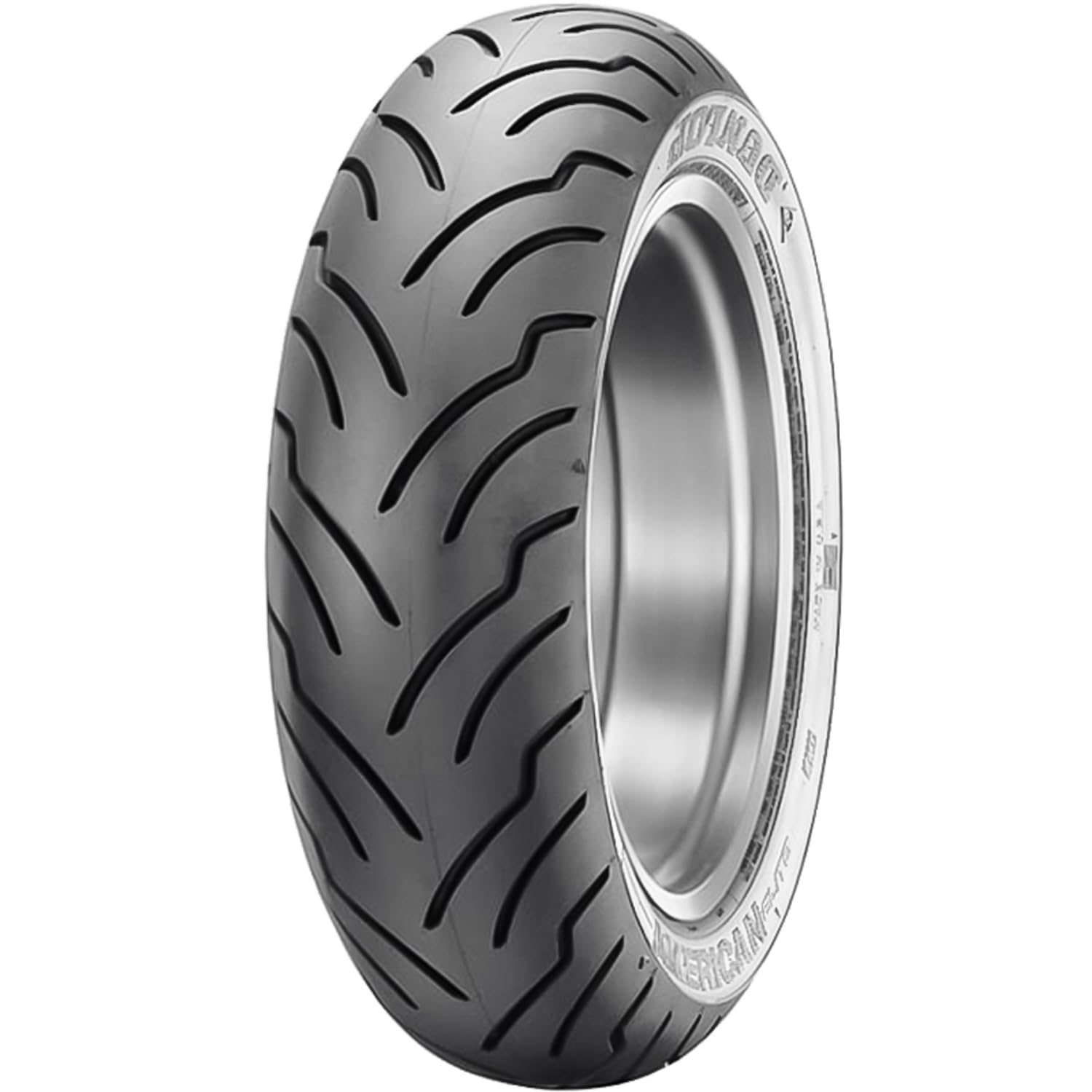
The Dunlop American Elite is the only aftermarket tire line for Harley-Davidson motorcycles that is designed and tested in the United States, and it comes in 28 size options covering most bagger and touring models. The 180/55B-18 variant uses Dunlop’s MT Multi-Tread technology, which bonds two different compounds in the same tread face — a hard-wearing center strip for straight-line mileage and softer shoulder rubber for cornering bite. Owner reports from Road Glide and Ultra Limited riders indicate the tire delivers on its mileage promise, with expectations of 10,000 to 20,000 miles depending on riding habits and bike weight.
The Multi-Tread design is the key engineering feature, allowing the tire to resist flat-spotting during highway cruising while still providing grip when leaned over. Owners note the transition between the hard center and soft shoulder is seamless, with no abrupt change in feel during cornering entry. The tread pattern has been updated from earlier versions to include more grooves for improved rainwater evacuation, and several owners who received the updated version note the wet-weather performance is noticeably better than the outgoing American Elite design.
The ride quality is tuned specifically for the weight and suspension characteristics of large touring motorcycles, with a carcass that absorbs highway expansion joints without transmitting harsh feedback to the handlebars. The load index of 80 supports up to 1,102 pounds, matching the requirements of fully loaded touring. The primary consideration is that the American Elite is designed for the specific demands of American V-twins — it may not be the best choice for lighter metric cruisers or sport-touring bikes where a radial tire would provide better handling characteristics. For the Harley owner who prioritizes mileage and predictable wear, this tire is a proven workhorse.
What works
- Multi-Tread technology delivers exceptional straight-line mileage
- Designed and tested specifically for Harley-Davidson models
- Seamless transition between hard center and soft shoulder compounds
What doesn’t
- Designed specifically for American V-twins, not universal
- Cornering grip does not match sport-touring radials
9. Continental ContiMotion

The Continental ContiMotion is designed as an entry-level radial tire that brings safe, predictable performance to budget-conscious riders without the extreme compromises of no-name budget rubber. The 0° steel-belt construction on the rear provides stability and ride comfort that exceeds what the price point would suggest, and owner feedback confirms the tire delivers reliable wet and dry feedback across a range of conditions. Riders on Buell XB12r, GSXR 600, CBR600F4i, and Ducati models report getting between 8,000 and 10,000 miles from the rear, which is impressive for a tire at this level.
The tread compound uses newly formulated polymers that balance mileage with adequate grip, and owners describe the traction as good for commuting and moderate pace riding. One detail from a Buell owner notes the tire lasted approximately 1.5 years on a high-torque bike with accidental wheelies, developing only a minor flat spot while remaining functional. Several owners have purchased the ContiMotion repeatedly, citing consistent performance and the ability to handle rain and fast highway speeds without alarming behavior.
The limitations emerge at aggressive lean angles — owners report feeling slightly slippery compared to premium sport tires when leaned far over, which is expected given the harder compound and entry-level design. The bias-ply construction listed in some data also means the tire does not match the ultimate cornering precision of a dedicated radial sport tire. For the commuter, beginner, or budget-focused rider who wants a brand-name tire with predictable characteristics and solid mileage, the ContiMotion represents a smart allocation of funds that does not force dangerous compromises.
What works
- Impressive mileage for an entry-level tire
- 0° steel-belt construction provides stable ride quality
- Reliable wet and dry traction for commuting duty
What doesn’t
- Grip at extreme lean angles is limited
- Not suited for aggressive sport riding or track use
Hardware & Specs Guide
Load Index and Ply Rating
Load index indicates the maximum weight a tire can carry at its rated pressure. Index 73 supports 805 pounds, index 80 supports 1,102 pounds, and index 84 supports 1,327 pounds. For heavy touring bikes with passenger and luggage, a load index of 80 or higher is recommended. Ply rating reflects carcass strength — 4-ply is standard for most sport and sport-touring tires, while 6-ply reinforced construction (Shinko SR777 HD) provides additional load capacity and puncture resistance at the cost of a stiffer ride.
Radial vs. Bias-Ply Construction
Radial tires use belt plies running perpendicular to the tread, allowing the sidewall to flex independently for better heat dissipation, higher speed stability, and a more compliant ride over bumps. Bias-ply tires use crisscrossed plies that produce a stiffer sidewall, offering greater load capacity and a more planted feel under heavy loads — common in cruiser and touring tires. The 180/55-18 size includes both radial options and bias-ply choices, so match the construction to your bike’s weight and your riding priorities.
Compound Technology
Silica-rich compounds improve wet traction by creating micro-pores that break the water film between tire and road. Carbon-black compounds prioritize tread life and heat resistance. Multi-compound or dual-compound tires use a harder center strip for straight-line mileage and softer shoulders for cornering grip — this is the dominant technology in premium sport-touring tires like the Michelin Road 5 and Dunlop American Elite. Single-compound tires offer more consistent feel across the tread face but tend to flat-spot faster under highway use.
Tread Pattern and Water Evacuation
The void ratio (percentage of groove area relative to total tread area) determines wet-weather capability. Higher void ratios with deep longitudinal grooves resist hydroplaning at higher speeds. Tires like the Michelin Road 5 use patented XST Evo siping that maintains stopping distance even as the tire wears. Sport tires typically have less siping and shallower grooves, which improves dry grip but reduces wet-weather margin. Cruiser tires often feature aesthetic tread patterns with functional siping for moderate rain performance.
FAQ
What does 180/55-18 mean on a motorcycle tire?
Can I use a 180/55-17 tire on an 18-inch rim?
How many miles should a 180/55-18 rear tire last?
What is the difference between H-rated and W-rated tires?
Is a radial or bias-ply tire better for a heavy touring motorcycle?
Final Thoughts: The Verdict
For most riders, the 180/55-18 motorcycle tire winner is the MICHELIN Road 5 because it delivers the best balance of wet traction, tread life, and cornering confidence across the widest range of conditions. If you ride a heavy touring bike with a passenger and want maximum mileage, go with the Shinko SR777 HD for its reinforced carcass and proven 10,000-mile durability. And for the Harley-Davidson owner who wants transformed handling without sacrificing load capacity, the Pirelli Night Dragon GT offers the most satisfying combination of ride quality and performance available in the true 180/55-18 segment.

Certification: BSc in Mechanical Engineering
Education: Mechanical engineer
Lives In: 539 W Commerce St, Dallas, TX 75208, USA
Md Amir is an auto mechanic student and writer with over half a decade of experience in the automotive field. He has worked with top automotive brands such as Lexus, Quantum, and also owns two automotive blogs autocarneed.com and taxiwiz.com.