Selecting the wrong 130/90-16 motorcycle tire means dealing with poor cornering confidence, premature tread wear, or compromised wet-road stability — mistakes no rider should accept for a component that keeps you glued to the pavement. The 130/90-16 sizing is a common fitment for cruiser and touring motorcycles, and the market is flooded with options that differ wildly in compound formulation, carcass construction, and real-world mileage potential.
I’m Amir — the founder and writer behind Four Wheel Ask. I spend my time comparing tire construction data, analyzing rubber compound durability reports, and cross-referencing owner feedback across thousands of miles to identify which models actually deliver consistent performance.
Understanding how tread design, load index, and speed rating affect your ride is the only way to make an informed purchase. Choosing the right best 130/90-16 motorcycle tire depends on studying compound durability, tread design, and proper load ratings for your specific cruiser.
How To Choose The Best 130/90-16 Motorcycle Tire
Matching a tire to your cruiser or touring bike requires more than just checking the sidewall numbers. The 130/90-16 size fits a broad range of V-twins and metrics, but subtle differences in compound hardness, tread depth, and load capacity can dramatically change how the bike handles and how long the rubber lasts.
Decoding Load Index and Speed Rating
The load index number indicates the maximum weight each tire can carry at full inflation. A 67 load index supports 677 pounds, while a 73 index handles 805 pounds — critical for baggers or two-up touring. Speed ratings like H (130 mph) or P (93 mph) tell you the sustained speed ceiling. Never install a tire with a lower load index than the manufacturer specifies for your bike.
Tread Pattern and Compound Selection
Directional tread patterns excel at channeling water away from the contact patch, improving wet-weather confidence. Asymmetrical designs balance dry grip with rain evacuation. Harder compounds extend tread life but can sacrifice cornering bite, while softer formulations offer tenacious traction at the cost of faster wear. Your riding style and local climate should dictate the compromise.
Bias-Ply vs. Radial Construction Differences
Most 130/90-16 tires are bias-ply — multiple layers of polyester or nylon cord arranged at alternating angles for a stiff, stable carcass that suits cruiser weight distribution. Radial construction, less common in this size, uses flexible sidewalls with a rigid belt package for a smoother ride and better heat dissipation. Bias-ply remains the standard for Harley and metric cruiser fitments.
Quick Comparison
On smaller screens, swipe sideways to see the full table.
| Model | Category | Best For | Key Spec | Amazon |
|---|---|---|---|---|
| Pirelli Night Dragon | Premium | Grip at all lean angles | 130/90-16, H-rated, 67 load | Amazon |
| Michelin Commander III | Premium | Wet braking and longevity | 130/90B-16, 73H, directional | Amazon |
| Dunlop D402 | OEM Touring | Harley touring direct fit | 130/82R16, 90 load, H-rated | Amazon |
| Bridgestone Battlecruise H50 | Premium | Touring mileage and comfort | 130/90-16, 73H, asymmetrical | Amazon |
| Shinko 777 HD | Mid-Range | Affordable grip and stability | 130/90B-16, 73H, asymmetrical | Amazon |
| Dunlop D404 Rear | Mid-Range | Smooth ride and water evacuation | 130/90-16, 67H, symmetrical | Amazon |
| Dunlop D404 Front | Mid-Range | Front-specific stability | 130/90-16, 67H, directional | Amazon |
| Kenda K657 Challenger | Budget | Entry-level street performance | 130/90H16, 67H, 6-ply | Amazon |
| MMG Motorcycle Tire | Budget | Basic commuting and sidecar use | 130/90-16, P-rated, 73 load | Amazon |
In‑Depth Reviews
1. Pirelli Night Dragon Front Tire

The Pirelli Night Dragon represents a deliberate blend of modern compound technology and cruiser-specific geometry. Its non-directional tread pattern prioritizes consistent contact patch behavior across varying lean angles, which directly translates to predictable cornering feel. Owners consistently report the tire inspires confidence when pushing through turns, with the rubber compound maintaining grip well beyond what budget options can match.
Straight-line acceleration and braking benefit from the specially formulated compound that Pirelli designed to handle the weight transfer characteristics of large V-twins. The structural design emphasizes stability at highway speeds without introducing a harsh ride over expansion joints or rough pavement. Multiple repeat buyers on heavy touring bikes confirm the Night Dragon holds up through several seasons of mixed riding.
The load index of 67 (677 pounds) suits most solo cruisers and light touring setups, though heavily loaded baggers may want to verify their weight requirements before purchasing. Some riders noted the soft compound delivers exceptional grip but may show wear faster than harder touring-focused alternatives under aggressive throttle use.
What works
- Outstanding cornering grip at all lean angles
- Stable at highway speeds with predictable feedback
- Excellent wet traction from compound formulation
What doesn’t
- Soft compound may wear quicker under hard acceleration
- Load capacity limited for heavy touring loads
2. MICHELIN Commander III Cruiser Rear Tire

Michelin engineered the Commander III Cruiser specifically to address the two biggest complaints cruiser riders have: wet-road stopping distance and premature rear tire wear. The directional tread pattern incorporates deep grooves that evacuate water efficiently, and internal testing shows this tire outperforms leading competitors in wet braking scenarios. Owners of heavy touring machines confirm the wet grip is noticeably better than previous generation cruiser tires.
The 73 load index (805 pounds) makes this one of the higher-capacity options in the 130/90-16 segment, suitable for fully loaded baggers and two-up touring. The tread compound is formulated for longevity without sacrificing the grip needed for confident cornering. Multiple Harley riders report smooth highway ride quality and minimal tread squirm during high-speed cruising.
Mounting the tire tubeless required some effort, with a few owners noting the stiff bead made installation more challenging than expected. Checking the DOT date code before installation is important to avoid sitting stock that may be several years old, a point several reviewers emphasized based on personal experience.
What works
- Exceptional wet braking and grip
- High load capacity for touring setups
- Durable tread compound extends mileage
What doesn’t
- Stiff bead complicates DIY mounting
- DOT date code should be verified on delivery
3. Dunlop Harley Davidson D402 Front Tire

The Dunlop D402 is the approved Harley-Davidson touring tire, co-engineered with the manufacturer to match the specific weight distribution and handling characteristics of Harley baggers and touring models. The three-ply polyester casing with two fiberglass belts provides the structural rigidity needed for stable highway cruising, especially when the bike is fully loaded with luggage and a passenger.
Computer-optimized tread profiling with an offset center groove reduces the wandering sensation often felt on rain grooves and steel-grated bridges. The design also helps minimize cupping — a common issue with cruiser front tires that leads to noisy, uneven wear. Owners of Electra Glides, Road Glides, and Heritage Softails report the D402 delivers consistent performance mile after mile.
The 130/82R16 sizing is slightly different from a standard 130/90-16, so confirming rim fitment and profile match is essential before ordering. The tread depth of 5/32nds is moderate, and some riders noted the tire wears faster than expected on heavier bikes when paired with aggressive throttle inputs.
What works
- OEM-approved Harley touring fitment
- Excellent highway stability and rain groove tracking
- Robust three-ply construction for heavy loads
What doesn’t
- Profile differs from standard 130/90-16 sizing
- Moderate tread depth may limit total mileage
4. Bridgestone Battlecruise H50 Rear Tire

Bridgestone designed the Battlecruise H50 to address the unique vibration damping needs of large-displacement American V-twins. The asymmetrical tread pattern balances dry cornering grip with effective water channeling, while the internal structure reduces the transmission of engine vibration to the rider — a feature that makes long-distance touring noticeably less fatiguing. Owners of Road Glides and Victory models consistently praise the smooth, controlled feel.
The load index of 73 (805 pounds) combined with the H-speed rating makes this tire suitable for aggressive highway cruising. Bridgestone claims the rear tire lasts up to 2.7 times longer than the previous EXEDRA MAX, and owner reports from high-mileage touring riders confirm exceptional durability — one reviewer reported 14,000 miles on a single rear tire with aggressive riding habits.
Some riders transitioning from Michelin Commanders noted the Battlecruise compound feels slightly less sticky in wet conditions, though still competent. The asymmetrical design requires attention during mounting to ensure correct orientation, and the stiff sidewall can make installation more labor-intensive on standard tire machines.
What works
- Outstanding touring mileage potential
- Excellent vibration damping for long rides
- High load capacity for loaded baggers
What doesn’t
- Wet grip slightly behind top competitors
- Stiff casing makes mounting difficult
5. Shinko 777 Rear H.D. Motorcycle Tire

The Shinko 777 HD (Heavy Duty) variant upgrades the standard 777 with a reinforced carcass that provides a more planted feel under load. The asymmetrical tread pattern incorporates functional siping and grooves specifically designed to maintain traction in both wet and dry conditions. Owner feedback from Harley and metric cruiser riders confirms the tire delivers confidence-inspiring grip during acceleration, braking, and cornering.
The 77 load index (805 pounds) matches premium touring tires at a more accessible price point, making this an attractive option for budget-conscious riders who still demand reliable performance. The H-speed rating ensures the tire can handle sustained highway speeds without heat-related degradation. Multiple reviewers noted easy installation with minimal wheel weights required when alignment dots were properly positioned.
The softer compound that gives the 777 its excellent grip may limit total tread life compared to harder touring compounds. Some owners reported replacing the tire after a single riding season, though riding style and bike weight play significant roles in wear rate. The Korean manufacturing quality has been consistently praised by long-term users.
What works
- Impressive wet and dry grip for the price
- Reinforced carcass improves stability
- Easy mounting with minimal balancing needed
What doesn’t
- Soft compound may wear faster than premium options
- Tread life varies significantly by bike weight
6. Dunlop D404 Rear Motorcycle Tire
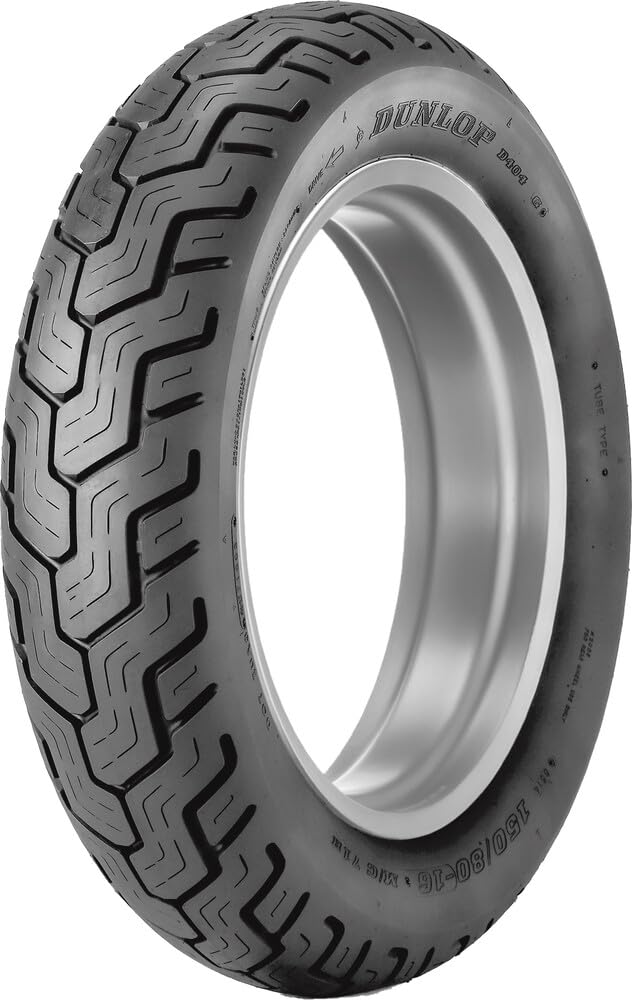
The Dunlop D404 has long been a staple in the cruiser tire segment for riders seeking a balanced combination of mileage and grip without stepping into premium pricing territory. The bias-ply construction delivers a smooth ride that absorbs road irregularities well, and the tread compound is engineered to resist the accelerated wear that plagues softer alternatives. Owners of Vulcan 800, Sportster 1200, and FXSTC models report predictable handling characteristics.
The front and rear tread patterns are optimized for water evacuation, with groove geometry that enhances wet grip without sacrificing straight-line stability. The 67 load index (677 pounds) suits standard cruisers, though riders with heavy touring accessories should verify their weight requirements. The H-speed rating provides headroom for sustained highway cruising.
Some owners noted the tire wears noticeably softer than expected — one Sportster rider reported visible wear around 4,500 miles. The 10/32nds tread depth provides decent starting rubber, but the compound formulation may not match the longevity of premium touring-specific options. Checking production dates at delivery is advisable to ensure fresh rubber.
What works
- Smooth highway ride with good shock absorption
- Reliable wet traction from tread pattern design
- Consistent handling for standard cruisers
What doesn’t
- Softer compound limits total mileage potential
- Load capacity insufficient for heavy touring loads
7. Dunlop D404 Front Motorcycle Tire

This front-specific D404 variant includes an offset center groove engineered to enhance straight-line stability, a feature particularly beneficial for cruisers sensitive to rain groove tracking. The directional tread pattern is optimized for front-wheel water evacuation, reducing hydroplaning risk in wet conditions. Owners of Yamaha V-Star 650, Kawasaki VN900B Vulcan, and similar metrics report a direct fit with no modifications required.
The bias-ply construction delivers the load-carrying capacity needed for front-end weight support while maintaining a compliant ride quality. The H-speed rating matches the rear D404 for balanced performance, and the compound formulation provides a good balance of initial grip and wear resistance. Multiple buyers confirmed the tire mounted easily and balanced with minimal weights.
Some buyers received tires with production dates from several years prior, which can affect rubber pliability and ultimate performance. Checking the DOT date code at delivery is strongly recommended. The 67 load index is adequate for standard cruisers but may not suit heavy touring machines with additional front-end accessories.
What works
- Offset groove improves straight-line stability
- Excellent water evacuation for wet riding
- Direct fit for many metric cruisers
What doesn’t
- Potential for older production date on delivery
- Not ideal for heavy touring front ends
8. Kenda K657 Challenger Street Tire

The Kenda K657 Challenger punches above its price point with a 6-ply tubeless carcass design that contributes to responsive handling and cornering confidence. The directional tread pattern is engineered to resist tracking in rain grooves — a feature typically found on more expensive tires. Owners of Electra Glides and other touring bikes report smooth road feel and impressive traction for the cost.
The H-speed rating (130 mph) is unexpected at this price level, providing a generous safety margin for highway use. The stiff sidewall construction improves turn-in response and stability during lane changes. Multiple buyers noted the tire balanced perfectly with minimal adjustment, suggesting consistent manufacturing quality.
Some riders reported noticeable road noise at highway speeds, which took time to identify as tire noise rather than a mechanical issue. While the grip in dry conditions is commendable, the wet traction may not match premium competitors. The load capacity of 677 pounds limits use on heavily equipped touring machines.
What works
- Excellent value with H-speed rating
- Stiff sidewall improves handling response
- Rain groove resistance at a budget price
What doesn’t
- Noticeable road noise at highway speeds
- Wet traction lags behind premium options
9. MMG Motorcycle Tire

The MMG tire offers a straightforward solution for riders who need a functional 130/90-16 tire for basic commuting, sidecar applications, or low-speed touring. The symmetrical tread pattern eliminates directional mounting concerns, making installation straightforward. The P-speed rating (93 mph) is sufficient for legal highway speeds but does not provide the headroom of H-rated alternatives.
The Load Range C construction with a 73 load index (803 pounds) is a surprising strength at this price point, supporting heavier bikes better than some mid-range competitors. Owner reports from sidecar users and ebike conversions confirm the tire withstands the unique wear patterns these applications produce. The MMG tire has proven particularly popular for vintage motorcycle restorations where original-spec rubber is desired.
The tread depth of 0.34 inches is modest, and the compound formulation prioritizes durability over maximum grip. Riders who push their bikes hard through corners may find the MMG tire lacking in edge grip compared to performance-oriented options. The 48 load index listed in some specifications appears to be an error — real-world use confirms the 803-pound capacity is accurate.
What works
- High load capacity for sidecar and heavy bike use
- Universal tread simplifies mounting
- Durable compound for long basic service life
What doesn’t
- Limited cornering grip compared to premium tires
- P-speed rating restricts sustained high-speed use
Hardware & Specs Guide
Bias-Ply Construction Fundamentals
Nearly all 130/90-16 cruiser tires use bias-ply construction — multiple layers of polyester or nylon cord laid at alternating angles and bonded with rubber. This design creates a stiff carcass that resists sidewall flex under heavy loads, providing the stable, planted feel cruiser riders expect. The trade-off is a firmer ride compared to radial construction, though the durability and load capacity advantages make bias-ply the dominant choice for V-twin and metric cruiser applications.
Tread Pattern Functional Differences
Directional tread patterns, identified by arrows on the sidewall, are optimized to channel water outward from the contact patch for improved wet-weather grip. Asymmetrical treads combine different rubber compounds or groove depths across the tire width to balance dry cornering traction with rain evacuation. Symmetrical patterns offer consistent wear characteristics and simplified mounting but may not evacuate water as effectively as directional designs at highway speeds.
Load Index and Speed Rating Explained
The load index number corresponds to a specific weight capacity — 67 equals 677 pounds, 73 equals 805 pounds, and 77 equals 908 pounds. Always match or exceed the original equipment load index. Speed ratings indicate the maximum service speed: P (93 mph), S (112 mph), and H (130 mph). Using a tire with a lower speed rating than the bike’s original spec reduces the safety margin at highway speeds.
Compound Hardness and Tread Life Trade-offs
Tire manufacturers formulate rubber compounds to target specific performance characteristics. Softer compounds with higher silica content deliver exceptional wet and dry grip but wear faster under heavy throttle or braking. Harder compounds with more carbon black extend tread life at the cost of ultimate cornering traction. Touring-specific tires often use medium-hardness compounds with deeper tread depths to balance mileage and all-weather confidence.
FAQ
What does 130/90-16 mean on a motorcycle tire?
Can I use a 130/90-16 tire on the front and rear of my cruiser?
How many miles should a 130/90-16 motorcycle tire last?
Is a higher speed rating always better for my cruiser?
Final Thoughts: The Verdict
For most buyers, the best 130/90-16 motorcycle tire winner is the Pirelli Night Dragon because it delivers the best balance of cornering grip, straight-line stability, and compound sophistication for cruiser and touring applications. If you prioritize wet braking performance and tire longevity, grab the MICHELIN Commander III Cruiser. And for a premium touring fitment with Harley-Davidson engineering validation, nothing beats the Dunlop D402.

Certification: BSc in Mechanical Engineering
Education: Mechanical engineer
Lives In: 539 W Commerce St, Dallas, TX 75208, USA
Md Amir is an auto mechanic student and writer with over half a decade of experience in the automotive field. He has worked with top automotive brands such as Lexus, Quantum, and also owns two automotive blogs autocarneed.com and taxiwiz.com.