A single gallon of carb cleaner sits at the heart of every serious carburetor rebuild. Whether you’re fighting gummed-up idle circuits on a vintage motorcycle or restoring a Holley four-barrel for a muscle car project, the right concentrated cleaning solution determines whether you spend an afternoon scrubbing or simply pull parts from the ultrasonic tank clean.
I’m Amir — the founder and writer behind Four Wheel Ask. My approach to parts cleaning focuses on the practical intersection of chemical formulation, material compatibility, and real-world restoration results that matter to DIY mechanics and professional builders alike.
After evaluating concentrated ultrasonic solutions, heavy-duty degreasers, and dedicated carburetor cleaners, these picks represent the strongest performers for dissolving fuel varnish, carbon deposits, and baked-on grease. This is the definitive guide to the 1 gallon carb cleaner market for any serious builder.
How To Choose The Best 1 Gallon Carb Cleaner
Not every gallon jug of cleaner works the same way. Some formulas are designed for ultrasonic tanks that use cavitation to blast contamination from jet orifices and air bleeds, while others rely on solvent action for immersion soaking or brush-on application. Understanding these distinctions prevents wasted money and damaged parts.
Dilution Ratio and Effective Volume
A concentrated 1 gallon carb cleaner that mixes 1:10 with water yields 11 gallons of useable cleaning solution. A 128-ounce concentrate that makes 8 gallons at a 1:7 ratio provides far more value than a ready-to-use jug. Always calculate the effective volume before comparing options — the gallon on the shelf may stretch much further than you think.
Metal Compatibility
Carburetors contain aluminum bodies, brass jets, zinc float bowls, and cast iron throttle plates. A cleaner safe for all of these metals prevents pitting, etching, or discoloration. Formulas that explicitly list compatibility with aluminum and brass are essential — many general degreasers attack soft metals during prolonged immersion.
Application Method
Ultrasonic cleaners require low-foaming, water-based solutions that won’t damage the tank transducer. Traditional soak cleaners rely on stronger solvents but require proper ventilation and disposal. Some products work in both scenarios. Determine whether you’re cleaning with an ultrasonic machine, a parts washer, or a simple dip bucket before purchasing.
Quick Comparison
On smaller screens, swipe sideways to see the full table.
| Model | Category | Best For | Key Spec | Amazon |
|---|---|---|---|---|
| Tillbrook Ultrasonic Cleaner Solution | Concentrate | High-volume ultrasonic cleaning | Makes 8 Gallons | Amazon |
| Durabasics Ultrasonic Cleaner Solution | Concentrate | Professional restoration projects | 1:5 Dilution Ratio | Amazon |
| CREWORKS Ultrasonic Cleaner Solution | Concentrate | Small parts and delicate metals | 34 fl. oz. Bottle | Amazon |
| 3D Grand Blast Engine Degreaser | Degreaser | Engine bay and exterior cleaning | Biodegradable Formula | Amazon |
| Griot’s Garage Engine Cleaner | Degreaser | Spray-on engine bay detailing | Ready-to-Use Gallon | Amazon |
In‑Depth Reviews
1. Tillbrook Ultrasonic Cleaner Solution

The Tillbrook concentrate delivers the highest effective volume in this lineup. A single 128-ounce jug mixed at 2 cups per gallon produces eight gallons of working solution, easily covering multiple carburetor rebuilds or a full set of cylinder heads. The formula targets fuel varnish, gum, and carbon deposits specifically, which is exactly what ultrasonic cavitation needs to dislodge from idle circuit passages and emulsion tubes.
Metal compatibility is broad — aluminum, brass, cast iron, copper, and zinc all pass the compatibility test without etching or discoloration during extended soak cycles. The solution is free from unnecessary harsh chemicals while maintaining enough solvency to handle heavily carbonized throttle plates and valve seats. The 1:7 dilution ratio also means the cost per gallon of working solution is low enough for regular maintenance cleaning without hesitation.
Where this product really stands out is the balance between cleaning aggression and surface safety. Many ultrasonic concentrates are either too weak for carbon removal or too aggressive for aluminum. Tillbrook hits the sweet spot, making it the top choice for the builder who needs one solution for every carburetor, from a vintage Keihin to a modern Edelbrock.
What works
- Makes 8 gallons of usable solution from one jug
- Safe on aluminum, brass, copper, and cast iron
- Excellent carbon and varnish dissolution in ultrasonic tanks
What doesn’t
- Requires an ultrasonic machine for best results
- 128-ounce jug is heavy and bulky to pour
2. Durabasics Ultrasonic Cleaner Solution

Durabasics formulates its concentrated solution at a stronger 1:5 dilution ratio, meaning each gallon of concentrate yields six gallons of working fluid. This higher concentration targets stubborn carbon deposits and varnish layers that have baked onto carburetor bodies over years of use. The fragrance-free formulation avoids the strong chemical odors typical of solvent-based cleaners, a welcome feature for indoor shop use.
The cleaning action in an ultrasonic tank is fast — ultrasonic bubbles penetrate jet orifices and accelerator pump passages that manual brushing cannot reach. The solution handles aluminum, brass, copper, and cast iron without visible corrosion, even when parts soak for extended cycles. For heavily carbonized motorcycle carburetors that have sat for a decade, this formula reduces the number of cleaning cycles needed.
The packaging is practical with a wide mouth for easy pouring into ultrasonic reservoirs. The 1:5 ratio does mean you use more concentrate per gallon than Tillbrook, so the per-use cost is slightly higher, but for deeply fouled parts the extra cleaning power justifies the difference. This is the go-to for restoration work where parts arrive caked in varnish.
What works
- Stronger 1:5 ratio tackles heavy carbon and varnish
- Safe on multiple metal types including aluminum
- Fragrance-free formula for indoor use
What doesn’t
- Higher concentrate use per cleaning cycle
- Best performance requires an ultrasonic machine
3. CREWORKS Ultrasonic Cleaner Solution

CREWORKS offers the most economical entry point for ultrasonic carb cleaning. The 34-ounce bottle dilutes at a 1:10 ratio with water, stretching into over 3.7 gallons of working solution. This is ideal for the home mechanic who cleans one or two carburetors per season and doesn’t need a full gallon of concentrate sitting on the shelf.
The formula is gentle on delicate surfaces — brass, iron, titanium, and plastic components all survive immersion without damage. This makes it suitable for cleaning not just carburetors but also fuel injectors, generator parts, and heat exchanger components. The cleaning action effectively breaks down grease and wax buildup but may require longer cycle times for heavy carbon deposits compared to stronger concentrates.
The smaller bottle size is a practical advantage for ultrasonic tanks with capacities under 2 liters. You’re not forced to store a massive jug, and the lower upfront cost reduces the barrier to trying ultrasonic cleaning for the first time. For light to moderate carburetor maintenance, this is the most cost-effective option available.
What works
- Low cost and small footprint for occasional use
- Safe on plastics and multiple metals
- Dilutes 1:10 for excellent value per gallon mixed
What doesn’t
- Less aggressive on heavy carbon deposits
- Not cost-effective for high-volume cleaning
4. 3D Grand Blast Engine Degreaser

3D Grand Blast takes a different approach — this is a heavy-duty engine degreaser rather than an ultrasonic-specific carb cleaner. Its fast-acting formula breaks down caked-on oil, grease, and road grime on engine bays, wheel wells, and undercarriages without the need for scrubbing. This is the product to reach for when you need to clean the outside of the engine before disassembly.
The biodegradable formulation is safe on metal, plastic, paint, and rubber surfaces, which makes it versatile for detailing work. Unlike some degreasers that leave a white residue or cause rubber seals to dry out, Grand Blast rinses clean with no staining. The low-odor formula is a practical advantage when working in a closed garage.
This is not a substitute for an ultrasonic carb cleaner — it won’t clean internal fuel passages or dissolve varnish inside a carburetor body. However, for pre-cleaning greasy engine components before rebuild, or for maintaining a clean work environment, this degreaser fills a necessary role alongside a dedicated carb cleaner concentrate.
What works
- Fast-acting degreasing without scrubbing
- Safe on paint, plastic, and rubber surfaces
- Biodegradable and low-odor formula
What doesn’t
- Not formulated for internal carburetor cleaning
- Ineffective on fuel varnish and carbon deposits
5. Griot’s Garage Engine Cleaner
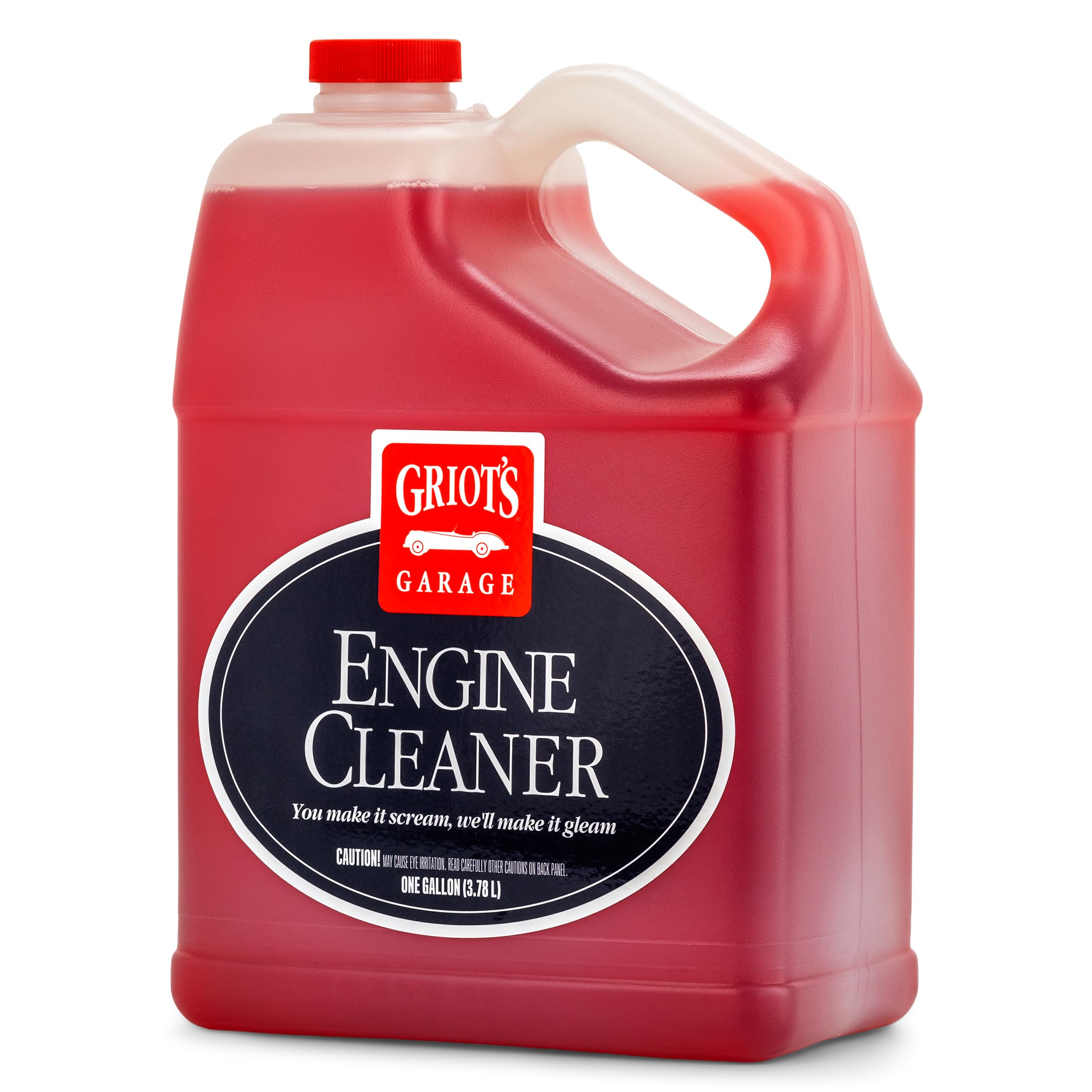
Griot’s Garage Engine Cleaner is a ready-to-use, spray-on formula designed for engine bay detailing rather than immersion cleaning. It breaks down oil, dirt, and grime on external engine components, wheel wells, and undercarriages with minimal scrubbing. The gallon jug fills a spray bottle multiple times, making it convenient for ongoing maintenance.
The formula lifts buildup and residue effectively, leaving the engine compartment looking clean without the dull film some degreasers leave behind. It works well in combination with Griot’s Citrus Multi-Surface Cleaner for tackling neglected engine bays. The spray-and-wipe approach is fast, but this cleaner is not suitable for internal carburetor passages or ultrasonic use.
For the mechanic who wants a clean engine bay during a rebuild, this is a good companion product. It serves a different purpose than the concentrated ultrasonic solutions at the top of this list. Use it for the exterior cleaning phase, then switch to a dedicated carb cleaner for the internal fuel system components.
What works
- Convenient ready-to-use spray formula
- Cleans exterior grime without residue
- Works on multiple engine bay surfaces
What doesn’t
- Not effective for internal carburetor cleaning
- Not designed for ultrasonic or immersion use
Hardware & Specs Guide
Dilution Ratio
The ratio of concentrate to water determines how many gallons of working solution a jug produces. A 1:10 ratio yields 11 gallons from one gallon of concentrate. A 1:5 ratio yields 6 gallons. Higher ratios offer more cleaning power per gallon of working solution but consume concentrate faster. Match the ratio to the severity of carbon buildup you typically encounter.
Metal Safety Profile
Carburetors combine aluminum bodies with brass jets, zinc components, and cast iron parts. A cleaner safe for all these metals prevents etching of aluminum surfaces, tarnishing of brass, and corrosion of iron. Look for explicit compatibility lists that include aluminum and brass — these are the most chemically sensitive metals in a carburetor.
FAQ
Can I use an engine degreaser in an ultrasonic cleaner for carburetor parts?
How long should I run the ultrasonic cycle when cleaning a carburetor?
Will concentrated carb cleaner damage aluminum carburetor bodies?
How do I dispose of used carb cleaner solution?
Final Thoughts: The Verdict
For most buyers, the 1 gallon carb cleaner winner is the Tillbrook Ultrasonic Cleaner Solution because it makes 8 gallons of working solution, handles all common carburetor metals safely, and removes carbon and varnish effectively in an ultrasonic tank. If you face heavily carbonized parts that need extra cleaning aggression, grab the Durabasics Ultrasonic Cleaner Solution. And for the occasional home mechanic who wants to try ultrasonic cleaning without a large investment, nothing beats the CREWORKS Ultrasonic Cleaner Solution.

Certification: BSc in Mechanical Engineering
Education: Mechanical engineer
Lives In: 539 W Commerce St, Dallas, TX 75208, USA
Md Amir is an auto mechanic student and writer with over half a decade of experience in the automotive field. He has worked with top automotive brands such as Lexus, Quantum, and also owns two automotive blogs autocarneed.com and taxiwiz.com.