Not all brake cleaners are built the same, and grabbing the wrong formula can leave residue on rotors, damage painted calipers, or fail to cut through baked-on brake dust. Whether you are refreshing pads, chasing a squeal, or detailing a show-quality wheel setup, the solvent chemistry, flash point, and application method determine whether you get a clean part or a messy headache.
I’m Amir — the founder and writer behind Four Wheel Ask. My approach to automotive chemistry focuses on comparing solvent types, evaporation rates, and material compatibility data so you can choose a product that actually fits your brake service or detailing workflow without guesswork.
After sifting through dozens of formulations and owner feedback across service bays and garage forums, the proven best 1 gallon brake cleaner for professional-grade brake service is the CRC Brakleen 5051 non-chlorinated formula.
How To Choose The Best 1 Gallon Brake Cleaner
Selecting a brake cleaner involves more than grabbing the cheapest aerosol on the shelf. Solvent type, residue behavior, flammability, and container format all affect how well the product performs on rotors, calipers, drums, and wheel surfaces. Understanding a few key specifications will help you match the formula to your specific service or detailing task.
Chlorinated vs. Non-Chlorinated Solvents
Chlorinated brake cleaners offer strong solvency and are non-flammable, making them a traditional choice for shops that prioritize safety around ignition sources. Non-chlorinated formulas reduce health risks and environmental impact while still delivering excellent cleaning power on grease, brake dust, and oil. Many regions now regulate volatile organic compounds, so checking local VOC compliance is essential before buying a bulk container.
Residue Profile and Drying Speed
A true brake parts cleaner should evaporate completely without leaving an oily film or sticky residue that could attract future dust or contaminate fresh brake pads. Fast-drying formulas allow you to reassemble components immediately, while slower-evaporating options may provide longer dwell time for soaking through heavy carbon buildup. Always verify that the cleaner is labeled residue-free for brake system applications.
Container Format and Application Method
One-gallon jugs are economical for shop use and can be transferred to a spray bottle, aerosol can, or parts washer. Aerosol cans offer pressurized delivery for targeted cleaning of calipers and backing plates, while trigger-spray bottles give you more control over saturation. Concentrated formulas require dilution but deliver more volume per dollar, making them ideal for high-volume detailing operations.
Quick Comparison
On smaller screens, swipe sideways to see the full table.
| Model | Category | Best For | Key Spec | Amazon |
|---|---|---|---|---|
| CRC Brakleen 5051 | Brake Cleaner | Professional Brake Service | 1 Gal, Non-Chlorinated | Amazon |
| P&S Brake Buster | Wheel Cleaner | Wheel & Tire Detailing | 1 Gal, Non-Acid | Amazon |
| Meguiar’s D14301 | Wheel Cleaner | Quick Wheel Cleaning | 1 Gal, Pre-Diluted | Amazon |
| Malco Red Thunder | Degreaser | Heavy-Duty Degreasing | 1 Gal, Concentrated | Amazon |
| Nanoskin NA-NAD128 | Wheel Cleaner | Cling Foam Action | 1 Gal, Concentrated | Amazon |
| Simple Green 19128 | Degreaser | Parts Washer Use | 1 Gal, Concentrated | Amazon |
| Pyroil PYNVOC15-6 | Brake Cleaner | Multi-Pack Value | 15 oz (6-Pack) | Amazon |
| Johnsen’s 2413 | Brake Cleaner | Bulk Aerosol Pack | 14 oz (12-Pack) | Amazon |
| Denco #1930 | Brake Cleaner | Low-Odor Cleaning | 15.3 oz (12-Pack) | Amazon |
| GUNK M720 | Brake Cleaner | Non-Flammable Cleaning | 19 oz (12-Pack) | Amazon |
| OUMSIS 05228 | Brake Cleaner | Entry-Level Cleaning | 14.82 oz (2-Pack) | Amazon |
In‑Depth Reviews
1. CRC Brakleen Non-Chlorinated Brake Parts Cleaner 5051

CRC Brakleen has been a staple in professional service bays for decades, and the 5051 non-chlorinated formula in a one-gallon jug brings that trusted performance to any shop or home garage. The solvent blend quickly dissolves brake fluid, grease, oil, and road grime without leaving a film that could compromise pad bite or rotor contact. Because it is non-chlorinated, you avoid the harsh odor and health concerns associated with traditional chlorinated cleaners while still getting rapid evaporation that lets you reassemble components without delay.
The gallon format is ideal for transferring into your own spray bottle or for use in a parts washer, giving you flexibility that aerosol cans cannot match. CRC specifies that this formula is safe for brake parts, linings, calipers, and drums, making it a one-stop solution for a full brake job. The bottle is sturdy and includes a handle for easy pouring, and the 50-state VOC compliance means you can order it anywhere without regional restrictions.
Owner feedback consistently highlights the consistent spray pattern when transferred to a trigger bottle and the fact that it does not leave behind a slippery residue that some cheaper cleaners do. For a shop or serious DIYer who goes through brake cleaner regularly, this jug delivers the lowest cost per ounce in a proven formulation that major manufacturers trust.
What works
- Non-chlorinated formula with fast evaporation and no residue
- 50-state VOC compliant and safe for all brake system metals
- Economical gallon size with comfortable pour spout
What doesn’t
- Not sold in Catalina Island due to local restrictions
- Requires a separate spray bottle for aerosol-style application
2. P & S Professional Brake Buster Wheel and Tire Cleaner

P&S Brake Buster sits at the intersection of professional detailing chemistry and practical wheel maintenance. This non-acid formula is engineered to lift brake dust, iron particles, and road contaminants without etching clear coats or corroding bare aluminum. The foaming action when used through a sprayer provides extended dwell time on vertical wheel faces, allowing the surfactants to break down bonded grime before rinsing.
One of the standout attributes is the protective coating that remains after cleaning, which helps repel future brake dust and oxidation. This reduces the frequency of deep cleaning for daily-driven vehicles and keeps wheels looking fresher between washes. The one-gallon size offers excellent value for detailers who work on multiple vehicles per week, and the concentrate can be diluted for lighter maintenance washes.
Being part of the Renny Doyle Double Black Collection adds credibility for enthusiasts who follow professional detailing standards. The formula is safe for chrome, painted, powder-coated, and steel wheels, so you do not need separate products for different wheel types. Owner reports consistently praise the cling and the reduced effort required to remove baked-on dust compared to generic wheel cleaners.
What works
- Foaming action clings to vertical surfaces for thorough cleaning
- Leaves a protective layer that resists future brake dust buildup
- Safe on all wheel finishes including clear coat and chrome
What doesn’t
- Designed primarily for wheels rather than bare brake rotors
- Concentrate dilution ratio requires measuring for consistent results
3. Meguiar’s D14301 Non Acid Tire and Wheel Cleaner

Meguiar’s D14301 takes the guesswork out of wheel cleaning by delivering a pre-diluted, ready-to-use formula that requires no mixing or measuring. This non-acid cleaner is designed to break down brake dust, road grime, light grease, and dirt without damaging clear-coated, painted, or chrome wheels. The one-gallon bottle provides enough volume for multiple full details, making it a practical choice for both weekend enthusiasts and mobile detailers who want consistent results without the complexity of concentrate ratios.
The formula is engineered with premium surfactants that lift contaminants without harsh etching, and the pH-balanced chemistry helps preserve wheel finishes over repeated use. Meguiar’s backs this product with decades of automotive surface care research, so the cleaning agents are calibrated to work effectively on both factory and aftermarket wheels. The gallon jug includes a simple pour spout for filling spray bottles or foam guns.
User feedback emphasizes the convenience of the pre-diluted format and the reliable cleaning power on moderate brake dust accumulation. While it may struggle with heavily caked-on iron deposits from tracked vehicles, it handles daily driving grime with ease. For detailers who value simplicity and trusted brand chemistry, this is a solid mid-range option that delivers predictable performance every time.
What works
- Pre-diluted formula requires no mixing or measuring
- Non-acid and safe for all wheel types and finishes
- Trusted Meguiar’s chemistry with consistent quality
What doesn’t
- Less effective on heavy, baked-on iron deposits
- Cannot be diluted further for lighter cleaning tasks
4. Malco Red Thunder Automotive Degreaser 102301
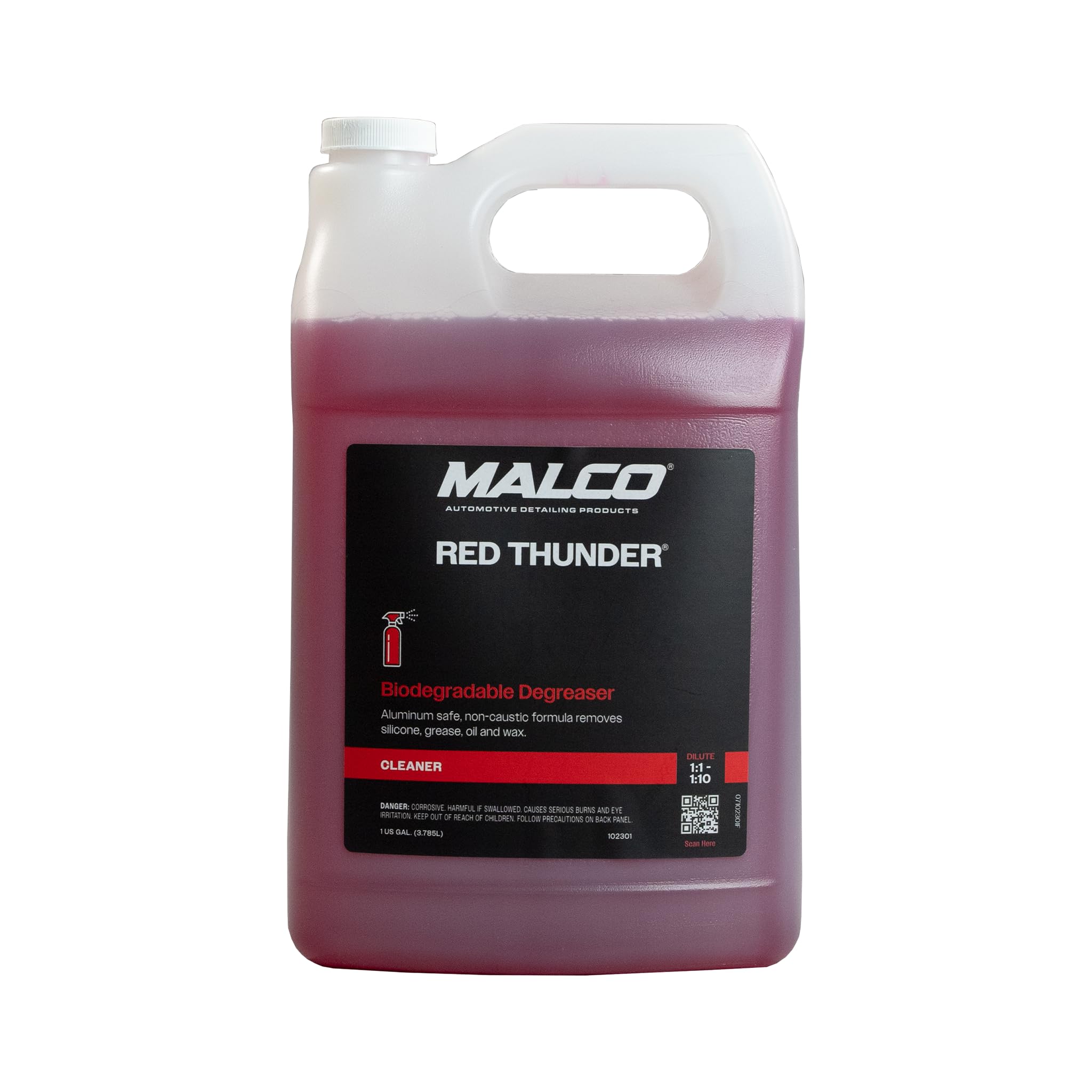
Malco Red Thunder is a high-performance concentrated degreaser that punches above its weight class when it comes to dissolving heavy grease, oil, and carbon deposits on engines, wheels, and tires. The formula uses a blend of biodegradable surfactants that cut through baked-on grime quickly without relying on harsh solvents. This makes it a strong candidate for pre-cleaning brake components before disassembly, especially when dealing with years of accumulated road film and grease.
The concentrate can be diluted at various ratios depending on the task, giving you control over cleaning strength. At full strength, it handles tire rubber rejuvenation and engine bay degreasing, while lighter dilutions work well on interior plastics and carpets. The residue-free rinsing property ensures that no film remains on aluminum parts or painted surfaces, which is critical when preparing brake calipers for painting or reassembly.
Malco has been producing professional-grade automotive products since 1953, and the Red Thunder formulation reflects that institutional knowledge. The one-gallon container includes dilution instructions and is suitable for use in foam sprayers, trigger bottles, or parts washers. Feedback from body shop and detail professionals frequently mentions the versatility and the eco-friendly profile as reasons for switching from solvent-based degreasers.
What works
- Concentrated formula offers flexible dilution ratios
- Biodegradable and phosphate-free with low environmental impact
- Residue-free finish suitable for aluminum and painted surfaces
What doesn’t
- Not a dedicated brake cleaner; may require more agitation on rotors
- Stronger dilutions can be aggressive on soft plastics if left too long
5. Nanoskin Non Acid Professional Wheel & Tire Cleaner NA-NAD128

Nanoskin has engineered the NA-NAD128 wheel and tire cleaner around a unique Xtreme Cling technology that produces a thick, stable foam capable of adhering to vertical wheel faces and tire sidewalls for extended dwell time. This design philosophy allows the cleaning agents to work on brake dust, oil, dirt, and light corrosion without the need for aggressive scrubbing. The concentrated formula mixes at a 4:1 ratio, meaning a single gallon yields five gallons of ready-to-use cleaner.
The non-acid chemistry is safe for clear-coated, powder-coated, chrome, alloy, and factory-painted wheels, eliminating the risk of etching or discoloration that comes with acidic wheel cleaners. The high-sudsing action is particularly effective on tires, where it lifts silicone residues and old dressings in preparation for a fresh coat of tire shine. For detailers who work across a range of vehicle types, this versatility simplifies inventory.
Owner feedback highlights the foam stability and the ease of rinsing, with minimal residue left behind. The formula performs well in foam sprayers and IK pump sprayers, and the concentrated format reduces storage space requirements. For mobile detailers or shop owners who clean wheels on every vehicle that comes through the bay, this product delivers professional foam aesthetics and reliable cleaning power.
What works
- Thick foaming action clings to vertical surfaces for deep cleaning
- Concentrated 4:1 ratio provides excellent value per gallon
- Safe on all wheel finishes including clear coat and chrome
What doesn’t
- Not intended for bare brake rotor or drum cleaning
- Foam performance depends on using a compatible sprayer
6. Simple Green 19128 Crystal Industrial Cleaner/Degreaser
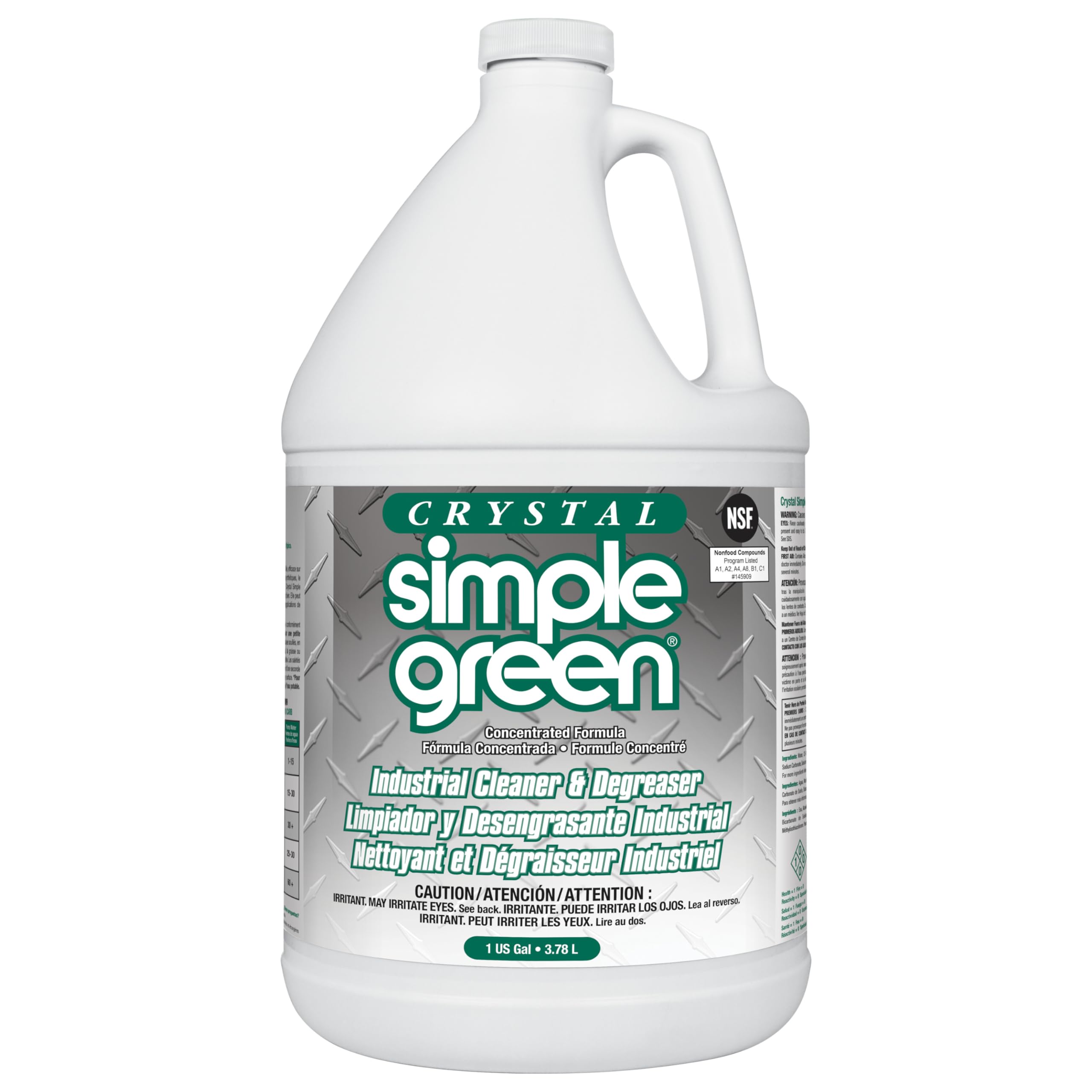
Simple Green Crystal is the fragrance-free and dye-free variant of the iconic industrial cleaner, formulated specifically for critical cleaning applications where added scents or colors could interfere with processes. The concentrated formula is non-toxic, biodegradable, non-flammable, and non-corrosive, making it one of the safest options for use in parts washers and enclosed shop environments. While it is not marketed strictly as a brake cleaner, its degreasing ability on oil, grease, and light carbon deposits makes it effective for pre-cleaning brake components.
The versatility of this cleaner is a major advantage for shops that need one solution for multiple tasks. It works on engines, tools, floors, and parts without the need for multiple specialty products. The lack of fragrance is a welcome feature for technicians who are sensitive to strong chemical odors, and the non-flammable classification improves safety when cleaning near ignition sources.
Feedback from industrial and automotive users emphasizes the cleaning power relative to the mild formulation, though some note that heavy brake dust may require additional dwell time or agitation. The one-gallon container provides a good entry point for testing the product before committing to larger bulk sizes. For environmentally conscious shops that prioritize safety and versatility, this degreaser fills a useful role.
What works
- Non-toxic, biodegradable, and non-flammable for safe shop use
- Fragrance-free formula ideal for scent-sensitive environments
- Extremely versatile across parts, tools, and surfaces
What doesn’t
- Not specifically formulated for brake systems or heavy carbon
- May require more dwell time or agitation on baked-on brake dust
7. Pyroil Non-Chlorinated Brake Parts Cleaner PYNVOC15-6
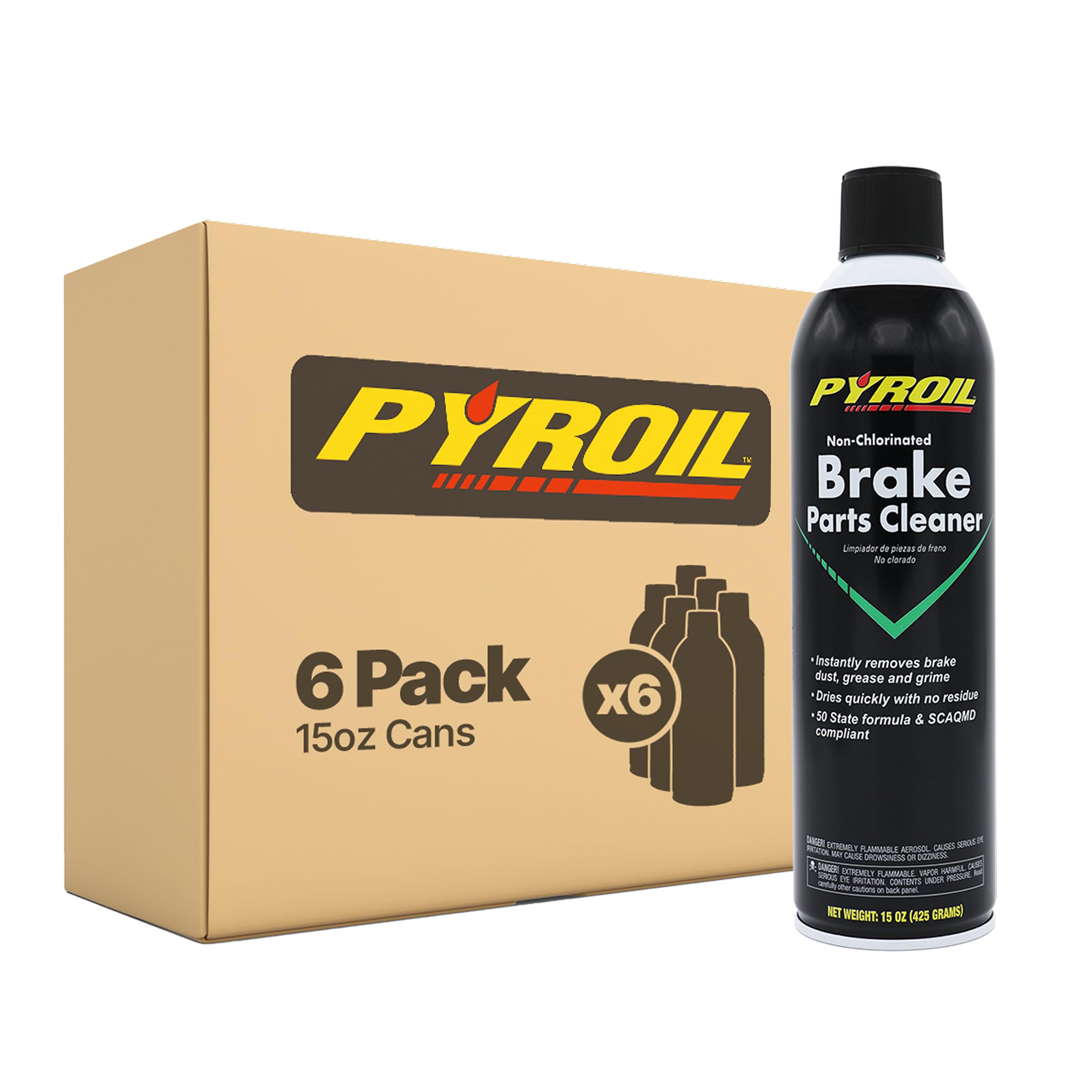
Pyroil delivers a practical six-pack of non-chlorinated brake cleaner aerosol cans that check all the boxes for a professional brake service. The high-pressure spray blasts away brake dust, grease, and oil film from rotors, calipers, drums, and CV joints without leaving a residue that could affect brake performance. The fast-drying formula evaporates quickly, allowing immediate reassembly and reducing turnaround time on brake jobs.
The non-chlorinated formulation avoids the harsh chemical odor associated with traditional chlorinated cleaners while still providing aggressive cleaning power. Pyroil states VOC compliance for all 50 states, so there are no restrictions on where you can use or purchase this product. The six-pack format ensures you have enough cans on hand for multiple brake services without needing to reorder frequently.
User feedback notes that the spray pattern is consistent from full to nearly empty, which is a common complaint with cheaper aerosol brake cleaners. The cans are sized at 15 ounces, providing a good balance between portability and volume. For home mechanics who perform brakes on several vehicles per year, this multi-pack offers a cost-effective way to keep a fresh can in the toolbox without worrying about running dry mid-job.
What works
- High-pressure spray delivers strong cleaning without residue
- 50-state VOC compliant and non-chlorinated for low odor
- Six-pack format provides good value for regular brake work
What doesn’t
- Aerosol format generates more waste than a bulk gallon jug
- Test on plastics and painted surfaces before heavy use
8. Johnsen’s 2413-12PK Non-Chlorinated Brake Parts Cleaner

Johnsen’s delivers a bulk twelve-pack of non-chlorinated brake parts cleaner that is built for high-volume shops and serious DIYers who go through multiple cans per week. Each 14-ounce aerosol can is formulated to remove oil, grease, brake fluid, and road contaminants without leaving a residue that could compromise brake system performance. The non-chlorinated chemistry keeps the odor manageable while still providing the quick evaporation needed for efficient brake service.
The twelve-pack format ensures you always have a fresh can ready, eliminating the frustration of a partially clogged nozzle or a can that runs out halfway through a job. The cleaner is approved for use on all ABS, disc, and drum brake systems, making it a universal solution for most passenger vehicles and light trucks. The residue-free claim is backed by consistent owner reports that confirm clean, dry surfaces after evaporation.
Feedback from fleet maintenance and independent shop technicians points to the consistent spray pressure and the value proposition of the bulk pack. While the individual cans are smaller than some competitors at 14 ounces, the twelve-pack total volume provides substantial coverage for the investment. For professionals who prioritize having a dedicated brake cleaner rather than a multi-purpose degreaser, this pack delivers focused performance.
What works
- Bulk twelve-pack ensures ample supply for high-volume brake work
- Non-chlorinated formula with fast evaporation and no residue
- Compatible with ABS, disc, and drum brake systems
What doesn’t
- Individual cans are smaller than some competing aerosol options
- Not available in regions that regulate VOC content of consumer products
9. Denco #1930 Brake & Parts Cleaner Spray
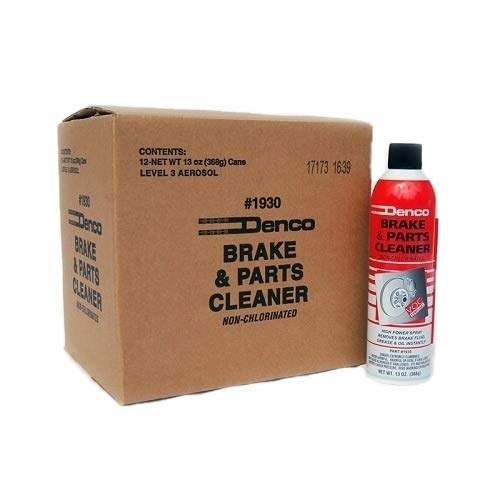
Denco #1930 is an aggressive non-chlorinated brake and parts cleaner that prioritizes fast drying and low odor without sacrificing solvency. The 15.3-ounce aerosol cans in this case of twelve deliver pressurized cleaning power for calipers, pads, rotors, and other brake line system components. The formula is designed to leave minimal residue, reducing the need for wiping or secondary rinsing before reassembly.
The aggressive solvent blend tackles heavy grease, oil, and brake dust buildup that milder cleaners struggle with, making it suitable for restoration work or components with years of accumulated grime. Denco states that the formula is safe for ABS components, calipers, pads, and rotors, giving you confidence to use it across the entire brake system. The case of twelve provides a substantial inventory for a busy shop or for stocking up ahead of a project season.
Owner reports emphasize the fast evaporation rate and the reduced chemical smell compared to chlorinated alternatives. Some users note that the spray nozzle delivers a focused stream, which is useful for targeting specific areas but may require more passes for large surfaces. For technicians who value quick turnaround and minimal solvent odor in the shop, this bulk pack is a strong choice.
What works
- Fast-drying formula with low odor for comfortable shop use
- Aggressive solvent blend handles heavy grease and carbon
- Safe for ABS, calipers, pads, and rotors
What doesn’t
- Focused spray stream may require more passes on large components
- Case of twelve may be excessive for infrequent DIY users
10. GUNK M720-12PK Brake Parts Cleaner
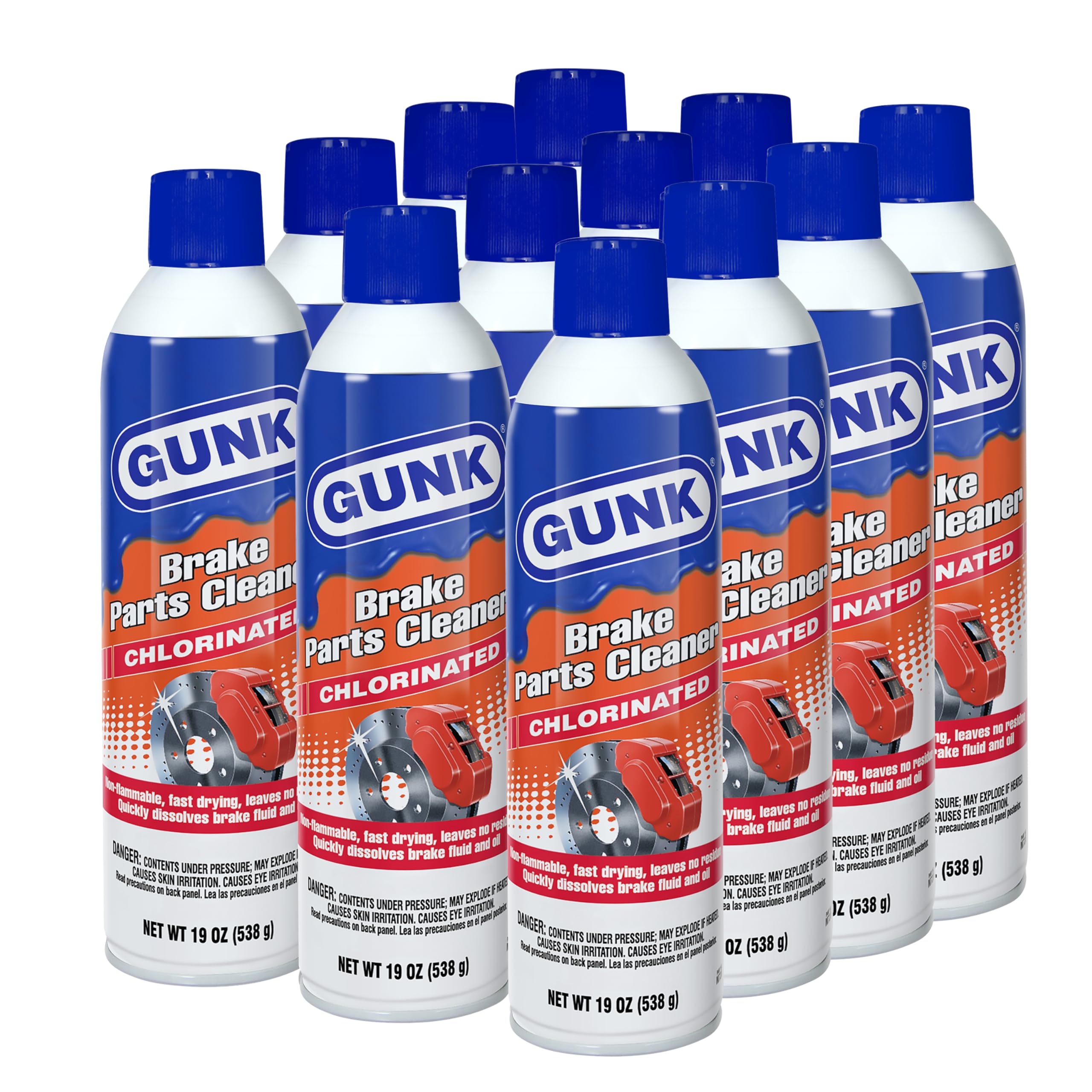
GUNK M720 is a chlorinated brake parts cleaner that stands out for its non-flammable formulation, a critical advantage in shops where open flames, sparks, or hot surfaces are present. The chlorinated chemistry provides aggressive solvency that quickly penetrates and lifts brake dust, grease, and oil from pads, rotors, and calipers without the fire risk associated with flammable solvent blends. Each 19-ounce can in this twelve-pack offers a generous volume for extended use.
The fast-drying, no-residue formula allows for immediate reassembly after cleaning, and the chlorinated base ensures that even stubborn carbon deposits are dissolved effectively. GUNK has a long history in the automotive chemical market, and this product reflects the brand’s focus on professional-grade cleaning. The twelve-pack format is well-suited for shops that go through multiple cans daily and want the security of a non-flammable solution.
Owner feedback consistently mentions the non-flammable safety feature as the primary reason for choosing this product over alternatives. The larger 19-ounce can size means fewer can changes during a full brake job. However, the chlorinated formula carries a stronger odor and may not be legal in all regions depending on local VOC regulations, so checking regional compliance before purchasing is advised.
What works
- Non-flammable formula improves safety near ignition sources
- Chlorinated chemistry provides aggressive cleaning power
- Larger 19-ounce cans reduce frequency of can changes
What doesn’t
- Chlorinated formula has stronger chemical odor
- May be restricted in regions with strict VOC regulations
11. OUMSIS Non-Chlorinated Brake Cleaner Spray Can 05228
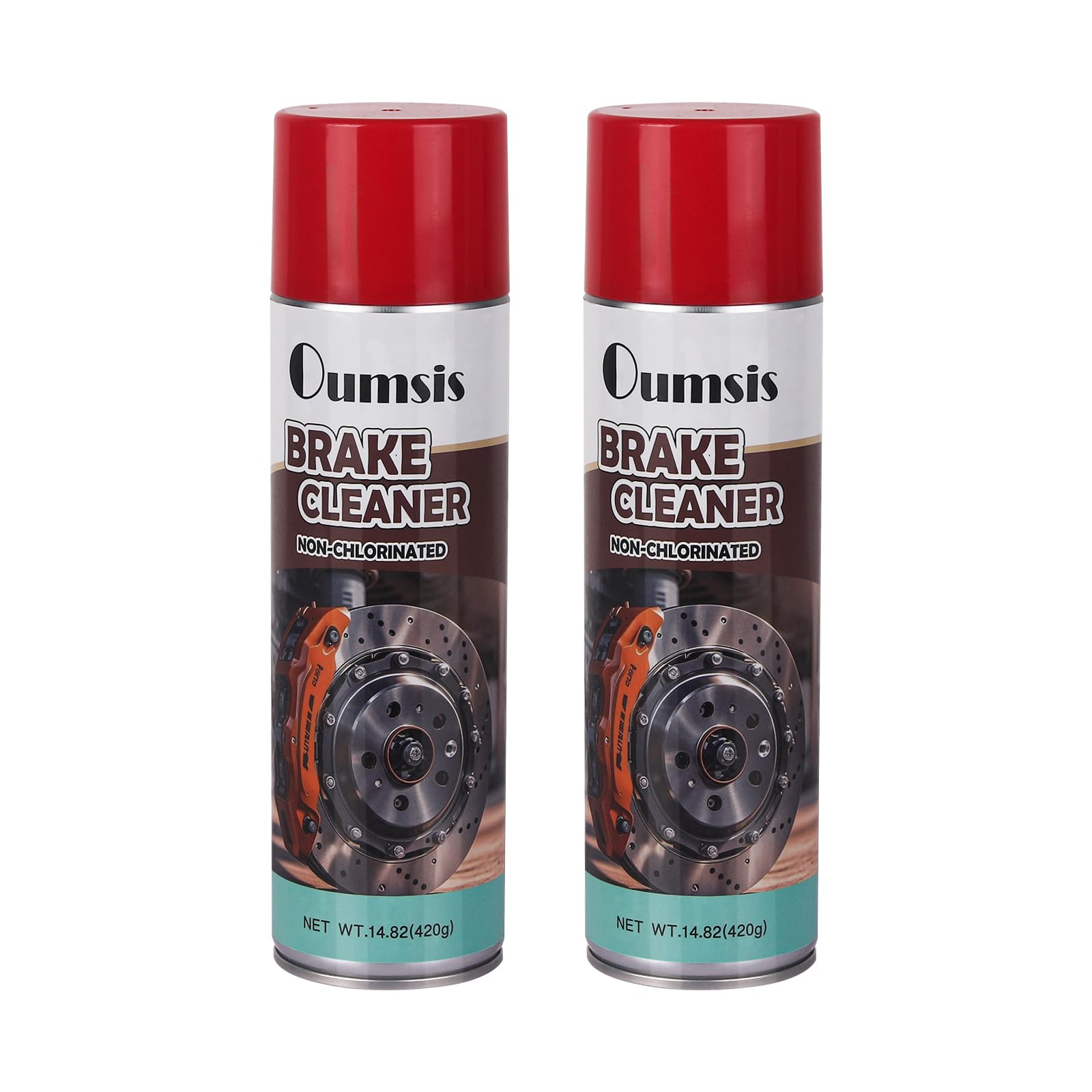
OUMSIS offers a budget-friendly entry point into non-chlorinated brake cleaning with a two-pack of 14.82-ounce aerosol cans that emphasize safety and ease of use. The advanced safety formula is designed to be non-toxic, low odor, and non-corrosive, making it suitable for home garage users who are sensitive to harsh chemicals or working in enclosed spaces. The cleaner is safe for all brake system components including calipers, springs, pads, and discs.
The high-pressure spray system maintains consistent delivery from full to empty, and the nozzle supports horizontal, vertical, and inverted spraying for accessing tight crevices around calipers and backing plates. The fast-evaporating formula leaves no residue, so parts are ready for service immediately after cleaning. The two-pack provides enough volume for several brake jobs without committing to a bulk case.
Owner feedback notes that the cleaning power is adequate for routine brake dust and light grease but may require more saturation on heavily carbonized components. The low-odor profile is frequently mentioned as a positive for at-home use. For DIYers who perform brake maintenance once or twice a year and want a safer, lower-investment option, this two-pack delivers functional performance without the upfront cost of larger bulk formats.
What works
- Low-odor, non-toxic formula ideal for home garage use
- Versatile spray nozzle works in horizontal, vertical, and inverted positions
- Two-pack provides sufficient volume for occasional brake service
What doesn’t
- Cleaning power is moderate compared to professional-grade solvents
- Smaller can size may require multiple cans for a full brake job
Hardware & Specs Guide
Solvent Chemistry
Brake cleaners rely on either chlorinated or non-chlorinated solvents. Chlorinated formulas (perchloroethylene, trichloroethylene) offer strong solvency and are non-flammable but carry health risks and environmental restrictions. Non-chlorinated options use hydrocarbon blends that are safer for the user and the planet, though some may be flammable. Always check the safety data sheet for flash point and handling requirements before use.
Residue and Drying Characteristics
A quality brake cleaner should evaporate completely within seconds to minutes, leaving no oily film or particulate residue. Residue can contaminate fresh brake pads, reduce friction coefficient, and attract future dust. Fast-drying formulas allow immediate reassembly, while slower-evaporating options may be useful for soaking through heavy carbon deposits but require longer wait times before component installation.
VOC Compliance and Regional Restrictions
Volatile organic compound regulations vary by state, with California and other CARB states enforcing the strictest limits. Non-chlorinated cleaners are generally easier to formulate for 50-state compliance, while some chlorinated products face restrictions in certain regions. Always verify that your chosen product is labeled for sale in your state, especially when ordering online.
Container Format and Application Equipment
Brake cleaners come in aerosol cans, trigger-spray bottles, and bulk gallons. Aerosols provide pressurized delivery for targeted cleaning and are convenient for quick jobs. Bulk gallons offer the lowest cost per ounce and can be transferred to spray bottles or parts washers. Concentrated degreasers require dilution with water and are best suited for high-volume detailing operations rather than direct brake component cleaning.
FAQ
Can I use a wheel and tire cleaner on brake rotors and calipers?
What is the difference between chlorinated and non-chlorinated brake cleaner?
How do I choose between aerosol and gallon jug formats?
Is it safe to use brake cleaner on painted calipers?
Do I need to remove the wheel to clean brake components effectively?
Final Thoughts: The Verdict
For most buyers, the best 1 gallon brake cleaner winner is the CRC Brakleen 5051 because it combines proven non-chlorinated chemistry, 50-state VOC compliance, and a practical gallon format that works for both professional shops and serious DIYers. If you need a dedicated wheel and tire cleaner with protective properties, grab the P&S Brake Buster. And for heavy-duty degreasing that also handles engines and interiors, nothing beats the versatility of the Malco Red Thunder concentrate.

Certification: BSc in Mechanical Engineering
Education: Mechanical engineer
Lives In: 539 W Commerce St, Dallas, TX 75208, USA
Md Amir is an auto mechanic student and writer with over half a decade of experience in the automotive field. He has worked with top automotive brands such as Lexus, Quantum, and also owns two automotive blogs autocarneed.com and taxiwiz.com.