The 1 1/4 exhaust flex pipe is a universal band-aid that gets welded or clamped into the most punishing real estate on a vehicle — right between the engine’s violent shake and the rigid cat-back system. Pick a pipe with thin walls or low-grade steel, and you are signing up for a rattle, a leak, or a full re-do inside six months. The right flex pipe shrugs off thermal cycling, soaks up engine vibration, and keeps the exhaust sealed through Michigan winters and desert summers alike. Every product here was evaluated on its wall construction, material grade, and real-world ability to handle misalignment without splitting.
I’m Amir — the founder and writer behind Four Wheel Ask. I’ve spent the last decade dissecting automotive component specs, comparing metallurgical differences in exhaust materials, and aggregating long-term owner feedback to separate durable universal-fit parts from the shelf stock that should have stayed on a warehouse pallet.
The challenge is that a flex pipe lives inside a brutal temperature and vibration envelope that cheap steel simply cannot handle. I have compiled the definitive breakdown to help you identify the 1 1/4 flex exhaust pipe that will actually survive the undercarriage conditions it was designed for.
How To Choose The Best 1 1/4 Flex Exhaust Pipe
The 1 1/4 flex exhaust pipe gets selected based on three non-negotiable factors: the material’s corrosion resistance, the wall’s ability to flex without cracking, and the length that matches your chassis layout. A 72-inch pipe works for a long wheelbase truck with a cat-back system far from the manifold, while a 16-inch section is all you need for a short header-to-cat connection. Skimp on metallurgy, and you will be cutting out a welded section that flaked apart from the inside out.
Material Grade and Corrosion Resistance
304 stainless steel contains 18% chromium and 8% nickel, forming a passivation layer that resists the acidic condensate forming inside the exhaust during cold starts. Galvanized steel relies on a zinc coating that burns off at weld temperatures, leaving bare carbon steel exposed to rust. If you live in a region that uses road salt, or your vehicle generates short-trip moisture, the 304-grade pipe is the only choice that avoids pinhole leaks within two years.
Construction and Wall Flexibility
Single-roll-band construction creates a continuous helix that distributes flex stress evenly along the pipe length. Multi-ply or seamed tubes concentrate bending stress at the weld line, accelerating fatigue cracks. The outside diameter of a 1 1/4 pipe (which measures 1.25 inches ID) also determines how much wall thickness remains after the corrugation is formed — a thicker nominal wall resists collapse under clamp pressure but reduces overall flexibility.
Length and Installation Method
Six-foot sections let you route a single continuous pipe from the downpipe all the way to the muffler, eliminating additional slip joints that can leak. Shorter 16-inch sections are ideal for bridging the gap between a rigid header collector and the intermediate pipe, where only limited engine movement needs isolation. Clamp-on installation with U-bolt clamps works only if the pipe has a consistent OD and no flattening at the ends — burr-free cut ends prevent cuts in the sealing gasket or the clamp itself.
Quick Comparison
On smaller screens, swipe sideways to see the full table.
| Model | Category | Best For | Key Spec | Amazon |
|---|---|---|---|---|
| SKYMIRO 304 Stainless | Premium | Long-term corrosion resistance | 72″ Length, 304 SS, 18-mo warranty | Amazon |
| HZJD Stainless | Mid-Range | Heavy duty universal weld fix | 72″ Length, 0.625″ nominal wall | Amazon |
| TORDXICS 72″ SS | Mid-Range | Budget 6-foot stainless option | 72″ Length, single roll band | Amazon |
| FORTLUFT Galvanized | Budget | Quick clamp temporary repair | 72″ Length, alloy steel | Amazon |
| TORDXICS 16″ SS | Budget | Short span and tight spaces | 16″ Length, includes 2 U-bolts | Amazon |
In‑Depth Reviews
1. SKYMIRO 304 Stainless Steel Flex Pipe (72″)
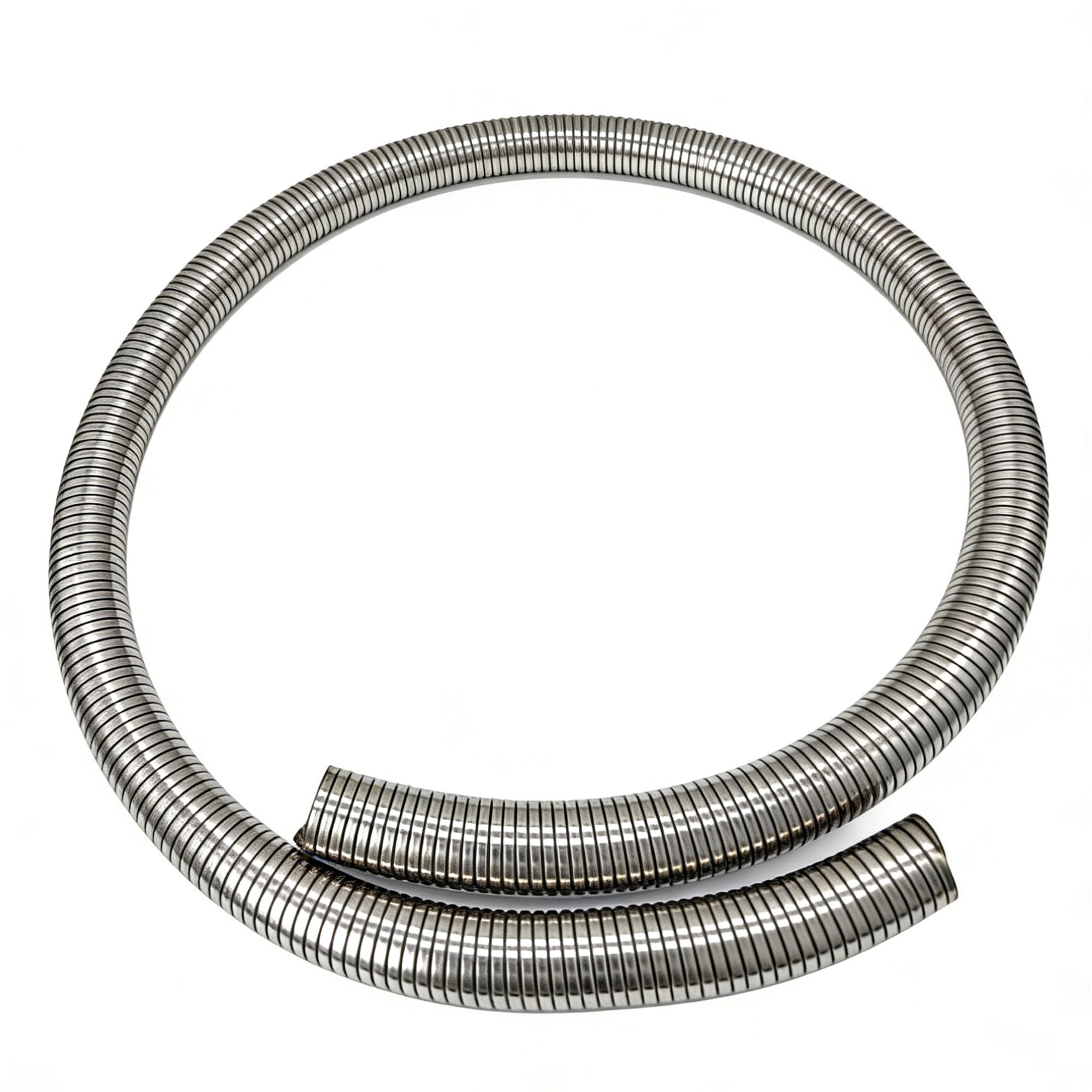
The SKYMIRO exhaust flex pipe is built from authentic 304 stainless steel — the same metallurgy used in high-end marine exhaust systems. Its flex-lock technology uses a continuous single-roll-band construction that distributes torsional vibration across the entire 72-inch length rather than concentrating stress at a single seam. The burr-free ends arrive ready for either a tig weld or a clamp connection, saving you the cleanup pass that often damages cheaper pipes.
This 1 1/4 ID pipe has an outside diameter consistent enough that standard U-bolt clamps seat without distortion. The multi-layer design prevents the blowout that plagues single-ply corrugated tubes under high backpressure conditions — a critical advantage on header-back systems where exhaust pulses are most aggressive. The 18-month manufacturer warranty covers material defects, a trust signal that galvanized sellers do not offer.
For anyone replacing a rusted-out galvanized flex pipe on a daily driver, the SKYMIRO is the set-and-forget solution. The price reflects premium material, but the corrosion resistance alone eliminates the need to drop the exhaust again within two years. It is the only pipe on this list that you can weld into a cat-back system and reasonably expect to outlast the muffler itself.
What works
- Genuine 304 stainless resists acidic condensate corrosion
- Single-roll-band flex-lock prevents mid-section cracking
- 18-month manufacturer warranty adds long-term confidence
- Burr-free ends ready for immediate weld or clamp
What doesn’t
- Premium-grade material commands a higher upfront cost
- No included clamps or hardware in the package
2. HZJD Exhaust Flex Pipe (72″)
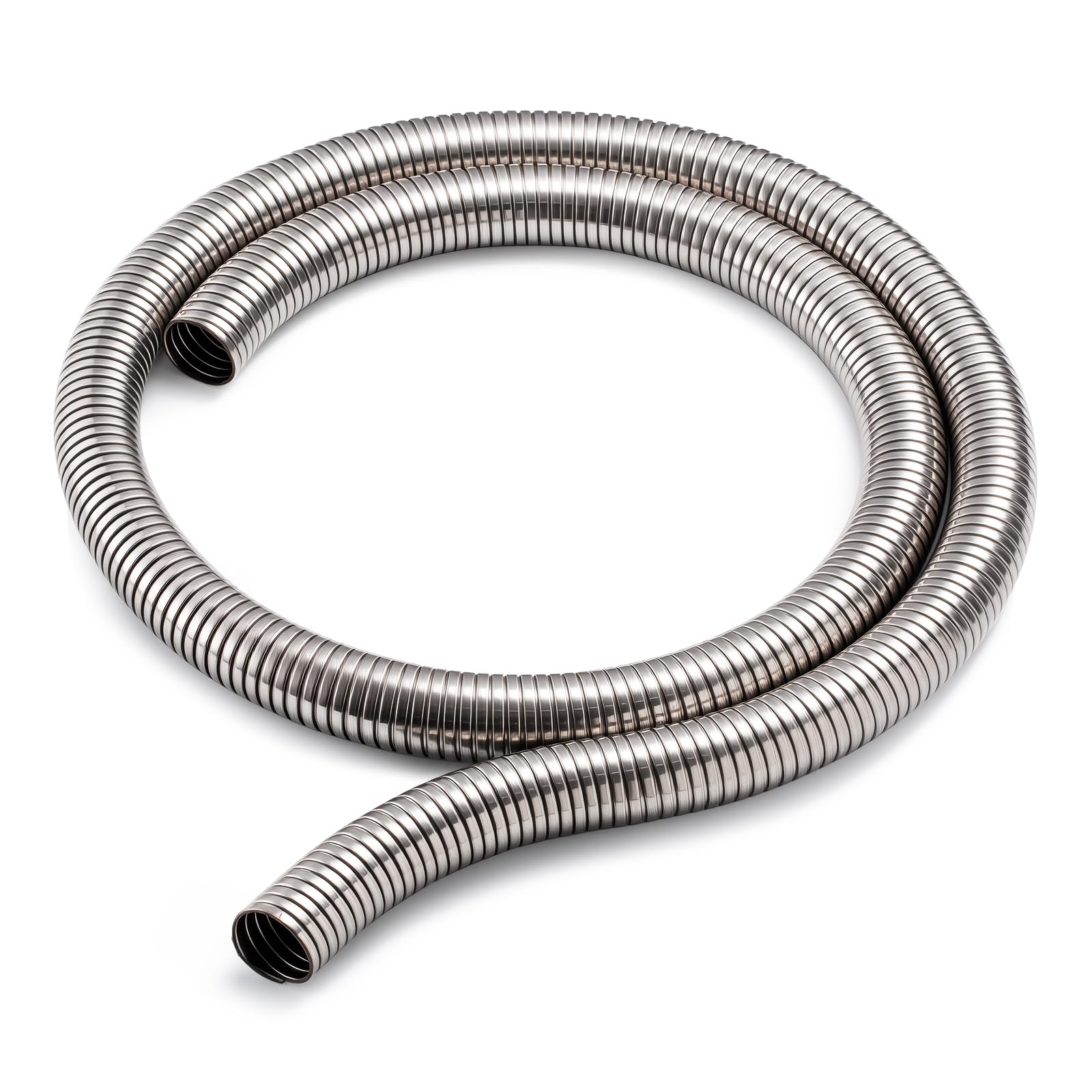
The HZJD flex pipe uses stainless steel with a surface-polish corrosion treatment that adds an extra barrier against road salt and chemical de-icers. The nominal wall thickness measures 0.625 inches, which gives it a noticeably stiffer feel compared to thinner corrugated tubes, making it ideal for heavy-duty applications where the pipe must also support some structural alignment between the manifold and the mid-pipe.
The universal fit accommodates weld or clamp installation, and the 72-inch length provides enough material to run from the downpipe collector to the rear axle area on a standard pickup truck. The polishing step removes the microscopic surface irregularities where corrosion typically initiates, making this a strong candidate for vehicles that endure seasonal road treatments.
The trade-off with the thicker wall is reduced flexibility — you will need more precise alignment during installation because the pipe resists bending into tight radius curves. For straight-line runs or gentle chassis bends, however, the rigidity translates into a long-lasting, rattle-free connection that outperforms thinner wall pipes in mechanical fatigue resistance.
What works
- Thick 0.625-inch nominal wall resists mechanical fatigue
- Polished surface repels corrosion initiation
- Universal 72-inch length suitable for full undercarriage runs
What doesn’t
- Reduced flexibility makes tight bend routing tougher
- No hardware included for clamp installation
3. TORDXICS Stainless Flex Pipe (72″)
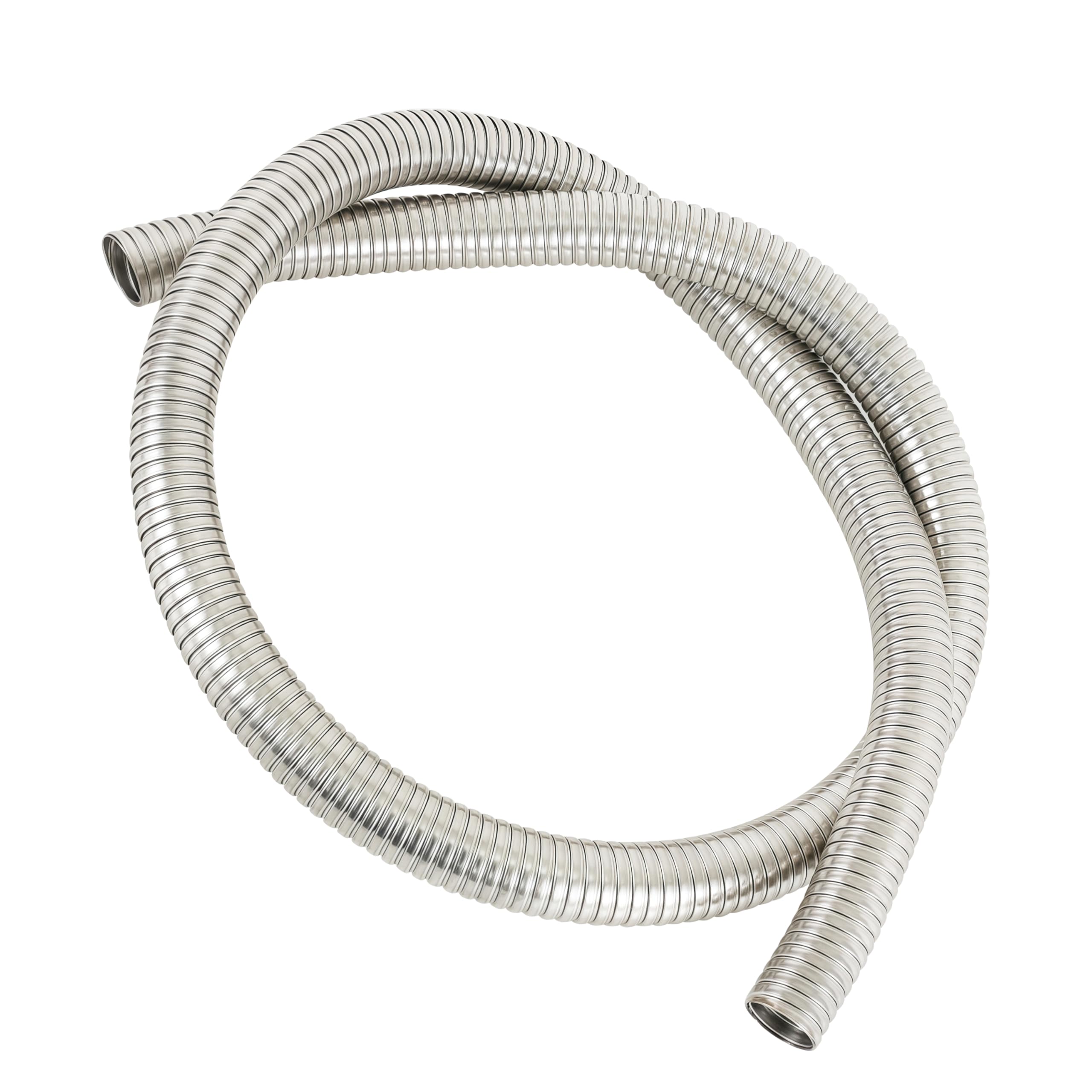
The TORDXICS 72-inch flex pipe offers stainless steel construction at a mid-range price point, making it the logical step-up for buyers who want corrosion resistance without paying the premium for 304-grade material. The single-roll-band construction creates a continuous corrugation that handles the axial flex and torsional twist from normal engine movement without tearing at a seam.
The pre-cut length includes clean edges that accept a MIG weld bead without porosity or burn-through, and the stainless composition inhibits the rust that would normally start at a cut end on galvanized pipe. It works as a universal replacement for cat-back systems and downpipes where the existing flexible section has fatigued from vibration rather than from thermal degradation.
The 30-day warranty is shorter than the premium options, but for the price gap, you are getting a functional stainless flex pipe that outperforms alloy steel alternatives in typical daily-driver conditions. If your budget stops before the 304-grade tier, this is the pipe to match against the salt-belt service interval you expect.
What works
- Stainless steel build beats galvanized on corrosion
- Single-roll-band prevents stress concentration
- Pre-cut with clean edges for immediate welding
What doesn’t
- 30-day warranty is shorter than premium alternatives
- Not true 304 stainless, corrosion resistance is moderate
4. FORTLUFT Galvanized Flex Tube (72″)

The FORTLUFT flex tube uses galvanized alloy steel with a zinc coating that provides initial corrosion resistance on a tight budget. At 72 inches and weighing 2.4 pounds, this is the lightest full-length pipe on the list, making it easy to route and clamp in place without needing a second person to hold the alignment. The zinc layer works well as long as it remains intact, which means clamp-style installation preserves the coating better than welding, which burns it off at the joint.
This is the pipe you choose when you need a functional exhaust repair this weekend and the vehicle sees dry-climate operation or occasional use. The 12-month or 15,000-mile warranty from the manufacturer indicates they expect the galvanized coating to hold up for at least that window under standard conditions. The alloy steel core provides adequate mechanical strength, though it will not match the fatigue life of a stainless equivalent in a high-vibration application.
If you are patching a flex section on a project truck or a beater that stays out of the rust belt, the FORTLUFT delivers the necessary flexibility at the lowest entry cost. The key is to avoid welding the ends — stick to clamp connections and the zinc layer will keep the steel protected where it matters most.
What works
- Lightweight at 2.4 lbs for easy handling
- Galvanized coating resists rust in dry climates
- 12-month/15,000-mile warranty included
- Lowest entry cost for a full 72-inch pipe
What doesn’t
- Zinc coating burns off at weld temperatures
- Alloy steel core will rust if coating is breached
- Lower fatigue life than stainless under vibration
5. TORDXICS 16″ Stainless Flex Pipe with Clamps
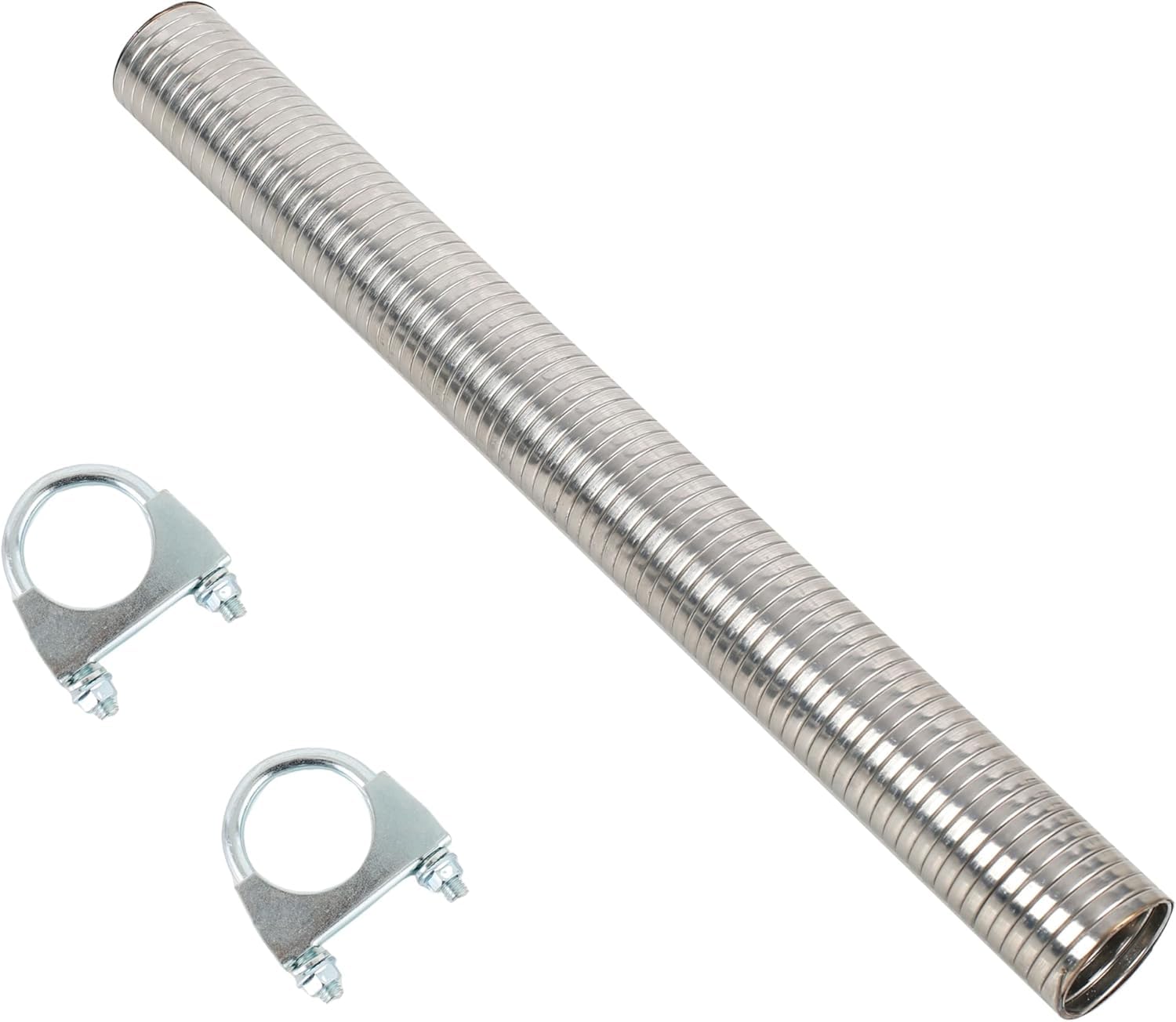
The TORDXICS 16-inch flex pipe is designed specifically for short-span applications where the space between a rigid header collector and the main exhaust pipe is less than two feet. It comes packaged with two metal U-bolt clamps, eliminating the extra trip to the hardware store. The 1 1/4 inch ID matches standard downpipe and muffler inlet dimensions, and the stainless steel construction resists the surface rust that would quickly disfigure a carbon steel section in the same position.
The short length makes this an ideal bridge for engine swaps or header installations where the factory flex joint is no longer in the correct location. The burr-free ends slide easily into the receiving pipe before the U-bolts are torqued down, and the included clamps tighten to a secure seal without crushing the corrugation. The 30-day warranty is consistent with the budget segment but the stainless material gives you a corrosion advantage that galvanized short sections cannot match.
For header-to-cat connections, downpipe repairs, or any chassis configuration that needs only a short flex span, this TORDXICS section solves the problem without requiring you to cut down a longer pipe and waste material. The included hardware makes it a turnkey solution for the weekend mechanic who needs a sealed repair with minimal fabrication.
What works
- Includes two U-bolt clamps in the package
- 16-inch length perfect for short span repairs
- Stainless steel prevents quick surface corrosion
- Burr-free ends seat easily in receiving pipe
What doesn’t
- Short length limits use to specific tight spaces
- 30-day warranty is minimal coverage
Hardware & Specs Guide
Material Grade: 304 vs Galvanized
304 stainless steel contains 18-20% chromium and 8-10.5% nickel, forming a self-healing chromium oxide layer that resists exhaust condensate acids (pH as low as 2.5) and road salt. Galvanized steel relies on a zinc coating that is approximately 0.002 inches thick — this coating vaporizes at 1,665°F, which is below the typical exhaust weld puddle temperature of 2,500°F, leaving bare steel exposed at the joint. For any repair lasting beyond a single season, 304 stainless provides measurable residual wall thickness after two years of use while galvanized sections often show pinhole leaks at the weld zone.
Flex Pipe Length and Chassis Fit
A 72-inch flex pipe provides enough material to run from the downpipe flange all the way past the transmission crossmember on a full-size truck or SUV, eliminating intermediate slip joints that act as leak points. A 16-inch section is purpose-built for bridging the gap between a rigid header collector and the intermediate pipe, where only the first 12-18 inches of exhaust travel experience the highest amplitude engine vibration. Selecting the wrong length creates two failure modes: too short and the rigid mounts transfer vibration to the pipe, too long and the unsupported section sags under thermal expansion.
FAQ
Can I weld a 1 1/4 flex pipe with a standard MIG welder?
How do I stop a flex pipe from rattling against the frame?
Final Thoughts: The Verdict
For most buyers, the 1 1/4 flex exhaust pipe winner is the SKYMIRO 304 Stainless Flex Pipe (72″) because its 304-grade metallurgy and flex-lock construction provide genuine corrosion resistance and vibration dampening that budget pipes cannot match. If you need a heavy-duty section with extra wall thickness for structural support, grab the HZJD Exhaust Flex Pipe. And for a short-span repair where a full 6-foot pipe is unnecessary, nothing beats the included-clamp convenience of the TORDXICS 16″ Stainless Flex Pipe.

Certification: BSc in Mechanical Engineering
Education: Mechanical engineer
Lives In: 539 W Commerce St, Dallas, TX 75208, USA
Md Amir is an auto mechanic student and writer with over half a decade of experience in the automotive field. He has worked with top automotive brands such as Lexus, Quantum, and also owns two automotive blogs autocarneed.com and taxiwiz.com.