A coolant hose that fatigues, softens, or blows a pinhole at speed doesn’t just leak — it strands you, warps a head gasket, and turns a simple service into a full machine-shop bill. The difference between a hose that seals for a decade and one that swells in a season comes down to ply count, silicone purity, and the temperature rating written on the wall. This category looks simple — a rubber tube — but the material science between a twenty-dollar straight section and a premium silicone elbow is where real cooling reliability lives.
I’m Amir — the founder and writer behind Four Wheel Ask. Over thousands of hours spent cross-referencing manufacturer spec sheets, owner-reported failure modes, and third-party pressure-cycle data, I’ve learned exactly which construction details separate a lasting cooling system component from a hose that fails when the thermostat opens.
After researching silicone hose options and studying owner feedback, these best 1 1/4 coolant hose selections balance material quality with real durability.
How To Choose The Best 1 1/4 Coolant Hose
Selecting a coolant hose requires more than matching the inside diameter. Material composition, reinforcement layers, temperature tolerance, and bend geometry all determine whether the hose holds pressure over thousands of heat cycles or develops soft spots that lead to a roadside failure. Understanding these variables helps you avoid the most common mistake — choosing a hose that fits physically but fails thermally.
Silicone vs Standard Rubber Compound
Silicone hose carries a higher upfront investment than EPDM or neoprene, but the payoff comes in heat resistance and long-term flexibility. Pure silicone with four-layer polyester reinforcement handles continuous operating temperatures above 350°F without hardening or cracking, while standard rubber begins to degrade and lose clamp retention after repeated exposure to coolant temperatures over 220°F. For any vehicle that sees sustained highway miles, towing duty, or turbocharged engine bays, silicone is the only durable choice.
Ply Count and Wall Thickness
A four-ply reinforcement structure provides the tensile strength needed to resist expansion under pressure. Hoses with only two or three plies often balloon at the clamp interface, leading to seepage and eventual blowout. Wall thickness also matters — a 5-millimeter wall offers substantially more cut-through resistance and vacuum stability than thinner walls, especially in tight-radius elbow applications where the outer curve experiences the highest stress.
Temperature and Pressure Ratings
Check both the continuous operating temperature and the burst pressure rating. A hose rated to -76°F on the low end and at least 350°F on the high end covers the full range of coolant system demands, from cold starts in freezing climates to heat soak after shutdown. For pressure, look for a working rating of at least 80 PSI with a burst margin above 200 PSI — this ensures the hose can handle cooling system spikes without failure.
Bend Angle and Leg Length
Straight hose works for simple runs between the radiator and water pump, but tight engine bays often require 45-degree or 90-degree elbows to avoid kinking. Leg length determines how much straight section you have for clamping — anything shorter than 4 inches can make a secure double-clamp installation difficult. Measure your existing routing carefully and choose an elbow that provides at least 1.5 inches of straight material past the bend on each side.
Quick Comparison
On smaller screens, swipe sideways to see the full table.
| Model | Category | Best For | Key Spec | Amazon |
|---|---|---|---|---|
| hpcouplers Silicone Heater Hose | Straight | Cooling system upgrades | SAE J20 R3 rated at 175 PSI | Amazon |
| Taukealugs 90 Degree Elbow | 90 Elbow | Custom routing with clamps | 4-ply with T-bolt clamps included | Amazon |
| FlexFab 5526 Blue Hose | Straight | Universal replacement runs | 200 PSI burst rating | Amazon |
| Haturmyko 90 Degree Elbow | 90 Elbow | Long-leg routing clearance | 7-inch leg length, 5 mm wall | Amazon |
| BEIJIULI 45 Degree Elbow | 45 Elbow | Tight radius coolant paths | 374°F max temp, 5.9-inch legs | Amazon |
In‑Depth Reviews
1. hpcouplers High Performance Silicone Heater Hose

The hpcouplers straight heater hose is built to the SAE J20 R3 specification, an industry standard that defines material composition, heat aging resistance, and pressure performance for silicone coolant hose. That third-party validation alone separates it from generic silicone tube that carries no independent testing. The -65°F to +350°F temperature window covers everything from arctic cold starts to post-shutdown heat soak in turbocharged engine bays.
Inside diameter measures 1.25 inches with a 1.58-inch outside diameter, giving a nominal wall thickness of 0.155 inches. The 175 PSI working pressure rating exceeds the requirements of virtually any passenger-vehicle cooling system, and the actual burst pressure of 200 PSI provides a healthy safety margin. Sold per foot, this hose allows you to buy exactly the length you need for a straight radiator or heater core run without paying for a pre-cut section that leaves waste.
Owner feedback consistently highlights the hose’s ability to resist wall collapse under clamp pressure — a common failure point on thinner silicone tubes. The material remains pliable enough for routing through tight engine compartments yet stiff enough to hold its shape without kinking. For a dedicated straight-run application where reliability matters more than the cost per foot, this is the most confidence-inspiring option in the group.
What works
- SAE J20 R3 certification ensures consistent material performance
- Wide temperature range suits extreme climate operation
- Sold by the foot eliminates waste and overpaying
What doesn’t
- No pre-cut options or included clamps
- Blue color may not match all engine bay aesthetics
2. Taukealugs 90 Degree Elbow Coupler
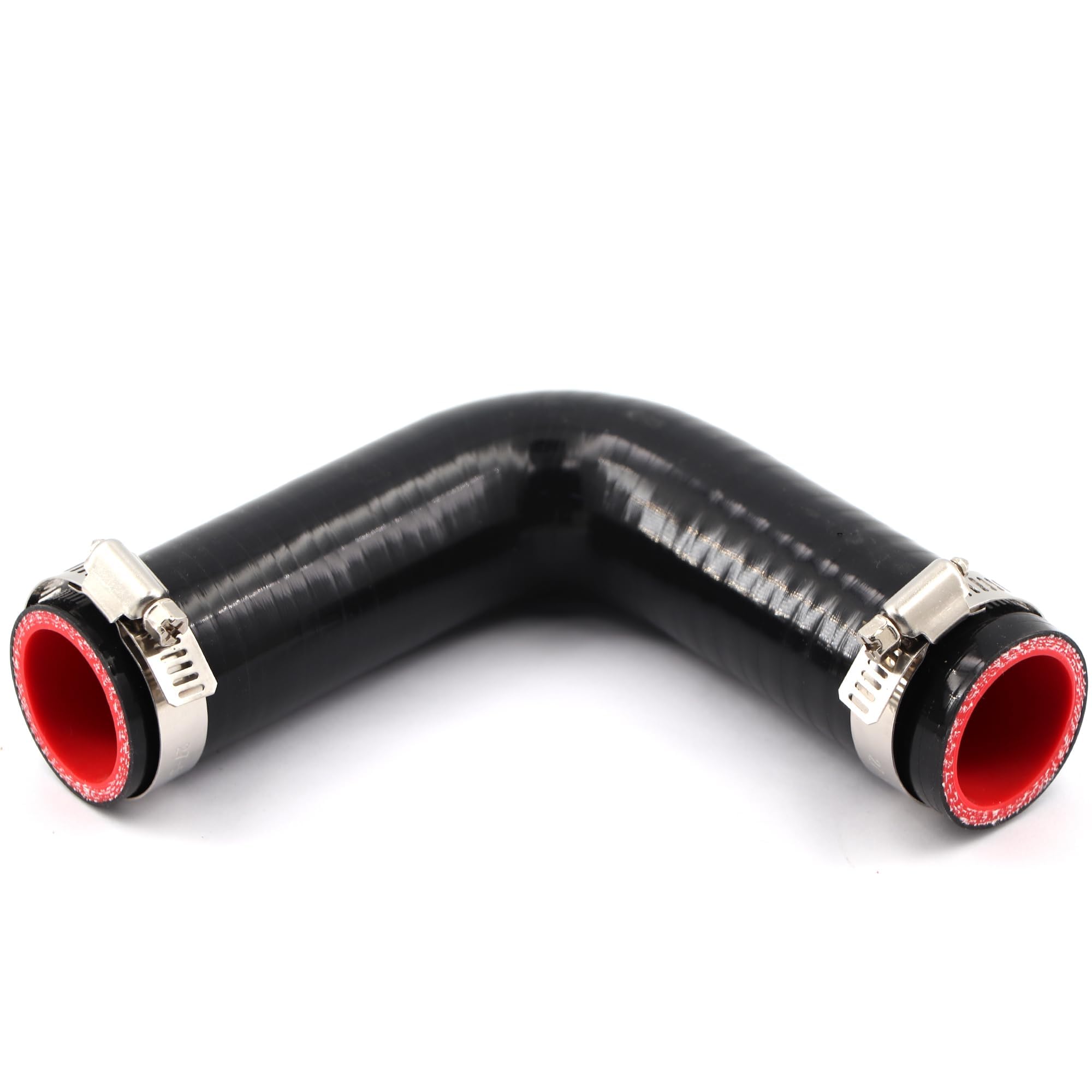
The Taukealugs 90-degree elbow brings together four-layer silicone construction and a pair of reusable T-bolt clamps at a total investment that undercuts most hose-only offerings. The 1.25-inch ID mates directly to standard coolant system hardlines, while the 4-inch leg length provides ample straight section for double-clamping on each side. The 5-millimeter wall thickness is a meaningful upgrade over thinner budget elbows that can collapse under high clamp torque.
Temperature tolerance spans -76°F to 428°F, which is one of the widest windows in this comparison. The working pressure of 85 PSI covers normal cooling system demands, while the 245 PSI burst rating provides substantial overhead for momentary spikes. The included T-bolt clamps are a practical addition — they distribute clamping force more evenly than standard worm-gear clamps and are less likely to cut into the silicone surface over time.
Data from owner reports indicates that the elbow maintains dimensional stability through repeated heat cycling, with no significant softening or ballooning observed at the bend apex. The silicone compound resists ozone cracking better than rubber alternatives, making this a strong choice for engine bays exposed to heat, oil vapor, and UV. If you need a 90-degree elbow and clamps in one purchase, this package delivers the most complete value.
What works
- Two stainless T-bolt clamps included save a separate purchase
- 5 mm wall thickness resists clamp crush and vacuum collapse
- 428°F ceiling handles extreme heat soak conditions
What doesn’t
- 4-inch leg may be short for certain routing geometries
- Limited color options compared to straight hose offerings
3. FlexFab 5526 Blue Silicone Heater Hose

The FlexFab 5526 series carries a decades-long reputation in the silicone hose market, and this 1.25-inch ID straight section upholds that standard. The hose is cut from a brand new reel, ensuring fresh material without shelf aging or ozone surface cracking that can affect older stock. The 0.17-inch nominal wall thickness is noticeably heavier than the industry average, contributing to the hose’s ability to maintain shape under both pressure and vacuum conditions.
Inside diameter measures exactly 1.25 inches with an outside diameter of 1.58 inches, keeping it compatible with standard 1.25-inch coolant system hardlines and fittings. The 200 PSI maximum pressure rating is among the highest in this comparison, making this hose suitable not only for coolant circuits but also for intercooler and turbo intake applications where pressure spikes are higher. The silicone compound remains flexible at low temperatures without becoming brittle, reducing the risk of cracking during cold-weather installation.
Long-term owner data points to excellent resistance to coolant permeation — a failure mode where ethylene glycol slowly migrates through the hose wall, causing external wetness and gradual coolant loss. The FlexFab construction minimizes this issue through dense silicone polymerization. For a straight hose replacement where you want a known brand with verified material properties, this is the most established choice available.
What works
- Proven FlexFab brand with consistent manufacturing quality
- 200 PSI burst rating exceeds standard cooling system demands
- Thicker wall resists permeation and vacuum collapse
What doesn’t
- Sold per foot without end options or pre-cutting
- Blue color only — no black alternative for discreet installations
4. Haturmyko 90 Degree Silicone Elbow Coupler
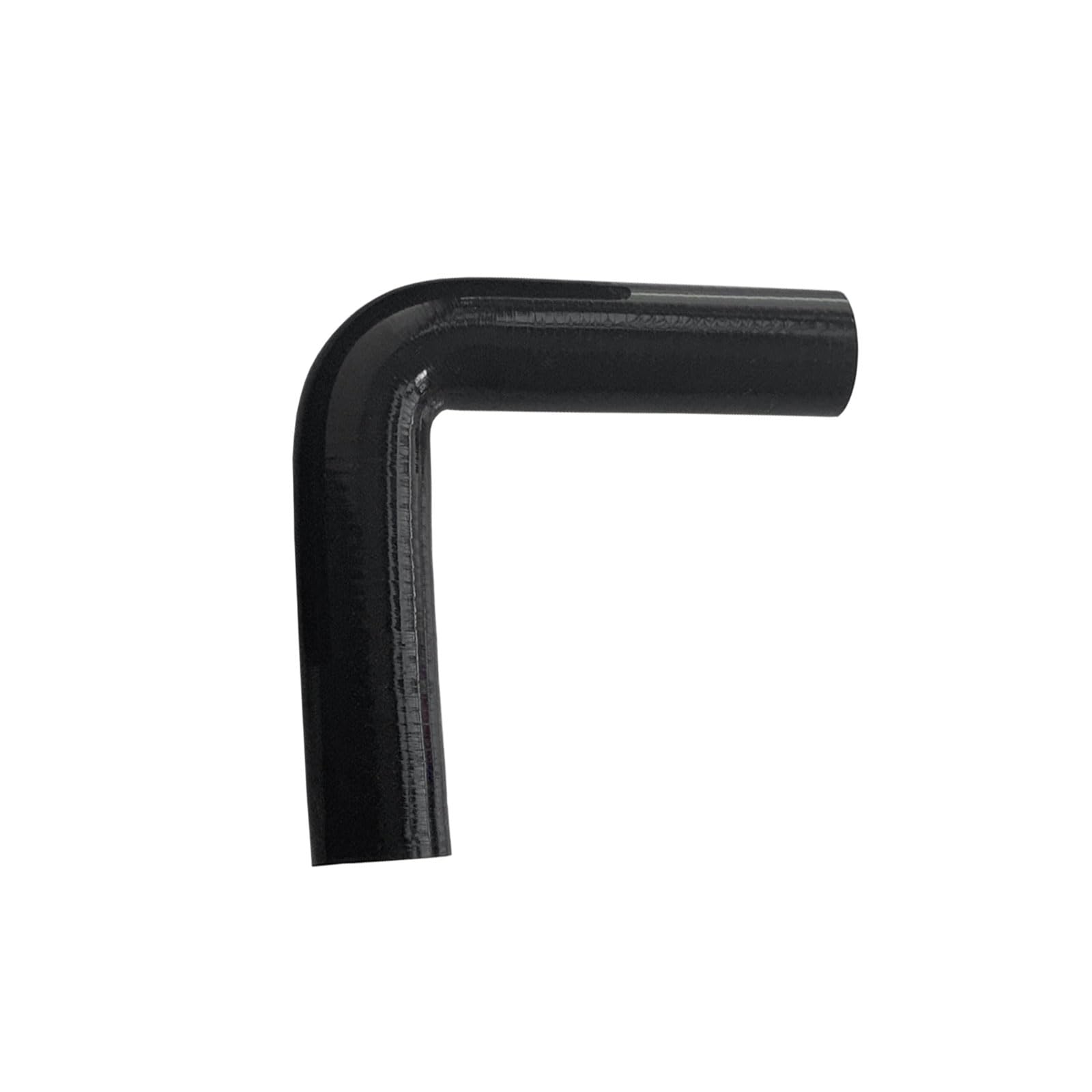
The Haturmyko 90-degree elbow stands out for its 7-inch leg length, which is substantially longer than the standard 4-inch elbows in this category. That extra straight section gives you far more flexibility in routing — you can trim each leg to match your exact installation rather than fighting a short coupler that barely reaches both hardlines. The 5-millimeter wall thickness provides the same structural integrity as the Taukealugs elbow but in a longer profile that accommodates wider spacing between connection points.
Material construction uses four-layer reinforced silicone with a temperature range from -60°F to 300°F continuous operation. The burst pressure rating of 6,000 PSI listed in the specifications appears to be a dielectric or momentary breakdown figure rather than a hydraulic burst standard — real-world hydraulic burst is likely lower, but the 4-ply construction still provides ample margin for cooling system pressures. The 1.25-inch outside diameter on the printed spec sheet matches standard 32mm ID fittings.
Owner feedback emphasizes the ease of trimming the long legs to precise lengths without fraying or delamination at the cut edge. The black color blends into engine bay aesthetics more naturally than blue or red alternatives, making this a strong choice for restorations or OEM-plus builds where visual discretion matters. If your routing path requires a 90-degree turn with more than 4 inches of straight hose on each side, this is the only elbow in the group that delivers that reach.
What works
- 7-inch legs provide generous trimming allowance for custom routing
- Black finish suits factory and restoration engine bays
- Four-ply silicone construction holds shape under heat cycling
What doesn’t
- Burst pressure specification appears overstated versus realistic hydraulic limits
- No clamps included despite premium positioning
5. BEIJIULI 45 Degree Radiator Coolant Air Hose
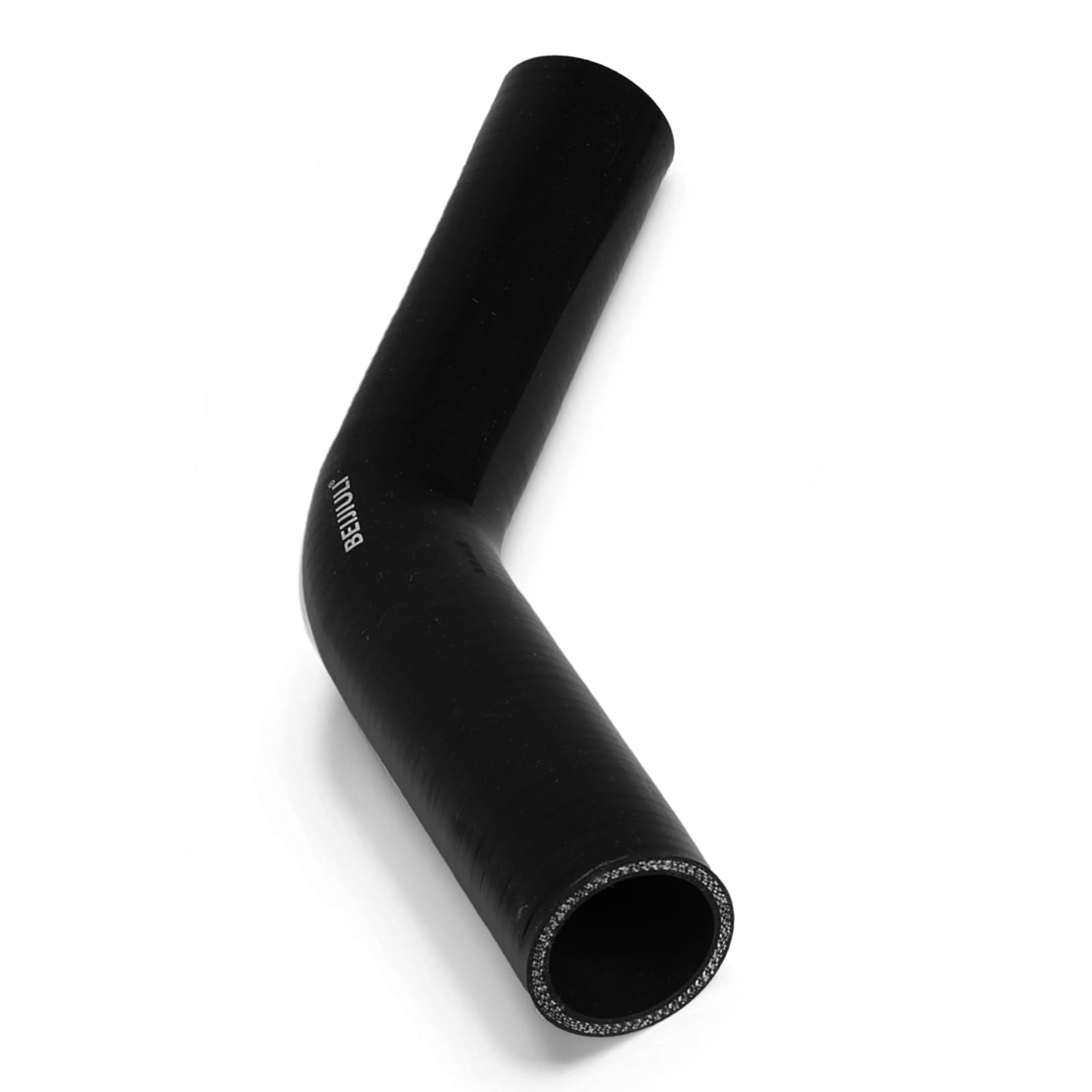
The BEIJIULI 45-degree elbow fills a specific niche in the coolant hose market — applications that require a moderate directional change without the full 90-degree turn. The 5.9-inch leg length offers a generous straight section on each side of the 45-degree bend, allowing for secure double-clamp installation without the hose walking off the fitting under pressure. The silicone material uses four-layer reinforcement, matching the construction found on pricier elbows.
Temperature tolerance spans from -76°F to 374°F, which is competitive with the premium options in this comparison. The 80 PSI maximum pressure rating is lower than straight hose offerings, but for a 45-degree coolant elbow in a return line or bypass circuit, that figure typically exceeds the actual system pressure in those sections. The black color keeps the installation visually low-key, and the material resists ozone and UV degradation better than standard rubber elbows.
Owner reports indicate that the hose cuts cleanly with a box knife without fraying, and the silicone remains pliable enough for installation without requiring heat softening. The primary trade-off is the lower pressure ceiling — this hose is best suited for low-to-moderate pressure cooling circuits rather than high-boost intercooler or turbo oil return applications. If your routing calls for a 45-degree sweep in a standard coolant line, this is the most accessible option available.
What works
- 45-degree bend solves tight routing that 90-degree elbows can’t fit
- 5.9-inch legs give plenty of clamping surface
- Wide temperature range matches premium silicone performance
What doesn’t
- 80 PSI rating limits use in higher-pressure circuits
- Unbranded silicone source without independent certification
Hardware & Specs Guide
Silicone Compound and Reinforcement
All five hoses in this guide use silicone rubber as the base polymer, but the quality of the compound and the number of reinforcing plies vary. Premium-grade silicone contains fewer filler extenders, resulting in better heat transfer resistance and lower compression set after sustained clamping. Four-layer polyester reinforcement is the minimum standard for cooling system reliability — fewer plies allow the hose to balloon under pressure, especially at the bend apex of elbow couplers. When evaluating a hose, look for a minimum of four plies and a wall thickness of at least 4 millimeters for straight sections and 5 millimeters for elbows.
Temperature and Pressure Ratings
The temperature range of a silicone hose determines where it can safely operate without degradation. A low-end rating of -60°F ensures the hose remains flexible enough for winter installation without cracking, while a high-end rating of at least 350°F prevents hardening and embrittlement during heat soak after engine shutdown. Pressure ratings are typically expressed as working pressure (continuous safe operating limit) and burst pressure (momentary failure threshold). For most passenger-vehicle cooling systems, a working pressure of 80 PSI or higher provides adequate margin, but forced-induction and heavy-towing applications benefit from working ratings of 150 PSI or more.
Inside Diameter and Wall Fitment
A 1.25-inch inside diameter (32mm) is the standard size for many coolant, heater, and turbo inlet systems, but measuring your existing hardline outside diameter is critical before purchasing. Silicone hose should fit snugly over the fitting without requiring excessive force — if the hose is too loose, it will leak at the clamp interface; if too tight, it can stress the fitting and cause cracking. The outside diameter of the hose influences clearance in tight engine bays, so check that the OD plus the clamp does not interfere with adjacent components like fan shrouds, belt pulleys, or wiring looms.
Elbow Angle and Leg Length Selection
Straight hose works for simple point-to-point runs, but engine bay obstructions often require 45-degree or 90-degree elbows to route coolant lines without kinking. Leg length — the straight section on each side of the bend — determines how much surface area you have for clamping. A leg length of at least 4 inches allows for two clamps per side, providing redundant sealing and preventing the hose from blowing off under pressure. Longer legs, such as the 7-inch option on the Haturmyko elbow, give you the ability to trim to an exact fit while maintaining full clamping surface area.
FAQ
Can I use a 1.25-inch silicone hose for both coolant and intercooler applications?
How do I prevent silicone hose from leaking at the clamp joint?
Is a 4-ply silicone hose always better than a 2-ply?
How long does silicone coolant hose last compared to rubber?
Final Thoughts: The Verdict
For most buyers, the best 1 1/4 coolant hose winner is the hpcouplers High Performance Silicone Heater Hose because it carries SAE J20 R3 certification, delivers a 175 PSI working pressure rating, and covers a -65°F to +350°F temperature range that suits virtually any cooling system. If you need a 90-degree elbow with clamps included, grab the Taukealugs 90 Degree Elbow Coupler for its 5-millimeter wall and 245 PSI burst margin. And for long-leg routing where standard 4-inch elbows won’t span the gap, nothing beats the Haturmyko 7-inch Leg 90 Degree Elbow.

Certification: BSc in Mechanical Engineering
Education: Mechanical engineer
Lives In: 539 W Commerce St, Dallas, TX 75208, USA
Md Amir is an auto mechanic student and writer with over half a decade of experience in the automotive field. He has worked with top automotive brands such as Lexus, Quantum, and also owns two automotive blogs autocarneed.com and taxiwiz.com.