Engine oil is the single most consequential fluid you pour into your vehicle, and the 0W-30 viscosity grade occupies a unique sweet spot between cold-start fluidity and high-temperature film strength. Modern engines with tighter tolerances, turbochargers, and variable valve timing demand an oil that flows instantly at subzero temperatures yet maintains a robust boundary layer under extreme heat and shear.
I’m Amir — the founder and writer behind Four Wheel Ask. Over the past several years, I have analyzed thousands of product specifications, scrutinized OEM approval lists, and synthesized real-world owner feedback to identify which formulations deliver measurable protection across diverse driving conditions.
Selecting the wrong oil can accelerate wear, trigger sludge buildup, and void warranties. That is why I have evaluated each formula against strict criteria including additive chemistry, base oil quality, certification breadth, and documented field performance. This detailed analysis of the best 0w-30 car oil options helps you make an informed, confident final buying decision.
How To Choose The Best 0W-30 Car Oil
Selecting a 0W-30 oil goes far beyond picking a familiar brand. The viscosity grade, base stock composition, additive chemistry, and OEM approvals all factor into how well an oil protects your engine across its service interval. Below are the critical considerations to evaluate before making a purchase.
Viscosity Grade and Base Oil Quality
The “0W” rating indicates the oil flows at extremely low temperatures, while the “30” hot-grade ensures adequate film strength at operating temperature. Full synthetic base oils — typically Group III, IV (PAO), or Group V (esters) — resist thermal breakdown and oxidation far better than conventional or hydrocracked stocks. A high-quality synthetic base allows longer drain intervals and consistent viscosity retention under shear.
OEM Approvals and Certification Standards
Many modern European and domestic engines require specific approvals such as BMW LL-04, Mercedes-Benz 229.51, VW 504.00/507.00, or GM Dexos 1 Gen 3. Using an oil that meets these standards ensures the correct low-SAPS formulation, proper additive balance, and compatibility with emissions systems including diesel particulate filters (DPF) and gasoline particulate filters (GPF). Always cross-reference your owner’s manual with the oil’s certification list.
Additive Technology and Friction Modifiers
Advanced additive packages include detergents to prevent sludge and deposits, anti-wear agents like zinc dialkyldithiophosphate (ZDDP), and friction modifiers such as molybdenum disulfide and boron nitride. These compounds reduce boundary friction, protect cam lobes and lifters, and extend engine life under high-load conditions. Oils with nano-boron or moly formulations can reduce wear by a significant margin compared to baseline API requirements.
Drain Interval and Longevity Claims
Some synthetic 0W-30 oils advertise extended drain intervals of 15,000 to 20,000 miles or more. While these claims are supported by lab testing, real-world factors including driving style, climate, fuel quality, and engine condition all affect actual oil life. Many manufacturers back their interval claims with warranties, which adds a layer of assurance for high-mileage drivers.
Quick Comparison
On smaller screens, swipe sideways to see the full table.
| Model | Category | Best For | Key Spec | Amazon |
|---|---|---|---|---|
| TRIAX Synergy SRT 0W-30 | Full Synthetic | Maximum wear protection | API SP, 20K mi interval | Amazon |
| Pennzoil Platinum Euro LX 0W-30 | Full Synthetic | European engines | Natural gas base, 500K mi protection | Amazon |
| Mobil 1 0W-30 | Full Synthetic | Extreme temperature range | Universal fit, -53°F pour point | Amazon |
| LIQUI MOLY Special Tec V 0W30 | Full Synthetic | Volvo and long intervals | 5L jug, DPF compatible | Amazon |
| Valvoline European 5W-30 XL-III | Full Synthetic | European gasoline and diesel | Low-SAPS, ACEA C3, API SP | Amazon |
| Honda Genuine 10W-30 | Conventional | OEM-specified Honda applications | 4-pack 32oz, vehicle specific | Amazon |
| Valvoline Restore & Protect 5W-20 | Full Synthetic | Deposit removal and anti-wear | Active Clean Tech, API SP | Amazon |
In‑Depth Reviews
1. TRIAX Synergy SRT 0W-30
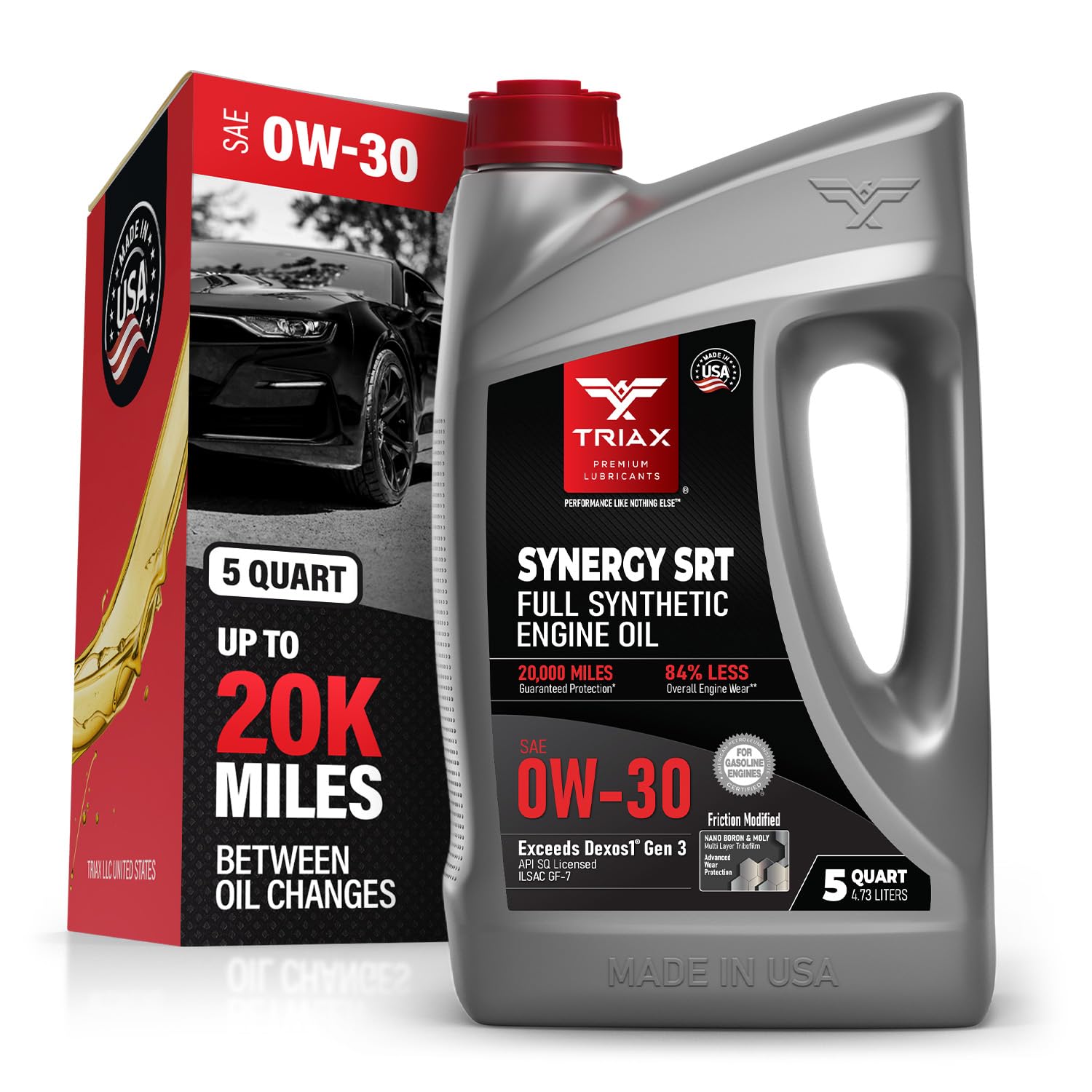
The TRIAX Synergy SRT 0W-30 delivers a friction-modified formulation that sets a high bar in the full synthetic segment. Built with nano-boron and molybdenum additives, this oil achieves up to 84 percent less wear than API and OEM performance standards, which translates directly to improved camshaft, bearing, and turbocharger protection. The API SP license and compliance with GM Dexos 1 Gen 3 further confirm its capability for modern gasoline engines across Ford, GM, and Chrysler platforms.
What makes this oil stand out is its extended drain interval — up to 20,000 miles or two years without compromising protection. The formulation also reduces deposits by 50 percent compared to OEM/API requirements, helping engines stay sludge-free for a quarter-million miles. The 5-quart jug covers the typical passenger car or light truck service easily.
For drivers who want a single oil that balances extreme wear prevention, deposit control, and drain longevity, the TRIAX Synergy SRT is a compelling choice. It is especially well-suited for turbocharged engines and vehicles used in stop-and-go traffic or heavy towing where shear stability and film strength are critical.
What works
- Outstanding wear reduction with nano-boron and moly friction modifiers
- 20,000-mile extended drain interval backed by robust testing
- API SP licensed and exceeds GM Dexos 1 Gen 3 standards
What doesn’t
- Limited European OEM approvals compared to specialized Euro blends
- Not ideal for diesel engines requiring low-SAPS formulations
2. Pennzoil Platinum Euro LX 0W-30
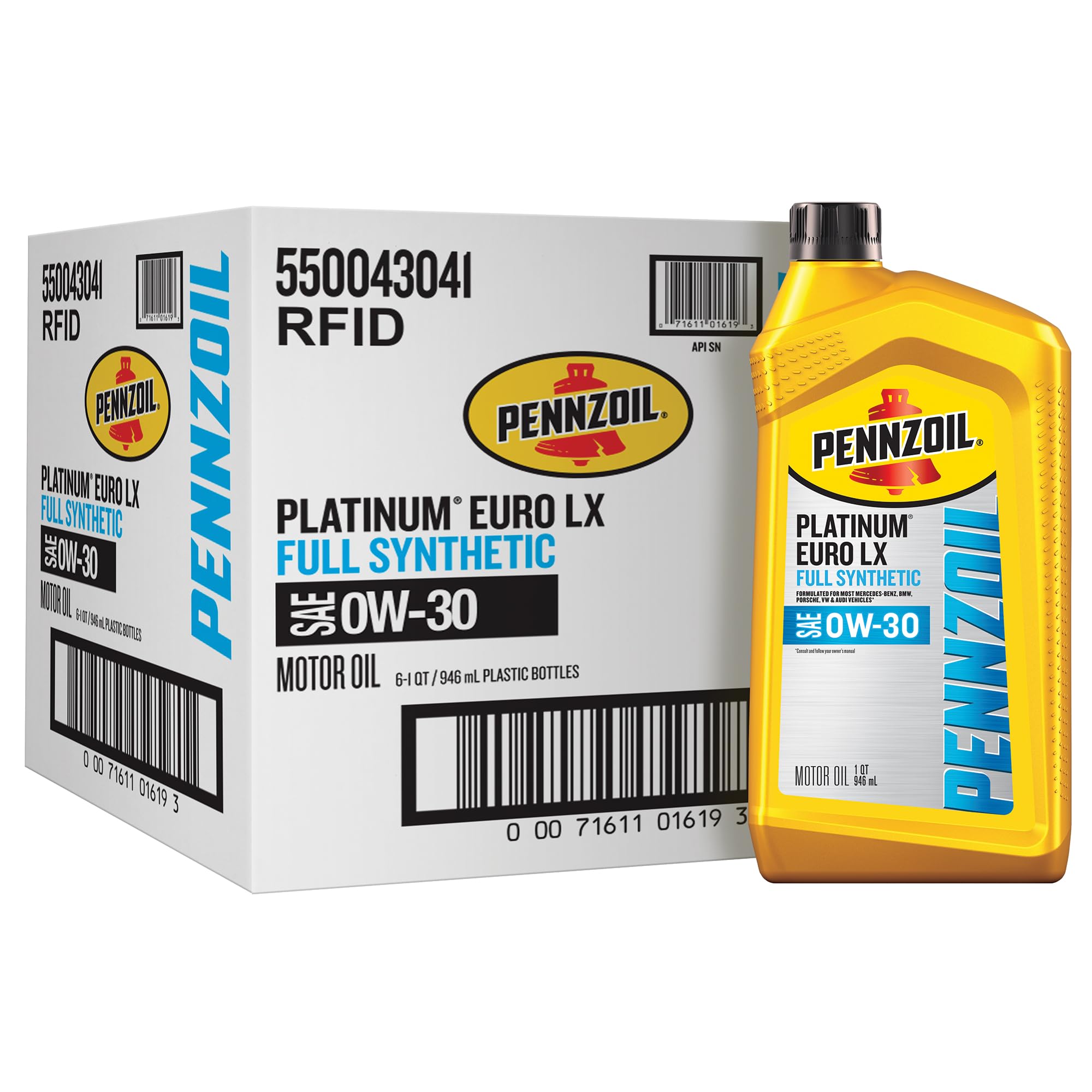
Pennzoil Platinum Euro LX 0W-30 is formulated using natural gas base stock, which results in a purer synthetic oil with fewer impurities than conventional crude-derived oils. This base oil purity translates into exceptional thermal stability and resistance to oxidation, helping the engine stay closer to factory clean over extended intervals. The formula is designed specifically for high-performance diesel and gasoline engines in European vehicles, including BMW, Mercedes-Benz, Porsche, VW, and Fiat.
The manufacturer backs the oil with a 500,000-mile or 15-year engine protection guarantee, which underscores the confidence in its long-term performance. Sequence VH and M-111 sludge tests demonstrate that the oil keeps pistons and valvetrains exceptionally clean. It also delivers faster low-temperature flow compared to heavier grades, improving protection during cold starts in northern climates.
For owners of European vehicles who want a dedicated 0W-30 that meets OEM requirements while benefiting from a unique natural-gas base stock, this Pennzoil offering is a strong candidate. The six-quart case provides enough volume for most European sedan oil changes, and the clarity of the base oil means less varnish formation over time.
What works
- Ultra-pure natural gas base stock reduces sludge and varnish formation
- 500,000-mile protection guarantee demonstrates long-term durability
- Broad European OEM compatibility including BMW and MB approvals
What doesn’t
- Premium pricing reflects the advanced base stock and certifications
- Not recommended for older engines requiring higher SAPS formulations
3. Mobil 1 0W-30

Mobil 1 0W-30 is a benchmark full synthetic known for its exceptionally wide operating temperature range. With a pour point of -53 degrees Fahrenheit and high-temperature protection up to 400 degrees Fahrenheit, this oil handles everything from arctic cold starts to desert summer driving without viscosity breakdown. The universal fit designation means it works across a broad range of makes and models, from passenger cars to light trucks.
Outstanding wear protection is a hallmark of this formulation, backed by decades of fleet testing and industry validation. The additive package resists sludge and harmful deposits while maintaining stable oil pressure under sustained high-load conditions. Fuel economy benefits are also notable, as the low viscosity at startup reduces parasitic drag until the engine reaches operating temperature.
This oil is ideal for drivers who operate their vehicles in varying climates and want a proven, decades-tested synthetic. The six-quart pack provides enough oil for most standard oil changes, and Mobil 1’s widespread availability makes it easy to find between changes if a top-off is needed.
What works
- Extreme temperature range from -53°F to 400°F for all-climate protection
- Proven anti-wear and sludge prevention across millions of fleet miles
- Universal compatibility with cars and trucks from multiple manufacturers
What doesn’t
- Lacks specific European OEM approvals found in dedicated Euro blends
- No extended-drain warranty compared to some competitors
4. LIQUI MOLY Special Tec V 0W30

LIQUI MOLY Special Tec V 0W30 is a fully synthetic engine oil developed primarily for Volvo gasoline and diesel engines, though its specification range extends to other European makes. It is formulated for long oil change intervals and high engine loads, making it a strong fit for turbocharged direct-injection engines common in the Volvo lineup. The additive package is low-SAPS, ensuring compatibility with diesel particulate filters and gasoline particulate filters.
The 5-liter jug covers the typical Volvo oil capacity with margin, and the oil meets the stringent requirements of the Volvo VCC RBS0-2AE specification. The formulation also supports multi-valve technology, valvetronic systems, and turbochargers, delivering consistent lubrication at both low and high engine speeds. Its thermal stability helps prevent oil consumption and maintains viscosity over extended drain intervals.
European vehicle owners, particularly Volvo drivers seeking an OEM-grade 0W-30, will find this oil directly meets the factory requirements. The German engineering and manufacturing standards add confidence for those who prioritize precise specification compliance over generic coverage.
What works
- Specifically developed for Volvo engines with VCC RBS0-2AE approval
- Low-SAPS formula compatible with DPF and GPF emissions systems
- Excellent thermal stability for extended drain intervals
What doesn’t
- Narrow primary application focus limits cross-brand use
- 5-liter jug size may not suit all vehicle oil capacities
5. Valvoline European Vehicle 5W-30 XL-III
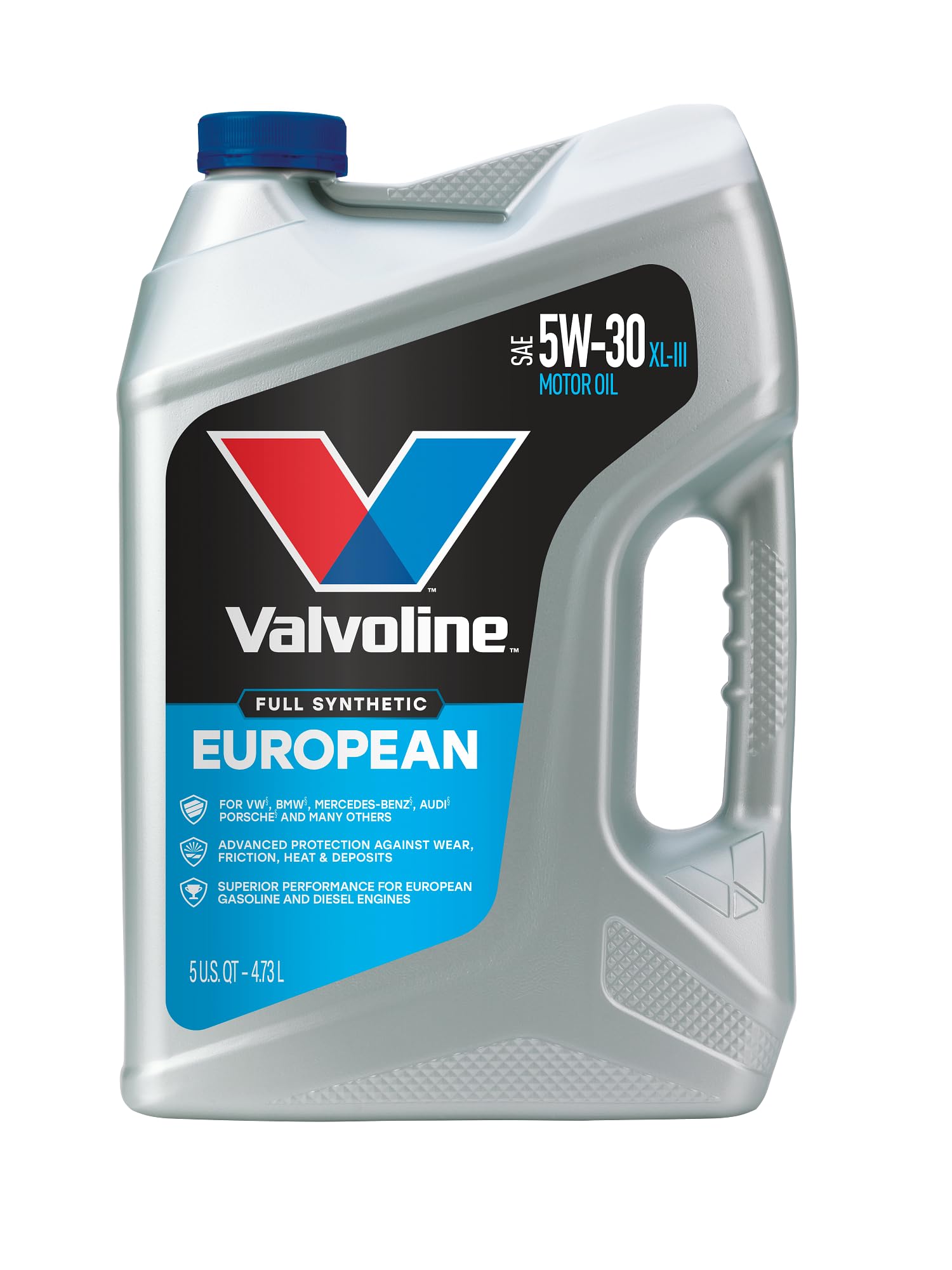
Valvoline European Vehicle 5W-30 XL-III is a full synthetic that brings the protection needs of European gasoline and diesel engines into a more accessible price tier. While it is a 5W-30 rather than a 0W-30, the formulation still delivers excellent low-temperature flow and high-temperature stability. The low-SAPS composition meets the stringent ACEA C3 standard, ensuring compatibility with sensitive emissions aftertreatment systems.
The oil holds approvals from VW 504.00/507.00, BMW LL-04, and Mercedes-Benz 229.31/229.51/229.52, making it suitable for a wide range of European vehicles. The anti-wear additives provide extra protection against the four main causes of engine breakdown: wear, friction, heat, and deposits. It also features superior antioxidants and cleaning detergents to keep the engine free of sludge.
For drivers of European cars who want a budget-friendly option that still meets critical OEM specifications, this Valvoline oil offers strong value. The 5-quart container provides enough volume for most oil changes, and the broad approval list provides peace of mind that the oil meets factory requirements.
What works
- Broad European OEM approvals including BMW, MB, and VW
- Low-SAPS formula protects DPF and catalytic converters
- Competitive pricing for a full synthetic with extensive certifications
What doesn’t
- 5W-30 viscosity lacks the cold-start advantage of 0W-30 grades
- Not suitable for vehicles requiring 0W-20 or 0W-30 specifically
6. Honda Genuine 10W-30

Honda Genuine 10W-30 is a conventional mineral oil engineered specifically for Honda and Acura engines that call for this viscosity. As a vehicle-specific lubricant, it is blended to match Honda’s internal specifications for ring seal, valve train wear, and oil consumption control. The pack contains four 32-ounce bottles, providing a total of 128 ounces — just over one gallon — for multiple top-offs or a single oil change on smaller engines.
While this is not a full synthetic and does not offer the cold-flow advantages of 0W-30, it remains a valid choice for older Honda engines designed around 10W-30. The OEM formulation ensures compatibility with Honda seals and gaskets, which can be a concern with aftermarket oils in high-mileage applications. It also meets the specifications for Honda’s recommended change intervals when used in appropriate climates.
For owners of older Honda vehicles that specifically require 10W-30 conventional oil, this genuine product eliminates guesswork. The four-pack format is convenient for those who prefer to stock up or who perform changes on multiple Honda vehicles.
What works
- Genuine Honda formulation ensures exact OEM compatibility
- Four-bottle pack provides ample volume for multiple services
- Trusted choice for high-mileage Honda engines using conventional oil
What doesn’t
- Conventional base oil cannot match synthetic wear or temperature protection
- 10W-30 grade offers inferior cold-start flow compared to 0W-30
7. Valvoline Restore & Protect 5W-20

Valvoline Restore & Protect 5W-20 is a full synthetic formulated with Active Clean Technology that actively removes engine deposits while protecting against future accumulation. The manufacturer claims it can remove up to 100 percent of deposits with continuous use, which is significant for engines that have suffered from poor maintenance or extended drain intervals. This oil meets API SP and ILSAC GF-6A specifications, covering virtually all modern gasoline engines.
The Liqui-Shield Technology provides a protective barrier that helps prevent new deposits from forming, while the anti-wear additives deliver 79 percent stronger wear protection than industry standards. The 5W-20 viscosity is designed for engines that require this lighter grade, often found in Ford, Honda, and Toyota models. The three-pack format offers a total of 15 quarts, covering multiple oil changes.
For drivers looking to rehabilitate an engine with existing sludge or varnish buildup, this oil represents a proactive approach to cleaning without mechanical intervention. It is also suitable for routine use in any gasoline engine that specifies 5W-20 and wants ongoing deposit prevention.
What works
- Active cleaning technology removes existing deposits over multiple changes
- 79 percent stronger anti-wear protection than GF-6A standards
- Three-pack case provides excellent value per quart for multiple services
What doesn’t
- 5W-20 viscosity not compatible with engines requiring 0W-30
- Best results require multiple consecutive oil changes for full cleaning
Hardware & Specs Guide
SAE Viscosity Grade
0W-30 indicates a winter grade of 0, meaning the oil flows readily at temperatures as low as -40 degrees Celsius, combined with a hot-grade of 30 that maintains film strength up to 100 degrees Celsius. This dual nature makes 0W-30 suitable for both cold-start protection and high-temperature operation in modern engines with tight clearances. Oils with a 5W or 10W winter grade sacrifice some cold-flow capability, while a 40 or 50 hot grade provides thicker film at high temperatures.
Base Oil Composition
Full synthetic 0W-30 oils typically use Group III or Group IV (PAO) base stocks that resist thermal breakdown, oxidation, and viscosity shear far better than conventional mineral oils. Group V ester bases are used in some premium formulations for enhanced film strength and detergency. The base oil quality directly affects how long the oil can maintain its performance characteristics under high heat and load.
Additive Package Components
Modern 0W-30 oils include detergents to suspend combustion byproducts, dispersants to prevent sludge agglomeration, anti-wear agents such as ZDDP and molybdenum compounds, and antioxidants to inhibit oxidation at high temperatures. Friction modifiers like nano-boron and organic moly reduce boundary friction on cam lobes and piston rings. The total additive treat rate typically ranges from 15 to 25 percent of the volume.
OEM Approvals and Compatibility
OEM approvals such as BMW LL-04, MB 229.51, VW 504.00/507.00, and GM Dexos 1 Gen 3 are more stringent than generic API or ACEA certifications. They require validation of low-SAPS content for DPF/GPF compatibility, shear stability testing, and extended drain interval capability. Using an oil with the correct OEM approval preserves warranty coverage and ensures optimal performance in engines with variable valve timing, turbochargers, and emissions systems.
FAQ
Can I use 0W-30 oil in an engine that specifies 5W-30?
How often should I change 0W-30 full synthetic oil?
What does low-SAPS mean in a 0W-30 oil?
Is 0W-30 oil suitable for high-mileage engines?
Final Thoughts: The Verdict
For most buyers, the best 0w-30 car oil winner is the TRIAX Synergy SRT 0W-30 because it combines a robust friction-modified additive package, API SP licensing, and a 20,000-mile drain interval at a competitive price point that undercuts many premium European blends. If you need a dedicated European OEM formulation with a natural gas base stock, grab the Pennzoil Platinum Euro LX 0W-30. And for extreme temperature versatility and universal compatibility, nothing beats the Mobil 1 0W-30.

Certification: BSc in Mechanical Engineering
Education: Mechanical engineer
Lives In: 539 W Commerce St, Dallas, TX 75208, USA
Md Amir is an auto mechanic student and writer with over half a decade of experience in the automotive field. He has worked with top automotive brands such as Lexus, Quantum, and also owns two automotive blogs autocarneed.com and taxiwiz.com.