A battery that fails at the wrong moment turns a simple errand into a roadside frustration. For owners of the second-generation Honda Odyssey, finding a replacement that delivers consistent cold cranking power, fits the tray without shims, and handles the van’s electrical demands is more nuanced than grabbing the cheapest option at the auto parts store. The wrong choice means sluggish starts in winter or a dead battery after a weekend parked.
I’m Amir — the founder and writer behind Four Wheel Ask. I have spent years analyzing product specifications, comparing build quality across brands, and aggregating real owner feedback to separate marketing claims from genuine performance.
Balancing cold cranking amps, reserve capacity, and proper physical fitment for your minivan — this guide covers the best 06 honda odyssey battery.
How To Choose The Best 06 Honda Odyssey Battery
Selecting the right battery for a 2006 Honda Odyssey starts with understanding the factory specifications. The van originally shipped with a Group 24F battery, typically rated around 550–650 CCA with a top-post terminal layout. Deviating from these dimensions or terminal positions leads to cable strain, loose hold-downs, or exposed metal contacting the hood. Beyond fitment, you need to evaluate construction chemistry, cold-weather performance, and how the battery handles deep discharge cycles common in a vehicle with power sliding doors and entertainment systems.
Group Size and Terminal Orientation Are Non-Negotiable
The Odyssey tray is molded specifically for a Group 24F case measuring roughly 10.75 x 6.81 x 8.98 inches. Terminal position matters just as much — the positive post must be on the right when facing the battery. Installing a Group 34 or Group 47 battery may physically fit in the tray but often flips the polarity or leaves the hold-down bracket misaligned. Always confirm the BCI group number matches 24F unless you are prepared to modify cables or the tray.
Cold Cranking Amps vs Reserve Capacity
Cold cranking amps measure starting power in freezing conditions, while reserve capacity tells you how long the battery can run the van’s electronics if the alternator fails. For the Odyssey, a minimum of 650 CCA ensures reliable winter starts, and an RC of 120 minutes or more provides a safety buffer for the van’s parasitic draws from the security system, clock, and audio memory. AGM batteries typically offer better RC values than flooded equivalents at the same physical size.
Flooded vs AGM Construction
Flooded lead-acid batteries are cheaper but require occasional water checks and vent tube routing. AGM (absorbent glass mat) batteries are sealed, vibration-resistant, and deliver stronger cyclic performance for vehicles with start-stop or heavy accessory loads. The Odyssey does not have start-stop, but AGM still resists the internal corrosion caused by heat under the hood. If you plan to keep the van another three to five years, the premium for AGM pays for itself in fewer replacement cycles.
Quick Comparison
On smaller screens, swipe sideways to see the full table.
| Model | Category | Best For | Key Spec | Amazon |
|---|---|---|---|---|
| Interstate MTX-24F | Premium AGM | Longest service life | 710 CCA, 70 Ah, Group 24F | Amazon |
| Odyssey 34R-PC1500T | Premium AGM | Extreme cold starts | 850 CCA, Group 34R | Amazon |
| Weize AGM Group 24F | AGM | Best value AGM | 710 CCA, 70 Ah, Group 24F | Amazon |
| Weize AGM Group 47 | AGM | Compact fitment | 680 CCA, 60 Ah, Group 47 H5 | Amazon |
| ACDelco Gold 51RAGM | AGM | GM/OEM replacement | 32 lbs, Group 51R | Amazon |
| MARXON Group 34 | AGM | Budget AGM option | 650 CCA, 55 Ah, Group 34 | Amazon |
| Odyssey PC925 | Premium AGM | Compact / dual-purpose | 330 CCA, 26 lbs, PC925 | Amazon |
In‑Depth Reviews
1. Interstate Batteries MTX-24F
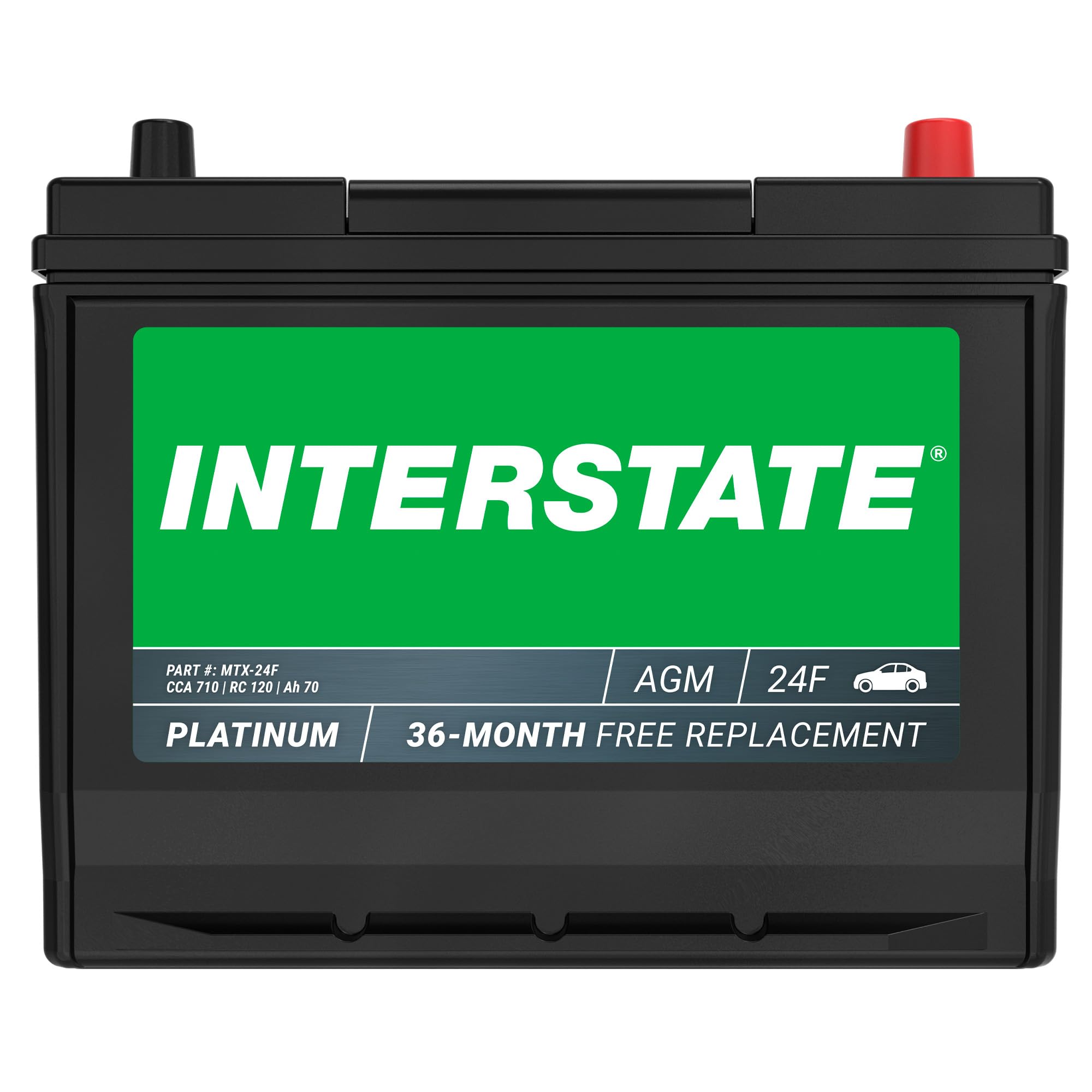
The Interstate MTX-24F is a pure-lead AGM battery built specifically for the Group 24F footprint required by the 2006 Odyssey. Its 710 CCA rating exceeds the factory specification, providing headroom for cold mornings when the van has sat for days. The absorbed glass mat construction eliminates the need for water top-ups and resists the vibration that comes from minivan duty on rougher pavement.
Interstate claims two to three times the service life of a conventional flooded battery, and owner feedback supports that — several reports describe reliable starting after multiple years of use, even with the van’s parasitic draws from the security system and power door modules. The MTX line uses a dense lead formulation that delivers stable voltage under load, which matters for the Odyssey’s aging electrical architecture that can be sensitive to voltage sag.
Fitment is direct: the 10.75 x 6.81 x 8.98 inch case drops into the factory tray without spacers, and the top-post terminals align correctly with the cable ends. The integrated carry handle simplifies installation. The main consideration is the price premium over flooded alternatives, but the longer replacement interval offsets the upfront cost for owners planning to keep the van beyond a few years.
What works
- Direct OEM fitment in Group 24F tray
- Pure-lead AGM offers double to triple the service life of flooded
- Strong 710 CCA for dependable cold-weather starts
- Spill-proof and maintenance-free design
What doesn’t
- Premium price compared to standard flooded batteries
- Heavier than flooded alternatives at 45 pounds
- Some units reported faster discharge when van sits for weeks
2. Odyssey Batteries 34R-PC1500T

The Odyssey 34R-PC1500T represents the upper tier of automotive starting batteries, packing 850 CCA into a Group 34R case. While the 34R group size does not match the Odyssey’s factory 24F tray without adapter brackets or hold-down modifications, the sheer cranking power makes it a compelling option for those willing to perform a custom install. Owners report that a simple wood spacer or aftermarket hold-down bracket solves the fitment gap.
The pure-lead AGM construction delivers roughly twice the overall power and three times the service life of conventional flooded batteries. Multiple owner accounts describe getting six to eight years of reliable service, with one reporting a full decade before replacement. The battery handles deep discharges better than most AGM units, which matters if the van sits unused for extended periods or if accessory loads drain the battery overnight.
At 51.5 pounds, this is the heaviest battery on the list, reflecting the dense lead plate design. The SAE terminal posts are smaller than OEM, so you may need to shave your cable clamps or use adapters for a secure connection. This battery rewards owners who prioritize maximum cranking power and longevity over drop-in convenience.
What works
- Extremely high 850 CCA for severe cold starts
- Proven 6 to 10 year service life in real-world use
- Handles deep discharge cycles better than standard AGM
- Vibration-resistant design for harsh conditions
What doesn’t
- Requires tray modification or adapter to fit Group 24F bay
- SAE terminals are smaller than OEM posts
- Heaviest option at over 50 pounds
- Very high price point
3. Weize Platinum AGM Battery BCI Group 24F

The Weize Platinum AGM in Group 24F is the most straightforward drop-in upgrade for the 2006 Odyssey that does not require tray modifications. The dimensions match the factory specification at 10.75 x 6.81 x 8.98 inches, and the tapered terminal layout positions positive on the right as required. The 710 CCA and 70 Ah capacity surpass the original equipment ratings, providing genuine starting confidence in freezing weather.
Weize claims up to double the cycle life of conventional flooded batteries, and owner reports across multiple vehicle applications confirm reliable performance with no early failures. The AGM construction handles the Odyssey’s moderate parasitic drain better than a flooded battery, maintaining higher voltage after days of inactivity. The included three-year warranty adds protection beyond what most budget brands offer.
The 46-pound weight reflects the robust lead content, and the sealed case means no vent tube routing or water checks. Some owners have noted that the terminal posts are slightly shorter than OEM, but cable clamps still engage fully. For the price, this battery delivers AGM performance and correct fitment without requiring a budget stretch.
What works
- Perfect factory fitment for Group 24F tray
- Strong 710 CCA and 70 Ah capacity
- AGM construction resists vibration and parasitic drain
- Three-year warranty provides solid coverage
What doesn’t
- Terminal posts feel slightly shorter than OEM
- Heavier than flooded options at 46 pounds
- Some units show slightly lower resting voltage than premium brands
4. Weize Platinum AGM Battery BCI Group 47

The Weize Platinum AGM Group 47 (H5 size) offers a compact alternative for Odyssey owners who need a high-performance AGM but have space constraints or want a slightly smaller footprint. With dimensions of 9.52 x 6.89 x 7.48 inches, this battery is shorter in length than the factory 24F, so you will need to fabricate a spacer or adjust the hold-down bracket to prevent movement in the tray.
Rated at 680 CCA and 60 Ah, this battery still exceeds the Odyssey’s minimum starting requirements for most climates. The AGM construction provides the same maintenance-free, spill-proof advantages as the larger Group 24F Weize, and the 100-minute reserve capacity offers adequate backup for accessory loads. Owner reviews highlight strong performance in European and Asian cars, with consistent cold-weather starting.
The 41.6-pound weight makes it one of the lighter AGM options, which simplifies handling during installation. The tapered terminal layout matches the Odyssey’s polarity requirements. The main trade-off is the non-standard fitment that requires a spacer solution, but for owners who already have the right tools, this battery delivers reliable AGM performance at a compelling value.
What works
- Compact and lighter than Group 24F options
- 680 CCA sufficient for most winter conditions
- AGM construction with spill-proof design
- Three-year warranty included
What doesn’t
- Shorter length requires hold-down spacer or modification
- 60 Ah capacity lower than factory 24F spec
- Not a direct drop-in without adjustment
5. ACDelco Gold 51RAGM
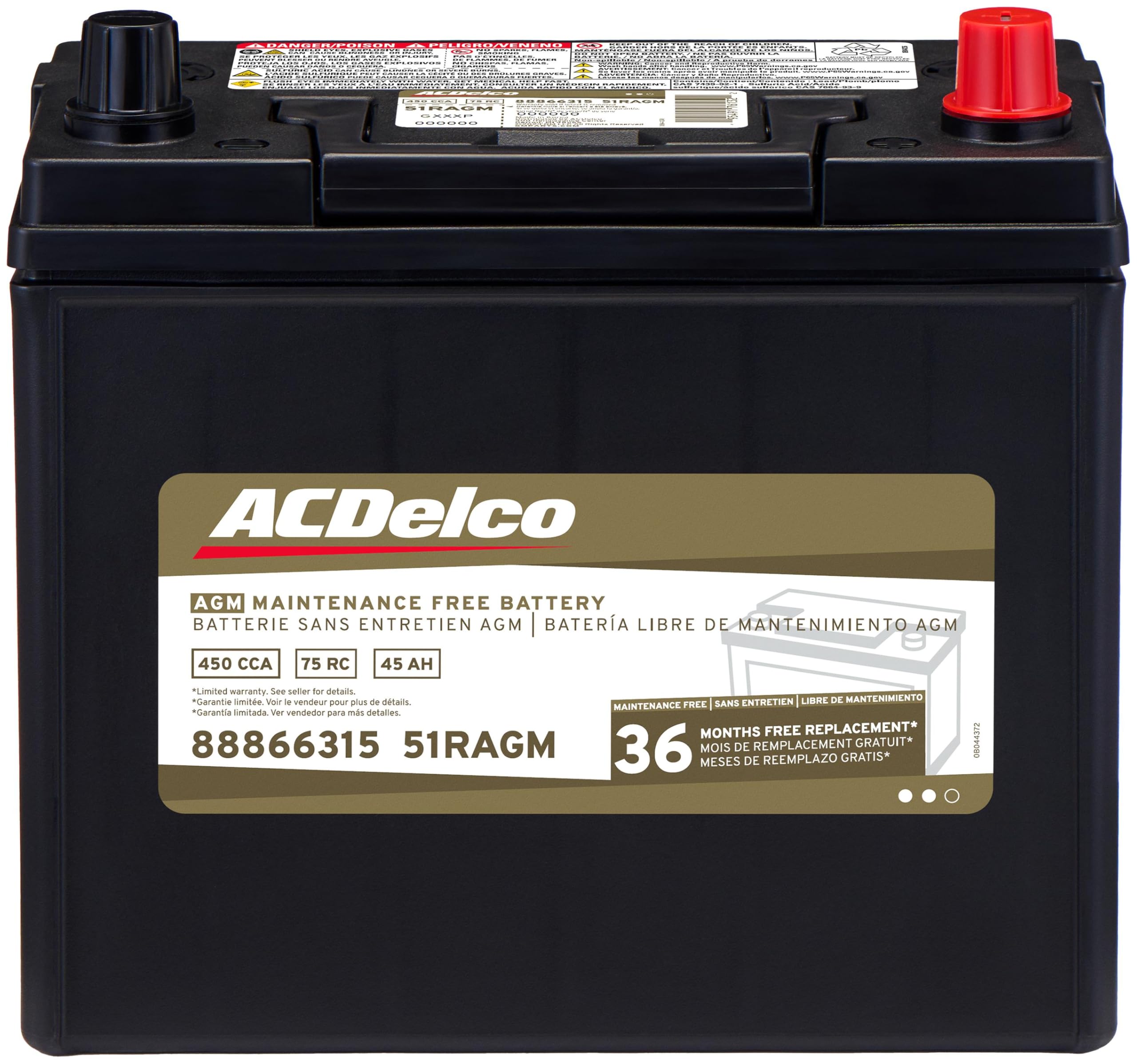
The ACDelco Gold 51RAGM is a Group 51R battery that serves as a direct OEM replacement for certain Honda and GM models, but it is not a fitment match for the 2006 Odyssey’s 24F tray. The 51R case is significantly smaller in all dimensions, so installation requires a custom bracket and likely cable extensions. This battery is included for owners who are fabricating a custom battery relocation or have modified their tray for a smaller unit.
ACDelco parts are manufactured to meet GM’s fit, form, and function specifications, and the Gold series uses AGM construction for vibration resistance and maintenance-free operation. Owner feedback across Honda Civic and HR-V applications praises the build quality and cold-weather starting performance. The 32-pound weight makes it easy to maneuver, and the tapered terminals are standard for the 51R group.
The primary appeal here is ACDelco’s reputation for durability — several owners report that factory ACDelco batteries lasted over a decade in trucks and SUVs. However, the significant fitment gap for the Odyssey means this is only suitable for advanced DIY owners willing to engineer a custom mounting solution. For standard replacement, stick with Group 24F options.
What works
- ACDelco build quality with proven long service life
- Lightweight at 32 pounds for easy handling
- AGM construction is spill-proof and maintenance-free
- Ideal for custom battery relocation projects
What doesn’t
- Group 51R does not fit Odyssey tray without major modification
- Requires custom bracket and potentially longer cables
- Not a practical choice for standard replacement
6. MARXON Group 34 Start and Stop Car Battery

The MARXON Group 34 AGM battery offers a budget-oriented entry point into AGM technology, priced well below most competitors in this group. The Group 34 case measures 10.87 x 6.61 x 6.89 inches, which is similar in length to Group 24F but narrower and shorter. This means the battery fits the tray width-wise but requires a spacer on the side or a modified hold-down to stay secure.
Rated at 650 CCA and 55 Ah, the capacity is at the lower end of what is recommended for the Odyssey, particularly for owners in colder regions. The AGM construction still provides the benefits of spill-proof operation and faster recharge than flooded batteries. MARXON includes a three-year warranty and has a US-based support office, which adds confidence for an emerging brand.
Owner reviews across various applications highlight solid performance for the price, with multiple reports of trouble-free starts after nearly a year of use. The main compromise is the lower reserve capacity compared to larger 24F batteries, which means less margin if the alternator fails or if accessories drain the battery while parked. For mild climates and short commutes, this battery works, but it is not the best choice for harsh winters or heavy electrical loads.
What works
- Very affordable entry into AGM technology
- Three-year warranty with US-based support
- Fits tray width-wise with minimal side spacer
- Fast recharge capability compared to SLA batteries
What doesn’t
- 550 CCA and 55 Ah at the low end for Odyssey demands
- Requires spacer or bracket modification for secure fit
- Lower reserve capacity leaves less margin for parasitic drain
7. ODYSSEY PC925

The Odyssey PC925 is a compact AGM battery designed primarily for powersports, motorcycles, and dual-purpose applications, not for full-size minivan starting duty. With only 330 CCA and a 26-pound weight, this battery lacks the cranking power required to reliably start a 3.5-liter V6 in cold weather. Its dimensions of 7.05 x 6.64 x 5.04 inches are far smaller than the Odyssey’s battery tray.
This battery is included in the guide for owners who may be considering a lightweight battery for a race application or a secondary battery installation for accessories. The Odyssey PC925 has a proven track record in the powersports world, with owners reporting 8 to 10 years of service life in motorcycles and ATVs. The pure-lead AGM construction delivers excellent cycle life and recharge efficiency.
For the Odyssey, this battery would require extensive custom fabrication of a mounting tray, cable extensions, and likely a secondary starting battery in parallel to achieve adequate CCA. The price point is relatively high for the capacity offered. This is not a practical recommendation for standard Odyssey battery replacement, but it serves as a reference point for specialized builds.
What works
- Extremely compact and lightweight for specialized builds
- Proven 8-10 year service life in powersports applications
- Excellent recharge efficiency from pure-lead AGM
- Non-spillable design for flexible mounting options
What doesn’t
- 330 CCA is far too low to start a 3.5L V6 reliably
- Requires extensive custom fabrication for Odyssey fitment
- High price for the limited capacity provided
- Not a practical standalone starting battery for a minivan
Hardware & Specs Guide
Group 24F Dimensions and Why They Matter
The 2006 Odyssey factory battery tray accepts only Group 24F batteries measuring approximately 10.75 inches in length, 6.81 inches in width, and 8.98 inches in height. Batteries shorter in any dimension leave gaps that allow movement, which can fray cables or crack the case. Batteries taller than 9 inches may contact the hood latch mechanism. Always measure your existing battery or the tray before ordering, as some aftermarket “universal” Group 24F batteries vary slightly in height.
Cold Cranking Amps and Reserve Capacity Explained
Cold cranking amps (CCA) measure the battery’s ability to start the engine at 0°F. The Odyssey’s 3.5L J35 engine typically needs at least 550 CCA, but 650 to 700 CCA provides a safer margin for cold climates. Reserve capacity (RC) measures how many minutes the battery can supply a 25-amp load before dropping below 10.5 volts. An RC of 120 minutes or higher ensures you have power for lights and accessories if the alternator fails during a short trip.
AGM vs Flooded: Maintenance and Lifespan Trade-Offs
Flooded lead-acid batteries cost less upfront but require periodic electrolyte checks and are prone to corrosion around the terminals. They typically last 3 to 5 years in the Odyssey’s under-hood heat. AGM batteries cost more but are sealed, vibration-resistant, and usually last 4 to 7 years. For the Odyssey, which has moderate parasitic draw from power door modules and the security system, AGM’s lower self-discharge rate helps maintain starting voltage after several days of inactivity.
Terminal Orientation and Cable Reach
The Odyssey requires a battery with the positive terminal on the right side when you face the battery from the front of the vehicle. Most Group 24F batteries use this layout, but some Group 34 and Group 47 batteries reverse the polarity. Installing a battery with reversed terminals stretches the positive cable across the top of the battery, creating a short-circuit risk against the hold-down bracket. Always confirm the terminal layout matches your original battery before purchasing.
FAQ
What exact battery group size does a 2006 Honda Odyssey take?
Can I use a Group 34 or Group 35 battery in my 06 Odyssey?
Is an AGM battery worth the extra cost for a 2006 Odyssey?
How many cold cranking amps do I need for reliable winter starting?
Do I need to vent an AGM battery in the Odyssey?
Final Thoughts: The Verdict
For most buyers, the best 06 honda odyssey battery winner is the Interstate MTX-24F because it delivers a direct Group 24F fitment with pure-lead AGM construction, strong 710 CCA, and a service life that outlasts conventional flooded batteries by years. If you want maximum cold-weather cranking power and are comfortable with minor tray modifications, grab the Odyssey 34R-PC1500T. And for a value-driven drop-in AGM that matches the factory footprint without breaking the budget, nothing beats the Weize Platinum AGM Group 24F.

Certification: BSc in Mechanical Engineering
Education: Mechanical engineer
Lives In: 539 W Commerce St, Dallas, TX 75208, USA
Md Amir is an auto mechanic student and writer with over half a decade of experience in the automotive field. He has worked with top automotive brands such as Lexus, Quantum, and also owns two automotive blogs autocarneed.com and taxiwiz.com.