
When you want to replace or upgrade your Ford vehicle’s transmission, understanding the compatibility factors will definitely come into play. And having a Ford transmission interchange chart handy makes things a lot easier by letting you know which transmissions fit specific Ford models.
Having worked with tens of dozens of Ford vehicles for over two decades, I’ve seen my fair share of compatibility issues and successes. While a fitting transmission might not always be an easy find, knowing the correct information helps tremendously.
That’s why I’ve compiled a Ford transmission interchange chart and a list of crucial compatibility factors to help you find the right fit for your Ford vehicle.
Ford Transmission Interchange Chart
Below, I’ve listed some popular Ford models and the matching transmissions known to be interchangeable.
While I’ve spent a good few days researching and collecting the data, this isn’t an exhaustive list. Still, it should give you a good starting point for finding the right fit.
| Transmission Type | Matching Models | Year Range |
|---|---|---|
| Matching Models | Year Range | |
| 4EAT-F | Escort | 1995 |
| 4EAT-G | Pro BE 2 2L L4 –3 0L V6 | 1989-1993 |
| Pro BE 2 5L V6 | 1994-1997 | |
| 4R44E | Ranger | 1995 and forth |
| 4R44E, 4R55E | Explorer | 1995-1998 |
| 4R55E | Ranger | 1995 and forth |
| 4R70W | Crown Victoria | 1995 and forth |
| F150 | 1994 and forth | |
| 250 | 1994 and forth | |
| F350 4R70W | 1993 and forth | |
| Thunderbird | 1995 and forth | |
| 5R55E | Ranger | 1997 and forth |
| A4LD | Aerostar | 1985-1994 |
| Bronco II | 1984-1990 | |
| Explorer | 1991-1994 | |
| AOD | Bronco Victoria | 1983-1992 |
| Crown Victoria | 1993-1994 | |
| F100 | 1981-1983 | |
| Ltd | 1980-1986 | |
| Mustang/Mustang II | 1980-1983, 1994-1995 | |
| Mustang/Mustang II | 1980-1982 | |
| Thunderbird | 1980-1982, 1993-1995 | |
| Van | 1983-1990 | |
| AODE | Crown Victoria | 1993-1994 |
| Mustang/Mustang II | 1994-1995 | |
| Escort | 1981-1990 | |
| ATX | Exp | 1982-1988 |
| Taurus | 1985 and forth | |
| AX4S | Windstar | 1994-1996 |
| AXOD | Taurus | 1986-1992 |
| Taurus | 1993 | |
| AXODE | Taurus | 1993 |
| BW35 | Cortina | 1968-1973 |
| Courier | 1972-1975 | |
| Escort | 1967-1974 | |
| C3 | 2000E | 1975-1981 |
| Fairmont | 1978-1993 | |
| Granada | 1981-1982, 1975-1980 | |
| Mustang/Mustang II | 1974-1980 | |
| Pinto | 1974-1980 | |
| Ranger | 1983-1984 | |
| Thunderbird | 1980-1981 | |
| C4 | 2000E | 1974 |
| Bronco | 1973-1977 | |
| Cortina | 1974 | |
| F100 | 1965-1972 | |
| F250 | 1968-1998 | |
| Fairlane | 1964-1970 | |
| Fairmont | 1978-1981 | |
| Falcon | 1965-1971 | |
| Granada | 1975-1980 | |
| Granada | 1981-1982 | |
| Ltd | 1975-1980 | |
| Ltd II | 1977 | |
| Maverick | 1970-1977 | |
| Mustang/Mustang II | 1966-1981 | |
| Pinto | 1971-1980 | |
| Ranchero | 1965-1979 | |
| Thunderbird | 1966-1981 | |
| Torino | 1968-1976 | |
| C5 | Aerostar | 1982-1986 |
| Bronco II | 1984 | |
| F100 | 1982-1983 | |
| Fairmont | 1982-1983 | |
| Granada | 1982 | |
| Mustang/Mustang II | 1982-1986 | |
| Ranger | 1982-1986 | |
| Thunderbird | 1982-1986 | |
| C6 | Bronco | 1978-1991 |
| F100 | 1973-1983 | |
| F150 | 1975-1991 | |
| F250 | 1968-1998 | |
| F350 | 1968-1998 | |
| F450 | 1992 and forth | |
| F500/600 | 1970-1978 | |
| Fairmont | 1966-1970 | |
| Falcon | 1971 | |
| Ltd | 1975-1980 | |
| Ranger | 1977-1979 | |
| Thunderbird | 1968-1979 | |
| Torino | 1968-1976 | |
| Contour | 1995 and forth | |
| CD4E | Probe 2 0L L4 | 1994-1997 |
| Cruiseomatic | Thunderbird | 1961-1966 |
| E4OD | Bronco | 1994-1998 |
| Expedition | 1997-1998 | |
| F150 | 1990-1998 | |
| F250 | 1989-1998 | |
| F350 | 1989-1998 | |
| Van | 1989-1998 | |
| F3A | Aspire (1.6L L4 Engine) | 1994-1997 |
| Festiva | 1989-1993 | |
| FMX | F350 | 1965-1972 |
| Ltd II | 1977-1979 | |
| Mustang/Mustang II | 1969-1973 | |
| Ranchero | 1968-1979 | |
| Thunderbird | 1968-1979 | |
| L3N718 | Courier | 1973-1982 |
| MX | F350 | 1965-1972 |
| Falcon | 1971 | |
| Mustang/Mustang II | 1969-1973 | |
| Ranchero | 1961-1966 | |
| Thunderbird | 1975-1979 |
Looking for the Dodge truck transmission identification chart? Check it out here.
5 Factors Affecting Interchangeability Ford Transmission
For a proper exchange between two transmissions, it’s crucial to understand the factors determining how seamless the transition will be. So, be sure to follow my checklist below.
1. Engine Size
No two things can interchange when their sizes vary, can they? But there’s more to it.
Large engines generally need more robust transmissions to handle the increased stress and strain.
Smaller engines, on the other hand, produce less power and torque, which means they can use lighter and more compact transmissions to save weight and fuel.
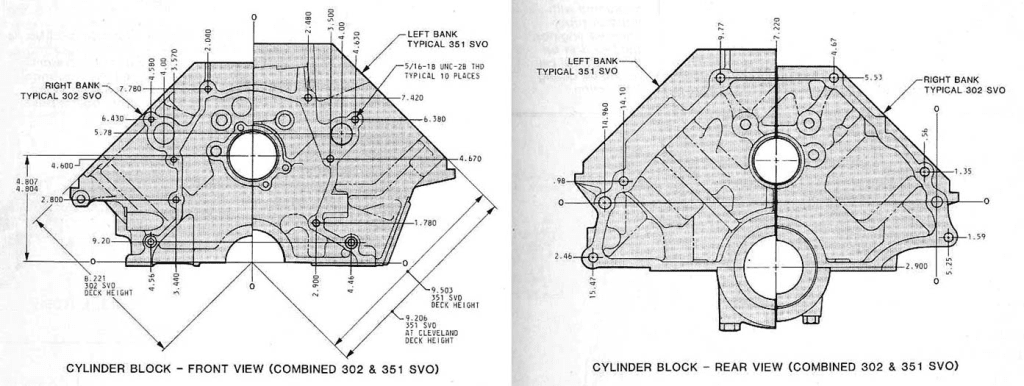
2. Bellhousing Bolt Pattern
It’s the shape and arrangement of the bolts that connect the engine and transmission.
Different Ford models have different bellhousing bolt patterns, and it’s crucial that the pattern on your chosen transmission matches the one on your vehicle’s engine for a proper fit.
Source: https://www.fordmuscleforums.com/threads/looking-for-drawing-of-bellhousing-bolt-pattern.468415/
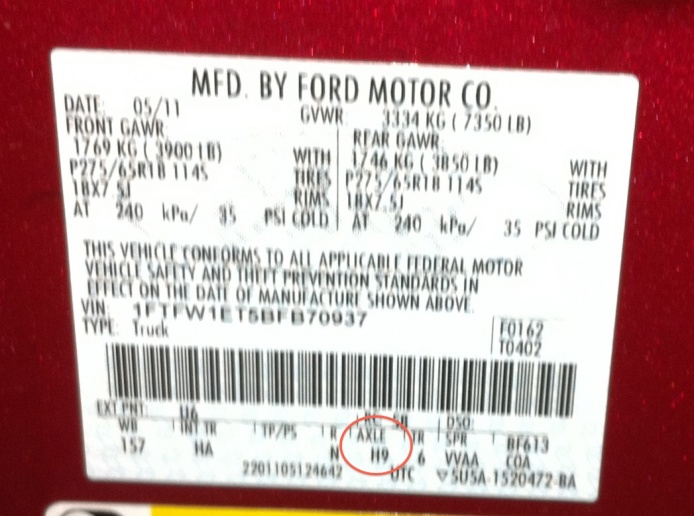
3. Rear Axle Ratio
The rear axle ratio is the proportion of teeth between the differential pinion gear and ring gear. Differentials allow wheels to rotate at varying speeds when turning, and they also transfer power from driveshafts to axle shafts.
You’ve got to consider the axle ratio when interchanging transmissions because it’ll influence the final drive ratio—the overall ratio between engine and wheel speeds.
Source: https://www.f150forum.com/f38/axle-ratio-100801/
4. Driveshaft Length
Your Ford’s driveshaft length will affect transmission interchangeability because of how it controls the engagement between the transmission output shaft and the driveshaft yoke.
The yoke is the part that slides onto the output shaft and connects to the universal joint, allowing the driveshaft to rotate and flex.
5. Shift Linkage Type
The shift linkage is a combined system of cables, rods, levers, or electronics that connects the gear shifter to the transmission. It depends on the transmission type and the vehicle’s design.
It affects transmission interchangeability because it makes up how you select the desired gear and how the transmission receives the signal to shift.
Looking for a 4t65e transmission interchange chart? Check it out from here.
Common Issues That May Arise When Interchanging Ford Transmissions
Having done numerous transmission swaps in Ford vehicles, it’s not uncommon to have a few issues during or after the interchange. Below, I’ve outlined a few common issues you might face.
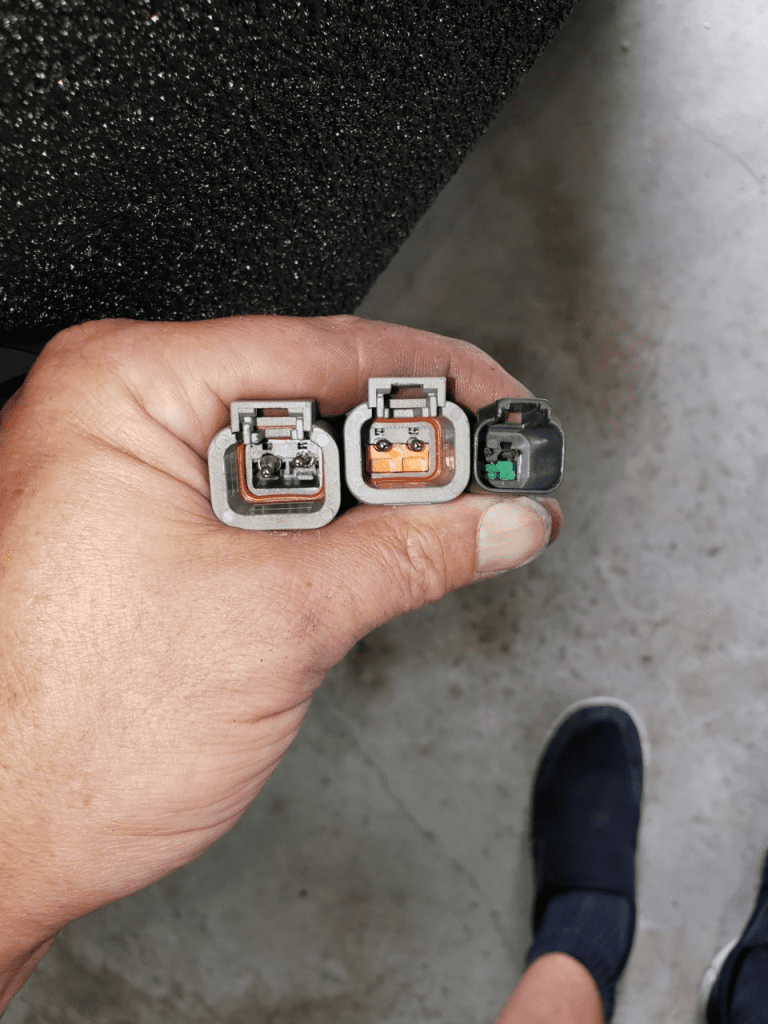
Wiring Harness Mismatch
Modern Ford cars with built-in complex electronics may often bring in wiring complications when you swap their transmission for something else.
If your existing wiring harness doesn’t align with your new transmission, you’ll likely face compatibility issues with your vehicle’s PCM, ECU, or sensors. In this case, you must find a replacement harness.
Source: https://www.tundras.com/threads/wiring-harness-mismatch.66754/
Damaged Bolts and Threads
It isn’t uncommon for rookie repairmen to damage the bolts or threads when installing a new transmission, something I see pretty often. This can cause misalignment or difficulty securing the transmission properly and lead to parts needing replacement as well.
Damaged Torque Converter
Damaging the torque converter can be even worse than damaging the bolts and threads. And since the component is extremely delicate, it’s not unlikely.
DTC Codes
Like most modern vehicles, Fords come with lots of connectors and sensors that need some reasonable degree of attention when hooking up. And misconnections may result in trouble codes appearing on your dashboard, forcing repeated assemblies.
Tips for Successfully Interchanging Ford Transmissions
As someone who has addressed compatibility factors and potential problems throughout the years, here are my tips for avoiding potential pitfalls:
- Research thoroughly to ensure the compatibility of the transmission you plan to use. Consult a professional when unsure.
- Look for veteran repairmen experienced with your Ford model and the transmission you’re installing. Also, ask if they’d offer any warranty and necessary parts replacements.
- Before installing a used or rebuilt transmission, ensure it’s in good working condition. Inspect all components, bearings, and seals for wear or damage.
- Choose high-quality transmission fluids and components to ensure optimal performance and a longer lifespan for your new transmission.
- Don’t forget to test drive your Ford after the swap. However, be careful not to shoot up the revs on your first attempt.
Conclusion
So, there you have it—a Ford transmission interchange chart at your disposal, factors affecting interchangeability, common issues that may arise, and tips for successfully swapping Ford transmissions.
Keep in mind that engine swaps can be a challenging endeavor, and some Ford models might require more extensive modifications than others.
Yet, with extensive research, proper tools, and the help of experienced professionals, an optimal transmission upgrade for your Ford is certainly possible.

Certification: BSc in Mechanical Engineering
Education: Mechanical engineer
Lives In: 539 W Commerce St, Dallas, TX 75208, USA
Md Amir is an auto mechanic student and writer with over half a decade of experience in the automotive field. He has worked with top automotive brands such as Lexus, Quantum, and also owns two automotive blogs autocarneed.com and taxiwiz.com.