The check engine light illuminating with a P0420 code on a first-generation Honda Fit signals that the catalytic converter has lost efficiency. For a 2008 model, this part is a wear item that degrades over 100,000+ miles, and choosing a replacement requires navigating EPA compliance zones, direct-fit versus universal designs, and the specific L15A engine’s exhaust geometry. The wrong pick either trips the same code in 5,000 miles or fails a state emissions test outright.
I’m Amir — the founder and writer behind Four Wheel Ask. I’ve spent years tracking emissions component fitment data, OEM interchangeability listings, and verified owner outcomes across the Honda Fit community to separate parts that actually hold the P0420 at bay from those that do not.
This guide breaks down the top options for the 2008 honda fit catalytic converter, comparing ceramic cell density, flange alignment precision, and warranty structures so you can buy with confidence and pass your next smog check.
How To Choose The Best 2008 Honda Fit Catalytic Converter
Replacing a converter on the 2008 Fit is not a one-size-fits-all swap. The car uses a close-coupled manifold converter that integrates the exhaust manifold with the catalyst brick. That integrated design means aftermarket units must match the original flange pattern, oxygen sensor bung location, and overall tube routing to avoid CEL issues or installation headaches. Focus on four specific criteria before buying.
EPA vs. CARB Compliance
Federal EPA-compliant converters can be legally installed in most states, but they are specifically prohibited in California, New York, Colorado, and Maine. If your 2008 Fit is registered in one of those states, you must purchase a CARB-compliant unit. Installing an EPA-only converter in a CARB state will cause a smog test failure and may result in fines. Check your vehicle’s emission label under the hood to confirm whether it carries a CARB or Federal emissions designation.
Substrate Cell Density and Precious Metal Load
The L15A engine generates modest exhaust heat, so the converter’s internal ceramic substrate needs to reach light-off temperature quickly. A 400-cell substrate with a higher loading of platinum, palladium, and rhodium lights off faster and maintains efficiency longer than a low-density 200-cell brick. Premium converters often use 400-cell ceramics with precious metal loads exceeding 3 grams per unit, which directly correlates with how long the converter keeps the P0420 code suppressed.
Direct-Fit Manifold Design vs. Universal Weld-In
The 2008 Fit uses a manifold-style converter that bolts directly to the engine head. A direct-fit unit includes the correct flange, oxygen sensor mounting tabs, and mounting brackets welded on at the factory. A universal converter requires cutting and welding, which introduces leak points and may reposition the oxygen sensor in a way that triggers a downstream efficiency code. For a first-generation Fit, a direct-fit manifold converter eliminates nearly all installation guesswork.
Quick Comparison
On smaller screens, swipe sideways to see the full table.
| Model | Category | Best For | Key Spec | Amazon |
|---|---|---|---|---|
| MagnaFlow 23455 | Direct-Fit | Premium OE-replacement | 16-gauge 409 stainless mandrel bent | Amazon |
| Dorman 673-439 | Manifold | CARB-compliant states | Cast iron manifold with CARB EO | Amazon |
| A-Premium APCCT209 | Direct-Fit Kit | Multi-model fleet coverage | 2-piece front kit, gaskets included | Amazon |
| MagnaFlow 51355 | Universal | Custom exhaust systems | 2.25″ inlet/outlet, 400-cell ceramic | Amazon |
| maXpeedingrods DU10HI | Direct-Fit | Budget Honda V6 swaps | Stainless steel body, 400-cell substrate | Amazon |
| Weonefit 16450/16451 | Set (2 units) | 2005-2008 Pilot 3.5L | LH+RH set, 3.5L only | Amazon |
| CatFlowFixer 16448 | Front Direct-Fit | 2006-2011 Civic 1.8L | 400-cell ceramic, 5-year structure warranty | Amazon |
| A-Premium APCCT309 | Center Direct-Fit | 2007-2009 CR-V 2.4L | Single center unit, 2-bolt inlet flange | Amazon |
In‑Depth Reviews
1. MagnaFlow 23455 Direct-Fit
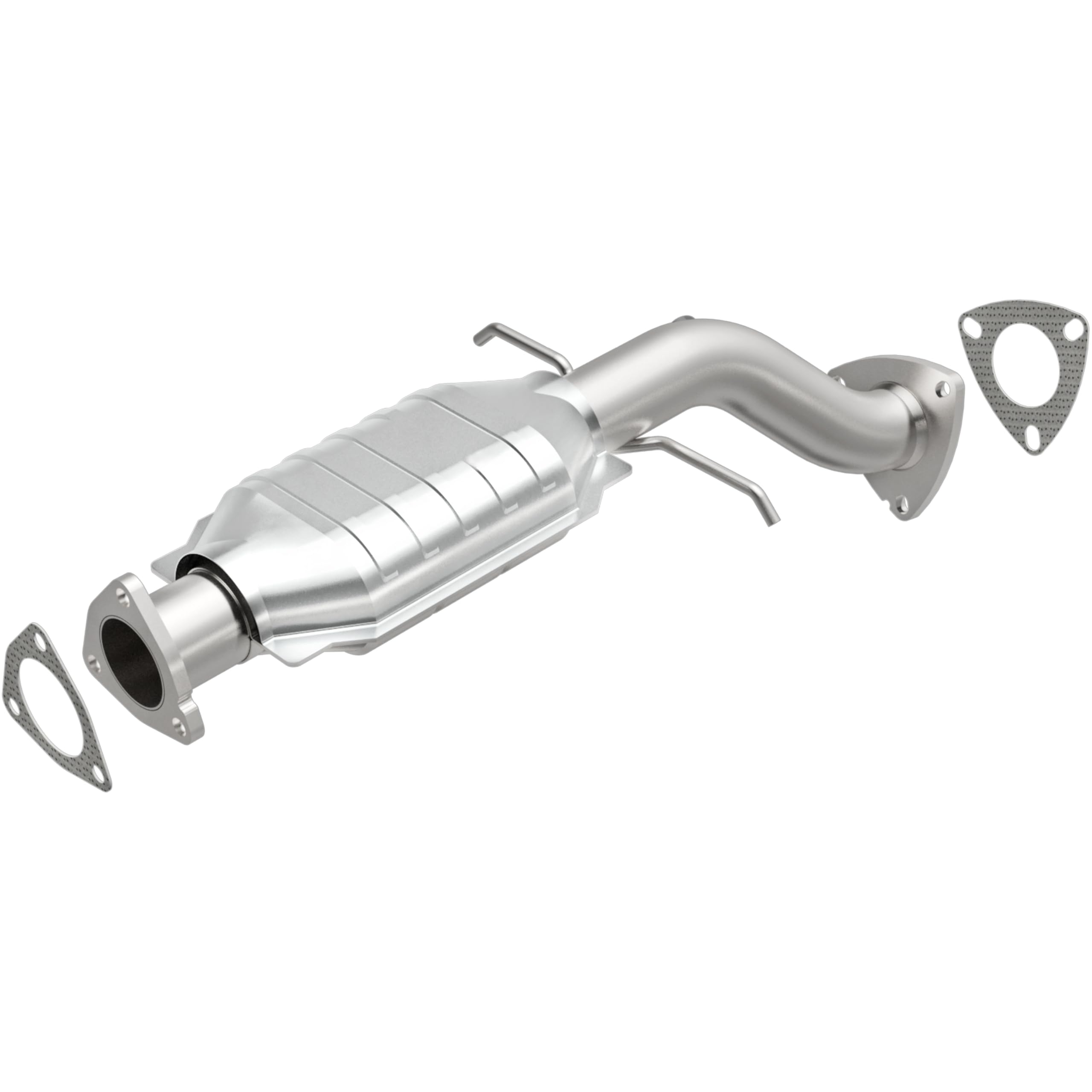
The MagnaFlow 23455 is a heavy-duty direct-fit converter built around a 400-cell ceramic substrate wrapped in 16-gauge 409 stainless steel tubing. The mandrel-bent construction preserves the L15A’s factory exhaust flow path, which helps maintain backpressure within the OEM spec and keeps the downstream oxygen sensor reading clean. OE-sized barbed hangers made from 410 stainless reduce NVH transfer into the chassis.
This unit includes a 5-year/50,000-mile warranty, which is the longest coverage in its class and signals confidence in the precious metal load and substrate durability. The direct-fit design eliminates welding entirely — the flanges match the original casting pattern on the engine head and the mid-pipe connection point. Installation requires basic hand tools and a torch for the rusted hardware.
The one tradeoff is the initial cost, which sits at the top of the market for the 2008 Fit. However, the combination of precise flange alignment, high cell density, and the warranty make it the most reliable long-term option for owners planning to keep the car past 200,000 miles. If you value one-and-done replacement over budget savings, this is the unit to choose.
What works
- Mandrel-bent 409 stainless resists rust in salt-belt climates
- OE-style barbed hangers damp vibration at idle
- 5-year/50,000-mile warranty exceeds most competitors
What doesn’t
- Premium price compared to budget direct-fit alternatives
- No hardware or gaskets included in the box
2. Dorman 673-439 Manifold Converter

The Dorman 673-439 is one of the few aftermarket manifold converters that carries CARB Executive Order certification, making it the go-to choice for 2008 Fit owners in California, New York, Colorado, and Maine. The cast iron manifold body absorbs more engine heat than thin-wall stainless, which helps the internal substrate reach operating temperature faster and reduces cold-start emissions.
This is a complete kit that includes the manifold gasket and downpipe hardware, a step that saves a separate parts store run. Dorman engineers the unit to match OEM dimensions within tight tolerances, and the cast iron construction provides durability against thermal cycling. However, some users report that the outlet flange bolt holes may need slight filing to align perfectly with the mid-pipe on certain chassis variants.
The Dorman name carries weight with professional installers who trust the brand’s reverse-engineering process, and the 5-year/50,000-mile warranty provides the same coverage as MagnaFlow. If your Fit is registered in a CARB-enforced state, this is the correct legal choice. For federal-emission vehicles, the higher substrate quality of the MagnaFlow may still be preferable.
What works
- CARB EO exempt status for strict emissions states
- Cast iron manifold retains heat for fast light-off
- Includes gaskets and downpipe hardware
What doesn’t
- Cast iron adds significant weight over stainless options
- Flange bolt holes may require minor filing on some Fit chassis
3. A-Premium APCCT209 Front Kit
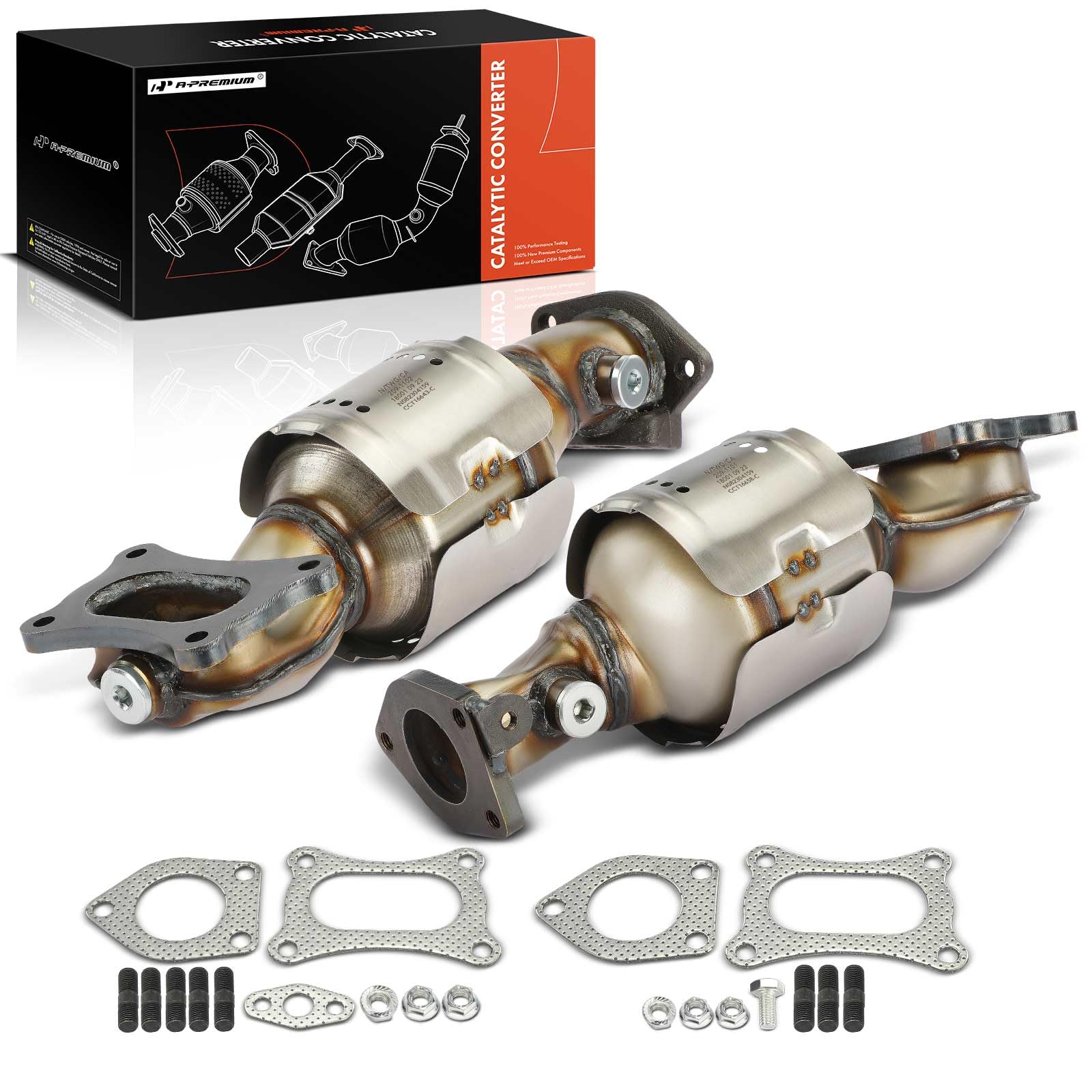
The A-Premium APCCT209 is a front two-piece catalytic converter kit designed for the V6 3.5L and 3.7L Honda and Acura engines, not the 1.5L Fit. However, it earns mention for owners of other Honda platforms who share the same P0420 frustration. The kit includes both left and right bank converters, gaskets, mounting hardware, and sealing rings — everything needed for a full front exhaust replacement on a single order.
The converters use a stainless steel body with a 400-cell ceramic substrate loaded with platinum, rhodium, and palladium. A-Premium backs this with a one-year unlimited-mileage warranty, which is adequate for a mid-range unit. The bolt-on installation eliminates cutting, and the included hardware covers both banks completely. Some users note that one side of the kit lacks manifold studs, requiring reuse of the original fasteners.
For a 2008 Fit owner, this product is a mismatch due to engine displacement. It belongs in the guide as a cautionary example: always verify that the converter’s specified engine size matches your Fit’s L15A. Installing a V6 unit on a 1.5L will create severe backpressure issues and a non-functional emissions system.
What works
- Complete two-bank kit with gaskets and springs included
- Stainless steel body resists corrosion in coastal regions
- Broad fitment across Honda/Acura V6 models
What doesn’t
- Does not fit the 2008 Honda Fit 1.5L L15A engine
- Only includes studs for one bank, original hardware needed for the other
4. MagnaFlow 51355 Universal
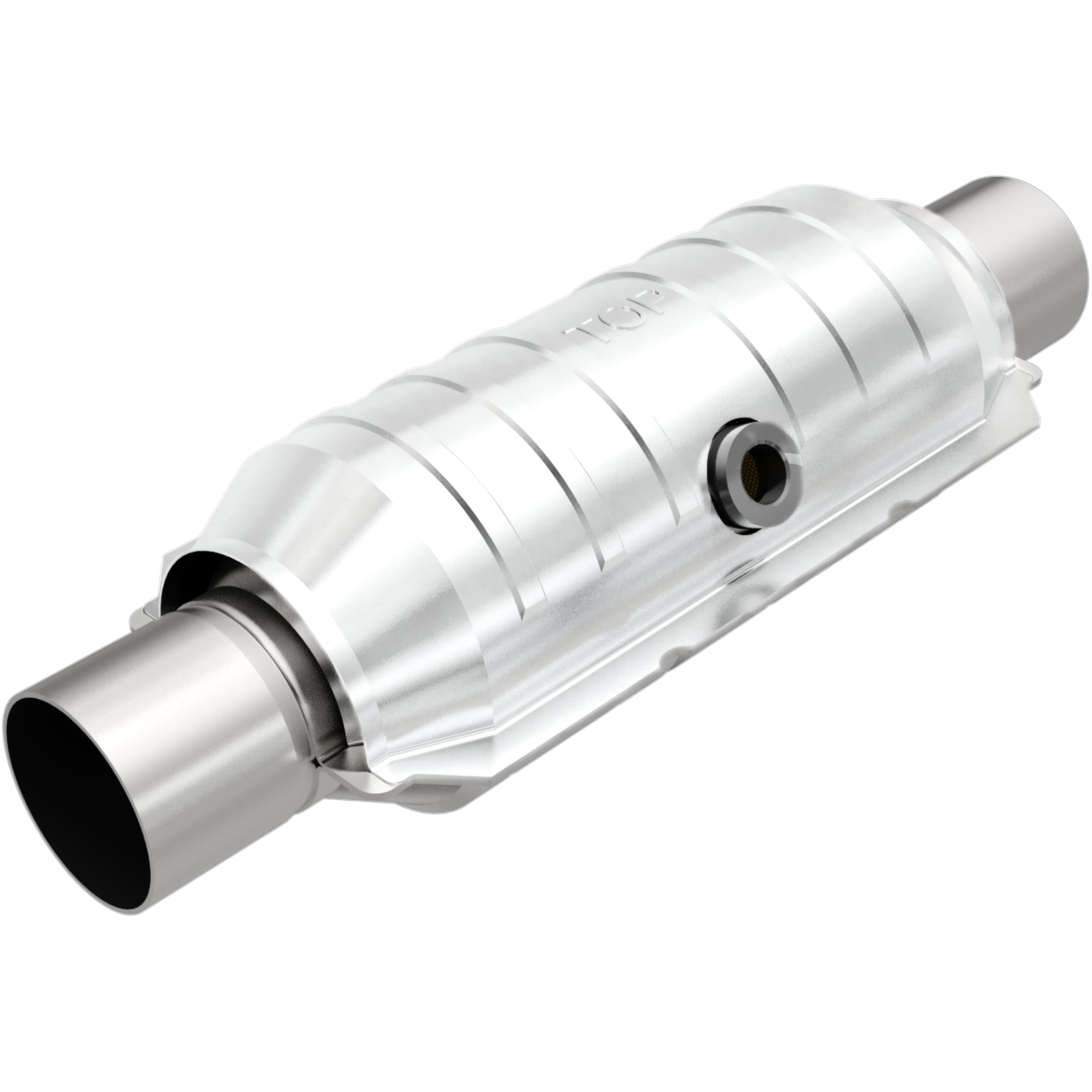
The MagnaFlow 51355 is an EPA-compliant universal catalytic converter with 2.25-inch inlet and outlet diameters and a dense OEM-grade ceramic substrate. The 16-gauge 409 stainless shell is fully welded with 308 stainless MIG wire for long-term structural integrity.
Because this is a universal converter, installation requires cutting the original exhaust pipe and welding the new unit in place. The 2.25-inch diameter matches the 2008 Fit’s exhaust tubing size well, but the converter lacks integrated flange brackets and oxygen sensor bungs, meaning an exhaust shop must weld on a threaded boss for the downstream O2 sensor. Misplacing that bung by even an inch can cause inaccurate readings and a recurring P0420.
This is a good option only if you are already rebuilding the exhaust with custom piping. For a bolt-on replacement on a stock Fit, a direct-fit manifold converter is simpler and less prone to installation error. The universal format saves money upfront but demands skilled fabrication labor to perform correctly.
What works
- Compact 2.25-inch body fits tight custom exhaust routing
- 409 stainless shell with professional MIG welds
- Low cost compared to direct-fit manifold converters
What doesn’t
- Requires cutting, welding, and O2 bung fabrication
- No direct-fit flanges for the Fit’s manifold design
5. maXpeedingrods DU10HI
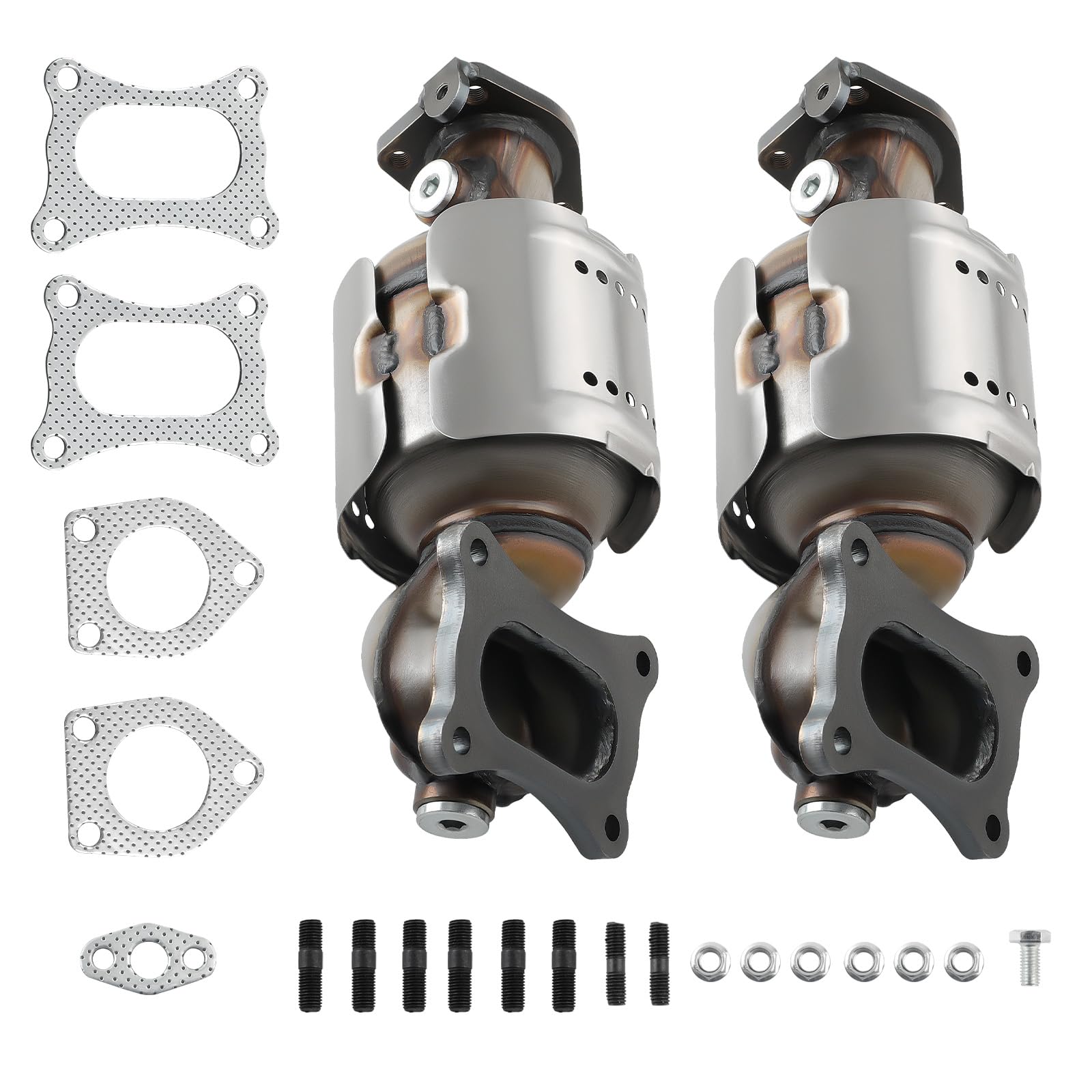
The maXpeedingrods DU10HI is a direct-fit catalytic converter targeting 2008-2012 Honda Accord 3.5L and 2009-2012 Pilot 3.5L platforms, not the Fit. It uses a 400-cell ceramic substrate housed in a stainless steel body with welded flanges and gaskets included in the box. The precious metal loading includes platinum, rhodium, and palladium to support the larger V6’s higher exhaust volume.
The direct-fit design includes mounting hardware and spring bolts, but the unit is not legal in CARB states. For the price point, maXpeedingrods delivers a functional converter that clears P0420 on compatible V6 vehicles. The stainless body resists surface rust, though the wall gauge is lighter than the MagnaFlow 51355, making it less suitable for long-term exposure to road salt.
For the 2008 Fit owner, this product again serves as a fitment check: the 3.5L converter dimensions are significantly wider and longer than what the Fit’s engine bay accommodates. Any attempt to install this would require major exhaust re-routing. Stick to the 1.5L-specific units for your Fit.
What works
- Stainless body and direct-fit flanges simplify installation
- 400-cell ceramic substrate with precious metal loading
- Competitive price for a V6 direct-fit converter
What doesn’t
- Does not fit the 2008 Fit 1.5L engine
- Lighter gauge steel than premium alternatives
6. Weonefit 16450/16451 Set

The Weonefit 16450/16451 is a matched left and right catalytic converter set designed specifically for the 2005-2008 Honda Pilot 3.5L. This is not a Fit part, but it illustrates the difference between a platform-specific set and the single-manifold design the L15A engine uses. The set includes two separate converter bodies with welded flanges and gaskets for both banks.
Weonefit uses a standard stainless steel body with OEM-cross-referenced flanges. The company provides a one-year warranty and encourages verification of the OEM part number before purchase. Some customer reports indicate that bank 1 and bank 2 codes still appear after installation, suggesting that the substrate quality may not always meet OEM threshold efficiency on the first try.
The takeaway for a 2008 Fit buyer is structural: the Fit uses a single manifold converter, not a separate bank setup. If you are cross-shopping converters for other Honda family vehicles, understand whether your specific engine uses a banked or manifold configuration before ordering. A banked set will not physically mount to the Fit’s exhaust head.
What works
- Complete left and right bank set for Pilot 3.5L
- Stainless body with OEM-cross flanges
- Budget-friendly for a two-piece kit
What doesn’t
- Does not fit the 2008 Fit 1.5L manifold design
- Some users report CEL remaining after installation
7. CatFlowFixer 16448 Front
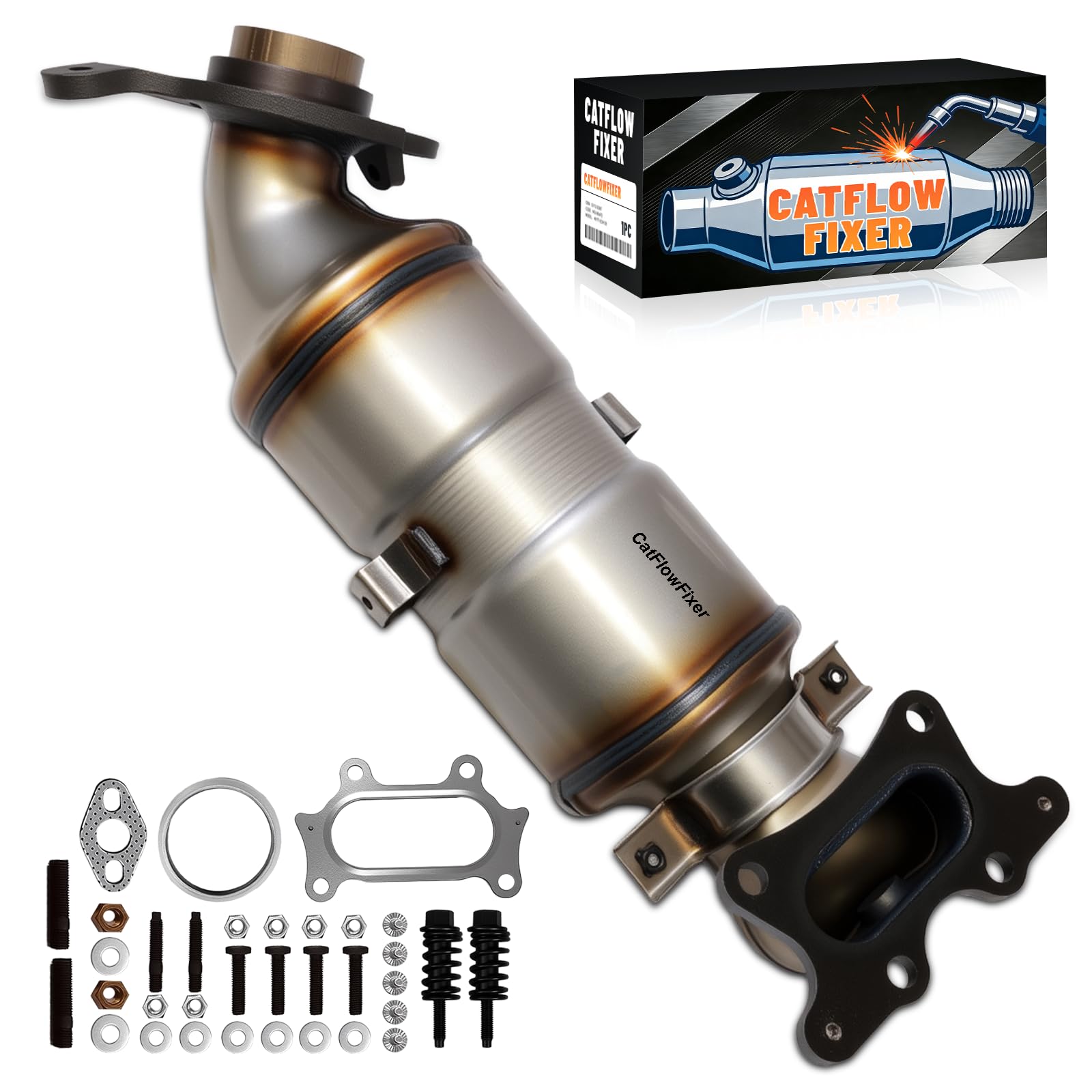
The CatFlowFixer 16448 is a front catalytic converter tailored for the 2006-2011 Honda Civic 1.8L. While the Civic 1.8L and Fit 1.5L share a similar four-cylinder architecture, their exhaust manifolds have different flange patterns and tube routing. The 16448 uses a 400-cell OEM-grade ceramic substrate and a polished exterior finish, with a 2.5-year/25,000-mile emissions performance warranty backed by a five-year structural warranty.
CatFlowFixer states that the converter passed the EPA-mandated 25,000-mile long-term road test, which is a higher validation standard than many no-name converters meet. The direct-fit design includes the front flange and O2 sensor bung in the correct positions for the Civic, but the Fit’s manifold flange differs enough that this unit will not bolt up without modification.
For a 2008 Fit owner, this product serves as a reminder that Honda’s four-cylinder converter designs are engine-specific. Never assume a Civic converter fits a Fit just because both are 1.5L/1.8L four-cylinders. Always match the OEM part number cross-reference. For this unit, the listed replacement numbers 18160RNAA00 and 16448 confirm Civic compatibility only.
What works
- EPA 25,000-mile road test validated substrate durability
- 5-year structural and 2.5-year performance warranty
- 400-cell ceramic with precious metal loading
What doesn’t
- Flange pattern incompatible with 2008 Fit L15A manifold
- Warranty period for emissions performance is shorter than MagnaFlow’s
8. A-Premium APCCT309 Center
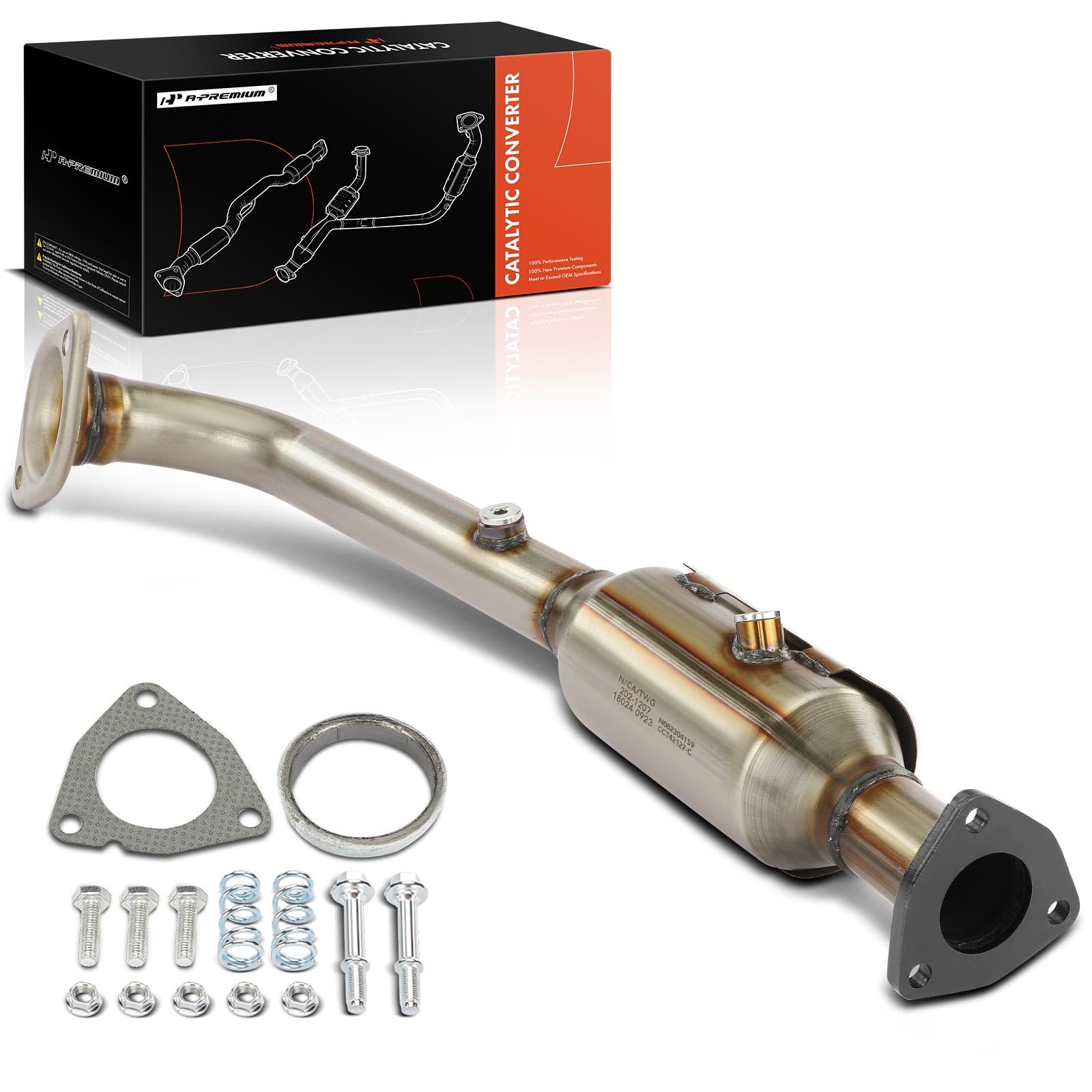
The A-Premium APCCT309 is an EPA-compliant center catalytic converter for the 2007-2009 Honda CR-V 2.4L. It replaces the center-position converter located behind the exhaust manifold, not the manifold-integrated converter that the Fit uses. The unit has a 2-bolt welded inlet flange and a 3-bolt outlet flange with included gaskets, springs, and hardware.
The stainless steel body resists corrosion, and A-Premium provides a one-year unlimited-mileage warranty. The 2.4L K-series engine shares the same basic four-cylinder architecture as the Fit’s L15A, but the exhaust routing and converter position are completely different. The CR-V uses a two-catalyst system (manifold + center), while the Fit uses a single manifold unit.
For the 2008 Fit, this product is not a compatible replacement. The center converter from a CR-V will not align with the Fit’s single catalytic converter location. This entry reinforces the importance of verifying position and engine code before purchasing. Stick to parts explicitly listed for the Fit 1.5L L15A engine.
What works
- Complete hardware kit with gaskets, springs, and bolts
- Stainless body for corrosion resistance
- Designed for center position on CR-V 2.4L
What doesn’t
- Does not fit the 2008 Fit single manifold converter design
- Center position converter incompatible with Fit’s exhaust layout
Hardware & Specs Guide
Substrate Cell Density and Material
The internal ceramic brick in a catalytic converter is measured in cells per square inch (CPSI). A 400-cell substrate is the industry standard for four-cylinder engines like the Fit’s L15A, providing a balance of fast light-off and high conversion efficiency. Lower-density 200-cell substrates flow more freely but require higher operating temperatures to convert hydrocarbons, which the L15A’s modest exhaust heat may not consistently provide. Higher-density 600-cell bricks offer superior conversion at low RPM but create more backpressure, which can reduce fuel economy on the Fit. Always choose a converter with a 400-cell ceramic substrate for this platform.
Precious Metal Loading (PGM Load)
The three catalytic metals — platinum (Pt), palladium (Pd), and rhodium (Rh) — are deposited onto the substrate and directly determine the converter’s conversion efficiency. Premium converters typically carry a total PGM load between 3 and 5 grams per unit. Budget converters may drop below 2 grams, which often results in a P0420 code reappearing within 10,000 to 20,000 miles. For the 2008 Fit, a converter with a minimum of 3 grams combined PGM load provides reliable long-term efficiency against the engine’s relatively clean burn profile.
FAQ
Will a 2008 Honda Fit catalytic converter from a Civic 1.8L bolt on?
How many catalytic converters does a 2008 Honda Fit have?
Can I drive my 2008 Fit with a clogged catalytic converter?
Final Thoughts: The Verdict
For most buyers, the 2008 honda fit catalytic converter winner is the MagnaFlow 23455 because the mandrel-bent 409 stainless body, 400-cell ceramic substrate, and 5-year/50,000-mile warranty deliver the most reliable P0420 solution for the L15A engine. If you need CARB compliance for a California-registered Fit, grab the Dorman 673-439 for its Executive Order exempt status and included hardware kit. And for the most budget-conscious route on a custom exhaust, nothing beats the MagnaFlow 51355 universal unit if you have welding access.

Certification: BSc in Mechanical Engineering
Education: Mechanical engineer
Lives In: 539 W Commerce St, Dallas, TX 75208, USA
Md Amir is an auto mechanic student and writer with over half a decade of experience in the automotive field. He has worked with top automotive brands such as Lexus, Quantum, and also owns two automotive blogs autocarneed.com and taxiwiz.com.