Fastening sheet metal, securing brackets, or assembling trailers with a manual rivet tool turns a quick job into a forearm-burning ordeal. That struggle disappears the moment you switch to a tool that uses compressed air to deliver consistent, effortless pulls on every rivet shank. Pneumatic rivet guns transform high-volume fastening from a punishing task into a smooth, repeatable process that saves time and spares your joints.
I’m Amir — the founder and writer behind Four Wheel Ask. I’ve spent years analyzing market trends, pulling spec sheets, and cross-referencing owner reports across hundreds of automotive fastening tools to identify which models truly deliver on their pulling-force promises without failing prematurely.
Whether you are restoring a classic car, fabricating an off-road bumper, or punching rivets on a production line, selecting the right best air rivet gun determines how fast your work gets done and how long the tool lasts under real shop conditions.
How To Choose The Best Air Rivet Gun
Buying a pneumatic rivet gun means looking past the color of the handle and understanding the mechanical specs that separate a daily-driver tool from an occasional-use gadget. The air rivet gun market offers a wide range of pulling forces, stroke lengths, and build materials, and matching those to your typical rivet material and volume is the smartest way to avoid buyer’s remorse.
Pulling Force and Rivet Compatibility
The pulling force, measured in pounds-force (LBF) or newtons (N), determines whether the gun can shear the mandrel off a steel or stainless steel rivet cleanly. Aluminum rivets require less force, but if you plan to set 3/16-inch or 1/4-inch steel rivets regularly, look for a gun rated at 2200 LBF or higher. Lower-force models work well for thin-gauge aluminum panels and light assembly but will struggle or jam on heavy structural fasteners.
Stroke Length and Cycle Speed
Stroke length dictates how far the jaws travel to pull and break the mandrel. A longer stroke, typically around 20 mm, allows the gun to set one rivet per trigger pull without needing to reset the jaws mid-cycle. Short-stroke guns may require multiple trigger squeezes for larger rivets, which slows down production work and increases hand fatigue. Fast oil-and-gas circulation inside the cylinder also contributes to rapid jaw return, keeping your cycle times short.
Build Quality and Ergonomics
Aviation-grade aluminum bodies keep the tool lightweight — usually under 4 pounds — which matters when you are holding the gun above shoulder height or working in tight engine bays. A swiveling air inlet prevents the hose from twisting and pulling the gun off-axis, while a well-placed trigger reduces pinch points. Models with silencer ports lower the noise level, which becomes critical in enclosed spaces or during all-day use.
Quick Comparison
On smaller screens, swipe sideways to see the full table.
| Model | Category | Best For | Key Spec | Amazon |
|---|---|---|---|---|
| Milwaukee 2550-20 | Cordless | Remote jobs without compressor access | 450 rivets per charge (1/8″ steel) | Amazon |
| HAZET 9037SPC | Pneumatic/Hydraulic | Quiet shop environments and German engineering | 8700 N pulling force | Amazon |
| Chicago Pneumatic CP9882 | Pneumatic | General shop use and composite body durability | 2200 LBF pulling force | Amazon |
| SAKAI Sanhe S50 | Pneumatic/Hydraulic | High-volume production lines | 4.2 CFM air consumption | Amazon |
| Proster PST230aus | Pneumatic | Kit buyers needing starter rivets included | 500-piece rivet assortment | Amazon |
| INPANOLS ART-20-Red | Pneumatic | One-handed operation in tight spaces | 18 KN pulling force @ 6 bar | Amazon |
| FICHFOYE FLQ004 | Pneumatic | Entry-level buyers wanting maximum pulling force | 4000 LBF pulling force | Amazon |
In‑Depth Reviews
1. HAZET 9037SPC Blind Rivet Gun

The HAZET 9037SPC delivers 8700 newtons of pulling force from a compact metal housing that weighs only 3.3 pounds. This German-engineered pneumatic-hydraulic tool handles aluminum and steel rivets from 2.4 mm up to 4 mm, and it will pull stainless steel rivets up to 3 mm without hesitation. The swivel coupling plug keeps the air hose from binding, and the sound pressure level sits at just 73 decibels, making it the quietest option in this lineup for noise-sensitive workshops.
Four nosepieces cover the most common blind rivet diameters, and the 14 mm stroke length sets each rivet in a single trigger pull. Users who have run thousands of rivets through the 9037SPC report zero jams over extended production runs, which speaks to the precision machining of the jaw mechanism. The tool dimensions of 310 x 90 x 160 mm allow it to fit into confined spaces where bulkier guns cannot reach.
The main trade-off involves the mandrel collection system — the HAZET does not include an auto-ejecting collector bottle, so spent mandrels drop freely from the nosepiece. This is actually a benefit for operators using small compressors, since vacuum-style collectors consume extra air volume. For professional shops that value longevity, low noise, and consistent pull strength, the HAZET represents the top-tier standard.
What works
- Exceptionally quiet operation at 73 dB
- Reliable hydraulic damping reduces vibration
- German build quality with robust metal housing
What doesn’t
- No onboard mandrel collector bottle included
- Limited to 4 mm max rivet diameter
2. Milwaukee Electric Tools 2550-20 M12 Rivet Tool
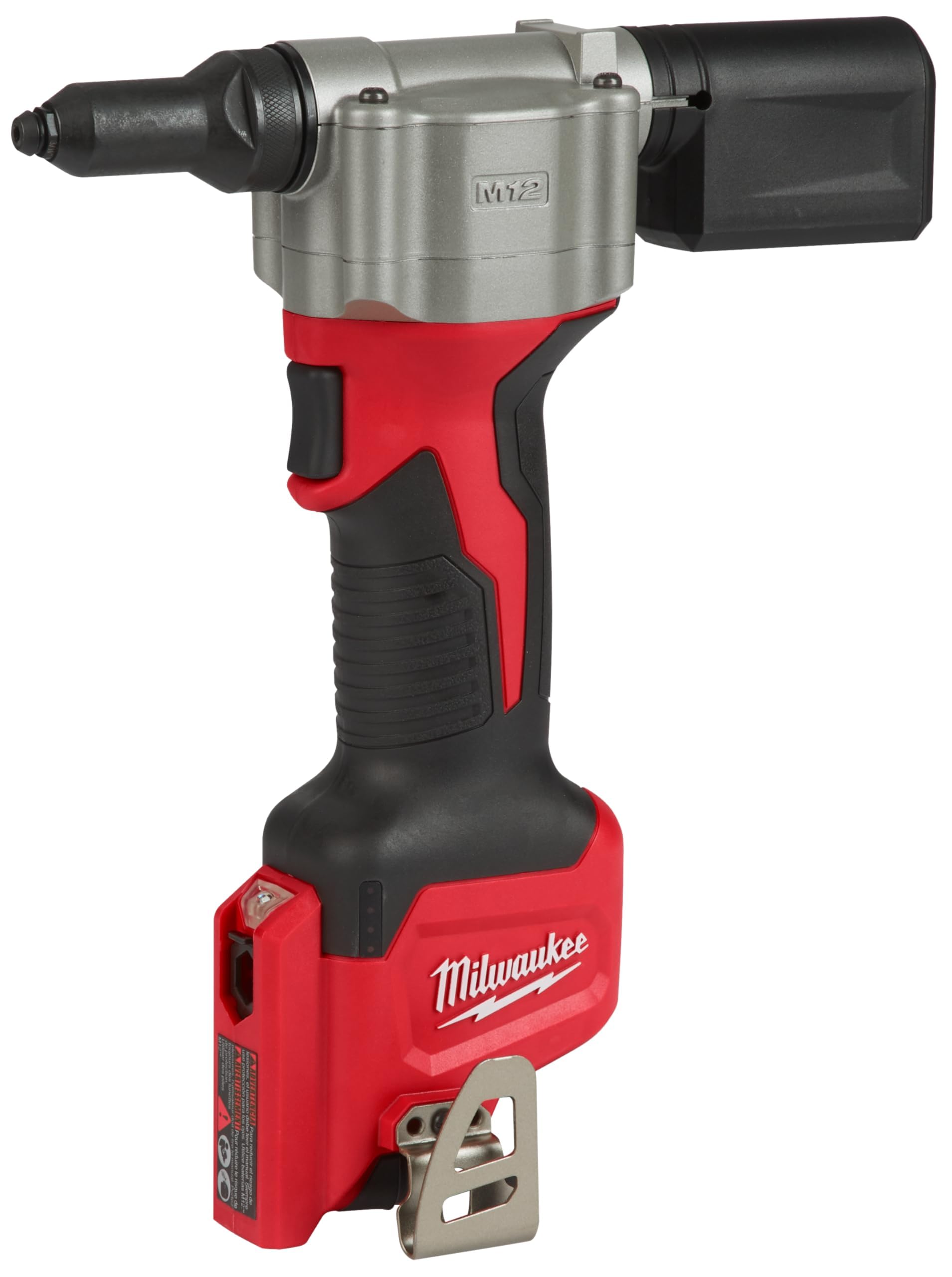
The Milwaukee 2550-20 breaks the cordless barrier for blind rivet tools, pulling 1/8-inch steel rivets at a rate of 450 per charge on a single M12 Lithium-Ion battery. This tool handles 3/32-inch, 1/8-inch, 5/32-inch, and 3/16-inch rivets, making it compatible with the most common diameters used in automotive trim, gutter work, and light fabrication. The stainless steel and steel construction gives it a sturdy feel that inspires confidence when the nearest air compressor is a hundred feet away.
Onboard storage for the spare nosepieces is a thoughtful design touch, though the placement forces you to remove the battery to access the stored heads. The trigger action is smooth and requires minimal hand strength, which users with arthritis or limited grip power consistently praise. The bare tool weighs 4.81 pounds with a battery installed, which is heavier than most pneumatic options, but the freedom from air hoses compensates for the extra weight in mobile applications.
Long-term users report that the tool maintains consistent pulling force even as the battery depletes, and the build quality holds up well in professional environments. The major consideration is the upfront investment, especially since the tool ships as a bare unit without a battery or charger. For technicians who already own M12 batteries, this rivet gun eliminates the compressor dependency entirely and works reliably on remote job sites.
What works
- No air compressor required for operation
- High output of 450 rivets per M12 charge
- Sturdy stainless steel and steel construction
What doesn’t
- Battery and charger sold separately
- Spare nozzle storage blocked by battery
3. Chicago Pneumatic CP9882 Air Riveter

Chicago Pneumatic has a long reputation in the industrial tool space, and the CP9882 carries that lineage with a 2200-pound pulling force housed in a composite body that weighs just 3.3 pounds. The tool accepts 3/32-inch, 1/8-inch, 5/32-inch, and 3/16-inch blind rivets, and the 1/4-inch NPT air inlet with 3/8-inch minimum hose size ensures compatibility with standard shop air systems. Operating pressure maxes out at 90 psi, which lines up perfectly with typical compressor regulators.
The twist-off cup on the front collects spent mandrels, keeping the work area clean and preventing stray stems from falling into assemblies. Four nosepieces come included, and the ergonomic composite grip stays comfortable during long shifts. The CP9882 measures just under 9 inches in length, which gives good leverage without being cumbersome inside frames or channel sections.
Some users note that the composite body, while lightweight, does not feel as premium as a full metal housing. However, the reduced weight translates to less fatigue when setting hundreds of rivets overhead or on vertical surfaces. For general repair shops and home workshops that need a reliable pneumatic riveter without the German price tag, the Chicago Pneumatic CP9882 delivers consistent performance with a trusted brand name.
What works
- Lightweight composite body reduces fatigue
- Twist-off mandrel cup keeps work area clean
- Trusted industrial brand with broad support
What doesn’t
- Composite housing less impact-resistant than metal
- Limited to 3/16-inch max rivet size
4. SAKAI Sanhe Pneumatic Hydraulic Pulling Rivet Gun S50

The SAKAI Sanhe S50 is a lightweight pneumatic-hydraulic rivet gun weighing only 2.9 pounds, making it the lightest full-power option in this selection. Despite the minimal weight, it delivers serious pulling force through a short-cylinder design that cycles quickly. The tool consumes 4.2 CFM at operating pressure and includes four nosepieces covering 3/32-inch through 3/16-inch diameters. The quick-release air valve enables rapid cylinder return for high-speed assembly operations.
Users who have fired over 4000 rivets through the S50 report zero jams and consistent performance, which is exceptional reliability for a tool in this weight class. The aluminum construction resists corrosion, and the compact form factor fits easily into a tool bag alongside other pneumatic tools. The absence of an auto-collection bottle means less air consumption, allowing the S50 to run effectively on smaller pancake-style compressors that would struggle with vacuum-feed tools.
The trigger design is a conventional pull-style rather than a lever, which some users prefer for one-handed operation. The trade-off is that the trigger lacks the pinch-guard found on some competitors, so operators need to be mindful of finger placement. For high-volume production environments where every gram of tool weight matters over a 10-hour shift, the SAKAI Sanhe S50 stands out as the endurance champion.
What works
- Extremely lightweight at 2.9 pounds
- Zero-jam reliability over thousands of cycles
- Runs well on small pancake compressors
What doesn’t
- No mandrel collector bottle included
- Trigger lacks finger pinch guard
5. Proster Pneumatic Riveter PST230aus
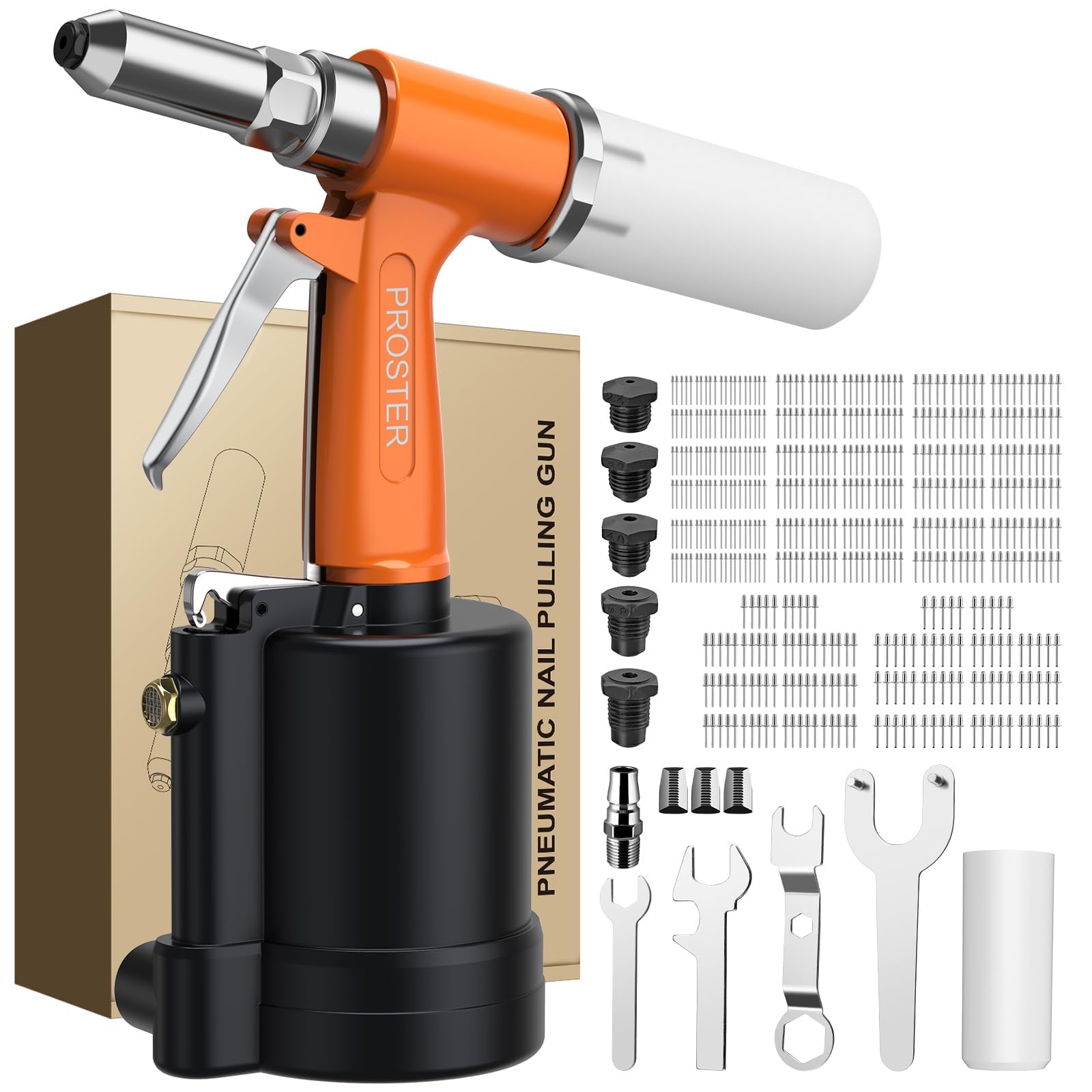
The Proster PST230aus stands out by bundling 500 blind rivets across five sizes — 100 pieces of 2.4 mm, 150 of 3.2 mm, 130 of 4.0 mm, 100 of 4.8 mm, and 20 of 6.4 mm — alongside five corresponding nosepieces and a US-standard air inlet. The aircraft-grade aluminum body keeps the weight at a manageable level while providing enough durability for frequent use. The three-claw jaw design with 360-degree gripping ensures the mandrel is held securely through the pull cycle.
Users consistently describe the tool as sturdy and heavy-duty, noting that it drives rivets cleanly without the jamming issues that plague lower-tier pneumatic riveters. The included silencer port reduces the exhaust noise noticeably, which is a welcome feature for indoor work. The extra set of jaw pieces included with the kit extends the service life before replacement parts are needed, which is a smart inclusion for a tool intended for regular use.
The primary limitation is that the manufacturer explicitly advises against using stainless steel rivets with this model, which restricts its application range for some industrial jobs. Additionally, some users report occasional trigger hesitation where the gun requires a second squeeze to complete the pull on larger rivets. For DIYers and light commercial users who work primarily with aluminum and steel rivets, the Proster kit delivers exceptional value by including everything needed to start riveting immediately.
What works
- Generous 500-piece rivet assortment included
- Aluminum body with extra jaw set for longevity
- Silencer port reduces exhaust noise
What doesn’t
- Not recommended for stainless steel rivets
- Occasional trigger hesitation on larger sizes
6. INPANOLS Pneumatic Pop Riveter ART-20-Red

The INPANOLS ART-20-Red generates 18 kilonewtons of pulling force at 6 bar, which is roughly equivalent to 4046 LBF, putting it in the same league as much more expensive industrial guns. The aviation aluminum main body keeps the tool light and maneuverable, and the 360-degree swiveling air inlet prevents the hose from kinking or pulling the gun off-axis during use. The short trigger design allows a more natural grip position, reducing wrist strain compared to the long-lever triggers found on older pneumatic riveters.
A 20 mm working stroke enables the gun to set one rivet per trigger pull across all compatible sizes, including 3/32-inch through 3/16-inch aluminum, iron, and stainless steel rivets. The oil fill port on the top of the cylinder allows lubrication without disassembling the tool, which simplifies maintenance and extends seal life. The muffler holes on the rear efficiently vent exhaust air while keeping the noise level manageable.
Users with arthritis or age-related hand weakness specifically praise this tool because it requires minimal grip strength to operate. The spent mandrel sometimes stays inside the tool rather than ejecting cleanly, requiring a quick tap to clear it. For mechanics and fabricators who need a compact, powerful, and comfortable pneumatic riveter that runs on standard shop air, the INPANOLS ART-20-Red delivers a well-balanced package.
What works
- High 18 KN pulling force in a compact package
- Swiveling air inlet prevents hose binding
- Ergonomic short trigger reduces hand strain
What doesn’t
- Mandrel occasionally sticks inside the nosepiece
- No storage case included for nosepieces
7. FICHFOYE Heavy Duty Pneumatic Rivet Gun FLQ004
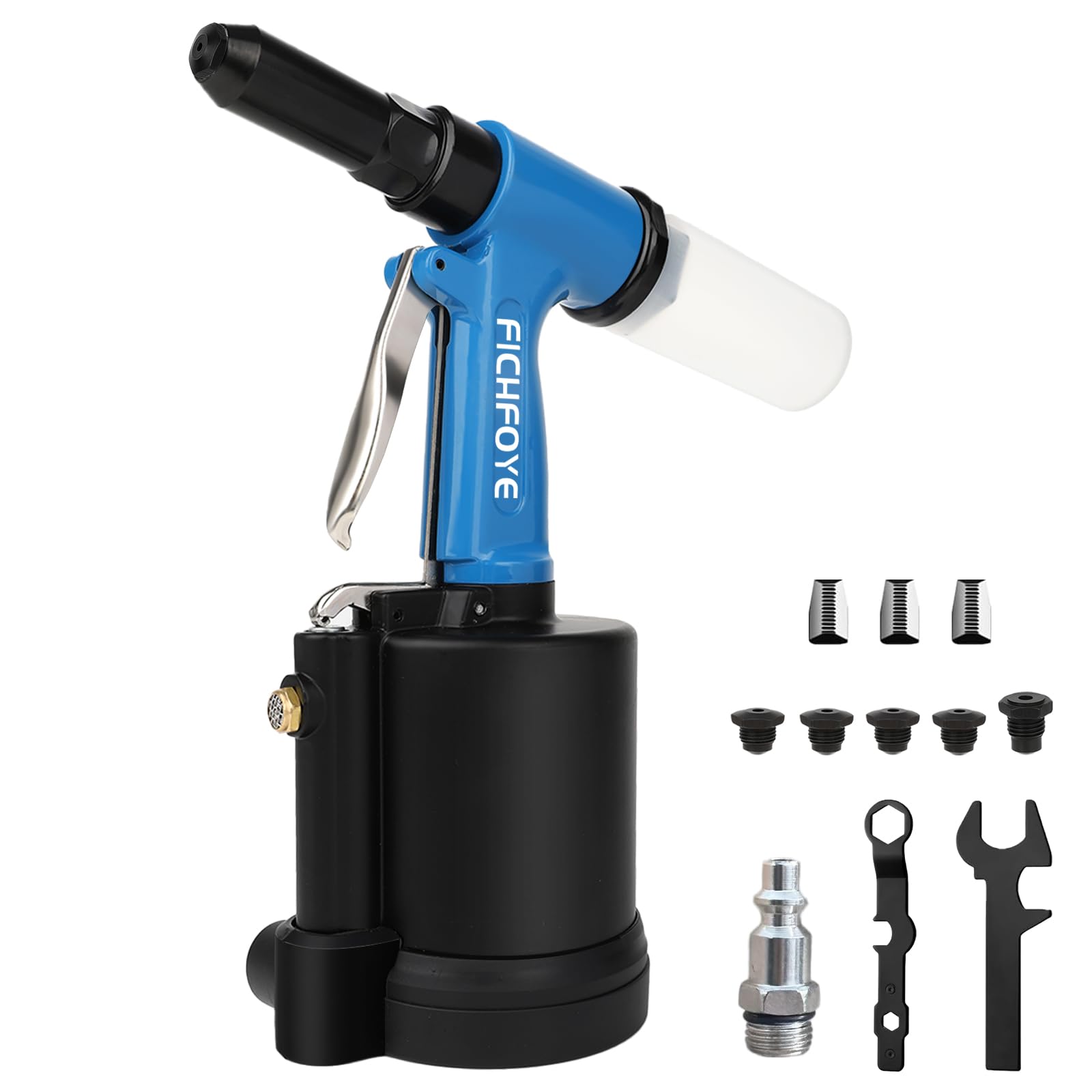
The FICHFOYE FLQ004 claims a massive 4000 LBF pulling force (1814 kgf), which positions it as the highest pulling-force-rated gun in this comparison at the most accessible price point. The kit includes five rivet heads covering 3/32-inch through 1/4-inch diameters, two wrenches, three claws, a US-standard air nozzle, and a removable collection bottle. This level of force makes short work of 1/4-inch steel rivets that would stall lower-powered tools.
The ergonomic handle design and lightweight build reduce forearm fatigue during extended sessions, and the quick-change nosepiece system lets you swap sizes without reaching for a tool. The collection bottle captures spent mandrels automatically, which is a nice convenience feature often missing from sub-100-dollar pneumatic riveters. The aluminum and steel construction feels adequate for weekend-warrior use and light commercial applications.
Some users note that the fit and finish does not match premium brands, with slightly looser tolerances on the jaw carrier assembly. The long-term durability remains unproven since this model was introduced in mid-2024, so heavy daily use in a production environment carries some risk. For home garage users and small repair shops who want maximum pulling force at a minimum investment, the FICHFOYE FLQ004 offers compelling specs on paper.
What works
- Highest pulling force rating at 4000 LBF
- Complete kit with collection bottle and wrenches
- Quick-change nosepiece system for fast swaps
What doesn’t
- Build tolerances not as tight as premium models
- Long-term reliability still unverified
Hardware & Specs Guide
Pulling Force: LBF vs kN
Pulling force determines the maximum rivet diameter and material your air rivet gun can shear. Pounds-force (LBF) and kilonewtons (kN) are the two common units — 1 kN equals roughly 225 LBF. Aluminum rivets require less force than steel, and stainless steel rivets demand the highest pulling capacity. A gun rated below 2000 LBF will handle most automotive aluminum rivets, while 3000 LBF and above allows consistent setting of 1/4-inch steel fasteners without hesitation.
Air Consumption and Compressor Matching
Pneumatic rivet guns consume air measured in cubic feet per minute (CFM) at a given pressure. Most tools require 4 to 6 CFM at 90 psi to maintain full pulling force. A standard 6-gallon pancake compressor typically outputs around 2.5 CFM, which means it will struggle to keep up with rapid rivet cycling. For production work, a 20-gallon or larger compressor delivering at least 5 CFM ensures the gun operates without pressure drops that cause incomplete pulls.
FAQ
Can an air rivet gun handle stainless steel rivets?
What size air compressor do I need for a pneumatic rivet gun?
Why does my air rivet gun jam and how do I fix it?
Final Thoughts: The Verdict
For most buyers, the best air rivet gun winner is the HAZET 9037SPC because it combines an 8700 newton pulling force with whisper-quiet operation and legendary German build quality that survives years of professional use. If you want cordless freedom for remote jobs, grab the Milwaukee 2550-20. And for budget-conscious buyers who need maximum pulling force on day one, nothing beats the FICHFOYE FLQ004.

Certification: BSc in Mechanical Engineering
Education: Mechanical engineer
Lives In: 539 W Commerce St, Dallas, TX 75208, USA
Md Amir is an auto mechanic student and writer with over half a decade of experience in the automotive field. He has worked with top automotive brands such as Lexus, Quantum, and also owns two automotive blogs autocarneed.com and taxiwiz.com.