That chalky, oxidized layer on your aluminum wheels, boat pontoons, or truck toolbox isn’t just an eyesore—it’s a surface that’s slowly breaking down under the elements. A purpose-formulated solution can strip away that corrosive haze and restore a like-new luster without damaging the base metal.
I’m Amir — the founder and writer behind Four Wheel Ask. I’ve spent countless hours analyzing chemical formulations, application methods, and real-world performance data for cleaning agents, separating marketing fluff from measurable results by cross-referencing technical data sheets with thousands of verified owner experiences.
The right formula depends entirely on the surface condition and your working style. This guide breaks down the five top-performing options to help you find the best aluminum cleaner for your specific restoration project, whether you are tackling heavy marine oxidation or light wheel grime.
How To Choose The Best Aluminum Cleaner
Not every product removes the same type of staining. Understanding the difference between chemical etching and mechanical polishing is the first step toward a finish that lasts.
Acid-Based Brighteners vs. Abrasive Polishes
Acid-based brighteners use a chemical reaction to dissolve oxidation and embedded stains. They work fast—often in under a minute—and require no scrubbing, making them ideal for large surfaces like pontoons or RV siding. However, they can leave a slightly chalky haze if not rinsed thoroughly or if the aluminum has deep pitting. Abrasive polishes, on the other hand, physically grind down the top oxide layer. They demand more elbow grease or a machine buffer but deliver a mirror finish on wheels and fabricated parts. The trade-off is that heavy abrasion can remove anodized coatings.
Surface Condition and Pitting Depth
If your aluminum surface is smooth but simply dull or chalky, a chemical brightener is usually the quicker route. If the metal has visible pitting—small craters from prolonged salt exposure—no cleaner will fill those cavities. In that case, a polish can at least restore shine to the uncorroded areas. Never use a heavy abrasive on polished or anodized trim intended for aesthetic applications unless you are prepared to re-clear the surface afterward.
Application Equipment and Working Environment
Spray-on, rinse-off products require access to a pressure washer or a strong garden hose and good drainage. Paste or liquid polishes require clean microfiber cloths, foam applicator pads, or a variable-speed buffer. Ventilation matters—some chemical cleaners produce strong fumes that are irritating in enclosed spaces. Gloves and eye protection are always recommended, especially when handling acid-based formulations.
Quick Comparison
On smaller screens, swipe sideways to see the full table.
| Model | Category | Best For | Key Spec | Amazon |
|---|---|---|---|---|
| 3M Marine Restorer & Polish | Abrasive Polish | Heavy marine oxidation removal | 1000-grit medium abrasive | Amazon |
| Quality Chemical Combo | Acid Brightener | Spray-on wheel and trailer cleaning | 1 Gallon concentrate + 2 sprayers | Amazon |
| Flitz Multi Purpose Polish | Non-Abrasive Polish | Versatile household & automotive metal care | 16 oz liquid, 6-month protection | Amazon |
| Bosh Chemical Alumabright | Acid Brightener | Large-scale commercial & fleet restoration | 2 Gallon concentrated case | Amazon |
| Poli Glow Restoration Kit | Polymer Sealant | Fiberglass & painted aluminum RV/boat restoration | 32 oz polymer + prep solution | Amazon |
In‑Depth Reviews
1. 3M Marine Aluminum Restorer and Polish

The 3M Marine Restorer uses a 1000-grit medium abrasive compound designed specifically to cut through heavy oxidation and chalking on boat aluminum. When applied with a low-speed buffer, it removes the weathered top layer and reveals a reflective surface beneath. Multiple owners report that a single seasonal application keeps their pontoon tubes and trailer rails looking new through an entire summer of freshwater use.
This polish excels on surfaces that have gone completely chalky but lack deep pitting. The concentrated formula spreads well, so a small amount covers a large area. It works by hand for small sections, but a machine dramatically improves the final uniformity. Users caution against expecting it to fill corrosion craters—it restores shine only to uncorroded metal underneath.
Professional detailers and serious DIY boat owners favor this product for its predictable results and the protective wax residue it leaves behind. It is classified as industrial use, so good ventilation and gloves are essential. For someone who wants a lasting restoration rather than a quick spray-down, this is the most reliable option on the list.
What works
- Effective on severe marine chalking and oxidation
- Machine-compatible for efficient large-area work
- Leaves a protective wax layer behind
What doesn’t
- Requires elbow grease or a buffer—not a spray-on
- Will not repair existing pitting in the metal
2. Quality Chemical Aluminum Cleaner & Brightener

The Quality Chemical Combo is an acid-based brightener designed for a fast spray-on, rinse-off workflow. It targets oxidation, road salt corrosion, and mold stains on trailer frames, truck rims, and pontoons. Users report that grime visibly melts off within seconds of contact, typically requiring only a minute of dwell time before pressure washing reveals the bright underlying metal.
One distinct advantage is the included pair of chemically resistant sprayers and two refill quarts, giving you ready-to-use bottles without extra mixing steps. The concentrated gallon allows for significant dilution for lighter cleaning or full-strength application for heavy staining. Several verified buyers note that full-strength use produces strong fumes, so working outdoors with a respirator is strongly advised.
The primary compromise is that the chemical action can leave a slightly chalky finish on aluminum that has micro-pitting. A neutralization step with water is critical to prevent residue. For owners who need to clean large areas quickly without scrubbing, this system delivers the fastest turnaround time of any product here.
What works
- Almost instant stain removal with no scrubbing
- Comes with two sprayers for immediate use
- Excellent for road salt and mold stains
What doesn’t
- Strong odor requires good ventilation
- Can leave a haze on pitted surfaces
3. Flitz Multi Purpose Metal Polish

Flitz is a non-abrasive metal polish formulated with German ingredients and manufactured in the United States. It targets tarnish, light oxidation, and grime on aluminum, chrome, brass, and stainless steel without scratching the surface finish. One of its standout features is the protective barrier it leaves behind, which owners report lasts up to six months in freshwater and three months in saltwater environments.
The liquid consistency works well with a dry vibrating tumbler for small parts, making it a favorite among enthusiasts who restore golf club heads or engine components. For automotive use, it performs exceptionally well on foggy headlights and lightly oxidized aluminum wheels. The non-flammable and food-safe formulation means it can even be used on kitchen prep surfaces without concern.
While it is a superior general-purpose cleaner, it struggles against the heavy, chalk-like oxidation found on marine aluminum that has been neglected for years. It requires more physical effort and multiple passes compared to dedicated marine polishes. For someone maintaining multiple metal surfaces around the house, garage, and boat, this is the most versatile single bottle solution available.
What works
- Safe on multiple metal types without scratching
- Long-lasting protective coating after application
- Non-toxic and food-safe formula
What doesn’t
- Not effective on deep marine oxidation
- Requires more manual effort than spray-on cleaners
4. Bosh Chemical Alumabright Aluminum Cleaner
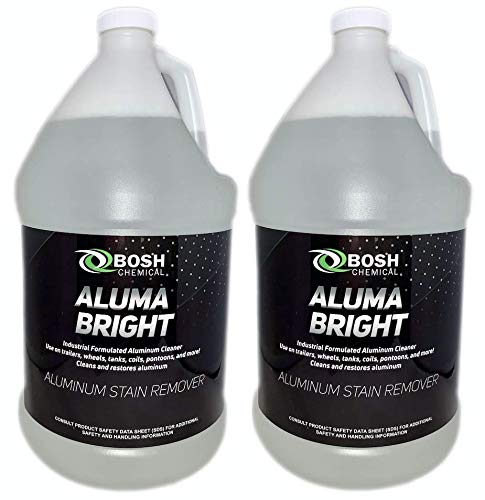
The Bosh Chemical Alumabright is a highly concentrated, non-fuming acid-based cleaner designed for heavy-duty fleet and marine applications. It targets embedded carbon deposits, diesel exhaust smoke residue, grease, and road salt corrosion. The two-gallon case provides substantial volume for recurring maintenance on tow truck beds, work truck bodies, or multiple boat pontoons over a season.
Application requires a pump sprayer for best coverage. Users describe spraying the concentrate onto dry aluminum, allowing it to foam for about a minute, then rinsing with cold pressurized water. The chemical reaction lifts oxidized material without the need for scrubbing. One long-term user specifically noted its effectiveness on aluminum rollback tow truck beds that accumulate years of grime from loading vehicles.
The primary limitation is that the final finish is a clean, bright surface rather than a polished mirror. If a high-gloss look is required, this product should be followed by a mechanical polish. The strong almond scent is mild compared to other acid cleaners, but adequate ventilation and protective gear remain essential. For commercial operators who prioritize speed and volume, this case offers the best cost-per-gallon ratio.
What works
- Non-fuming formula reduces inhalation risk
- Highly concentrated for heavy grease and carbon removal
- Two-gallon case provides excellent per-application value
What doesn’t
- Requires a separate pump sprayer
- Cleans rather than polishes—no high-gloss finish
5. Poli Glow Boat & RV Restoration Kit
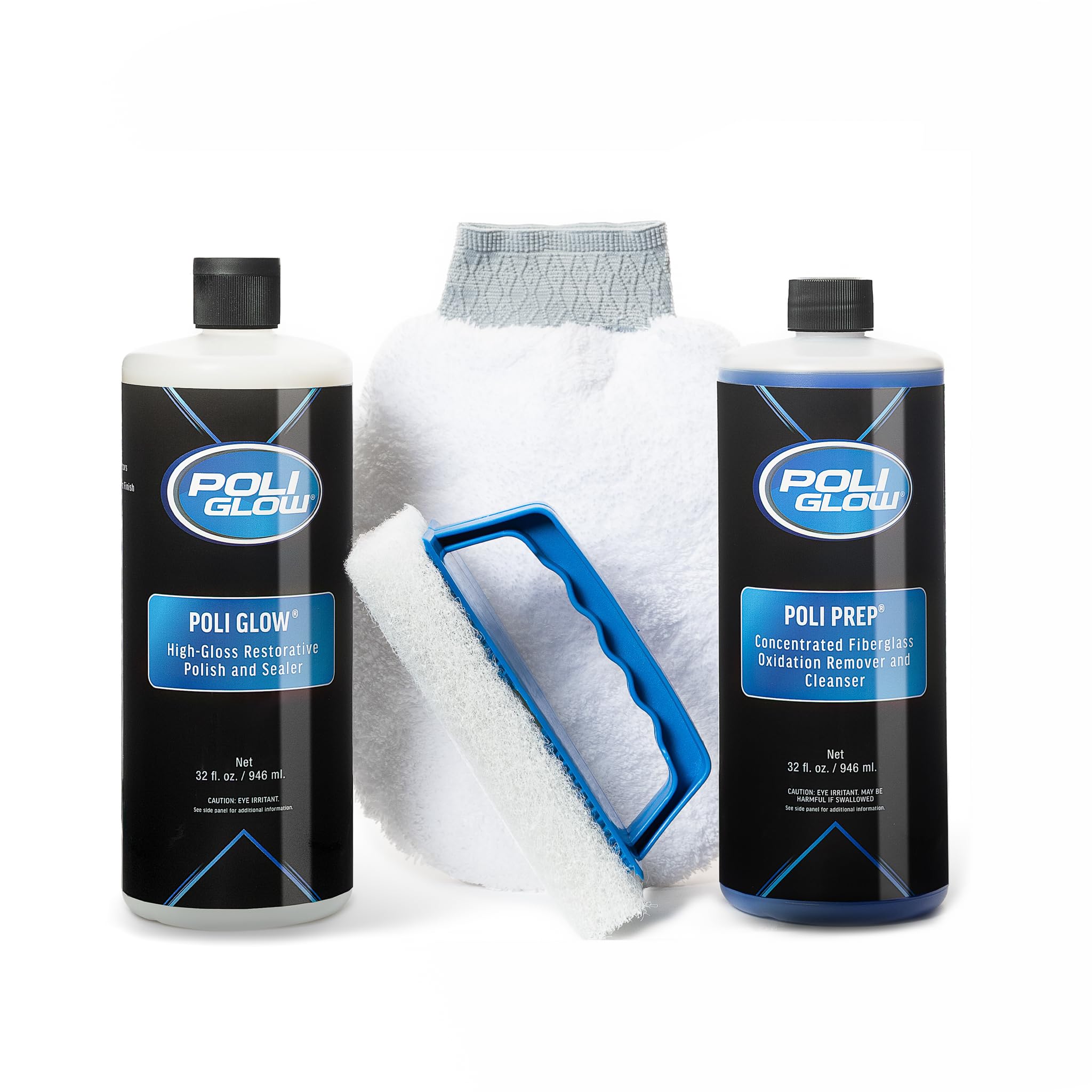
The Poli Glow kit takes a fundamentally different approach by using an acrylic polymer that bonds to fiberglass and painted aluminum surfaces rather than chemically etching or abrading them. It is designed specifically for gelcoat and painted metals on RVs, boats, and jet skis that have faded from UV exposure. The kit includes a 32-ounce bottle of Poli Glow, a 32-ounce bottle of Poli Prep cleaner, an applicator mitt, and a scrub pad.
Application requires the surface to be thoroughly cleaned with Poli Prep first, then a minimum of six thin coats of Poli Glow applied sequentially. The cured acrylic layer blocks UV rays and water intrusion, with owners reporting shine retention for several years. This has made the kit extremely popular among RV owners in high-UV climates who want a permanent-looking restoration without annual re-waxing.
This product is not an aluminum cleaner in the traditional sense. It will not remove heavy oxidation from bare aluminum. It is the right choice exclusively for surfaces that already have a painted or gelcoat finish. For those with fiberglass campers or gelcoated outboard motors suffering from fading, it produces results that are visually dramatic and mechanically durable. The trade-off is the multi-step application process and the higher initial cost of the kit.
What works
- Creates a durable polymer shield that lasts years
- Effective on faded gelcoat and painted aluminum
- Complete kit with applicator and cleaner included
What doesn’t
- Not a cleaner for bare or oxidized aluminum
- Requires multiple coats and careful application
Hardware & Specs Guide
Abrasiveness and Grit Rating
The grit rating of a polish determines how much material it removes from the surface. Lower grit numbers like 400 are aggressive and should only be used on heavily weathered industrial aluminum. The 3M Marine Restorer uses a 1000-grit medium abrasive, making it a safe starting point for most DIY boat and RV restoration. Finer grits approach pure polishing and produce a reflective mirror finish but require more passes to strip chalk. Always test on an inconspicuous area before committing to a full application.
pH Level and Chemical Safety
Acid-based aluminum brighteners typically have a pH between 1 and 2. This low pH dissolves aluminum oxide quickly but also attacks skin and lung tissue on contact. The Quality Chemical and Bosh Chemical formulations fall into this category and require full protective gear—rubber gloves, safety glasses, and long sleeves. The 3M polish and Flitz are neutral-pH options that are significantly safer for casual use but sacrifice chemical etching speed. For enclosed spaces or sensitive environments, prioritize neutral products over acid-based ones.
FAQ
Can I use an acid-based aluminum cleaner on painted surfaces?
Why does my aluminum look chalky again after only one wash?
What is the best way to apply a polish to an aluminum boat hull?
Final Thoughts: The Verdict
For most buyers, the best aluminum cleaner winner is the 3M Marine Aluminum Restorer and Polish because it combines effective oxidation removal with a protective waxy finish, suiting the widest range of aluminum restoration tasks. If you want a fast spray-and-rinse solution for wheels and trailers, grab the Quality Chemical Aluminum Cleaner & Brightener. And for large-scale commercial cleaning or repeated use on a fleet of vehicles, nothing beats the concentrated value of the Bosh Chemical Alumabright two-gallon case.

Certification: BSc in Mechanical Engineering
Education: Mechanical engineer
Lives In: 539 W Commerce St, Dallas, TX 75208, USA
Md Amir is an auto mechanic student and writer with over half a decade of experience in the automotive field. He has worked with top automotive brands such as Lexus, Quantum, and also owns two automotive blogs autocarneed.com and taxiwiz.com.