Riding with headphones is dangerous. You lose situational awareness of traffic, emergency sirens, and fellow cyclists. The solution isn’t turning down the volume—it’s switching to a bike helmet with speakers that projects audio directly into your ears while keeping your ear canals open to ambient sound. These helmets embed micro-thin drivers into the padding so you can navigate with turn-by-turn directions, take calls hands-free, and enjoy music without isolating yourself from your environment.
I’m Amir — the founder and writer behind Four Wheel Ask. I’ve spent years analyzing the intersection of personal audio and cycling safety equipment, dissecting owner feedback on battery life, speaker driver quality, water resistance, and how these features hold up across real-world commutes and long weekend rides.
Whether you’re an urban commuter navigating city streets, a weekend trail rider, or a long-distance road cyclist, finding the right bike helmet with speakers means balancing audio clarity, battery runtime, safety certifications, and smart features like fall detection without blowing your budget.
How To Choose The Best Bike Helmet With Speakers
Selecting a helmet with integrated audio isn’t the same as picking a standard lid. You’re making trade-offs between driver quality, safety systems, battery life, and the smart features that actually matter for your riding style. Here’s what to look for.
Audio Driver Size & Placement
Not all built-in speakers are created equal. The best models use 40mm or larger drivers positioned directly over your ears to deliver clear mids and punchy bass at moderate volume. Poorly positioned drivers sound thin and force you to crank the volume, defeating the safety advantage of open‑ear listening. Look for helmets that advertise stereo positioning with enough padding depth to keep drivers comfortably off your ear cartilage.
Battery Life & Charging Convenience
A helmet with speakers is only useful if its battery outlasts your longest ride. For daily commuters, 8–10 hours of continuous playback is the baseline. Long‑distance riders should target 15 hours or more. USB‑C charging is now standard on premium models and drastically reduces downtime. Also check whether the lights and audio draw from the same battery—some helmets dim the lights automatically to preserve playback runtime.
Safety Certifications & Smart Features
Every helmet must meet CPSC or EN1078 impact standards, but added layers like MIPS can reduce rotational forces in angled impacts. Smart features are where these helmets differentiate: automatic brake lights that brighten under deceleration, G‑sensor fall detection that sends SOS alerts via an app, and integrated turn signals operated by head‑tilt or remote are all category‑specific upgrades. If you ride at night, prioritize a model with a rear LED light rated for 100+ lumens.
Quick Comparison
On smaller screens, swipe sideways to see the full table.
| Model | Category | Best For | Key Spec | Amazon |
|---|---|---|---|---|
| LIVALL BH60SE Neo | Premium Smart | Fall detection & SOS | 300 g / 24 vents | Amazon |
| Sena R1 | Group Intercom | Rider‑to‑rider comms | 380 g / Bluetooth 5 | Amazon |
| Sena U1 | E‑Bike Certified | Mesh 2.0 Intercom | 560 g / IPX4 | Amazon |
| ASIEVIE Smart Helmet | Mid‑Range Audiophile | 80‑lm headlight + audio | 365 g / 1000 mAh | Amazon |
| ILM E3‑12LS | Auto Signal | G‑sensor turn alerts | 465 g / NTA‑8776 | Amazon |
| Lumos Ultra Aero GT | Lightweight Aero | MIPS + low weight | 350 g / 14 vents | Amazon |
| asteron SL029 | LED Display | Custom LED patterns | 363 g / app‑controlled | Amazon |
In‑Depth Reviews
1. LIVALL BH60SE Neo

The LIVALL BH60SE Neo is the most thoughtfully engineered smart helmet in this lineup. At just 300 grams, it sheds weight aggressively compared to competitors while packing patented fall detection, real‑time GPS positioning, and automatic SOS alerts through the LIVALL app. The embedded Bluetooth speakers and wind‑proof microphone deliver crystal‑clear call quality without blocking ambient road noise—a critical safety advantage for urban riders.
The integrated LED lighting system includes turn signals operated by a handlebar remote and a brake light that illuminates during deceleration. The 24 ventilation channels keep airflow generous even on warm days, and the unibody molding with EPS liner meets both EN1078 and CPSC1203 standards. Owner reports confirm the helmet survived a direct impact with an SUV with zero damage to the shell, and the SOS feature alerted emergency contacts automatically.
Battery life is strong at roughly 10 hours of mixed music and light usage, though heavy GPS tracking will drain faster. The remote control requires separate charging, which is a minor logistical friction. If you want the peace of mind that comes from a helmet that can call for help when you can’t, this is the definitive choice.
What works
- Patented fall detection with automatic SOS alerts
- Extremely lightweight at 300 grams
- Excellent ventilation with 24 air vents
What doesn’t
- Remote control requires separate charging
- App integration is necessary for SOS features
2. Sena R1

The Sena R1 is built from the ground up for group communication. Its four‑way intercom system lets you chat with up to three other riders in real time, with a range that covers the distance between a lead and sweep rider on most group rides. The built‑in speakers and microphone are tuned for voice clarity rather than bass‑heavy music reproduction, and the noise‑canceling mic handles wind well at moderate cycling speeds.
The polycarbonate shell and EPS liner meet CPSC standards, and the spin‑dial fit system provides a secure adjustment across head shapes. Owners consistently praise the intercom for eliminating the need to yell or fumble with phones during rides—a particular win for couples or clubs riding together. The Ice Blue color is sharp, and the removable, washable padding extends hygiene across sweaty seasons.
Music playback quality is adequate but not audiophile‑grade; the drivers prioritize vocal frequencies for intercom clarity, so bass response feels thin. The pairing procedure requires patience—the manual is dense and initial sync can be finicky. Once paired, however, the system is rock‑solid. For riders who prioritize staying connected with a group over solo audio fidelity, the R1 is the obvious buy.
What works
- Reliable four‑way rider‑to‑rider intercom
- Wind‑noise cancellation performs well at speed
- Washable padding for long‑term hygiene
What doesn’t
- Music audio lacks bass and overall fidelity
- Initial Bluetooth pairing can be confusing
3. Sena U1

The Sena U1 is the e‑bike rider’s dream helmet, certified to the stricter NTA‑8776 standard that covers impact protection at speeds up to 28 mph. Its Mesh 2.0 intercom system offers more robust rider‑to‑rider connectivity than Bluetooth‑only helmets, automatically reconnecting dropped participants without manual intervention. The Advanced Noise Control technology is a genuine leap—wind roar is suppressed dramatically, making conversations audible even at e‑bike cruising speeds.
The rear LED light provides solid nighttime visibility, and the IPX4 water resistance means a sudden downpour won’t take out your electronics. The included dual‑visor system (yellow and gray) gives flexibility for varying light conditions, and over‑the‑air firmware updates keep the intercom software current without cables. Owners moving from Sena motorcycle units find the interface familiar and the audio quality surprisingly good for a bicycle helmet.
The 560‑gram weight is noticeably heavier than other options, which may cause neck fatigue on longer rides without an e‑bike motor assist. The ABS outer shell feels robust but adds heft. If you ride an e‑bike and need intercom range that surpasses standard Bluetooth limitations, the U1 justifies its premium price.
What works
- NTA‑8776 certified for e‑bike impact speeds
- Mesh 2.0 intercom with auto‑reconnect
- Excellent wind noise reduction at high speed
What doesn’t
- Heavier than most non‑e‑bike helmets
- Premium price point
4. ASIEVIE Smart Helmet
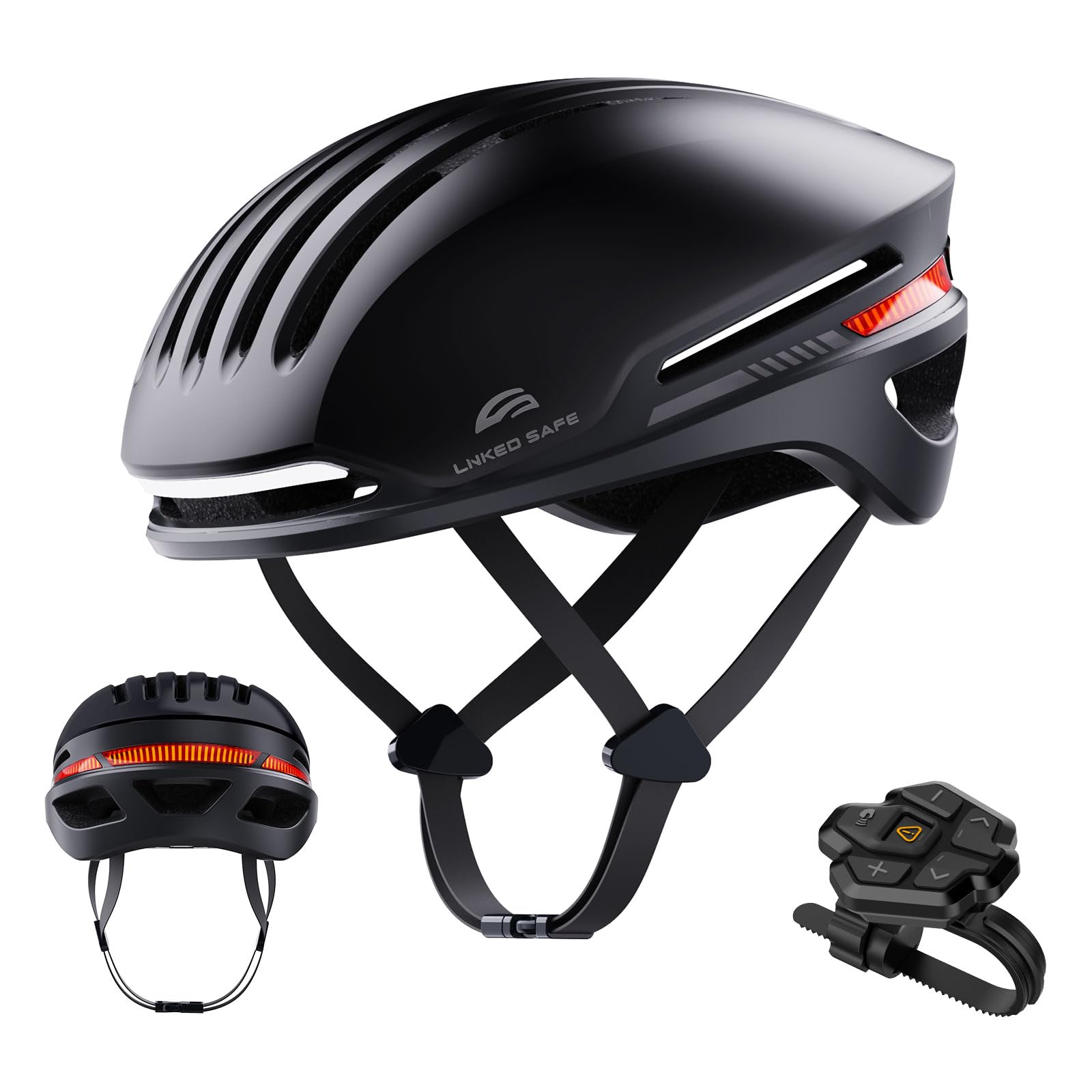
The ASIEVIE Smart Helmet goes all‑in on audio performance. Its 1000 mAh battery delivers up to 18 hours of music playback, which handily beats every other helmet in this comparison. The Bluetooth 5.3 chip provides stable connectivity, and the 80‑lumen front headlight is genuinely useful for unlit bike paths. The 42 dB microphone ensures hands‑free calls remain clear, though this is a mono communication system—no intercom support.
The helmet is EN1078, ROSH, and FCC certified, and the smart brake flash alert system automatically increases rear light brightness when you decelerate. At 365 grams, it’s reasonably light for a helmet with this much battery, and the 19 ventilation holes provide adequate airflow for moderate riding. The remote control on the handlebar gives easy access to turn signals without fumbling.
The fit system uses a simple dial, though the size labeling is inconsistent between production batches—a potential hassle for buyers between sizes. Some owners note that the speakers sit slightly off the ear for certain head shapes, reducing perceived volume. For solo riders who prioritize marathon battery life and a powerful headlight above all else, this is the strongest mid‑range contender.
What works
- Best battery life in class at up to 18 hours
- 80‑lumen headlight improves nighttime visibility
- Smart brake flash enhances rear safety
What doesn’t
- No intercom for group rides
- Speaker placement can be inconsistent across head shapes
5. ILM E3‑12LS

The ILM E3‑12LS introduces a genuinely useful safety innovation: automatic turn signals activated by head tilt. When you tilt your head more than 15 degrees left or right, the corresponding rear signal stays lit for ten seconds. The brake light doubles its brightness under emergency deceleration, and both features work from dawn to dusk via an ambient light sensor that auto‑enables the lighting system at night.
The NTA‑8776 certification means it’s designed to absorb impacts at e‑bike speeds up to 28 mph, and the PC/ EPS construction feels substantial without being cumbersome. The detachable visor effectively blocks sun and flying debris, and the included windproof plugs provide extra insulation in cold weather. Owners appreciate the speaker integration that covers the ears comfortably, keeping them warm on cool morning commutes.
Audio quality is serviceable for podcasts and navigation but lacks the clarity needed for music appreciation—bass response is minimal. The 465‑gram weight is notable, and the 10 air vents struggle to keep riders cool in hot Southern climates. For commuters who want signal automation that works without handlebar remotes, the ILM offers unique value at a very accessible price point.
What works
- Automatic head‑tilt turn signals
- NTA‑8776 certified for e‑bike use
- Detachable visor adds versatility
What doesn’t
- Limited ventilation for hot‑weather riding
- Audio quality is basic for music playback
6. Lumos Ultra Aero GT
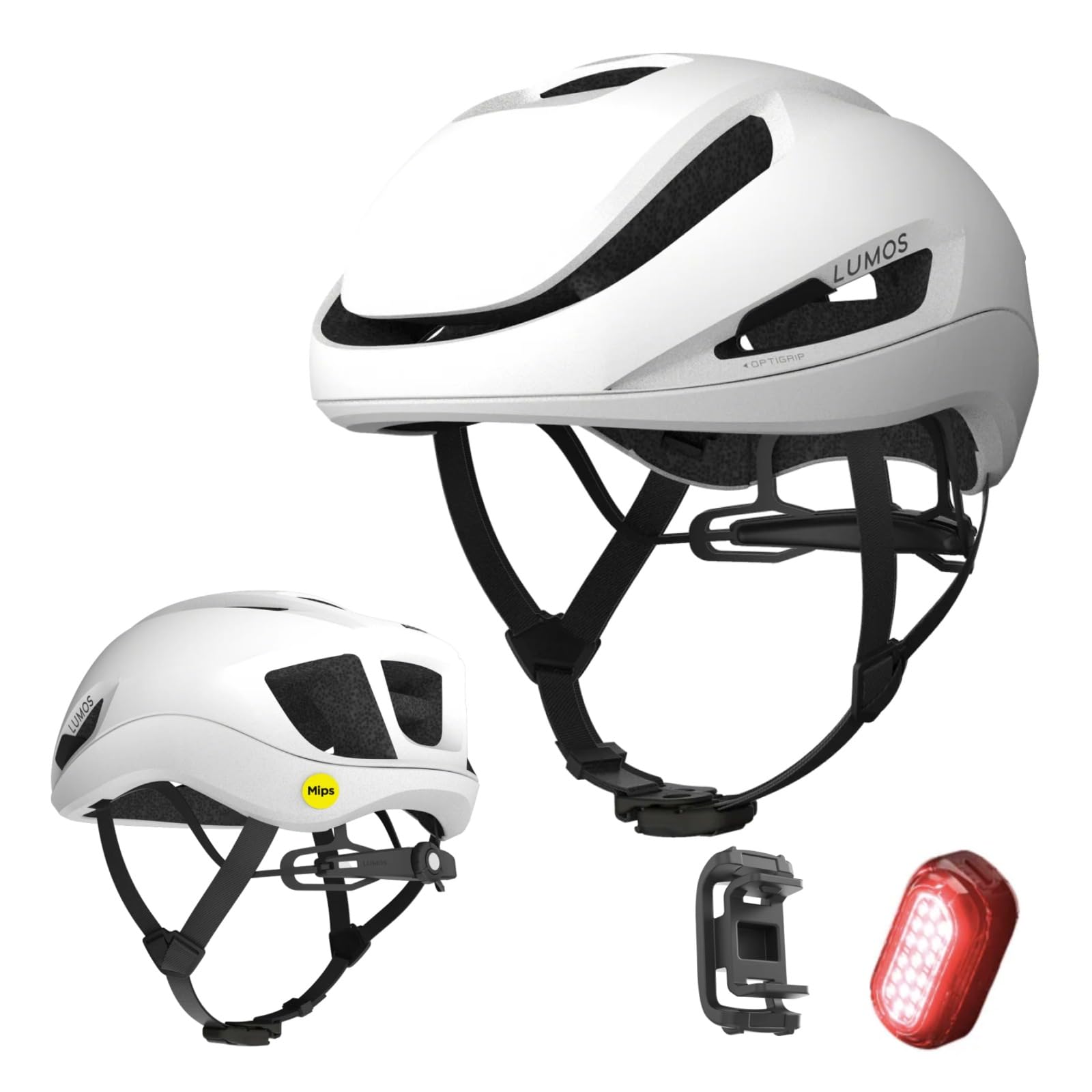
The Lumos Ultra Aero GT prioritizes cycling performance above all. At 350 grams with a deeply aerodynamic profile and 14 precisely shaped ventilation channels, it pulls air over your head efficiently during high‑cadence efforts. The integrated MIPS system adds rotational impact protection without the weight penalty that usually accompanies the technology, making this one of the lightest MIPS‑equipped helmets with audio compatibility on the market.
The helmet uses magnetic click compatibility with the Lumos Firefly mini lights rather than built‑in LEDs, which keeps the weight down but requires a separate purchase for visibility. The OptiGrip Eyewear Dock is a smart touch for riders who alternate between clear and tinted lenses during changing light. The magnetic chin strap buckle is a small but meaningful convenience—especially with gloved hands on cold mornings.
The trade‑off is that the Ultra Aero GT does not include integrated speakers. It’s designed to be paired with aftermarket audio accessories. For road cyclists who already own a standalone Bluetooth headset or earbuds and want the best‑possible helmet shell with MIPS and minimal weight, this is the top pick. Buyers expecting a fully integrated one‑piece audio solution should look at the LIVALL or ASIEVIE instead.
What works
- Ultra‑lightweight with MIPS rotational protection
- Aerodynamic profile for faster road cycling
- Magnetic chin strap is glove‑friendly
What doesn’t
- No integrated speakers—requires separate audio
- Lights are an optional add‑on, not included
7. asteron SL029

The asteron SL029 stands out for its 360‑degree LED display that can show over 100 customizable patterns, animated text, emojis, and even music‑sync visuals through a dedicated app. This isn’t just a gimmick—the high‑visibility display increases your presence to motorists by approximately 300%, according to the manufacturer’s testing. The automatic turn signals and brake light (“STOP”) integrate into the LED matrix smoothly.
The head‑impact structure uses a PC shell over EPS foam, and the adjustable dial fit accommodates head sizes from 22.8 to 24 inches. The 8 ventilation ports are on the lighter side compared to dedicated sport helmets, but adequate for casual commutes and path riding. The ambient light sensor adjusts LED brightness in tunnels or low light, and the programmable timer can automatically activate lights based on your typical ride schedule.
The LED matrix and lack of a front rim light are two drawbacks noted by owners—the front of the helmet has no light bar, so forward visibility depends on a bike‑mounted headlight. The speakers integrated into this model are functional for calls and navigation prompts but not designed for immersive music listening. For night riders who want to be seen and have fun with customizable light shows, this is an affordable and entertaining option.
What works
- 360‑degree LED display with custom patterns
- Auto brake light and turn signals via app
- Built‑in microphone for hands‑free calls
What doesn’t
- No front‑facing light for forward visibility
- Speaker audio quality is basic, not music‑grade
Hardware & Specs Guide
Speaker Driver Materials
The critical audio component is the driver—a thin diaphragm typically made of PET or mylar that creates sound waves. Premium helmets use neodymium magnets to improve sensitivity and reduce driver weight. The larger the driver (40 mm being the standard for helmet integration), the more air it can move, resulting in fuller bass. In contrast, cheaper drivers use ferrite magnets and smaller diaphragms, producing tinny audio that fatigues ears over a long ride.
Battery Chemistry
Lithium‑ion polymer (LiPo) is the dominant chemistry across this category. LiPo cells are thin and can be curved to fit inside helmet padding, but their capacity degrades faster than the cylindrical 18650 cells used in some e‑bike helmets. Pay attention to the charge cycle rating—most integrated batteries are rated for 300‑500 cycles before noticeable capacity drop. USB‑C charging is standardizing at 5V/1A; higher‑end models support fast charging that fills to 80% in about an hour.
FAQ
Can I still hear traffic with built‑in helmet speakers?
How long do integrated helmet speakers typically last?
Are helmets with built‑in speakers heavier than regular helmets?
Final Thoughts: The Verdict
For most buyers, the bike helmet with speakers winner is the LIVALL BH60SE Neo because it combines true‑safety innovation—patented fall detection with SOS alerts—with lightweight ergonomics and excellent ventilation. If you ride regularly in a group and communication is more important than music fidelity, grab the Sena R1 for its proven intercom system. And for the e‑bike rider who needs NTA certification and Mesh 2.0 reliability, nothing beats the Sena U1.

Certification: BSc in Mechanical Engineering
Education: Mechanical engineer
Lives In: 539 W Commerce St, Dallas, TX 75208, USA
Md Amir is an auto mechanic student and writer with over half a decade of experience in the automotive field. He has worked with top automotive brands such as Lexus, Quantum, and also owns two automotive blogs autocarneed.com and taxiwiz.com.