A blue motorcycle helmet does more than match your bike’s paint — it signals that you understand the difference between a fashion statement and a life-saving piece of gear. The market is flooded with shells that look the part but fail where it counts: impact absorption, optical clarity, and long-haul comfort. Whether you ride a cruiser, sportbike, dual-sport, or adventure tourer, the blue helmet you choose must pass a set of non-negotiable safety standards while delivering real-world features like ventilation that works, visors that don’t fog, and a fit that stays planted at speed.
I’m Amir — the founder and writer behind Four Wheel Ask. I’ve spent years combing through motorcycle helmet certifications, comparing shell materials from polycarbonate to carbon fiber, and analyzing thousands of owner reviews to separate legitimate protection from marketing hype.
This guide breaks down nine of the strongest contenders currently available, from budget-friendly modulars to premium carbon fiber shells, to help you find the best blue motorcycle helmets for your specific riding style and head shape.
How To Choose The Best Blue Motorcycle Helmets
Selecting a blue motorcycle helmet involves balancing safety certifications against comfort features and price. The wrong choice means either inadequate protection or a helmet that sits in the garage because it’s too heavy, too loud, or too hot to wear. Focus on these three factors first.
Safety Certifications and Shell Construction
The DOT FMVSS 218 standard is the baseline for any helmet sold in the US, but ECE 22.06 and Snell M2020 certifications indicate stricter testing protocols. ECE tests include impact absorption at different angles and speeds, while Snell adds multiple impact zones on the same helmet. Shell material directly correlates with weight: polycarbonate and ABS offer good protection at a lower cost but weigh more, while multi-layer carbon fiber shells like the TCT-U 3K used in premium models shed significant grams and reduce fatigue on long rides. A lighter helmet also reduces neck strain during high-speed wind buffeting.
Visor Systems and Optical Clarity
A blue helmet’s visor determines your ability to see hazards clearly. Optical Class 1 shields, found on ScorpionEXO models, eliminate distortion across the entire lens. Dual visor systems with an internal drop-down sunshield add convenience but introduce mechanical complexity; check that the mechanism feels solid and seals tightly against the eyeport gasket. Pinlock-ready shields, especially Pinlock 70 lenses, prevent fogging in cold or humid conditions better than anti-fog sprays or shields with no treatment. For riders who wear glasses, KwikFit sculpted cheek pads on premium models allow frame arms to sit without pressure points.
Ventilation and Interior Comfort
Effective ventilation keeps you focused and prevents moisture buildup inside the helmet. Look for helmets with adjustable intake vents at the forehead and chin bar, paired with passive exhaust ports at the rear. The channeling system inside the EPS foam should direct airflow over the crown without creating turbulence against the eyes. Removable and washable moisture-wicking liners are critical for hygiene, especially in warmer climates. Pay attention to fitment notes: some brands like LS2 and ScorpionEXO run small relative to size charts, while ILM helmets tend to fit true to measurement, so consult real owner feedback on sizing before purchasing.
Quick Comparison
On smaller screens, swipe sideways to see the full table.
| Model | Category | Best For | Key Spec | Amazon |
|---|---|---|---|---|
| ScorpionEXO ST1400 EVO Carbon | Full Face | Premium weight savings | TCT-U 3K carbon fiber, ~1383g | Amazon |
| ScorpionEXO R430 | Full Face | Snell certified value | Advanced polycarbonate shell | Amazon |
| HJC i91 Modular | Modular | Trusted brand modular | Advanced polycarbonate composite | Amazon |
| Fox Racing V Core MIPS | Motocross | Off-road with MIPS | MIPS, 9 intake vents | Amazon |
| ILM MF509 Full Face | Full Face | Dual certification value | DOT + ECE certified | Amazon |
| LS2 Valiant II Modular | Modular | Low chin lift at speed | Multi-density EPS liner | Amazon |
| O’Neal 1SRS | Motocross | Entry-level dirt riding | ABS shell construction | Amazon |
| ILM WS902 Dual Sport | Dual Sport | Adventure versatility | Pinlock-compatible visor | Amazon |
| 1Storm HB89 Modular | Modular | Budget modular entry | Thermoplastic alloy shell | Amazon |
In‑Depth Reviews
1. ScorpionEXO ST1400 EVO Carbon Full Face
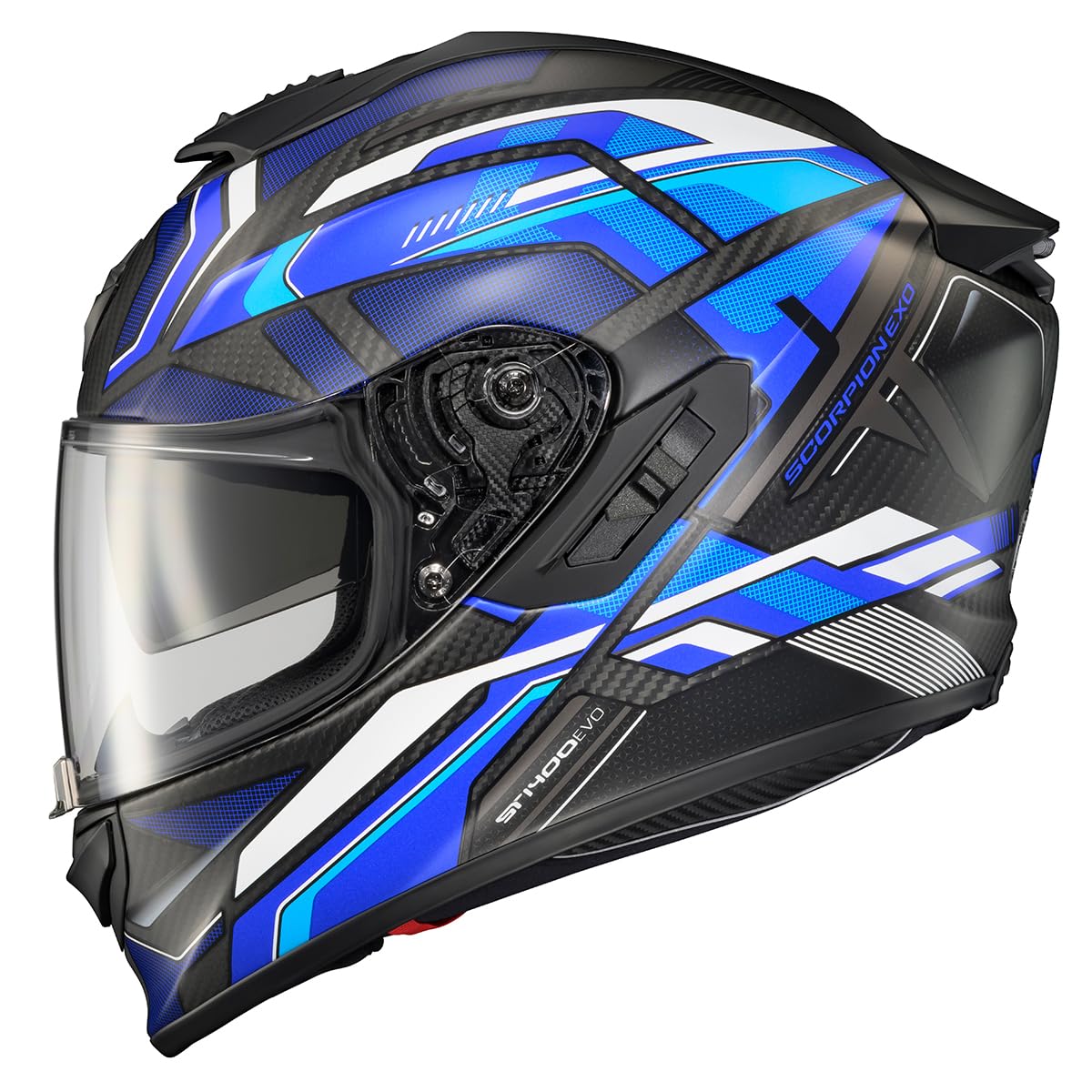
The ST1400 EVO is the lightest helmet in this lineup at roughly 1383 grams in a medium, thanks to its resin-infused TCT-U 3K carbon fiber shell. Aircraft-grade composite construction delivers impact dispersal properties that far exceed the baseline DOT requirement, and the helmet carries both DOT and ECE certifications. The Airfit inflation system lets you pump up the cheek pads for a custom snug fit on the fly, which is a game-changer for riders whose head shape falls between standard shell sizes.
The Everclear distortion-free shield comes treated with anti-fog on both surfaces and blocks 95% of UV-A and UV-B rays. The retractable Speedview drop-down sunvisor slides smoothly and seals evenly across the eyeport to prevent dust ingress. Ventilation uses a venturi-effect channeling system with dual ram-air intakes and a spoiler-integrated exhaust, which pulls heat out efficiently at highway speeds. The inclusion of KwikFit 3D sculpted cheek pads means eyeglass frames sit comfortably without pressure points.
Some owners report that sizing runs small compared to other brands, so measuring your head circumference and consulting the ScorpionEXO size chart is essential before ordering. Wind noise is slightly higher than expected for a premium lid, likely due to the aggressive aero profile, so earplugs are recommended for extended highway stints. The emergency quick-release cheek pad system and integrated reflective piping add practical safety touches that justify the premium price point for riders prioritizing weight and protection.
What works
- Sub-1400g weight reduces neck fatigue dramatically
- Airfit inflation allows on-the-fly fit adjustment
- Excellent optical clarity with anti-fog treatment
What doesn’t
- Runs small — size up from standard measurements
- Wind noise is higher than expected at highway speeds
- Sun visor could be darker for bright-day riding
2. ScorpionEXO R430 Full Face
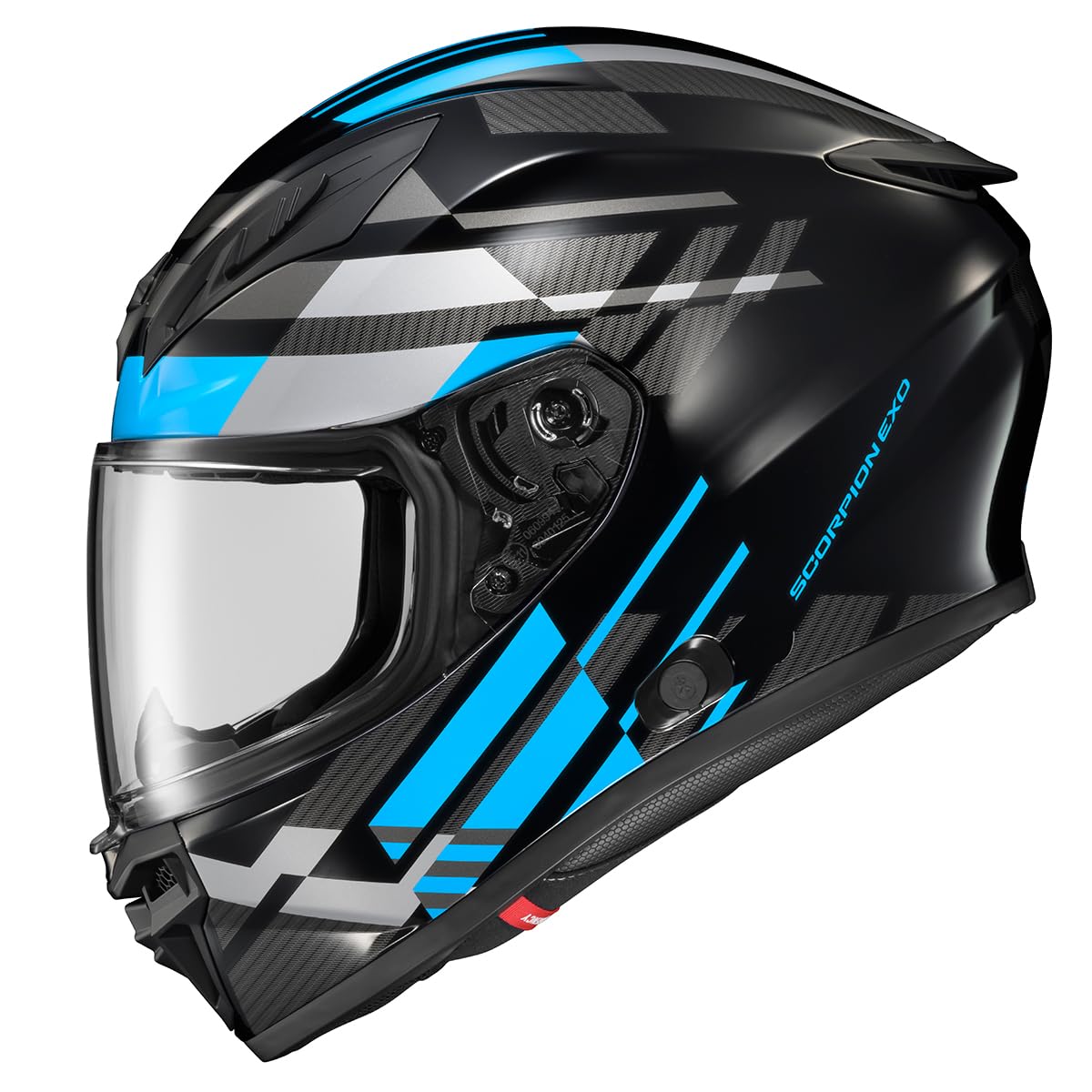
The R430 is the most affordable Snell M2020 certified helmet in the blue colorway, making it a standout for riders who demand the extra impact protection of Snell testing without jumping to the carbon fiber price bracket. The advanced polycarbonate shell uses CAD-refined aerodynamics to reduce lift and turbulence, and it comes with an Optical Class 1 shield with a preinstalled clear No-Fog lens. The KwikWick C moisture-wicking liner is fully removable and machine washable, and the KwikFit sculpted cheek pads accommodate most eyeglasses.
The Ellip-Tec III elliptical-axis ratchet system is a refined mechanism that creates a smaller footprint and smoother operation than previous generations, making shield swaps quick and tool-free. The aero-tuned ventilation system features closable intake vents on top and an adjustable mouth vent that directs significant airflow to the face area for fog dissipation. The emergency release system with reflective piping on the cheek pads is a nice safety addition for potential first responder access after a crash.
Owner feedback consistently notes that the helmet fits snug but comfortable for rounder head shapes, but it does run slightly heavier than some competitors due to the polycarbonate construction. Wind noise is moderate — quieter than budget modulars but not as silent as the ST1400 EVO. The integrated communication port is designed for the EXO-COM system, but riders have successfully installed third-party Bluetooth units using the pre-cut speaker pockets.
What works
- Snell M2020 certification at a mid-range price point
- Optical Class 1 shield with no distortion
- Adjustable mouth vent provides excellent airflow
What doesn’t
- Heavier than carbon fiber competitors
- Wind noise is noticeable on the highway
- Sizing runs small for some head shapes
3. HJC i91 Solid Modular
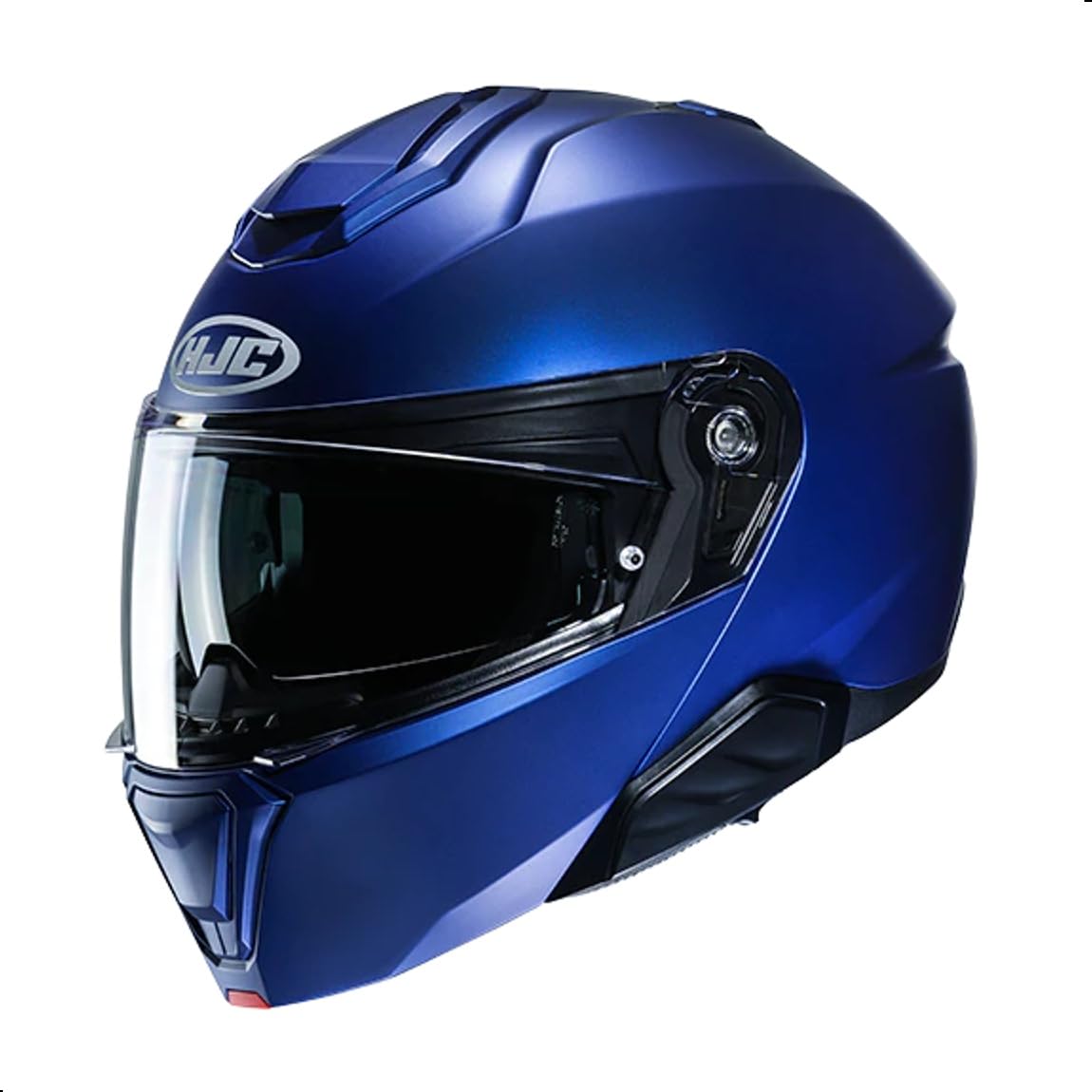
HJC brings decades of helmet engineering to the i91 modular, which meets DOT FMVSS 218 standards and comes with a Pinlock-ready HJ-33 shield that offers 99% UV protection and an anti-scratch coating. The advanced polycarbonate composite shell is built with CAD technology for a lightweight profile, and the advanced channeling ventilation system provides front-to-back airflow that effectively expels heat and humidity during long rides. The moisture-wicking, quick-drying liner is fully removable and washable, and interchangeable cheek pads across all sizes allow for a customized fit.
The dynamic multi-step sun visor is installed with a black dark smoke shield and features optimized positioning for effective sunlight blocking. The i91 uses a ratchet closure system that is glove-friendly and secure, and the flip-up chin mechanism locks solidly without play. The integrated communication port is ready for SMART HJC 21B and 50B Bluetooth systems, though third-party comms can also be installed using the speaker pockets. Owners praise the fit for larger head sizes — the i91 accommodates measurements up to 68cm comfortably, which is rare in modular helmets.
Noise level is the most frequently cited drawback, with several owners reporting significant road noise that necessitates earplugs for rides exceeding 30 minutes at highway speeds. The shell feels slightly heavier than non-modular full-face options, though this is common in the modular category due to the hinge and locking mechanism. Glasses grooves are present but some riders with thicker frames find the fit tight. Overall, the i91 is a reliable modular option from a brand with a strong reputation for consistent quality.
What works
- Excellent fit for extra-large head sizes
- Removable and washable liner simplifies maintenance
- Modular flip-up adds convenience for touring riders
What doesn’t
- Noise level is high at highway speeds
- Heavier than comparable full-face options
- Glasses grooves could be deeper
4. Fox Racing V Core MIPS Motocross

The Fox Racing V Core MIPS is built for off-road and motocross riders who need maximum ventilation and rotational impact protection. It meets both DOT and ECE 22.06 standards, and the MIPS liner reduces rotational forces during angled impacts — a critical feature for dirt riders who crash at awkward angles over uneven terrain. The injection-molded polycarbonate and ABS shell uses four shell sizes and five EPS sizes to achieve a precise fit across a wide range of head shapes, and the double-ring closure is the standard for secure motocross retention.
The magnetic visor release system is a standout feature: the visor stays secure under roost and branches but detaches during a crash to reduce the risk of neck strain. The ventilation system is extreme, with nine intake vents and four exhaust vents delivering airflow that keeps riders cool during intense summer rides. The moisture-wicking liner pulls sweat away from the scalp effectively, and the overall weight of 3.2 pounds in a medium is competitive for a motocross helmet at this price point.
This is a dedicated motocross helmet — there is no integrated sun visor, no Pinlock shield, and the peak visor creates significant lift at street-legal highway speeds, so it is not suitable for street riding without modification. The liner is removable and washable, but the double-ring closure requires some practice to adjust quickly. For riders who exclusively trail ride or race motocross, the V Core MIPS offers a strong combination of safety technology and airflow at a reasonable investment.
What works
- MIPS reduces rotational forces in angled impacts
- Magnetic visor release protects the neck in a crash
- 13 total vents provide excellent cooling
What doesn’t
- Not suitable for street riding due to peak lift
- Double-ring closure takes time to learn
- No integrated sun visor or Pinlock shield
5. ILM MF509 Full Face

The ILM MF509 is one of the few helmets at this mid-range price point that carries both DOT and ECE certifications, meaning it undergoes stricter impact attenuation testing than DOT-only helmets. The ABS shell with black EPS liner keeps weight manageable while providing good impact absorption, and the helmet is designed by an Italian studio, giving it a shape that sits between the round and intermediate head profiles common in the US and Europe. The dual visor system comes with a clear outer shield and a tinted inner sun visor, plus a spare tinted visor in the box.
A Pinlock70 lens is included with the package, which offers superior anti-fog performance compared to the Pinlock30 standard — a significant advantage for riders commuting in cold or wet conditions. The ventilation system uses ports at the mouth, front, top, and tail to create channels that reduce interior fogging. The premium padded lining has prefabricated speaker indentations, making Bluetooth integration easy. Riders with eyeglasses report that the cheek pads accommodate frames without excessive pressure.
The color descriptions can be misleading — the “war damaged gray” finish does not match the product images, so ordering the Cyborg Blue color is safer if you want the finish shown in the listing. The helmet runs slightly large compared to the size chart, so some owners recommend sizing down if between sizes. Wind noise is well-controlled for a full-face helmet at this price point, and the overall build quality exceeds expectations for a helmet with dual certifications.
What works
- DOT and ECE certification at a mid-range price
- Pinlock70 lens provides excellent fog resistance
- Comfortable fit for eyeglass wearers
What doesn’t
- Color finish may differ from product images
- Sizing runs large — consider sizing down
- Shell feels slightly heavy compared to polycarbonate options
6. LS2 Valiant II Modular

The LS2 Valiant II is engineered with a multi-density EPS liner designed to reduce chin lift and head wobble even at speeds approaching triple digits, a common complaint with round-profile modular helmets. The shell uses a polycarbonate composite that balances weight with structural rigidity, and the flip-up mechanism operates with smooth detents that lock into place with confidence. The built-in sun visor drops down fully to cover the entire eyeport, and the peripheral vision range is excellent for a modular design.
The moisture-wicking liner is removable and washable, and the cheek pads feature emergency release tabs for first responder access. The face shield is Pinlock-ready, though the Pinlock insert is not included with all purchases, so check the listing specifics. The ventilation system includes closable intake vents at the forehead and an adjustable chin vent that directs air across the shield to reduce fogging. Owners consistently praise the comfort level for all-day touring, noting that the padding density strikes a good balance between plush and secure.
Some buyers have reported receiving helmets without the dark face shield mentioned in the promotional materials, and the packaging can be inconsistent — occasionally arriving without instructions in the box. The shell is slightly larger than some competitors due to the modular mechanism, which can create more wind drag at high speed. Sizing runs small compared to other LS2 models, so measuring your head and ordering up if you are between sizes is recommended.
What works
- Minimal chin lift at high speeds for a modular
- Smooth flip-up mechanism with secure locking
- Excellent peripheral vision for a modular helmet
What doesn’t
- Pinlock insert not always included in box
- Shell is slightly wider, adding some wind drag
- Sizing runs small — check carefully
7. O’Neal 1SRS Dirt Bike Helmet
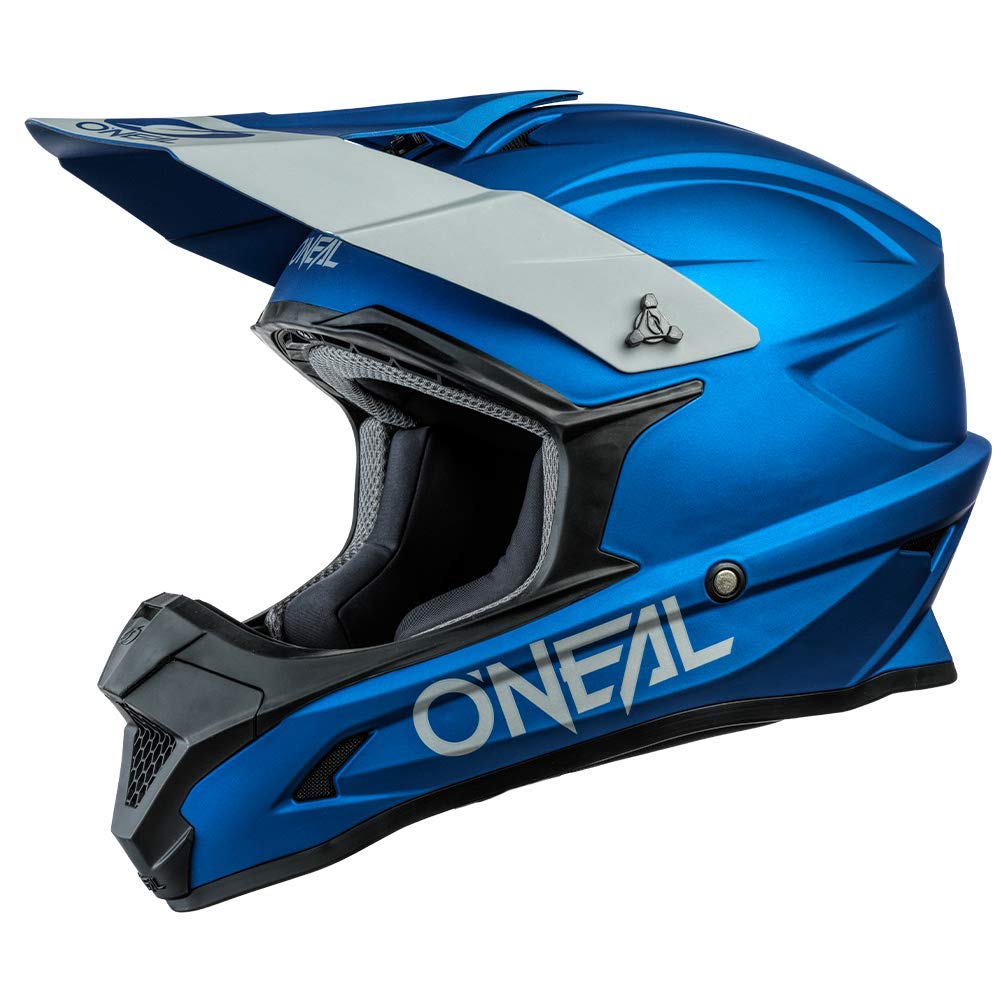
The O’Neal 1SRS is a budget-friendly entry point for off-road riders who need a DOT-certified motocross helmet with a traditional peak visor and aggressive styling. The ABS shell provides adequate impact protection for trail riding and casual motocross use, and the multi-piece EPS liner is tuned for low-to-mid speed impacts typical of off-road crashes. The visor is mounted securely to deflect roost and branches, and the chin bar features large mesh vents for airflow during intense rides.
The interior uses a moisture-wicking liner that is removable and washable, and the cheek pads offer a snug fit that reduces helmet shift during rough terrain. The double-ring closure system is standard for the dirt segment and provides the secure retention needed for off-road riding. The helmet is available in multiple colorways including blue, and the graphics are applied with durability in mind to resist scratches from brush and trail debris.
Build quality is consistent with the price tier — the liner padding is thinner than premium motocross helmets, and the ventilation is adequate but not exceptional compared to designs with deeper channeling. The peak visor creates aerodynamic lift at higher speeds, so this helmet is best suited for trail riding at moderate speeds rather than high-speed desert racing. Overall, the 1SRS is a solid choice for new riders looking for a basic off-road helmet without overspending.
What works
- Affordable entry to DOT-certified motocross protection
- Removable and washable liner for hygiene
- Secure double-ring chin strap closure
What doesn’t
- Liner padding is thinner than premium options
- Ventilation is average for the motocross category
- Peak visor creates lift at higher speeds
8. ILM WS902 Dual Sport

The ILM WS902 is purpose-built for the dual-sport and adventure riding segment, combining a motocross-style peak visor with a full-face street helmet profile for versatility on pavement and dirt. It meets DOT FMVSS 218 standards using an ABS shell and EPS foam liner, and the oversized outer visor provides excellent peripheral vision while being compatible with Pinlock 30 inserts (sold separately). The internal drop-down sunshield is a crucial feature for adventure riders who transition from sunny pavement to shaded forest trails without stopping to swap visors.
The seven-position ventilation system ensures appropriate air intake across a range of speeds, and the removable inner lining pads feature fewer seams to reduce pressure points on the scalp during long days in the saddle. The quick-release clasp is easier to operate with gloves compared to double-ring systems, and the removable chin curtain helps reduce wind noise. Owners note that the helmet fits slightly larger than average, so sizing down from your usual measurement is recommended for a snug fit.
The peak visor does generate noticeable lift at highway speeds above 65 mph, which is typical for dual-sport helmets but worth noting for riders who spend most of their time on the interstate. The internal sun visor is effective but sits slightly short of the bottom of the eyeport, which can let a sliver of sunlight in from below. For the price, the WS902 delivers strong value as a do-it-all helmet for weekend adventurers who split time between asphalt and gravel.
What works
- Excellent peripheral vision with oversized outer visor
- Drop-down sunshield is practical for mixed lighting
- Seven-position vent provides good airflow
What doesn’t
- Peak visor creates lift at highway speeds
- Internal sun visor sits slightly short
- Sizes run large compared to standard charts
9. 1Storm HB89 Modular Flip-Up

The 1Storm HB89 is a budget-friendly modular helmet that delivers surprising feature density for its price point, including a DOT-certified thermoplastic alloy shell, a flip-up chin bar, and a dual visor system with an inner smoked lens and an outer clear shield. The modular design allows riders to flip the chin bar up for easy conversation or hydration at gas stations without removing the entire helmet. The liner snaps in and out for easy washing, and there are pre-cut speaker pockets for seamless Bluetooth system installation.
The helmet comes with an extra spoiler for converting between street and sport styling, giving riders cosmetic flexibility without buying a separate helmet. The quick-release mechanism on the chin bar operates smoothly for a budget model, and the two visors work well together — the outer clear shield handles night riding while the inner smoked lens reduces glare during daytime. The size range covers S through XXL, making this a rare budget option for riders with larger head circumferences.
Wind noise is higher than mid-range and premium helmets, which is expected at this price tier, and the thermoplastic alloy shell is heavier than polycarbonate or carbon fiber alternatives. The padding is comfortable for short to mid-length rides but may cause pressure points on longer tours. The 1Storm HB89 is a strong entry-level modular for riders on a tight budget who prioritize versatility and DOT certification over weight savings and noise isolation.
What works
- Modular flip-up adds convenience at a low price
- Dual visor system works right out of the box
- Pre-cut speaker pockets simplify Bluetooth setup
What doesn’t
- Wind noise is significant at highway speeds
- Heavier than polycarbonate and carbon fiber options
- Padding may cause pressure points on long rides
Hardware & Specs Guide
Shell Materials Explained
The outermost layer of a blue motorcycle helmet determines both weight and impact dispersal. Thermoplastic alloy shells, as used on the 1Storm HB89, are the most affordable but add significant weight — expect 3.5 to 4 pounds. Polycarbonate composite shells, found on the ScorpionEXO R430 and HJC i91, offer a better strength-to-weight ratio at around 3.2 to 3.5 pounds. Carbon fiber shells, like the ScorpionEXO ST1400 EVO’s TCT-U 3K, can drop below 3.1 pounds while providing aircraft-grade impact properties. Heavier shells increase neck fatigue over long distances but may absorb low-speed impacts slightly better due to their mass.
Safety Certification Tiers
DOT FMVSS 218 is the legal minimum in the US, testing impact attenuation, penetration resistance, and chin strap retention. ECE 22.06, found on the Fox Racing V Core MIPS and ILM MF509, adds testing for rotational impacts and shield penetration at higher velocities. Snell M2020, which the ScorpionEXO R430 carries, is voluntary and stricter than DOT, requiring multiple impacts on the same helmet at different locations. MIPS (Multi-directional Impact Protection System) is a separate low-friction layer that reduces rotational forces during angled impacts — the Fox V Core MIPS includes this technology.
FAQ
How do I know if a blue motorcycle helmet fits properly?
Is a modular helmet as safe as a full-face helmet?
Why do some blue helmets cost significantly more than others?
Can I install a Bluetooth communicator in any blue helmet?
Final Thoughts: The Verdict
For most buyers, the best blue motorcycle helmets winner is the ScorpionEXO ST1400 EVO Carbon because it combines a sub-1400 gram carbon fiber shell with DOT and ECE certifications, the Airfit inflation system, and an optically superior shield — delivering premium protection and weight savings for riders who spend hours in the saddle. If you want Snell M2020 certification without the carbon fiber price, grab the ScorpionEXO R430. And for dual-sport riders who need a helmet that works on pavement and trails with a practical internal sunshield, nothing beats the ILM WS902 Dual Sport.

Certification: BSc in Mechanical Engineering
Education: Mechanical engineer
Lives In: 539 W Commerce St, Dallas, TX 75208, USA
Md Amir is an auto mechanic student and writer with over half a decade of experience in the automotive field. He has worked with top automotive brands such as Lexus, Quantum, and also owns two automotive blogs autocarneed.com and taxiwiz.com.