Cutting through steel conduit, rebar, angle iron, or thick-gauge sheet metal with a reciprocating saw demands a blade that can survive the bite without losing its edge mid-cut. A standard wood-cutting blade will dull in seconds, leaving you with a warped tip and a stalled project. The right blade—one with hardened M42 bi-metal teeth and a high TPI count—makes the difference between a clean, fast demoliton and a frustrating, blade-changing marathon.
I’m Amir — the founder and writer behind Four Wheel Ask. Over the years I’ve analyzed hundreds of reciprocating saw blade lines, comparing tooth geometry, cobalt content, and real-world wear reports from shop and field work to identify which models deliver the cuts they promise.
This guide breaks down the top options available now, focusing on blade construction, shank compatibility, and cutting performance to help you find the best metal cutting sawzall blade for your specific job site needs.
How To Choose The Best Metal Cutting Sawzall Blade
Selecting the right reciprocating saw blade for metal comes down to matching the blade’s material, tooth pitch, and shank type to the specific metal thickness and job conditions. Using the wrong blade can lead to poor cut quality, premature dulling, or even dangerous kickback.
Tooth Pitch and TPI (Teeth Per Inch)
TPI determines how aggressive and smooth the cut is. For thin metal like sheet steel or exhaust pipe (1/16 to 1/8 inch), a higher TPI of 18 to 24 provides a slower, cleaner cut with less vibration. For thicker materials like angle iron or rebar (3/16 to 1/4 inch and above), a variable or lower TPI of 10 to 14 helps clear chips and cut faster. The best approach is often a variable-tooth design that combines two TPI ranges on one blade.
Quick Comparison
On smaller screens, swipe sideways to see the full table.
| Model | Category | Best For | Key Spec | Amazon |
|---|---|---|---|---|
| EZARC R610DM 5-Pack | Bi-Metal | Steel demolition, medium-thick metal | 14+18 TPI variable | Amazon |
| TOLESA M42 225mm | Premium M42 | Fine metal cutting, pipes, bolts | 18 TPI, 8% cobalt | Amazon |
| Caliastro 6-Inch 8-Pack | Bi-Metal | General metal, conduit, rebar | 18 TPI, 0.05-inch thickness | Amazon |
| REEPLAR 10-Pack 14/18 TPI | Budget Bi-Metal | Light to medium metal, solid pipes | 14+18 TPI variable | Amazon |
| Milwaukee 48-00-5021 5-Pack | Wood Pruning | Wood cutting | 24 TPI, 0.062-inch thickness | Amazon |
In‑Depth Reviews
1. EZARC Reciprocating Saw Blade, 6-Inch Bi-Metal 14+18TPI 5-Pack

The EZARC R610DM set uses hardened M42 bi-metal teeth with 8% cobalt, a material choice that directly resists heat softening during sustained cuts through steel. The variable 14/18 TPI design means the blade handles both thin sheet metal and thicker 5/16-inch plate without clogging the gullets or chattering excessively. Multiple users report cutting over 200 inches of 1/4-inch steel plate with a single blade, which speaks to the edge retention and manufacturing consistency.
At 1.1 millimeters thick, these blades are stout enough to resist bending under heavy feed pressure, yet the universal 1/2-inch shank ensures they lock into any major saw brand without wobble. The 5-pack value is solid for medium-to-heavy metal demolition projects, including structural steel, rebar, and thick-wall conduit.
The only trade-off is the 6-inch length; for deep cuts through large-diameter pipes or framing you may want a longer blade. But for the vast majority of metal cutting tasks encountered by DIYers and light pros, this is the most balanced performer on the market right now.
What works
- Variable TPI cuts both thin and medium steel efficiently
- M42 cobalt teeth hold edge longer than standard bi-metal
What doesn’t
- 6-inch length limits deep cuts in large-diameter materials
- Some users report faster dulling on very thick (1/4-inch+) steel
2. TOLESA M42 Bi-Metal Reciprocating Saw Blade 225 mm 18 TPI

The TOLESA blade takes a fine-tooth approach with a fixed 18 TPI and M42 material containing 8% cobalt, prioritizing edge longevity and precision for thin-to-medium metal work. This design excels on materials like sheet metal, exhaust pipe, and bolts where a clean, burr-free finish matters. The 9-inch length offers better reach for cutting through wider profiles than typical 6-inch packs provide.
Users working with 0.05- to 0.15-inch metal report smooth cuts with minimal vibration, a direct result of the denser tooth spacing and thicker blade body. The universal 1/2-inch shank fits all major brands, and the cobalt content gives it a noticeable heat tolerance advantage when making long, continuous cuts without lubricant.
The main trade-off is the single TPI; at 18 TPI it cuts slowly through thicker material. This is a precision tool for fine metalwork, not a fast demolition blade for thick rebar or angle iron.
What works
- M42 cobalt teeth resist heat and stay sharp across many cuts
- Excellent for thin metal and pipe where finish matters
What doesn’t
- 18 TPI cuts slowly in material thicker than 1/4 inch
- Single tooth pitch limits versatility across varied metal thicknesses
3. Caliastro 6-Inch Thick Metal Cutting Reciprocating Saw Blades 18 TPI 8-Pack
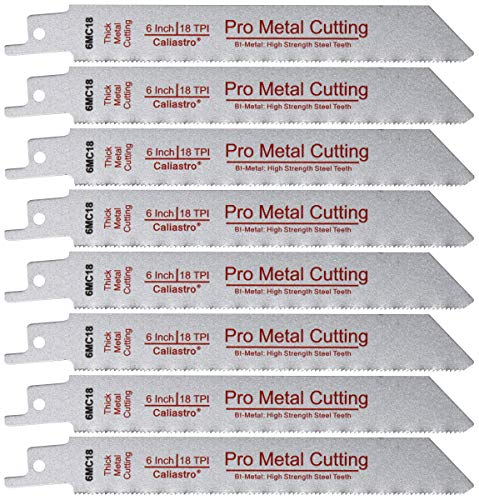
The Caliastro set uses an 18 TPI bi-metal construction with a 0.05-inch blade thickness, which helps reduce bending and breakage during aggressive cuts on black pipe, conduit, cold rolled steel, and rebar. The 8-pack count is generous, and customers routinely report cutting multiple drums or structural sections before needing to swap blades. The included clear plastic storage case keeps them organized and protected during transport.
These blades work with all major reciprocating saw brands thanks to the universal 1/2-inch shank. The precision-set teeth produce surprisingly smooth cuts for a general-purpose metal blade. Many users working on 55-gallon drums and HVAC ductwork note they only used one blade for the entire job, which reflects well on the heat treatment and edge quality.
The biggest downside is a consistent 18 TPI; while fine for thinner material, it lacks the aggressiveness needed for heavy demolition through thick steel plate. Still, for the price per blade, this is the strongest package deal you can find.
What works
- Good combination of thickness and tooth design resists bending
- Excellent value with 8 blades and a hard storage case
What doesn’t
- Single 18 TPI not ideal for thick or heavy steel sections
- Some users report faster dulling on heavily rusted materials
4. REEPLAR 10 Pack 6 inch 14/18 TPI Bi-Metal Auto Dismantling Sawzall Blade

The REEPLAR 10-pack offers a variable 14/18 TPI tooth pattern on a bi-metal body with 8% cobalt, making it a versatile option for cutting solid pipes, angle steel, conduit, and rebar within a 1/16 to 5/16 inch thickness range. The blades come in a portable retractable plastic storage box, and the 0.04-inch thickness keeps them flexible enough to absorb vibration during extended cuts.
Several users confirm the blades cut well on light-to-medium steel, but durability reports are mixed when tackling tough nail-embedded lumber or very thick metal sections. Some experienced tip burn after just 5-10 nails, while others got through dozens of cuts without issue—suggesting batch variance in heat treatment. The shank fits all standard reciprocating saws from Bosch, DeWalt, Milwaukee, Makita, and others.
The major trade-off is that while the variable TPI adds versatility, the blade can dull unpredictably during more demanding demolition work. It’s a solid budget-friendly option for DIY jobs around the house, but not a first choice for daily pro use on heavy steel.
What works
- High blade count for the price point
- Variable TPI handles several metal thicknesses
What doesn’t
- Blade durability appears inconsistent batch to batch
- 0.04-inch thickness can flex too much under heavy pressure
5. Milwaukee 6″ L Bi-Metal Reciprocating Saw Blade 5-Pack
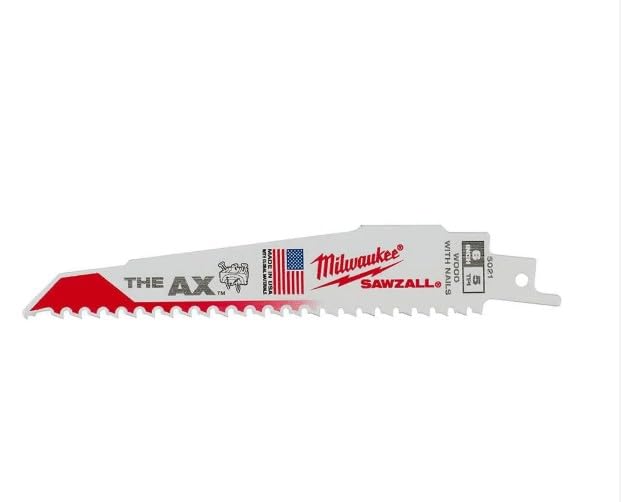
This Milwaukee 48-00-5021 blade is designed primarily for wood cutting, including hardwoods and small limbs, not metal demolition. The 24 TPI fine tooth pattern and 0.062-inch thickness give it excellent durability for pruning and demolition through nail-embedded lumber, but the high-speed steel and cobalt alloy composition is not optimized for sustained metal cutting. Users consistently praise its performance on landscaping and construction debris work.
The 6-inch length and 1/2-inch universal tang work with all Sawzall-type tools. Reviews highlight its ability to cut through nails embedded in wood without losing edge, and the heat-treating process adds resilience for heavy abuse. A 5-year limited warranty backs the set.
If your primary task is cutting metal, this is the wrong tool. It belongs on this list only as a comparison for buyers who might mistake a general-purpose blade for a metal-specific one. For wood and nail-embedded demolition, it’s excellent; for steel, look at the EZARC or TOLESA options.
What works
- Robust 0.062-inch thickness resists bending in rough demolition
- Excellent on nail-embedded wood and landscaping work
What doesn’t
- Not designed for metal cutting; dulls quickly on steel
- 24 TPI too fine for effective metal debris removal
Hardware & Specs Guide
Blade Material and Tooth Hardness
Bi-metal construction welds high-speed steel (HSS) teeth onto a flexible carbon steel body. Adding 8% cobalt (M42 grade) increases red hardness, allowing the teeth to stay sharp even when friction heats the cutting edge. Carbide-tipped blades exist for extreme abrasion, but M42 bi-metal is the sweet spot for most metal cutting tasks because it resists chipping better than carbide while outlasting standard HSS.
Tooth Pitch and Geometry
TPI (teeth per inch) determines cut speed and finish. Lower TPI (10-14) cuts fast and clears chips for thick material. Higher TPI (18-24) produces a smoother finish for thin sheet metal. Variable-tooth blades (like 14/18) offer a compromise by alternating wide and narrow gullets to reduce vibration. Precision-set teeth with a raker or alternate top bevel (ATB) pattern improve chip ejection and cut straightness.
Blade Thickness and Body Stiffness
A thicker blade (0.05 to 0.062 inches) resists bending and buckling during aggressive cuts, but also creates more friction in the kerf. Thinner blades (0.035 to 0.042 inches) flex more, reducing binding in curved cuts but increasing the risk of breakage under heavy feed. Matching blade thickness to the rigidity of your saw and the complexity of the cut path is critical.
Shank Type and Compatibility
The universal 1/2-inch tang shank is standard across all major reciprocating saw brands—Bosch, DeWalt, Milwaukee, Makita, Ryobi, and others. Some specialized blades use a longer tang or locking pin hole for specific models, but 99% of metal cutting blades ship with the universal tang to ensure broad compatibility. Always check shank type before purchase if you own a less common saw model.
FAQ
Can I use a wood cutting blade on metal?
What TPI is best for cutting thin sheet metal?
Do I need a M42 or carbide blade for cutting stainless steel?
Why does my sawzall blade keep breaking during metal cuts?
Final Thoughts: The Verdict
For most buyers, the best metal cutting sawzall blade winner is the EZARC R610DM 5-Pack because it combines a variable 14/18 TPI with M42 cobalt teeth, delivering fast, clean cuts on both thin and medium steel without an extreme price per blade. If you need a precision blade for fine thin metalwork, grab the TOLESA M42 225mm for its consistent 18 TPI and longer 9-inch reach. And for a budget-friendly bulk option, the Caliastro 8-Pack gives you strong value for general metal cutting around the workshop or job site.

Certification: BSc in Mechanical Engineering
Education: Mechanical engineer
Lives In: 539 W Commerce St, Dallas, TX 75208, USA
Md Amir is an auto mechanic student and writer with over half a decade of experience in the automotive field. He has worked with top automotive brands such as Lexus, Quantum, and also owns two automotive blogs autocarneed.com and taxiwiz.com.