A camshaft is the brain of your small block Chevy 350 — it dictates where your engine makes power, how it idles, and whether your torque converter feels lazy or snappy. Picking the wrong grind leaves horsepower on the table or creates a bucking, vacuum-starved mess that kills brake boost. The right cam transforms a tired 350 into a responsive, torquey powerhouse that pulls hard from stoplight to passing lane.
I’m Amir — the founder and writer behind Four Wheel Ask. I’ve spent years analyzing camshaft grind specifications, owner break-in reports, and dyno curves across the entire SBC spectrum to separate profitable upgrades from frustrating misfires.
This guide breaks down the seven most relevant camshaft options for the Chevy 350, covering lift, duration, lobe separation, and real-world idle quality so you can confidently choose the camshaft for 350 small block that matches your transmission, rear gear, and driving style.
How To Choose The Best Camshaft For 350 Small Block
Choosing a camshaft is a matching game between your engine’s displacement, cylinder head flow, rear axle ratio, and your intended driving environment. A cam that works brilliantly in a 3,500-pound pickup with 3.73 gears will feel flat and lazy in a 3,200-pound muscle car with 3.08 gears. Start by defining your RPM budget — street engines rarely need power above 5,500 RPM, while a weekend bracket racer may need a cam that pulls to 6,500 RPM.
Lift and Duration — The Power Curve Fundamentals
Valve lift controls how far the valve opens. More lift above 0.450 inch increases airflow — but only if your cylinder head and valve springs can support it. Duration at 0.050 inch is the industry-standard metric for matching a cam to your operating RPM. A duration figure around 212 to 218 degrees at 0.050 inch suits a daily-driven 350 with a stock torque converter, while 224 to 234 degrees moves the power band higher and typically requires a stall converter above 2,000 RPM.
Lobe Separation Angle (LSA) and Vacuum
Lobe separation angle directly affects overlap — the brief window when both intake and exhaust valves are open. A tighter 108-degree LSA creates a choppy idle, more top-end snap, and lower manifold vacuum, which can starve power brakes. A wider 112- to 114-degree LSA smooths idle vacuum to 14+ inches, making the engine more street-friendly. If you run power brakes, target an LSA of 110 degrees or wider.
Flat Tappet vs. Roller Lifter — Durability Trade-Off
Hydraulic flat tappet cams on a Gen I SBC 350 require a zinc-rich break-in oil to prevent lifter lobe galling during the critical first 20 minutes. Roller lifters reduce friction, allow more aggressive lobe profiles, and eliminate the camshaft break-in procedure, but they require either a factory roller block or a conversion kit with link bars or a lifter retainer. Flat tappet cams are significantly more affordable but demand meticulous break-in discipline.
Quick Comparison
On smaller screens, swipe sideways to see the full table.
| Model | Category | Best For | Key Spec | Amazon |
|---|---|---|---|---|
| COMP Cams 12-242-2 | Hydraulic Flat Tappet | Street machines with 2,000+ stall converter | 224/230 deg duration at 0.050 / 110 deg LSA | Amazon |
| JEGS 555-200106 | Hydraulic Flat Tappet | Weekend track days and high-RPM pulls | 0.488/0.488 lift / 234 deg duration at 0.050 | Amazon |
| Edelbrock 2102 Performer-Plus | Hydraulic Flat Tappet | RV/towing and daily-driving street trucks | 0.420/0.442 lift / 204/214 deg duration at 0.050 | Amazon |
| Engine Pro MC1730 | Hydraulic Flat Tappet | Budget street rebuild with towing needs | 0.420/0.443 lift / 204/214 deg duration at 0.050 | Amazon |
| Melling 22301 | Hydraulic Flat Tappet | Entry-level stock replacement | 3.87 kg / Universal fit 262-400 | Amazon |
| COMP Cams 850-16 | Hydraulic Roller Lifter Set | Retro-fit roller conversion for old blocks | OE-style / 0.800 in max lift capacity | Amazon |
| CVF Racing 350-WRAPTOR-AC | Serpentine Conversion System | Full accessory drive upgrade | 64 lb / includes AC, alt, PS pump | Amazon |
In‑Depth Reviews
1. COMP Cams 12-242-2 Xtreme Energy

The COMP Cams 12-242-2 Xtreme Energy grind is arguably the gold standard for a Gen I small block Chevy that sees equal time on the street and local cruise. The 224/230 duration at 0.050 inch sits right at the sweet spot — aggressive enough to make 1,600-5,800 RPM feel lively, yet tame enough that a 2,000 RPM stall converter keeps the car civil in stop-and-go traffic. The 110-degree lobe separation delivers a throaty idle that announces your presence without dropping vacuum below power brake territory.
COMP Cams designs these lobes with a quicker opening ramp than conventional flat tappet grinds, which translates into more area under the lift curve per degree of duration. This means the 12-242-2 produces stronger mid-range torque than a traditional 224-degree cam, and it pairs well with aftermarket intake manifolds, headers, and 3.55 to 3.73 rear gears. Users consistently report a dramatic improvement over stock and moderate cams like the Edelbrock Performer in identical 350 builds.
Owners note the cam performs best when matched with a 2,000 RPM stall converter — running it with a stock converter leaves low-RPM throttle response slightly soggy. A few users also mention the occasional lifter noise during cold starts, which is characteristic of aggressive flat tappet profiles but settles once oil pressure stabilizes. For a street 350 that sees occasional track time or spirited canyon runs, this is the most balanced option available.
What works
- Exceptional mid-range torque for a 224-degree duration cam
- Aggressive idle sound without losing power brake vacuum
- Works with stock valve springs if lift stays under 0.480 inch
What doesn’t
- Requires a 2,000+ RPM stall converter for best performance
- Does not fit factory roller blocks from 1985 and newer
- No cam card included for verifying lobe profile
2. JEGS 555-200106 Hydraulic Flat Tappet
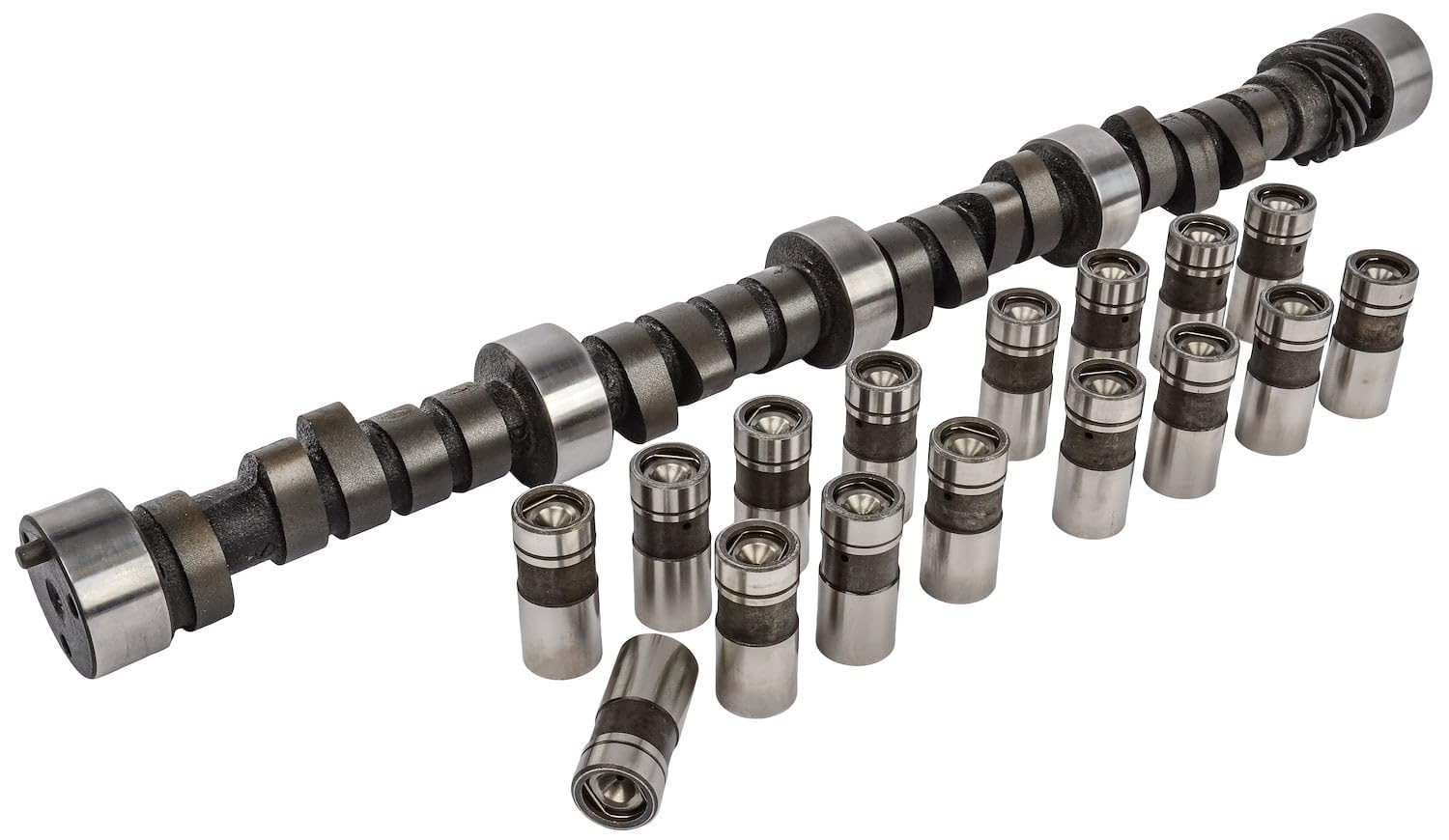
JEGS 555-200106 pushes the bumpstick envelope for the SBC 350 into genuine high-performance territory. With 0.488 inch of lift on both intake and exhaust and a 234-degree duration at 0.050 inch, this cam targets the 3,000 to 6,200 RPM power band — a range that suits weekend bracket racers and street cars with 3.73 or steeper rear gears. The 114-degree lobe separation intentionally smoothes out idle vacuum slightly compared to tighter LSA grinds, which helps power brakes remain functional even with the extended duration.
This cam is made in the USA using high-quality alloy castings, and JEGS includes a matching set of hydraulic flat tappet lifters. The 0.488-inch lift is within the range of many stock-style 1.5 ratio rocker arms, though upgrading to 1.6 ratio rockers pushes effective lift closer to 0.520 inch for those chasing every last horsepower. The 383 stroker crowd also picks this cam because the extra 33 cubic centimeters of displacement help fill in the low-RPM torque that the 234-degree duration sacrifices on a standard 350.
Real-world owner feedback notes that this cam requires good valve springs capable of handling the moderate lift — budget stock springs risk coil bind above 0.480 inch. The 114-degree LSA keeps idle quality acceptable for a cam this large, but expect a lumpy, loping idle that demands a slightly higher idle speed around 900-950 RPM. If your build has a 2,500+ RPM stall converter and a free-flowing exhaust system, this cam rewards you with a hard pull up to the shift point.
What works
- Strong top-end power from 3,000 to 6,200 RPM
- Made in USA with quality materials
- 114-degree LSA keeps idle vacuum acceptable for power brakes
What doesn’t
- Soft low-RPM torque below 2,500 RPM on a standard 350
- Requires upgraded valve springs to avoid coil bind
- Needs 2,500+ RPM stall converter for street drivability
3. Edelbrock 2102 Performer-Plus

The Edelbrock 2102 Performer-Plus kit is the definitive low-RPM torque cam for a 350 that spends its life pulling trailers, hauling cargo, or daily commuting. With a mild 204/214 duration split at 0.050 inch and a modest 0.420/0.442 inch lift, this cam creates strong cylinder pressure from just off idle through 4,500 RPM — precisely where a street-driven truck or full-size sedan lives. The 112-degree lobe separation angle keeps manifold vacuum above 16 inches, so power brakes, air conditioning, and cruise control all function without issue.
This cam is part of Edelbrock’s Performer system, meaning it is designed to pair seamlessly with their Performer 2101 intake manifold and Performer 1406 carburetor. Owners who match the three components report a predictable, trouble-free tune with very little tuning required. One builder noted a flat cam failure on a recent production batch, but that appears to be an isolated quality control issue rather than a systematic problem — the majority of reviews describe a dramatic improvement over a worn stock cam.
The included lifters simplify purchasing, and the mild ramp speeds mean standard valve springs and stock pushrods work without modification. A 1970 C10 owner described the Performer-Plus as bringing his 350 “back to life” after the factory grind lobes had worn down. If your goal is reliable daily power between 1,500 and 4,500 RPM with no converter changes or exhaust upgrades required, this cam fits the bill perfectly.
What works
- Excellent low-RPM torque ideal for towing and daily driving
- Works with stock torque converter, valve springs, and pushrods
- Mild idle maintains full vacuum for power brakes and accessories
What doesn’t
- Limited top-end power above 5,000 RPM
- Some owners report isolated flat cam failures during break-in
- Not aggressive enough for performance-oriented street builds
4. Engine Pro MC1730

The Engine Pro MC1730 is a budget-conscious RV/towing grind that targets the same low-RPM power band as the Edelbrock Performer-Plus but at a more accessible price point. With 0.420/0.443 inch lift and a 204/214 duration split at 0.050 inch, this cam builds torque from 1,500 to 4,500 RPM and is designed specifically for highway cruising, off-road adventures, and towing heavy loads behind a pickup or SUV. The 420/443 valve lift figures are nearly identical to the Edelbrock, making this a direct competitor for the value-oriented shopper.
Engine Pro markets this cam as compatible with Chevy SBC engines from 1957 to 1995, covering the vast majority of Gen I small blocks. The smoother lobe profile means less stress on valve train components, allowing builders to retain stock-style valve springs and pushrods. Owners report that the idle remains smooth enough for comfortable daily driving, and the engine pulls cleanly from idle without stumbling — a telltale sign the duration and lift are well-matched to the small block’s displacement.
The main drawback noted by owners is the absence of a cam card inside the box. One experienced builder knocked a star off his review simply because he wanted lobe timing points printed for degreeing the cam. Without the cam card, you will need to degree the cam manually using a dial indicator and degree wheel to confirm the intake centerline. For a budget RV replacement where exact lobe center is less critical, this is a solid, serviceable option.
What works
- Very affordable price point for an RV/towing profile
- Broad compatibility with 1957-1995 SBC engines
- Strong low-end torque perfect for highway cruising and towing
What doesn’t
- No cam card included for degreeing the cam
- Modest lift limits top-end power potential
- Limited performance data from manufacturer specifications
5. Melling 22301 Hydraulic Lifter Cam

Melling 22301 is the entry-level stock replacement camshaft for a small block Chevy 350 that needs nothing more than factory-grade reliability. Manufactured in the United States, this cam is a direct drop-in for any 262 through 400 cubic inch Gen I SBC block. Melling is an OEM supplier known for consistent quality control, and the 22301 is pressed into service as a budget-friendly option when the original cam is worn or damaged.
This cam does not feature aggressive ramp angles or elevated lift figures — it is designed to mimic the smooth, low-stress profile of the original factory cam. That means stock valve springs, stock pushrods, and a stock torque converter all function as intended without any supporting modifications. The 8.3-pound package weight confirms this is a cast iron core, which is standard for budget flat tappet cams. Melling includes a 1-year warranty, which adds peace of mind for first-time engine builders.
The universal fit description covers a wide range of blocks, but buyers should verify they are not installing this in a factory roller block from 1985 or newer — it is designed for flat tappet cam journals. Owners who provided feedback praised the Melling quality and value, though one reviewer deducted a star for the same missing cam card issue seen on other budget cams. If you are rebuilding a farm truck or a budget cruiser and just need the engine to run smoothly for another 100,000 miles, this cam does the job.
What works
- Made in USA with consistent OEM-quality manufacturing
- Plug-and-play compatibility with all stock valve train components
- 1-year warranty for build peace of mind
What doesn’t
- No performance increase over a factory cam
- No cam card included in the box
- Not compatible with factory roller blocks from 1985+
6. COMP Cams 850-16 Lifter Set
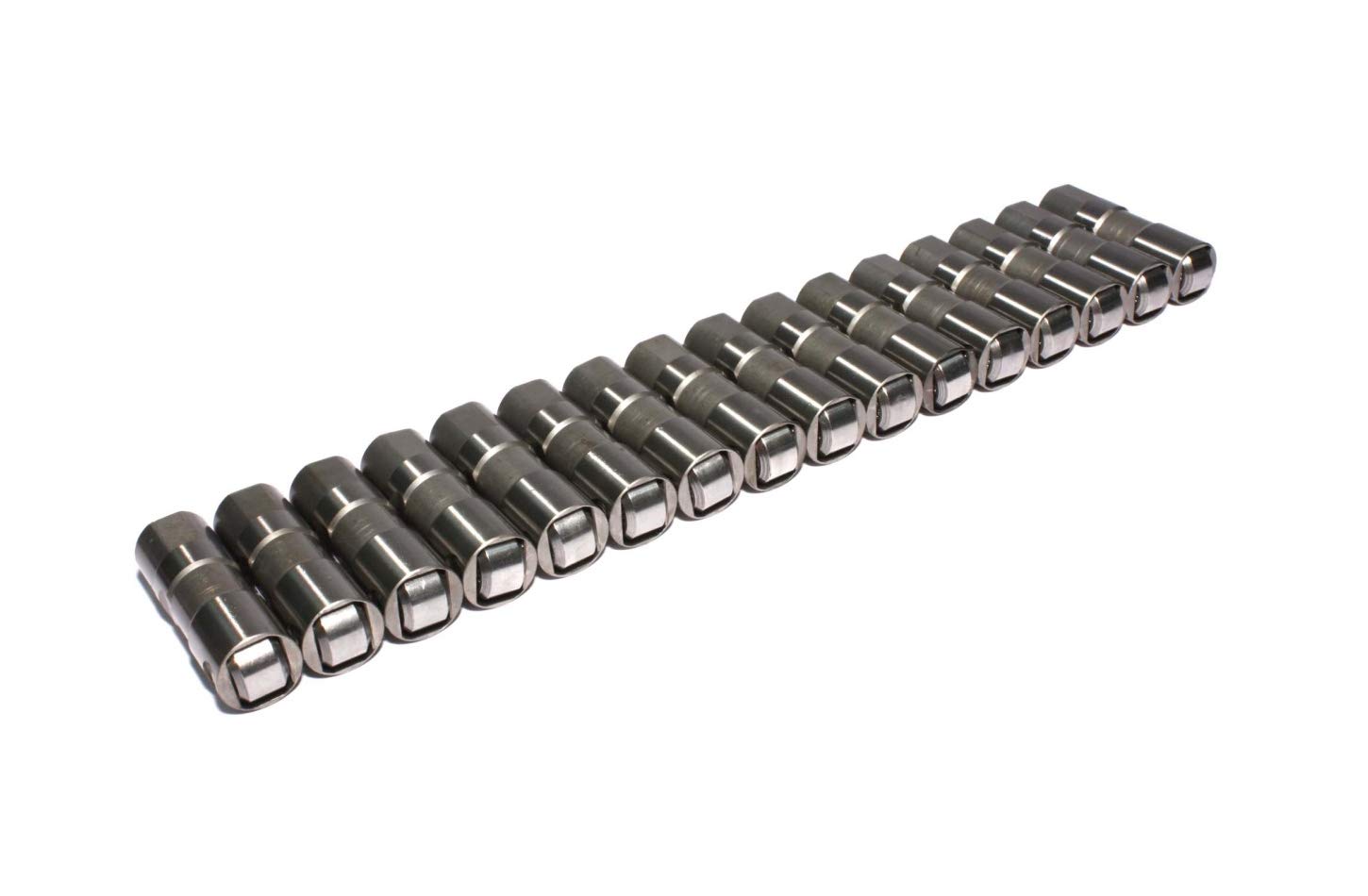
The COMP Cams 850-16 OE-style hydraulic roller lifter set is the key component for converting a Gen I small block Chevy from flat tappet to roller cam technology. This lifter set is designed as a direct retrofit for 1987-and-later factory roller blocks, but it also serves as the lifter component in retro-fit roller cam systems for older non-roller blocks when paired with a link bar or lifter tray. The hydraulic roller design reduces internal friction by as much as 20 percent compared to flat tappet lifters, which translates directly to better fuel efficiency and less heat generation.
The 850-16 lifters accept significantly more aggressive cam profiles than flat tappet lifters can handle — the maximum lift capacity is rated at 0.800 inch, though very few street SBC builds approach that limit. The roller wheel at the bottom eliminates the sliding friction that causes flat lobe failures, and the OE-style construction means oil flow and plunger travel match factory specifications. These lifters are pre-assembled with the roller wheel and axle, so installation is straightforward as long as the lifter bores are clean and within spec.
Switching to a roller cam using the 850-16 lifters also removes the dreaded flat tappet break-in procedure — no more 2,500 RPM for 30 minutes on a fresh cam. You do need to ensure your cam core has the correct roller lobe profile and that your pushrod length is adjusted for the slightly longer roller lifter body. For anyone building a high-performance 350 with aggressive duration and lift numbers, the 850-16 is the safe, long-lasting foundation for that setup.
What works
- Eliminates flat tappet break-in procedure entirely
- Accepts cam profiles up to 0.800 inch lift
- Reduced friction compared to flat tappet lifters
What doesn’t
- Requires matching roller cam core and link bar setup
- Pushrod length may need adjustment for proper lifter preload
- Higher cost than comparable flat tappet lifter set
7. CVF Racing 350-WRAPTOR-AC Serpentine Kit
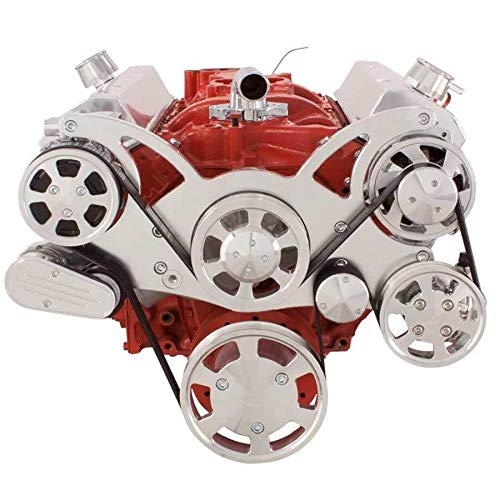
While not a camshaft itself, the CVF Racing 350-WRAPTOR-AC all-inclusive serpentine conversion system deserves mention because the accessory drive setup directly affects how your cam chosen camshaft interacts with the rest of the engine. This kit replaces the traditional V-belt configuration with a modern serpentine belt system running an AC compressor, alternator, and power steering pump — all with a single belt. The kit is designed to fit various SBC cylinder heads, including Camel, Fuelie, and Vortec castings.
The 64-pound package includes CNC-machined brackets, a tensioner, and a billet remote reservoir for the GM Type 2 power steering pump. CVF Racing backs it with a lifetime warranty and offers responsive tech support. The simple, single-belt design means no more adjusting multiple V-belts, and the serpentine system frees up hood clearance in tight engine bays. For anyone installing a performance cam like the COMP 12-242-2 or Edelbrock Performer-Plus on a 350 swapped into a classic truck or muscle car, this kit cleans up the front of the engine dramatically.
What works
- Complete kit with AC, alternator, and power steering pump included
- Lifetime warranty with dedicated tech support
- Bolt-on fitment for multiple SBC head styles
What doesn’t
- Alternator sits high and may require low-profile hood
- Not a camshaft — only relevant for full accessory drive upgrade
- Heavy 64-pound package complicates single-person installation
Hardware & Specs Guide
Valve Lift and Duration at 0.050
Valve lift and duration are the two most critical specs for choosing a cam. Lift is measured in inches from the base circle to the nose of the lobe and determines how far the valve opens. Duration at 0.050 inch of lifter rise is the industry standard for comparing cam profiles because it eliminates the variable ramps used in advertised duration figures. On a 350 small block, 204-214 degrees at 0.050 suits a stock converter daily driver, while 224-234 degrees moves the power band higher and requires a stall converter above 2,000 RPM.
Lobe Separation Angle (LSA)
Lobe separation angle controls overlap, which directly affects idle quality and manifold vacuum. A 108-degree LSA produces a choppy idle and more top-end power, but vacuum may drop to 10 inches or less. A 112-degree LSA provides a smooth idle with vacuum above 14 inches, allowing power brakes and cruise control to function properly. For a street 350 with power brakes, 110 degrees or wider is the safest bet. Engines with manual brakes can run tighter LSAs without issue.
Flat Tappet vs. Roller Lifter Break-In
Hydraulic flat tappet cams require a careful break-in procedure using zinc-rich break-in oil. The engine must be run at 2,000 to 2,500 RPM for 20 minutes immediately after first startup to properly seat the lifter faces against the cam lobes. Roller cams eliminate this procedure entirely, as the roller wheel on the lifter does not slide across the lobe face. The trade-off is cost — roller cam kits with lifters cost significantly more than flat tappet equivalents, but they offer reduced friction and accept more aggressive profiles.
Intake/Exhaust Duration Split
A camshaft with identical intake and exhaust duration figures (single pattern) suits engines with equal flowing intake and exhaust ports. A split-pattern cam adds additional exhaust duration to help scavenge cylinders through restrictive exhaust systems. The Edelbrock 2102 uses a 204/214 split — the extra 10 degrees on the exhaust side helps the 350 push spent gases out through stock manifolds. Engines with free-flowing headers can often use single-pattern cams with good results.
FAQ
How do I know if a cam will fit my 350 without machining the block?
What happens if I install a high-lift cam on stock 350 heads?
Can I use a 350 cam in a 400 small block Chevy?
Why does my 350 lose vacuum after installing a performance cam?
What oil should I use for break-in on a flat tappet 350 cam?
Final Thoughts: The Verdict
For most buyers, the camshaft for 350 small block winner is the COMP Cams 12-242-2 Xtreme Energy because it delivers a perfectly balanced power band from 1,600 to 5,800 RPM, an aggressive idle that still works with power brakes, and proven compatibility with aftermarket intakes and headers — all without requiring a full converter swap if you start with a 2,000 RPM stall. If you need stump-pulling low-end torque for towing, grab the Edelbrock 2102 Performer-Plus. And for high-RPM track duty with 3.73 gears or steeper, nothing beats the JEGS 555-200106 for top-end pull and broad torque from a 234-degree duration grind.

Certification: BSc in Mechanical Engineering
Education: Mechanical engineer
Lives In: 539 W Commerce St, Dallas, TX 75208, USA
Md Amir is an auto mechanic student and writer with over half a decade of experience in the automotive field. He has worked with top automotive brands such as Lexus, Quantum, and also owns two automotive blogs autocarneed.com and taxiwiz.com.