An engine that’s been neglected for tens of thousands of miles develops a thick, tar-like buildup inside the crankcase that restricts oil flow, robs compression, and can eventually starve critical components of lubrication. Removing that sludge without damaging seals, bearings, or turbochargers is the real challenge—not just pouring in a bottle and hoping for the best.
I’m Amir — the founder and writer behind Four Wheel Ask. My research focuses on chemical formulation differences, additive compatibility, and long-term owner reports across high-mileage gasoline and diesel engines.
Whether you’re reviving a high-mileage daily driver or performing preventive maintenance on a well-kept engine, understanding the differences between solvent-based and oil-based flush additives is essential. This guide reviews the top contenders for the best engine sludge remover.
How To Choose The Best Engine Sludge Remover
Selecting the right sludge remover depends on your engine’s age, mileage, and current oil passage condition. A product that works perfectly on a well-maintained engine can cause seal shrinkage or turbo damage in a neglected one.
Oil-Based vs. Solvent-Based Formulas
Oil-based flushes use synthetic esters and dispersant additives to suspend sludge particles without stripping protective oil film from bearings. Solvent-based products (containing acetone, toluene, or xylene) can aggressively dissolve deposits but may also attack aged rubber seals and cause sudden oil leaks in high-mileage engines. For most daily drivers, an oil-based formula provides safer cleaning without the risk of seal degradation.
Anti-Wear Additives (ZDDP Content)
During a flush, the oil’s viscosity drops as the cleaning agents dilute it, increasing metal-to-metal contact risk in heavily loaded areas like cam lobes and turbocharger bearings. A sludge remover formulated with extra ZDDP (zinc dialkyldithiophosphate) provides a sacrificial layer that protects engine components until the flush oil is drained and replaced with fresh lubricant.
Compatibility With Modern Emissions Systems
Gasoline engines with catalytic converters and diesel engines with DPF filters require flushes that won’t leave residues capable of clogging these components after the oil change. Dispersant-based cleaners that keep particulates suspended in the drained oil are safer than those that could re-precipitate during the first hot cycle after refill.
Quick Comparison
On smaller screens, swipe sideways to see the full table.
| Model | Category | Best For | Key Spec | Amazon |
|---|---|---|---|---|
| TRIAX Pro Engine Flush | Oil-Based | Turbo & high-performance engines | ZDDP preloaded in formula | Amazon |
| Motul Engine Clean | Oil Additive | Gasoline & diesel daily drivers | DPF & catalytic converter safe | Amazon |
| XADO ATOMEX Total Flush | Oil Additive | Oil pressure restoration | Revitalizant protective barrier | Amazon |
| Berryman 1216 Oil Change Flush | Solvent-Based | Budget DIY cleaning before oil change | Water removal & corrosion resistance | Amazon |
| Power Service Clear-Diesel (Fuel Tank Cleaner) | Fuel Additive | Diesel fuel system & storage tanks | Microbial slime & water removal | Amazon |
In‑Depth Reviews
1. TRIAX Pro Engine Flush (16 oz)
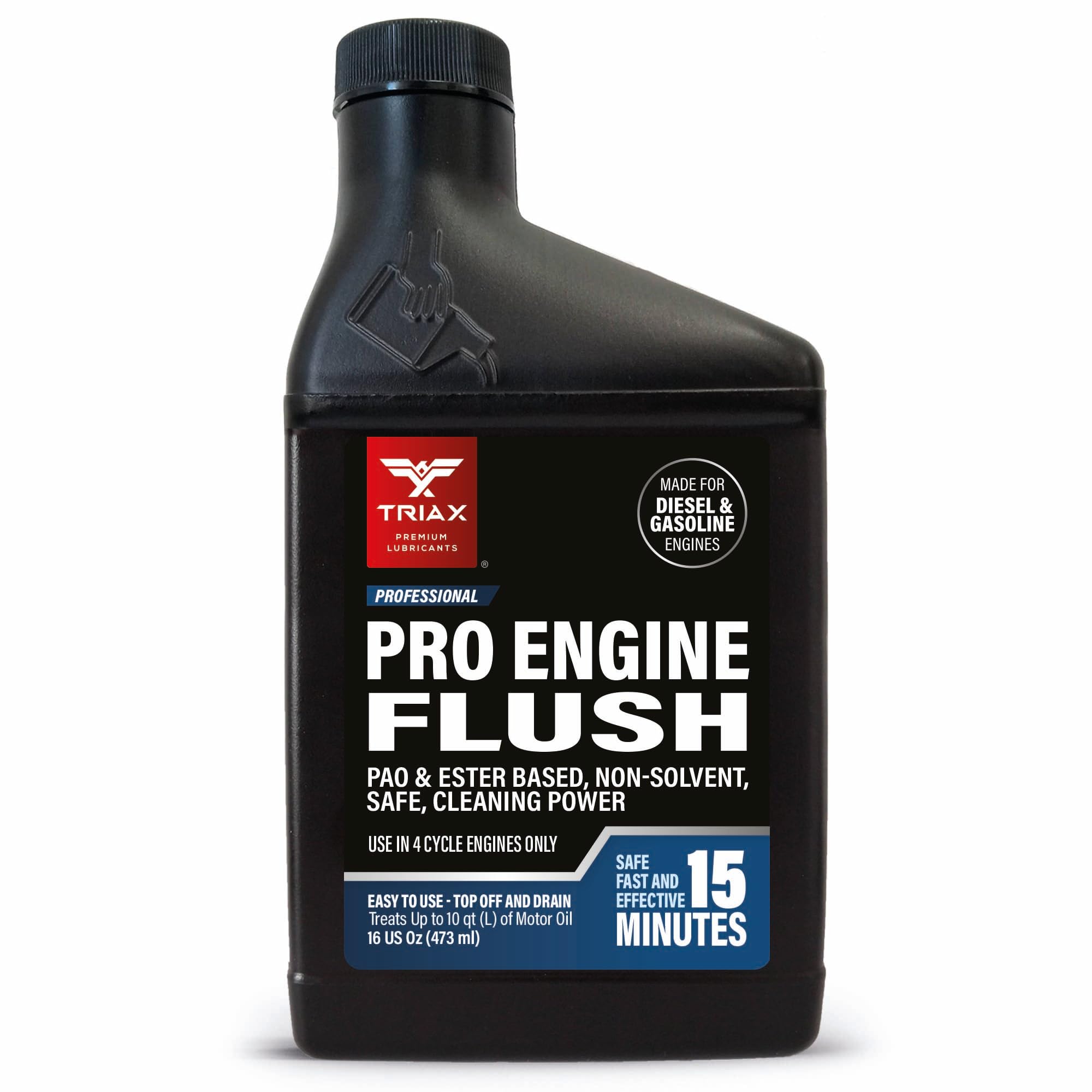
The TRIAX Pro Engine Flush is a synthetic, oil-based cleaner that preloads ZDDP anti-wear protection directly into the flush formula — a feature no other product in this comparison offers. This is critical for turbocharged engines where bearing lubrication must be maintained even as the cleaning agents work, preventing metal-to-metal contact during the 10-15 minute idle cycle. It uses polar esters to penetrate baked-on deposits around piston rings and valve seats, while PIB succinimide dispersants keep loosened debris suspended so it drains out with the old oil rather than settling back into oil galleys.
The formula is designed to treat up to 10 quarts of crankcase capacity, making it suitable for larger V8 diesel engines and high-performance gasoline builds alike. It contains anti-foamers that prevent air entrainment during the flush cycle, which is especially important for engines with high-pressure HEUI injectors commonly found in Ford Power Stroke diesels. The absence of aggressive solvents means seals remain pliable and won’t shrink or crack during treatment.
Users report measurable improvements in oil pressure readings and a reduction in valvetrain noise after a single treatment. The product works equally well in naturally aspirated and forced-induction engines, across both gasoline and diesel platforms. For a shop-grade flush that doesn’t compromise on component protection, this is the most complete package available at a mid-range price point.
What works
- Preloaded ZDDP protects turbo bearings and cam lobes during flush
- 100% synthetic oil base won’t shrink seals or cause leaks
- Anti-foam additives safe for modern HEUI injector systems
What doesn’t
- Slightly more expensive than basic solvent flushes
- Limited bottle size may require two bottles for larger diesel engines
2. Motul Engine Clean (300ml)

Motul Engine Clean uses a dispersant-based detergent formula designed to dissolve oil sludge, varnish, and combustion by-products without relying on harsh solvents. This approach is gentler on aging seals and gaskets, making it a strong candidate for high-mileage daily drivers where concerns about creating new oil leaks are legitimate. Its compatibility with catalytic converters and diesel particulate filters (DPFs) allows it to be used as a routine maintenance additive without worrying about downstream emissions component damage.
The 300ml bottle treats most 4-6 quart crankcases, and the recommended procedure is a 15-minute idle before draining. The formula works on gasoline, diesel, turbocharged, naturally aspirated, and hybrid powertrains — versatility that reflects Motul’s engineering background in automotive lubricants. By cleaning piston rings and turbo oil lines, it helps restore compression and oil flow consistency that may have degraded over tens of thousands of miles of neglect.
For emissions-conscious owners, the dispersant action helps reduce hydrocarbon output by promoting more complete combustion after the cleaning cycle. Paired with Motul’s Fuel System Clean, it can assist in passing smog inspections by clearing carbon deposits that contribute to failed emissions tests. This is a solid choice for the owner who wants preventive chemistry rather than aggressive stripping.
What works
- Safe for catalytic converters and DPFs
- Routine-use friendly with no harsh solvents
- Works across gasoline, diesel, and hybrid engines
What doesn’t
- Smaller volume requires careful measurement
- Not formulated with extra ZDDP for turbo protection
3. XADO ATOMEX Total Flush Revitalizant (250ml)

XADO’s ATOMEX Total Flush stands apart with its Revitalizant technology — a proprietary additive that creates a protective metal-ceramic barrier on wear surfaces during the cleaning process. While the primary function is removing sludge and carbon deposits from the oil system, the Revitalizant layer continues protecting cylinder walls and bearing surfaces even after the flush oil is drained. This dual-action approach makes it particularly effective for engines suffering from low oil pressure due to accumulated deposits in oil galleys and around the pressure relief valve.
The 250ml bottle is designed for use before an oil change, treating engines up to 5 liters of crankcase capacity. It works across all engine types including turbo-supercharged configurations, and the anti-carbon effect targets the hard, baked-on deposits that solvent-free flushes sometimes struggle to loosen. Users restoring Toyota Camrys and similar high-mileage sedans report noticeable reductions in oil consumption and the elimination of valve train noise after treatment.
For those with moderate sludge buildup rather than full blockages, XADO’s formula provides a protective restoration approach rather than a chemical assault. The Revitalizant component helps ensure that even in the week following the flush, some level of wear protection remains active in the fresh oil. This is a unique value proposition in a market where most products simply clean and exit.
What works
- Revitalizant creates lasting protective barrier on metal surfaces
- Reduces oil consumption and restores oil pressure
- Suitable for turbocharged and supercharged engines
What doesn’t
- Small bottle may require two for larger V8 engines
- Not as widely available as major brand competitors
4. Berryman 1216 Oil Change Flush (16 oz)

The Berryman 1216 is a solvent-based flush that uses detergents and dispersing agents without aggressive solvents like acetone, toluene, or xylene. This middle-ground formulation allows it to tackle moderate sludge deposits while reducing the risk of seal damage compared to full-solvent flushes. It also removes water from the crankcase, providing corrosion resistance for engines that may have condensation buildup from short-trip driving patterns.
Customer feedback from high-mileage Ford F-150s and Saturn Ions shows the product can restore idle stability and free up stuck rings at the 165,000-270,000 mile mark. The universal fit design means it works across gasoline and diesel platforms, and the 16-ounce bottle treats standard 4-6 quart systems. The recommended procedure is a 5-minute idle before draining, shorter than the 10-15 minute cycles required by oil-based competitors.
However, users warn against using this flush on engines with unknown maintenance history, as the solvent action can dislodge heavy sludge that was functioning as a seal, resulting in new oil leaks. For budget-conscious DIYers performing regular maintenance where the engine is already in decent shape, this is an effective and affordable option — but it demands caution on neglected high-mileage units.
What works
- Effective moderate sludge removal at an entry-level price
- Water removal protects against condensation corrosion
- Short 5-minute idle cycle is time-efficient
What doesn’t
- Solvent base can cause leaks in unknown-maintenance engines
- No ZDDP or anti-wear protection during flush
5. Power Service Clear-Diesel Fuel & Tank Cleaner (80 oz)

The Power Service Clear-Diesel is a diesel-specific fuel system and tank cleaner, not a crankcase oil flush like the other products on this list. It targets microbial contamination in diesel fuel — the slime, algae, and water that grow in storage tanks and vehicle fuel tanks over time. If your sludge issue originates from biological growth in the fuel system rather than oil breakdown in the crankcase, this is the correct tool for the job.
The 80-ounce bottle treats large storage tanks and equipment fuel systems, making it ideal for farm tractors, construction equipment, and motorhome fuel tanks where diesel can sit for months or years. It disperses fuel contaminants, removes water through emulsification, and works with all diesel types including ULSD and biodiesel blends. The Petro Fresh additive included in the formula provides long-term storage stability by inhibiting microbial regrowth.
For diesel engine owners who experience clogged fuel filters, poor combustion, or black smoke due to tank contamination, this is an essential cleaning step before addressing potential crankcase sludge. It doesn’t replace a crankcase flush, but it prevents fuel-side contamination from being misdiagnosed as an internal engine problem. Note that this product belongs in the fuel tank — never add it to engine oil.
What works
- Eliminates microbial slime and water from diesel fuel systems
- Petro Fresh additive provides long-term storage stability
- Works in ULSD, biodiesel, and stored emergency diesel
What doesn’t
- Not a crankcase oil flush — separate application required
- Large container oversized for single vehicle fuel tank treatment
Hardware & Specs Guide
Base Oil Type
The carrier fluid in a sludge remover determines how it interacts with engine seals and bearings. Oil-based flushes use synthetic esters or mineral oil as the base, allowing them to dissolve sludge through chemical polarity while maintaining a lubrication film. Solvent-based flushes use light hydrocarbons that can flash off quickly but may attack aged rubber seals. For high-mileage engines over 100,000 miles, oil-based formulas reduce the risk of creating new oil leaks during the cleaning process.
ZDDP Anti-Wear Concentration
Zinc dialkyldithiophosphate is an anti-wear additive that forms a sacrificial phosphate glass layer on metal surfaces under high pressure. During a flush, the oil film thins as cleaning agents dilute it, increasing wear risk. Products with intentional ZDDP preloading provide an extra margin of safety for turbocharger bearings, cam lobes, and lifters. Standard levels in engine oil range from 800-1200 ppm; flushes with added ZDDP may provide 1500+ ppm during the cleaning cycle.
Dispersant vs. Solvent Cleaning Mechanism
Dispersant-based cleaners use chemical surfactants that surround sludge particles and keep them suspended in the oil so they drain out completely. Solvent-based cleaners physically dissolve deposits into the oil, which can re-precipitate if the solvent evaporates or if the oil cools before draining. Dispersant formulas are generally safer for modern engines with variable valve timing and oil control solenoids because they leave no residue behind in narrow oil passages.
Emissions System Compatibility
Gasoline and diesel engines with catalytic converters, DPFs, or SCR systems require cleaning additives that don’t leave ash-forming residues. Dispersant flushes that suspend contaminants in the drained oil are inherently safer than solvent flushes that could leave dissolved deposits in the engine. Some products explicitly state DPF-safe and catalyst-safe certification — look for these designations if your engine uses exhaust after-treatment systems that are sensitive to contamination.
FAQ
Can I use an engine sludge remover in a turbocharged gasoline engine?
How many miles should I drive before using a sludge remover for best results?
Will an engine flush fix low oil pressure caused by sludge buildup?
Can I leave an engine flush in longer than the recommended idle time for tougher sludge?
Final Thoughts: The Verdict
For most buyers, the best engine sludge remover winner is the TRIAX Pro Engine Flush because it combines preloaded ZDDP anti-wear protection with a synthetic oil-based cleaning formula that won’t damage seals or cause leaks — ideal for turbocharged and high-mileage engines alike. If you want a dispersant formula that’s fully safe for modern emissions equipment like DPFs and catalytic converters, grab the Motul Engine Clean. And for restoring oil pressure on a budget using XADO’s protective Revitalizant technology, nothing beats the XADO ATOMEX Total Flush.

Certification: BSc in Mechanical Engineering
Education: Mechanical engineer
Lives In: 539 W Commerce St, Dallas, TX 75208, USA
Md Amir is an auto mechanic student and writer with over half a decade of experience in the automotive field. He has worked with top automotive brands such as Lexus, Quantum, and also owns two automotive blogs autocarneed.com and taxiwiz.com.