When the mercury drops below zero, the chemical reaction inside your lead-acid battery slows to a crawl, turning a reliable cranking source into a sluggish lump that barely spins the starter. A dedicated battery heater is the only real solution to maintain full cold cranking amps through the worst winter mornings, and the difference between an 80-watt wrap and an unheated battery can mean the car fires instantly versus clicking helplessly.
I’m Amir — the founder and writer behind Four Wheel Ask. I’ve spent years analyzing the thermal dynamics, electrical loads, and real-world durability data from hundreds of owner reports across battery heating products to separate the effective units from the underpowered gimmicks.
This guide breaks down the specific design trade-offs between wrap-style blankets, pad-style tray heaters, and insulation-only kits so you can confidently select the right best car battery heater for your climate, vehicle layout, and budget.
How To Choose The Best Car Battery Heater
Choosing a battery heater is not about picking the hottest option — it is about matching the heat delivery method to your battery’s physical orientation, your garage or driveway power access, and your winter temperature floor. Three factors dominate the decision: heater type, wattage density, and fitment accuracy.
Wrap vs. Pad vs. Insulation-Only
A wrap-style heater encases the battery body like a blanket, warming the case directly and keeping the electrolyte from freezing. Wraps are ideal for standard rectangular batteries in open trays where you can access all four sides. A pad-style heater sits under the battery in the tray, heating from the bottom up — this works well for odd-shaped batteries or tight compartments but heats more slowly. Insulation-only kits like the AOPEC use reflective material to retain existing engine bay heat but add no active warming; they are a supplement, not a replacement for a powered heater in severe cold.
Wattage and Thermostat Control
Most battery heaters draw either 60 or 80 watts. An 80-watt wrap will raise the battery core temperature significantly above ambient — enough for reliable starts down to -30°F. A 60-watt pad is adequate for milder winters (teens to single digits) and is safer for plastic battery trays that cannot dissipate concentrated heat. A built-in thermostat that shuts off at around 68°F, like the Facon pad, prevents over-heating and lets you leave the unit plugged in without constant monitoring.
Fitment and Cord Length
A 36-inch wrap fits most Group 24 through Group 34 batteries, but larger Group 31 batteries may leave a gap. Measure your battery’s height and circumference before ordering. The power cord should reach from the battery location to your nearest exterior 120V outlet — most cords range from 30 to 42 inches, so you may need an extension cord rated for outdoor winter use.
Quick Comparison
On smaller screens, swipe sideways to see the full table.
| Model | Category | Best For | Key Spec | Amazon |
|---|---|---|---|---|
| Zerostart 2800063 | Premium Wrap | Deep cold, extreme winters | 80W, 36in, CSA approved | Amazon |
| Kat’s 22200 | Mid-Range Wrap | Reliable daily warm-up | 80W, 36in, vinyl coated | Amazon |
| GM 10952544 | OEM Wrap | GM truck/SUV fitment | 80W, standard plug | Amazon |
| Facon Silicone Pad | Tray Heater | Tight compartments, tractors | 60W, thermostat, 8.5×5.5in | Amazon |
| AOPEC Insulation Kit | Passive Insulation | Supplemental thermal wrap | 40x7in, no power needed | Amazon |
In‑Depth Reviews
1. Zerostart 2800063 Electric Battery Blanket
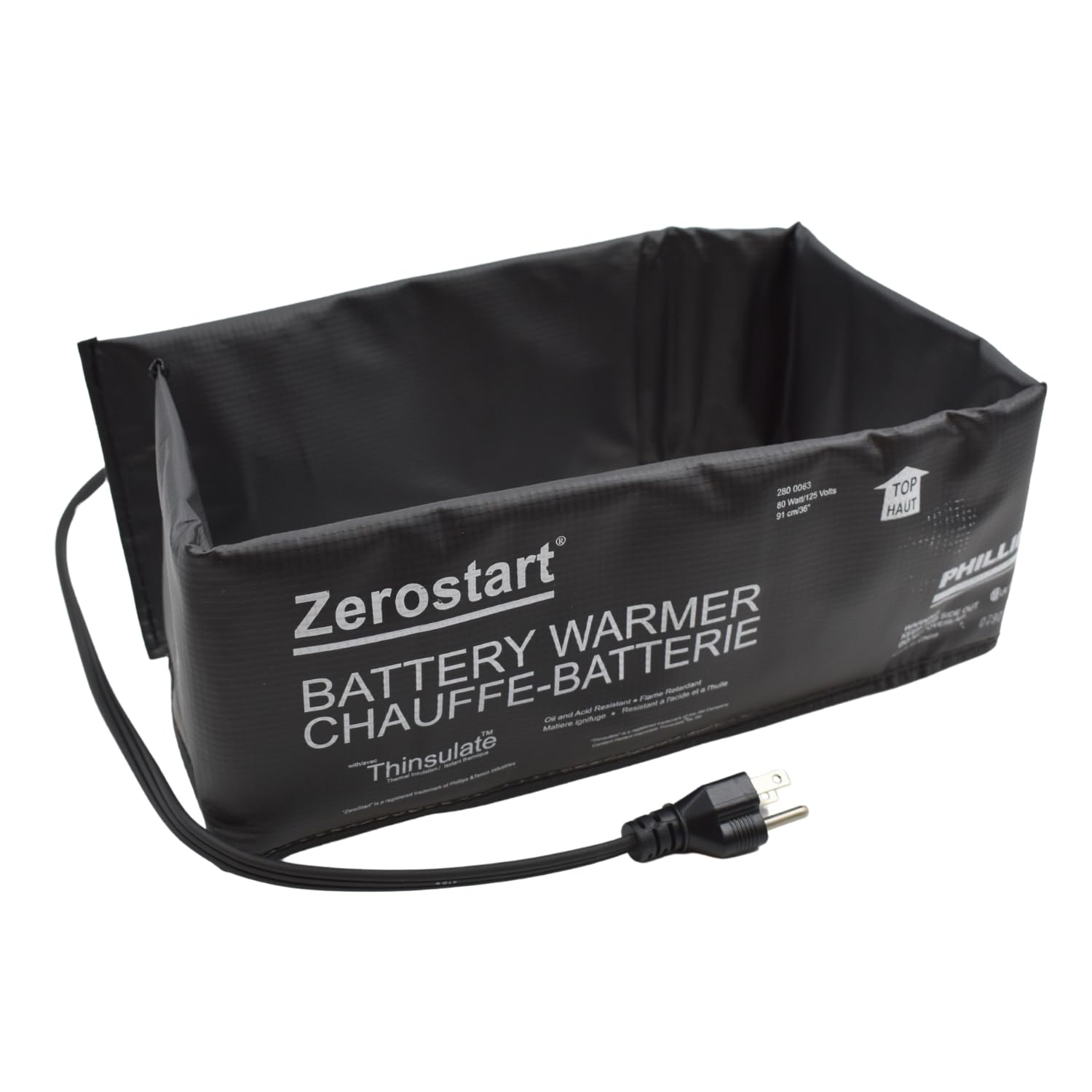
The Zerostart 2800063 delivers 80 watts of heating power wrapped in a Thinsulate thermal layer that maintains battery core temperature 60-70°F above ambient. Owner reports from Minnesota and North Dakota confirm reliable starts at -20°F and below, making this the go-to choice for extreme northern winters where a dead battery is a genuine safety risk. The 36-inch length covers most Group 24 through 34 batteries, and the CSA approval means the electrical components meet rigorous safety standards for continuous outdoor use.
Installation is straightforward — the wrap secures around the battery with the included twist ties, though several long-time users recommend swapping those for 36-inch zip ties for a tighter, vibration-proof fit. The 30-inch ground cord is adequate for most hood-mounted outlets, but owners of larger trucks with batteries tucked near the firewall may need an extension. The wrap does not have an integrated thermostat, so it will continue heating as long as it is plugged in — pairing it with a simple outlet timer prevents unnecessary overnight power drain.
One design note: the manufacturer explicitly warns against overlapping the wrap on itself, as the concentrated heat can damage the blanket material. Users report the overlap warning is not printed on the product packaging, so careful measuring before installation is essential. Despite this minor documentation gap, the Zerostart remains the most consistently recommended 80-watt wrap across owner forums for deep-cold environments.
What works
- Thinsulate layer holds heat longer than bare vinyl wraps
- 80W output provides reliable starts in -20°F conditions
- CSA approved for continuous outdoor electrical safety
What doesn’t
- No built-in thermostat — requires a timer for efficient use
- Overlap warning not clearly stated on packaging
- Twist tie fasteners are inadequate — zip ties are mandatory for a tight fit
2. Kat’s 22200 80 Watt Battery Thermal Wrap

The Kat’s 22200 brings the same 80-watt output as the premium Zerostart but in a vinyl-coated construction that resists oil and battery acid exposure. Multiple verified owners in North Dakota and the Midwest report zero battery failures even during polar vortex events, citing the wrap’s consistent heat output over several winters. The 36-inch length covers standard Group sizes, and the vinyl exterior cleans easily if the engine bay gets grimy.
The installation experience is mixed — the unit ships with a single thin 36-inch wire tie that most reviewers describe as useless. Practical owners immediately replace it with heavy-duty zip ties, which hold the wrap flush against the battery case for even heat distribution. The power cord measures 42 inches, giving a slight reach advantage over the Zerostart for batteries positioned deeper in the engine bay. The wrap is sold as “single use” in the specifications, but many owners have reused it for multiple seasons without issue, as long as the vinyl coating remains intact.
The build quality feels slightly less dense than the Zerostart’s Thinsulate construction, but the price reflects that difference. For drivers who face temperatures that dip into the single digits or low teens rather than -30°F extremes, the Kat’s wrap delivers sufficient warmth at a more accessible cost point. The unit’s bare-no-branding aesthetic does not affect function, but it is worth noting the plug end is straightforward without any molded strain relief — handle the cord gently at the connection point.
What works
- Oil and acid-resistant vinyl coating extends usable life in dirty engine bays
- 42-inch power cord offers better reach for deep battery positions
- Consistent 80W output proven in multi-season use
What doesn’t
- Included wire tie is useless — budget for aftermarket zip ties
- No thermal insulation layer — less heat retention than premium wraps
- No branded identification on the unit — looks generic
3. GM Accessories 10952544 80-Watt Battery Blanket
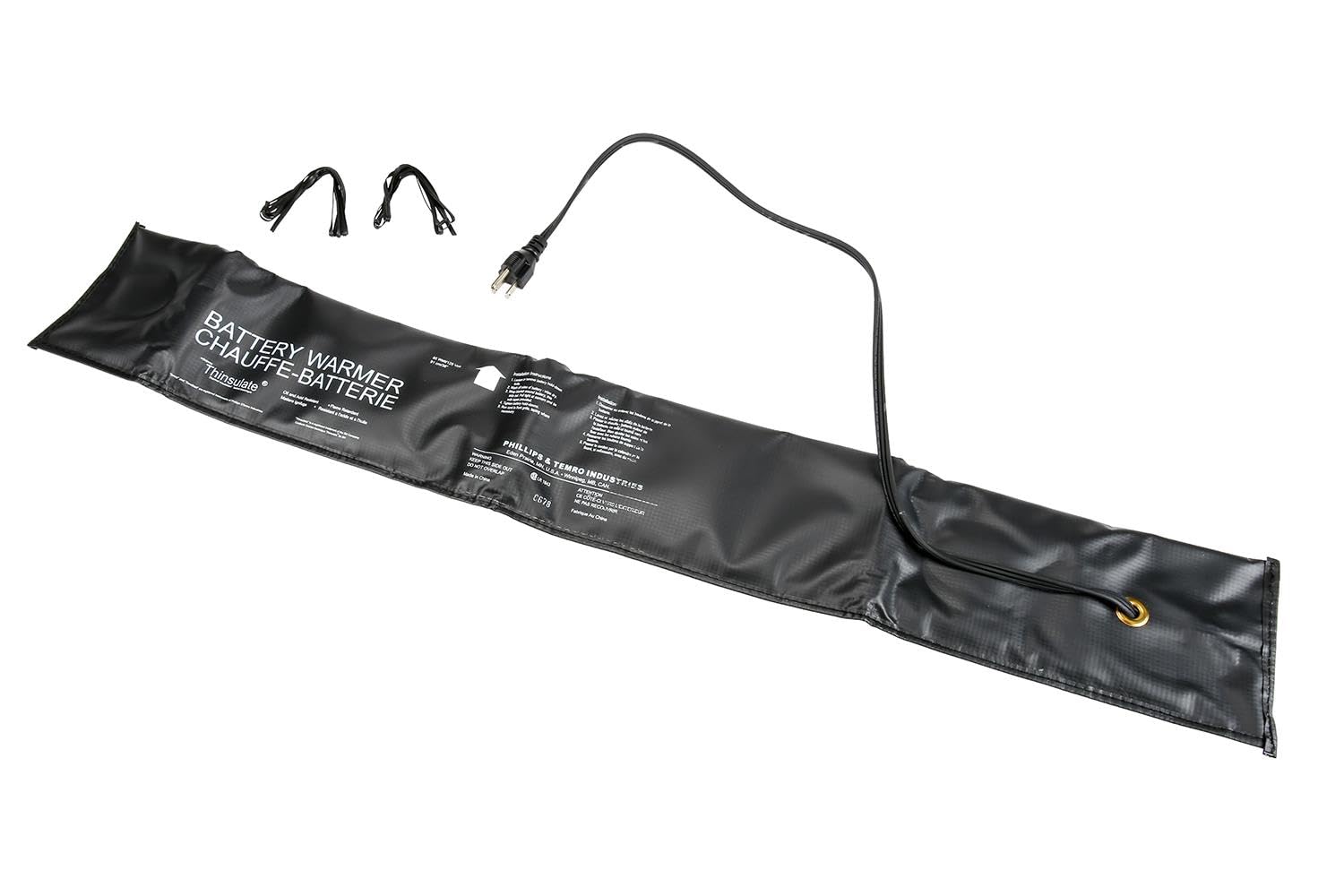
This GM Genuine Parts blanket is an 80-watt wrap designed specifically for GM truck and SUV battery trays, but it works universally on any standard-top battery. The OEM branding gives it a clean, factory-integrated look under the hood, and the build quality from ACDelco is consistent with original equipment standards. Owners of Silverados, Sierras, Tahoes, and Suburbans report it bolts up naturally without fighting the battery hold-down.
The wrap itself lacks any built-in fastening system beyond the basic twist ties — a recurring theme in this category. Multiple GM truck owners note they secured it with zip ties or velcro straps to prevent the blanket from shifting during highway vibration. The 80-watt heating element brings the same core-warming capability as the Kat’s and Zerostart, so cranking performance in sub-freezing weather is comparable. For Group 31 batteries, the blanket falls slightly short of full wrap-around coverage, but it still heats the battery body sufficiently to preserve cranking amps.
Priced in the middle of the pack, this blanket makes sense for GM owners who want a parts-bin-correct solution or for anyone who trusts ACDelco’s electrical engineering over generic imports. The packaging lists the country of origin as China, but the quality control and warranty backing are handled through GM’s standard parts network. If your battery tray has an odd shape or your vehicle is a GM truck, this blanket aligns perfectly with the existing battery tie-down geometry.
What works
- OEM-fit designed for GM truck and SUV battery trays
- 80W output matches aftermarket wraps for cold-start performance
- ACDelco warranty support through GM parts network
What doesn’t
- Does not fully wrap Group 31 batteries — leaves a gap
- Only twist ties included for fastening — insufficient for road use
- No velcro or integrated strap — requires aftermarket securing
4. Facon 8-1/2” x 5-1/2” Silicone Battery Heater Pad

The Facon heater pad takes a fundamentally different approach from the wraps: instead of enveloping the battery, it sits under the battery in the tray and warms the case from the bottom. The 60-watt output is lower than the 80-watt wraps, but the built-in thermostat that shuts off at 68°F makes it a set-and-forget solution — no timer needed, no risk of cooking the battery overnight. The silicone coating is waterproof and acid-resistant, making it suitable for battery boxes exposed to moisture or spillage.
Owners have found creative applications beyond battery warming — several tractor owners stick the pad to the oil pan to warm engine oil before cold starts, and one Sprinter van owner used two pads to heat LiPO batteries in an inverter setup where temperatures regularly dropped below freezing. The 1.8mm slim profile slides easily into tight battery boxes without raising the battery height enough to interfere with the hold-down bracket. The 72-inch power cord is significantly longer than any wrap-style heater, making it the best option when the nearest outlet is far from the battery location.
One critical caveat: the manufacturer explicitly states this pad is not recommended for lithium-ion, nickel-cadmium, or ABS-case batteries. The pad heats to a surface temperature that can damage plastic battery cases or cause lithium cells to swell. This limits the pad to standard lead-acid and AGM batteries with hard rubber or polypropylene cases. For those with the correct battery type, the thermostat-controlled operation is a genuine convenience advantage over the unregulated wraps.
What works
- Built-in thermostat prevents overheating — no timer required
- 72-inch power cord reaches far outlets easily
- Ultra-slim 1.8mm profile fits tight battery boxes without lifting the battery
What doesn’t
- Not compatible with lithium or ABS-case batteries
- 60W heats slower than 80W wraps in extreme cold
- Bottom-heat design warms battery less evenly than full wrap
5. AOPEC Universal Car Battery Insulation Kit
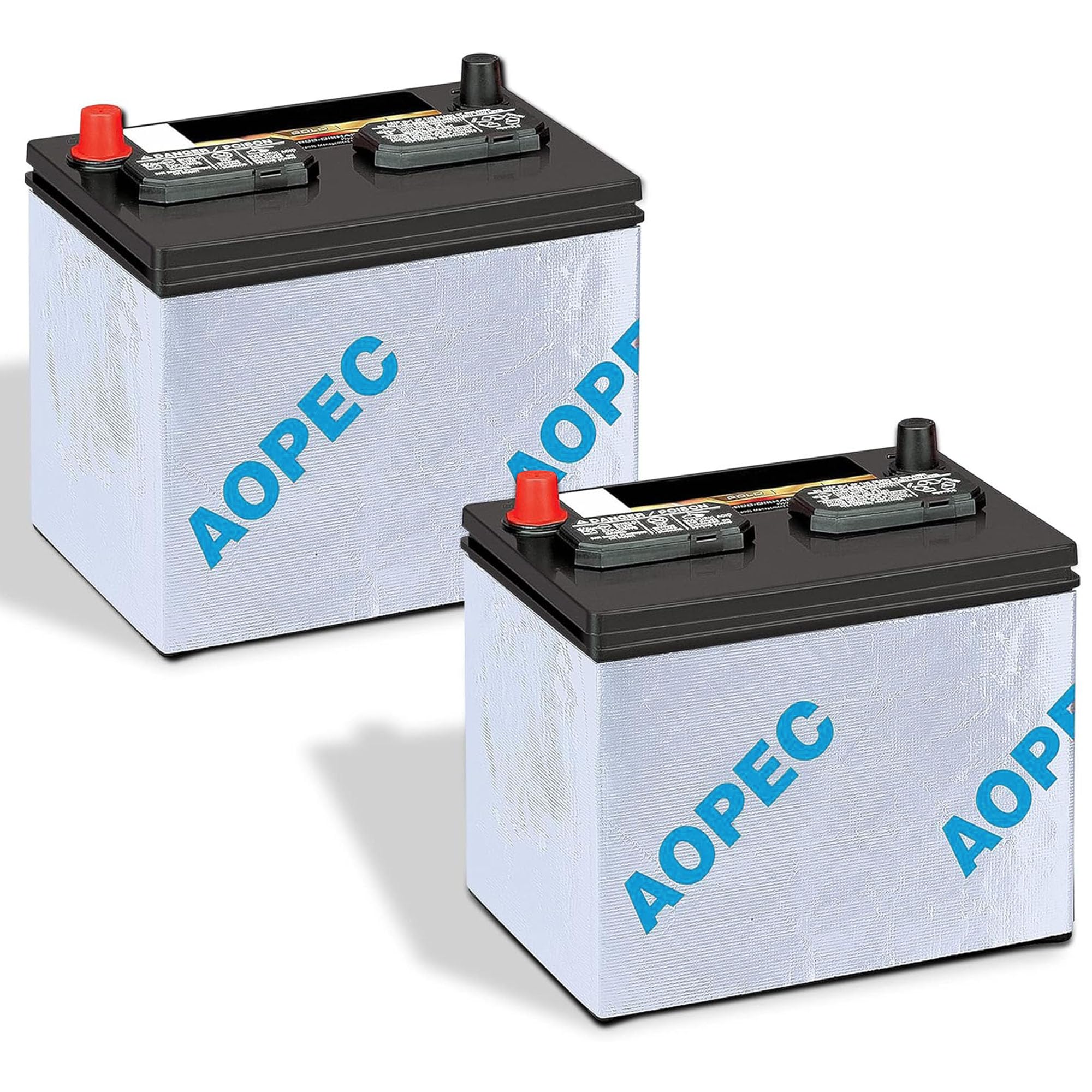
This is a passive insulation kit, not a powered heater — a critical distinction that sets it apart from the other four products on this list. The AOPEC uses a layered construction of polyester, aluminum foil fiber cloth, and acrylic to reflect heat back into the battery and block cold ambient air. For drivers in milder winters where temperatures stay in the teens or twenties, adding this insulation around an already-healthy battery can be enough to prevent hard starts without any power draw or extension cord.
The 40-inch by 7-inch sheet is designed to be cut and shaped to wrap around most standard batteries. The material is 30% thicker than comparable passive wraps, according to the manufacturer, and the aluminum layer provides a radiant barrier that keeps summer heat from baking the battery as well. Owners report trim-to-fit installation takes about 10 minutes with scissors, and the one-piece design requires no tools beyond a measuring tape and a marker. For vehicles that sit outside but are driven daily, the insulation alone may eliminate the need for an active heater.
However, in deep cold below 0°F, passive insulation is not a substitute for an 80-watt wrap. The material retains existing heat but does not generate any, so if the ambient temperature drops far enough, the battery will eventually equalize with the outside air. This kit works best as a companion to an active heater — wrapping the insulation over an 80-watt blanket dramatically reduces heat loss and shortens the time the heater needs to run. As a standalone solution for extreme climates, it will leave you disappointed.
What works
- Zero power draw — no cord, no electricity cost
- Reflective aluminum layer blocks summer heat as well as winter cold
- Trim-to-fit design adapts to odd battery shapes easily
What doesn’t
- No active heating — ineffective alone below 0°F
- Installation requires measuring, marking, and cutting
- Thicker material may not fit in very tight battery boxes
Hardware & Specs Guide
Wattage and Voltage
Every active battery heater on this list operates on standard 120V AC household current. The 80-watt wraps (Zerostart, Kat’s, GM) draw roughly 0.67 amps, making them safe to run on any 15-amp household circuit. The 60-watt Facon pad draws 0.5 amps. Higher wattage means faster heat-up and better performance in extreme cold, but also higher continuous energy use if left unplugged without a timer. For reference, an 80-watt heater running 8 hours overnight consumes about 0.64 kWh — roughly the same as a small incandescent bulb.
Heat Distribution: Wrap vs. Pad
A wrap-style heater surrounds the battery body, warming the electrolyte evenly from all sides. This is the most efficient method because the liquid inside the battery circulates as it warms, distributing heat throughout the cells. A pad-style heater only warms the bottom of the case, relying on thermal conduction through the plastic and into the electrolyte — this creates a temperature gradient where the top of the battery stays colder than the bottom. In practical terms, a wrap will bring a frozen battery to operational temperature faster than a pad of equal wattage.
Physical Dimensions and Fitment
Battery group sizes are standardized: Group 24 is about 10.25 x 6.8 x 8.9 inches, Group 34 is 10.25 x 6.8 x 7.9 inches, and Group 31 is 13 x 6.8 x 9.4 inches. A 36-inch wrap fits Groups 24-35 comfortably but will not fully encircle a Group 31, leaving an unheated gap. Measure your battery’s side-to-side circumference (height multiplied by two, plus width multiplied by two) and compare it to the heater’s length. Pad heaters require only a clean tray surface — no measurement beyond length and width is needed.
Thermostat vs. Always-On
A thermostatically controlled heater (like the Facon pad) contains a bimetal switch that opens the circuit when the heater reaches approximately 68°F and closes again when it cools below that threshold. This prevents thermal runaway and eliminates the risk of boiling battery electrolyte. Always-on wraps offer no such protection — they will heat continuously as long as they are plugged in. While a frozen battery cannot overheat, an always-on wrap in a garage that stays above freezing can gradually dry out the electrolyte over weeks of continuous use.
FAQ
Can I leave a battery heater plugged in all winter?
Will a battery heater work with an AGM battery?
What size battery heater do I need for a Group 31 battery?
How long does a battery heater take to warm a frozen battery?
Can a battery heater damage my car electronics?
Final Thoughts: The Verdict
For most buyers, the best car battery heater winner is the Zerostart 2800063 because its combination of 80-watt heat output, Thinsulate thermal retention, and CSA safety certification provides the most reliable cold-start insurance for extreme winter climates. If you want thermostatically controlled set-and-forget operation without plugging into a timer, grab the Facon Silicone Pad — just confirm your battery case material is compatible. And for the budget-conscious who face only mild winters or want to supplement an existing heater, nothing beats the AOPEC Insulation Kit for zero-power passive protection.

Certification: BSc in Mechanical Engineering
Education: Mechanical engineer
Lives In: 539 W Commerce St, Dallas, TX 75208, USA
Md Amir is an auto mechanic student and writer with over half a decade of experience in the automotive field. He has worked with top automotive brands such as Lexus, Quantum, and also owns two automotive blogs autocarneed.com and taxiwiz.com.