An 06 Honda Pilot with a lazy 5-speed automatic is a common sight, but finding the right fluid to keep it shifting crisp isn’t a guessing game. Use the wrong viscosity or friction profile, and you risk gear hunting, delayed engagement, or worse, a costly rebuild. This guide cuts through the noise to focus on what actually keeps the B7XA transmission happy.
I’m Amir — the founder and writer behind Four Wheel Ask. I’ve spent years analyzing Honda transmission specifications, owner-reported shift quality data, and the chemical compatibility of aftermarket ATF options to help you make an informed choice.
Whether you are topping off after a drain-and-fill or performing a full flush on a high-mileage unit, picking the correct fluid is critical. Below you’ll find my picks for the best 06 honda pilot transmission fluid to maintain smooth shifting and long-term durability.
How To Choose The Best 06 Honda Pilot Transmission Fluid
The 2006 Honda Pilot uses a B7XA 5-speed automatic transmission that is highly sensitive to fluid friction characteristics. Using the wrong fluid can cause torque converter shudder or harsh 2-3 upshifts. These four decision points will help you narrow your choice.
Stick To The DW-1 Specification
Honda originally specified ATF-Z1 for this generation, but later superseded it with DW-1. DW-1 has a lower viscosity for quicker pump response and better cold-weather flow. Any fluid you choose must be explicitly labeled as compatible with Honda DW-1. A multi-vehicle ATF that covers DW-1 is acceptable only if the bottle lists it.
Full Synthetic Vs. Conventional Base Oil
A full synthetic base oil resists thermal breakdown during heavy towing and stop-and-go traffic. The Pilot’s 3.5L V-6 generates significant heat, especially when the transmission cooler is original. Synthetic fluids also maintain their film strength at higher temperatures, reducing the risk of clutch glazing.
Friction Modifier Package
Honda transmissions rely on a specific friction modifier curve to lock and unlock the torque converter smoothly. Multi-vehicle fluids that claim “universal” compatibility may not precisely match Honda’s curve. If you notice a new vibration or harsh downshift after switching brands, the friction modifier package is usually the culprit.
Quick Comparison
On smaller screens, swipe sideways to see the full table.
| Model | Category | Best For | Key Spec | Amazon |
|---|---|---|---|---|
| TRIAX Global ATF | Multi-Vehicle | Heavy-Duty Towing | DW-1 Compatible | Amazon |
| Castrol Transmax Import | Multi-Vehicle | Budget-Friendly D&F | Dexron III / Mercon V | Amazon |
| Valvoline Extended Protection | Full Synthetic | High-Mileage Protection | Dual Defense Additives | Amazon |
| Lubegard PSF Honda | Power Steering | Steering System Only | Honda/Acura Spec | Amazon |
| Genuine Honda DW-1 | OEM | Factory Match | DW-1 (2 Quarts) | Amazon |
In‑Depth Reviews
1. TRIAX Global ATF Full Synthetic
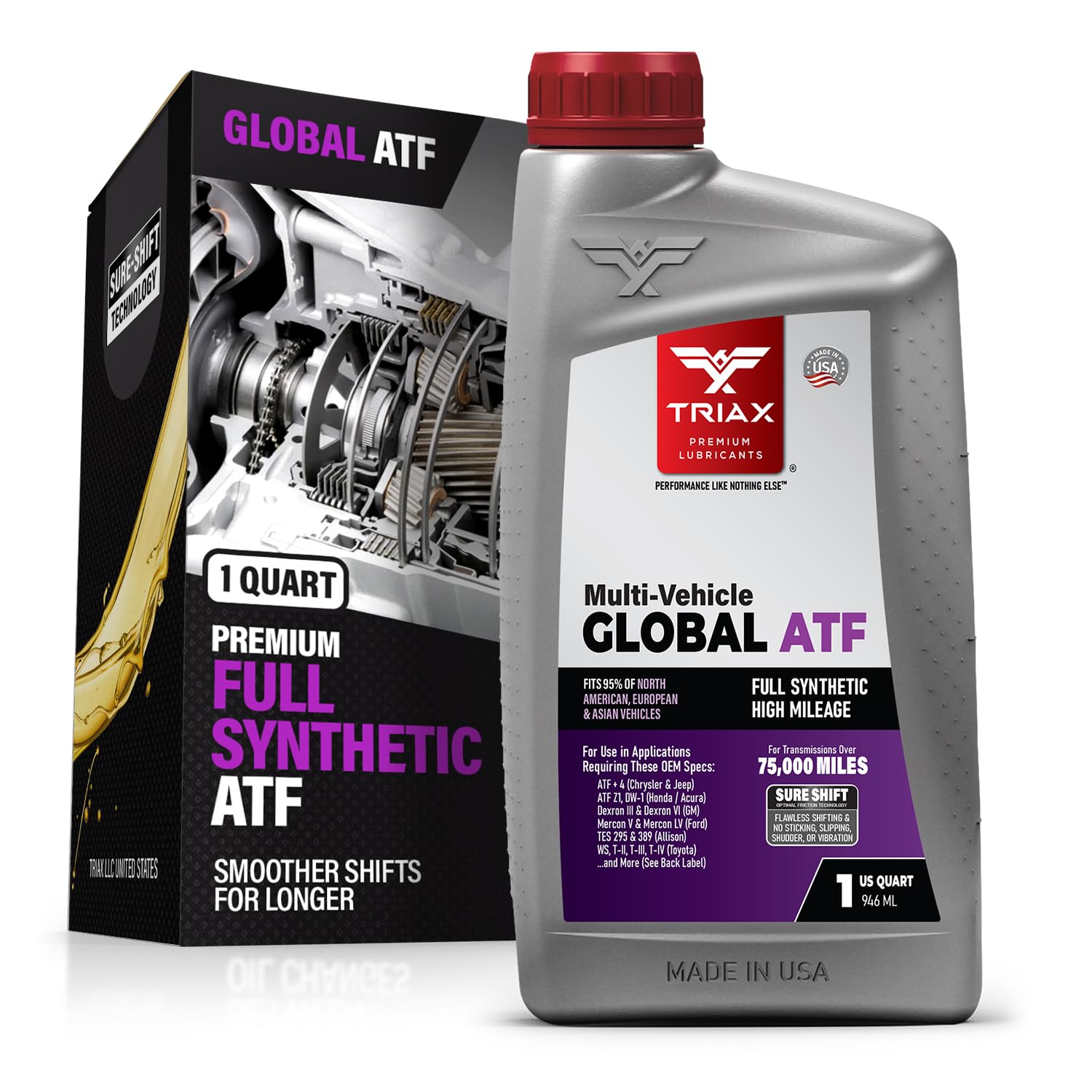
This TRIAX Global ATF is a full-synthetic multi-vehicle fluid that is explicitly marked as compatible with Honda DW-1. The manufacturer claims up to 50% smoother shifting, which is backed by high-load frictional stability that directly benefits the B7XA transmission during towing. Its pour spout makes filling through the dipstick tube clean and easy on the Pilot.
Owner feedback from high-mileage Honda applications notes a significant reduction in gear hunting on slight inclines. The fluid’s ability to handle severe service conditions — rated for 100,000 miles in heavy-duty use — means it can withstand the heat generated by the Pilot’s 3.5L V-6 without losing viscosity. It also works for nearly all seal types, which helps prevent weeping at the axle seals.
The only catch is that this fluid is not for CVT or dual-clutch transmissions, but that is irrelevant here since the Pilot uses a conventional automatic. For owners who want a single fluid that works across multiple vehicles and delivers robust shift quality, this is a compelling one-bottle solution.
What works
- Explicit DW-1 compatibility on the label
- Excellent heat resistance for towing use
- Handy built-in pour spout
What doesn’t
- May be overkill for light-duty city driving
- Some owners prefer OEM fluid for older high-mileage units
2. Castrol Transmax Import Multi-Vehicle ATF

Castrol Transmax Import is a long-standing favorite among Honda owners who do not want to pay OEM prices for a simple drain-and-fill. Its enhanced friction durability directly addresses the Pilot’s torque-converter lockup feel, and its low-temperature fluidity ensures the 5-speed shifts smoothly on cold winter mornings. It is licensed for Ford Mercon V and meets Dexron III-H requirements, but it is the JASO-1A certification that aligns it with Japanese transmission designs.
Real-world reports from 2009 Honda Accord and 2005 Pilot owners confirm that this fluid produces shifts that are indistinguishable from the Honda DW-1. The calcium sulfonate additive package resists oxidation, which is important for the Pilot’s transmission cooler lines that can trap debris over time. At a per-quart cost that sits firmly in mid-range territory, this is an affordable choice for regular maintenance intervals.
One note: this fluid does not explicitly list DW-1 on the bottle, though many Honda owners use it without issues. If you prefer a direct factory match for peace of mind, the Genuine Honda DW-1 is a safer bet. Otherwise, Castrol delivers predictably smooth results at a lower entry point.
What works
- Excellent cold-weather shift quality
- Proven track record with Honda transmissions
- Very cost-effective for multiple drain-and-fill cycles
What doesn’t
- No explicit DW-1 on the label
- Not a full-synthetic base oil
3. Valvoline Extended Protection Full Synthetic ATF

Valvoline’s Extended Protection formula is a full-synthetic ATF designed for transmissions manufactured from 2010 onward, but its high-quality base oil and Dual Defense additive technology make it a solid choice for the 06 Pilot. The additive package combines friction modifiers with anti-wear agents, which helps protect the B7XA’s clutch packs from glazing under sustained load. Valvoline claims a 45% stronger resistance to breakdown compared to conventional fluids, a spec that matters when hauling a full load of passengers up a grade.
The viscosity curve of this fluid is slightly thinner at low temperature than older Dexron formulations, matching the DW-1’s behavior for faster pump priming. Owners of older Honda and Toyota vehicles report that this fluid eliminated intermittent slippage that had developed over time. The synthetic formula also extends drain intervals, so you can feel confident running this fluid for 30,000 miles between services.
One trade-off: because this fluid is optimized for newer transmissions, it may be over-specified for a 2006 vehicle. However, higher thermal tolerance never hurts an aging transmission. If you plan to keep your Pilot past 200,000 miles, the extra cost per quart is justified by the long-term anti-wear protection.
What works
- Full-synthetic base resists heat breakdown
- Advanced anti-wear additive package
- Proven to eliminate slippage in high-mileage transmissions
What doesn’t
- Designed primarily for 2010+ vehicles
- Premium price per quart
4. Lubegard Complete Synthetic PSF Honda & Acura
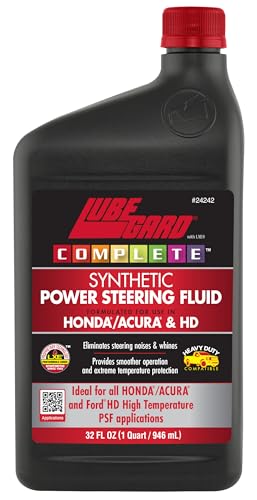
This Lubegard fluid is a dedicated power steering fluid for Honda and Acura systems, specifically formulated for 2007-and-up models but fully backward-compatible with the 06 Pilot’s steering rack. It uses a fully synthetic formula that provides superior anti-wear protection, directly addressing the whining noise that can develop in the Pilot’s power steering pump after 100,000 miles. The fluid also contains no seal swellers, so it will not cause the steering rack seals to harden or leak.
Owner reports from 2007 CR-V and 2002 Odyssey owners confirm that draining the reservoir and filling with this Lubegard fluid instantly silenced pump noise and reduced steering effort. For the Pilot, this is an excellent maintenance fluid — you can extract the old fluid from the reservoir with a turkey baster, refill, and cycle the steering lock-to-lock to flush the system. One 32-ounce bottle is enough for a full fluid replacement with some left over for future top-ups.
It is critical to note this product is NOT transmission fluid. It belongs in the power steering reservoir only. If you are looking strictly for transmission fluid, skip this item. For a Pilot owner tackling both transmission and steering maintenance, you should use this alongside one of the ATF options for a complete service.
What works
- Specifically formulated for Honda/Acura steering racks
- Immediately quiets noisy pumps
- Safe for all seal types
What doesn’t
- Not compatible with automatic transmissions
- Single-use bottle size may leave leftover fluid
5. Genuine Honda ATF DW-1 (2 Quarts)

This is the genuine Honda DW-1 fluid, the direct factory specification for your 06 Pilot. Honda superseded the older ATF-Z1 with DW-1 due to its lower viscosity index, which improves low-temperature shifting and reduces torque-converter shudder. Using OEM fluid guarantees that the friction modifier package matches exactly what Honda’s engineers calibrated, eliminating any guesswork about compatibility.
Owner feedback from 2005 CR-V and 2012 Odyssey owners consistently reports that the transmission “runs like new” after switching to DW-1. The fluid comes in a two-quart pack, which is convenient for a single drain-and-fill that removes roughly 3 quarts from the transmission pan. For the Pilot, you will need at least one more quart to complete the refill, so factor that into your purchase quantity.
The main downside is that the OEM fluid carries a premium price compared to aftermarket full-synthetics. It also does not boast the same high-temperature additive packages that some competitive synthetics offer. For owners who follow a strict 30,000-mile drain schedule and want zero compatibility questions, this is the safest choice.
What works
- Exact OEM specification for the 06 Pilot
- Consistent, smooth shift feel as delivered from factory
- Convenient two-quart packaging
What doesn’t
- Higher cost per quart than aftermarket options
- Does not include advanced anti-wear additives found in some synthetics
Hardware & Specs Guide
DW-1 Viscosity Profile
Honda DW-1 has a kinematic viscosity of roughly 7.2 cSt at 100°C, which is noticeably thinner than Dexron VI (around 6.4 cSt) or Mercon V (around 7.5 cSt). This lower viscosity allows the B7XA transmission’s oil pump to build line pressure faster, reducing delay when shifting from Park to Drive. Using a thicker fluid can cause harsh engagement and slower shift response.
Friction Coefficient Durability
The B7XA uses paper-based clutch packs that rely on a specific static-to-dynamic friction curve. Aftermarket fluids with aggressive friction modifiers can cause the clutches to grab abruptly, leading to a shudder during 2-3 upshifts. Look for fluids that advertise “frictional stability” or “anti-shudder” properties to match the Honda spec over the long term.
FAQ
Can I use Dexron VI in my 06 Honda Pilot transmission?
How many quarts of ATF does an 06 Pilot need for a drain and fill?
Final Thoughts: The Verdict
For most buyers, the 06 honda pilot transmission fluid winner is the TRIAX Global ATF because it delivers full-synthetic heat resistance and explicit DW-1 compatibility at a price that competes with conventional fluids. If you want the absolute factory match, grab the Genuine Honda DW-1 for complete peace of mind with the friction curve. And for a budget-friendly option that still provides smooth shifts during routine maintenance, the Castrol Transmax Import is the most cost-effective pick for a simple drain-and-fill.

Certification: BSc in Mechanical Engineering
Education: Mechanical engineer
Lives In: 539 W Commerce St, Dallas, TX 75208, USA
Md Amir is an auto mechanic student and writer with over half a decade of experience in the automotive field. He has worked with top automotive brands such as Lexus, Quantum, and also owns two automotive blogs autocarneed.com and taxiwiz.com.