Brake dust isn’t just ugly — it’s corrosive. That metallic film that cakes onto your aluminum rims after a few days of driving is actually iron particulate that, if left unchecked, can etch into clear coats and pit bare alloy surfaces. Standard car wash soap barely touches it, and harsh acidic cleaners can strip your wheel’s protective layer while you’re trying to clean it. The solution is chemistry designed specifically for the job.
I’m Amir — the founder and writer behind Four Wheel Ask. I’ve spent years analyzing automotive cleaning chemistry, comparing pH levels, iron-reactor efficacy, and real-world owner feedback to separate the gimmicks from the genuine formulas that protect and restore aluminum wheels.
Whether you’re fighting baked-on grime from performance pads or just want a weekly spray that keeps your wheels looking new, choosing the right aluminum wheel cleaner means understanding pH balance, iron-reaction technology, and which specific finish your rims actually have.
How To Choose The Best Aluminum Wheel Cleaner
Choosing an aluminum wheel cleaner isn’t as simple as grabbing the most expensive bottle on the shelf. The wrong chemistry can leave etching, discoloration, or a hazy film that is nearly impossible to reverse. You need to match the cleaner to your specific wheel finish and your cleaning style.
pH Level — The Safety Benchmark
pH-neutral formulas (around 7.0) are the safest bet for any wheel finish — clear-coated, painted, anodized, or polished. Acid-based cleaners might cut through grime faster, but they can permanently etch clear coats and accelerate oxidation on bare aluminum. A pH-neutral wheel cleaner preserves your wheel’s factory finish while still breaking down the grime.
Iron-Reacting Technology — The Visual Confirmation
Modern wheel cleaners often use iron-reacting chemistry that changes color (typically to purple or red) upon contact with metallic brake dust. This visual confirmation tells you the chemistry is actively dissolving the embedded iron particles. It’s a good indicator of a formula designed for heavy brake dust, but remember that color-change does not automatically equal “no scrubbing.”
Concentrate vs. Ready-to-Use
Ready-to-use (RTU) sprays provide convenience and consistency—perfect for quick weekly maintenance. Concentrates, often sold by the gallon, offer lower per-ounce cost and allow you to tailor the dilution ratio to the grime level. If you clean multiple vehicles or your wheels get heavily soiled, a concentrate can be a more strategic long-term choice.
Quick Comparison
On smaller screens, swipe sideways to see the full table.
| Model | Category | Best For | Key Spec | Amazon |
|---|---|---|---|---|
| SONAX Beast Wheel Cleaner | Premium | Iron melt heavy duty | pH-Balanced, Color-Changing | Amazon |
| Griot’s Garage Wheel Cleaner | Premium Gallon | Value & weekly use | pH-Balanced, 1 Gallon | Amazon |
| Carfidant Rim Reactor | Mid-Range | No scrub formula | pH Neutral, Iron Reactor | Amazon |
| 3D Yellow Degreaser | Mid-Range | Versatile degreaser | Biodegradable, 16 oz | Amazon |
| NIKCOSMK 12Pcs Wheel Brush Kit | Value Kit | Complete cleaning tools | 12 Pieces, Bendable | Amazon |
In‑Depth Reviews
1. SONAX Beast Wheel Cleaner

The SONAX Beast is a concentrated weapon against baked-on brake dust. Its color-changing formula sprays on clear and turns a deep red or purple upon contact with ferrous particles, providing a clear visual cue that the chemical reaction is actively dissolving the contamination. This 1-liter (33.8 fl oz) bottle is ready-to-use and specifically pH-balanced for factory-installed wheels, including aluminum, chrome, clear-coated, and PVD finishes.
Real-world feedback from owners of high-dust performance vehicles is overwhelmingly positive, with many reporting that a simple spray-and-rinse approach handles moderately soiled wheels with little to no agitation. The non-acid chemistry attaches to and emulsifies stubborn iron deposits, making it far more effective than a standard soap for heavy grime. Owners caution against using it undiluted on anodized or sensitive surfaces without a spot test.
The main trade-off is that the Beast works fast but also goes fast — the 33.8 oz size may only last for a few deep-clean sessions on a full-sized SUV. It’s clearly the top-tier choice for owners who value speed and visual confirmation over per-use cost. For those who clean weekly, the price point might be a little high, but the reduction in scrubbing time is considerable.
What works
- Dramatic color-change reaction provides clear feedback during cleaning
- Minimal agitation needed on moderate brake dust buildup
- Safe on all common factory wheel finishes
What doesn’t
- Higher cost per ounce compared to gallon-sized alternatives
- Heavily neglected wheels may still require brushing
2. Griot’s Garage Wheel Cleaner
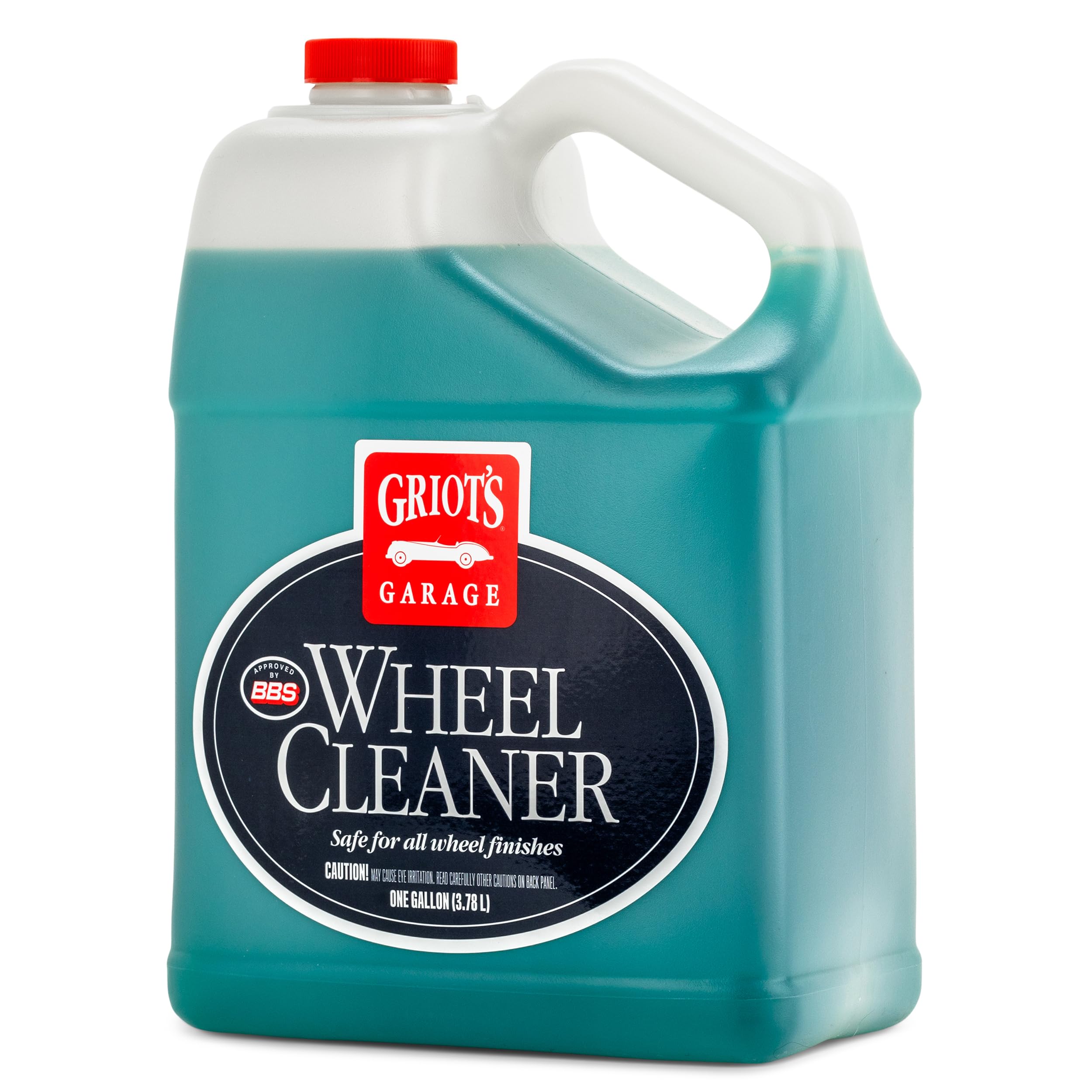
The Griot’s Garage Wheel Cleaner is a pH-balanced, non-acidic formula designed to be safe for all wheel finishes — chrome, polished, powder-coated, steel, and aluminum. It comes in a one-gallon container, which dramatically lowers the per-ounce cost compared to smaller spray bottles. This makes it an excellent choice for enthusiasts who detail multiple vehicles or need a reliable weekly cleaner without the premium price per squirt.
Unlike iron-reacting cleaners, this formula does not rely on color-change indicators. Its cleaning power comes from a high-tech surfactant blend that lifts and emulsifies brake dust, tar, and road grime. User reviews consistently confirm it removes baked-on dust effectively, but do note that some agitation — a soft brush or microfiber sponge — is usually necessary for optimal results. It is not a true “spray and rinse” product for heavily soiled wheels.
One experienced detailer noted that this formula is particularly effective for maintenance washes on ceramic-coated wheels, as it won’t strip the coating. However, for owners with extreme brake dust accumulation from performance pads, the lack of an iron-reactor means you will need to work a bit harder. The gallon size and reasonable price make it a solid, non-gimmicky option for regular upkeep.
What works
- Excellent value per ounce with the gallon size
- Safe for all finishes including ceramic coatings
- Great for weekly maintenance cleaning
What doesn’t
- Requires scrubbing for heavily soiled wheels
- No iron-reacting color change for visual feedback
3. Carfidant Rim Reactor Wheel Cleaner
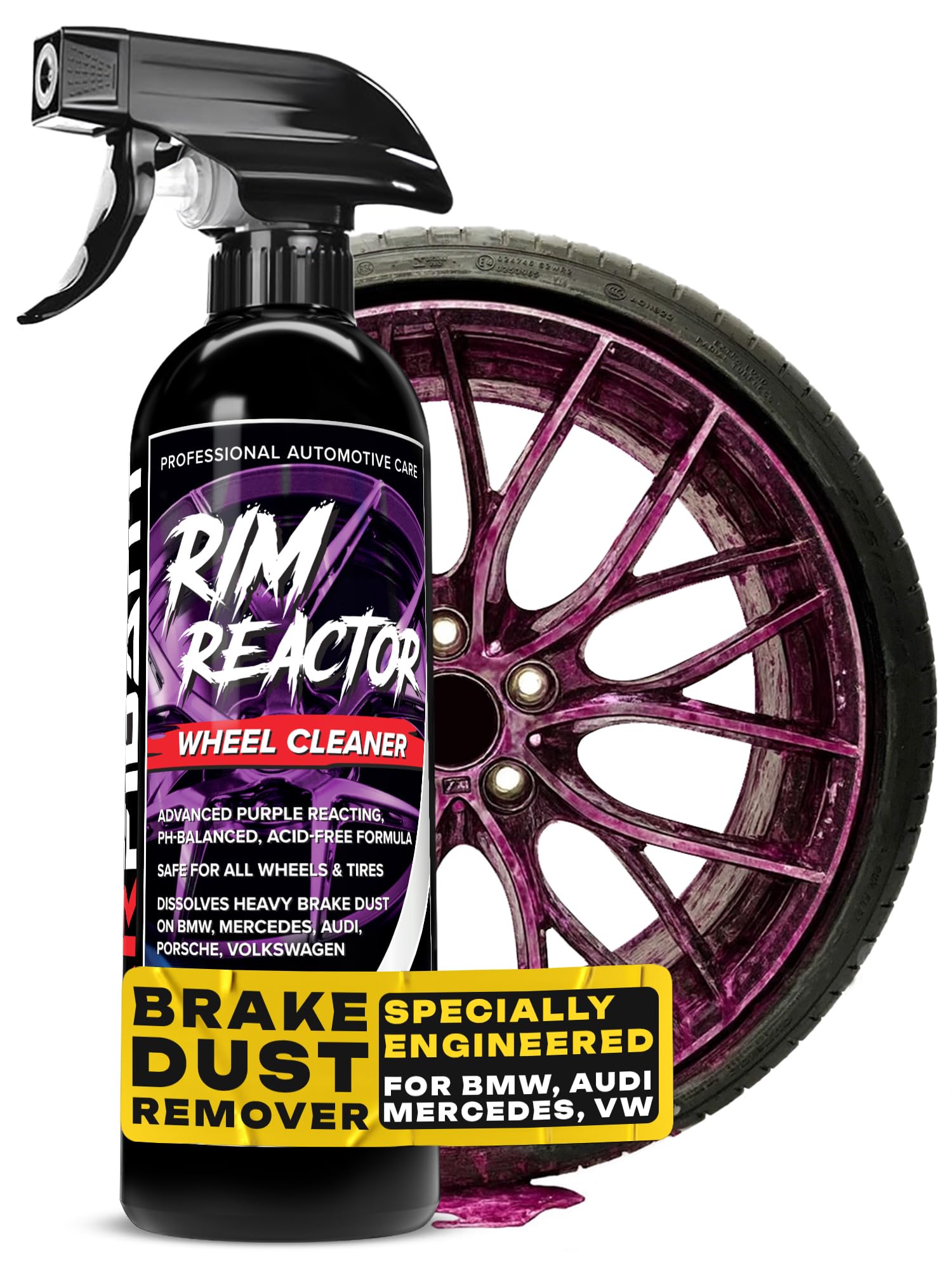
The Carfidant Rim Reactor is formulated as a no-scrub wheel cleaner that relies on a purple iron-reacting chemical process to dissolve brake dust. The formula is pH-neutral and non-acidic, making it safe for a variety of wheel finishes, including aluminum, chrome, black, painted, and alloy. The classic “watch it turn purple” effect gives the user visual proof that iron residue is being broken down without needing to touch the wheel.
Customer feedback is mixed but informative: many owners of brands like Audi with heavy brake dust report that the product works wonders, particularly when allowed to dwell for the recommended 2–4 minutes. Some even used it successfully to remove rust spots from paint. However, one critical review noted that on extremely neglected wheels, the formula fell short and required more agitation than advertised, and another mentioned it caused rust on rotors if not rinsed thoroughly.
This product sits firmly in the mid-range category in terms of capability. It offers the satisfying color-change technology of a premium product but at a more approachable cost. It is an ideal middle ground for the owner who wants to upgrade from simple soap but isn’t ready to commit to a dedicated professional-grade iron remover. It’s best used for moderately dirty wheels where you want a nearly effortless clean.
What works
- No-scrub formula works well on moderate grime
- pH-neutral chemistry is safe for all wheel types
- Color-changing reaction confirms cleaning action
What doesn’t
- Heavily neglected wheels still require a brush
- Some users report it can discolor rotors if not rinsed
4. 3D Yellow Degreaser
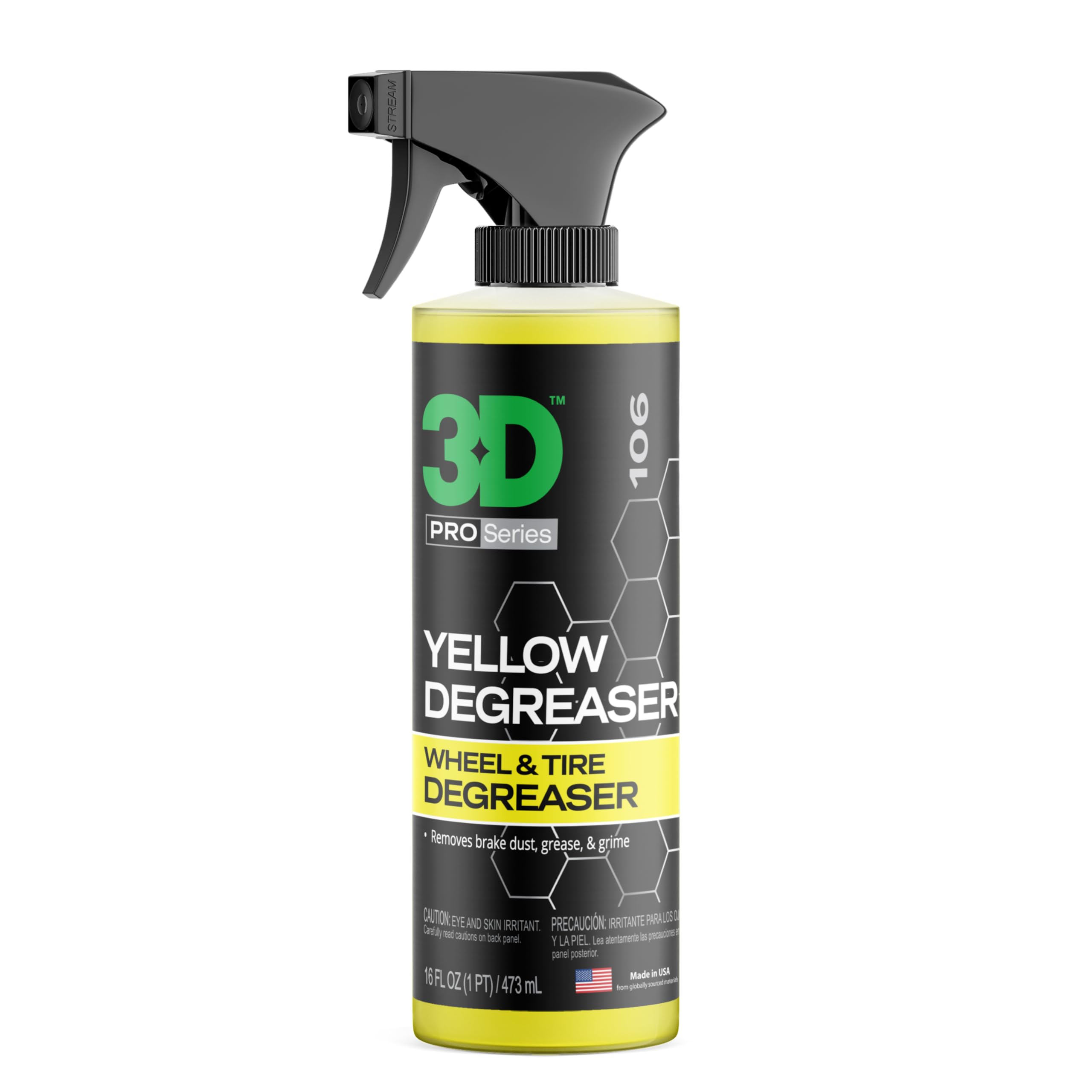
The 3D Yellow Degreaser takes a different approach than the dedicated iron-reactors on this list. It is an acid-free, biodegradable, all-purpose degreaser that happens to be exceptionally effective on wheels and tires. Its primary chemistry revolves around breaking down the oily bond that holds metallic brake dust, silicone residue, and road grime to the wheel surface rather than reacting with the iron particles themselves.
This is a versatile product that detailers love for its ability to clean tires, revive rubber sidewalls, and even degrease engine bays. For wheel use, it is very effective on surface grime and light brake dust buildup. Professional detailers in the reviews confirmed it works well even without scrubbing on lightly soiled wheels, but for heavy, caked-on dust, some mechanical agitation is needed. The 16 oz bottle is entry-level, but 3D also sells larger sizes.
The primary limitation is that it is not a targeted iron remover, so it won’t tackle deeply embedded ferrous contamination as efficiently as a dedicated color-changing wheel cleaner. However, for the owner looking for a single, safe, eco-conscious product that can handle wheels, tires, and other dirty automotive surfaces, the 3D Yellow Degreaser is a strong, budget-friendly choice. It’s not the most specialized, but it is one of the most useful.
What works
- Versatile degreaser that works on wheels, tires, and engine bays
- Biodegradable and made in the USA
- Effectively removes silicone residue and old tire dressings
What doesn’t
- Less effective on heavy, baked-on brake dust
- Requires more agitation for deep cleaning
5. NIKCOSMK 12Pcs Wheel Brush Kit

No single wheel cleaner can do its job without the right agitation tool. The NIKCOSMK 12-piece kit provides a comprehensive set of brushes designed to clean every part of the wheel and tire interface. The kit includes soft microfiber wheel brushes, detailing brushes for lug nuts and calipers, a dedicated tire brush, a wash mitt, and a cleaning towel — all in a storage bag. The microfiber brushes are completely metal-free to prevent scratching.
The standout feature is the bendable brush shaft that provides 360 degrees of movement, which is crucial for reaching the back barrel of a deep-dish wheel where brake dust accumulates most heavily. Owners of wide-rimmed vehicles specifically praise this for making the impossible-to-reach barrel surfaces accessible. The kit also works for interior crevices, cupholders, and exhaust tips, boosting its overall value.
While this kit doesn’t replace a chemical cleaner, it represents the other half of the cleaning equation. It’s especially important for those using pH-neutral cleaners or concentrates that require agitation. If you already own a premium cleaner like the SONAX Beast, pairing it with a good brush kit is costlier but yields far better results. For the entry-level detailer, this kit is an excellent way to ensure you have the right tool for every angle of the wheel.
What works
- Complete set covers all wheel and tire cleaning angles
- Bendable shaft reaches deep barrel areas
- Metal-free brushes protect wheel finishes
What doesn’t
- Not a chemical cleaner — only a tool set
- Brushes may not be heavy-duty enough for extreme caked-on grime
Hardware & Specs Guide
pH Level and Wheel Safety
pH measures how acidic or alkaline a cleaner is on a scale of 0–14, with 7 being neutral. For aluminum wheels, a pH-neutral or slightly alkaline formula (6.5–8.5) is safest. Acid-based cleaners (pH below 4) can chemically etch clear coats and cause a white, cloudy haze on bare aluminum that is irreversible. Always check the product label for “pH-balanced” or “non-acid” if you want to preserve your wheel’s finish.
Iron-Reacting vs. Surfactant-Based Cleaners
Iron-reacting cleaners contain thioglycolic acid or ammonium thioglycolate that chemically bonds with ferrous metal particles (brake dust) and changes color (red/purple) as it dissolves them. This is effective for heavy contamination. Surfactant-based cleaners use detergents to lift and emulsify dirt and grime without a color-change reaction. Surfactant types are gentler on coatings and ideal for regular maintenance but require more physical agitation.
FAQ
Can I use an aluminum wheel cleaner on painted or clear-coated rims?
Is it safe to use a wheel cleaner on a car with ceramic brake pads?
Will a color-changing wheel cleaner harm anodized aluminum rims?
Final Thoughts: The Verdict
For most buyers, the aluminum wheel cleaner winner is the SONAX Beast because its advanced iron-reacting chemistry delivers the fastest and most visually satisfying deep clean with the least physical effort. If you want an affordable gallon-sized option for weekly maintenance without the color-change gimmicks, grab the Griot’s Garage Wheel Cleaner. And for the entry-level detailer who needs a versatile degreaser that also tackles tires and engine bays, nothing beats the 3D Yellow Degreaser.

Certification: BSc in Mechanical Engineering
Education: Mechanical engineer
Lives In: 539 W Commerce St, Dallas, TX 75208, USA
Md Amir is an auto mechanic student and writer with over half a decade of experience in the automotive field. He has worked with top automotive brands such as Lexus, Quantum, and also owns two automotive blogs autocarneed.com and taxiwiz.com.