Metallic brake dust doesn’t just make black rims look brown and throw off your whole wash job — it actually bonds to clear coats and painted finishes over time, causing permanent staining and corrosion if you use harsh acids. The best car rims cleaning products in this guide use advanced iron-reacting chemistry that turns purple as it lifts contamination, turning a 45-minute scrubbing session into a 10-minute spray-and-rinse job, even on high-dust European brake systems.
I’m Amir — the founder and writer behind Four Wheel Ask. I’ve spent hundreds of hours cross-referencing chemical formulations, pH levels, iron-chelating agents, and brush fiber densities from detailer forums, manufacturing spec sheets, and aggregated owner feedback to find exactly which wheel cleaning approaches deliver showroom-shine without the elbow grease.
Whether you drive a daily commuter caked in road film or a performance car that dusts its own rims after every canyon run, you need a strategy that removes ferrous particles without etching your wheel’s protective coating. After analyzing 5 top-tier chemical sprayers and mechanical brush kits across real-world brake dust loads, this guide ranks the safest, most effective car rims cleaning solutions by chemistry type, application speed, and finish protection — so you never have to scrub bare aluminum again.
How To Choose The Best Car Rims Cleaning Products
The market offers two distinct paths for rim cleaning: chemical sprayers that dissolve ferrous particles on contact, and mechanical brush kits that physically dislodge stubborn grime. Your choice depends on wheel finish type, brake pad compound, and how much time you want to spend bent over a bucket. Below are the three critical filtering criteria that separate an effective system from a wasted purchase.
Chemical Reactivity: Iron-Chelating vs. Acid-Based Formulations
True wheel-specific cleaners use ammonium thioglycolate or similar iron-chelating agents that bond with metallic brake dust particles, turning purple or red as they work. This reaction signals active cleaning — the chemical literally lifts iron off the surface. Avoid acid-based cleaners (hydrofluoric or phosphoric) on clear-coated or painted wheels; they etch protective layers and leave a dull haze. A quality acid-free, pH-neutral formula should register between 6.5 and 7.5 on the pH scale for repeated safe use on alloy and chrome.
Brush Fiber Density and Metal-Free Construction
If you choose a brush kit (either as primary cleaner or for agitation alongside spray), the bristle material determines scratch risk. Natural boar hair or ultra-soft synthetic woolies with 100% metal-free ferrules prevent scratches on polished lips and powder-coated barrels. Stiffer brushes work for rubber tires but should never contact the rim face. The ideal wheel brush bends to 360 degrees, reaches behind calipers and lug nut cavities, and holds enough cleaning liquid to emulsify grime in a single pass. Skipping this spec guarantees swirl marks.
Application Speed and Water-Activated Dwell Time
Not all no-scrub claims are equal. Iron-reacting sprays require 2–4 minutes of dwell time on a cool, dry wheel — any longer and the chemical dries, re-depositing iron onto the surface. High-pressure rinse is essential. For heavily neglected wheels (six months or more since last clean), even the best chemistry needs light agitation with a soft brush. A maintenance routine with a diluted formula every two weeks reduces buildup to the point where spray-only cleaning actually works. Choose a system whose dwell specs match your real-world wash frequency.
Quick Comparison
On smaller screens, swipe sideways to see the full table.
| Model | Category | Best For | Key Spec | Amazon |
|---|---|---|---|---|
| SONAX Beast | Chemical Spray | Heavy iron load removal | 33.8 fl oz; color-changing formula | Amazon |
| Carfidant Rim Reactor | Chemical Spray | No-scrub maintenance cleaning | 16 oz; pH neutral, iron reaction | Amazon |
| 3D Yellow Degreaser | Chemical Spray | Tire gunk and silicone residue | 16 oz; biodegradable, acid-free | Amazon |
| NIKCOSMK 12pc Brush Kit | Brush Kit | Full wheel and tire detailing | 12 brushes; bendable 360° handles | Amazon |
| TTRCB 8pc Brush Set | Brush Kit | Pro-grade reach and scrubbing | 8 brushes; boar hair+ woolies | Amazon |
In‑Depth Reviews
1. SONAX Beast Wheel Cleaner

The SONAX Beast uses an acid-free, iron-chelating chemistry that sprays on clear and turns deep red or purple on contact with ferrous brake dust. This visual confirmation lets you see exactly where contamination sits before you rinse — no guesswork, no over-scrubbing. At 33.8 fluid ounces, it delivers roughly twice the coverage of typical 16-ounce competitors, making the per-wash cost surprisingly lean for a premium formula. The recommended dwell time is 2–3 minutes on cool, dry wheels; high-pressure water is essential to flush the emulsified iron completely.
Real-world detailers report this formula handles baked-on dust from European performance pads (Audi, BMW, Mercedes) with minimal agitation. The color-changing reaction is aggressive enough that you’ll see purple runoff within 60 seconds on moderately dirty rims. For six months of neglected buildup, a light pass with a soft brush after dwell ensures even the caliper crevices come clean. One note: the manufacturer advises caution on anodized wheels and recommends a spot test in an inconspicuous area first, as anodized surfaces can react differently to iron removers.
Multiple verified owners who switched from other color-change sprays cite the Beast’s effectiveness on white paint overspray and rust spots in addition to wheels, though paint use is not officially recommended. The scent is mild and the formula does not leave a sticky residue after rinsing. If you want a single bottle that handles heavy iron loads without acids and provides a clear visual cue, the SONAX Beast justifies its premium tier pricing with real chemical performance.
What works
- Color-change reaction provides real-time cleaning confirmation
- Acid-free formula is safe on clear-coated, chrome, and painted finishes
- Large 33.8 oz bottle offers excellent coverage per use
What doesn’t
- Requires high-pressure rinse for best results; garden hose alone may leave faint residue
- Not recommended for anodized wheels without a spot test
- Premium price point, especially compared to brush-only or degreaser alternatives
2. Carfidant Rim Reactor Wheel Cleaner
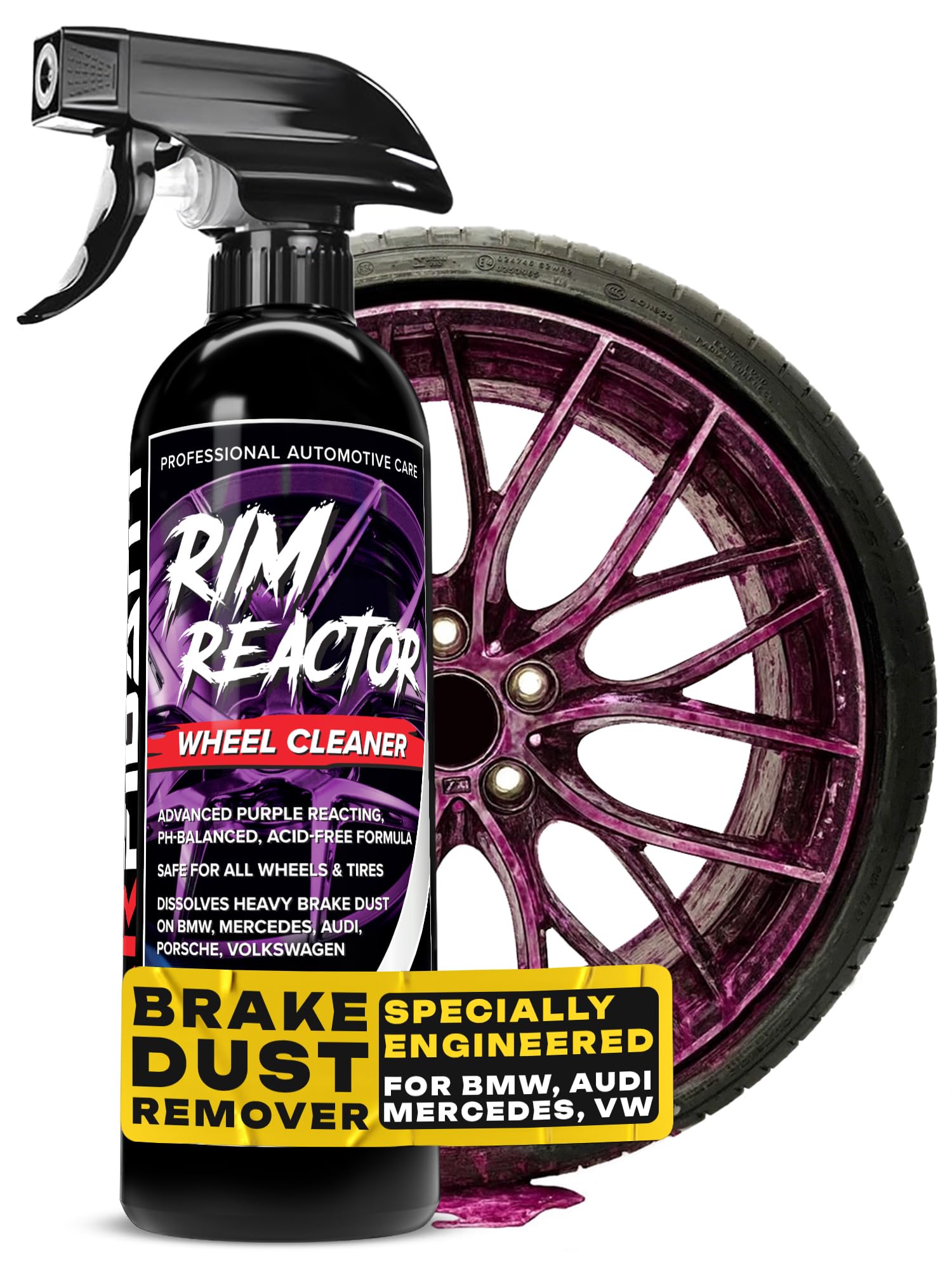
Carfidant’s Rim Reactor is a pH-neutral, non-acidic iron remover that sprays on and turns purple to indicate active brake dust dissolution. The manufacturer claims a no-scrub experience — and for wheels cleaned within the last month, that holds true. The formula performs best on moderately soiled surfaces sprayed generously, left for 2–4 minutes, then rinsed with strong water pressure. The pH-neutral composition ensures no etching or haze on clear coats, even with repeated applications on black or chrome finishes.
Owner experiences confirm that heavily neglected wheels (brake dust baked on over several months) still require light agitation with a soft brush, especially around lug nut recesses and barrel cavities. The purple reaction is visible but less aggressive than the SONAX Beast; on thick layers you may see patchy color change rather than an all-over purple bloom. Dilution for maintenance washes is straightforward — a 1:1 ratio with water stretches the bottle while retaining enough reactivity for weekly upkeep.
One verified buyer on a BMW reported that after months of buildup, the Rim Reactor worked well with a brush but did not fully clean with spray alone. Another owner noted corrosion on rotors after the product dried, though this is typical of any iron remover left on bare metal without rinsing. For the mid-range price point, the Rim Reactor is a strong pick for drivers who maintain a regular two-week wash schedule and want a chemical that works without acid risk.
What works
- pH-neutral formula prevents damage to clear coats and painted finishes
- Dilutable for cost-effective maintenance cleaning between deep washes
- Purple reaction provides visual feedback on iron particle removal
What doesn’t
- No-scrub claim only works on regularly maintained wheels; heavy buildup needs agitation
- Smaller 16 oz bottle requires more frequent repurchasing for multiple vehicles
- Some verified reports of rotor surface rust if not rinsed immediately and thoroughly
3. 3D Yellow Degreaser – Non-Acid Wheel & Tire Cleaner
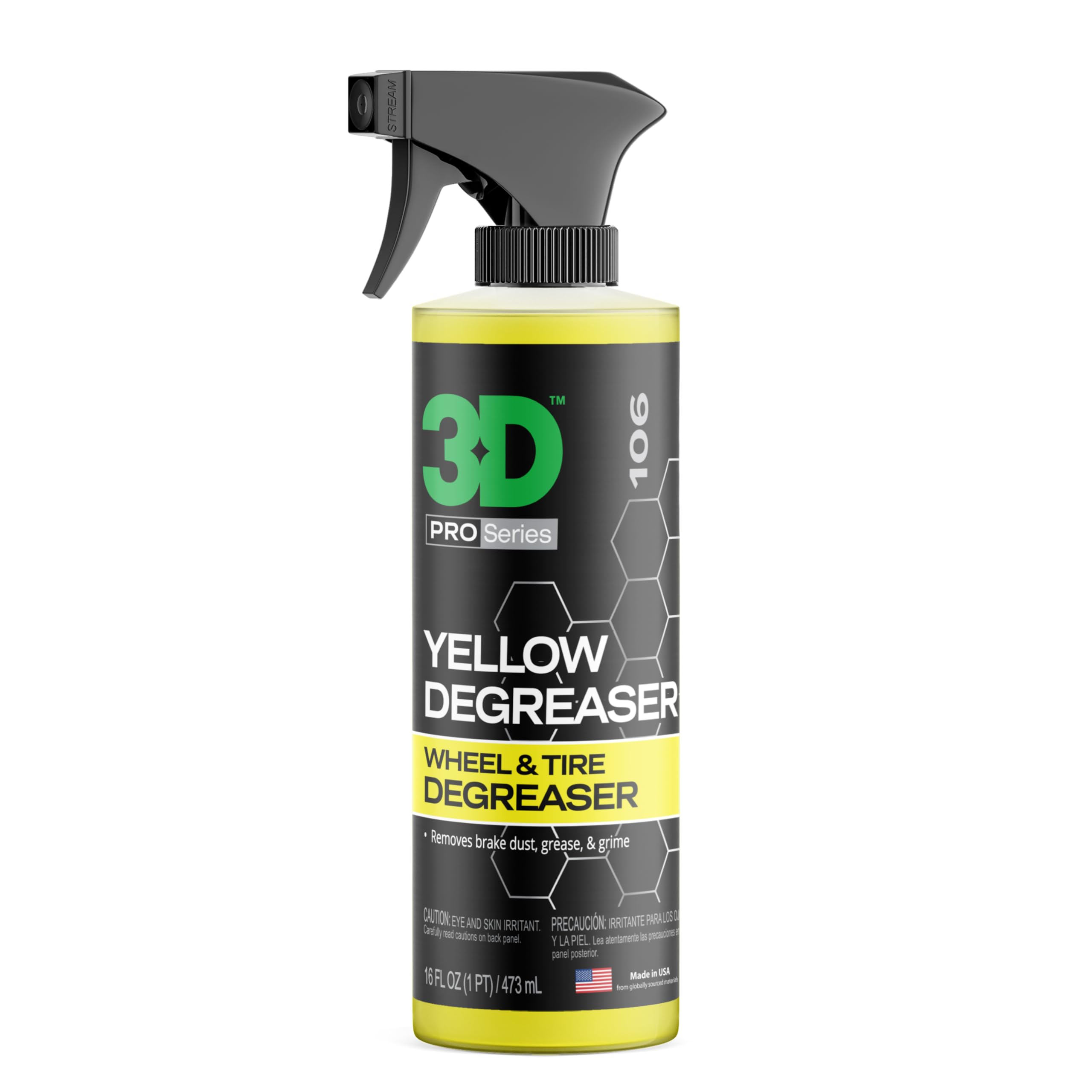
3D Yellow Degreaser represents a different philosophy from the color-change sprays above — it’s a surfactant-based degreaser that lifts silicone residue, tire dressing buildup, and road grime through emulsification rather than iron chelation. The formula is acid-free, unscented, and biodegradable, making it one of the most environmentally conscious picks in this roundup. It works best on tire sidewalls, white-letter tires, and wheels that carry heavy tire shine layers or caked-on mud, but it does not actively target metallic brake dust the way iron-specific cleaners do.
Verified owners report that spraying Yellow Degreaser on dry tires, agitating with a brush, and rinsing removes brown tire gunk in a single pass — no need for multiple applications. Professional detailers in the reviews note that for wheel cleaning specifically, the product performs best when used as a pre-wash to strip old dressing before switching to an iron remover for the rims. The 16-ounce bottle covers roughly two full-size SUV tire-and-wheel sets when used generously. Owners also mention using it on engine bays and exhaust tips with good results due to its non-corrosive nature.
The downside is that this degreaser does not change color, so you have no visual cue for when the chemistry is fully reacting. It also struggles with baked-on brake dust compared to dedicated iron removers; if your rims have a layer of brown metallic film, you’ll need additional agitation or a secondary product. For the entry-level price point, though, the 3D Yellow Degreaser is an outstanding all-purpose cleaner for tire maintenance and light wheel grime, especially if you value eco-friendly chemistry.
What works
- Biodegradable, unscented, and acid-free — safe for repeated use on all finishes
- Excellent at dissolving old tire dressings, silicone, and mud from sidewalls
- Very affordable, making it a cost-effective pre-wash or general-purpose cleaner
What doesn’t
- No color-change reaction; you cannot visually confirm when brake dust is removed
- Not formulated specifically for metallic iron particles; heavy brake dust needs scrubbing
- Small bottle size runs out quickly if used as a primary wheel cleaner for multiple vehicles
4. NIKCOSMK 12-Piece Wheel Brush Kit

When you need a physical scrubbing solution rather than chemicals alone, the NIKCOSMK 12-piece kit delivers a full wheel, tire, and interior detailing arsenal in one package. The core wheel brush features ultra-soft synthetic woolies on a 360-degree bendable shaft, letting you reach into deep wheel barrels and behind brake calipers without removing the wheel. The metal-free construction eliminates scratch risk on painted, chrome, and powder-coated rims, while the silicone grip handle stays secure even when wet.
The kit includes two dedicated wheel brushes (one large, one smaller for barrel access), five detailing brushes for lug nut cavities and spoke gaps, a stiff tire brush for scrubbing rubber sidewalls, a wash mitt, and a microfiber towel. Verified owners emphasize that the long wheel brush alone is worth the purchase — it holds enough cleaning liquid to foam through grime and reduces bending over by half compared to sponge-only cleaning. The tire brush bristles are stiff enough to remove browning and caked-on mud but flexible enough not to tear rubber.
The tradeoff: some component quality feels mid-range rather than pro-grade — the detailing brushes soften noticeably after several uses, and the storage bag is basic. However, for driveway detailers who want one kit that covers wheels, tires, exhaust tips, and interior crevices without scratching, the NIKCOSMK set offers exceptional versatility at its mid-range price point. Pair it with an iron-remover spray for chemical-mechanical synergy that rivals professional wheel treatments.
What works
- 12-piece set covers wheels, tires, interior vents, cup holders, and exhaust tips
- Bendable wheel brush reaches deep barrel areas and caliper recesses without scratching
- Metal-free design with ultra-soft woolies safe for polished and powder-coated finishes
What doesn’t
- Detail brushes soften faster than dedicated professional-grade options
- Storage bag is functional but not heavy-duty; zipper may wear over time
- No dedicated long-reach crevice brush for behind-the-rotor cleaning
5. TTRCB 8-Piece Wheel Brush Set
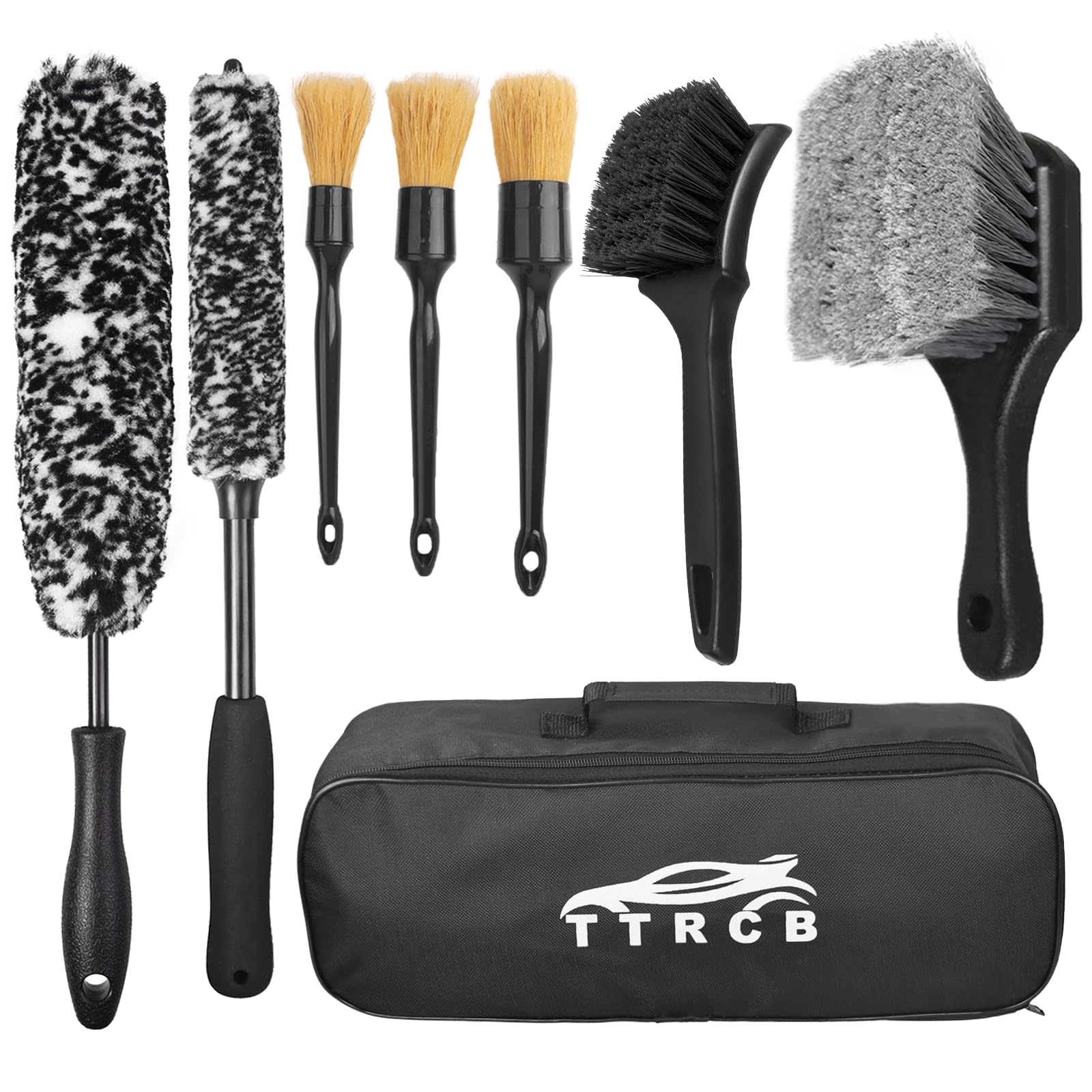
The TTRCB 8-piece brush set takes a more focused approach than the NIKCOSMK kit — fewer total pieces but higher quality per brush, with a mix of soft synthetic woolies and natural boar hair detailing brushes. The two wheel brushes feature 360-degree bendable shafts and 100% metal-free construction, while the three boar hair brushes are designed specifically for lug nut cavities, tire grooves, and tight gaps that foam brushes can’t reach. The included tire brush uses a stiffer fiber that handles tire browning and mud without degrading after repeated use.
Professional detailers in the verified feedback mention that the wheel brushes hold their shape after months of daily use — a significant differentiator from budget kits whose bristles flatten within weeks. The silicone grips on the handles reduce hand fatigue during long sessions, and the brushes rinse clean in seconds under running water. The set comes in a zippered storage bag that keeps everything organized, and the compact 8-piece count means less clutter than a 12-plus-kit while still covering every wheel zone thoroughly.
The main limitation is that this kit does not include a dedicated interior brush set or a wash mitt, so if you want an all-in-one interior-and-exterior solution, the NIKCOSMK set offers broader coverage. The TTRCB also sits at a slightly higher price point than comparably sized sets from lesser brands. But if your priority is wheel-and-tire cleaning quality over quantity — and you want brushes that survive professional workload — the TTRCB set delivers the best per-brush build in this roundup.
What works
- High-quality boar hair and woolie fibers maintain shape and stiffness through frequent use
- 360-degree bendable shafts reach tight barrel and caliper areas without effort
- Compact set reduces clutter while covering all essential wheel and tire brush roles
What doesn’t
- No interior detailing or microfiber washing accessories included
- Higher price per piece compared to larger, lower-cost brush kits
- Tire brush stiffness may feel too aggressive for some glossy sidewall finishes
Hardware & Specs Guide
Iron-Chelating vs. Emulsifying Chemistry
Iron-chelating wheel cleaners use ammonium thioglycolate or similar compounds that bond directly to ferrous (iron) particles from brake pads, turning purple or red when active. Emulsifying degreasers like 3D Yellow Degreaser use surfactants to break down organic residues — tire gels, mud, oils — but do not chemically target metallic dust. For high-dust brake systems (common on German and many European vehicles), an iron-chelating spray is essential to prevent fine metal particles from embedding in clear coat over time. For general tire cleaning and removal of old dressings, an emulsifying degreaser is more cost-effective and environmentally safe.
Brush Fiber Type and Metal-Free Risk
Wheel brush bristles are categorized by stiffness and material. Ultra-soft synthetic woolies (polyester or nylon with polished tips) are safe on all wheel finishes including clear-coated aluminum, chrome, and painted rims — they trap dirt without scratching. Natural boar hair offers mild abrasion for tight crevices but carries slight scratch risk on glossy surfaces if used aggressively. Stiff polypropylene bristles should be restricted to tire sidewalls and wheel wells only. The most critical spec is metal-free ferrules — the wire or band that holds brush bristles. Any exposed metal contact point can score a wheel’s coating in seconds. Always confirm “metal-free” or “full polymer” construction before buying a brush for rim faces.
FAQ
Can I use wheel cleaner on hot rims or after driving?
Will color-changing purple wheel cleaner damage clear coat if left too long?
Can I dilute iron-removing wheel cleaners for weekly maintenance washes?
Final Thoughts: The Verdict
For most buyers, the car rims cleaning winner is the SONAX Beast Wheel Cleaner because its iron-chelating color-change chemistry handles heavy brake dust from performance pads without acids, and the large 33.8-ounce bottle delivers real per-use value. If you want a no-scrub maintenance formula that pairs with a soft brush for weekend washes, grab the Carfidant Rim Reactor. And for a comprehensive brush system that tackles tires, rims, and crevices without spending extra on chemicals, nothing beats the NIKCOSMK 12-Piece Brush Kit.

Certification: BSc in Mechanical Engineering
Education: Mechanical engineer
Lives In: 539 W Commerce St, Dallas, TX 75208, USA
Md Amir is an auto mechanic student and writer with over half a decade of experience in the automotive field. He has worked with top automotive brands such as Lexus, Quantum, and also owns two automotive blogs autocarneed.com and taxiwiz.com.