A gas tank hose that leaks, cracks, or kinks turns a simple refuel into a frustrating mess of spilled fuel and dangerous fumes. Whether you’re topping off a diesel Super Duty, routing a vent line on an ATV, or upgrading a racing jug, the wrong hose can cost you time, money, and create a serious fire hazard. The market is packed with cheap rubber tubes that harden after one season, forcing you to repeat the job.
I’m Amir — the founder and writer behind Four Wheel Ask. I’ve spent years analyzing fuel system components across OEM and aftermarket catalogs, comparing material certifications, temperature ratings, and real-world owner feedback to separate temporary fixes from long-term solutions.
This guide breaks down the five best options for 2025 based on fitment, material integrity, and functional testing. Whether you need a direct replacement filler neck for a specific truck or a bulk spool for custom routing, you’ll find the right gas tank hose for your situation.
How To Choose The Best Gas Tank Hose
Selecting the right hose for your fuel system isn’t about grabbing the cheapest spool on the shelf. A mismatch in inside diameter, material composition, or temperature tolerance can lead to ethanol bleeding, dry rot, or a dangerous fuel leak under pressure. Focus on these three critical factors.
Inside Diameter And Exact Fitment
The inside diameter (ID) of the hose must match your vehicle’s filler neck or fuel line port. A 2-inch ID hose is standard for many truck filler necks, while 1.5-inch and 1.75-inch sizes appear on older models and some heavy-duty gas caps. For small engine vent lines, a 1/4-inch ID bulk hose is common. Always measure the existing hose or the port you are replacing before ordering. A hose that is too loose will leak fuel vapors and raw gasoline; one that is too tight will stress the fittings and may crack under thermal expansion.
Material Construction And Fuel Compatibility
Not all black rubber hoses are created equal. Look for a nitrile tube construction with a synthetic rubber cover — this resists swelling from ethanol-blended gasoline and diesel. Nylon cord reinforcement inside the wall (often called “reinforced fuel filler hose”) prevents the hose from collapsing under vacuum during refueling or from expanding under the weight of the fuel column. For high-pressure applications like in-tank transfer pumps, an SAE 30R7 rating is the minimum standard for gasoline compatibility; SAE 30R9 is required for submersed fuel pump applications and higher ethanol concentrations.
Temperature Range And Installation Flexibility
A gas tank hose lives under the hood, along the frame rail, or near the exhaust system. The material must stay flexible from deep winter cold to engine bay heat. Hoses rated from -40°F to 212°F provide a wide safety margin for most passenger vehicles and diesel trucks. An easy-to-cut hose material speeds installation, but avoid anything so soft that it pinches or kinks when bent around a tight radius. A kinked hose restricts fuel flow and may cause the pump to cavitate, leading to premature failure.
Quick Comparison
On smaller screens, swipe sideways to see the full table.
| Model | Category | Best For | Key Spec | Amazon |
|---|---|---|---|---|
| TKKEUEP 2″ ID 15 7/8″ Fuel Filler Hose | Mid-Range | Filler neck replacement on trucks & SUVs | 2″ ID, 15 7/8″ length, nylon cord reinforced | Amazon |
| Frienda 2-Pack 1.5″ ID 45° Filler Hose | Mid-Range | 45° angled filler neck setups with clamps | 1.5″ ID, 15 7/8″ length, dingqing material | Amazon |
| Aumzong FN782 Filler Neck Pipe | Premium | Direct fit Ford F-350/F-450/F-550 6.0L diesel | Stainless steel, replaces #FN782 4C3Z9034C | Amazon |
| Jeemiter 1/4″ ID 25ft Fuel Line Hose | Premium | Bulk replacement for vent lines & small engines | 1/4″ ID, 25 ft spool, SAE 30R7, 300 PSI working | Amazon |
| Mapleza Racing Fuel Jug Hose Kit | Budget | Pour spout for 3/5/5.5 gallon racing jugs | 13.62″ length, clear plastic, 4-pack | Amazon |
In‑Depth Reviews
1. Aumzong FN782 Fuel Filler Neck Pipe

This stainless steel filler neck pipe replaces the factory Ford part for 2005-2007 F-350, F-450, and F-550 Super Duty trucks equipped with the 6.0L Power Stroke diesel. The rigid metal construction eliminates the dry rot and collapse issues that plague rubber hoses in high-heat diesel applications. The integrated neck design includes the correct bend angle to match the fuel tank inlet, so you do not struggle with hose routing or pull the filler door out of alignment.
The manufacturer has tested this pipe to OEM vibration and sealing standards, which matters for a high-miles work truck that sees rough roads and heavy loads. The OE cross-reference numbers (FN782, 4C3Z9034C, 577-306) confirm that this is a direct bolt-on repair, not a universal cut-to-fit piece. Use this when you need a one-and-done replacement for a rotted or rusted filler neck on a Super Duty chassis.
Because the filler outlet on the tank side is a rigid connection, you still need a short section of flexible hose to join the pipe to the tank. Check that your existing rubber coupler is in good shape or order a matching flexible joint separately. The stainless finish resists road salt and winter grime better than the original coated steel.
What works
- Direct bolt-on replacement for 6.0L Super Duty trucks with exact OEM geometry
- Stainless steel construction resists corrosion and fuel vapor degradation
- Includes verified OE cross-reference numbers for a hassle-free purchase
What doesn’t
- Compatibility limited to 2005-2007 Ford diesels — not universal
- Does not include the rubber coupler needed to connect to the tank
2. TKKEUEP 2″ ID 15 7/8″ Fuel Filler Hose
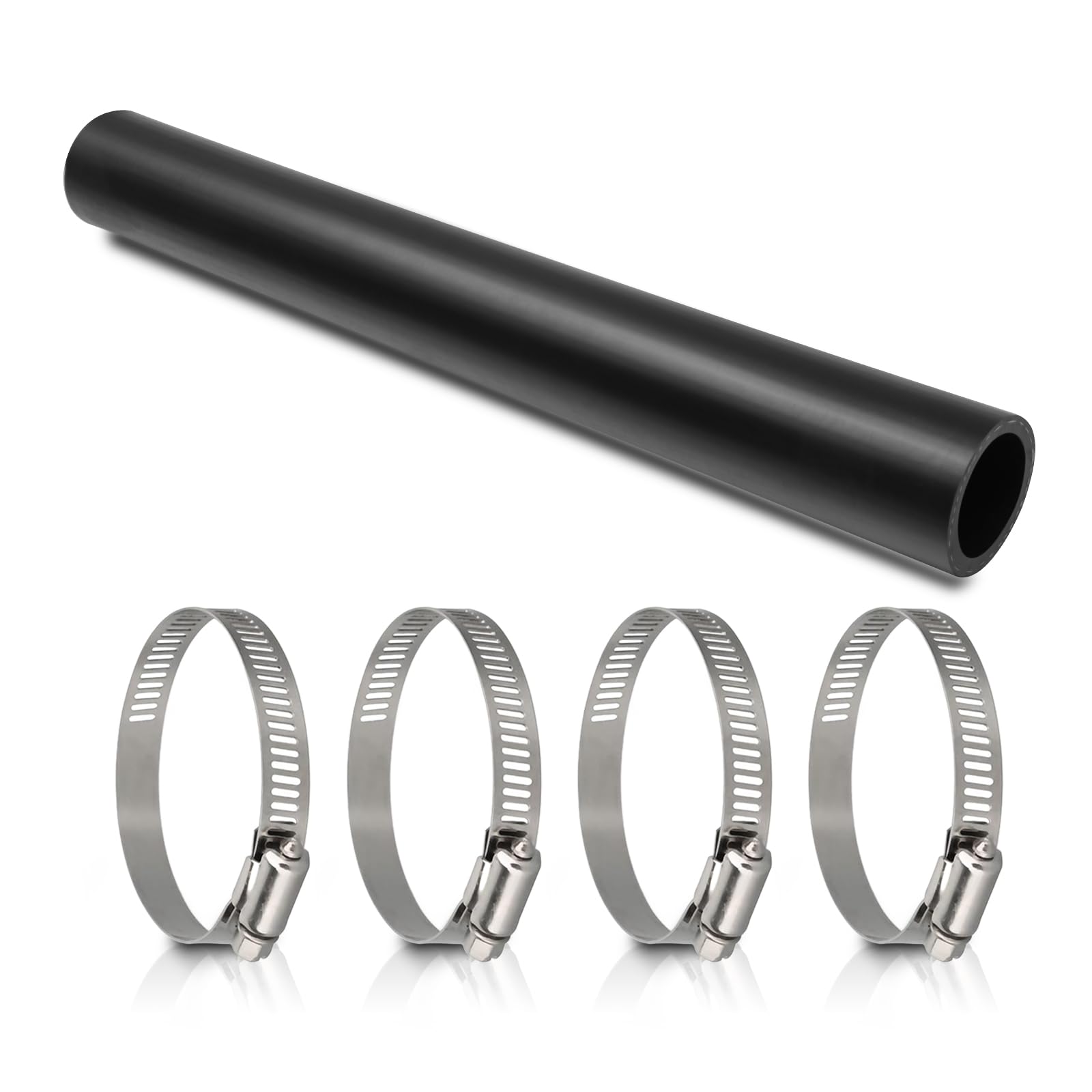
This is a straight 2-inch inside diameter reinforced rubber hose designed specifically as a universal filler neck replacement. The nitrile inner tube resists swelling from ethanol and the nylon cording embedded in the wall prevents collapse under the weight of the fuel column. The temperature range of -40°F to 212°F means it stays flexible during a northern winter fill-up and does not soften under the hood on a hot summer day.
The 15 7/8-inch length is enough to bridge the gap between many truck and SUV fuel tanks and the body-side filler flap. The material cuts cleanly with a box knife, so you can trim an inch or two if your chassis has a shorter run. The 2-inch ID fits common filler neck applications on older Ford, Chevy, and Dodge pickups. The natural straight shape works best for vertical or near-vertical fill positions.
Four stainless steel hose clamps are included in the package, which simplifies the shopping list. Because the hose is straight, you will need to create a gentle bend using a radiator hose spring or a reinforced elbow fitting if your filler neck has a tight 90-degree turn. The black synthetic rubber cover resists ozone and UV cracking better than basic heater hose.
What works
- Nylon cord reinforcement prevents vacuum collapse during high-flow refueling
- Nitrile tube resists ethanol and diesel fuel swelling over years of service
- Includes four stainless steel clamps for a ready-to-install kit
What doesn’t
- Straight design requires careful routing — not ideal for sharp 90° bends
- 2-inch ID may be too large for some import or compact vehicle filler necks
3. Frienda 2-Pack 1.5″ ID 45° Filler Hose with Clamps

This two-piece hose set bundles a pair of 1.5-inch inside diameter filler hoses with a 45-degree pre-formed angle plus eight stainless steel clamps. The 45-degree bend mimics the angle found on many fuel tank fill necks that enter the body at a slant rather than straight down. The dingqing material (a durable nitrile blend) offers similar ethanol resistance to standard nitrile rubber while maintaining flexibility for cutting and trimming.
Each hose measures roughly 15 7/8 inches along the outer curve, which is a standard length for mid-size truck and SUV fuel filler runs. The 1.5-inch ID fits filler necks on many Japanese and domestic compact vehicles, ATVs, and older Ford Rangers. Having two hoses in the box means you can fix two vehicles at once or keep one as a spare for a future replacement. The pack includes eight clamps — enough for both hoses plus a couple to spare.
The 45-degree angle reduces strain on the tank inlet once the hose is clamped, which helps prevent the hose from pulling off over time. The material cuts clean with a sharp utility knife if you need to shorten the straight leg of the hose. The only downside is that the 1.5-inch ID may be too small for full-size trucks with a 2-inch filler opening.
What works
- Pre-formed 45° bend matches many angled filler neck installations
- Two hoses and eight clamps provide an excellent value for multi-vehicle use
- Dingqing nitrile formulation resists fuel softening and cracking
What doesn’t
- 1.5-inch inside diameter will not fit full-size truck filler necks
- Material is slightly stiffer than pure rubber, making tight bends harder
4. Jeemiter 1/4″ ID 25ft Fuel Line Hose Kit
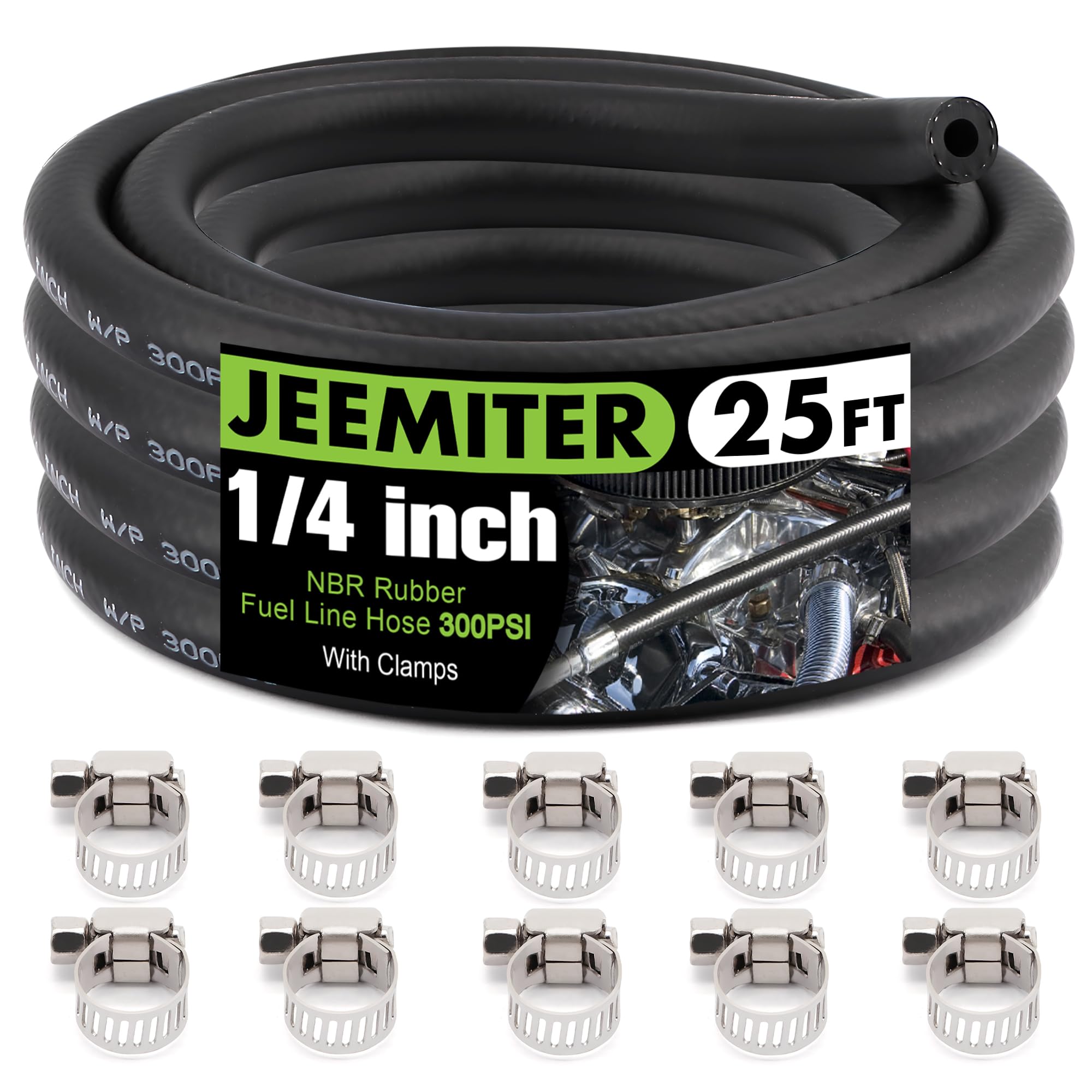
This 25-foot spool of 1/4-inch inside diameter SAE 30R7 fuel line hose is built for bulk replacement jobs. The NBR (nitrile butadiene rubber) construction is certified for gasoline, diesel, biodiesel, and oil, making it suitable for fuel return lines, tank vent hoses, PCV breathers, and small engine fuel supply. The working pressure rating of 300 PSI with a burst pressure of 1160 PSI means this hose will never be the weak link in a vent or return system.
The temperature range from -40°F to 257°F exceeds most standard automotive applications. The hose remains flexible enough for tight routing near engine blocks and transmission bellhousings. The included ten matching stainless steel clamps save you from digging through your toolbox for random-sized hardware. The 1/4-inch ID works perfectly for 1/4-inch barbed fittings on most aftermarket fuel pumps and carburetors.
Because it is a continuous 25-foot spool, you can cut custom lengths for multiple projects — fuel lines on a lawn tractor, a vent hose on a boat tank, or a return line on a classic car with an electric fuel pump. The SAE 30R7 certification provides peace of mind that the inner tube will not degrade when submerged in ethanol-laden fuel. The black rubber outer cover resists abrasion from zip ties and metal edges.
What works
- SAE 30R7 rated for safe use with ethanol gasoline, diesel, and biodiesel
- 300 PSI working pressure handles high-flow tank vent and return systems
- 25-foot length on one spool allows multiple custom-cut sections
What doesn’t
- 1/4-inch inside diameter is too small for main filler neck applications
- Rubber hose can kink if bent sharply without a spring protector
5. Mapleza Racing Fuel Jug Hose Kit
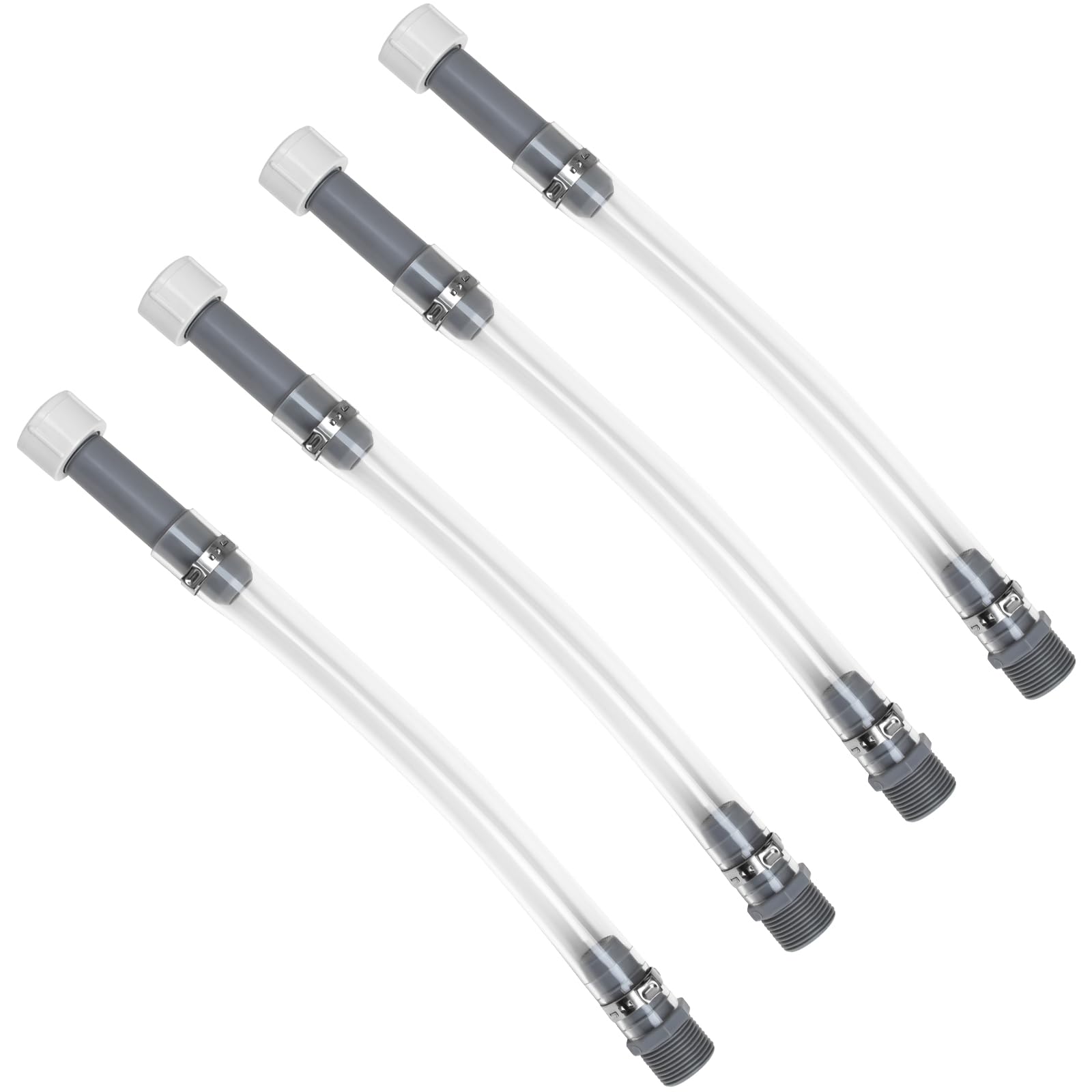
This four-pack of transparent fuel jug hoses is designed specifically for VP-style racing gas cans and similar 3, 5, and 5.5-gallon containers. The clear plastic material lets you see the fuel level as you pour, which helps avoid overfilling and messy spills. Each hose measures about 13.62 inches long with a 1-inch width, fitting the standard spout opening on most aftermarket racing jugs and some ATV cans.
The plastic construction is lightweight and keeps the hose rigid enough to maintain its shape during pouring without drooping into the vehicle’s filler neck. The kit comes with four hoses, which means you can outfit multiple cans at once or keep spares for when one eventually wears out. The improved filter design (integrated at the end) catches debris and sediment from the can before it enters your vehicle’s fuel system.
These hoses are not intended for permanent vehicle installation — they are strictly for fuel transfer from a portable jug to a tank. The clear plastic is compatible with gasoline, but extended exposure to sunlight may cause yellowing or hardening. For occasional track-day or trailside refueling, this kit delivers a clean, no-drip experience that prevents fuel from running down the side of your truck or dirt bike.
What works
- Clear material lets you see fuel flow and avoid overfilling the tank
- Four hoses in one pack outfit multiple gas cans or provide backups
- Filter built into the spout keeps debris from entering the vehicle tank
What doesn’t
- Clear plastic can become brittle after long-term UV exposure
- Only compatible with VP-style racing jugs — not for standard vehicle filler necks
Hardware & Specs Guide
Inside Diameter (ID) And Length
The inside diameter determines whether the hose fits the filler neck or fuel line port. Most full-size trucks use a 2-inch ID for the main filler neck, while compact cars and ATVs typically use 1.5-inch or 1.75-inch ID hoses. Vent lines and return lines use much smaller diameters — typically 1/4-inch or 5/16-inch ID. Length is equally critical: too short and the hose will not reach the tank inlet; too long and it may kink or sag. Measure your original hose along the centerline of the curve, not the straight distance between ends.
Material Certification (SAE 30R7 vs. 30R9)
SAE 30R7 is the most common standard for fuel line hoses used in non-submersed applications such as filler necks, vent lines, and return lines. It is compatible with ethanol blends up to E10 and diesel. SAE 30R9 is required for hoses that sit submerged in fuel inside the tank (like in-tank pump hoses) and handles higher ethanol blends like E85. Always check the side of the hose for the printed SAE rating before cutting — if the hose lacks a rating stamp, do not use it for permanent fuel system repairs.
FAQ
Can I use a standard rubber fuel line for a gas tank filler neck replacement?
What is the difference between a straight filler hose and a 45-degree filler hose?
How do I measure the correct inside diameter for my gas tank filler hose?
Can I use a gas tank hose with diesel fuel if the package says “gasoline”?
Final Thoughts: The Verdict
For most buyers, the gas tank hose winner is the TKKEUEP 2″ ID Fuel Filler Hose because it blends mid-range pricing with long-term durability and ready-to-install convenience for the most common truck filler size. If you need a direct-fit metal replacement for a diesel Super Duty, grab the Aumzong FN782. And for bulk vent line repairs across multiple projects, nothing beats the Jeemiter 25-foot SAE 30R7 Spool.

Certification: BSc in Mechanical Engineering
Education: Mechanical engineer
Lives In: 539 W Commerce St, Dallas, TX 75208, USA
Md Amir is an auto mechanic student and writer with over half a decade of experience in the automotive field. He has worked with top automotive brands such as Lexus, Quantum, and also owns two automotive blogs autocarneed.com and taxiwiz.com.