A failing fan blower motor turns a simple cabin temperature adjustment into an exercise in frustration. When the airflow through your vents weakens to a whisper or the motor starts emitting a high-pitched whine, the entire HVAC system loses its ability to keep the cabin comfortable in extreme temperatures. These units are the workhorses behind your dashboard, forcing conditioned air through the ducts, and when they fail, the fix is often a direct swap.
I’m Amir — the founder and writer behind Four Wheel Ask. My market analysis focuses on matching automotive HVAC replacement parts to their intended vehicle applications and identifying which units deliver consistent airflow without premature bearing failure based on aggregate owner feedback and spec sheet comparisons.
Understanding the differences in amperage draw, RPM ratings, and frame sizing is essential before purchasing a replacement. This guide breaks down the top contenders for the best fan blower motor whether you need a 12-volt cabin unit or a 115-volt furnace blower.
How To Choose The Best Fan Blower Motor
Selecting the correct fan blower motor requires matching voltage, physical dimensions, and mounting configuration to your specific application. A mismatch in any of these areas results in an installation that either does not fit or operates incorrectly. Focus on these three areas.
Voltage and Amperage Draw
Vehicle HVAC systems operate almost exclusively on a 12-volt DC supply, while residential furnace blowers run on 115 or 230 volts AC. The amperage rating tells you the load the motor places on the circuit. Installing a motor with a higher amp draw than the original can overload the wiring or the blower motor resistor. Always match the voltage exactly and stay within 1-2 amps of the original unit’s rating.
RPM and Airflow Volume
Rotational speed, measured in RPM, directly dictates how much air the fan wheel moves. A 12-volt cabin blower typically spins at 3250 to 3750 RPM at full speed. A residential furnace blower runs much slower, usually around 1075 or 1725 RPM, because it uses a larger, wider fan wheel. Do not assume higher RPM is better — the wrong speed for your fan wheel creates excessive noise or insufficient static pressure.
Frame Size and Shaft Dimensions
Physical fitment is the most common point of failure. Cabin blower motors are application-specific and defined by their mounting flange pattern. Residential motors use standardized NEMA frame sizes like 48 or 56. The shaft diameter (typically 1/2 inch) and shaft length must match the existing fan wheel hub. A 48-frame motor has a specific bolt pattern and shaft height that differs from a 56-frame, so check the old motor’s nameplate before ordering.
Quick Comparison
On smaller screens, swipe sideways to see the full table.
| Model | Category | Best For | Key Spec | Amazon |
|---|---|---|---|---|
| Marsflex Front Blower (Toyota/Lexus) | Cabin HVAC | Toyota/Lexus Direct Swap | 3250 RPM / 204W | Amazon |
| Century GF2054 | Furnace Blower | Belt-Drive Furnace | 1725 RPM / 1/2 HP | Amazon |
| Evergreen X-13 (1/2 HP) | Furnace Blower | Constant Torque ECM Upgrade | 1075 RPM / 1/2 HP | Amazon |
| VEVOR 1/3HP Furnace Blower | Furnace Blower | Direct-Drive System | 1075 RPM / 4 Speeds | Amazon |
| Evergreen X-13 (1/3 HP) | Furnace Blower | 230V System Replacement | 48 Frame / 1/3 HP | Amazon |
| Marsflex Front Blower (GM) | Cabin HVAC | Chevy/GMC Truck Fitment | 3250 RPM / 228W | Amazon |
| BDFHYK Blower Motor (Nissan) | Cabin HVAC | Rogue/Rogue Sport | 3750 RPM / 12V | Amazon |
In‑Depth Reviews
1. Marsflex Front Blower Motor (Toyota/Lexus)

This unit covers the widest application span of any 12-volt cabin blower in this test, fitting the 2010-2020 4Runner, 2007-2017 Camry, 2008-2019 Highlander, and 2007-2020 Tundra along with several Lexus models including the ES350 and GX460. The 204-watt motor spins at 3250 RPM and draws 22 amps under full load, providing strong airflow for the large cabin volumes of these SUVs and sedans. Marsflex rates this unit for a service life of 80,000 hours, which is exceptionally high for an automotive-grade replacement part.
The precision-balanced fan cage and foam shims sealed to the housing reduce the entry of dust and debris, which is a common failure point for cabin blowers in trucks and off-road vehicles. The build quality shows in the rigid mounting flange and the smoothly spinning armature that produces no detectable wobble at speed. The included 1-year warranty provides a reasonable safety net against early failure.
Replacement OE numbers include PM9351, 75830, 87103-0E040, and 87103-60400, making cross-referencing straightforward. The physical dimensions measure 9.25 inches in height and 7.87 inches in width, which match the factory footprint for these Toyota and Lexus platforms. For a direct-fit replacement that covers a huge range of popular models, this unit delivers reliable performance at a price that undercuts dealership parts counters significantly.
What works
- Massive vehicle coverage spanning Toyota and Lexus
- High 80,000-hour service life rating
- Foam sealing reduces debris ingress
What doesn’t
- Plastic impeller less durable than metal alternatives
- Amperage draw may stress original wiring on older vehicles
2. BDFHYK AC Heater Blower Motor Fan (Nissan)
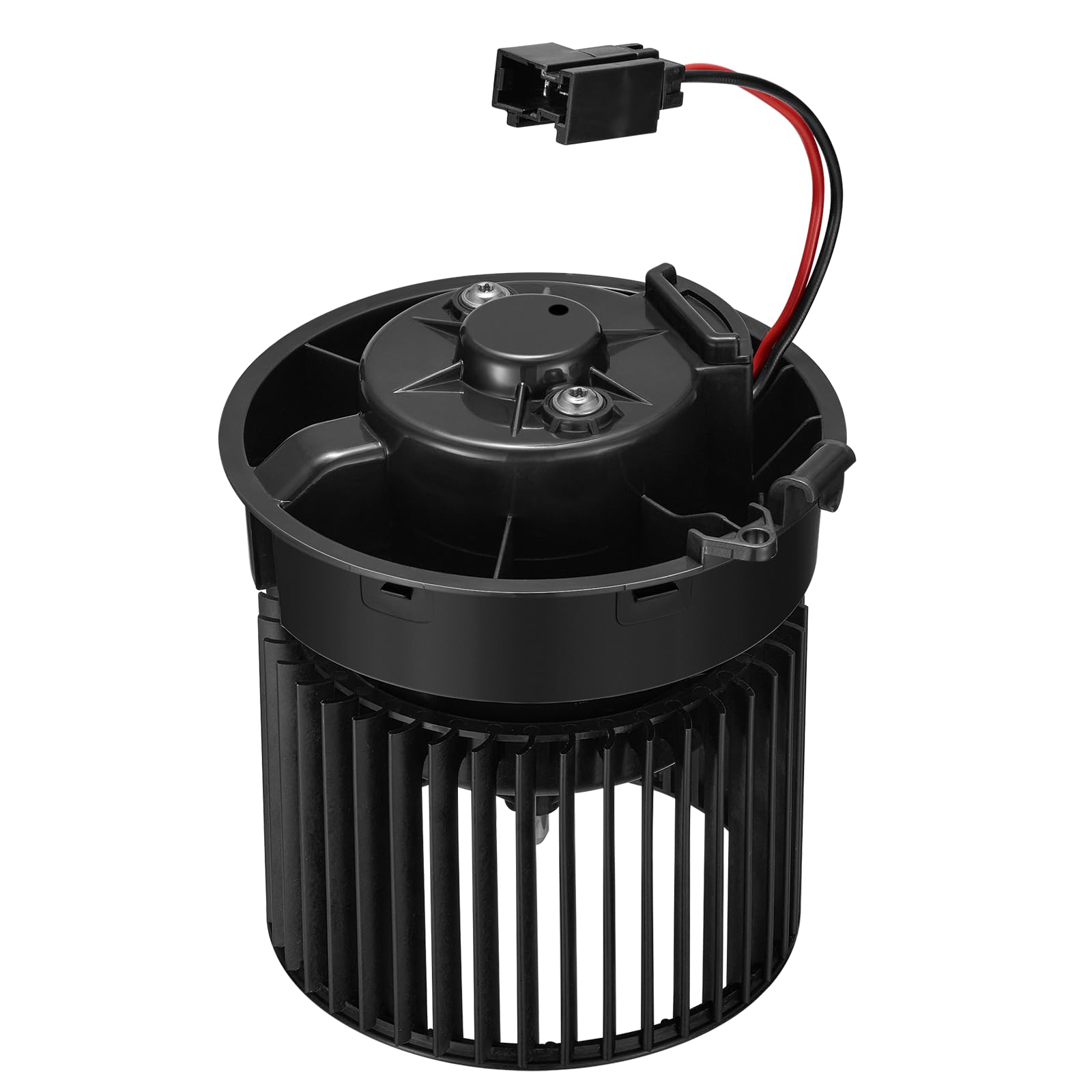
Designed specifically for the second-generation Nissan Rogue (2014-2019) and the Rogue Sport (2017-2019), this BDFHYK unit spins at a higher 3750 RPM compared to most competitors, translating to more air volume through the vents at maximum speed. The motor uses a precision-balanced impeller and a reinforced motor shaft that minimizes vibration and the whining sounds typical of failing bearings in Nissan HVAC systems. The iron and plastic construction keeps weight down while maintaining structural rigidity.
Built to OE standards, this motor handles extreme temperature swings without sagging performance, which is critical for the Rogue’s climate control system that must quickly defog windshields in winter and cool the cabin in summer. The 1-year warranty covers manufacturing defects, and the packaging includes foam inserts that prevent the fan cage from getting bent during shipping, a common cause of post-installation imbalance.
Cross-reference numbers include 700323, 27226-4BU0A, and NI3126126, so compatibility verification is simple. The airflow remains consistent across all four fan speeds, indicating good brush and commutator contact inside the motor housing. For Rogue and Rogue Sport owners who need a drop-in replacement that moves air aggressively, this unit is a solid choice.
What works
- High 3750 RPM for strong airflow
- Reinforced shaft reduces vibration and noise
- OE-standard fitment for Nissan platforms
What doesn’t
- Narrow fitment range limited to Rogue models
- Plastic housing can crack if over-torqued during install
3. Marsflex Front Blower Motor (Chevy/GMC)

This Marsflex unit targets the GM full-size truck and SUV family, including the 2000-2006 Chevy Tahoe and Silverado, 2000-2006 GMC Sierra and Yukon, and the 2003-2006 Cadillac Escalade. It draws 17 amps and produces 228 watts, offering a higher power output than the Toyota/Lexus version to compensate for the larger ductwork and cabin volume of these GMT800-platform vehicles. The 80,000-hour service life rating applies here as well.
The fan cage features a dust-reduction design, which matters for trucks and SUVs that frequently operate in dusty or off-road conditions. Performance on all speed settings is consistent, and the motor includes balanced testing certification to minimize noise at higher RPMs. The packaging adds firm foam shims around the housing to prevent the fan blades from striking the housing wall during transport.
Replacement numbers include 35143, 1581647, 89019321, and 52400424. The dimensions are 8.46 inches wide by 7.87 inches high, fitting the tight space behind the glove box of these GM models. For an affordable direct replacement that covers millions of trucks and SUVs on the road, this unit offers excellent value.
What works
- Covers millions of GMT800 trucks and SUVs
- 228W power output moves air through large cabins
- Dust-reduction design for off-road use
What doesn’t
- Does not include the resistor harness adapter
- Plastic impeller can crack if the vehicle hits deep water
4. VEVOR 1/3HP Furnace Blower Motor

Moving to residential HVAC, the VEVOR 1/3HP motor operates at 1075 RPM on a 110-120-volt supply, drawing 4.4 amps full load. This is a 48-frame direct-drive motor designed for use in furnaces, air handlers, and package systems. The four-speed tap configuration gives technicians flexibility to match the airflow to the system’s static pressure requirements, which is essential for achieving the correct temperature rise across the heat exchanger.
The reversible rotation allows installation in either CW or CCW applications without needing a different motor model, and the included 5μF/370V capacitor saves a separate trip to the supply house. The 11-inch hold hoop provides a secure mounting bracket that fits standard furnace blower compartments. The metal casing resists corrosion, which matters for units installed in basements or crawl spaces with higher humidity levels.
Weighing 12 pounds, this motor has a solid feel that indicates proper copper windings and adequate bearing mass. The 48-frame mounting holes align with standard residential air handler brackets. For a budget-friendly residential replacement that includes the capacitor and mounting hoop, this unit simplifies the replacement process.
What works
- Includes capacitor and mounting hoop
- Reversible rotation for flexible installation
- Four-speed tap for airflow matching
What doesn’t
- Not compatible with 230V systems
- Can be noisier than premium brands at high speed
5. Century GF2054 1/2 HP Blower Motor
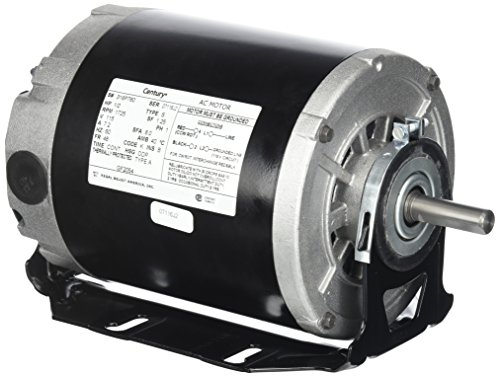
The Century GF2054 is a 1/2 horsepower, 1725 RPM split-phase motor built on a 48-frame platform with a resilient cradle base. This motor is specifically designed for belt-drive furnace applications, not direct-drive systems. The higher 1725 RPM speed matches belt-drive fan wheels which need a smaller pulley to reduce the wheel speed to the proper RPM range. The 7.2 amp draw at 115 volts is efficient for a motor of this output level.
Sleeve bearings are used here, which are quieter than ball bearings in belt-drive applications and are lubricated for the life of the motor. The automatic overload protection prevents the motor from burning out if the fan belt seizes or the wheel becomes obstructed. The 1.25 service factor provides a 25% safety margin above the rated horsepower, giving this motor some reserve capacity for system variations.
The shaft measures 1/2 inch in diameter with a 3-inch shaft height, and the rotation is reversible. Made by Century (formerly AO Smith), this motor carries a reputation for reliability that spans decades in the HVAC industry. For technicians servicing belt-drive systems, this remains a trusted standard that will run for years with minimal maintenance.
What works
- Trusted Century/AO Smith build quality
- Automatic overload protection included
- 1.25 service factor for reserve capacity
What doesn’t
- Not for direct-drive systems
- Sleeve bearings are non-serviceable
6. Evergreen X-13 1/3 HP 230V Blower Motor
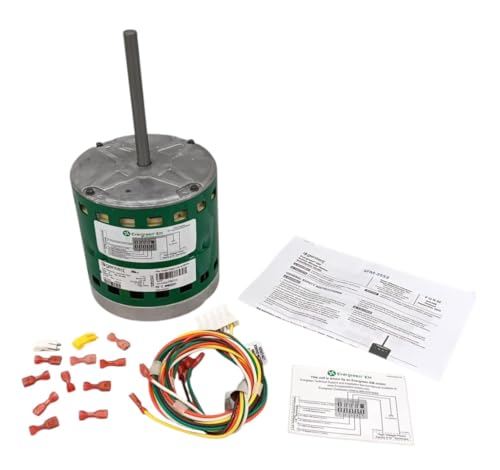
The Evergreen X-13 series represents a technological step forward from conventional PSC motors. This 1/3 horsepower, 208-230 volt motor is a constant torque ECM (Electronically Commutated Motor) that uses auto-sensing technology to detect the required rotation direction. The 48-frame housing with a 1/2-inch shaft is designed for direct-drive blowers in residential and light commercial air handlers and furnaces that originally used a 6-pole 1075 RPM PSC motor.
ECM motors are significantly more efficient than PSC motors, often reducing electrical consumption by 60-80% at lower speeds. The multi-speed capability via 24VAC control signals allows the system to ramp airflow up or down based on heating or cooling demand, improving overall system efficiency and reducing temperature swings. The 2-year factory warranty is double the industry standard for residential motors, reflecting confidence in the brushless DC design.
This motor replaces units from all major manufacturers matching the same specifications, as well as the Azure Digi-Motor 10800. It does not replace EON 3.0, 2.3, or 2.5 ECM motors, so application verification is important. For homeowners with a 230V system looking to upgrade from a PSC motor to a modern ECM, this is a cost-effective entry point.
What works
- High efficiency ECM motor saves electricity
- Multi-speed operation via 24VAC control
- 2-year factory warranty included
What doesn’t
- Requires 230V supply, not 115V
- More expensive upfront than PSC motors
7. Evergreen Genteq 1/2 HP 230V X-13 Blower Motor

This Evergreen Genteq motor is the 1/2 horsepower version of the X-13 constant torque platform, operating at 208-230 volts. It is a multi-speed brushless DC motor with CCW/CW rotation sensing technology and features four discrete speeds controlled by 24VAC signals plus an automatic continuous fan speed setting. The 48-frame belly band mount and 5-inch long, 1/2-inch diameter shaft make it a drop-in replacement for direct-drive residential blowers.
The constant torque design maintains consistent airflow regardless of static pressure changes caused by dirty filters or duct restrictions, which keeps the heat exchanger temperature rise within manufacturer specifications. This motor replaces a massive list of OEM part numbers including Trane MOT13004, Carrier HD44AE137, and countless others, while excluding EON and certain other ECM platforms. The UL and CSA recognition ensures the motor meets safety and performance standards.
For techs upgrading a 1/2 HP PSC motor system to an ECM, this unit delivers the efficiency gains and speed control that modern HVAC systems demand. The auto-sensing rotation eliminates the need to manually set direction, reducing installation errors. For those comfortable with the higher upfront cost, the long-term energy savings and improved comfort are substantial.
What works
- Constant torque maintains airflow under restriction
- Replaces a wide range of OEM part numbers
- Auto-sensing rotation for easier install
What doesn’t
- Highest cost option in this lineup
- Not compatible with 115V systems
Hardware & Specs Guide
RPM Ratings Decoded
Cabin blower motors operate at high RPMs (3250-3750) because they drive small, low-mass plastic or metal fan wheels inside a tight housing behind the dashboard. Residential furnace blowers spin at 1075 or 1725 RPM because they drive large-diameter metal blower wheels that move hundreds of cubic feet of air per minute. Installing a 1725 RPM motor into a system designed for 1075 RPM will move too much air, causing noise and potentially excessive static pressure that can damage the heat exchanger.
Frame Sizes and Mounting
The NEMA frame size defines the mounting configuration, shaft height, and bolt pattern. A 48-frame motor has a specific distance from the base to the shaft center, while a 56-frame is taller. Cabin motors are not NEMA-standardized and rely on vehicle-specific flange patterns. When replacing a belt-drive motor, the shaft size (usually 1/2 inch or 5/8 inch) must match the pulley bore, and the shaft height must align with the belt sheave for proper belt tracking.
FAQ
How do I know if my blower motor is failing or just the resistor?
Can I replace a 3-speed blower motor with a 4-speed motor?
Why does my new blower motor vibrate after installation?
Final Thoughts: The Verdict
For most buyers, the best fan blower motor winner is the Marsflex Front Blower Motor for Toyota and Lexus because it covers a massive range of popular vehicles, offers a high 80,000-hour service life, and delivers strong 204-watt performance at a reasonable investment. If you need a residential furnace replacement, the Century GF2054 is the go-to for belt-drive systems requiring proven durability. And for a modern ECM upgrade, the Evergreen Genteq 1/2 HP X-13 provides the efficiency and precise airflow control that serious HVAC work demands.

Certification: BSc in Mechanical Engineering
Education: Mechanical engineer
Lives In: 539 W Commerce St, Dallas, TX 75208, USA
Md Amir is an auto mechanic student and writer with over half a decade of experience in the automotive field. He has worked with top automotive brands such as Lexus, Quantum, and also owns two automotive blogs autocarneed.com and taxiwiz.com.