The “0W” cold-flow rating is the single most critical spec for modern engines. A 0W-20 motor oil must shear thin at startup to reach tight bearing clearances the instant you turn the key, then hold its 20-grade film strength under combustion heat. Get the formulation wrong and you risk early timing chain stretch, LSPI, and sludge that no additive pack can reverse. This category is not about viscosity alone; it is about the specific additive chemistry and base stock quality behind the API SP or ILSAC GF-7A certification on the bottle.
I’m Amir — the founder and writer behind Four Wheel Ask. I analyze motor oil formulations across base stock types, shear stability data, and real-world owner reports from high-mileage fleet vehicles to spot which 0W-20 bottles deliver the protection their labels promise.
Choosing between synthetic base oils, seal conditioners, and deposit-cleaning detergents matters more than price per quart. After reviewing the specs and certifications behind the market leaders, this guide walks you through the chemistry and real mileage data to help you pick the right 0w-20 motor oil for your specific engine platform.
How To Choose The Best 0W-20 Motor Oil
The right 0W-20 oil is a balance of viscosity retention, detergent strength, and manufacturer approvals. Do not look at price first—look at the certification bottle label. Here are the three most important factors.
API SP / ILSAC GF-7A Certification
API SP is the current standard that addresses low-speed pre-ignition (LSPI) in turbocharged direct-injection engines and improves timing chain wear protection. ILSAC GF-7A adds stricter fuel economy and deposit control requirements. Always choose a bottle with at least API SP; older API SN bottles lack the latest anti-LSPI additive packages.
Base Stock & Additive Chemistry
Group III (hydrocracked) base oils dominate the mid-range segment and provide excellent performance for most daily drivers. Group IV (PAO) base oils, found in some premium offerings, offer superior thermal stability and oxidation resistance at high temperatures. The additive package—especially the presence of seal conditioners for high-mileage engines or molybdenum-based friction modifiers for fuel economy—defines the oil’s real-world behavior beyond the base stock.
Shear Stability & Viscosity Retention
The “20” in 0W-20 refers to the high-temperature high-shear (HTHS) viscosity. Oils with weak shear stability can thin out under sustained highway driving or towing, reducing film strength. Look for oils whose data sheets show HTHS viscosity above 2.6 cP at 150°C. Brands that publish NOACK volatility numbers below 10% also indicate less oil consumption and better long-term protection.
Quick Comparison
On smaller screens, swipe sideways to see the full table.
| Model | Category | Best For | Key Spec | Amazon |
|---|---|---|---|---|
| Castrol EDGE EP 0W-20 | Full Synthetic | Extended drain intervals, turbo engines | 25K mile protection, 50X better high-temp | Amazon |
| Valvoline Restore & Protect 0W-20 | Full Synthetic | Deposit removal & engine restoration | 100% deposit removal, ILSAC GF-6A | Amazon |
| Mobil 1 Truck & SUV 0W-20 | Full Synthetic | Heavy-duty towing, SUVs, trucks | 10K mile protection in towing tests | Amazon |
| Motul 8100 ECO-lite 0W-20 | Full Synthetic | GM/Ford/Chrysler modern engines | dexos1 Gen3, API SP, -40°F cold flow | Amazon |
| Liqui Moly Top Tec 6600 0W-20 | Full Synthetic | BMW LSPI prevention, European engines | BMW Longlife-17 FE+ approved | Amazon |
| Idemitsu IFG3 0W-20 | Full Synthetic | Asian OEM, TGDI engines, fuel economy | SP/GF-7A, ISO certified | Amazon |
| Valvoline MaxLife High Mileage 0W-20 | Full Synthetic | High-mileage engines over 75K miles | Seal conditioners, 70% stronger wear | Amazon |
In‑Depth Reviews
1. Castrol EDGE Extended Performance 0W-20

Castrol EDGE EP uses “Titanium FST” technology that creates a stronger film under pressure—backed by a Kurt Orbahn test showing 3X stronger viscosity retention than the leading full synthetic. The 25,000-mile drain interval is not marketing fluff; it is supported by 50X better high-temperature performance measured in the Seq IIH test against API SQ limits.
Certified under API SP, ILSAC GF-7, ACEA C5, and GM dexos1 Gen 3, it also carries MB 229.71 approval and meets Ford WSS-M2C947-B1. The additive package prioritizes oxidation control over the entire extended interval, so the oil does not shear down before the recommended change. For modern turbocharged engines running long oil change cycles, this is the benchmark.
Some drivers on standard 5,000-mile intervals may not use the full extended-life capability, but the high-performance base stock provides a margin of safety that is hard to beat at this price tier. The 5-quart jug format covers most passenger car sumps in one pour.
What works
- Industry-leading 25K mile protection backed by certified tests
- Excellent cold-flow performance in sub-zero starts
- Broad OEM approval list including BMW and GM dexos1 Gen 3
What doesn’t
- Overkill for short-interval, low-mileage driving
- Not optimized specifically for high-mileage seal conditioning
2. Valvoline Restore & Protect 0W-20

Valvoline Restore & Protect is the first motor oil on the market that actively removes existing engine deposits rather than just preventing new ones. Its Active Clean Technology targets piston deposits in adapted Sequence IIIH testing, showing removal of up to 100% of deposits with continued use. That is a significant claim—most oils only promise prevention.
The formulation includes Liqui-Shield Technology that coats metal surfaces to prevent future deposit buildup while delivering 79% stronger anti-wear protection than the GF-6 standard. It meets ILSAC GF-6A, API SP, and all preceding categories, making it suitable for both new engines on their first oil change and higher-mileage platforms dealing with accumulated sludge.
The 394°F flash point indicates robust thermal stability, though the primary additive focus is on detergency rather than extreme-wear boundary lubrication. It works best as a maintenance oil for engines that have seen less-than-perfect service history or direct-injection carbon buildup issues.
What works
- Unique active deposit removal technology
- Strong anti-wear protection versus industry standards
- Suitable for new and older engines alike
What doesn’t
- No extended drain life certification
- May require multiple changes to fully clean heavy deposits
3. Mobil 1 Truck & SUV 0W-20
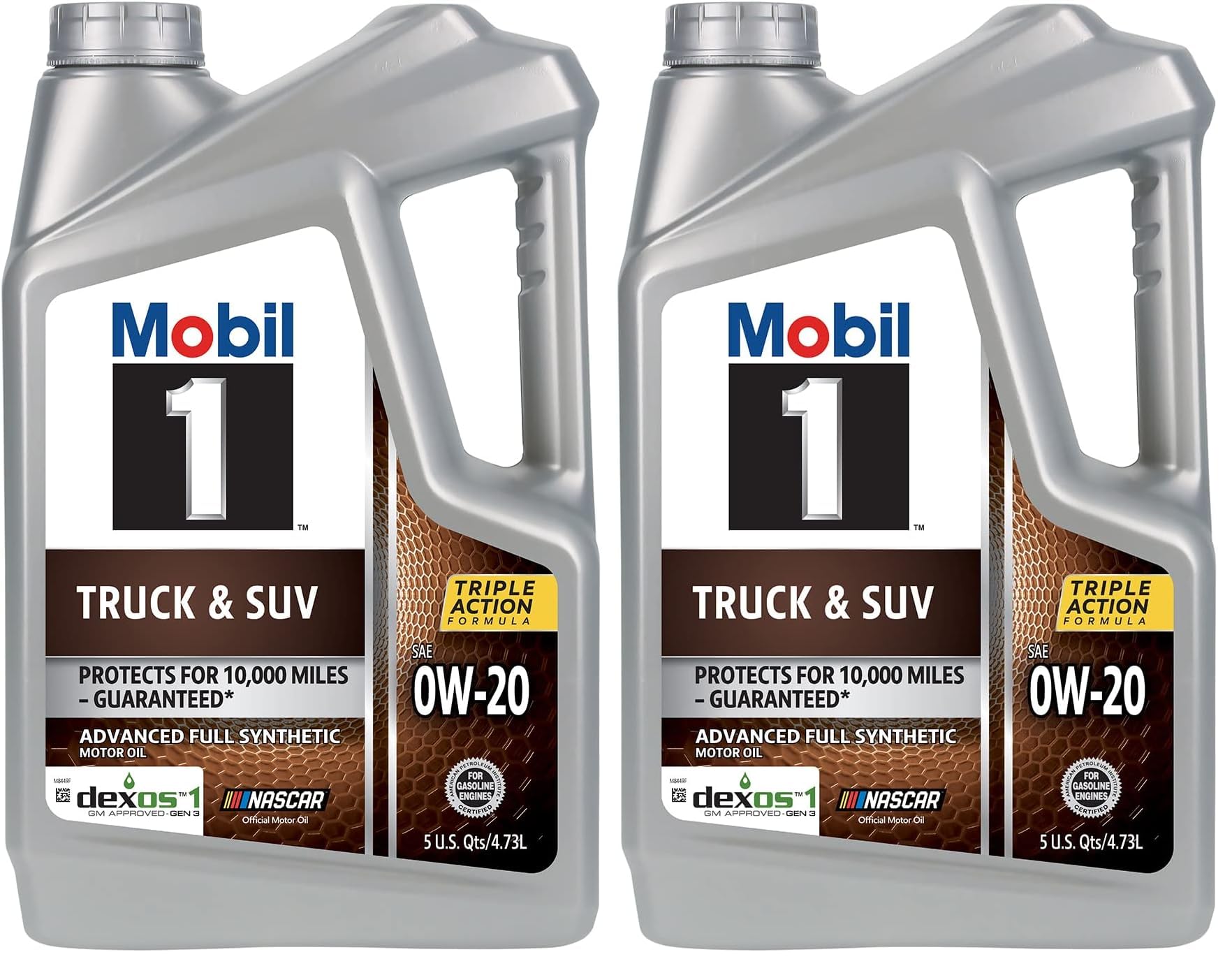
Mobil 1’s Truck & SUV formulation is built specifically for the higher thermal load of towing and hauling. The Triple Action Formula delivers proven protection, cleanliness, and performance in a validated 10,000-lb towing test. The oil maintains viscosity stability up to 500°F, which is critical when the engine is under sustained load on grades.
The pack-of-2 format provides 10 quarts total, enough for two oil changes in most full-size pickups and SUVs. Mobil 1’s additive package includes antioxidants that control oxidation for up to 10,000 miles between changes, and the low-temperature rating to -40°F ensures reliable cold starts in northern climates.
While it shares the same API SP and ILSAC GF-7A compliance as other premium synthetics, the proprietary anti-deposit additives and towing-test validation differentiate it for owners who actually work their trucks. The 320 fluid ounce total volume is a strong value for large-capacity sumps.
What works
- Validated for heavy towing and hauling loads
- Excellent high-temperature stability to 500°F
- Pack-of-2 offers strong value for large engines
What doesn’t
- Less suitable for small-displacement passenger cars
- No specific seal conditioner for high-mileage engines
4. Liqui Moly Top Tec 6600 SAE 0W-20

Liqui Moly Top Tec 6600 is a German-engineered 0W-20 that specifically targets BMW engines requiring Longlife-17 FE+ approval. The formulation is designed to mitigate low-speed pre-ignition (LSPI) through a specialized additive package that stabilizes the air-fuel mixture in the combustion chamber at low RPM, preventing the spontaneous ignition that can cause catastrophic rod failure.
The oil is backward compatible with older BMW Longlife standards, but it is mandatory for engines that explicitly require LL-17 FE+. The 5-liter (5.28 quart) bottle covers most European engine sumps with a small margin. The Group IV base stock provides exceptional shear stability and oxidation resistance over extended drain intervals typical in European service schedules.
Owners report minimal oil consumption between changes, a direct result of the low NOACK volatility inherent in the PAO base oil. The 200°C flash point confirms strong thermal resistance. For BMW B-series and N-series engines, this is a factory-quality match.
What works
- BMW Longlife-17 FE+ approval ensures factory spec compliance
- Active LSPI prevention additive chemistry
- Low NOACK volatility reduces oil consumption
What doesn’t
- Limited compatibility outside European vehicle applications
- Higher cost per quart compared to mass-market alternatives
5. Motul 8100 ECO-lite 0W-20
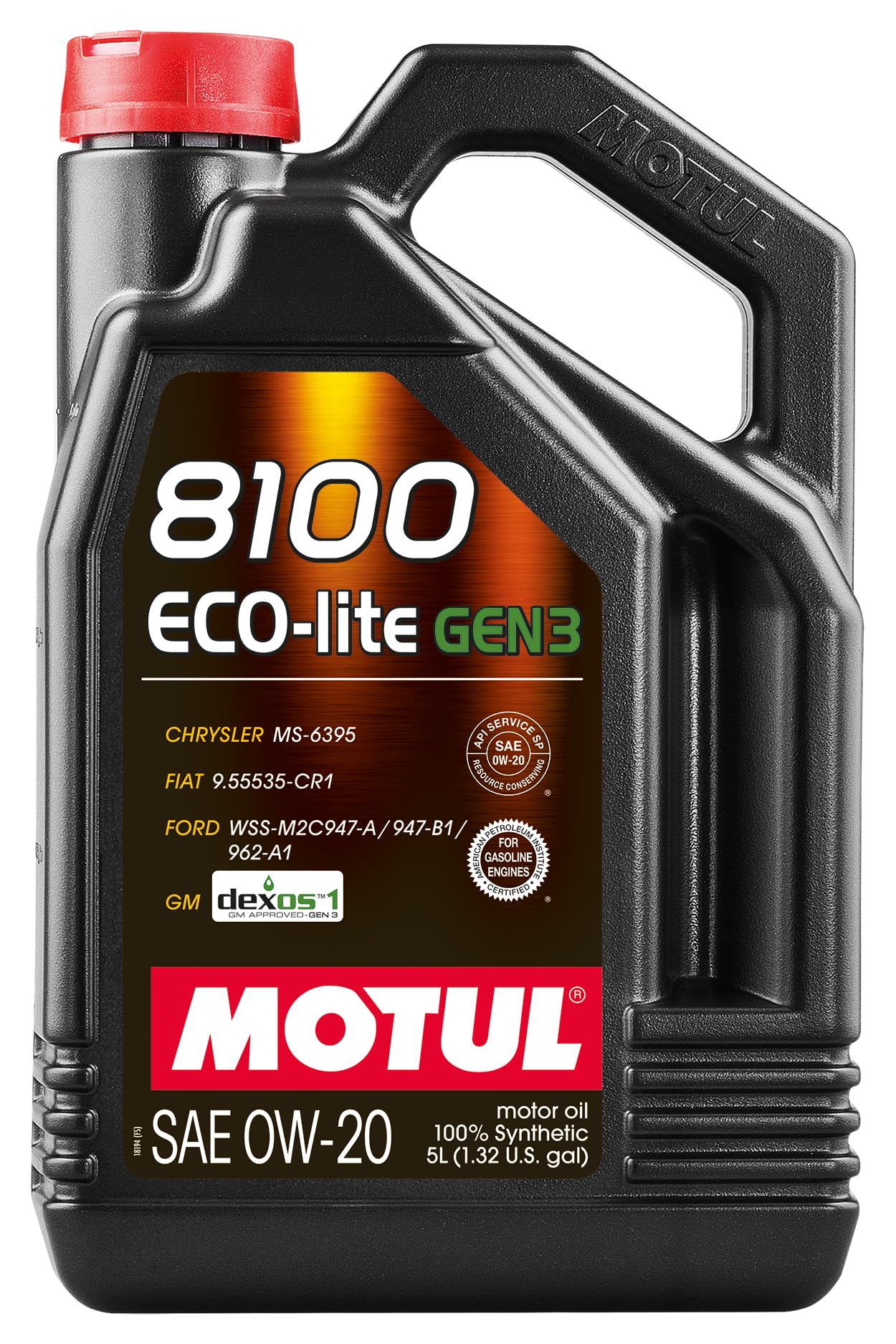
Motul 8100 ECO-lite is a 100% synthetic 0W-20 carrying API SP and GM dexos1 Gen 3 certification, meeting Ford WSS-M2C947-A/947-B1/962-A1, Chrysler MS-6395, and FIAT 9.55535-CR1. The advanced low-friction formula uses ester-based base stocks in addition to PAO for superior film strength and thermal stability, a characteristic that typically reduces internal friction and improves fuel economy.
The oil’s 433°C flash point is unusually high for a 0W-20 viscosity grade, indicating exceptional resistance to thermal breakdown under high-load conditions. It is designed specifically for turbocharged and direct-injection engines where LSPI prevention and timing chain wear protection are critical. The 5-liter jug format matches European and domestic engine sump capacities.
Motul’s proprietary additive technology includes molybdenum friction modifiers that reduce boundary friction during cold starts. Owners of GM, Ford, and Chrysler vehicles running modern turbo engines report the oil maintains viscosity consistency over 7,500-mile intervals with no measurable shear-down. The price reflects the premium base stock quality.
What works
- Exceptional 433°C flash point for extreme thermal protection
- GM dexos1 Gen 3 certified for the latest GM engines
- Ester-based formulation reduces friction and improves fuel economy
What doesn’t
- Premium pricing places it above mass-market brands
- Ester base may not be ideal for very high-mileage engines with seal degradation
6. Idemitsu IFG3 0W-20 SP/GF-7A
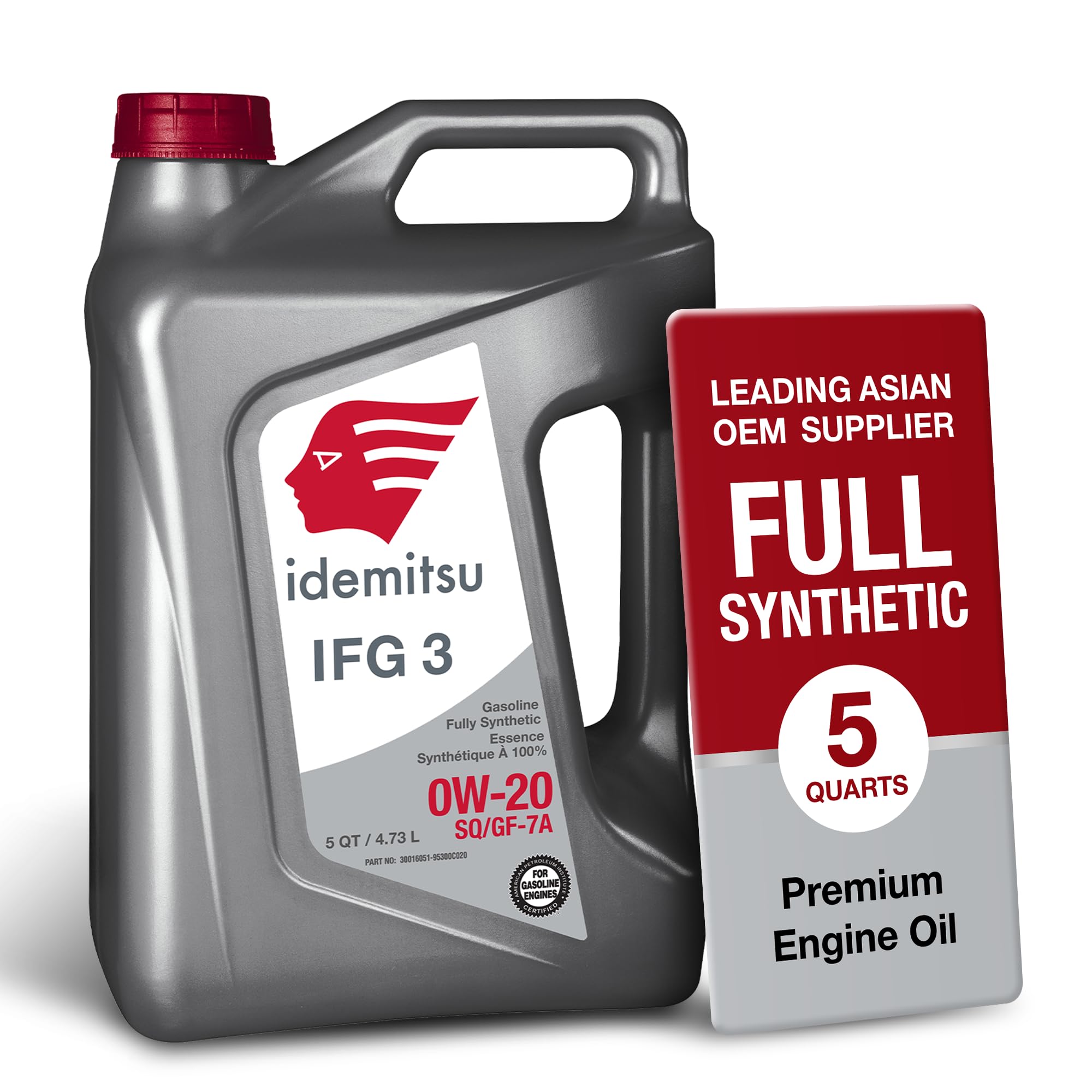
Idemitsu IFG3 is engineered in Japan and certified under the latest ILSAC GF-7A and API SP standards, which place strict requirements on fuel economy improvement and deposit control. It is specifically formulated for Asian OEM engines (Toyota, Honda, Nissan, Subaru, Mazda) and TGDI (turbocharged gasoline direct injection) engines that are sensitive to LSPI and timing chain wear.
The advanced additive package includes low-ash detergents that keep piston rings clean in direct-injection engines prone to carbon buildup. The ISO and IATF certifications add a layer of quality assurance for fleet and commercial applications. The 200°C flash point is typical for a mid-tier 0W-20 but the primary strength is the GF-7A fuel economy additive system.
Owners of late-model Honda and Toyota engines report consistent fuel economy numbers over the oil change interval, indicating minimal viscosity breakdown. The 0.95-kilogram per-quart weight suggests a balanced formulation without heavy metal additives. For daily-driven Asian imports, this is a well-specified mid-range option.
What works
- Latest ILSAC GF-7A certification for maximum fuel economy
- Optimized for Asian OEM and TGDI engine platforms
- ISO certified for consistent manufacturing quality
What doesn’t
- Limited availability compared to mass-market brands
- Not certified for Ford or GM dexos1 specifications
7. Valvoline MaxLife Extended Protection High Mileage 0W-20
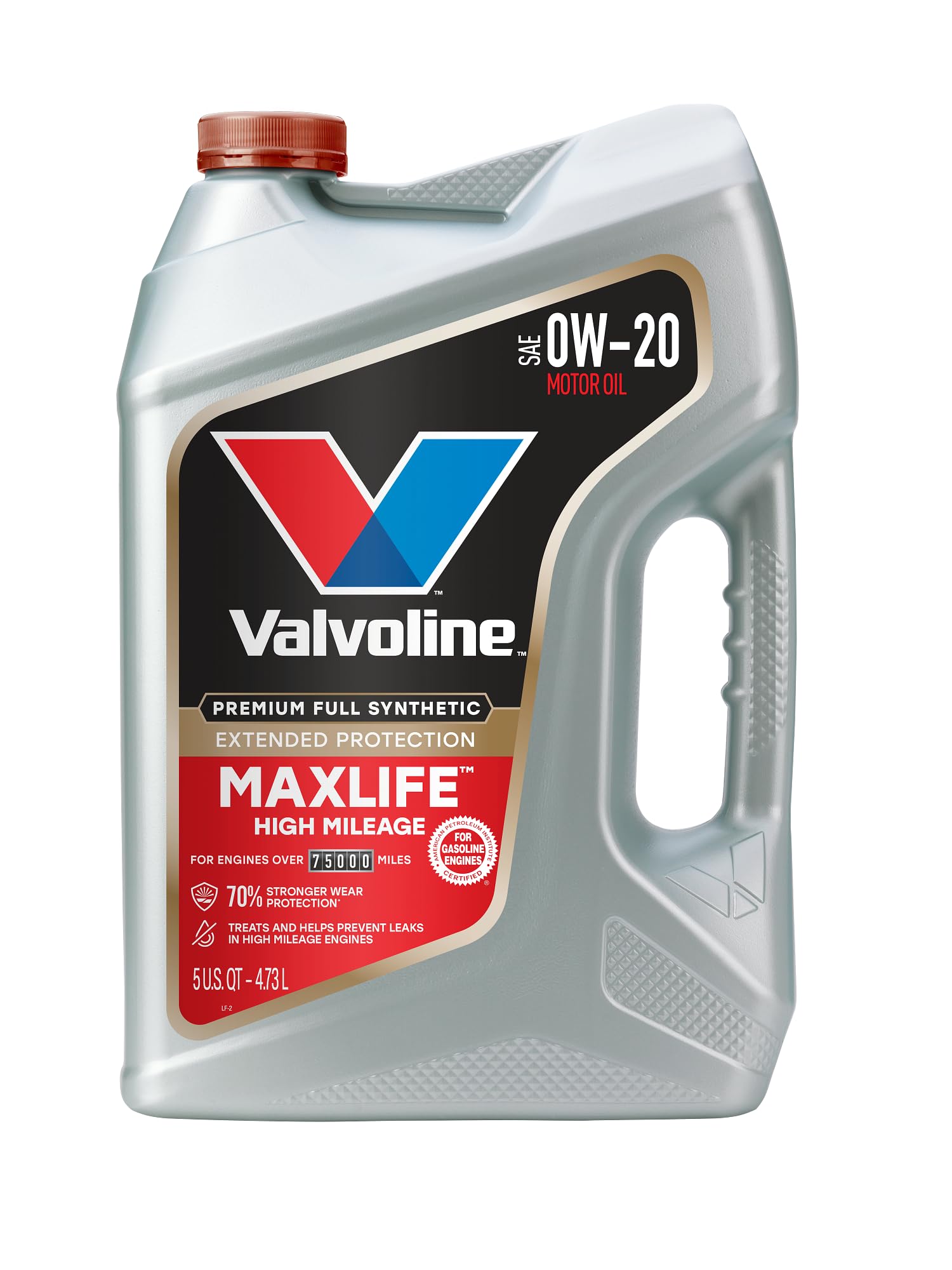
Valvoline MaxLife is the dedicated high-mileage solution for engines exceeding 75,000 miles. Its Dual Defense Additive Technology combines seal conditioners that reverse seal shrinkage—reducing external leaks and oil consumption—with enhanced detergents that combat existing sludge and varnish buildup. The formulation delivers 70% stronger wear protection than the API SP standard.
The oil provides 20X better heat protection and 20% better sludge defense compared to industry baselines, critical for engines whose cooling systems may not be as efficient as when new. It meets ILSAC GF-7A, API SQ, API SP, and Chrysler MS-13340, covering American and Japanese high-mileage platforms. The Ford WSS-M2C962-A1 approval makes it suitable for Ford EcoBoost engines with higher mileage.
The 5-quart size covers most standard sumps in one bottle. Owners of high-mileage GM 2.4L and Ford 3.5L engines report reduced oil consumption after two consecutive changes. The tradeoff is slightly lower fuel economy optimization compared to GF-7A-only formulations, since the additive priority shifts to seal conditioning and leak prevention.
What works
- Seal conditioners actively reduce oil leaks in high-mileage engines
- 70% stronger wear protection than API SP standard
- Excellent 20X heat protection for aging thermal systems
What doesn’t
- Not optimized for maximum fuel economy in newer engines
- Seal conditioning chemistry may be unnecessary on engines under 75K miles
Hardware & Specs Guide
Viscosity Grade: 0W-20
The “0W” indicates a cold-cranking viscosity that allows the oil to flow at temperatures as low as -40°C (-40°F), protecting engine bearings on the coldest starts. The “20” refers to the kinematic viscosity at 100°C, typically between 6.9 and 9.3 cSt. Oils that shear out of grade (drop below 6.9 cSt at 100°C) lose film strength under load, increasing metal-to-metal contact.
HTHS Viscosity
High-Temperature High-Shear viscosity measures oil film thickness under extreme pressure at 150°C. For 0W-20 oils, the minimum HTHS is 2.6 cP. Premium formulations typically exceed 2.7 cP, providing a thicker cushion between cam lobes and followers. Lower HTHS values improve fuel economy, but engines under heavy towing or track use benefit from higher HTHS.
NOACK Volatility
NOACK volatility measures the mass percentage of oil that evaporates at 250°C over one hour. Lower numbers mean less oil is lost to vaporization in high-heat operation. Premium 0W-20 oils aim for NOACK below 10%, while budget oils may exceed 13%. High volatility contributes to oil consumption and valve deposit buildup.
TBN (Total Base Number)
TBN measures the oil’s reserve alkalinity to neutralize acidic combustion byproducts. Fresh 0W-20 oils range from 7 to 11 mg KOH/g. A TBN drop below 2-3 mg KOH/g indicates the oil is spent and can no longer prevent corrosion. Extended-drain oils start with higher TBN to maintain reserve over longer intervals.
Pour Point
The pour point is the lowest temperature at which the oil still flows. Top-tier 0W-20 oils achieve pour points below -45°C (-49°F). This spec determines whether the oil reaches critical camshaft bearings during sub-zero winter starts. Oils with higher pour points risk oil starvation until the engine warms up.
API SP vs. ILSAC GF-7A
API SP (introduced 2020) focuses on LSPI protection, timing chain wear resistance, and improved sludge control. ILSAC GF-7A (introduced 2024) adds stricter fuel economy requirements and tighter deposit control limits. Many premium oils carry both certifications, but a bottle with only API SP may not meet the fuel economy targets required by some modern Japanese engines.
FAQ
Can I use 0W-20 in an engine that specifies 5W-30?
How often should I change 0W-20 full synthetic oil?
Is 0W-20 oil too thin for high-mileage engines?
What does ILSAC GF-7A certification mean for my car?
Can I mix different brands of 0W-20 oil in an emergency?
Final Thoughts: The Verdict
For most buyers, the 0w-20 motor oil winner is the Castrol EDGE Extended Performance because it delivers the highest certified protection, longest drain interval, and broadest OEM coverage for modern turbo engines. If you want active deposit removal for an engine with neglected service history, grab the Valvoline Restore & Protect. And for heavy towing and hauling duty cycles, nothing beats the Mobil 1 Truck & SUV for validated high-load durability.

Certification: BSc in Mechanical Engineering
Education: Mechanical engineer
Lives In: 539 W Commerce St, Dallas, TX 75208, USA
Md Amir is an auto mechanic student and writer with over half a decade of experience in the automotive field. He has worked with top automotive brands such as Lexus, Quantum, and also owns two automotive blogs autocarneed.com and taxiwiz.com.