A spark plug socket isn’t just a deep well — it’s the difference between a five-minute plug swap and a knuckle-busting extraction that leaves the porcelain shard in the head. The 21 mm size hits the sweet spot for late-model GM LS engines, many Ford modular V8s, and a growing list of European and Asian powerplants, meaning your socket choice directly affects whether that plug comes out clean or the boot rips and the ceramic cracks. A rubber insert, a thin wall profile, and impact-rated steel are the three non-negotiable features that separate a proper tool from a frustration generator.
I’m Amir — the founder and writer behind Four Wheel Ask. I’ve analyzed hundreds of tool SKUs across professional lineups, scrutinizing chrome vanadium versus chrome moly compositions, heat-treat cycles, and drive-end tolerances to separate marketing fluff from real shop-floor durability.
This guide walks through four distinct 21 mm spark plug socket options that cover DIY garage work, professional impact use, and tight-access engine bays. The 21 mm spark plug socket you choose should match how hard you torque it and how deep those plug wells actually sit.
How To Choose The Best 21 Mm Spark Plug Socket
The right 21 mm spark plug socket needs to handle the torque required to break free a carbon-fouled plug without slipping, while its internal rubber insert must grip the ceramic insulator firmly enough to pull the plug out without leaving it stuck in the well. Three factors will determine whether your socket passes or fails that test.
Drive Size and Impact Rating
A 1/2-inch drive is the standard for 21 mm spark plug sockets because it delivers the torque capacity needed for stubborn plugs without twisting off. Impact-rated sockets use tougher alloy steel and specialized heat treating to survive repeated hits from an impact wrench, while non-impact sockets are fine for manual ratchet use but can crack or distort under pneumatic hammering.
Wall Thickness and Reach
Thin wall sockets are essential for modern engines where plug tubes are cast into the cylinder head with very little clearance. A standard wall socket might jam against the tube wall, scoring the aluminum head or preventing the socket from seating fully. Minimum reach for most passenger car applications is around 65 to 70 mm, with longer sockets needed for deep well designs.
Internal Retention Method
Rubber inserts are the most common retention method — they grip the plug insulator gently enough not to crack it, yet hold tight enough to lift the plug out vertically. Some sockets use spring-loaded collets or magnets, but rubber inserts remain the industry favorite because they self-center the plug and protect the ceramic from metal-on-metal contact.
Quick Comparison
On smaller screens, swipe sideways to see the full table.
| Model | Category | Best For | Key Spec | Amazon |
|---|---|---|---|---|
| SUNEX TOOLS 2621 | Mid-Range | Impact Wrench Use | 1/2″ Drive, Thin Wall, CR-MO Steel | Amazon |
| Williams JHW14M-621 | Premium | Heavy-Duty Shop Use | 1/2″ Drive, SUPERTORQUE Design | Amazon |
| Ten Tools M120046-C | Mid-Range | Manual Ratchet Use | 1/2″ Drive, 70mm Length, Rubber Insert | Amazon |
| TIGHTSPOT IS38D21MM6-TW | Budget-Friendly | 3/8″ Drive Compatibility | 3/8″ Drive, Deep Impact, CRV Steel | Amazon |
In‑Depth Reviews
1. SUNEX TOOLS 2621 1/2-Inch Drive 21-Mm Extra Thin Wall Deep Impact Socket
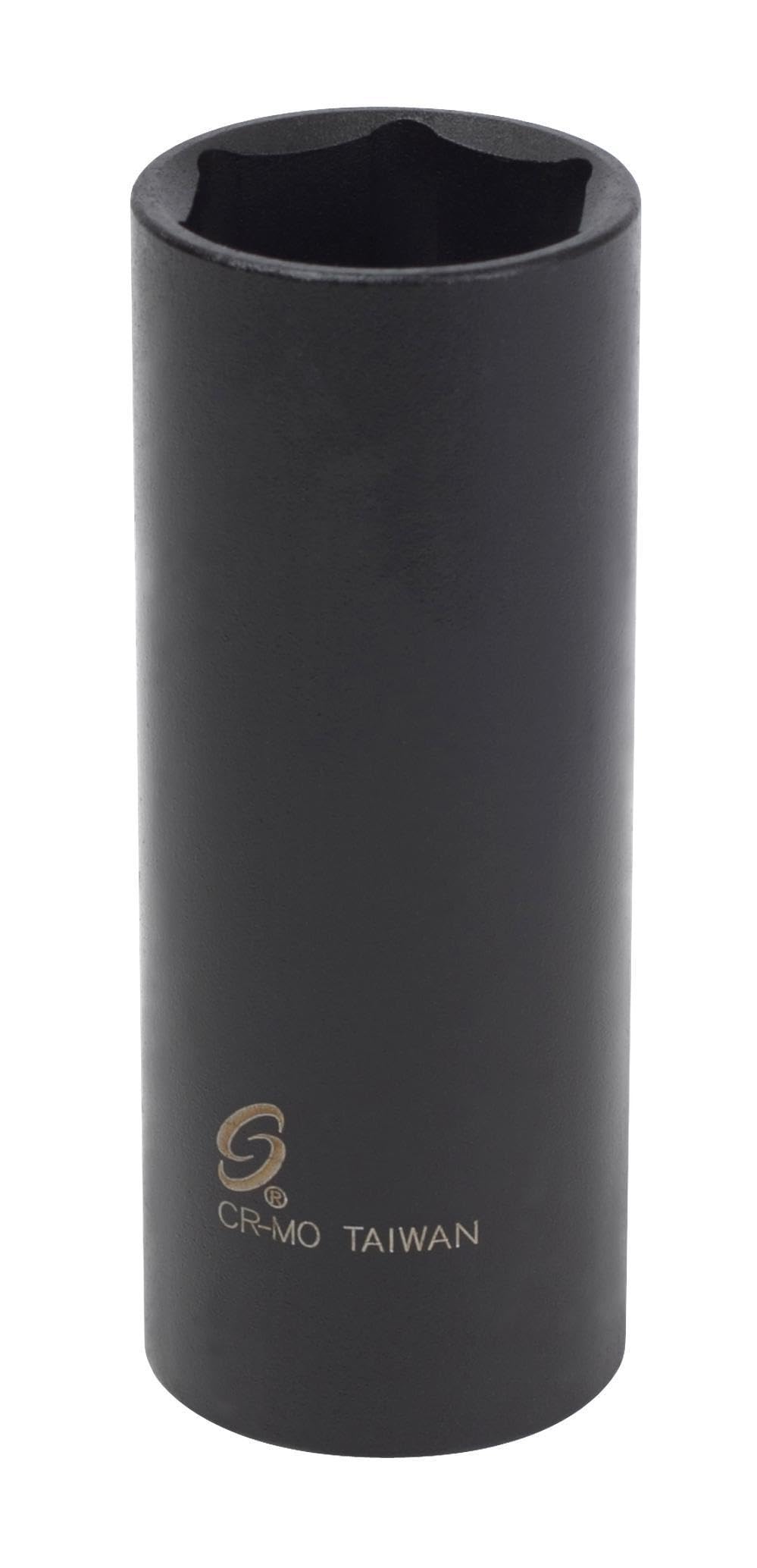
The SUNEX 2621 is built from chrome molybdenum alloy steel, a material choice that gives it a measurable strength advantage over cheaper chrome vanadium sockets when subjected to repeated impact-wrench cycles. The extra-thin wall profile — noticeably slimmer than standard deep sockets — lets it slide into tight plug tubes on LS motors and Ford 5.0 Coyote engines where clearance is measured in millimeters. The 3.4-inch overall length provides enough reach for most deep-well applications without being so long that it wobbles under load.
Sunex heat-treats the socket to meet or exceed ANSI and ASME impact socket standards, which means the six-point broaching stays sharp and the drive square resists deformation even after hundreds of plug changes. The black phosphate finish provides real corrosion resistance — not just a cosmetic coating — and the laser-etched size markings are crisp enough to read under a hood light. For the working mechanic who needs one socket to handle both hand-torque and impact driver removal, this is the sweet spot.
What keeps this from being an absolute no-brainer is the lack of a rubber insert. Without that internal retention, you rely on friction fit alone to hold the plug during extraction, and a stuck plug boot can cause the plug to drop back into the well. A quick fix is to add a piece of rubber vacuum line inside the socket, but out of the box you sacrifice some convenience for the thin-wall benefit.
What works
- Chrome moly steel handles heavy impact torque without cracking
- Thin wall design fits tight OEM plug tubes on LS and Ford engines
- Lifetime no-exclusion warranty provides long-term confidence
What doesn’t
- No internal rubber insert to grip the plug insulator
- Black phosphate finish shows wear faster than chrome plating
2. Williams JHW14M-621 SUPERTORQUE 1/2-Inch Drive Deep Impact Socket
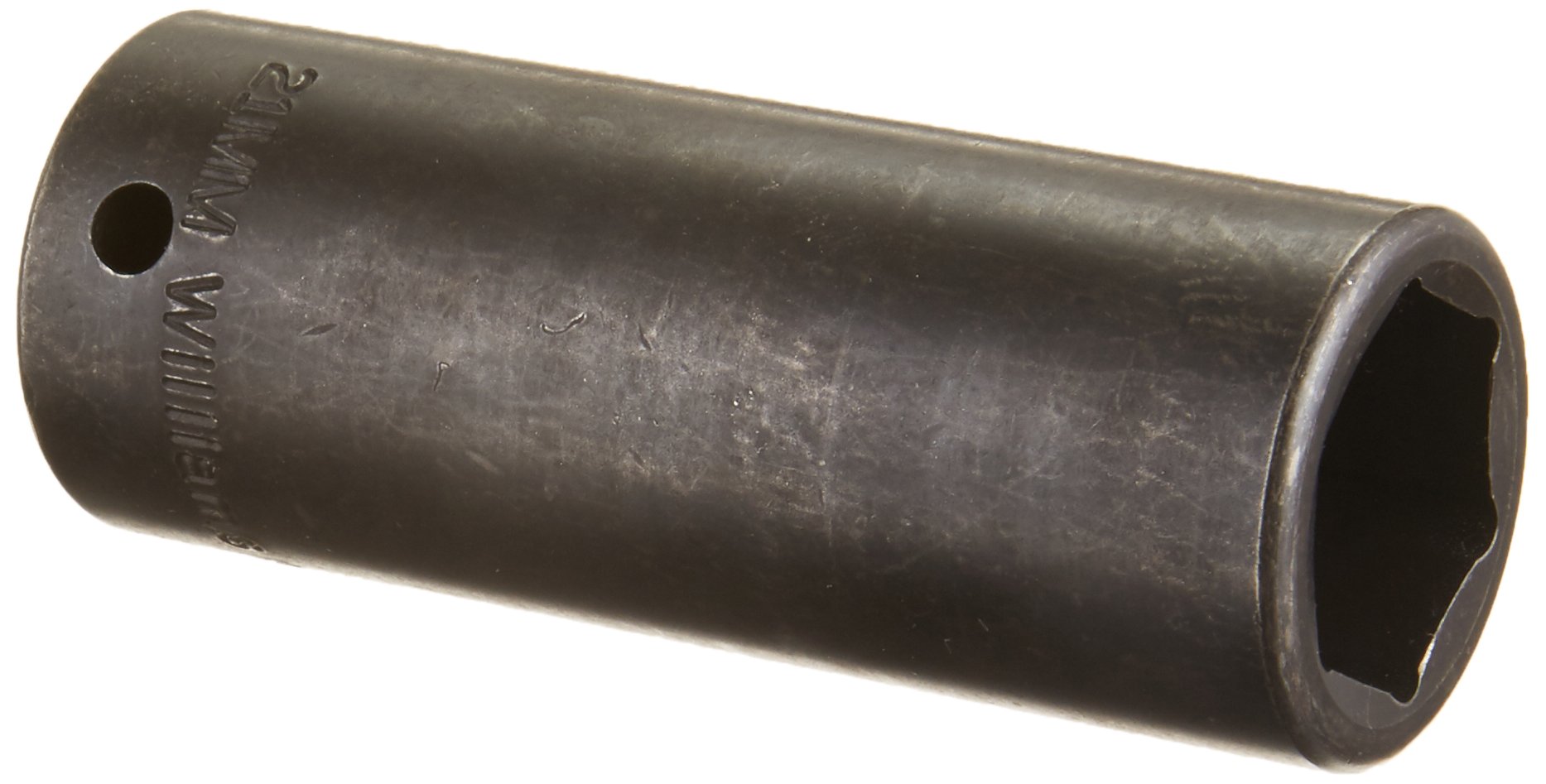
Williams, a brand with over 140 years of industrial tooling heritage, brings its SUPERTORQUE lobular geometry to the 21 mm deep impact socket. Instead of the standard six-point hex that contacts the fastener at the corners, the SUPERTORQUE design uses curved lobes that apply force to the flats of the bolt head, dramatically reducing the risk of rounding off a seized spark plug ground electrode. This geometry also distributes the impact load more evenly across the socket wall, which extends the tool’s fatigue life in high-torque applications like breaking free rusted plugs on heavy equipment or truck engines.
The JHW14M-621 is heat-treated specifically for impact use, and the alloy steel construction gives it a weight of 11.2 ounces — noticeably heftier than the Sunex and Teng options, which translates to more mass behind each hammer blow from an impact wrench. The black painted finish is functional rather than flashy, and the size is deeply stamped into the steel so it won’t wear off. For a shop that runs an IR or Milwaukee impact all day, this socket earns its keep through sheer durability.
The main trade-off is the price point — this is the most expensive option in the group, and the added cost is justified primarily by the SUPERTORQUE geometry and the brand’s reputation for surviving brutal industrial use. If your work stays strictly under the hood of a sedan or light truck, the premium might not translate to a feelable difference in daily use. The socket also lacks a rubber insert, so plug retention remains friction-dependent.
What works
- SUPERTORQUE lobular design prevents fastener rounding under high torque
- Heat-treated alloy steel survives heavy industrial impact cycles
- Stamped size markings never wear off
What doesn’t
- Premium price is overkill for light DIY use
- No internal rubber insert for plug retention
3. Teng Tools 21mm 1/2 Inch Drive 6 Point Spark Plug Socket With Rubber Insert

The Teng Tools M120046-C stands apart because it comes from the factory with a rubber insert already installed — a detail that matters enormously when you’re pulling a plug from a deep well where you can’t see the socket-to-plug engagement. The rubber gripper centers the ceramic insulator and holds the plug securely enough that you can yank the socket straight up without the plug dropping. At 70 mm in length and 165 grams in weight, it’s compact enough to work in tight spaces yet substantial enough to feel solid in hand.
Chrome vanadium steel with a satin chrome finish gives this socket a smooth exterior that resists rust and wipes clean easily after exposure to oil and coolant. The six-point broaching grabs the flat sides of the plug hex instead of the corners, which is the same anti-rounding principle used by more expensive impact sockets. Because this socket is not impact-rated, it’s best used with a standard ratchet or breaker bar rather than a pneumatic gun, but the satin finish actually provides better grip in oily environments than a polished chrome surface.
The primary limitation is the lack of an impact rating — if you need to use an impact wrench to break loose a seized plug, this socket is not designed for that duty cycle. Chrome vanadium steel is tougher than basic carbon steel but less impact-resistant than chrome moly. For purely manual use on routine plug changes, this is the most user-friendly socket in the lineup.
What works
- Includes rubber insert for secure plug retention and removal
- Satin chrome finish improves grip in oily conditions
- Compact 70mm length fits tight engine compartments
What doesn’t
- Not impact-rated — manual ratchet use only
- Chrome vanadium steel less durable than chrome moly under extreme torque
4. TIGHTSPOT 3/8 Inch Drive 21 mm Deep Impact Socket
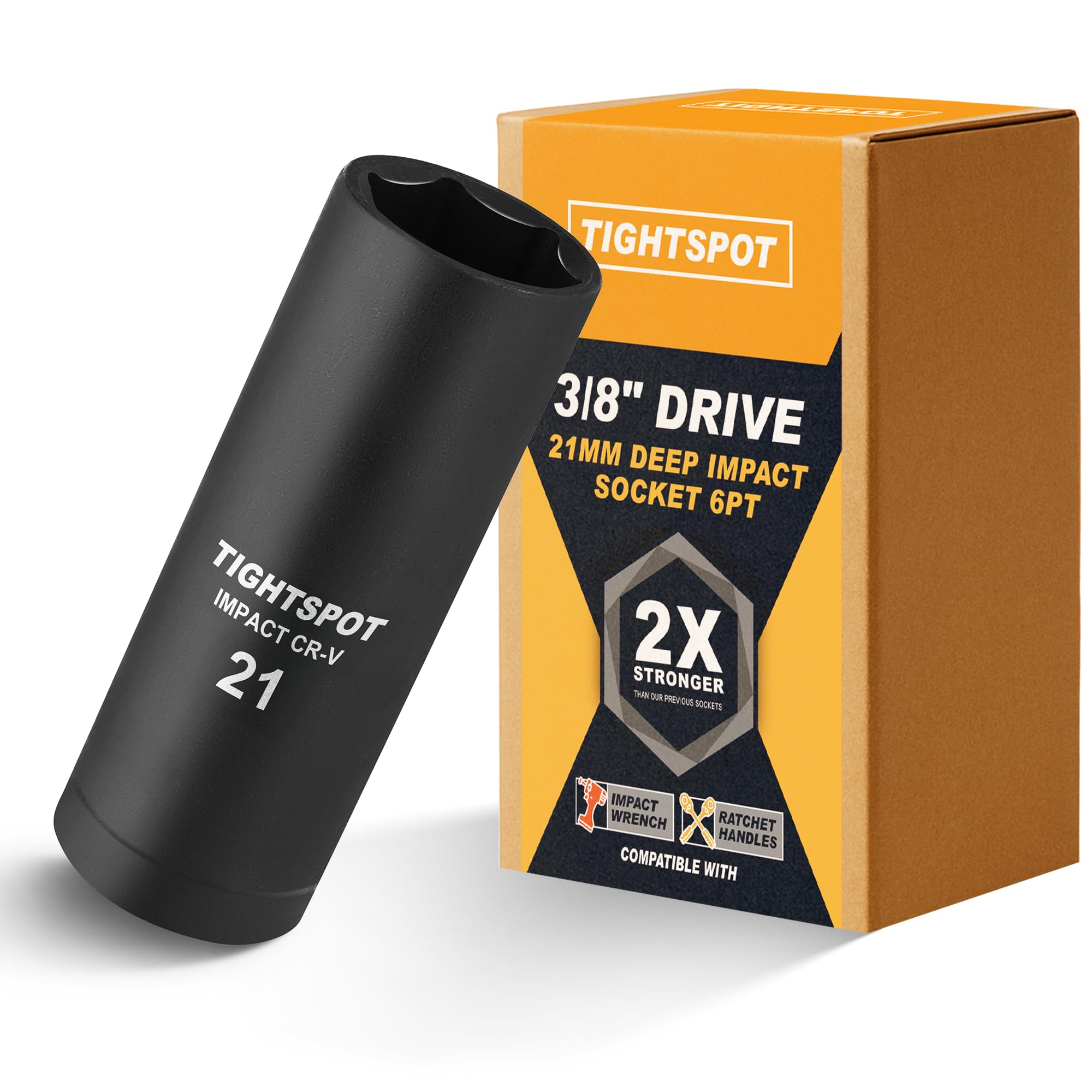
The TIGHTSPOT socket is the budget-friendly entry point that doubles as a unique solution for setups using a 3/8-inch drive ratchet or impact driver. Most 21 mm spark plug sockets use a 1/2-inch drive, which means you need an adapter if your ratchet is 3/8-inch — the TIGHTSPOT eliminates that extra point of failure by using a 3/8-inch square drive directly. The deep impact design uses radius corner geometry that applies force to the fastener flats rather than the corners, reducing the chance of rounding off a rusty plug base.
Aerospace-grade CRV steel with a manganese phosphate finish provides decent corrosion resistance, and the socket is heat-treated for impact use, so it can handle a 3/8-inch impact driver for quick removal. The chamfered opening helps align the socket onto the plug quickly, which is a small but noticeable time-saver when you’re working on a bank of plugs in a row. The laser-etched and permanently stamped size markings ensure the 21 mm designation stays legible after years in a tool drawer.
The compromise here is the 3/8-inch drive itself — while it’s ideal for compact impact drivers and smaller ratchets, it has lower torque capacity than a 1/2-inch drive setup. If you’re breaking loose a plug that’s been seized for years, the smaller drive square could twist before the plug budges. This socket is best suited for routine maintenance on engines with accessible plugs rather than heavy extraction work.
What works
- 3/8-inch drive works directly with compact impact drivers and ratchets
- Radius corner design reduces fastener rounding
- Aerospace-grade CRV steel with dual size markings
What doesn’t
- 3/8-inch drive limits maximum torque for seized plugs
- No internal plug retention feature
Hardware & Specs Guide
Alloy Steel Grades
Chrome vanadium steel (CRV) is the standard for hand sockets, offering good toughness and corrosion resistance at a low cost. Chrome molybdenum steel (CR-MO) is a step up in impact resistance and fatigue life, making it the preferred material for impact-rated sockets that must survive repeated pneumatic hammer blows. For a 21 mm spark plug socket that will see impact use, CR-MO is the safer long-term choice.
Six-Point vs. Lobular Drive
Standard six-point sockets contact the fastener at the corners of the hex shape, which can round off a seized plug head. Lobular or SUPERTORQUE geometry uses curved internal profiles that contact the flat sides of the fastener instead, distributing force across a wider surface area. This reduces rounding risk and allows higher torque application without damaging the plug.
FAQ
Can I use a 21 mm deep socket as a spark plug socket without a rubber insert?
Is a 1/2-inch drive or 3/8-inch drive better for a 21 mm spark plug socket?
What wall thickness do I need for modern engine plug tubes?
Final Thoughts: The Verdict
For most buyers, the best 21 mm spark plug socket winner is the SUNEX TOOLS 2621 because its chrome moly steel, thin wall profile, and lifetime warranty deliver professional-grade impact capability at a mid-range price point. If you want a rubber insert for stress-free plug removal, grab the Teng Tools M120046-C. And for heavy-duty shop environments where fastener rounding is a constant risk, nothing beats the Williams JHW14M-621 with its SUPERTORQUE lobular geometry.

Certification: BSc in Mechanical Engineering
Education: Mechanical engineer
Lives In: 539 W Commerce St, Dallas, TX 75208, USA
Md Amir is an auto mechanic student and writer with over half a decade of experience in the automotive field. He has worked with top automotive brands such as Lexus, Quantum, and also owns two automotive blogs autocarneed.com and taxiwiz.com.