Finding the right adhesive to reattach that mirror housing or glass panel requires a formula that can handle extreme temperature swings, constant road vibration, and the occasional car wash without letting go.
I’m Amir — the founder and writer behind Four Wheel Ask. I’ve spent years analyzing adhesive formulations, tensile strength data, and long-term cure behavior specifically for automotive trim and mirror repairs to separate the products that actually hold from those that fail after a week on the road.
Whether you are dealing with a cracked mirror housing, a detached glass face, or a loose mounting bracket, choosing the right product for the job determines whether your repair lasts. This guide breaks down the top options to help you find the best glue for car side mirror repairs that will survive the elements and keep your mirror secure.
How To Choose The Best Glue For Car Side Mirror
A car side mirror faces a unique set of stresses — direct sunlight heating the adhesive past 180°F on a summer day, cold snaps dropping well below freezing, constant vibration from the road, and moisture from rain and car washes. Not every adhesive is engineered for these conditions. Understanding the chemistry and application method is the difference between a repair that lasts years and one that fails within weeks.
Adhesive Type — Match Chemistry to the Material
Cyanoacrylate gel formulas are ideal for small gaps and plastic-to-plastic bonds on mirror housings because they cure quickly without dripping, and specialized automotive versions resist oil and heat up to around 230°F. Polyurethane adhesives are better suited for bonding glass to metal or painted surfaces, offering flexibility that absorbs vibration without cracking. High-strength double-sided tape (like 3M VHB) works well for reattaching mirror housings to the door panel where a uniform surface exists, but it struggles on curved or heavily textured areas where gap-filling is required.
Temperature and Vibration Resistance
The adhesive in a side mirror repair must survive underhood-level heat on one side and freezing cold on the other. Look for a stated temperature range that covers at least -20°F to 200°F. Vibration resistance is harder to quantify on paper, but polyurethane formulations naturally dampen vibration better than rigid cyanoacrylate bonds, while high-tack gel cyanoacrylates are formulated with flex agents to handle road stress without embrittlement.
Application Method and Work Time
Gel cyanoacrylates offer precision application with anti-clog nozzles and give you about 20-60 seconds of repositioning time before the bond sets — ideal for small mirror parts. Polyurethane in a cartridge requires a caulking gun and provides a longer open time of 10-15 minutes, which helps when aligning larger mirror assemblies. Double-sided tape is the simplest option for flat surfaces: cut, peel, press, and it’s done instantly with no mess, but it offers zero forgiveness if you misalign the part.
Quick Comparison
On smaller screens, swipe sideways to see the full table.
| Model | Category | Best For | Key Spec | Amazon |
|---|---|---|---|---|
| CS-4300 Mirror Adhesive | Mirror-Specific Adhesive | Dedicated mirror bonding with low odor | 10.1 oz cartridge, SCAQMD compliant | Amazon |
| KRAFTPROTZ Automotive Super Glue Gel | Cyanoacrylate Gel | Plastic mirror housing & trim repairs | Heat resistant up to 230°F (110°C) | Amazon |
| 3M Super-Strength Molding Tape | Double-Sided Tape | Reattaching mirror housing to door panel | Temperature range -40°F to 250°F | Amazon |
| Berkland Polyurethane Windshield Adhesive 2-Pack | Polyurethane | Glass-to-metal mirror bonding, permanent hold | 10.5 oz per cartridge, OEM-level bond | Amazon |
| Evostik Serious Glue | Multi-Purpose Gel | Small plastic clips & mirror attachment points | Full cure in 24 hours, repositionable for 3 min | Amazon |
In‑Depth Reviews
1. CS-4300 Mirror Adhesive
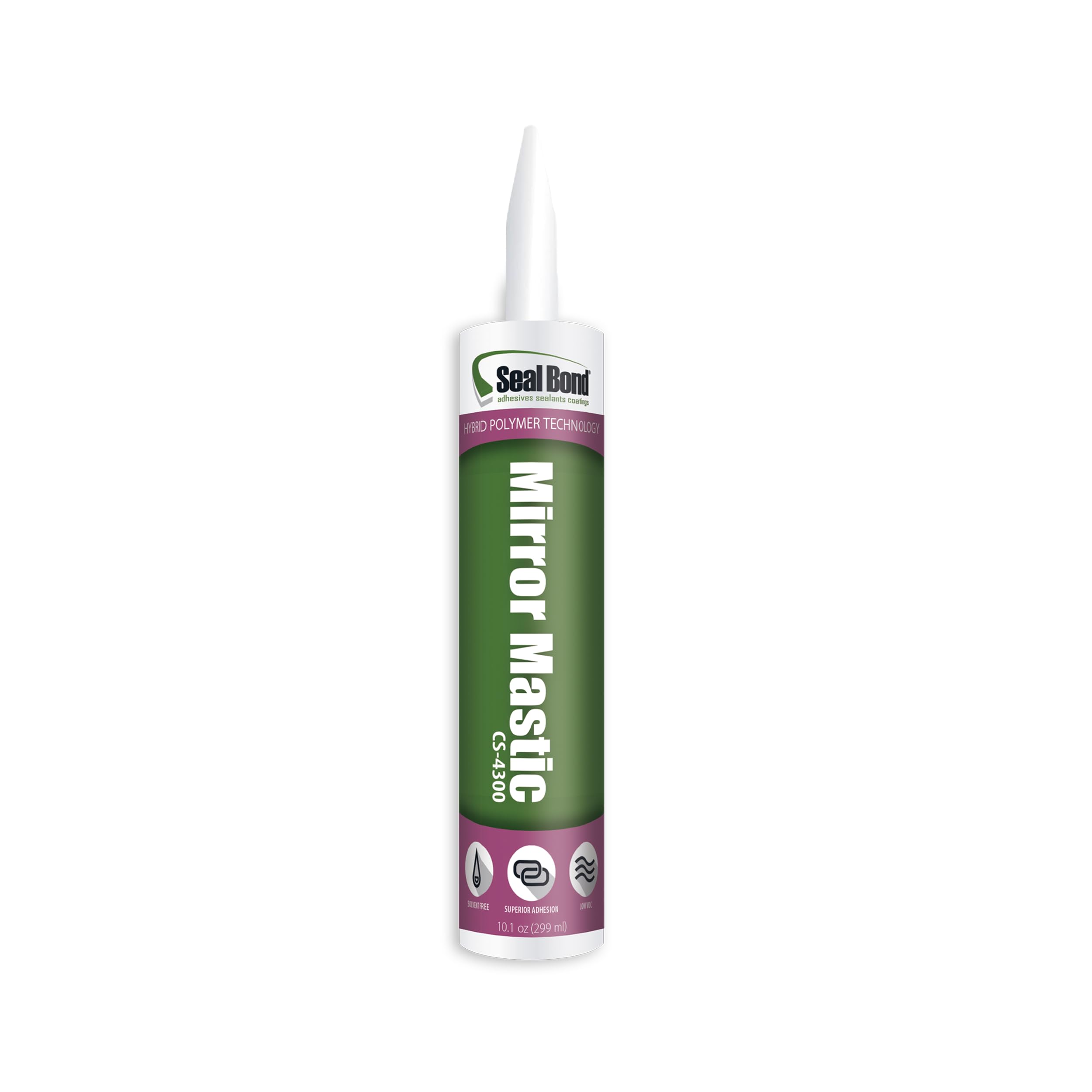
The CS-4300 from Seal Bond is a purpose-built mirror adhesive that excels where general-purpose glues fall short. Its low-odor, solvent-free formulation eliminates the harsh chemical fumes typical of construction adhesives, making it safe for interior mirror repairs on car doors or even household mirrors. The 10.1-ounce cartridge provides enough material for multiple large mirror installations, with excellent build-out properties that fill gaps between the glass and the mounting plate without sagging.
This adhesive complies with SCAQMD and CDPH standards for ultra-low VOC emissions, so you are not inhaling isocyanates or solvents during application. It works equally well on conventional glass mirrors and acrylic mirrors, maintaining a strong bond through temperature swings from garage cold to summer heat. The natural off-white color blends well with most mirror backings, and the bond remains flexible enough to absorb road vibration without becoming brittle over time.
User reports confirm this adhesive holds mirrors that weigh over ten pounds with no mechanical fasteners — a testament to its shear strength. The only trade-off is that it requires a standard caulking gun for application, which adds a step compared to squeeze tubes. For a dedicated mirror repair where long-term reliability is non-negotiable, the CS-4300 is the definitive choice.
What works
- Designed specifically for mirror bonding with proven hold on large mirrors
- Low odor and ultra-low VOC formulation safe for interior use
- Excellent gap-filling properties for irregular mounting surfaces
What doesn’t
- Requires a caulking gun for application
- Overkill for small mirror parts or quick fixes
2. KRAFTPROTZ Automotive Super Glue Gel
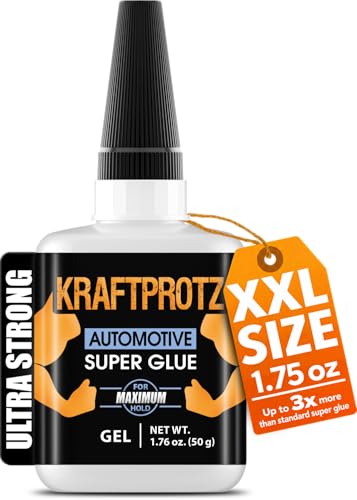
The KRAFTPROTZ Automotive Super Glue Gel delivers a no-drip cyanoacrylate formula that stays exactly where you put it — critical when working on vertical mirror housings where liquid super glue would run down and create a mess. This gel bonds tenaciously to plastic, rubber, metal, ABS, PVC, and fiberglass, covering the full range of materials found in a modern car side mirror assembly. The anti-clog tip keeps the nozzle clear between uses, which is a practical benefit for mechanics and DIYers who may not finish the entire tube in one session.
Engineered specifically for vehicle environments, this adhesive withstands engine vibration, thermal cycling, and oil exposure up to 230°F. The XXL 1.76-ounce tube offers roughly three times the volume of standard automotive glue tubes, making it a cost-effective choice for repeated repairs. Users report success reattaching front bumpers, sun visors, and interior trim — applications that share the same vibration and temperature stresses as a side mirror repair.
One user noted that a visor repair required a second application because the initial bond didn’t grip well, highlighting that surface preparation is still essential with this gel. The chemical smell during cure is noticeable, and the gel sets quickly, leaving little room for repositioning. For small to medium mirror housing cracks or bracket breaks, this gel offers a strong, heat-resistant fix without the need for clamps or tape.
What works
- No-drip gel stays in place on vertical surfaces
- Heat and oil resistant up to 230°F for underhood durability
- Large 1.76 oz tube provides excellent value for multiple repairs
What doesn’t
- Requires clean, dry surfaces for maximum bond strength
- Chemical odor during application requires ventilation
3. 3M Super-Strength Molding Tape

3M VHB technology is the industry standard for permanent automotive trim attachment, and this Super-Strength Molding Tape brings that aircraft-grade bonding power to side mirror repairs. The 1/2-inch by 15-foot roll gives you ample material for multiple mirror housing reattachments or securing trim pieces around the mirror base. The acrylic foam core conforms to irregular and textured surfaces, creating full contact even on slightly curved door panels where rigid adhesives would bridge gaps.
The temperature range of -40°F to 250°F covers every climate condition a vehicle encounters — from a frozen winter morning to a black car sitting in direct summer sun. The tape resists weather, moisture, and impact, and users consistently report that parts attached with this tape stay put through automatic car washes and highway driving. Application is clean and instant: cut the length, peel the liner, press the part, and the bond reaches full strength within 24 hours with no clamping required.
The limitation is that this tape only bonds where the two surfaces have intimate contact — it cannot fill gaps or bridge broken plastic brackets. For a mirror housing that has cracked mounting tabs, the tape alone won’t bridge the crack. For reattaching a housing that still has intact mounting surfaces, however, this is the fastest, cleanest, and most reliable solution available.
What works
- No mess, no cure time — bonds instantly on contact
- Extreme temperature tolerance from -40°F to 250°F
- Conforms to textured and slightly uneven surfaces
What doesn’t
- Cannot fill gaps or bridge broken plastic parts
- Surface must be perfectly clean and dry for adhesion
4. Berkland Polyurethane Windshield Adhesive 2-Pack

Berkland’s polyurethane windshield adhesive is a professional-grade solution for side mirror repairs that involve bonding glass directly to metal or painted surfaces. Unlike cyanoacrylate gels that cure rigid, polyurethane remains flexible after curing — a critical property when the mirror glass needs to absorb road vibration without the adhesive cracking or delaminating. The 2-pack provides two 10.5-ounce cartridges, enough for a full windshield replacement or multiple mirror repairs over time.
This adhesive reaches handling strength within a few hours and fully cures to an OEM-level bond that won’t shrink or crack. Users report that even heavy glass panels held securely after a single application, with the bond staying watertight through thermal cycles and road shocks. The cartridge fits standard caulking guns, and the included nitrile gloves and spreader tool make application straightforward even for first-time users.
The main consideration is that this is a polyurethane adhesive — it has a thick, paste-like consistency that requires firm pressure on the caulking gun trigger. Heating the cartridge in sunlight before use makes the flow easier, as noted by experienced users. For a permanent side mirror glass reattachment where the mirror must survive years of weather and vibration, this adhesive offers a bond strength that surpasses any consumer-grade glue.
What works
- Flexible polyurethane bond resists vibration and thermal cycling
- OEM-level bond strength for glass-to-metal mirror attachment
- Two-cartridge pack provides backup or covers multiple repairs
What doesn’t
- Thick paste requires effort to push through caulking gun
- Overkill for small plastic clip repairs on mirror housings
5. Evostik Serious Glue

Evostik Serious Glue is a versatile multi-purpose gel that works well for small-scale side mirror repairs — think reattaching a plastic clip that holds the mirror adjuster knob or bonding a cracked trim piece on the mirror housing. The gel formula is solvent-free and odorless, making it comfortable to use in tight spaces inside the car cabin. It dries clear, so any visible excess glue won’t ruin the appearance of the mirror assembly.
The 3-minute repositioning window is a practical feature for mirror repairs where you need to align parts precisely before the bond sets. Full cure occurs in 2 hours, with maximum strength reaching at 24 hours. The tube comes with two nozzle options — a small job nozzle for precision application into tight gaps and a larger nozzle for covering more surface area. Users have successfully repaired items as delicate as hearing aids and as varied as rubber seals, demonstrating the glue’s broad material compatibility.
For a full mirror housing reattachment or bonding a heavy mirror glass plate, this glue may lack the specialized heat and vibration resistance of purpose-built automotive adhesives. It is best reserved for non-structural mirror parts where the bond won’t bear significant weight or constant vibration. As an entry-level option for minor fixes, it gets the job done without breaking the budget.
What works
- Odorless and solvent-free — comfortable for interior use
- Dries clear and offers 3-minute repositioning time
- Comes with two nozzle sizes for precision application
What doesn’t
- Not specifically formulated for high-heat or high-vibration environments
- Small 33g tube is best for minor repairs only
Hardware & Specs Guide
Operating Temperature Range
The temperature range of an adhesive determines whether it will survive summer dashboard heat or winter freezing without degrading. For car side mirror repairs, look for a minimum range of -20°F to 200°F. The CS-4300 mirror adhesive performs well in standard ambient conditions, while the 3M VHB tape and KRAFTPROTZ gel extend that range significantly to cover extreme climates. Polyurethane adhesives like the Berkland formula maintain flexibility across a broad temperature span but can become more difficult to apply in cold weather.
Cure Time and Workability
Cure time directly impacts your ability to position the mirror correctly before the bond sets. Cyanoacrylate gels (KRAFTPROTZ, Evostik) cure within seconds to minutes, offering little room for adjustment — ideal when you know exactly where the part goes. Polyurethane and mirror-specific adhesives (CS-4300, Berkland) allow 10-15 minutes of open time for alignment but require clamping or taping the part in place while the bond cures to full strength over 24 hours. Double-sided tape provides instant grab with zero cure time but offers no forgiveness if you misplace the part.
FAQ
Can I use regular super glue to fix a car side mirror?
How long does car side mirror glue take to fully cure?
What surface preparation do I need before applying mirror glue?
Will mirror glue hold up through automatic car washes?
Can I remove a mirror glued with polyurethane adhesive if I need to replace it later?
Final Thoughts: The Verdict
For most buyers, the glue for car side mirror winner is the CS-4300 Mirror Adhesive because it is formulated specifically for mirror bonding with low odor and excellent gap-filling performance that handles both glass and mirror housings. If you need a fast, mess-free fix for reattaching a mirror housing to the door panel, grab the 3M Super-Strength Molding Tape. And for a permanent glass-to-metal bond that absorbs road vibration without cracking, nothing beats the Berkland Polyurethane Windshield Adhesive.

Certification: BSc in Mechanical Engineering
Education: Mechanical engineer
Lives In: 539 W Commerce St, Dallas, TX 75208, USA
Md Amir is an auto mechanic student and writer with over half a decade of experience in the automotive field. He has worked with top automotive brands such as Lexus, Quantum, and also owns two automotive blogs autocarneed.com and taxiwiz.com.