A bypassed nail, a cracked rim bead, or a dry-rot sidewall usually means one thing for older steel wheels and vintage fitments: the whole tire gets scrapped unless you run an inner tube. Replacing a ruined casing with a fresh tube restores the tire’s ability to hold air, returns the ride height, and often saves hundreds of dollars compared to sourcing a discontinued tire size. The catch is that tube selection demands more than matching the rim diameter — section width, load rating, and valve stem offset each play a decisive role in whether the assembly seals correctly the first time.
I’m Amir — the founder and writer behind Four Wheel Ask. I’ve spent years cross-referencing manufacturer fitment charts, analyzing butyl rubber compound data, and studying aggregated owner feedback on tube longevity across passenger cars, light trucks, and farm implements to isolate what actually separates a reliable seal from a slow leak.
This guide walks through seven candidates that cover radial and bias-ply compatibility, standard and heavy-duty ply ratings, and both single and two-pack configurations so you can confidently order the right car tire tube without the guesswork.
How To Choose The Best Car Tire Tube
An inner tube that doesn’t fit properly either wrinkles inside the tire (causing a pinch flat) or stretches too thin (creating a porous section that leaks air slowly). Understanding rim size, section width, load range, and valve stem type eliminates these failures before you mount the tire.
Match Rim Diameter and Section Width Exactly
The rim diameter (13, 14, or 15 inches) must match the wheel. The tube’s listed section width, however, should overlap with the tire’s marked width. A tube rated for 205/75R15 will comfortably fill a 215/75R15, but stretching a 13-inch tube into a 15-inch rim creates dangerous thinning. Always compare the tube’s size range chart against your tire’s sidewall markings.
Radial vs. Bias-Ply Tubes
Radial tubes are designed with a thinner sidewall that allows the tube to flex with the radial tire’s belt package as it rotates. Bias-ply tubes use thicker rubber throughout because bias-ply tires generate more sidewall heat and friction. Using a bias tube inside a radial tire can cause the tube to wear through at the shoulder; using a radial tube in a bias tire risks excessive pinching.
Valve Stem Position and Type
Most passenger car tubes use a TR13 short rubber valve stem that fits a 0.453-inch rim hole. Some wheels, especially custom or trailer applications, require a TR15 (0.625-inch hole) or an offset stem (bent at 90 degrees for clearance against brake drums or suspension components). Measure your wheel’s valve hole diameter and verify stem clearance before ordering.
Load Range and Ply Rating
Light-duty tubes (4-ply equivalent) handle passenger car loads up to roughly 1,300 pounds per tube. Heavy-duty tubes (6-ply to 10-ply) are built for truck, SUV, and agricultural applications where the tire carries higher pressure and heavier weight. The tube’s maximum pressure rating should never be lower than the tire’s recommended inflation pressure.
Quick Comparison
On smaller screens, swipe sideways to see the full table.
| Model | Category | Best For | Key Spec | Amazon |
|---|---|---|---|---|
| TYK Industries (2-Pack) | Premium | Heavy duty 15-inch replacement | 4X thicker butyl rubber | Amazon |
| Firestone (2-Pack) | Premium | Trusted brand, dual-size fit | 1,323 lb load capacity | Amazon |
| AIR-LOC (4-Pack) | Premium | Volume buyers, multiple vehicles | 4-ply butyl, fits 15-inch | Amazon |
| JUSTUBES MR14/15 | Mid-Range | 15-inch car and truck radial | 225/75R15 radial tube | Amazon |
| TubeSpecialty ER12/13 (2-Pack) | Mid-Range | 13-inch radial tires | 65 PSI max pressure | Amazon |
| Premium Service Implement Tube | Mid-Range | Farm and bias-ply tires | Multi-size stretch fit | Amazon |
| JUSTUBES FR13/14 (2-Pack) | Budget | 14-inch car and trailer | 85 PSI, 10-ply rating | Amazon |
In‑Depth Reviews
1. TYK Industries (2-Pack) 195/65R15, 205/65R15 Tire Inner Tube

TYK Industries markets this 2-pack as “up to 4X thicker than the competition,” and the butyl rubber compound backs that claim with a noticeably heavier feel straight out of the box. The material resists ozone cracking and holds pressure longer than standard thin-walled tubes, making it a strong candidate for trucks and SUVs that sit for weeks at a time between drives.
The TR13 short rubber valve stem is vulcanized with a lock nut that lets you adjust seating depth inside the rim. This feature is particularly useful on aftermarket wheels where the valve hole alignment isn’t perfectly centered, because the nut prevents the stem from pulling inward during inflation. The three-year warranty against manufacturing defects adds confidence for long-term use.
Fitment covers 195/65R15 and 205/65R15, plus many 15-inch light truck and trailer applications. The 4-ply construction handles standard passenger loads, though buyers running heavy farm implements may want a higher ply rating for sustained high-pressure service. For everyday road use, this pack offers exceptional puncture resistance per dollar.
What works
- Thick butyl rubber resists punctures and holds air very well
- Lock nut on TR13 stem prevents pull-through during inflation
- Three-year warranty is rare in this category
What doesn’t
- 4-ply may feel light for extreme off-road or heavy load use
- Size range is narrower than multi-fit options
2. Firestone Brand Passenger Tire Inner Tube (2-Pack) 14/15-inch

Firestone’s name carries weight in tire circles, and this 2-pack of inner tubes reflects the same rubber quality found in their full tire line. The TR13 valve stem seats cleanly in standard 0.453-inch rim holes, and the 4-ply construction supports up to 1,323 pounds per tube, which covers most passenger sedans, light trucks, and utility trailers.
The dual-size fit (14-inch and 15-inch rims) gives flexibility if you maintain multiple vehicles with different wheel diameters. The rubber compound feels pliable without being too soft, so it conforms to the tire’s interior shape during mounting without creasing. The set of two also means you can replace both rear or both front tubes in one purchase.
Maximum pressure is rated at 60 PSI, which is sufficient for standard passenger tires but slightly below what some truck tires need. The 4-ply rating limits its use in heavy agricultural or commercial applications where 6-ply or 8-ply tubes are standard. Still, for everyday road-going cars and light trailers, this is a reliable, brand-backed option.
What works
- Brand reputation for consistent rubber quality
- Dual size fit (14 and 15 inch) adds versatility
- Decent load capacity for passenger use
What doesn’t
- 60 PSI max pressure may be low for some truck tires
- 4-ply rating not suited for heavy commercial loads
3. AIR-LOC Four KR14/15 Heavy Duty Tire Inner Tubes

Buying a 4-pack of inner tubes makes sense when you maintain a fleet of trailers, multiple off-road vehicles, or a stable of vintage cars on 15-inch wheels. AIR-LOC’s KR14/15 tubes stretch to fit a wide range of sizes including 205/75R15, 215/75R15, 215/70R15, 225/70R15, and even some 14-inch equivalents, which reduces the risk of ordering the wrong specific size.
The butyl rubber construction handles a maximum pressure of 65 PSI, and the 4 to 6-ply equivalent rating provides a safety buffer for light truck and SUV applications. The TR13 valve stem is standard, and the tubes are test-inflated before packaging, so the rate of DOA units is very low based on owner reports. Having four tubes on hand also saves shipping costs compared to buying singles.
The biggest consideration is that these are heavy-duty tubes designed for thicker tires — installing them inside a low-profile passenger tire may leave excess rubber that bunches. They shine best in radial truck tires, ATV trailers, and classic car tires where the extra material simply fills the cavity without issue.
What works
- Four tubes per pack covers multiple vehicles or spares
- Wide size compatibility reduces fitment mistakes
- Pre-inflated testing minimizes defects
What doesn’t
- Thick material may be overkill for low-profile tires
- Heavier than single-tube packs for shipping
4. JUSTUBES MR14/15 15 Inch Car, Truck Tire Inner Tube
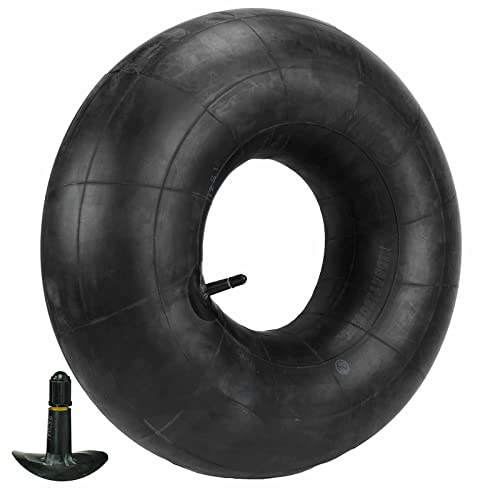
JUSTUBES specializes in straightforward fitment with minimal ambiguity — the MR14/15 tube is designed for radial tires sized P225/75R15 and P235/75R15, two of the most common light truck sizes on the road. The radial-specific construction flexes with the tire’s belt package, reducing internal friction that could cause premature wear in bias-ply tubes.
The single-tube format is ideal if you only need one replacement, and the TR13 valve stem integrates cleanly with factory steel wheels. The rubber feels dense without being excessively thick, which helps the tube settle into the tire cavity without forming hard creases during mounting. Owners report consistent air retention over several months of daily driving.
The main limitation is the narrow fitment range — it won’t stretch to fit 205/75R15 or 195/75R15 reliably. If your tire size falls outside the P225-P235 window, you need a different model. Also, being a single tube means you pay separate shipping if you need a pair, whereas competitors bundle two tubes at a similar price point.
What works
- Perfect direct fit for common P225/75 and P235/75 sizes
- Radial construction reduces sidewall friction wear
- Consistent air retention reported by long-term users
What doesn’t
- Limited to specific width range — not a multi-fit
- Single tube means higher cost per tube compared to 2-packs
5. TubeSpecialty Two ER12/13 Radial Tire Inner Tubes (2-Pack)

Thirteen-inch wheels appear on compact cars, older economy sedans, and many small trailers. The TubeSpecialty ER12/13 2-pack covers common 13-inch radial sizes like P155/80R13, 165/70R13, and 185/60R13, making it a practical choice for owners of classic Honda Civics, Toyota Corollas, or utility trailers with smaller wheels.
The 65 PSI maximum pressure rating is higher than most passenger tubes, which matters if you run higher inflation for maximum load capacity in a trailer application. The load index of 112 indicates a substantial safety margin for the tube’s size. Being a 2-pack, you can outfit both sides of an axle in one order without hunting for a second tube.
The radial construction is correct for modern radial tires, but the tube’s sidewall is relatively thin compared to heavy-duty options. If you frequently drive on rough terrain or gravel roads, the thinner rubber may be more susceptible to puncture from sharp debris that penetrates the tire casing.
What works
- High 65 PSI rating supports full tire pressure for load
- 2-pack covers both sides of one axle
- Direct fit for common 13-inch radial sizes
What doesn’t
- Thin sidewall vulnerable to sharp debris penetration
- Limited to 13-inch rims only
6. Premium Service Farm Implement Tire Inner Tube (TR13 Stem)

Agricultural tires operate at lower speeds but endure higher loads, rougher terrain, and more sidewall flex than passenger tires. This Premium Service tube is designed for bias-ply implement tires sized 7.5L-14, 8.5L-14, 9.5L-14, 7.5L-15, 8.5L-15, and 9.5L-15, giving it a multi-fit range that covers many riding mowers, small tractors, and yard trailers.
The TR13 straight rubber valve stem works with standard implement rims, and the tube’s rubber compound is specified for bias construction, meaning the sidewall is thicker to withstand the higher heat and flexing that bias-ply tires generate. The speed rating of L (75 mph) is more than adequate for farm use where speeds rarely exceed 30-40 mph.
The main trade-off is the tube’s construction — it’s built for bias-ply tires, not radials. If you drop this into a radial passenger tire, the thicker sidewall can create localized wear points at the tire’s belt edges. It’s also a single tube, so buying for both rear tires on a tractor means ordering two separate units.
What works
- Multi-size stretch fit covers many implement sizes
- Thick bias-ply construction withstands farm work
- TR13 stem fits standard implement rims
What doesn’t
- Not for radial passenger tires — incorrect sidewall design
- Single tube; need two for dual-rear setups
7. JUSTUBES FR13/14 (2-Pack) 14 Inch Car Tire Inner Tube

For 14-inch wheels, this 2-pack from JUSTUBES delivers an unusually high 85 PSI maximum pressure and a 10-ply rating in a package sized for passenger radial tires. The 205/60R14 fitment covers many older sedans, small trucks, and trailer applications where high load capacity inside a compact 14-inch rim is needed.
The offset TR13 stem is a smart detail — it positions the valve at an angle that can clear brake drums or suspension arms that would interfere with a straight stem. The 10-ply construction means the tube is notably stiffer than standard 4-ply tubes, which helps it resist pinch flats from under-inflation or low tire pressure conditions.
The trade-off for that high ply rating is a very rigid tube that can be difficult to fold and insert through a tight tire bead opening. The rubber also feels less flexible than lower-ply tubes, which may cause it to resist conforming to the tire’s interior shape if the tire is cold during mounting. Owners should warm the tube before installation.
What works
- 85 PSI max pressure handles heavy loads and high pressure
- 10-ply rating resists punctures exceptionally well
- Offset stem clears brake drum interference
What doesn’t
- Very stiff rubber makes mounting difficult cold
- May resist conforming to tire shape if not warmed up
Hardware & Specs Guide
Butyl Rubber Compound
Butyl rubber is the standard material for inner tubes because of its very low gas permeability — air molecules move through butyl roughly ten times slower than through natural rubber. This directly translates to fewer top-offs between rotations. Tubes labeled “high quality butyl” typically use a higher percentage of butyl content, reducing the oxidation and ozone cracking that lead to sidewall splits over time.
TR13 vs. TR15 Valve Stem
The TR13 valve stem has a 0.453-inch diameter base and is the most common fit for passenger car rims. The TR15 stem is wider at 0.625 inches and appears on some heavy-duty truck wheels and agricultural rims. Using a TR13 stem in a TR15 hole leaves an air gap; using a TR15 stem in a TR13 hole won’t fit. Always measure your wheel’s valve hole diameter with a caliper before ordering.
Ply Rating vs. Actual Plies
“4-ply” or “10-ply” on a tube label refers to the load range equivalent, not the literal number of rubber plies in the tube wall. A 10-ply rated tube has thicker rubber to handle higher inflation pressures (often 80+ PSI) and heavier loads. Oversizing the ply rating for a standard passenger tire is safe, but undersizing it for a heavy truck tire can lead to tube rupture under high pressure.
Offset vs. Straight Valve Stem
Offset valve stems have a 90-degree bend that relocates the valve core’s axis to a position offset from the rim’s hole. This is critical when the rim’s valve hole faces a brake caliper, drum, or suspension component that blocks access to a straight stem. The FR13/14 offset tube is one of the few that offers this feature, making it the go-to for many suspension-laden 14-inch applications.
FAQ
Can I use a bias-ply tube inside a radial tire?
How do I tell if my wheel needs an offset valve stem?
What causes an inner tube to develop a pinch flat after installation?
Final Thoughts: The Verdict
For most buyers, the car tire tube winner is the TYK Industries 2-Pack because its 4X thicker butyl rubber provides exceptional puncture resistance and long-term air retention for 15-inch light truck and SUV applications. If you need a budget-friendly option for 14-inch wheels, the JUSTUBES FR13/14 2-Pack delivers a massive 85 PSI pressure rating and offset stem at a very accessible price point. And for high-volume buyers managing multiple vehicles or trailers, nothing beats the AIR-LOC 4-Pack which covers a wide size range and costs less per tube than buying individually.

Certification: BSc in Mechanical Engineering
Education: Mechanical engineer
Lives In: 539 W Commerce St, Dallas, TX 75208, USA
Md Amir is an auto mechanic student and writer with over half a decade of experience in the automotive field. He has worked with top automotive brands such as Lexus, Quantum, and also owns two automotive blogs autocarneed.com and taxiwiz.com.