A loose or corroded connection in a vehicle’s wiring harness can cause intermittent failures in critical systems like the ECU, fuel pump, or lighting circuits, leaving you stranded with a no-start condition. Finding secure, weather-proof terminals that can handle under-hood temperature swings and road salt exposure isn’t a luxury—it’s a necessity for any reliable build or repair.
I’m Amir — the founder and writer behind Four Wheel Ask. I’ve spent years analyzing automotive connector kits, studying terminal material compositions like tin-plated copper versus H62 brass, and comparing crimp-force consistency across dozens of aftermarket wire solutions to separate the durable from the dime-store junk.
This guide breaks down the most reliable automotive electrical connectors for projects ranging from simple trailer lighting repairs to full wire harness restorations, focusing on pin counts, waterproofing methods, and terminal retention force that actually matter for long-term reliability.
How To Choose The Best Automotive Electrical Connectors
Choosing the right connector kit for your vehicle project requires more than just matching pin shapes. You must evaluate the physical environment of the connection, the current load, and the type of terminal retention the housing provides. Start by checking the wire gauge your circuit uses—most automotive accessory circuits operate in the 22 to 14 AWG range, but high-amperage paths like a starter solenoid need thicker gauge support.
Terminal Material and Plating
Bare brass terminals oxidize quickly under hoods where moisture and salt spray are common. Look for tin-plated copper terminals; the plating slows galvanic corrosion and maintains stable conductivity across the operating temperature range of -40°C to +125°C that most quality kits specify. Pure copper cores offer the highest current transfer, but without a protective coating they degrade faster in marine or winter-driven vehicles.
Waterproofing Method
Two primary waterproofing approaches dominate the market: silicone rubber seals inside the connector housing, and integrated heat-shrink tubing over the terminal barrel. Silicone-sealed housings are ideal for multi-pin weather-pack connectors where you need a positive latch; heat-shrink butt connectors work best for inline splices where the connection sees less physical movement. Verify that the listed IP rating or temperature spec matches your intended mounting location—engine bay connections above the exhaust tunnel need the full 125°C rating.
Crimping vs. Soldering
A quality ratcheting crimper creates a gas-tight connection between the terminal barrel and the wire strands without introducing a brittle solder joint that can crack under vibration. The best connector kits bundle a precision crimper with matched dies. Look for a tool that adjusts crimp height automatically via a built-in star wheel, which ensures consistent deformation of the barrel regardless of slight variations in terminal wall thickness.
Quick Comparison
On smaller screens, swipe sideways to see the full table.
| Model | Category | Best For | Key Spec | Amazon |
|---|---|---|---|---|
| Twippo 800Pcs 50 Sets | Multi-Pin Kit | Full harness projects | 1-6 Pin, 16-22 AWG | Amazon |
| haisstronica HS-8327 Kit | Crimper Combo | Heat shrink butt splices | 22-10 AWG, Ratchet Tool | Amazon |
| TYJ 812Pcs Pin Kit | Non-Insulated Pins | Small gauge pin headers | 1.0-3.5mm Pin Diameter | Amazon |
| Kikerike 376Pcs 25 Kits | Weather Pack | General automotive repair | 22-14 AWG, PA66 Housing | Amazon |
| haisstronica 330PCS Fork | Ring/Fork Terminals | Battery and ground posts | #10 Stud, 22-10 Gauge | Amazon |
In‑Depth Reviews
1. Twippo 800Pcs 50 Sets Waterproof Connector Kit

This kit from Twippo is the most comprehensive bundle in this roundup, offering 50 separate waterproof connector sets spanning 1-pin through 6-pin configurations, plus a dedicated ratcheting crimping tool. The 16-22 AWG wire range covers the vast majority of automotive signal and low-current power circuits, and the included carbon-steel crimper features an automatic ratchet release that eliminates under-crimped terminals—a common failure point in DIY harness work.
The connectors use a positive-lock buckle design that secures the terminal inside the housing with an audible click, and the high-precision copper plating process ensures consistent conductivity even after exposure to road salt spray. The kit weighs in at 2.6 pounds, reflecting the sheer quantity of male and female terminals, silicone seals, and connector bodies—enough material to re-pin an entire engine bay harness or build a complete trailer wiring setup from scratch.
For serious restorations or custom builds where you need both the tooling and the connectors in one purchase, this eliminates the guesswork of matching terminal sizes from separate suppliers. The only trade-off is that the crimper is designed for open-barrel terminals, so you’ll still need a separate tool if you plan to use uninsulated closed-barrel pins for sensor connectors.
What works
- Includes a quality ratcheting crimper matched to the terminal sizes.
- 50 connector sets cover 1-through-6-pin configurations with seals.
- Tin-plated copper terminals resist corrosion in wet environments.
What doesn’t
- Crimper is specific to open-barrel terminals, not universal.
- Connector housings don’t include secondary terminal position assurance (TPA) locks.
2. haisstronica HS-8327 Crimping Tool with 200PCS Butt Connectors

The HS-8327 from haisstronica is a purpose-built crimping system for heat-shrink butt connectors, bundling 200 pieces of tinned red copper splices in 22-10 AWG along with a precision ratcheting tool. What sets this crimper apart is the adjustable star wheel on the jaw, which fine-tunes the crimp height to match the barrel wall thickness—a feature usually found on professional-grade tools that cost several times more.
The built-in ratchet mechanism automatically cycles through the full crimp stroke and releases only when the handle hits the correct compression force, preventing both under-crimping (which causes high resistance) and over-crimping (which can sever wire strands). The ergonomic nylon handles include a quick-release lever, so you can bail out mid-stroke if the terminal misaligns. Each heat-shrink tube has a 3:1 shrink ratio and an adhesive inner liner that seals the splice against moisture intrusion after heating.
This kit is ideal for marine and under-carriage repairs where every splice needs to be waterproofed after installation. The 200-piece count is sufficient for a full trailer rewire or multiple engine bay sensor repairs. The main limitation is that the crimper dies are shaped specifically for butt connectors, so it won’t work well for weather-pack or pin terminals without an adapter die set.
What works
- Adjustable crimp height via star wheel ensures consistent compression.
- 200 heat-shrink connectors with 3:1 shrink ratio and adhesive seal.
- Tinned copper barrels resist galvanic corrosion better than standard brass.
What doesn’t
- Crimper dies only fit butt connectors, not pin or spade terminals.
- No connector housings included for multi-pin applications.
3. TYJ 812Pcs Pin Connector Kit with Removal Tools
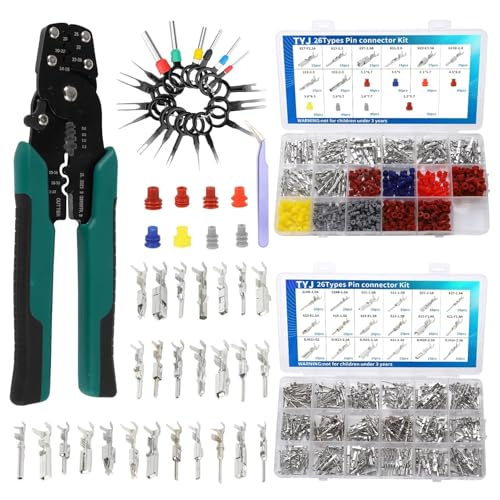
The TYJ 812-piece kit is built for the technician who needs access to eight different pin diameters—from 1.0mm up to 3.5mm—covering the non-insulated terminal sizes found in Japanese and European automotive connectors. The 450 terminal pins are tin-plated copper with a polished finish that maintains low contact resistance, while the 360 waterproof wire seals allow you to add moisture protection to any pin configuration.
What makes this kit stand out is the inclusion of 18 needle extractors designed to remove terminals from locked housings without damaging the retention barbs. This is a critical tool for anyone doing connector repair rather than full replacement; you can depin a damaged terminal from an existing ECU connector and swap in a fresh pin without cutting and splicing. The pins support both crimp and solder attachment methods, giving flexibility for different wire strand counts.
The storage case keeps each pin diameter in separate labeled compartments, which saves significant time when you’re working on a complex harness with multiple sensor connector types. The only real drawback is the absence of connector housings—this is purely a terminal and seal kit, so you’ll need to source the plastic bodies separately for your specific vehicle connector family (Sumitomo, Yazaki, Bosch, etc.).
What works
- Eight terminal diameters cover most OEM connector pin sizes.
- Includes 18 needle extractors for safe terminal removal.
- Tin-plated copper pins with polished contact surface reduce resistance.
What doesn’t
- No plastic connector housings included—terminals only.
- Seals are generic O-rings, not form-fit for specific housing brands.
4. Kikerike 376Pcs 25 Kits Weather Pack Connectors

Kikerike’s 376-piece kit delivers 25 individual weather-pack connector sets in 1/2/3/4/6-pin configurations, making it a solid entry point for general automotive repairs on motorcycles, trucks, and boats. The housings are molded from PA66 nylon, a material known for high toughness and resistance to under-hood chemicals, while the terminals are H62 brass—a zinc-copper alloy that provides better wear resistance in high-cycle mating applications.
The operating temperature range of -40°C to +125°C covers the full spectrum of engine bay conditions, and the silicone rubber plugs inside each connector body create a dustproof and waterproof seal when mated. The kit includes 160 rubber cable seals that compress around the wire insulation during assembly, preventing moisture migration along the wire path. Current handling is rated from 1.5A on the smallest terminals up to 9.5A on the larger pins, sufficient for lighting circuits, relays, and sensor feeds.
Assembly produces a clear audible click when the terminal fully seats into the housing, which is a helpful confirmation for beginners who aren’t yet confident in tactile feedback. The primary compromise is the H62 brass contact material: while mechanically tough, it is more prone to surface oxidation than tin-plated copper, so vehicles in high-humidity regions may see faster contact resistance creep over years of service.
What works
- PA66 housings resist chemical attack from fuels and solvents.
- Audible click confirms terminal seat in housing.
- Wide temperature range covers engine bay and chassis locations.
What doesn’t
- H62 brass terminals oxidize faster than tin-plated copper in humid climates.
- No crimping tool included in the kit.
5. haisstronica 330PCS Heat Shrink Fork Connectors
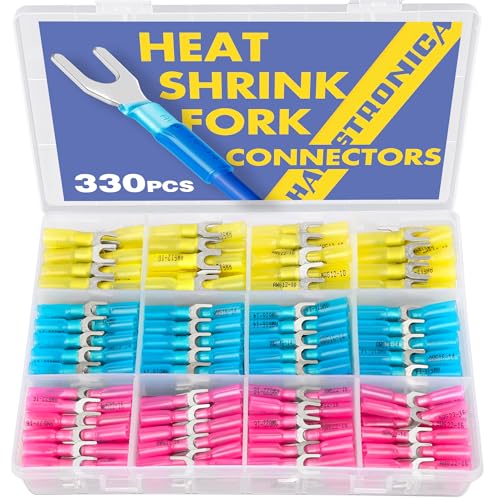
This haisstronica set focuses on a single terminal type—fork/spade connectors sized for #10 studs—across three wire gauge ranges (22-18, 16-14, and 12-10 AWG) identified by red, blue, and yellow insulation colors. The terminals are pure copper with a tin-plated coating, and each includes a heat-shrink sleeve with a 3:1 shrink ratio that encapsulates the barrel and a portion of the wire insulation after heating, providing a stress relief point that resists vibration fatigue.
Fork connectors are the correct choice for applications where the terminal needs to be removed without fully disconnecting the stud—common on battery terminals, starter solenoids, and ground distribution posts. The U-shaped fork allows you to loosen the nut and slide the terminal off without removing the nut entirely, which is a significant time saver in tight engine bay spaces. The polyolefin heat shrink has an internal adhesive that flows during heating, sealing the wire entry point against moisture and salt.
With 110 pieces per gauge range, this kit offers enough terminals for an entire vehicle rewire plus spares for future projects. The limitation is the fixed #10 stud size—if your vehicle uses #8 or 1/4-inch studs for power distribution, you’ll need a separate kit for those larger terminals. Additionally, the fork shape provides less mechanical retention than a closed-ring terminal in high-vibration environments, so secure tightening of the nut is essential.
What works
- Pure copper with tin plating offers excellent conductivity and corrosion resistance.
- Color-coded insulation eliminates gauge measurement guesswork.
- Heat shrink with adhesive seals the wire entry point against moisture.
What doesn’t
- Limited to #10 stud size only—doesn’t cover larger power terminals.
- Fork style is less secure than ring terminals in high-vibration mounting points.
Hardware & Specs Guide
Terminal Material: H62 Brass vs. Tin-Plated Copper
H62 brass (62% copper, 38% zinc) offers better tensile strength and wear resistance for connectors that will be mated and unmated repeatedly, but it develops a surface oxide layer faster than pure copper in the presence of humidity and road salt. Tin-plated copper provides lower initial contact resistance and better long-term corrosion protection, but the thin tin coating can wear off after multiple insertion cycles, exposing the underlying copper to galvanic attack.
Wire Gauge and Current Capacity
Automotive electrical connectors are typically rated for a specific AWG range, and using a wire size outside that range compromises terminal retention and current handling. A 22 AWG wire is sufficient for a 1.5A sensor circuit, while a 14 AWG wire is needed for a 9.5A lighting or relay circuit. Exceeding the maximum current rating causes the terminal barrel to heat up, annealing the metal and reducing spring tension on the wire strands.
Temperature Rating: Understanding the -40°C to +125°C Range
The -40°C lower limit covers arctic starting conditions where the connector housing must remain flexible rather than brittle. The +125°C upper limit reflects the maximum continuous temperature near an engine block or exhaust manifold. Connectors rated only to +85°C will degrade quickly if mounted near a turbocharger heat shield or in a transmission tunnel next to an exhaust pipe.
Waterproofing Mechanisms: Silicone Seals vs. Heat Shrink
Multi-pin weather-pack connectors rely on silicone rubber grommets inside the housing that compress around each wire, plus a perimeter seal between the male and female halves. Heat-shrink terminations, on the other hand, use a polyolefin tube with a hot-melt adhesive liner that bonds to the wire insulation. Silicone seals are serviceable—you can repin without destroying the seal—while heat shrink is a permanent one-time installation.
FAQ
What does the pin count on a connector kit mean for my vehicle?
Can I use 22-14 AWG connectors on thicker battery cables?
Are waterproof connectors necessary for interior dashboard repairs?
How do I remove a stuck terminal from a connector housing?
What is the difference between male and female pin terminals in a kit?
Final Thoughts: The Verdict
For most buyers, the automotive electrical connectors winner is the Twippo 800Pcs 50 Sets because it bundles 50 connector sets across 1-through-6-pin configurations with a dedicated ratcheting crimper, giving you everything needed to tackle a full harness build in one purchase. If you want the precision of adjustable crimp height for heat-shrink butt splices, grab the haisstronica HS-8327 kit. And for pin-level repair where you need eight terminal diameters and a set of extractors to depin OEM connectors without cutting, nothing beats the TYJ 812Pcs Pin Connector Kit.

Certification: BSc in Mechanical Engineering
Education: Mechanical engineer
Lives In: 539 W Commerce St, Dallas, TX 75208, USA
Md Amir is an auto mechanic student and writer with over half a decade of experience in the automotive field. He has worked with top automotive brands such as Lexus, Quantum, and also owns two automotive blogs autocarneed.com and taxiwiz.com.