That rhythmic ticking or tapping from under the hood is your engine’s hydraulic lifters crying out for help. Left untreated, that annoying noise can lead to accelerated camshaft wear, reduced oil flow, and costly internal repairs. The right oil additive can restore hydraulic pressure, clean out varnish deposits, and bring back that smooth, quiet idle your engine was designed for.
I’m Amir — the founder and writer behind Four Wheel Ask. I’ve spent years researching oil additive chemistries, analyzing viscosity modifiers and detergent packages, and cross-referencing thousands of owner reports to separate the products that genuinely quiet noisy lifters from those that simply market the claim.
This guide breaks down the best formulas based on real-world thickening power, deposit-cleaning ability, and compatibility with modern engines to help you find the right additive for lifter noise.
How To Choose The Best Additive For Lifter Noise
Not all oil additives attack lifter noise the same way. Some thicken the oil to fill worn clearances, while others use detergents to dissolve the sludge blocking the lifter’s internal oil passage. Before you pour anything into your crankcase, match the additive’s chemistry to your engine’s underlying condition.
Viscosity Thickening vs. Detergent Cleaning
If your lifters tick because the oil thins out at operating temperature, you need a formula that raises the hot viscosity — think heavy-bodied additives that use high-molecular-weight polymers. If the ticking stems from gunk preventing the lifter from pumping up, you need a solvent or ester-based detergent that dissolves carbon and varnish. Many premium additives combine both strategies in a single bottle.
Compatibility With Your Oil Weight
An additive that thickens a 5W-20 to a 10W-40 range can quiet worn lifters but may also increase parasitic drag and reduce fuel economy. Check your owner’s manual for the acceptable viscosity range and choose an additive that boosts viscosity without exceeding the maximum safe grade. For modern variable-valve-timing engines, stick with additives that list VVT compatibility explicitly.
Catalytic Converter Safety
Some heavy petroleum-based thickeners contain high levels of phosphorus and zinc (ZDDP) that can poison a catalytic converter over time. If your vehicle is a 1996 or newer OBD-II model, look for additives that are catalytic-converter-safe or low in ash content to avoid damaging the emissions system while you quiet the lifters.
Quick Comparison
On smaller screens, swipe sideways to see the full table.
| Model | Category | Best For | Key Spec | Amazon |
|---|---|---|---|---|
| Liqui Moly Hydraulic Lifter Additive | Premium Cleaner | Direct lifter cleaning & quieting | 300 ml bottle | Amazon |
| Bg MOA Engine Oil Supplement | Mid-Range Stabilizer | Extended oil life & ticking reduction | 11 fl oz can | Amazon |
| Dura Lube Engine Treatment | Mid-Range Thickener | Friction reduction & cold start protection | 32 fl oz bottle | Amazon |
| Bardahl NoSmoke + StopLeak | Budget Thickener | Oil burning reduction & noise dampening | 16 fl oz bottle | Amazon |
| STP Ceramic Oil Treatment | Budget Coating | Long-lasting ceramic film protection | 15 fl oz bottle | Amazon |
In‑Depth Reviews
1. Liqui Moly 20004 Hydraulic Lifter Additive

Liqui Moly’s Hydraulic Lifter Additive is the most targeted solution on this list. Rather than simply thickening the entire oil volume, it uses a high-detergent ester-based chemistry that specifically cleans the valve bores and the lifter’s internal oil passage. That direct cleaning action restores the lifter’s ability to pump up, eliminating the clatter at its source rather than just masking it with a thicker oil film.
The 300 ml size is designed to be added to the existing oil at every change interval, and it remains effective for the full drain cycle. The flash point of 60°C is notably low, which means the solvent base is volatile enough to dissolve baked-on varnish without leaving a heavy residue behind. This makes it particularly effective on engines that have been running conventional oil for years with irregular changes.
Liqui Moly explicitly states compatibility with turbochargers and catalytic converters, so owners of modern forced-induction engines can use it without worrying about oxygen sensor or cat damage. For anyone whose lifter noise is caused by internal deposits rather than mechanical wear, this additive delivers the fastest and most noticeable silencing effect.
What works
- Directly cleans lifter oil passages instead of just thickening oil
- Safe for turbochargers and catalytic converters
- Noticeable reduction in ticking after a short drive
What doesn’t
- Small 300 ml bottle may require multiple treatments for severe sludge
- Less effective if lifters are worn from mechanical damage
2. Bg MOA Engine Oil Supplement

Bg MOA is a staple among professional mechanics who deal with high-mileage engines daily. This 11-ounce supplement works by stabilizing the oil’s viscosity across a wider temperature range, preventing it from thinning out when the engine reaches full operating temperature. When oil thins, lifters lose hydraulic pressure and start ticking — MOA counters that by maintaining film strength even in older engines with looser tolerances.
Owner reports consistently mention that Bg MOA reduces oil consumption significantly, which is a strong indicator that it’s restoring seal integrity in the valve guides and piston rings. The 5W-30 viscosity grade listed on the spec sheet tells you it’s designed to work with the most common modern oil weight, and it can safely extend oil change intervals without compromising lubrication.
Where this supplement stands out is in preventing lifter noise from returning between changes. Many additives provide a temporary fix that fades after a few hundred miles, but Bg MOA’s chemistry remains active for the full interval. For anyone who wants a set-it-and-forget-it solution that addresses lifter noise as part of broader engine health, this is the pick.
What works
- Stabilizes hot oil viscosity to maintain lifter pressure
- Reduces oil consumption and top-end wear
- Long-lasting effect for the entire drain interval
What doesn’t
- Smaller bottle size requires careful pour
- Not a dedicated cleaner for heavy deposit buildup
3. Dura Lube Engine Treatment
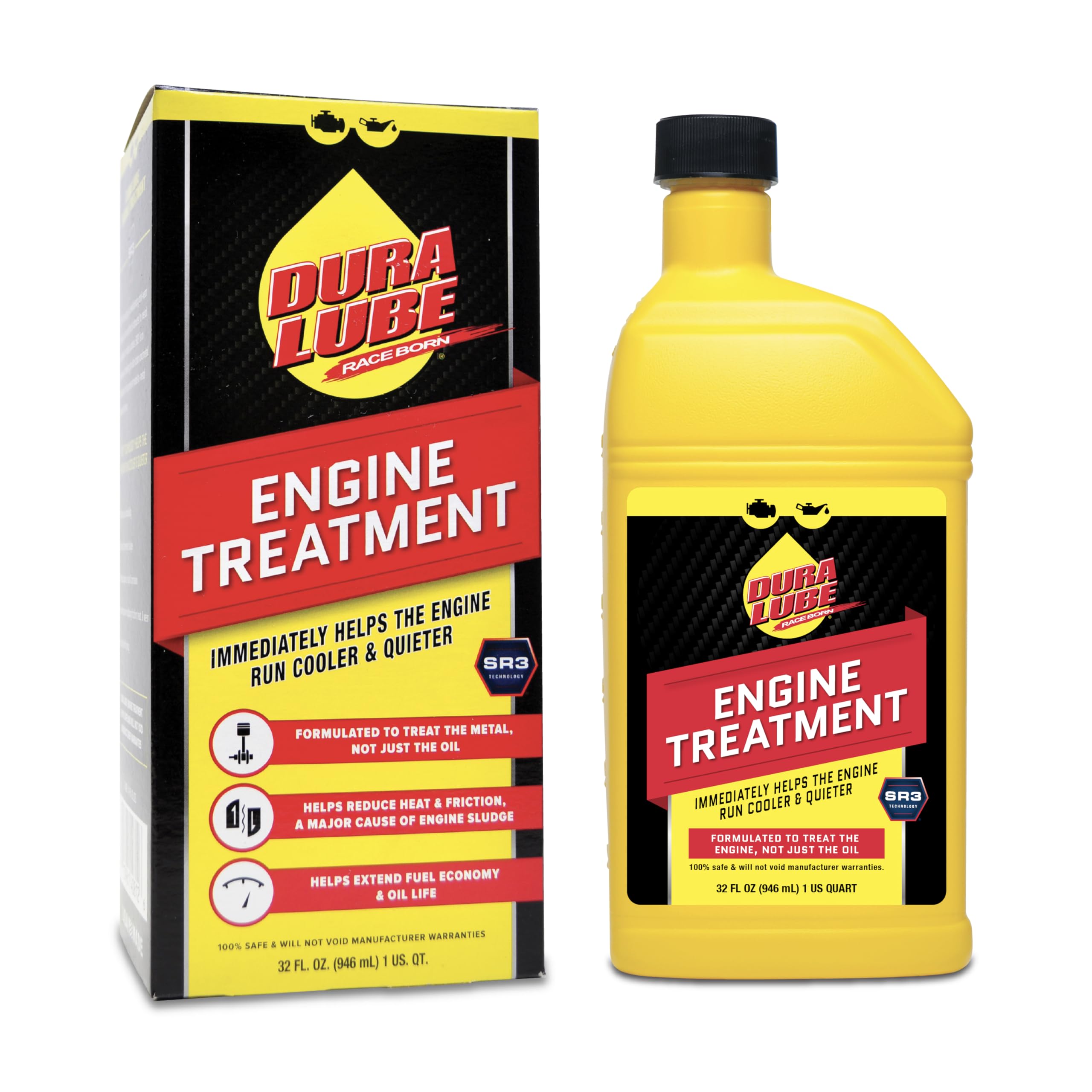
Dura Lube delivers the largest volume per bottle in this lineup at 32 fluid ounces, making it the most economical option for drivers who want to treat larger sump capacities or run the additive for multiple consecutive drain intervals. The formulation relies on a high-flash-point mineral oil base (495°F) that significantly thickens the oil film, filling the microscopic gaps between worn lifter plungers and their bores.
The primary mechanism here is friction reduction through a heavy-bodied barrier film. By increasing the oil’s overall viscosity, Dura Lube reduces the metallic contact that creates the ticking sound. It also explicitly advertises cold-start protection, which is critical because lifter noise is often loudest in the first few seconds after ignition when oil hasn’t fully circulated to the top end.
Compatibility spans both gasoline and diesel engines, and the formula works with conventional, synthetic, and blended oils. The trade-off is that a thickener-based approach is less effective at cleaning internal deposits than a detergent-based additive. For engines where the noise comes from wear rather than sludge, Dura Lube provides a substantial and cost-effective improvement in noise suppression.
What works
- Large 32 oz bottle provides multiple treatments per purchase
- Thickens oil film effectively for worn lifter clearances
- Excellent cold-start protection for noisy mornings
What doesn’t
- Does not dissolve existing varnish or sludge deposits
- May be too thick for engines requiring 0W-20 oil
4. Bardahl NoSmoke + StopLeak

Bardahl NoSmoke + StopLeak takes a dual approach: it uses a thick, honey-like base to “fill in” loose engine tolerances while also containing seal-conditioning agents that re-swell dried-out valve stem seals. This makes it an ideal choice for engines that not only have noisy lifters but also burn visible oil — the two problems often share the same root cause of worn clearances and hardened seals.
Multiple owner reports describe the additive as “ridiculously thick,” and that viscosity is exactly what quiets lifters in engines with scored cylinder walls or worn cam lobes. One user noted a 50% reduction in oil consumption on a 2005 SLK350 that was burning a quart every 200 miles. That kind of thickening power directly translates to reduced lifter clatter because the thicker oil maintains higher pressure inside the lifter body.
The 16-ounce bottle treats a standard 4- to 5-quart sump, and Bardahl recommends using it at every oil change for engines with known consumption issues. The trade-off is that the thick formula can initially feel alarming when pouring, and it may not fully dissolve existing sludge. It’s best suited for older engines with high mileage where restoration of seal integrity is the priority over deposit cleaning.
What works
- Extremely thick formula fills worn lifter and ring clearances
- Reduces both oil burning and exhaust smoke
- Reconditions dried-out valve stem seals
What doesn’t
- Not a deposit cleaner — sludge may remain
- Very high viscosity may not suit modern low-weight oil engines
5. STP Ceramic Oil Treatment
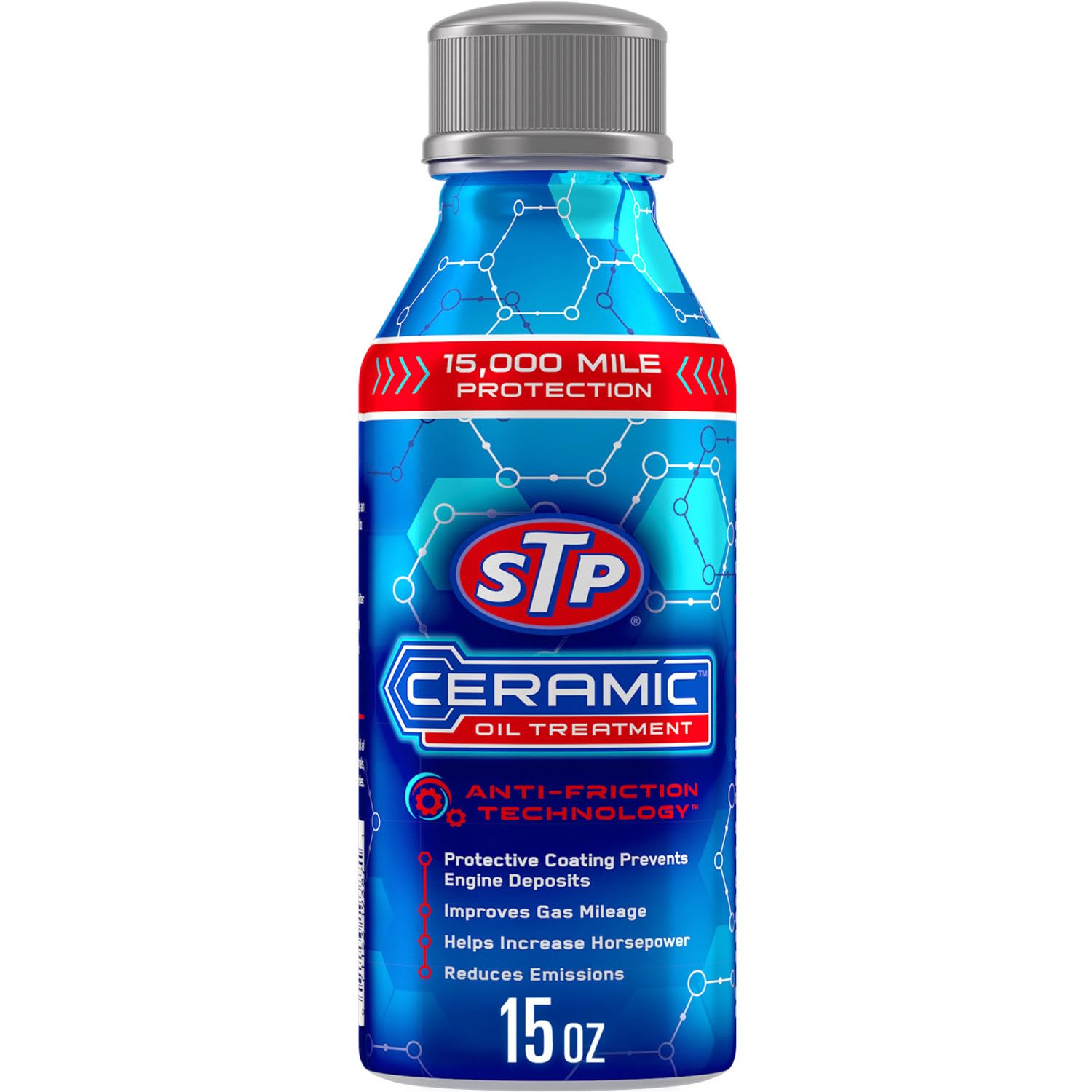
STP’s Ceramic Oil Treatment is unique in this group because it uses ceramic micro-particles to create a permanent protective coating on metal surfaces. Unlike conventional thickeners that wash out with the next oil change, the ceramic film remains bonded to the lifters and cam lobes for up to 15,000 miles, providing continuous noise damping even as the oil itself ages and loses viscosity.
The anti-friction technology is designed to improve lubrication between high-pressure metal contacts, which is exactly what happens inside a hydraulic lifter during operation. By reducing that friction, the ceramic coating directly suppresses the tapping sound that occurs when metal-to-metal contact breaks through the oil film. STP also claims improvements in gas mileage and horsepower as a secondary benefit.
Compatibility extends to all gas and diesel engines, including ATVs, UTVs, motorcycles, and lawn equipment, giving it the widest vehicle application of any additive here. The primary limitation is that ceramic treatments work best on engines with relatively clean internals — if heavy sludge is blocking the lifter passage, the ceramic particles can’t reach the friction surface to provide benefit. For a well-maintained engine with initial stages of lifter noise, this is a forward-thinking preventive solution.
What works
- Ceramic coating lasts beyond the oil change interval
- Reduces friction at lifter contact points for quieter operation
- Broad compatibility with all engine types
What doesn’t
- Less effective when heavy sludge blocks lifter oil passages
- May not provide immediate noise reduction like thickeners do
Hardware & Specs Guide
Viscosity Index Improvers
Additives that raise the oil’s viscosity index use long-chain polymer molecules that expand as temperature rises, counteracting the natural thinning of the base oil. This maintains higher oil pressure in the lifter gallery at operating temperature, directly reducing the ticking caused by insufficient hydraulic pressure. Look for additives listing “viscosity stabilization” or “film strength enhancement” if your noise worsens after the engine warms up.
Detergent & Ester Base Stocks
Solvent-based additives use esters or synthetic detergents to dissolve the carbon, varnish, and sludge that accumulate inside the lifter’s plunger and check ball. When a lifter is “sticky” from deposits, it cannot pump up fully, causing a persistent tick at all temperatures. Ester-based formulas attack these deposits without the heavy viscosity increase of polymer-based thickeners, making them the cleaner route for engines with moderate sludge buildup.
FAQ
Can an additive fix a collapsed lifter or is it only for noisy lifters?
How long should I wait after adding the additive to hear the noise stop?
Will a lifter additive damage my variable valve timing system?
Final Thoughts: The Verdict
For most buyers, the best additive for lifter noise is the Liqui Moly Hydraulic Lifter Additive because it targets the root cause through dedicated deposit cleaning rather than simply masking the noise with thicker oil. If you want extended oil life and long-term ticking prevention, grab the Bg MOA Engine Oil Supplement. And for high-mileage engines that burn oil along with the noise, nothing beats the Dura Lube Engine Treatment for sheer value in restoring film strength and seal condition.

Certification: BSc in Mechanical Engineering
Education: Mechanical engineer
Lives In: 539 W Commerce St, Dallas, TX 75208, USA
Md Amir is an auto mechanic student and writer with over half a decade of experience in the automotive field. He has worked with top automotive brands such as Lexus, Quantum, and also owns two automotive blogs autocarneed.com and taxiwiz.com.