A leaking brake line union isn’t a minor inconvenience—it’s a direct threat to pedal feel, stopping distance, and safety. Whether you are patching a rusted line on an old truck or building a complete custom system, the threads and sealing face of the union determine whether you bleed the system once or chase drips for a week. The right brass or stainless steel inverted flare connector turns a nightmare splice into a permanent fix.
I’m Amir — the founder and writer behind Four Wheel Ask. I spend my time digging through material specs, thread compatibility data, and real-world owner feedback to find which unions actually hold pressure after installation.
After evaluating material composition, thread size variety, included fitting counts, and flaring tool compatibility, I’ve narrowed the market to the five kits that deliver reliable sealing. This guide breaks down the best brake line unions for repair, restoration, and performance builds.
How To Choose The Best Brake Line Unions
Brake line unions are the mechanical splice between two sections of tubing, and their job is simple: hold a zero-leak seal at pressures that can exceed 1,500 psi. Choosing the wrong union means a brake pedal that slowly sinks to the floor and a repair you get to do twice. Focus on the material, the thread pitch, and the packing count before you click buy.
Material: Brass vs Stainless Steel
Brass unions are the standard for most passenger vehicles. They resist corrosion well, are easy to torque without galling, and seal against a properly flared steel line without issues. Stainless steel unions are stronger, resist corrosion even better in salt-belt environments, and hold up on heavier trucks or performance builds, but they are harder to tighten without damaging the threads if over-torqued.
Thread Pitch and Tube Diameter
Nearly all aftermarket brake line unions are designed for 3/16″ tube diameter, but the thread pitch varies. The most common pitch is 3/8-24, which fits standard domestic and import brake line fittings. Some heavy-duty and older applications use 7/16-24 or even 1/2-20 pitches. A kit with multiple nut sizes ensures you aren’t stuck hunting for a single adapter at a local parts store on a Saturday.
Fitting Count and Kit Completeness
A union by itself is useless without the matching inverted flare nuts. The best kits include at least four unions and a range of nut sizes (3/8-24, 7/16-24, 1/2-20, 9/16-18) so you can handle a full brake line replacement on one axle without running out of parts. Kits that toss in a flaring tool or pre-flared tube sections add serious convenience for DIY installers.
Quick Comparison
On smaller screens, swipe sideways to see the full table.
| Model | Category | Best For | Key Spec | Amazon |
|---|---|---|---|---|
| TUBPRO 3/16″ Kit | Kit | Full system replacement | 25 ft tubing + 4 unions + 16 nuts | Amazon |
| The Stop Shop Brass Union 5-Pack | Unions Only | Quick splice repair | 5 pcs, 3/8-24 threads, brass | Amazon |
| MuHize 20 ft Kit | Kit | DIY with no flaring tool | 20 ft tubing + 4 pre-flared tubes + 4 unions | Amazon |
| The Stop Shop Stainless Fitting Kit | Fittings | Corrosion-proof builds | 19 pcs stainless, 4 thread sizes | Amazon |
| Racewill 25 ft Kit + Flaring Tool | Kit + Tool | Complete DIY starter bundle | 25 ft tubing + flaring tool + 4 unions | Amazon |
In‑Depth Reviews
1. The Stop Shop Stainless Brake Line Fitting Kit

The Stop Shop delivers the most corrosion-resistant fitting kit on the list. Every union and nut in this set is stainless steel, which means zero surface rust forming inside the engine bay or under the chassis over the long haul. The kit includes twelve 3/8-24 nuts, three 7/16-24 nuts, two 1/2-20 nuts, and two 9/16-18 nuts, covering the overwhelming majority of SAE brake line sizes.
Stainless steel is a step up in hardness from brass, so you need to be careful when torquing the unions to avoid stripping. The inverted flare seat is machined cleanly, and the sealing face mates well with double-flared 3/16″ tubing. If you are building a brake system from scratch on a project car, the inclusion of four distinct nut sizes means you won’t need to buy separate union bags for front and rear lines.
This kit does not include tubing, so you will need to source brake line separately. For brake line unions and nuts this comprehensive, especially in stainless, the count of 19 pieces makes it a premium option that pays for itself in saved trips to the auto parts counter.
What works
- Full stainless construction fights rust in salt-belt regions effectively
- Four thread sizes included covers nearly all 3/16″ SAE applications
What doesn’t
- No tubing or flaring tool included in the kit
- Stainless nuts require careful torque to avoid thread galling
2. TUBPRO 3/16″ x 25 ft Brake Line Kit
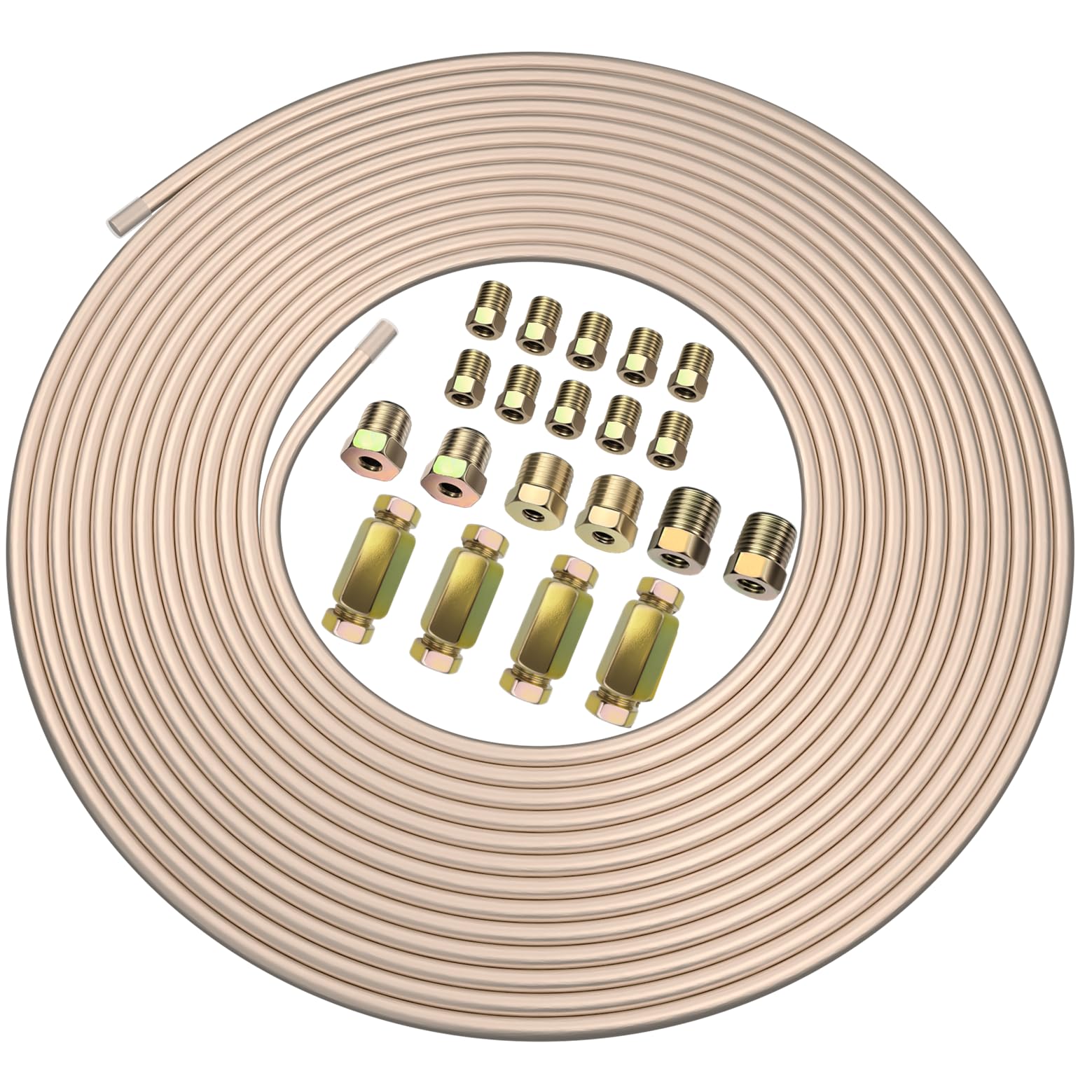
TUBPRO’s kit pairs 25 feet of copper-coated alloy steel tubing with four brass unions and a total of 16 inverted flare nuts in four thread sizes. The 25-foot length is sufficient to replace a full brake line from the master cylinder to the rear axle on most compact trucks and sedans, with spare material for mistakes.
The brass unions in this kit are all 3/8-24 thread, which is the most common standard for domestic and Asian brake systems. The alloy steel tubing bends easily by hand without kinking, and the copper coating adds a layer of corrosion protection that plain steel lines lack. The included nut assortment (3/8-24, 7/16-24, 1/2-20, 9/16-18) matches the Stop Shop stainless kit in thread variety.
The tubing is copper-coated rather than fully stainless, so if you live in a high-salt environment you may see surface rust develop at abrasion points over several years. For a standard daily driver or weekend repair, this kit delivers the tubing length, union count, and nut variety that most DIYers need at a mid-range price point.
What works
- Four thread sizes for nuts cover multiple brake line applications
- Copper-coated steel tube resists corrosion and bends cleanly by hand
What doesn’t
- Unions are only available in 3/8-24 thread
- Copper coating can wear through at tight bends in corrosive climates
3. Racewill 25 ft Kit with Flaring Tool

Racewill packs this kit with 25 feet of copper-coated steel line, a double/single flaring tool, a tube cutter, and four 3/8-24 brass unions plus 16 nuts across four thread sizes. The flaring tool alone makes this kit a standout for a first-time brake line installer who doesn’t already own the specialty tools to form inverted double flares.
The copper-coated steel tubing bends by hand without kinking, and the brass unions seal consistently when properly torqued against a double-flared line. The included 3/8-24 unions match the standard 3/16″ tubing fitting, and the nut kit covers 3/8-24, 7/16-24, 1/2-20, and 9/16-18 pitches. The tube cutter works well for clean cuts that minimize burrs before flaring.
The flaring tool included is a basic clamp-style unit that works for occasional use, but it won’t hold up to the abuse of a professional shop making dozens of flares daily. If you plan to do multiple brake jobs, consider upgrading to a separate premium flaring tool. For a one-time full system replacement, this kit has everything you need in one box.
What works
- Complete bundle includes flaring tool, cutter, tubing, unions, and nuts
- Brass unions seal reliably with standard double flares
What doesn’t
- Included flaring tool is basic and best for occasional use only
- No pre-flared spare sections for quick splicing
4. The Stop Shop Brass Inverted Flare Union 5-Pack
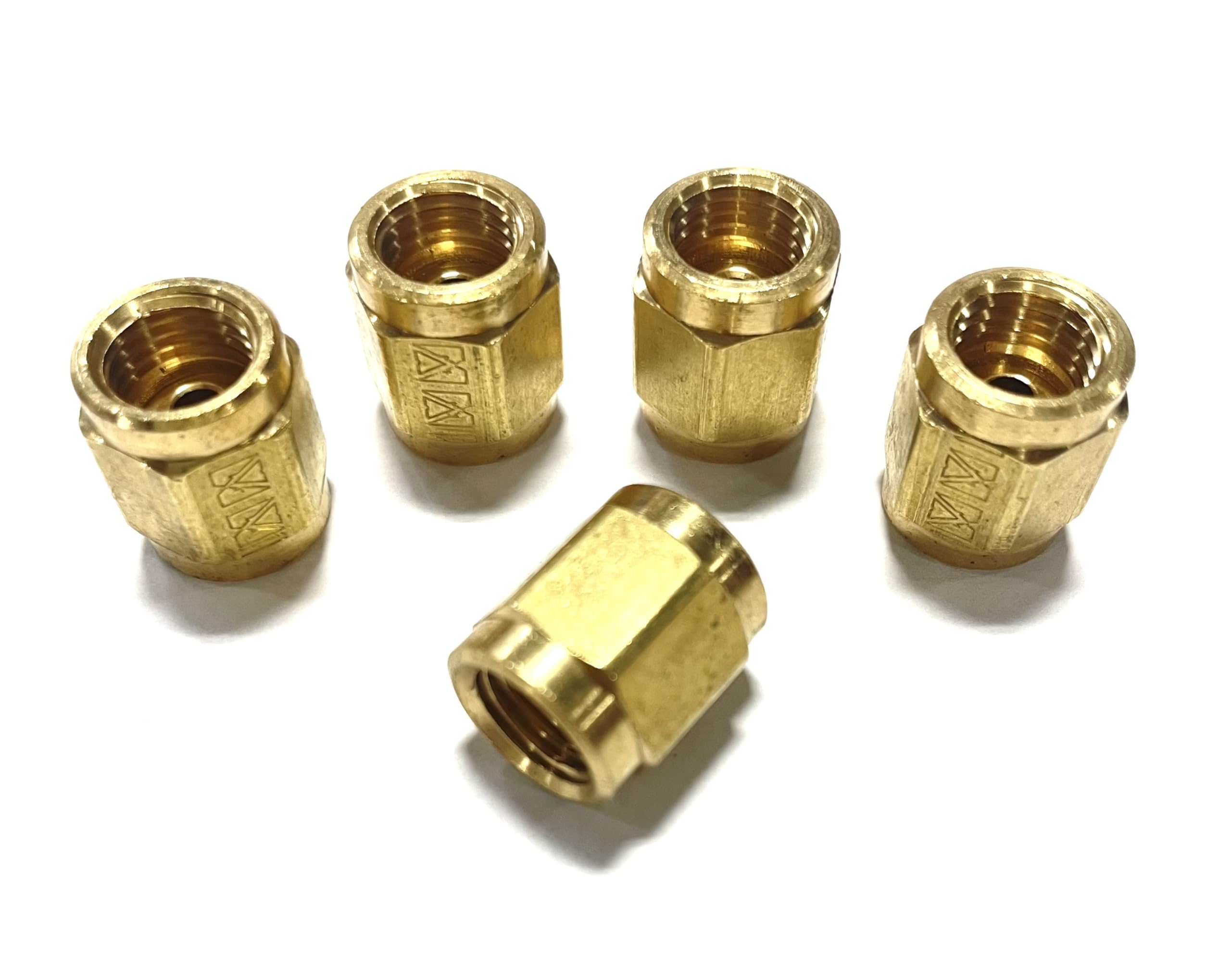
When you have a single rusted-out section of brake line and just need a quick splice, this five-pack of brass 3/8-24 inverted flare unions from The Stop Shop is the simplest option. Each union is machined from solid brass with a smooth sealing face, and the threads are cut cleanly to avoid cross-threading during installation in tight spaces under the car.
These unions are designed for 3/16″ tube with 3/8-24 threads, which is the standard for most cars and light trucks. Brass offers excellent corrosion resistance and is forgiving during torque application, so you can tighten the union without worrying about the threads stripping as easily as steel. The pack of five gives you spare unions for future repairs or for a two-axle splice job.
The major limitation is that this pack does not include any inverted flare nuts or tubing. You will need to buy nuts separately if your project doesn’t already have the hardware. For a targeted splice repair where you already have the nuts and line, this is an efficient, low-waste solution.
What works
- Solid brass construction provides excellent corrosion resistance
- Five unions give backup spares for multiple repairs
What doesn’t
- Unions only—no nuts or tubing included
- Single thread size (3/8-24) limits use on non-standard applications
5. MuHize 20 ft Brake Line Repair Kit
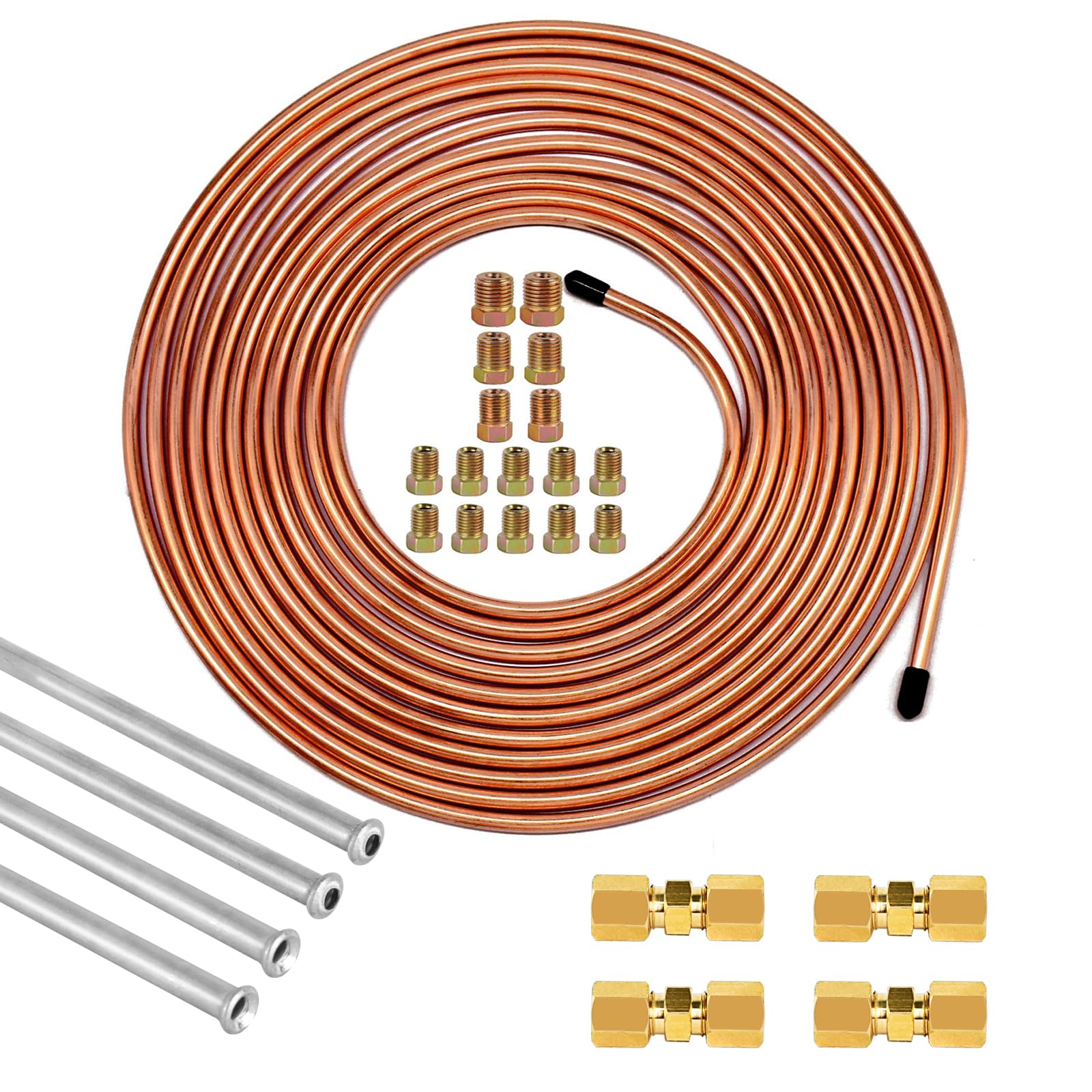
MuHize differentiates this kit by including four pre-flared tube sections and four brass compression unions alongside the 20 feet of copper-coated steel line. The compression unions use two small brass rings to grip unflared tube ends, allowing a DIY repair without needing a flaring tool or tube bender at all.
The 20-foot length is enough for most single-brake-line repairs but may fall short for full-length replacements on long-wheelbase trucks. The compression union design is convenient, but it is not as robust as an inverted flare union under extreme hydraulic pressure cycles. For a temporary repair or a low-stress brake system, the compression method works, but for a permanent fix, an inverted flare union is the better standard.
The pre-flared tubes are a nice touch because they let you install a new line section immediately by simply bending the tube and tightening the included nuts. If you are stuck without flaring tools and need the car back on the road today, this kit minimizes downtime.
What works
- Pre-flared tubes eliminate the need for a flaring tool
- Compression unions allow splicing unflared tubing quickly
What doesn’t
- Compression unions are less durable than inverted flare unions
- 20-foot tubing length may not cover full line runs on larger vehicles
Hardware & Specs Guide
Inverted Flare vs Compression Unions
An inverted flare union relies on a 45-degree machined seat that mates with the flared end of the brake tube. The thread draws the flare tight against the seat, creating a metal-on-metal seal that holds hydraulic pressure without gaskets. Compression unions use brass ferrules that deform around plain tube ends. While faster to install, compression unions introduce a failure point that can weep under continuous high pressure, especially in fluctuating temperatures.
Thread Pitch Identification
All 3/16″ brake line unions share the same tube diameter, but the thread pitch determines compatibility with your vehicle’s existing nuts. A 3/8-24 thread (fine) is standard for most passenger cars. A 7/16-24 pitch appears on some Fords and heavy-duty trucks. A 1/2-20 or 9/16-18 pitch is less common and typically found on larger commercial brake systems. Inspect your existing nut with a thread pitch gauge before ordering, or buy a multi-size kit that covers all four.
FAQ
Can I use a compression union as a permanent brake line repair?
What thread count do most 3/16 inch brake line unions use?
Are brass unions better than steel unions for brake lines?
Final Thoughts: The Verdict
For most buyers, the best brake line unions winner is the The Stop Shop Stainless Fitting Kit because its all-stainless construction delivers maximum corrosion resistance and the 19-piece assortment covers the four most common SAE thread sizes in one package. If you want a full tubing bundle ready for a complete brake system refresh, grab the TUBPRO 25 ft Kit. And for a minimalist splice repair where you only need unions and already have nuts and line, nothing beats the simplicity of the The Stop Shop Brass 5-Pack.

Certification: BSc in Mechanical Engineering
Education: Mechanical engineer
Lives In: 539 W Commerce St, Dallas, TX 75208, USA
Md Amir is an auto mechanic student and writer with over half a decade of experience in the automotive field. He has worked with top automotive brands such as Lexus, Quantum, and also owns two automotive blogs autocarneed.com and taxiwiz.com.