Bridging pavement and trail is the hardest job a motorcycle tire can face. A tread that hooks in wet gravel feels vague on the interstate, while a street-biased compound washes out the moment the asphalt ends. The right set of dual sport tires makes that compromise invisible — you simply ride where you point the bike.
I’m Amir — the founder and writer behind Four Wheel Ask. I’ve spent years analyzing tread compound data, ply ratings, and owner feedback across hundreds of dual sport tire models to separate real-world durability from marketing claims.
Whether you ride a big adventure bike or a lightweight dual sport, finding the best dual sport motorcycle tires comes down to matching tread aggression and rubber compound to the ratio of pavement and dirt you actually cover.
How To Choose The Best Dual Sport Motorcycle Tires
Dual sport tires live between two worlds, and picking the wrong split can ruin a ride. The key decisions revolve around tread layout, construction type, and load capacity — all of which shift depending on whether you tackle muddy single-track or fire roads with long highway stints.
Match Tread Pattern to Your Dirt Ratio
If you ride mainly pavement with occasional gravel, a 70/30 road-biased tread with continuous center ribs offers stable braking and low noise. Riders who spend half their time on loose trails need a 50/50 or 60/40 knobby layout where taller lugs dig into soft terrain. Spacing between knobs matters — wider gaps clear mud better but vibrate more at highway speed.
Check Load Index and Ply Rating
Heavy adventure bikes like the KLR 650 or V-Strom 1000 require a higher load index to support the combined weight of bike, rider, and gear. A 6-ply or 10-ply casing resists pinch flats on sharp rocks but makes the tire stiffer to mount and adds rotational mass. Lighter dual sport machines can run a standard 4-ply carcass for a more compliant ride.
Bias-Ply vs. Radial Construction
Bias-ply tires are the standard for knobby dual sport tires — they flex predictably at low off-road pressures and are easier to repair in the field. Radial construction, common on sport-touring rubber like the Michelin Road 6, delivers better heat dissipation and tread wear on high-mileage pavement rides. Most pure dual sport tires remain bias-ply for a reason: sidewall compliance at low PSI off-road.
Quick Comparison
On smaller screens, swipe sideways to see the full table.
| Model | Category | Best For | Key Spec | Amazon |
|---|---|---|---|---|
| Dunlop D606 Rear | Knobby Rear | Aggressive off-road traction | 120/90-18, 1069 lb load capacity | Amazon |
| Tusk Dsport Adventure Set | Trail Set | Hard enduro and rocky terrain | 90/90-21 & 120/90-18, 10-ply | Amazon |
| Tusk Waypoint Adventure Set | Adventure Set | BDR routes and mixed terrain | 90/90-21 & 130/90-17, 6-ply | Amazon |
| Shinko 705 Front 110/80-19 | Road-Biased Front | Highway touring with light gravel | 110/80-19, radial construction | Amazon |
| Shinko 705 Series 130/80-17 | Road-Biased Rear | Commuting and back-road cornering | 130/80-17, 639 lb load capacity | Amazon |
| Dunlop D605 Rear | Value Rear | Fire roads and dual-sport commuting | 4.60×18, 600 lb load capacity | Amazon |
| Kenda K270 5.10R18 | Budget Trail | Muddy trails and TW200 builds | 5.10R18, 15.1 lb weight | Amazon |
| Michelin Road 6 Front 120/70ZR-17 | Sport Touring Front | Wet-weather sport touring | 120/70ZR-17, radial, silica compound | Amazon |
| Michelin Road 6 Rear 180/55ZR-17 | Sport Touring Rear | High-mileage sport touring | 180/55ZR-17, 2CT+ technology | Amazon |
In‑Depth Reviews
1. Dunlop D606 Rear Tire (120/90-18)

The D606 is the gold standard for riders who spend more time on trails than on pavement. Its massive 1069-pound load index supports heavy adventure bikes loaded with gear, while the tall, widely spaced knobs clear mud efficiently and bite into loose rock. The bias-ply carcass flexes predictably at lower PSI, letting the tread conform to uneven terrain without folding over.
Street manners are rougher than a 50/50 tire — expect noticeable vibration and hum above 55 mph — but the trade-off is confidence on steep climbs and wet roots. Owners running this tire on CRF300L and XT250 builds report significantly better traction than stock rubber in Northwest mud and loose gravel. The stiff sidewalls make spooning a challenge, but that rigidity also resists pinch flats when you hit a sharp rock at speed.
Wear is moderate for an aggressive knobby. Riders logging mixed miles see around 2,500–3,500 miles before the center knobs drop below effective height. If your ratio tilts heavily toward dirt, the D606’s grip advantage over less aggressive tires is immediately noticeable on the first loose corner.
What works
- Exceptional traction in mud, sand, and loose rock
- High load rating supports heavy adventure bikes
- Stiff sidewalls resist pinch flats
What doesn’t
- Noticeable highway vibration and noise
- Short tread life compared to road-biased tires
- Very stiff carcass makes installation difficult
2. Tusk Dsport Adventure Motorcycle Tire Set (90/90-21 & 120/90-18)

The Tusk Dsport set is built for riders who tackle Rocky Mountain enduro lines and still need to plate the bike for connecting trails. The 10-ply casing is the standout feature here — it shrugs off sharp rocks and lets you run lower pressures without risk of a pinch flat. The tall knobbies are spaced aggressively to shed mud, yet the compound holds up to long pavement transfers without chunking prematurely.
Owners of KLR650s and CRF300Ls report that this set outlasts gummy dirt tires by thousands of miles when run at 18 PSI rear. The front tire tracks predictably in loose over hard-pack and doesn’t wash out in sandy corners. Balancing can require extra weight — several reviews note heavy wheel weights needed to smooth out the front — but once balanced, the ride is stable up to highway speeds.
Installation is a workout due to the 10-ply sidewalls. A quality set of tire spoons and a bead buddy are strongly recommended. Once mounted, the set delivers a surprisingly quiet ride for such an aggressive tread pattern, making it one of the best values for hard off-road riding that still sees street miles.
What works
- 10-ply casing offers extreme puncture resistance
- Long tread life for an aggressive knobby
- Excellent traction in mud and rocky terrain
What doesn’t
- Stiff casing makes mounting difficult
- Some sets require heavy balancing weights
- Heavier than standard 4-ply dual sport tires
3. Tusk Waypoint Adventure Motorcycle Tire Set (90/90-21 & 130/90-17)

The Waypoint set targets the adventure rider who rides BDR routes and fire roads but still covers hundreds of highway miles between trailheads. The 6-ply construction provides a middle ground — more puncture resistance than a 4-ply without the brutal stiffness of a 10-ply. The tread pattern uses moderately spaced knobs that support predictable cornering on pavement while maintaining grip on loose gravel.
KLR650 owners in particular have praised this set for its on-road composure. The tread profile is designed for consistency, meaning the tire doesn’t feel vague when you transition from a dirt road to a paved corner. Off-road, the knobs bite well in dry conditions and hard-pack, though deep mud will overwhelm them faster than a D606 or Tusk Dsport.
Mounted on a 17-inch rear, the set offers a wider contact patch than the 18-inch Dsport, which improves straight-line stability on the highway. Owners note that the tires hold air well and balance with minimal weights. The value proposition is strong — the full set costs roughly half of what a single premium tire from some brands runs.
What works
- Predictable on-road handling for an adventure tire
- 6-ply rating provides good puncture protection
- Excellent value for a front and rear set
What doesn’t
- Limited grip in deep mud compared to pure knobbies
- Installation still requires effort despite 6-ply flexibility
- Rear tire is a 17-inch, not compatible with all dual sport bikes
4. Shinko Dual Sport 705 Series Front Tire (110/80-19TL)

The Shinko 705 front tire is the road-biased choice for adventure bikes that rarely leave pavement. Its radial construction and continuous center rib deliver stable braking and low noise at highway speeds, while the shoulder blocks provide enough bite for hard-packed gravel roads and dirt access paths. Owners of V-Strom 1000s have logged over 9,000 miles on a set, including cross-country trips through varied terrain.
Wet weather grip is a strong point — the rubber compound resists tearing during off-road use but still feels planted in rain on asphalt. The 4-ply rating keeps weight low, which helps maintain steering response on heavier bikes. At highway speeds, the tread runs smooth without the hum associated with more aggressive knobby fronts.
Where the 705 falls short is in mud or deep sand. The tread spacing is too tight to clear sticky soil, and the center rib reduces bite when the front tire needs to claw up a loose incline. For riders whose definition of off-road is well-maintained fire roads and a cutoff to a campsite, this front tire is a perfect long-haul partner.
What works
- Excellent pavement grip and wet weather adhesion
- Long tread life for a dual sport tire
- Low road noise and smooth highway ride
What doesn’t
- Limited traction in mud and deep sand
- Center rib reduces bite on loose climbs
- Not designed for aggressive enduro riding
5. Shinko Dual Sport 705 Series Front/Rear Tire (130/80-17TL)

The 130/80-17 Shinko 705 is the rear counterpart to the 110/80-19 front, completing a long-distance touring package for bikes like the KLR650 and Versys. The aggressive tread pattern is more street-oriented than its appearance suggests — the continuous center treads provide stable braking on pavement while the shoulder lugs allow controlled slides on gravel. Riders report 8,000 to 10,000 miles on a rear set, which is exceptional for any dual sport tire.
Load capacity hits 639 pounds, which is adequate for a midsize adventure bike with luggage. The bias-ply construction keeps the tire predictable when you drop pressure for light off-road sections. Owners who ride 70/30 pavement-to-dirt find this tire handles everything from rain-soaked highways to washboard gravel without surprising them.
Ride quality is slightly firmer than premium sport-touring rubber. Some riders note a mild vibration at certain speeds, which improves as the tire wears in. For the price point, the 705 delivers mileage and grip that rivals tires costing notably more, making it a smart choice for the budget-conscious dual sport tourer.
What works
- Exceptional tread life for a dual sport tire
- Versatile enough for pavement and light gravel
- Strong value for the mileage delivered
What doesn’t
- Firm ride quality at highway speeds
- Not suitable for deep mud or technical trails
- Some sets exhibit minor vibration until worn in
6. Dunlop Tires D605 Rear Dual Sport Tire (4.60×18)

The Dunlop D605 is a no-frills rear tire built for riders who want decent off-road traction without destroying their budget. Its full tread depth pattern is designed for rigorous off-road use, and the compound holds up well on fire roads and single-track. The 600-pound load capacity covers most dual sport bikes with some margin for gear, and the 4.60×18 size fits a wide range of rear rims from Honda XR650Ls to Suzuki DR-Z400s.
Owner feedback highlights strong sidewalls that resist flex during hard cornering. The tire runs quietly on pavement for a knobby, and owners logging 70/30 pavement-dirt splits report 3,500 miles before the center knobs wear down. On crushed gravel and shale rock, the D605 outperforms its price tier — several reviewers switched from Shinko 244s and Bridgestone Trail Wings and found the D605 hooked up better on loose surfaces.
The main compromise is mud performance. The tread spacing is tighter than purpose-built enduro tires, so sticky clay will pack the lugs quickly. For riders who stick to hard-pack, loose gravel, and street connecting trails, the D605 offers excellent value without the stiffness of a 6-ply tire.
What works
- Strong sidewalls for stable cornering
- Quiet on pavement for a knobby tire
- Good traction on gravel and hard-pack trails
What doesn’t
- Mud clogs the tighter tread spacing
- Not as long-lasting as premium multi-compound tires
- Limited load capacity for heavily loaded adventure bikes
7. Kenda K270 Dual Sport Trail Tire (5.10R18)
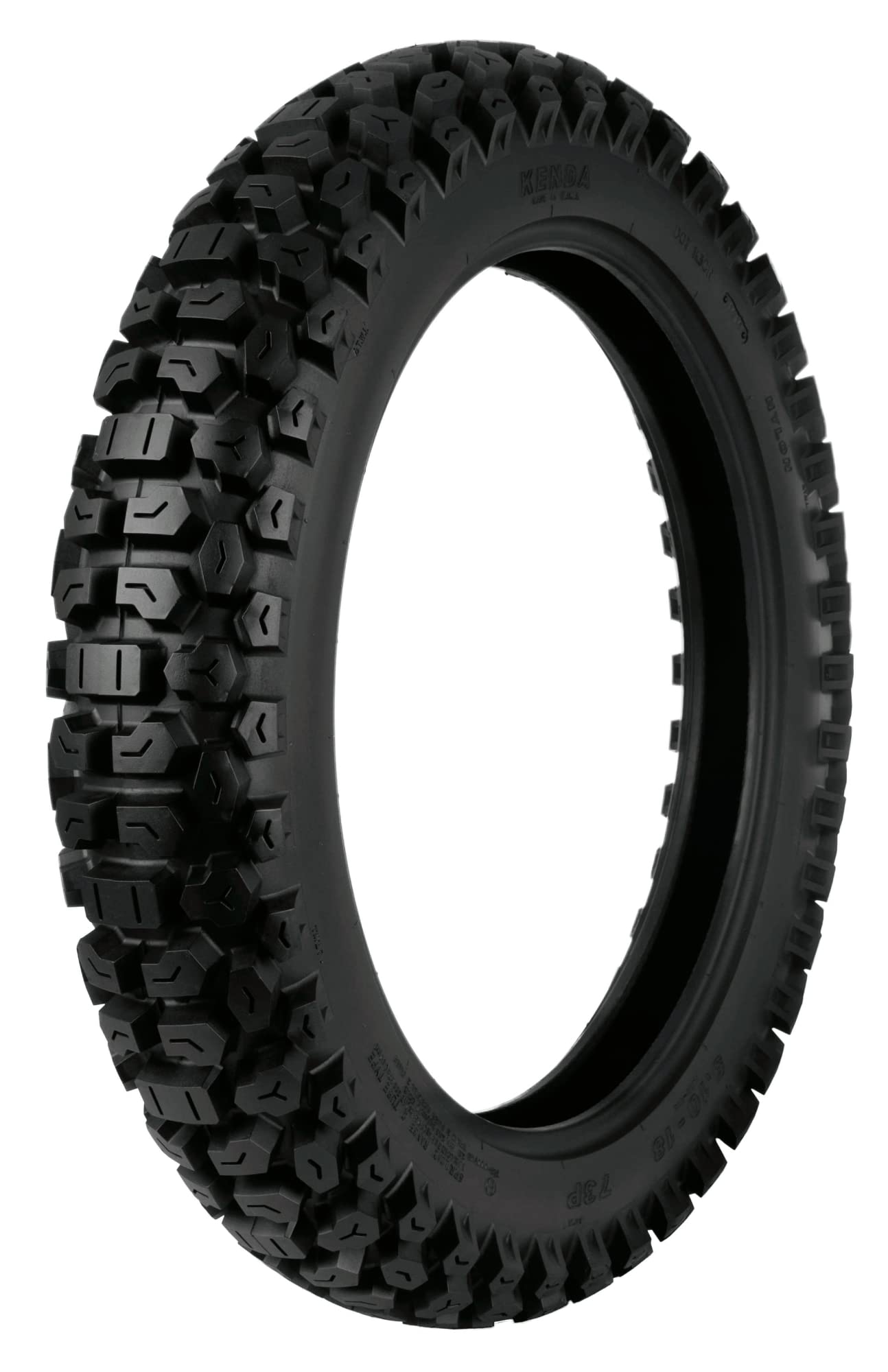
The Kenda K270 is a cult favorite among TW200 owners and budget-conscious dual sport riders who need a chunky tire that sheds mud well. The tread pattern features widely spaced lugs that clean out better than the Shinko 244, and the rubber compound balances off-road grip with respectable street wear. At 15.1 pounds, it’s a heavy tire for its size, but that weight translates to a durable carcass that lasts.
Riders report significantly better traction on crushed gravel and mud compared to Shinko 700s and Moto Z Mountains. The K270 works especially well on lighter bikes where the extra rotating mass isn’t a penalty. The tire tracks straight on pavement and delivers predictable slides when you pin the throttle on loose surfaces. Owners running it on a front rim note that the chunky tread provides confident steering in soft terrain.
High-speed highway riding reveals a noticeable hum and vibration, so this tire is best suited for riders who spend most of their time below 60 mph on secondary roads. For the price, the K270 is hard to beat for a dedicated trail-and-tarmac tire on smaller dual sport machines.
What works
- Wide knob spacing clears mud effectively
- Durable carcass lasts through rough terrain
- Excellent grip on gravel for a budget tire
What doesn’t
- Heavy construction adds rotational mass
- Noticeable highway vibration at speed
- Can require significant balancing weight
8. MICHELIN Road 6 Front Tire (120/70ZR-17)
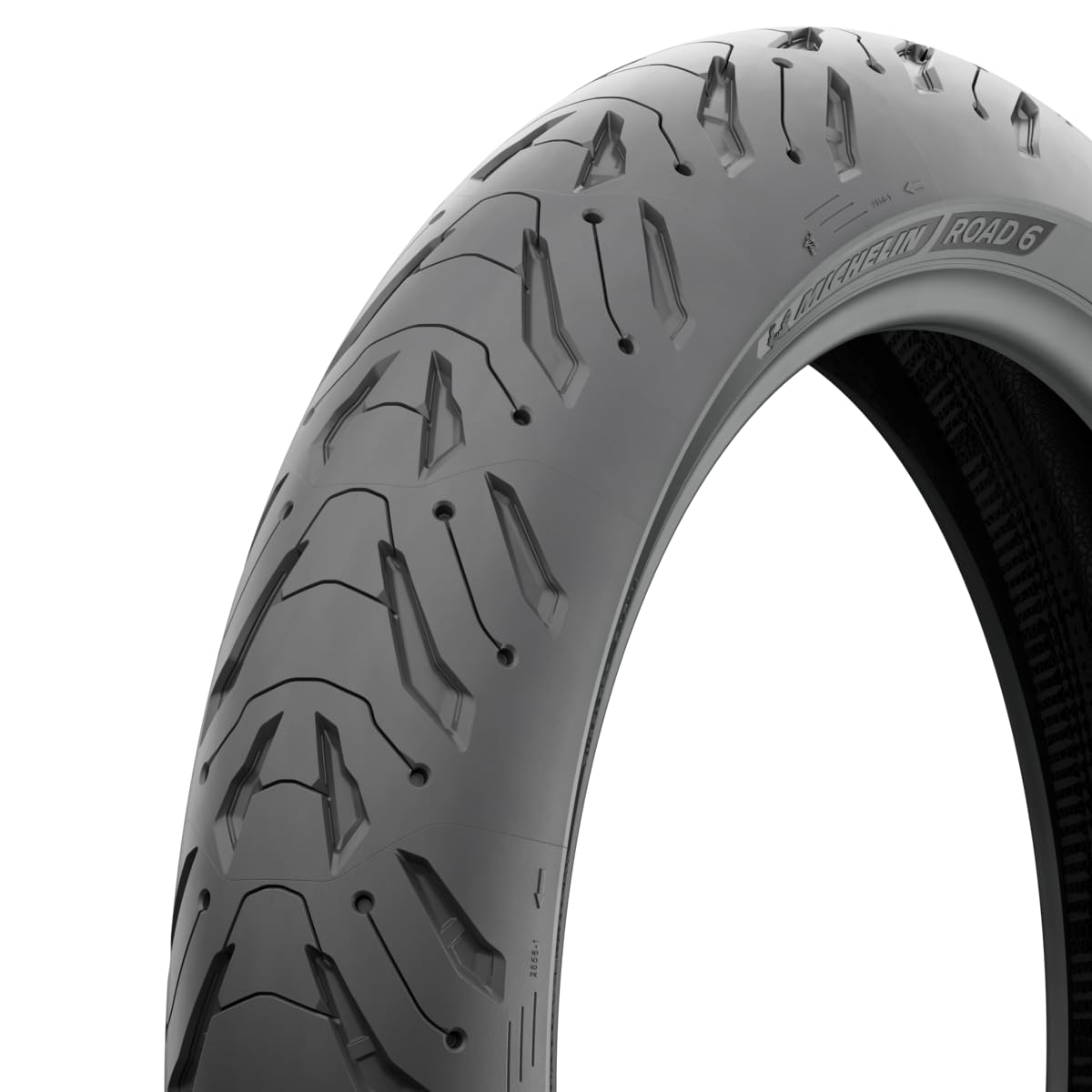
The Michelin Road 6 front tire is a premium sport-touring radial for riders who prioritize wet-weather confidence and long tread life. It uses 100% Michelin Silica Technology to improve grip on rain-soaked asphalt — a category-leading upgrade over its predecessor. The 120/70ZR-17 sizing fits a wide range of sport and naked bikes like the Ninja 650, CBR600RR, and NC750.
Owners report 4,000 miles with barely visible flattening, even in Phoenix heat where straight-line commuting typically squares off a tire quickly. The 2CT+ dual-compound construction gives a durable center strip for highway cruising while maintaining softer shoulder rubber for cornering lean. At track days, riders note that the tire supports aggressive lean angles with predictable edge grip.
The Road 6 is a pure street tire — it has no business on dirt, gravel, or any loose surface. For dual sport riders who have a second set of wheels for off-road weekends, this front tire is unmatched for the pavement portion. The trade-off is cost, but the extended mileage and safety margin in wet conditions justify the premium for high-mileage sport tourers.
What works
- Exceptional wet grip with silica compound
- Long tread life in high-mileage touring
- Dual-compound design resists center squaring
What doesn’t
- Not suitable for any off-road or gravel riding
- Premium price point for a front tire alone
- Stiff radial carcass on heavy bikes
9. MICHELIN Road 6 Rear Tire (180/55ZR-17)
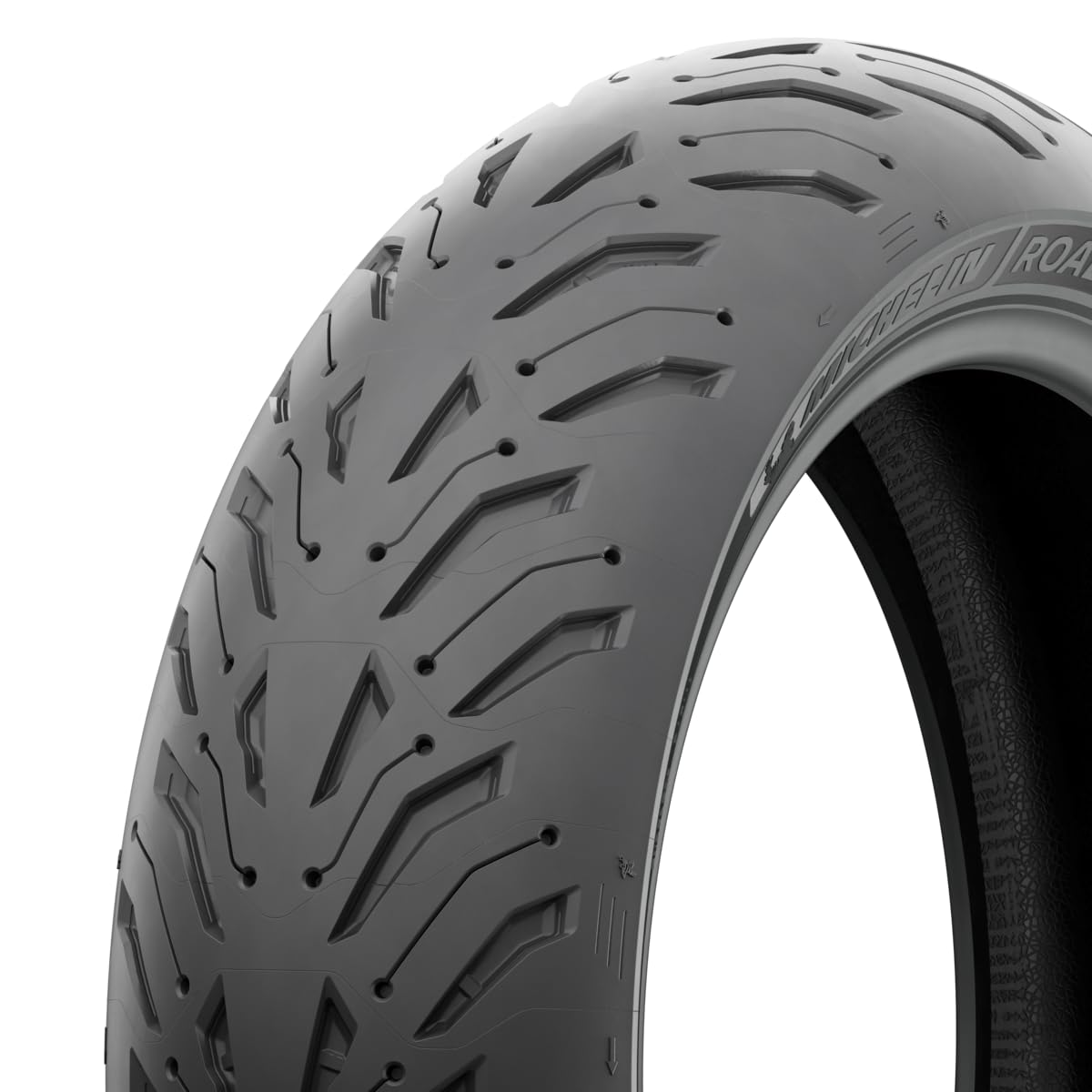
The Road 6 rear completes Michelin’s sport-touring package. The 180/55ZR-17 size fits supersport and sport-touring bikes, delivering a 10% longer tread life than the Road 5. The 2CT+ construction adds rigidity to the tire’s structure, improving stability under hard acceleration and heavy braking when loaded with saddlebags and a passenger.
Water Evergrip Technology compounds the silica tread, offering 15% more wet grip than the previous generation. Riders riding in rainy Pacific Northwest conditions report no loss of confidence in standing water, and the tire tracks through wet corners without the wandering feel typical of harder compounds. The carcass is designed for smooth high-speed stability, making it a natural fit for riders who log thousands of highway miles annually.
As with the front, this tire is strictly for pavement. It offers zero off-road capability and will lose grip instantly on gravel or dirt. For dual sport owners who maintain a separate set of wheels for street duty, the Road 6 rear is the benchmark for mileage, wet grip, and high-speed stability. The investment pays off in safety margins and reduced replacement frequency over multi-season travel.
What works
- 15% improved wet grip over Road 5
- Extended tread life for high-mileage riders
- Excellent high-speed stability under load
What doesn’t
- No off-road or gravel capability
- Premium pricing for a rear-only purchase
- Requires a compatible 17-inch rim
Hardware & Specs Guide
Tread Pattern and Lug Spacing
The most visible spec on any dual sport tire is the tread layout. Tires with continuous center ribs and tightly spaced shoulder blocks prioritize quiet pavement riding and stable braking. Widely spaced lugs with deep sipes allow mud and debris to exit the tread, which maintains bite in soft terrain. For riders who split the difference, a 50/50 pattern with staggered center blocks offers a compromise that works on both surfaces without excelling at either.
Load Index and Ply Rating
Load index is a numeric code that corresponds to the maximum weight a tire can carry when inflated to its rated pressure. A load index of 65 supports roughly 639 pounds, while an index of 73 supports about 805 pounds. Ply rating — 4, 6, or 10 — refers to the casing strength. Higher ply tires resist pinch flats off-road but are stiffer to mount and transmit more vibration at highway speed. Match load index to your bike’s fully loaded weight plus rider and gear.
FAQ
What does a 50/50 dual sport tire split actually mean in practice?
Can I run a radial tire on a bike designed for bias-ply tires?
How do I know if a tire will fit my bike without rubbing?
Why do knobby tires hum on pavement and is it a problem?
What PSI should I run off-road versus on the highway?
Final Thoughts: The Verdict
For most buyers, the best dual sport motorcycle tires winner is the Dunlop D606 Rear because its aggressive knobs and high load rating handle serious off-road terrain while remaining street-legal for the ride home. If you want a balanced set for BDR routes and highway travel, grab the Tusk Dsport Adventure Set. And for road-only sport touring with unmatched wet grip, nothing beats the Michelin Road 6 Rear.

Certification: BSc in Mechanical Engineering
Education: Mechanical engineer
Lives In: 539 W Commerce St, Dallas, TX 75208, USA
Md Amir is an auto mechanic student and writer with over half a decade of experience in the automotive field. He has worked with top automotive brands such as Lexus, Quantum, and also owns two automotive blogs autocarneed.com and taxiwiz.com.